“Macbeth does murder sleep – the innocent sleep, Sleep that knits up the ravell’d sleave of care, the death of each day’s life, sore labor’s bath, Balm of hurt minds, great nature’s second course, chief nourisher in life’s feast.”—William Shakespeare
Wednesday, July 28, 2022: Chinonye woke up with a start! She wasn’t sure if it was a dream or reality.
The heavy bang on her door and a seeming dismantling of her door and window protectors caught her off-guard. She jumped up from bed and sat down briefly to realize it was not a dream but somebody was actually pulling down her entrance doors and the windows to her room.
Being the type that likes to sleep naked, she quickly grabbed a pair of jeans and jumped into it and put on a blouse just as the door and the window caved in and the intruders walked in, numbering about twelve.
Her husband just travelled out of Abuja and she was home alone with her step-children, two undergraduates who had been home for some time since ASUU strike.
When she looked outside, she realized they were more in number than she thought. With a gun pointed on her head and a machete at her neck, they began to tell her what to do.
“I was scared to my pants. I never imagined that kind of thing would ever happen to me, not in Abuja. It was about 2am, the 28th day of July. They spoke good English and with northern accent. They were making specific demands and were not in a hurry. They stayed more than 30-minutes in my flat, taking away cash. Phones, laptops, jewelries and other valuables.
They asked me to open my phones and told me where to check the security number and they pressed on it. They asked for the pin and the pack that contained the phones when I bought them and I told them I left them in Lagos, that I was transferred recently to Abuja from Lagos. They asked where I work and I told them I’m working in a federal government establishment. They asked how long I have worked and I told them I just came to Abuja. It never occurred to me that with the gun on my head and the machete on my neck, all the truth was coming out. They were speaking good English.
”They left when they heard the police siren and we heard them exchanging words with the police. We were not sure if arrests were made. It was when the police came and they left that everybody came out, emboldened by the police presence. It was also then that we realized the robbers were more than 30. Twelve families were robbed that night. One of my neighbours who just had a baby kept thanking God because, they had already kidnapped the baby but later dropped him after much pleading and when the police arrived.
“We live in Nyanya area of Abuja but we realized it was not only us. Insecurity is spreading fast that even those very close to the seat of power and perceived safe areas in Abuja are afraid. My colleague who lives at Wuse also shared the experience of how the devils visited her household.
“My husband was not home when it happened but after relaying the experience, we have engaged on a search for another house. I was told it wasn’t the first time the area was robbed and the other time, they also tried to kidnap a baby but it was rescued. I don’t know what they have against new born babies and what they used them for but it was a scary experience. I don’t wish it anybody.”
Chinonye lamented the wave of crime in the Federal Capital Territory, FCT, which she said has gotten worse recently.
“I’ve always had this feeling that sometime will happen because very close to where I live, there is this large expanse of land and herdsmen are forever in that place grazing their cattle. I have told my husband times without number about my feeling but he kept saying nothing was going to happen. I need to relocate even if it would mean coming back to Lagos. I don’t feel safe here.
“Abuja residents are scared. Some are already relocating to other places especially after the recent security report of terrorists threatening to attack the FCT. My friend in Wuse told me her family is relocating to Ireland and only her husband would stay in Nigeria. It has really gotten that bad and families are relocating to other places.
“People don’t move anyhow around Abuja. If you are driving, you drive with care. Usually I don’t drive to work. I use to patronize all these unmarked vehicles but not anymore.
Nowadays, workers patronize public vehicles and if you must enter those unmarked cars, you look well before you leap due to kidnappers.
“Coming face-to-face with dare-devil armed robbers is not an experience one can wish one’s enemies and to have a gun pointed at your head and a cutlass at your neck is not a funny experience.”
Indeed, the spate of insecurity in Nigeria has reached an alarming stage. It has gotten to a stage that siblings fear each other and even parents are not comfortable with their children and vice-versa.
A bad situation
The issue of insecurity in Nigeria has become all encompassing. From the north to the south; from the east to the west, there is always a story to tell.
It has become such a dastardly situation where no one is safe and the problem is escalating and now is totally getting out of control.
Travel in Nigeria is a big experience; whether it is travel by road, by rail, the air or by sea, gunmen are everywhere.
Even if you are in your house or place of business, the gunmen are on the prowl.
To be in prison is not safe either. The gunmen dared to invade prisons and released prisoners across states in the federation.
Having a retinue of guards does not guarantee safety.
Just recently, the gunmen had the effrontery to threat to kidnap President Muhammadu Buhari and the Kaduna State Governor, Nasir el-Rufai and from all indications, they meant business.
Gunmen attacked the Presidential Advance Team to Katsina before the last Sallah Holidays.
They have attacked and killed some members of the Presidential Guards and few days ago, requested that federal government pays ransom for 500 Law Students, the DG and the 15 lecturers at the Law School Abuja.
After the threat message, the Law School management and the Department of State Services, DSS, addressed the students, giving them security tips.
Saturday Vanguard learnt that many students left the institution after the threat and some pleaded that the Law School be relocated.
Veritas University in Abuja, taking the clue has also shut down.
Insecurity has become a recurring phenomenon that threatens the well-being of citizens.
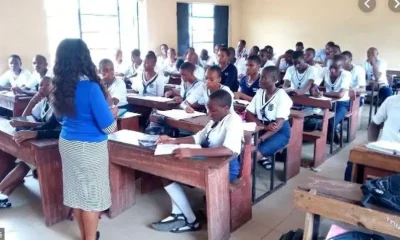
Public and Private Schools at the FCT are closing down. It is no longer a matter to joke with.
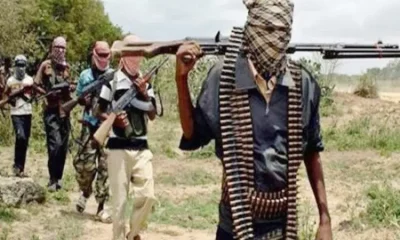
Last Tuesday, persons suspected to be terrorists/bandits carried out sporadic shootings at the Minister’s Hill area and the Dantata Bridge along Airport Road, Abuja.
In all these, Nigerian politicians have carried on as if nothing is amiss, as if they owe Nigerians no explanation.
Spreading like wild fire
From one geo-political zone to the other, there’s always a scary story to tell.
In the south-west, there’s a surge in cybercrime, armed robbery, kidnapping, domestic crime, extrajudicial killings, herder-farmer conflicts, ritual killings, and banditry.
The Ondo State Church experience happened not too long ago.
The agitation for Biafra with its now accompanying killings, commercial crime, kidnapping, herder-farmer clashes, attacks by unknown gunmen, and banditry is now holding sway in the southeast.
In the south-south, kidnapping, and environmental agitation are not completely over.
Humanitarian crisis caused by the Boko Haram insurgency and the Islamic State of West Africa Province has held sway for years in the northeast.
Ethno-religious killings and banditry are known to have taken a centre-stage in the north-west.
Since 2015, insecurity in Nigeria has gone political and now is spreading across ethnic and religious lines and has claimed thousands of lives and property.
Nigeria’s corrupt system since independence seems to have birthed the situation and the 1966 coup is the ugly cornerstone for the insecurity experienced today in Nigeria.
The 1966 coup, though not an Igbo coup as being perceived has created a mutual distrust between Igbo ethnic group and the other ethnic groups.
The ethnic mistrust among ethnic groups has made it extremely challenging for a Nigerian of south-eastern origin to become the country’s president and fuelled the perceived marginalisation of the region in the power control equation.
The heightened clashes between herdsmen and farmers in many southern parts of the country were interpreted as an invasion of the region by northern elements.
Major farms in the south-west including the Obasanjo farms and Olu Falae farms have been attacked by herdsmen with the later physically harmed.
The daughter of the Afenifere leader was equally attacked and killed.
The communities of the north central have also been at the mercy of bandits and land grabbers.
Insecurity has gone haywire. The politicization of the insurgency and terrorism has given room for their rapid expansion and replication.
Reports have also shown that absolute poverty, illiteracy, and neglect of the youth in many of the northern states created ready pools of recruits that found solace in the use of ammunition.
From all indications, the rising violence has cost Nigeria over 11% of its GDP worth N119 billion and projects worth N12 trillion were abandoned across Nigeria due to insecurity and other challenges.
The global peace index for 2021 compiled by the Institute for Economics and Peace ranked Nigeria 146th out of 163 countries with a score of 2.712, while among sub-Saharan African countries the country was ranked 39th out of 44 countries examined in the region.
According to experts, insecurity affects economic growth by drying out investments, increasing unemployment, and dwindling government revenue, among others.