Opinion
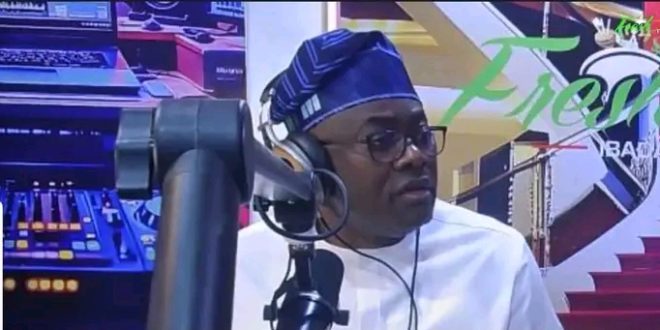
Governor Seyi Makinde’s Media Chat: A Hundred And Twenty Minutes Of Trash Talk | By Sola Abegunde
Published
4 weeks agoon
By
Mega IconI knew that Governor Makinde would provide us with a hundred and twenty minutes of comic relief and at the same time, I knew he is bound to commit unforced errors which would further expose his shenanigans.
The outgoing Governor of Oyo state did not disappoint on both fronts.
Personally, I understand the need for him to have one final valedictory Media Chat.
The atmosphere might be too hot for him to even think of such luxury after the general election in 2027. So, if he’s got the opportunity now, why not take a shot at it?
I must however say that the Governor displayed his insensitivity right from the choice of the Studio the Chat was aired.
Shortly before the Media Chat commenced, I came across a release signed by the Chairman of the Nigeria Union of Journalist, NUJ, BCOS Chapel, Com. Ademola Balogun.
Com. Balogun was full of lamentations concerning the very terrible state of the Oyo state Broadcasting Corporations, BCOS.
He was of the very strong opinion that the BCOS should have meaningful opportunities to cover Government activities.
He also called on Governor Seyi Makinde to empower the BCOS to invest in modern studio, transmitting equipment, digital broadcasting facilities and online platforms.
Com. Ademola spoke extensively about Staff welfare and other issues.
Sadly, while Governor Seyi Makinde has been consistent in empowering a particular Radio station, the Broadcasting Corporations of Oyo state, BCOS has been dying slowly.
Unfortunately, I have no good news for Com. Ademola. His lamentations will definitely fall on stone deaf ears. It is too late for Governor Makinde to change his ways. I just pray that the Governor would not wake up one day and sold off whatever remains of the Corporation.
That is just by the way. Let me address Governor Makinde’s Media Chat for whatever it is worth. The Governor spent a whole two hours venting anger and spreading outright lies and half-truths.
I am surprised that Governor Makinde has not seen any reason for him to have a second thought about his awkward and reckless comments about the Law Profession.
I am saying this because, for the second time, his Deputy was sitting closely beside him and yet, he felt like it was humorous for him to take a dig at Senator Sarafadeen Abiodun Alli, the All Progressives Congress, APC Gubernatorial candidate, regarding his misconceived failure as a Law practitioner.
He repeated the ignorant and reckless comments about Senator Alli, not being a Senior Advocate of Nigeria and for that reason, according to Governor Seyi Makinde, the Oyo South Senator is not an accomplished Legal Practitioner.
He had made that same reckless comments a couple of weeks ago and at that time also, the Deputy Governor was beside him!
The respectable man is an accomplished Lawyer of many years of experience, who had trained a lot of successful Lawyers.
I also wonder, how people like Dr. Nureni Adeniran and Olasunkanmi Olaleye, who are also Lawyers and have been working with Governor Seyi Makinde over the years would feel about those reckless comments coming from their Boss.
If you want to follow Governor Seyi Makinde’s reasoning, if you are a teacher and you did not rise to the status of a School Principal or Head teacher, then, you’re a failure.
If you are a Military Personnel and you didn’t rise to the position of a General, you’re a failure!
Any time I saw the Governor arguing in this regard, I always asked myself if he was actually himself, because, for me, only a drunkard is capable of reasoning in that manner, or, perhaps, some young elements who had taken so much banned substances.
I have carefully analyzed the 120 minutes Media Chat and I saw that Governor Seyi Makinde spent so much time treating two issues.
The first, being his frustration about his perceived betrayal by president Bola Ahmed Tinubu and the second being his failed attempt to rewrite the Constitution of Nigeria regarding the financial autonomy for Local Governments.
The birthday boy tried to work him through the crisis at the Circular Road, but it was obvious that the main reasons behind Governor Makinde’s Media Chat were grounded on his firm beliefs that Tinubu breached certain agreements with him and others in 2023 and his warped opinion about how the Local Governments should operate within our Federation.
Let’s start with Governor Seyi Makinde’s allegations against Tinubu.
According to him, in 2023, an agreement was signed between certain individuals, including himself.
He said there was an agreement that a Government of National Unity would be formed by president Tinubu after he won the presidential election of 2023 and that he and the Governor of Lagos state, Babajide Sanwo-Olu were signatories to that agreement.
According to him, president Tinubu was not a signatory to the agreement but he was informed after the agreement was signed!
He went further to say that on the strength of that agreement, he presented Bimbo Adekambi as a Ministerial nominee because the president had earlier told him that he wanted to appoint the Minister for Budget and Planing from Oyo state.
To his chagrin and disappointment, president Tinubu settled for Bayo Adelabu and asked him to own the nomination of the former Minister for power, a request he claimed he rejected.
He therefore concluded that all the Ministers nominated from the South West are from Bourdilon.
I have carefully analyzed this confession by Governor Seyi Makinde and I have a few questions for him.
Why is it that Governor Seyi Makinde is the only one complaining about a breached agreement?
Why did it take him all these long to come out with this fact?
What was the criteria for the nomination of Bimbo Adekambi? Did he just take a random decision to choose Adekambi without a prior relationship between the two of them or what?
How does Governor Seyi Makinde want to convince any right thinking person that he believed an agreement would be binding on Tinubu on the strength of Governor Sanwo-Olu’s alleged signature?
For me, that doesn’t make any sense, most especially, for an ” accomplished Engr” like Seyi Makinde!
I am surprised that Governor Makinde leaves out what he benefited from the alignment with Tinubu in 2023.
Remove the alignment with Tinubu in 2023, Seyi Makinde was a goner and the fact that he was able to secure a second term in office ought to have been enough for him.
I am also surprised that Governor Makinde didn’t understand that he was advertising his penchant for serial betrayal and greed when he was relating the events that shaped his re-election in 2023.
It was all about him and the decisions he took, not only affected the Peoples Democratic Party, PDP alone, it also affected certain candidates of his party during the first ballot in 2023.
Now, to the issue of Local Government Autonomy.
Governor Seyi Makinde is a very funny individual. He was very clear about his position on Local Government Autonomy in 2023.
His position was that he never even believed in their existence and I was amused when the birthday boy was saying that despite his position on Local Government Autonomy in 2023, he was still able to win in 31 Local Governments, signifying the fact that the people of Oyo state believed Governor Makinde’s explanations.
I am extremely happy that Governor Seyi Makinde has not changed his opinion on how Local Governments should operate within the Federating units.
He is still stuck on the fact that the 33 Local Governments in Oyo state should be appendages to the State Government, even, in spite of the Judgment of the Supreme Court granting them full financial autonomy.
I am shocked that Governor Seyi Makinde could attempt to confuse what happened between the Lagos state Government when Tinubu was Governor of the state and the Federal Government during Obasanjo’s period, with the illegalities he has been perpetuating with the resources 33 Local Governments.
There is a clear distinction between both scenarios.
In the case of Tinubu as Governor of Lagos state, the Lagos state Government created more Local Governments and the Federal Government was of the opinion that the state Government was wrong to have done so.
As a result of this misunderstanding, the Federal Government stopped the monthly allocations for the Local Governments in Lagos state and it led to a Judicial dispute.
In the end, the Supreme Court held that the Local Governments created by the Lagos state Government were incohate, but it faulted the Federal Government for withholding the monthly allocations belonging to the Local Governments in Lagos state.
Lagos state Government thereafter recognized and administered the newly created Local Governments as Local Government Development Areas and many states have since copied the template, including Oyo state.
In the present scenario, the president, through the Attorney general of the Federation approached the Supreme Court and sought to secure full financial autonomy for the 774 Local Governments and the Supreme Court agreed to the request.
I have been asking myself, why is it that Governor Seyi Makinde is having problems with that judgement?
The monthly allocations released to the 33 Local Governments are released against their names.
Is Governor Seyi Makinde saying that it is proper for a Governor to still be the supervisor for the 33 Local Governments?
How does the judgment of the Supreme Court translate to the Federal Government trying to take control of the 774 Local Governments?
Yorubas will always say that a dog can not stand watch over two different buildings. ( Aja kii roro, ko so ojule meji po).
I was also surprised to hear Governor Seyi Makinde talking about the fact that, instead of full financial autonomy for the Local Governments, he preferred to discuss about how the Local Governments could be empowered to survive without monthly allocations from Abuja.
Haba! Governor Makinde!! Gently now.
You are depriving the Local Governments of their entitlements and you except them to thrive. How would that happen?
Why didn’t we start with the state? Can Oyo state survive without monthly allocations?
I think everyone can now see that Bimbo Adekambi as Governor, would never allow the Local Governments to breathe.
On the other hand, Senator Sarafadeen Abiodun Alli has promised to guarantee full financial autonomy for the 33 Local Governments and the implementation of the policy requires no rocket science. All it requires is the will.
There is an existing judgment of the Supreme Court which has outlined the steps to be taken by any willing state Government.
Sarafa Alli only needs to direct relevant stakeholders at the Local Governments to comply with the judgment and that is the end of the matter.
What is so difficult in that, if you are not covetous?
I might have to do this piece in series but I will like to warn the residents of the Circular Road.
You heard Governor Seyi Makinde. He is promising you nothing.
My only problem with him is his attempts to shift the blame of the chaos he orchestrated at the Circular Road on the late Governor Abiola Ajimobi.
He even said that that the Government of Ajimobi defrauded residents of the Circular Road!
Sometimes, people like Governor Seyi Makinde needs no one to enchant them. Their character is an enchantment on itself.
If you’re saying that the Governments of the late Ajimobi defrauded residents of the Circular Road, is Bimbo Adekambi not an integral part of that Government and that is before you begin to ask the Governor for proofs.
I enjoyed Governor Seyi Makinde’s valedictory Media Chat, while looking forward to the new era awaiting him next year.
My father used to tell us that the mouth of the liar does not ooze blood. ( Enu opuro kii seje).
By the way, I saw that Governor Seyi Makinde never mentioned anything about the report of the Judicial Commission of Inquiry into the abduction of Teachers and Pupils of Yawota and Esinele communities of Oriire Local Government.
How far now?
Sola Abegunde.

Opinion
G-WAGON: Dare Adeleke, A Liar’ll Steal; Why’re You Desperate To Conceal The Truth? | Maroof Asudemade
Published
5 days agoon
November 6, 2026By
Mega IconI have read Dare Adeleke’s rather vacuous response to my article on Governor Seyi Makinde’s presentation of a brand-new Mercedes-Benz G-Wagon 500 to the President-General of the Central Council of Ibadan Indigenes (CCII), Barrister Sulaimon Ajeniyi Ajewole. Unfortunately, beneath the insults, name-calling on my person and his apparent eye-service desperation to impress his political benefactor, there is hardly any substance worth engaging.
Adeleke devoted considerable space to calling me a drunken, lowly writer. Yet, in all his verbal gymnastics, he conspicuously failed to address the fundamental questions raised in my article. Has Governor Makinde paid the statutory salaries and entitlements of the Olubadan of Ibadanland, Oba Rashidi Adewolu Ladoja, and the Alaafin of Oyo, Oba Akeem Owoade, since their ascension to the respective thrones? Has his administration provided them with official vehicles, as expected under the applicable government arrangements? These were the issues Adeleke ought to address not my personality.
If he had any credible answers to these questions, he would have provided them. Instead, he chose to exhibit his wrakness as an intellectually exhausted defender. He resorted to abusing the messenger when he couldn’t dismantle the message.
However, there is one particularly interesting aspect of Dare Adeleke’s response that deserves immediate correction. He lied that Governor Makinde spent N1 billion on the completion of the Olubadan Palace. Is he sure he’s not addicted to stealing as a liar? The financial contributions towards the completion of the palace came from multiple sources, including the 11 local governments in Ibadanland, each of which contributed N50 million, amounting to N550 million.
Governor Makinde contributed N250 million. The governor’s contribution was N250 million, not N1 billion! Why would Adeleke inflate the governor’s contribution from N250 million to N1 billion? Is he so desperate to manufacture an impressive record for his political principal that figures have become expendable? Or does he imagine that exaggerating the governor’s generosity will make the unanswered questions of ridiculing our royal fathers disappear?
The 11 local governments of Ibadanland have a responsibility towards the Olubadan institution. Their contributions towards the palace should not be presented as a personal sacrifice by Governor Makinde. They are contributions made by public institutions to an institution that belongs to the people of Ibadanland.
Even more disturbing is Adeleke’s inane argument that because Makinde contributed money towards completing the Olubadan Palace, the governor deserves appreciation rather than criticism. This argument betrays a shocking failure of Adeleke to distinguish between governmental responsibilities and statutory obligations.
Let us even assume, for the sake of argument, that Makinde personally spent N1 billion on the palace. How does constructing or completing a building discharge the government’s obligation to pay the statutory salaries and entitlements of the Olubadan and the Alaafin? How does a palace building become a substitute for official vehicles? Are these royal fathers supposed to live in beautiful palaces while their statutory entitlements remain unpaid?
By Adeleke’s ‘logic’, Governor Makinde could build a magnificent headquarters for the Nigeria Labour Congress and subsequently refuse to pay workers their salaries, expecting the labour movement to applaud him for his generosity. Would that be acceptable? Could the government substitute office buildings for workers’ wages? Dare Adeleke is glaringly a peripheral thinker!
A building is a capital project. Salaries and official entitlements are separate obligations. Since Adeleke knew he could not understand this elementary distinction, he should have smelt his argument before presenting it to the public. His defence is not only logically defective; it is intellectually sour.
More importantly, the completion of the Olubadan Palace was not the subject of my article. I did not dispute the governor’s contribution. I questioned the apparent contradiction between his extravagant generosity towards the CCII President-General and the allegations of neglect concerning the official entitlements of the Olubadan and the Alaafin. Adeleke has not answered that question. He has merely introduced an unrelated expenditure in an attempt to divert attention.
I have no objection to Governor Makinde giving G-Wagons, aeroplanes or even private jets to people he loves, provided he does so with his personal resources. He is entitled to his private generosity. But public accountability should not cease because a governor is generous to his friends, associates or political admirers. The issue is not his freedom to give birthday presents. It is his responsibility to discharge governmental obligations.
As for Adeleke’s unnecessary personal attacks, I refuse to dignify his descriptions of me as a drunken or lowly writer with an elaborate defence. Neither description reflects my personality, and neither alters the substance of my argument. He only needs to be aware that despite his opinion of me as a drunken, lowly writer, I am his better by far as a family man and a responsible father – two essential duties he has failed in. I will also not allow his inability to sustain an intelligent argument to dictate the level of my engagement.
I am upset with Dare Adeleke for not living up to his claim of belonging to Oja’ba. He lacks the intellectual discipline, street wisdom and argumentative dexterity traditionally associated with the historic Ibadan community. His response has demonstrated an unfortunate deficit in all three. “Dare ò m’èsì, ó tún gọ!”
There is also something deeply incongruous about Adeleke’s pretentious defence of Governor Makinde. Those familiar with the undercurrents of Oyo politics may find his public posturing rather amusing. He presents himself as an unquestioning defender of the governor, yet political hypocrisy has a way of concealing its true colours beneath an appearance of loyalty. If the human stomach were transparent like a calabash, perhaps the governor would have a clearer view of Dare Adeleke as the green snake lurking beneath the green grass.
But my concern remains the dignity of the Olubadan and Alaafin institutions, not Adeleke’s political theatrics. He has had an opportunity to answer straightforward questions. He failed. He has had an opportunity to correct the allegations with verifiable facts. He avoided them. Instead, he manufactured a N1 billion contribution, inflated the governor’s generosity and attempted to intimidate a critic with insults.
Let me therefore restate the questions he could not answer: Has Governor Makinde paid the statutory salaries and entitlements of the Olubadan and the Alaafin since their ascension? Has he provided them with their official vehicles in accordance with applicable government policy? If yes, let Adeleke produce the evidence. If no, let him explain why.
A G-Wagon cannot answer questions about unpaid salaries. A palace cannot substitute for statutory entitlements. And N1 billion in political propaganda cannot turn N250 million into N1 billion. Dare Adeleke may choose to defend Makinde with insults, exaggerations and emotional outbursts. I will continue to interrogate the administration with facts, logic and questions that public officeholders owe the people answers to.
The dignity of the Olubadan and the Alaafin is far more important than Adeleke’s desperate attempt to earn political applause. And no amount of name-calling will make me abandon the responsibility of holding those in power accountable.
Opinion
OYO AHEAD: Senator Alli Blueprint for Oyo Renewal | Muji Armstrong-Bello
Published
5 days agoon
November 6, 2026By
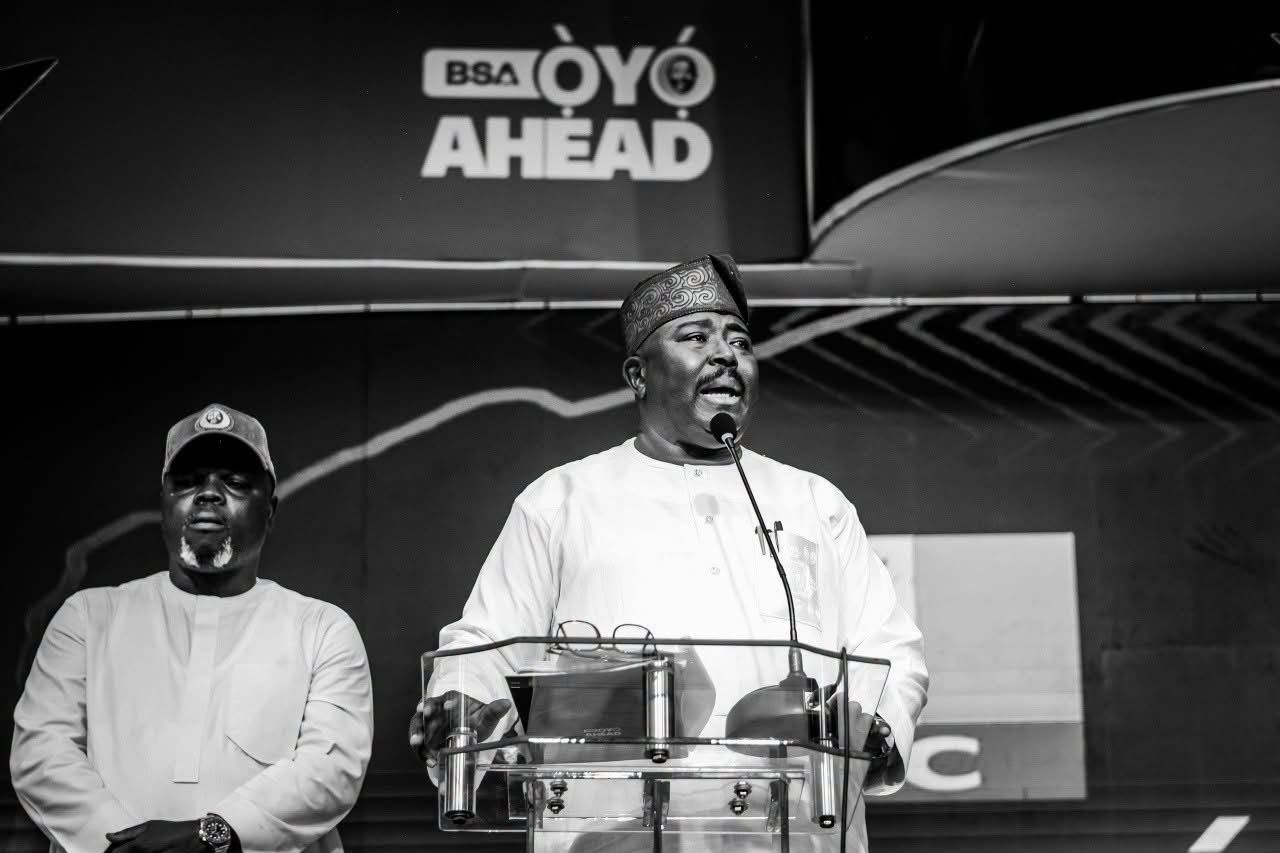
Mega IconThe unveiling of Senator Sharafadeen Abiodun Alli’s OYO AHEAD manifesto has introduced a new dimension to the 2027 Oyo State governorship conversation. Beyond the usual campaign promises, the document presents an attempt to define not just what a government intends to do, but how it proposes to govern. Its central message is that Oyo State needs a development model built around grassroots empowerment, economic productivity, institutional accountability and measurable performance.
What makes the manifesto politically significant is its attempt to connect the candidate’s personal political journey with a proposed programme of government. From his experience as Chairman of Ibadan North Local Government to his service as Secretary to the State Government, Chief of Staff, Senator and Chairman of Odu’a Investment Company, Alli presents himself as a politician whose experience cuts across grassroots administration, constitutional politics, legislative representation and business management. These experiences provide a solid foundation for effective governance and reinforce the expectation that his proposed agenda can be translated into tangible results for the people of Oyo State.
The first pillar, local government autonomy, may well become the most politically consequential. By promising transparent access to council allocations, monthly funding arrangements and greater freedom for local governments to address community needs, BSA is placing grassroots governance at the centre of his development philosophy. The message is unmistakable: democracy must be felt beyond the Government House, and the dividends of government must reach the communities where ordinary people live and work.
His infrastructure proposals also deserve attention. Rather than concentrating exclusively on new construction, the manifesto promises an audit of unfinished roads, published completion schedules, farm access roads, improved electricity, potable water and affordable housing. This suggests an understanding that infrastructure should be judged by its economic and social usefulness, not simply by the political visibility of projects.
In healthcare, the proposed Oyo Care Guarantee for infants, pregnant women and residents above 70 is a significant social intervention. The commitment to strengthen primary healthcare, address shortages of medical personnel and expand health insurance coverage recognises that healthcare is not a privilege reserved for those who can afford it. With the right funding arrangements, adequate staffing and firm institutional commitment, these promises can be translated into a sustainable healthcare system that delivers tangible benefits to the people of Oyo State.
Education is another area where the manifesto attempts to reconnect Oyo with its historic reputation as a pioneer of educational development. Reducing classroom congestion, repairing schools, expanding scholarships, establishing skills centres and linking graduates to employment are proposals that speak directly to the future of the state’s young population. These interventions are designed to translate educational investment into measurable improvements in learning outcomes, practical skills and employment opportunities for the next generation.
Perhaps the most compelling economic proposition is the commitment to move Oyob beyond an economy of consumption towards one of production, investment and job creation. The proposed industrial parks, revival of the Oluyole Free Trade Zone, ₦10 billion Youth Fund, digital skills programme and support for small businesses suggest an administration seeking to make employment creation a central responsibility of government. The ₦150 billion annual internally generated revenue target reflects an ambitious vision of economic growth, driven by expanded business activity, increased investment, efficient revenue administration and the elimination of financial leakages, while preserving a favourable environment for citizens and businesses to prosper.
Agriculture gives the manifesto another important regional dimension. Oyo possesses considerable agricultural potential, particularly across Oke-Ogun, Ogbomoso and Ibarapa. The proposals for processing facilities, revived farm settlements, mechanisation, storage, agricultural insurance and export promotion recognise that farmers cannot prosper merely by producing crops; they must also have access to markets, processing facilities and value chains. If properly executed, this could transform agriculture from subsistence activity into a major engine of industrial growth.
Security, appropriately, is treated as the foundation upon which every other pillar depends. The proposed strengthening of community security networks, protection and insurance for hunters and vigilantes, improved surveillance and farmer-herder mediation reflect the reality that development cannot flourish where fear controls access to farms, schools and businesses. The accompanying commitment to public disclosure of projects, contractors and costs also reinforces the argument that security and accountability are inseparable responsibilities of government.
One particularly striking feature is the candidate’s personal commitment to publish quarterly performance reports and to decline a second-term request if Oyo State is not measurably better by the end of his first tenure. This is a bold political undertaking. It shifts the conversation from the traditional entitlement of incumbency to the obligation of performance. This commitment further underscores the importance of measurable performance targets, transparent reporting and regular public assessments as the foundation for accountable and results-driven governance.
The strength of OYO AHEAD lies not only in the breadth of its promises but also in the opportunity to translate them into a practical development programme. The proposed revenue expansion, healthcare guarantee, youth and women empowerment funds, educational reforms and infrastructure projects provide an ambitious agenda for the state. With proper financial planning, sound legal frameworks, effective coordination and measurable implementation targets, these proposals can form the foundation of a purposeful and results-oriented administration.
This places an important responsibility on the OYO AHEAD Steering Committee. Beyond campaign mobilisation and public presentation, the Committee must sustain the technical work required to support the manifesto with reliable data, realistic costing, legal guidance, implementation timelines and measurable outcomes. The depth of this preparation will be central to demonstrating that OYO AHEAD is not merely a collection of campaign promises, but a carefully considered programme for governing Oyo State.
As the 2027 governorship election approaches, the debate should increasingly focus on the future of Oyo State: the governance philosophy, experience, policy direction and preparedness of those seeking the people’s mandate. Political alliances and personalities will naturally shape the contest, but the enduring question is which proposals offer a clear and practical pathway to development, prosperity and accountable leadership.
OYO AHEAD has placed such a pathway before the people of Oyo State. Its seven pillars provide a framework for addressing the state’s development priorities, while its emphasis on grassroots governance, economic productivity, human capital development and accountability speaks to the need for a new direction. With his political experience, administrative background and familiarity with the challenges of Oyo State, Senator Sharafadeen Abiodun Alli is well positioned to lead the effort to translate this blueprint into meaningful progress. The promise of OYO AHEAD is renewal; its ultimate measure will be the transformation it delivers to the lives of the people.
Prince Armstrong-Bello, JP. Akogun Aliiwo Ibadanland, Author of “Yoruba Leadership in Diaspora: Equity Justice and Tradition” is a Political Communication Strategist and Public Affairs Analyst
Opinion
OYO 2027: MAKINDE EATS SOUR GRAPES, ADEKANMBI’S TEETH MUST BE SET ON EDGE
Published
6 days agoon
November 4, 2026The confusion within the ranks of the Allied Peoples Movement (APM) is becoming increasingly difficult to describe.
The political empire built by Governor Seyi Makinde on what critics describe as lies, betrayals, broken promises and greed appears to be crumbling by the day.
Indeed, Makinde and his APM loyalists are providing an endless source of amusement these days.
Virtually everyone who leaves the Makinde administration is suddenly dismissed as a “paperweight” by the party’s social media attack dogs.
I have often wondered whether these fellows are unaware of the wisdom behind the Yoruba belief that even cotton wool, when gathered in sufficient quantities, can become a load too heavy for one person to carry.
As the Yoruba proverb puts it: Eni ní òwú ò t’ẹrù; ìwọ̀nba tó fẹ́ fi tan iná ló mú.
You keep losing prominent politicians and influential party stakeholders, yet you dismiss them as political nonentities. But which heavyweight has the power to cast more than one vote for a preferred candidate?
I am certain that even Bimbo Adekanmbi must be wondering how things deteriorated so badly for the APM.
Before his emergence as Governor Makinde’s anointed governorship candidate was made public, I granted an interview on a television station during which I openly predicted that Adekanmbi would get the governor’s endorsement and that his choice as successor would spell trouble for both men.
To one another, both men have become potential political albatrosses. Unfortunately, Governor Makinde’s ego appears to have blinded him to realities beyond his immediate political calculations.
I am particularly surprised that Adekanmbi failed to recognise that he was walking into a political trap by accepting Makinde’s endorsement.
Greed, indeed, can be a dangerous disease. In Adekanmbi’s position, no discerning politician would have ignored the number of political enemies Governor Makinde had accumulated during his seven years in office.
It follows, therefore, that Adekanmbi would inevitably inherit many of those political liabilities. Sadly, he either failed to appreciate the implications or simply chose to overlook the consequences.
By the time Governor Makinde, or perhaps Seye Famojuro, settled for Adekanmbi, the governor was already embroiled in disagreements with prominent political figures, including former Deputy National Chairman of the PDP, Ambassador Taofeek Oladejo Arapaja, Alhaji Bisi Olopoeyan and several first-class traditional rulers in Oyo State.
He had also fallen out with several influential political figures, including Senator Hosea Agboola, Alhaji Razak Gbadegesin, former Deputy Governor Barrister Gbolarunmi Hazeem, Chief Mrs Jumoke Akinjide, Hon. Mulikat Adeola Akande, former Deputy Governor Engr. Rauf Aderemi Olaniyan, Prince Diran Odeyemi, former Ekiti State Governor Ayodele Fayose, former Rivers State Governor Nyesom Wike and even President Bola Ahmed Tinubu.
Beyond these strained relationships, several stakeholders within the Makinde political camp were already uncomfortable with the process that produced Adekanmbi as the APM governorship candidate.
There were also contentious discussions about whether Governor Makinde should be succeeded by a Christian. Equally troubling to some stakeholders was the question of whether it made political sense for Makinde to present Adekanmbi as his preferred successor when both men hail from Ona-Ara Local Government Area.
At the time, agitations were mounting over Governor Makinde’s alleged failure to comply with the Supreme Court judgment granting financial autonomy to local governments.
Other contentious issues included the controversial Circular Road project, the sale of government assets and the proposed transfer of Oyo State farm settlements to estate developers.
The state’s debt profile, which has remained a subject of public concern and debate, was another issue that had yet to be satisfactorily addressed.
All these issues were already in the public domain before Adekanmbi accepted the offer to become Makinde’s anointed candidate.
One is therefore compelled to ask: what could have persuaded Adekanmbi to accept such a politically dangerous offer?
I can only think of one reason: greed.
When Governor Makinde claimed that he had advised Adekanmbi not to inherit his enemies, he was being economical with the truth.
The reality is that those political liabilities became Adekanmbi’s the moment he accepted Makinde’s endorsement.
The governor knows that he is carrying a political baggage that could weigh heavily on his preferred successor. Yet, he appears unwilling to be held accountable for the political consequences of his own administration.
Unfortunately for both men, even Adekanmbi’s campaign slogan tells a story of its own: “Omi Tuntun 3.0”.
How, then, does he intend to separate himself from the “Omi Tuntun” administration and the controversies surrounding it?
Governor Makinde has never hidden his discomfort with genuine local government autonomy. Adekanmbi, by his posture, appears prepared to sustain the same political template, which critics blame for weakening the 33 local government councils in the state.
On virtually every issue over which the people of Oyo State have expressed concern, Adekanmbi appears to be offering continuity rather than a departure from the policies of the present administration.
He has failed to condemn the controversy surrounding the proposed transfer of the Ogbomoso Farm Settlement to estate developers, despite protests by residents of the ancient town.
He has equally remained silent over the controversy surrounding the administration’s reported moves involving the Saki Farm Settlement.
He also appears untroubled by the reported transfer of the 4,000-hectare Eruwa Farm Settlement to investors, whose whereabouts and activities have, according to critics, remained unclear two years after the arrangement.
Indeed, Adekanmbi appears not to appreciate the extent of the challenges facing the state. For instance, Oyo State is said to be short of six general hospitals if the benchmark of one general hospital per local government area is adopted.
Yet, when Senator Sharafadeen Abiodun Alli promised in his manifesto to address this deficit, APM spokespersons reportedly went on the offensive, describing the manifesto as “lacking in originality”.
Governor Makinde has been in office for more than seven years. During this period, his administration has received ecological funds on several occasions.
The question, therefore, is simple: what has happened to those funds?
There are concerns over the utilisation and accountability of the ecological funds received by the state. The governor owes the people a clear explanation of how these resources have been deployed.
There are also questions surrounding the proposed upgrade of the Alakia Airport, a project for which Adekanmbi himself was appointed by Governor Makinde to head a committee.
I have been reliably informed that the contract sum for the airport upgrade was reportedly reviewed upwards from its original figure of over N50 billion to well above N150 billion.
I have raised this question before, but I am yet to hear Adekanmbi offer a convincing explanation or response to the allegation.
Similarly, Governor Makinde reportedly approved more than N60 billion for the renovation of the Government House, an expenditure that attracted public criticism.
As of today, the visible works include the construction of a hall, the painting of the Government House mosque and church, and the replacement of tiles in both places of worship.
I challenge Governor Makinde to tell the people of Oyo State how much of the more than N60 billion reportedly approved for the renovation has actually been released and expended.
Beyond that, the governor should invite members of the press to conduct an independent assessment of the work carried out so far. The people deserve transparency and accountability, not unanswered questions.
The state government’s performance in education is another area that demands urgent attention.
Oyo State’s performance in WAEC and NECO examinations has continued to attract concern, particularly when compared with the performance of other states, including neighbouring Osun, which has been celebrated for its fifth-place position in a recent examination ranking.
Senator Sharafadeen Abiodun Alli has argued that the state must return to an educational system that makes teaching and learning more conducive. One of his proposals is a 30-pupils-per-classroom policy.
But rather than engage constructively with the proposal, APM voices have dismissed its feasibility.
Adekanmbi, as the party’s governorship candidate, has also failed to offer a clear departure from the present arrangement, under which many public primary and secondary school classrooms remain severely overcrowded and unconducive to effective learning.
Oyo State cannot afford another administration that merely promises continuity without addressing the shortcomings of the present one.
The people deserve better, and they now have an alternative in Senator Sharafadeen Abiodun Alli.
Governor Makinde has eaten sour grapes. Unfortunately, Bimbo Adekanmbi appears destined to bear the consequences.
His teeth, indeed, must be set on edge.
MEGAICON TV
Ogbomoso Political Earthquake: Makinde Loses Ex-CoS, 32 APM Chieftains to APC
Oyo APC Raises Alarm Over Alleged Plan to Sell Govt Fish Farm
Alli to Makinde: End illegal tax collections in Oyo now
Trending
-
Politics4 weeks agoDIPHTHERIA OUTBREAK: ALLI QUERIES ₦9.9BN IMPACT FUNDS AS OYO LAGS IN CHILD VACCINATION
-
News3 weeks ago2027: Alli, Oseni Tour Ibarapa, Seek Support for APC Candidacies
-
News4 weeks agoOyo South: Sheikh Olafimihan Hails Oseni for N10m Inyass House Donation
-
Politics4 weeks ago2027: Oseni Support Islamic Group’s Building Project With N10m, Urges Voters to Prioritise Competence Over Religion