Connect with us

News

Coronavirus: Africa COVID-19 cases top 100 000

Published

on

The COVID-19 pandemic today reached a milestone in Africa, with more than 100 000 confirmed cases. The virus has now spread to every country in the continent since the first case was confirmed in the region 14 weeks ago.

Despite crossing this threshold, the pandemic, which has struck with such devastating force in much of the world, appears to be taking a different pathway in Africa. Case numbers have not grown at the same exponential rate as in other regions and so far Africa has not experienced the high mortality seen in some parts of the world. Today, there are 3100 confirmed deaths on the continent.

By comparison, when cases reached 100 000 in the World Health Organization (WHO) European region, deaths stood at more than 4900. Early analysis by WHO suggests that Africa’s lower mortality rate may be the result of demography and other possible factors. Africa is the youngest continent demographically with more than 60% of the population under the age of 25. Older adults have a significantly increased risk of developing a severe illness. In Europe nearly 95% of deaths occurred in those older than 60 years.

African governments have made difficult decisions and were quick to impose confinement measures, including physical and social distancing, which will have significant socio-economic costs. These measures, which along with contact tracing and isolation, expanded or increased hand washing have helped to slow down the spread of the virus.

“For now COVID-19 has made a soft landfall in Africa, and the continent has been spared the high numbers of deaths which have devastated other regions of the world,” said Dr Matshidiso Moeti, WHO Regional Director for Africa. “It is possible our youth dividend is paying off and leading to fewer deaths. But we must not be lulled into complacency as our health systems are fragile and are less able to cope with a sudden increase in cases.”

The continent has made significant progress in testing with around 1.5 million COVID-19 tests conducted so far. However, testing rates remain low and many countries continue to require support to scale-up testing. There is a need to expand the testing capacity in urban, semi-urban and rural areas, and provide additional test kits.

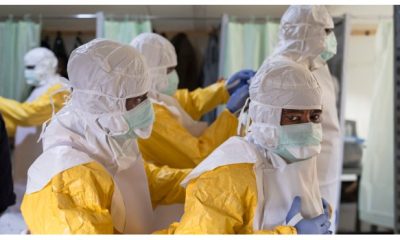
Cases continue to rise in Africa and while overall it took 52 days to reach the first 10,000 cases, it took only 11 days to move from 30 000 to 50 000 cases. About half of the countries in Africa are experiencing community transmission. More than 3400 health care workers have been infected by COVID-19. It is important that health authorities prioritize the protection of healthcare workers from COVID-19 infection at medical facilities and communities. There is also a need to provide enough personal protective equipment to health care workers and raise their awareness as well as increase infection prevention and control in health facilities.

“Testing as many people as possible and protecting health workers who come into contact with suspected and confirmed cases are crucial aspects of this response. Despite global shortages, we are working hard to prioritize the delivery of testing kits and personal protective equipment to low- and middle-income countries that have the most vulnerable populations, based on the number of cases reported,” said Dr Ahmed Al Mandhari, WHO Regional Director for the Eastern Mediterranean.

Despite the relatively lower number of COVID-19 cases in Africa, the pandemic remains a major threat to the continent’s health systems. A new modelling study by WHO predicts that if containment measures fail, even with a lower number of cases requiring hospitalization than elsewhere, the medical capacity in much of Africa would be overwhelmed.

Now that countries are starting to ease their confinement measures, there is a possibility that cases could increase significantly, and it is critical that governments remain vigilant and ready to adjust measures in line with epidemiological data and proper risk assessment.

WHO has offices in every country on the continent and is working closely with the Africa Centres for Disease Control, Ministries of Health, United Nations agencies and other partners to support the scale-up of the response through coordination, technical expertise, the provision of much needed medical supplies and assisting with data collection and analysis. WHO has trained more than 7000 health workers, including 1000 district health teams to support the decentralization of the response. So far, more than 225 experts have been deployed to over 39 countries in Africa and over 900 staff have been repurposed at the regional and country level to support the response.

Comments

News

Tinubu sends state police bill to Senate

Published

on

President Bola Tinubu has transmitted a Constitution Alteration Bill to the Senate seeking the establishment of state police as part of efforts to reform Nigeria’s security architecture.

The proposed legislation, contained in a communication dated June 15, 2026, was read during plenary on Tuesday by Senate President Godswill Akpabio.

Tinubu said the bill was aimed at providing a legal framework for a dual policing structure that would allow states to establish and operate their own police services alongside the Nigeria Police Force.

According to the President, the proposed amendment forms a key component of ongoing efforts to restructure the country’s policing system to improve security and enhance the protection of lives and property.

He explained that under the arrangement, communities, municipalities and local government areas would play more active roles in policing, enabling local authorities to detect suspicious activities and promptly relay intelligence to security agencies.

Following the presentation, Akpabio referred the bill to the Senate Committee on Constitution Review and directed it to report back on Wednesday.

Speaking on the importance of community-based policing, the Senate President said local authorities were better placed to identify security threats and support proactive responses by law enforcement agencies.

“You will know when foreigners infiltrate Nigeria and alert security agencies so they can react proactively rather than reactively,” he said.

Akpabio expressed optimism that sustained collaboration between the executive and legislative arms would ensure the successful passage and implementation of the initiative.

He disclosed that the process would be undertaken in phases through constitutional amendments and subsequent Acts of Parliament.

“We will do it in two phases through alteration and an Act of Parliament. There will be a lot of safeguards; let us come and do this important task. It is extremely important that we come tomorrow,” he said.

The Senate President also informed lawmakers that plenary would not entertain other major business following the death of a member of the House of Representatives, Yahaya Tongo of Gombe State.

Similarly, the Senate Leader urged senators to attend the next sitting, stressing the significance of the proposed state police framework.

“We need a minimum of two-thirds of members to vote on constitutional alterations. The issue of state police is non-partisan and cuts across geopolitical zones and interests,” he said.

The latest development came barely two weeks after the Senate passed an executive bill on state police for second reading.

Akpabio said the fresh Constitution Alteration Bill transmitted by the President builds on the earlier proposal and seeks to provide the constitutional foundation necessary for the establishment and operation of state police services across the country.

Continue Reading

News

Kola Oyewo’s family to Adeleke, Ooni, Atiku: Your condolences are our pillar of strength

Published

on

The family of the late veteran actor and scholar, Chief (Prof.) Adekola “Kola” Oyewo, has expressed deep appreciation to Governor Ademola Adeleke of Osun State, the Ooni of Ife, Oba Adeyeye Enitan Ogunwusi, Ojaja II, and former Vice President Atiku Abubakar, among other Nigerians, for their messages of condolence and support following the death of their patriarch.

In a statement issued on Saturday by Dr. Adewale Oyewo on behalf of the family, the bereaved household said the overwhelming show of sympathy, prayers, visits and acts of kindness from across Nigeria and beyond had served as a strong pillar of comfort in their period of grief.

The family described the late Oyewo as a respected community leader, accomplished academic, devoted family man, and traditional title holder whose life was defined by service, integrity, and unwavering commitment to societal development.

According to the statement, the tributes received in his honour reflect the far-reaching impact he made on students, colleagues, cultural practitioners and the wider society.

The family particularly appreciated Governor Ademola Adeleke for his condolence message and prayers, noting that his support had been deeply comforting.

It also expressed gratitude to the Ooni of Ife, whose words of encouragement were described as uplifting and consoling during the mourning period.

The statement further acknowledged the Oloba of Oba-Ile, Oba (Prof.) Adekunle Ashamu Oyeyemi (Tewogbade I), the Oloba-in-Council, and other traditional institutions for their fatherly support and solidarity.

Former Vice President Atiku Abubakar was also commended for his message of sympathy, which the family said brought reassurance in their moment of loss.

The family extended appreciation to professional bodies including the National Association of Nigerian Theatre Arts Practitioners (NANTAP) and the Theatre Arts and Motion Pictures Practitioners Association of Nigeria (TAMPAN), as well as academic communities of Obafemi Awolowo University, Redeemer’s University, Ekiti State University, and Elizade University, where the deceased served.

They also thanked friends, associates and well-wishers who stood by them with prayers and support.

“As we continue preparations to honour the life and legacy of our beloved patriarch, we humbly seek continued prayers and support,” the statement added, praying for the peaceful repose of his soul.

Continue Reading

News

IGP appoints Iniedu Force spokesman, replaces Placid

Published

on

photo combo of Anietie Iniedu and outgoing Force spokesman, Anthony Placid

The Inspector-General of Police, Tunji Disu, has appointed Anietie Iniedu as the new Public Relations Officer of the Nigeria Police Force, succeeding Anthony Placid, who was appointed to the position barely three months ago.

The appointment was announced in a statement issued on Friday by Placid, who described his successor as a seasoned police officer with extensive experience in public communication, operational policing, intelligence management, institutional accountability and administration.

An indigene of Etinan Local Government Area of Akwa Ibom State, Iniedu holds a Bachelor of Science degree in Pure Chemistry from the University of Uyo and has attended several professional courses in investigative interviewing, crime scene management, intelligence analysis, strategic communication and human rights-based policing.

Before his latest appointment, Iniedu headed the Complaint Response Unit at the Force Headquarters, Abuja, where he coordinated the management of public complaints and drove initiatives aimed at deepening transparency, accountability and public trust in the Nigeria Police Force.

He also served as Public Relations Officer of the Police College of Information Technology, Kobape, Ogun State, in addition to holding several operational and administrative positions across the country.

His previous postings include Operations Officer at the Maisandari Division in Yobe State, Area Crime Officer at the Umuahia Area Command in Abia State, Staff Officer at the IGP Secretariat, Force Headquarters, Second-in-Command of the 50 Police Mobile Force Squadron, Kubwa, and Officer-in-Charge of the Force Headquarters Situation Room, where he coordinated the dissemination of crime and security information nationwide.

The statement quoted the Inspector-General as expressing confidence in Iniedu’s capacity to lead the Force Public Relations Department, noting that his wealth of experience and professional background would further strengthen the police’s strategic communication architecture and enhance engagement with members of the public.

Continue Reading

Advertisement

Entertainment

Advertisement

MegaIcon Magazine Facebook Page

Advertisement

MEGAICON TV

Advertisement

Trending