Connect with us

Crime & Court

How Gangs Smuggle Stolen UK Cars to Africa, Russia – Study

Published

on

(FILES) Honda’s passenger vehicles are loaded onto the cargo ship Celestial Wing for export at a pier of the Chiba port in Narashino city, Chiba prefecture, on May 6, 2005. (Photo by TOSHIFUMI KITAMURA / AFP)

Surging car theft in the UK is being driven by organised crime gangs targeting vehicles to be smuggled out and resold in countries including the Democratic Republic of Congo and Russia, a study said Thursday.

Criminals were increasingly using vehicle theft technology to enable a fast and well-organised “stolen to order” model especially of high-end cars, the report by the Royal United Services Institue think-tank said.

Vehicle thefts have risen by 75 percent in a decade, according to government figures, a reversal of the trend seen over the previous two decades.

The thieves use modern vehicle theft devices, often costing over £20,000 ($27,000), with the market for the gadgets “rapidly adapting amid high criminal demand”.

“The trend towards sophistication affects more than just how vehicles are stolen. Increasingly, the speed at which vehicles can be taken, their identities masked or changed and subsequently sold… speaks to a more streamlined criminal landscape,” the report said.

A vehicle could be stolen in one county and “be in another county –- with cloned plates -– before anyone has been able to report the vehicle as stolen”, one police officer was quoted as saying.

“Many vehicles were stolen, loaded and out of the UK within a day,” the report added.

Destinations included Cyprus, Georgia, the United Arab Emirates (UAE) and the Democratic Republic of Congo (DRC).

“Vehicles often arrive at second-hand dealerships or scrapyards where they are sold into other Middle Eastern and North African countries, and as far as Russia,” the report said.

“Examples have emerged of vehicles vanishing from UK streets and reappearing in Moscow.”

The number of domestic vehicles stolen in the UK rose to 136,396 in 2022-3, a 75 percent rise on 2013-14, with the proportion leading to a criminal charge dropping from 9.2 percent to 2.6 percent over the same period.

The trend coincided with funding shortfalls faced by police forces resulting in fewer vehicle crime units.

Forces such as London’s Metropolitan Police, “which once possessed an almost triple-digit vehicle-crime investigative team, have seen their numbers dwindle to only a handful of officers”, the report said.

Policing authorities had also left the international dimension to car theft “largely unchecked with minimal attention paid to outgoing cargo from the UK”, it added.

Comments

Crime & Court

Ex-Power Minister Mamman Jailed 75 Years Over ₦33.8bn Fraud

Published

on

A Federal High Court in Abuja on Wednesday convicted and sentenced former Minister of Power, Saleh Mamman, to a cumulative 75 years imprisonment in absentia over a ₦33.8bn money laundering scandal linked to the Zungeru and Mambilla hydroelectric power projects.

The trial judge, Justice James Omotosho, found Mamman guilty on all 12 counts bordering on conspiracy and money laundering filed against him by the Economic and Financial Crimes Commission.

The judge ruled that the prison terms would run consecutively, bringing the total sentence to 75 years.

Justice Omotosho held that Mamman deliberately absented himself from court on the day of judgment and during the previous adjourned sitting in a bid to frustrate the administration of justice.

He agreed with counsel for the EFCC, Rotimi Oyedepo (SAN), that the Administration of Criminal Justice Act, 2015 empowered the court to proceed with sentencing despite the defendant’s absence.

The court consequently sentenced the former minister to seven years imprisonment each on Counts 1, 2, 3, 6, 7, 8, 9, 10, 11 and 12 without an option of fine.

Mamman was also sentenced to three years imprisonment on Count 4 with an option of a ₦10m fine, and two years imprisonment on Count 5 without an option of fine.

Justice Omotosho further ordered that the sentence would commence from the date of Mamman’s arrest since he was convicted in absentia.

The judge directed security agencies within and outside Nigeria, including Interpol, to arrest the convict wherever he is found and hand him over to the Nigerian Correctional Service to serve his jail term.

The court also ordered the final forfeiture of two Abuja properties linked to the former minister, alongside various sums recovered in different currencies by anti-graft agencies.

In addition, the court ordered Mamman to refund the outstanding balance from the ₦22bn already traced to the Zungeru and Mambilla hydroelectric power projects out of the ₦33.8bn allegedly diverted.

The conviction followed a lengthy trial instituted by the EFCC, which accused Mamman of conspiring with ministry officials and private companies to divert funds earmarked for the two power projects.

Mamman was arraigned on July 11, 2024 on a 12-count charge and pleaded not guilty.

During the trial, the EFCC called 17 witnesses and tendered 43 exhibits to support its case.

Following the close of the prosecution’s case, the former minister filed a no-case submission on November 19, 2025, contending that the EFCC had failed to establish sufficient evidence against him.

However, Justice Omotosho, in a ruling delivered on December 11, 2025, dismissed the application and held that the prosecution had established a prima facie case requiring the defendant to open his defence.

The matter was subsequently adjourned for continuation of defence before Wednesday’s judgment brought the proceedings to a close.

The case, regarded as one of the most significant corruption convictions in recent years, stemmed from Mamman’s arrest and detention by the EFCC on May 10, 2021.

Continue Reading

Crime & Court

‘I was misled,’ Villa worker tells court in alleged coup plot trial

Published

on

The fourth defendant in the alleged coup plot trial before the Federal High Court in Abuja, Zekeri Umoru, on Tuesday denied knowledge of any plan to overthrow President Bola Tinubu’s government, declaring in a recorded statement played in court that he was “misled”.

Umoru, a maintenance worker at the Presidential Villa engaged by a construction firm, made the claim in a video recording tendered by the prosecution as part of evidence against six defendants standing trial over the alleged plot.

In the footage played in open court, the defendant told investigators that he was introduced to key figures in the case by the third defendant, Inspector Ahmed Ibrahim, who is attached to the Presidential Clinic.

He said Ibrahim introduced him to one Hassan Mohammed, whom he later discovered to be Colonel Mohammed Ma’aji.

Umoru explained that he initially believed Ma’aji was a civilian businessman who intended to engage him for electrical work at a building under construction.

He, however, told investigators that he subsequently received several cash payments from Ma’aji during meetings attended by Ibrahim and another associate identified as Usman.

Recounting one of such meetings at a bar, Umoru said Ma’aji allegedly gave between N100,000 and ₦120,000 to him and others after buying drinks and asking about their professions.
He further disclosed that on September 24, 2025, Ma’aji allegedly handed him a “Ghana Must Go” bag filled with cash.

According to him, he deposited the money in a bank, where it was counted and confirmed to be N8.8m.

He added that an additional N2m was allegedly given to him the following day during another meeting involving Inspector Ibrahim.

Umoru told investigators that he became uneasy over the repeated cash payments and demanded an explanation from Ibrahim.

He claimed that Ibrahim told him Ma’aji was dissatisfied with the state of the country and intended to “sanitise the government” with the support of unnamed associates described as “boys”.

The defendant further alleged that discussions included plans to involve an ambulance driver to facilitate access into the Presidential Villa, with promises of financial rewards.

Despite the revelations, Umoru maintained that he had no knowledge of any coup plot.

“I was misled,” he said, adding that he would have distanced himself from Ma’aji had he known he was a military officer or had intentions beyond business.

Umoru also admitted escorting Usman into the Presidential Villa, noting that security personnel granted access after he identified the visitor as someone who came to see him.

He added that he later caught Usman taking photographs in his office and warned him to desist.

The defendant expressed regret during the interview, apologised to his employers, and affirmed his support for President Tinubu’s administration.

The court also viewed a separate video involving an Islamic cleric, Sheikh Imam Kassim Goni, who similarly denied involvement in the alleged plot.

Goni told investigators that funds he received from Ma’aji were meant strictly for prayers and charitable causes, including spiritual interventions linked to alleged promotion challenges.

However, investigators presented financial records indicating transfers running into millions of naira, including a ₦10m transaction in October 2024, which they said contradicted aspects of his claims.

The prosecution further argued that discussions captured in the videos—particularly references to gaining access and procuring “work tools”—raised concerns about a coordinated scheme, although both individuals denied any knowledge of a coup plot.

Following the presentation of the video evidence, counsel to the sixth defendant, Michael Numa (SAN), told the court that he had just been served with his client’s video exhibits and required time to study them.

While defence counsel sought an adjournment, the prosecution, led by the Director of Public Prosecutions, Rotimi Oyedepo (SAN), urged the court to adhere to its earlier directive for accelerated hearing of the case.

Justice Abdulmalik subsequently adjourned proceedings till May 11, 12 and 13, 2026, for continuation of trial.

Continue Reading

Crime & Court

IGP orders dismissal, prosecution of ASP over Delta suspect’s killing

Published

on

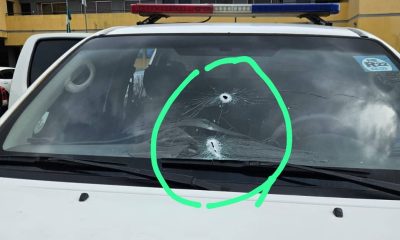
The Inspector-General of Police, Olatunji Disu, has approved the dismissal and prosecution of an Assistant Superintendent of Police, Nuhu Usman, over the killing of a suspect, Mene Ogidi, in Effurun, Delta State.

The decision followed the outcome of a review by the Force Disciplinary Committee, which examined the circumstances surrounding the incident and other related internal disciplinary procedures.

Addressing an emergency press conference in Abuja on Friday, the IGP said the officer, alongside members of his team found culpable in the matter, had been recommended for dismissal from the Nigeria Police Force.

According to him, the police panel established that the officer acted in gross violation of Force Order 237 and other extant regulations guiding the use of firearms.

He said, “The disciplinary committee recommended the immediate dismissal of ASP Usman, as well as other officers found culpable in the incident.

“Upon dismissal, all officers will be handed over to the appropriate judicial authorities to face criminal charges for unlawful homicide.”

Disu added that he had approved the recommendations and forwarded them to the Police Service Commission for ratification in line with due process.

The IGP reiterated that the Nigeria Police Force maintains zero tolerance for extrajudicial killings, abuse of power and all forms of misconduct.

He said, “No uniform confers the right to take life outside the provisions of the law. Any officer who violates this fundamental principle will face the full weight of disciplinary and legal consequences.”

Disu also extended condolences to the family of the deceased, 28-year-old Mene Ogidi, assuring them that the incident would not be treated lightly.

He said the Force remained committed to ensuring that justice was not only done but seen to be done in a manner that would reinforce public confidence and institutional accountability.

The IGP urged members of the public to remain calm and law-abiding, stressing that the police remained committed to discipline, professionalism and the protection of the rights and dignity of all citizens.

The killing of Ogidi has sparked outrage on social media. According to the police, the incident occurred on April 26, 2026, when operatives attached to Area Command Effurun acted on intelligence that the deceased had been apprehended while allegedly attempting to waybill a parcel containing a Beretta pistol loaded with four rounds of ammunition.

Continue Reading

Advertisement

Entertainment

Advertisement

MegaIcon Magazine Facebook Page

Advertisement

MEGAICON TV

Advertisement

Trending