Connect with us

News

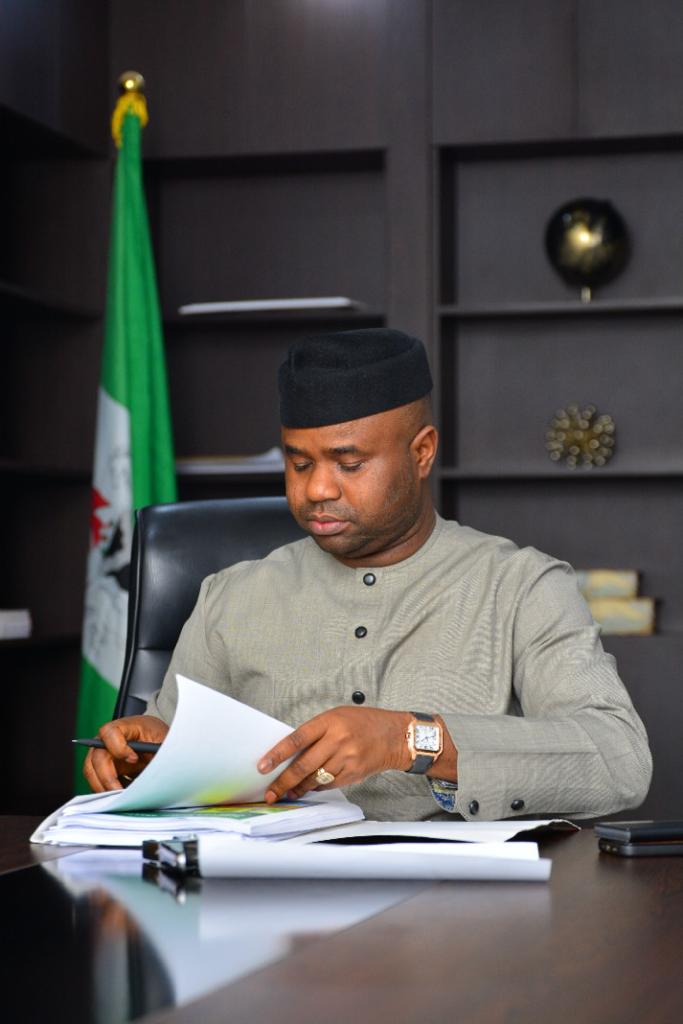
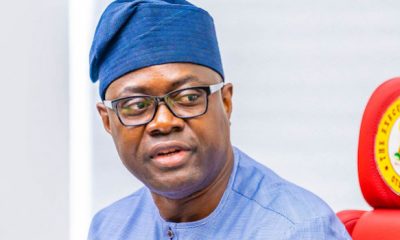
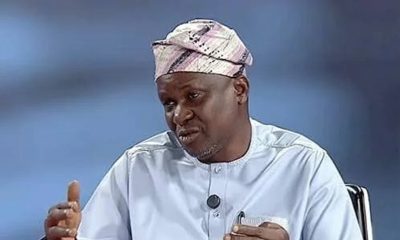
What You Should Know About President Tinubu’s New Special Adviser On Revenue, Zacch Adedeji   

Published

on

What You Should Know About President Tinubu’s New Special Adviser On Revenue, Zacch Adedeji

When Mr. Zacch Adedeji was appointed as the fifth substantive Executive Secretary of the National Sugar Development Council in March 2021 by President Muhammadu Buhari, stakeholders in the sugar sector hailed the appointment as one that would redefine the growth and development of the sugar industry.

He assumed leadership of the Council with a proven track record of over 15 years of hands-on executive experience (+16 years qualified chartered accountant) in strategy, accounting and financial management, financial analysis/reporting, internal controls, change management, and people management.

Before his appointment as the Sugar Council boss, Adedeji had demonstrated capacity for service delivery when he worked as one of the youngest Commissioners in Nigeria.

In 2011, barely seven months after his 33rd birthday, he was appointed Commissioner for Finance in Oyo State, becoming the youngest person to have occupied such a position. This was after he had attained a managerial position a few years after working diligently with an American multinational company-Procter and Gamble, (P & G). Until date, he is one of the most sought after in the state and beyond.

He is a First-Class graduate of Management and Accounting from the prestigious Obafemi Awolowo University, Ile-Ife and later bagged a Master of Science degree in Accounting from the same university. He is currently a doctoral student at the same university. His insatiable quest for knowledge took him to the famous Harvard Kennedy School of Government in the United States of America for an Executive Course in Economic Development.

Mr. Adedeji’s long sojourn in the private sector and a four-year stint as the Commissioner for Finance in Oyo State between 2011-2015 with unbeatable and unassailable performance records and achievements, have, undoubtedly, prepared him for the onerous task of providing the needed leadership in Nigeria’s drive to attain self-sufficiency in sugar production through the faithful implementation of the Nigeria Sugar Master Plan (NSMP).

He held a number of senior management positions while working at the Procter & Gamble Company (P&G), a renowned American multinational consumer goods corporation headquartered in Cincinnati, Ohio, United States of America with branches across several countries. He was General Accounting and Stewardship Manager between January 2004 to May 2006, where he led a cross-functional team to prepare and report financial statements regionally and globally through a consolidated data entry tool.

Mr. Adedeji’s culture of hard work and knack for professional excellence earned him a higher position at the P&G with his elevation as the Finance Leader-SAP (Systems Applications and Products) Implementation Project. He spearheaded the day-to-day evaluation and implementation of SAP Modules and also led a 15-person finance team to develop the internal processes for the roll-out of SAP West Africa in line with the projects prerequisites.

He later rose to the position of Corporate Finance Manager (West Africa) overseeing Treasury, Corporate/Affiliate Accounting, AP tax at the Procter and Gamble between August 2007 and May 2011.

While in the saddle as the Commissioner for Finance in Oyo State, he introduced a number of brilliant, forward-thinking, revenue-boosting and cost-saving reforms that pushed up the Internally Generated Revenue (IGR) of the state, plugged financial leakages, introduced the best financial practices and general financial turnaround among other innovations. Mr. Adedeji, a Fellow of Chartered Accountant (FCA), is also a member of the Institute of Chartered Accountants of Nigeria (ICAN) and member, Chartered Institute of Taxation of Nigeria (CITN).

Immediately he took over at NSDC, Zacch hit the ground running with a series of programmes to reposition the sugar sector as encapsulated in the Nigerian Sugar Master plan.

In driving the growth and development of the sector, he has within a space of 26 months implemented a series of programmes that have attracted huge investments into the sugar industry and positioned the sector as an avenue for job creation and poverty reduction.

In an interview, he described his over two-year journey at the NSDC as memorable, tasking and very rewarding.

Adedeji said, “The sugar sector is undoubtedly a very crucial sector to the Nigerian economy, especially in line with the economic diversification agenda of the President Muhammadu Buhari led Federal Government. More than anything else, we at the Council are ready and have put in place all the necessary policies, measures, programmes and strategies to maximally harness all the potentials in the sector in the overall interest of our dear country.

“So, the journey has been an eye-opening experience, particularly for me and members of my Management Team. We are determined to achieve our mandate as an agency of government, which is to regulate and develop the sugar sector for national prosperity.

“I inherited an organization that is both forward-thinking and very determined in the pursuit of its defined mandate and corporate objectives. I’m lucky to meet members of staff who are so dedicated, disciplined and committed to work, thereby making the whole environment friendlier and livelier than I thought.”

Comments

News

IGP Disu seeks NIPR partnership to boost public trust in police

Published

on

NIPR President, Dr Ike Neliaku, in a handshake with the Inspector-General of Police, Olatunji Disu, at the Force Headquarters in Abuja on Tuesday.

The Inspector-General of Police, IGP Olatunji Disu, has called for stronger collaboration between the Nigeria Police Force (NPF) and the Nigerian Institute of Public Relations (NIPR) to enhance public confidence in the police.

The IGP made the call on Tuesday when he received a delegation of the NIPR, led by its President and Chairman of Council, Dr Ike Neliaku, on a courtesy visit to the Force Headquarters, Abuja.

According to a statement issued by the Force Public Relations Officer, CSP Ani Iniedu, the IGP emphasised the importance of effective communication, professionalism, transparency and fairness in strengthening the relationship between the police and members of the public.

Disu noted that every police officer was an image-maker of the Force, adding that the conduct of personnel in their daily interactions with citizens had a direct impact on public perception of the police.

He said the Nigeria Police Force (NPF) remained committed to policing by consent and promoting a service-oriented policing culture built on professionalism, empathy, accountability and respect for human rights.

The IGP also sought the support of the NIPR in providing specialised communication training for police personnel and developing a coherent communication framework that would effectively communicate the sacrifices and contributions of police officers to public safety and national security.

Earlier, Neliaku commended the IGP for his professional accomplishments and briefed him on Nigeria’s hosting of the 2026 World Public Relations Forum and Africa Charter Forum.

The international event is scheduled to hold at the Transcorp Hilton, Abuja, and is expected to attract more than 3,000 delegates from 126 member countries of the Global Alliance for Public Relations.

The NIPR delegation also sought the support of the Nigeria Police Force in security planning and coverage for the event.

Neliaku further invited the IGP to serve as a keynote speaker at the forum and encouraged police officers to register and participate as delegates.

The delegation included the Secretary-General of the African Public Relations Association, Dr Omoniyi Ibietan; Dr Suleiman Haruna; Mrs Maryam Sanusi; Mrs Olubunmi Badejo; Commandant Olusola Odumosu; Chief Uzoma Oyegbadu; Chief Moji Makanjuola; Mr Stanley Ogadigo and other members of the institute.

Iniedu said the meeting reflected the commitment of the  Police Force to building productive partnerships with professional bodies and other stakeholders to strengthen public trust, enhance public safety and promote national security.


Continue Reading

News

Inflation drops marginally to 15.39% — NBS

Published

on

Nigeria’s headline inflation rate fell marginally to 15.39 per cent in August 2026 from 15.43 per cent in July, according to the National Bureau of Statistics.

The NBS disclosed this in its Consumer Price Index released on Tuesday, saying the latest figure represented a 0.04 percentage point decline from the previous month.

The statistics agency, however, reported a sharper decline in the month-on-month inflation rate, which dropped to 0.71 per cent in August from 1.57 per cent in July.

The month-on-month rate, according to the bureau, declined by 0.86 percentage points compared with the July figure.

The NBS explained that the development indicated that the rate at which the average price level increased in August was slower than that recorded in July.

The latest data also showed a significant moderation in food inflation, which stood at 19.57 per cent year-on-year in August.

The figure was substantially lower than the 25.30 per cent recorded in August 2025.

On a month-on-month basis, food inflation fell to 1.02 per cent in August from 5.56 per cent in July, representing a decline of 4.55 percentage points.

The NBS said the development showed that food prices were still rising, but at a slower rate during the month under review.

It attributed the decline largely to changes in the average prices of a number of food items, including palm oil, carrots, pepper, onions, cassava flour, beef, yam flour, water yam, melon (egusi), fresh ginger, fresh fish, Irish potatoes, wheat grain, frozen chicken and turkey meat.

At the state level, Adamawa recorded the highest year-on-year food inflation rate in August at 38.85 per cent.

It was followed by Zamfara with 37.96 per cent and Bayelsa with 36.20 per cent.

On the other hand, Borno recorded the lowest year-on-year food inflation rate at -4.04 per cent, followed by Jigawa at -0.23 per cent and Kebbi at 3.47 per cent.

The month-on-month figures presented a different picture, with Katsina recording the highest food inflation rate at 9.48 per cent.

Rivers and Osun followed with 8.86 per cent and 8.32 per cent respectively.

Taraba recorded the lowest month-on-month food inflation rate at -12.42 per cent, followed by Borno at -12.15 per cent and Bauchi at -8.88 per cent.

The latest figures indicate a moderation in the pace of price increases, particularly in the food sector, although the NBS data show that consumers continue to face varying price pressures across the states.

Continue Reading

News

Nigeria’s Oil Output Rises to 1.68m Barrels Per Day

Published

on

Nigeria’s crude oil and condensate production rose to 1.68 million barrels per day in August 2026, representing a 0.4 per cent increase from the 1.67 million barrels per day recorded in July.

The Nigerian Upstream Petroleum Regulatory Commission disclosed this in its latest production report released on Sunday.

Excluding condensate, the country produced an average of 1,500,190 barrels of crude oil per day in August, allowing Nigeria to meet its Organisation of Petroleum Exporting Countries quota for the fourth consecutive month.

Daily combined crude oil and condensate production ranged between 1.64 million barrels and 1.71 million barrels during the month under review.

A breakdown of production by terminals showed that Bonny Terminal recorded the highest output at 320.04 thousand barrels per day, followed by Forcados Terminal with 317.40 thousand barrels per day.

Qua Iboe Terminal recorded an average production of 171.72 thousand barrels per day, while Escravos Oil Terminal posted 131.71 thousand barrels per day.

Bonga ranked fifth among the highest-producing terminals, with an average output of 92.50 thousand barrels per day.

The NUPRC attributed the modest improvement in August production largely to the resolution of operational challenges involving the Single Buoy Mooring at the Erha field.

The commission said the challenges had adversely affected production in the preceding month.

“The restoration of normal evacuation and production operations at the asset contributed positively to overall production volumes during the period under review,” the commission’s spokesperson, Eniola Akinkuotu, said in a statement on Sunday.

The regulator added that production activities across most other producing assets remained relatively stable during the month.

“Production activities across most other producing assets remained relatively stable, with operators sustaining implementation measures aimed at optimising production efficiency, maintaining asset integrity, and minimising operational disruptions,” the statement said.

The latest figures indicate a continued improvement in Nigeria’s oil production, with the country maintaining its OPEC quota compliance for the fourth consecutive month.

Continue Reading

Trending

All Rights Reserved. Copyright © 2026 MegaIcon Magazine