Opinion
Time to kill NBC
Published
4 years agoon
The hypothesis that words, either written or spoken, are the worst enemy of despots and totalitarian regimes has been tested over time. Words are lethal, superior to mortars and armaments of war and penetrate deeper than bullets. Words are equally known to eventually precipitate the collapse of despotic regimes. It then stands to reason that dictators must wage war on words.
Merve Buyuksarac found out the above when it was almost too late. Crowned Miss Turkey in 2006, Merve’s brush with the imperial power of Recep Tayyip Erdogan began like a joke. On her Instagram page, assuming that poetic license shawled her from the biting proboscis of imperial power, she poured scum at what she referred to as high-level corruption and sleaze in Turkey. Couching this in very inviting poetic lines, Merve located Erdogan as the kingpin and epicentre of the rot. Pronto, as the Americans say, she was arrested and on May 31, given a suspended prison sentence of 14 months. Turkey frowns at such impudence of insulting the imperial office of the president. Such affront could net its violator up to four years imprisonment. More than 1,800 people have run afoul of this law.
Like Erdogan, Tunisian president from 1987 to 2011, Zine El Abidine Ben Ali, widely known as Ben Ali, was ruthless and diffident about the possibilities of free speech. He was dictatorial and repressive and his 23-year rule of Tunisia was signposted by manacles and barbs. Amnesty International, Freedom House and other international human rights groups voted Ali’s regime as terror personified and his regime authoritarian because he muzzled free speech. Under his watch, Tunisia became a police state and ranked 144th out of 173 countries in the world in repression of free speech.
Ben Ali abridged fundamental freedoms in a bid to sustain his authority. He did this by limiting the spread of information and suppressing citizens who wanted to speak out against his government’s multiplicity of violations of human rights. If you dared oppose Ali in the media, you were due for harsh consequences, the least being imprisonment. Apart from arbitrary jailing, he also generously deployed arbitrary disappearance of activists and journalists who had the temerity to speak against his demonic rule. The way he censured and censored free speech was through the control of information that could be channelled past the Tunisian borders. Smuggling books into Tunisia was the only way out for anyone who craved information. But you had to pay the very corrupt Tunisian police a heavy bribe. If for any reason, the police failed to play ball and you were caught, the smuggler was liable to a long jail sentence.
When foreign censure was becoming boring and jangling to him, Ben Ali decided that privatization of the Tunisian media would do the magic for his censorship of free speech. This was unbeknown to the rest of the world. The world then gave him unmerited applauses. The claps had not abated by the time he bared his fangs. He ensured that his daughter, Cyrine Ben-Ali, secured ownership of the only internet provider available in Tunisia. Of course, a welter of critical journalism outfits sprung up to take their destinies into their hands. One of such was Kalima. Kalima was a media group that published an online magazine and also had a radio outfit. In 2009, Ali shut Kalima down for being too critical of his government and family. In Tunisia, not only did journalists face heavy censure, but Emperor Ali also foisted a regime of heavy police harassment on news disseminators. The ones unlucky to get arrested by his goons were often mercilessly tortured.
On January 14, 2011, however, Ben Ali’s cup ran over. Like the proverbial offspring of a cobra that ensures its death, the Arab Spring revolution suddenly erupted, with Tunisia as its test case. On December 17, 2010, Mohamed Bouazizi, the later-to-be-famous street vendor, suddenly set himself on fire and his self-immolation became a catalyst for the Tunisian Revolution, christened Arab Spring, ultimately setting alight the whole of the Arab enclave. It became a vote of no confidence on autocratic leaders. Bouazizi’s wares had been confiscated, as well as being humiliated and harassed by a Tunisian municipal official and her aides. In the midst of this month-long protest, sensing that his time was up, Ali and his wife, Leila and their three children, fled to Saudi Arabia. He subsequently died on September 19, 2019, in exile.
Despots and totalitarian governments all over the world, including those who shawl themselves with veneers of democracy, cannot stand free speech. Their modern-day variant dictators are smart enough to know that a war on freedom of speech is a war against their existential survival.
It is why despots’ first priority in government is to impose restrictions on freedom of speech. This was what the Russian Bolsheviks did in 1917. The very day after the coup d’etat that ushered the regime into power, its first assignment was limiting freedom of speech by proclaiming the “Decree on the Press,” through which newspapers considered to be “sowing discord by libellous distortion of facts” were shut down. It was the same way that, a few months after its entry into power in 1933, the German national socialist government began attacks on books and the acquisition of knowledge. It burnt books in their millions, followed by an introduction of knee-jerk censorship by its ministry of propaganda. If you check the ratings of press freedom by international organizations such as Freedom House, communist states like Vietnam, Cuba, China, and North Korea and harsh despotic governments like those of Syria, Iran, Belarus, Sudan and Turkmenistan lead from the rear. To ensure their survival, totalitarian states pad themselves up with very strong propaganda machines with which they shore up an obvious dearth of free speech and credible information, all geared towards the manipulation of the people’s minds.
Asked what his disposition would be to free speech when he forcefully took over power from Shehu Shagari in the twilight of 1983, a dour General Muhammadu Buhari unapologetically proclaimed, like a tiger about to tear the flesh off an animal’s bones, that he would, with his bloodthirsty military decree incisors, peel off the flesh of free speech. He said this in an interview with the trio of Dele Giwa, Yakubu Mohammed and Ray Ekpu on February 6, 1984. For Nigerians to now expect a man who had such untainted disdain for free speech in 1984 to have purged himself of his self-constitutive baying for the blood of press freedom would be expecting a tiger to morph out of its bone-crushing tigritude.
Military despots like General Buhari knew that the Nigerian press has a very rich history, indeed, the Nigerian press is older than and predates the Nigerian state. With the installation of the first printing press in 1846 by the Presbyterian Church in Calabar and the founding, eight years after, precisely in 1854, of the Iwe Irohin by the Reverend Henry Townsend of the Church Missionary Society (CSM), the Nigeria which came out of the 1914 amalgamation was younger in historical antecedents than what is today the Nigerian press.
Since 1846, the press has been a formidable influence in the growth of Nigeria. Nnamdi Azikiwe, one of the patrons of the Nigerian press, who published the ubiquitous West African Pilot newspaper, while eulogizing the history of pioneers of Nigerian press, said their activities were “identical with the intellectual and material developments of Nigeria”, while also submitting that Nigeria produced a “galaxy of immortal journalists!” who played a unique part “in this corner of the earth in the great crusade for human freedom”.
Thereafter, for 35 years, the Nigerian press moved with Nigeria in its travails under the emergent military rule. Since 1999 when full-blown democracy returned to Nigeria, the press has had a wider horizon. There are more modern equipment and even a multiplicity of platforms for mass communication. The radio is no longer strictly controlled by the federal government as Radio Nigeria, a federally owned organization, nor is television strictly owned by the government. Social media has widened the space and made information dissemination available on the web of the wide world. The radio has today grown to become a very powerful octopus of the Nigerian media, with the multiplicity of radio ownership.
As said earlier, to run a regime which unpretentiously simulates the totalitarian government in China or Turkmenistan, in a 21st-century world that has a total aversion for despots, Buhari needed a character like Lai Mohammed. Adolf Hitler also needed Lai’s professional ancestor, German Nazi politician and Gauleiter of Berlin, Paul Joseph Goebbels. Goebbels had turned the spleen of the world in his official assignment as chief propagandist for the Nazi Party, as well as Reich minister of propaganda from 1933 to 1934. To be able to clone Goebbels effectively, Lai must have mopped up all essays on this unexampled propaganda warlord. Buhari must have been fascinated by Lai’s very mercurial showing as ACN and APC propaganda terror machine. Today, Lai has had an exemplary mastery of the game of divisiveness, crass governmental lies and artful manipulations.
The first thing Lai did upon being announced minister of information was to do a generational circum-guessing of what Goebbels would do if he were to be nominated by an Adolf in a 21st century Nigeria. Unlike Europe or Germany in the 1930s, the print media has lost its savour massively. The hugely pillaged Nigerian economy and the unfavourable global economic climate have largely affected the purchasing power of readers. Newsprint has risen to somewhere close to the stratosphere where only a few hands could reach. While the Nigerian print press recorded over a century of pervasive influence, respect and contributions to communication, there is no doubting the fact that its influence is waning. Some extremist views even submit that the newspaper press is nearing its extinction.
The advent of social media and internet usage has relegated hardcopy news to a secondary role, prompting navigation of the print press online and de-emphasis of printing. The internet then became a breeding ground for billions of citizens of the world and a borderless ground of opportunity to share opinions freely without let. It also became a floor for the exchange of personal and group communication. Like the biblical account of the devil that is roaring, seeking who to devour, despots also moved with citizens to the internet. It became a hunting ground for tyrants whose disdain for freedom of expression is as rotund as a bed bug that has amply sucked its victim’s blood.
All dictators needed to do was to transit from their old tactics of silencing dissidents and journalists into a new tactic of muzzling authors of tweets and posts that affront their quest to continue to lustre in their imperial fiefdom. The road to repression by totalitarians today is paved with bile and hatred for Facebook, Twitter and Instagram aficionados. However, the pestilence of dwindling believability of news received from the internet, through the orgy of fake news, has cast a huge pall on cyber information. For totalitarians and despots, the only alternative left is for them to activate their terror on the broadcast media of radio and television.
Broadcasting is unique and is growing in leaps and bounds as means of mass communication. While its effect is instantaneous and possesses tremendous power to penetrate a multiplicity of locales in a matter of minutes, this power is rivalled only by social media as means of communication. The power of the broadcast media is also in that, voices, videos and pictures can be transmitted to a large number of listeners and viewers who reside thousands of kilometres distance.
Broadcast media’s pervasive influence is a threat to despots and budding Haitian Papa and Baby Doc regimes like Buhari’s. So when towards the twilight of last week through its puppet, the National Broadcasting Commission (NBC), the Buhari government revoked the licenses of 52 broadcast media houses, it merely thought out of its despotic box. It was the same thing Tunisian Ben Ali did by appointing his daughter as sole licensee of internet broadcast.
Like all modern-day despots who fashion novel methods of abridging free speech, Buhari chose an innocuous, economic weapon to deal with press freedom and free speech. This tactic falls in line with what the Southeast Asian country of Myanmar did to poet Maung Saungkha in Burma. Writing on his Facebook post that he had a tattoo of Myint Swe, acting president of Myanmar, on his penis, Saungkha was arrested, tried and found guilty of defamation. He was then sentenced to a six-month jail term. It later turned out that the poet lied – he actually possessed no such tattoo! To the Swe puppet and the puppeteers, however, the mere fact that Saungkha made reference to such a “heinous” issue in an off-colour poem courted the imperial wrath of the state.
NBC’s ostensible grouse with the broadcast outfits was that “they failed to renew their licenses as required by law”, Saddled with the role of regulating the broadcast industry, NBC has acted more as a cudgel in the hands of Buhari’s Goebbels in its arbitrary imposition of fines on TV and radio stations over programmes that questioned the legitimacy of the Buhari government. After paying a huge sum for a licence, NBC again arbitrarily demands a 2.5% charge to be paid by these broadcast houses for every year of their operation. This is in an era where electricity supply is near zero and where diesel is sold for about N850 a litre. Nigerians have also queried the quixotic addition of the line, “in view of this development, the continued operation of the debtor stations is illegal and constitutes a threat to national security,” to reasons why NBC had to revoke the licences of the outfits.
Unknown to it, by shrinking the space against credible sources of information as represented by the 52 broadcast outfits which operated under the radar of the NBC, the Buhari government gave vent to a goblin it had repelled from mutating in the Nigerian space – the multiplicity of fake news. As opposed to its manual of operation as a broadcast regulator in its advisory capacity to the federal government, NBC has become the Rottweiler of the Buhari government. It is neither autonomous, independent nor does it shun interference. The over-politicization of the commission and how the so-called regulator has morphed into Lai Mohammed’s attack dog is a miserable mutation. By hacking those 52 broadcast media with its sledgehammer, Buhari has rendered many Nigerians jobless.
When you look at the Nigerian governmental firmament to find out where the repressive weapon of the Buhari government against free speech is hung, look no further: It is in NBC! The government does not want to hound individuals into prison as it did with Tunde Thompson and Nduka Irabor, via draconian Decree 4 of 1983 in its first coming. This has the tendency of attracting unnecessary attention and international odium. Its target now is institutional repression. That is why Nigerians must not take this arbitrary despotism cloaked in the shawl of economic generation for the federal government lying low. Our ultimate must be to see the end of NBC.
Dr. Adedayo, a Journalist, Columnist and Lawyer writes from Ibadan, Oyo State
You may like
Opinion
G-WAGON: Dare Adeleke, A Liar’ll Steal; Why’re You Desperate To Conceal The Truth? | Maroof Asudemade
Published
3 weeks agoon
November 6, 2026By
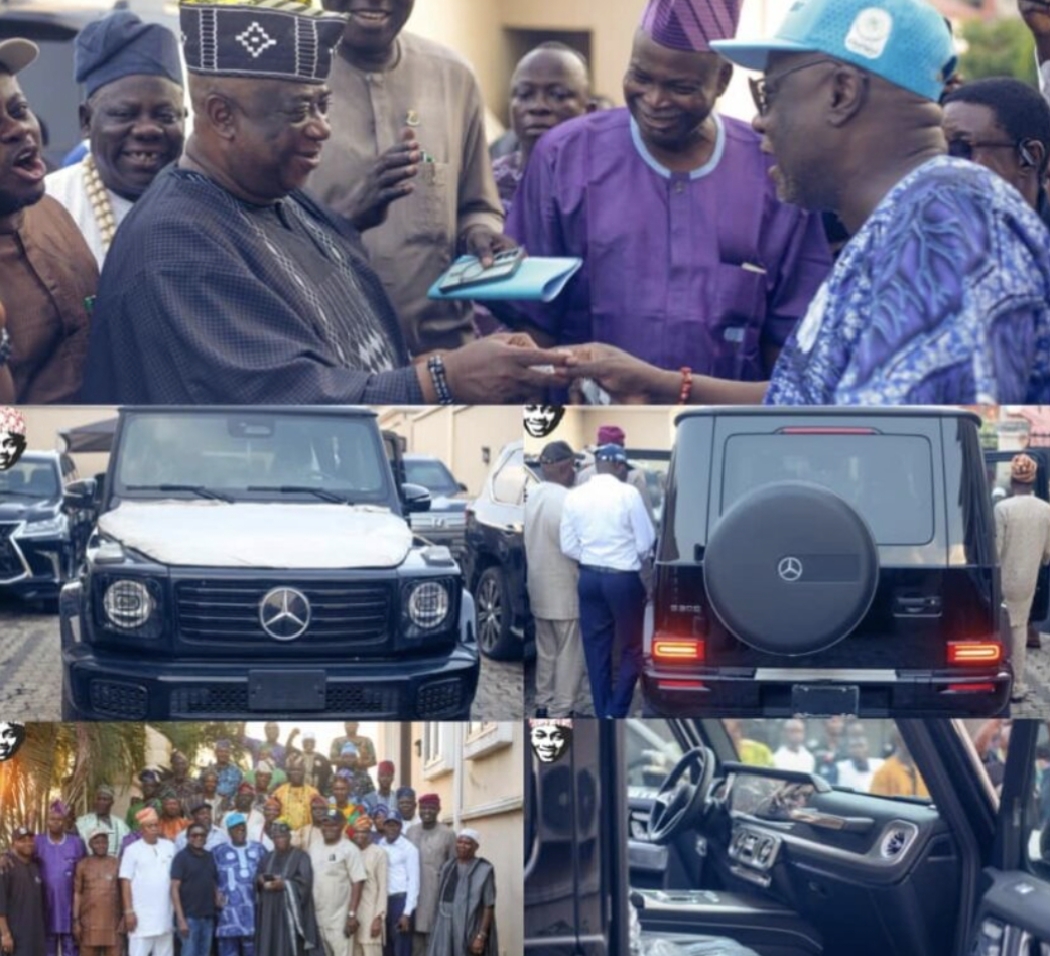
Mega IconI have read Dare Adeleke’s rather vacuous response to my article on Governor Seyi Makinde’s presentation of a brand-new Mercedes-Benz G-Wagon 500 to the President-General of the Central Council of Ibadan Indigenes (CCII), Barrister Sulaimon Ajeniyi Ajewole. Unfortunately, beneath the insults, name-calling on my person and his apparent eye-service desperation to impress his political benefactor, there is hardly any substance worth engaging.
Adeleke devoted considerable space to calling me a drunken, lowly writer. Yet, in all his verbal gymnastics, he conspicuously failed to address the fundamental questions raised in my article. Has Governor Makinde paid the statutory salaries and entitlements of the Olubadan of Ibadanland, Oba Rashidi Adewolu Ladoja, and the Alaafin of Oyo, Oba Akeem Owoade, since their ascension to the respective thrones? Has his administration provided them with official vehicles, as expected under the applicable government arrangements? These were the issues Adeleke ought to address not my personality.
If he had any credible answers to these questions, he would have provided them. Instead, he chose to exhibit his wrakness as an intellectually exhausted defender. He resorted to abusing the messenger when he couldn’t dismantle the message.
However, there is one particularly interesting aspect of Dare Adeleke’s response that deserves immediate correction. He lied that Governor Makinde spent N1 billion on the completion of the Olubadan Palace. Is he sure he’s not addicted to stealing as a liar? The financial contributions towards the completion of the palace came from multiple sources, including the 11 local governments in Ibadanland, each of which contributed N50 million, amounting to N550 million.
Governor Makinde contributed N250 million. The governor’s contribution was N250 million, not N1 billion! Why would Adeleke inflate the governor’s contribution from N250 million to N1 billion? Is he so desperate to manufacture an impressive record for his political principal that figures have become expendable? Or does he imagine that exaggerating the governor’s generosity will make the unanswered questions of ridiculing our royal fathers disappear?
The 11 local governments of Ibadanland have a responsibility towards the Olubadan institution. Their contributions towards the palace should not be presented as a personal sacrifice by Governor Makinde. They are contributions made by public institutions to an institution that belongs to the people of Ibadanland.
Even more disturbing is Adeleke’s inane argument that because Makinde contributed money towards completing the Olubadan Palace, the governor deserves appreciation rather than criticism. This argument betrays a shocking failure of Adeleke to distinguish between governmental responsibilities and statutory obligations.
Let us even assume, for the sake of argument, that Makinde personally spent N1 billion on the palace. How does constructing or completing a building discharge the government’s obligation to pay the statutory salaries and entitlements of the Olubadan and the Alaafin? How does a palace building become a substitute for official vehicles? Are these royal fathers supposed to live in beautiful palaces while their statutory entitlements remain unpaid?
By Adeleke’s ‘logic’, Governor Makinde could build a magnificent headquarters for the Nigeria Labour Congress and subsequently refuse to pay workers their salaries, expecting the labour movement to applaud him for his generosity. Would that be acceptable? Could the government substitute office buildings for workers’ wages? Dare Adeleke is glaringly a peripheral thinker!
A building is a capital project. Salaries and official entitlements are separate obligations. Since Adeleke knew he could not understand this elementary distinction, he should have smelt his argument before presenting it to the public. His defence is not only logically defective; it is intellectually sour.
More importantly, the completion of the Olubadan Palace was not the subject of my article. I did not dispute the governor’s contribution. I questioned the apparent contradiction between his extravagant generosity towards the CCII President-General and the allegations of neglect concerning the official entitlements of the Olubadan and the Alaafin. Adeleke has not answered that question. He has merely introduced an unrelated expenditure in an attempt to divert attention.
I have no objection to Governor Makinde giving G-Wagons, aeroplanes or even private jets to people he loves, provided he does so with his personal resources. He is entitled to his private generosity. But public accountability should not cease because a governor is generous to his friends, associates or political admirers. The issue is not his freedom to give birthday presents. It is his responsibility to discharge governmental obligations.
As for Adeleke’s unnecessary personal attacks, I refuse to dignify his descriptions of me as a drunken or lowly writer with an elaborate defence. Neither description reflects my personality, and neither alters the substance of my argument. He only needs to be aware that despite his opinion of me as a drunken, lowly writer, I am his better by far as a family man and a responsible father – two essential duties he has failed in. I will also not allow his inability to sustain an intelligent argument to dictate the level of my engagement.
I am upset with Dare Adeleke for not living up to his claim of belonging to Oja’ba. He lacks the intellectual discipline, street wisdom and argumentative dexterity traditionally associated with the historic Ibadan community. His response has demonstrated an unfortunate deficit in all three. “Dare ò m’èsì, ó tún gọ!”
There is also something deeply incongruous about Adeleke’s pretentious defence of Governor Makinde. Those familiar with the undercurrents of Oyo politics may find his public posturing rather amusing. He presents himself as an unquestioning defender of the governor, yet political hypocrisy has a way of concealing its true colours beneath an appearance of loyalty. If the human stomach were transparent like a calabash, perhaps the governor would have a clearer view of Dare Adeleke as the green snake lurking beneath the green grass.
But my concern remains the dignity of the Olubadan and Alaafin institutions, not Adeleke’s political theatrics. He has had an opportunity to answer straightforward questions. He failed. He has had an opportunity to correct the allegations with verifiable facts. He avoided them. Instead, he manufactured a N1 billion contribution, inflated the governor’s generosity and attempted to intimidate a critic with insults.
Let me therefore restate the questions he could not answer: Has Governor Makinde paid the statutory salaries and entitlements of the Olubadan and the Alaafin since their ascension? Has he provided them with their official vehicles in accordance with applicable government policy? If yes, let Adeleke produce the evidence. If no, let him explain why.
A G-Wagon cannot answer questions about unpaid salaries. A palace cannot substitute for statutory entitlements. And N1 billion in political propaganda cannot turn N250 million into N1 billion. Dare Adeleke may choose to defend Makinde with insults, exaggerations and emotional outbursts. I will continue to interrogate the administration with facts, logic and questions that public officeholders owe the people answers to.
The dignity of the Olubadan and the Alaafin is far more important than Adeleke’s desperate attempt to earn political applause. And no amount of name-calling will make me abandon the responsibility of holding those in power accountable.
Opinion
OYO AHEAD: Senator Alli Blueprint for Oyo Renewal | Muji Armstrong-Bello
Published
3 weeks agoon
November 6, 2026By
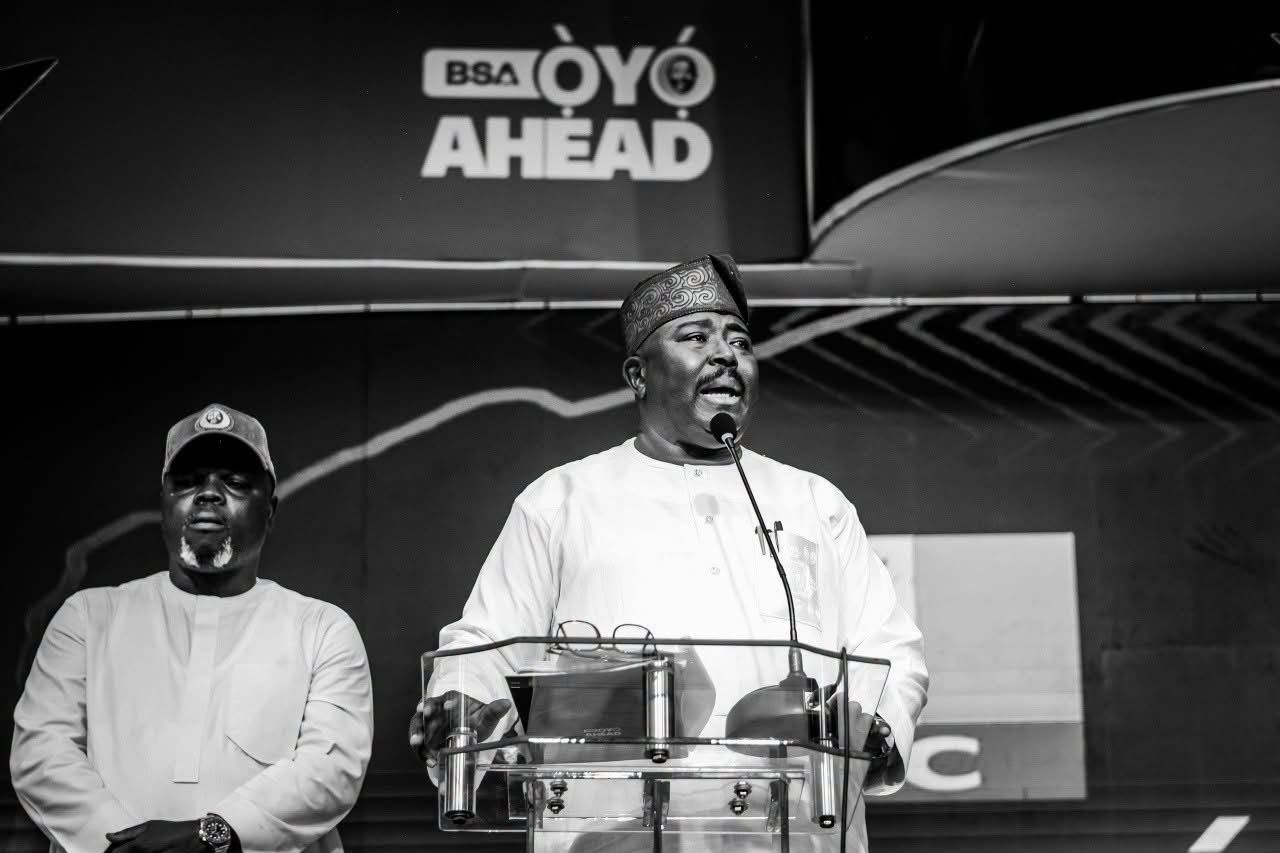
Mega IconThe unveiling of Senator Sharafadeen Abiodun Alli’s OYO AHEAD manifesto has introduced a new dimension to the 2027 Oyo State governorship conversation. Beyond the usual campaign promises, the document presents an attempt to define not just what a government intends to do, but how it proposes to govern. Its central message is that Oyo State needs a development model built around grassroots empowerment, economic productivity, institutional accountability and measurable performance.
What makes the manifesto politically significant is its attempt to connect the candidate’s personal political journey with a proposed programme of government. From his experience as Chairman of Ibadan North Local Government to his service as Secretary to the State Government, Chief of Staff, Senator and Chairman of Odu’a Investment Company, Alli presents himself as a politician whose experience cuts across grassroots administration, constitutional politics, legislative representation and business management. These experiences provide a solid foundation for effective governance and reinforce the expectation that his proposed agenda can be translated into tangible results for the people of Oyo State.
The first pillar, local government autonomy, may well become the most politically consequential. By promising transparent access to council allocations, monthly funding arrangements and greater freedom for local governments to address community needs, BSA is placing grassroots governance at the centre of his development philosophy. The message is unmistakable: democracy must be felt beyond the Government House, and the dividends of government must reach the communities where ordinary people live and work.
His infrastructure proposals also deserve attention. Rather than concentrating exclusively on new construction, the manifesto promises an audit of unfinished roads, published completion schedules, farm access roads, improved electricity, potable water and affordable housing. This suggests an understanding that infrastructure should be judged by its economic and social usefulness, not simply by the political visibility of projects.
In healthcare, the proposed Oyo Care Guarantee for infants, pregnant women and residents above 70 is a significant social intervention. The commitment to strengthen primary healthcare, address shortages of medical personnel and expand health insurance coverage recognises that healthcare is not a privilege reserved for those who can afford it. With the right funding arrangements, adequate staffing and firm institutional commitment, these promises can be translated into a sustainable healthcare system that delivers tangible benefits to the people of Oyo State.
Education is another area where the manifesto attempts to reconnect Oyo with its historic reputation as a pioneer of educational development. Reducing classroom congestion, repairing schools, expanding scholarships, establishing skills centres and linking graduates to employment are proposals that speak directly to the future of the state’s young population. These interventions are designed to translate educational investment into measurable improvements in learning outcomes, practical skills and employment opportunities for the next generation.
Perhaps the most compelling economic proposition is the commitment to move Oyob beyond an economy of consumption towards one of production, investment and job creation. The proposed industrial parks, revival of the Oluyole Free Trade Zone, ₦10 billion Youth Fund, digital skills programme and support for small businesses suggest an administration seeking to make employment creation a central responsibility of government. The ₦150 billion annual internally generated revenue target reflects an ambitious vision of economic growth, driven by expanded business activity, increased investment, efficient revenue administration and the elimination of financial leakages, while preserving a favourable environment for citizens and businesses to prosper.
Agriculture gives the manifesto another important regional dimension. Oyo possesses considerable agricultural potential, particularly across Oke-Ogun, Ogbomoso and Ibarapa. The proposals for processing facilities, revived farm settlements, mechanisation, storage, agricultural insurance and export promotion recognise that farmers cannot prosper merely by producing crops; they must also have access to markets, processing facilities and value chains. If properly executed, this could transform agriculture from subsistence activity into a major engine of industrial growth.
Security, appropriately, is treated as the foundation upon which every other pillar depends. The proposed strengthening of community security networks, protection and insurance for hunters and vigilantes, improved surveillance and farmer-herder mediation reflect the reality that development cannot flourish where fear controls access to farms, schools and businesses. The accompanying commitment to public disclosure of projects, contractors and costs also reinforces the argument that security and accountability are inseparable responsibilities of government.
One particularly striking feature is the candidate’s personal commitment to publish quarterly performance reports and to decline a second-term request if Oyo State is not measurably better by the end of his first tenure. This is a bold political undertaking. It shifts the conversation from the traditional entitlement of incumbency to the obligation of performance. This commitment further underscores the importance of measurable performance targets, transparent reporting and regular public assessments as the foundation for accountable and results-driven governance.
The strength of OYO AHEAD lies not only in the breadth of its promises but also in the opportunity to translate them into a practical development programme. The proposed revenue expansion, healthcare guarantee, youth and women empowerment funds, educational reforms and infrastructure projects provide an ambitious agenda for the state. With proper financial planning, sound legal frameworks, effective coordination and measurable implementation targets, these proposals can form the foundation of a purposeful and results-oriented administration.
This places an important responsibility on the OYO AHEAD Steering Committee. Beyond campaign mobilisation and public presentation, the Committee must sustain the technical work required to support the manifesto with reliable data, realistic costing, legal guidance, implementation timelines and measurable outcomes. The depth of this preparation will be central to demonstrating that OYO AHEAD is not merely a collection of campaign promises, but a carefully considered programme for governing Oyo State.
As the 2027 governorship election approaches, the debate should increasingly focus on the future of Oyo State: the governance philosophy, experience, policy direction and preparedness of those seeking the people’s mandate. Political alliances and personalities will naturally shape the contest, but the enduring question is which proposals offer a clear and practical pathway to development, prosperity and accountable leadership.
OYO AHEAD has placed such a pathway before the people of Oyo State. Its seven pillars provide a framework for addressing the state’s development priorities, while its emphasis on grassroots governance, economic productivity, human capital development and accountability speaks to the need for a new direction. With his political experience, administrative background and familiarity with the challenges of Oyo State, Senator Sharafadeen Abiodun Alli is well positioned to lead the effort to translate this blueprint into meaningful progress. The promise of OYO AHEAD is renewal; its ultimate measure will be the transformation it delivers to the lives of the people.
Prince Armstrong-Bello, JP. Akogun Aliiwo Ibadanland, Author of “Yoruba Leadership in Diaspora: Equity Justice and Tradition” is a Political Communication Strategist and Public Affairs Analyst
Opinion
OYO 2027: MAKINDE EATS SOUR GRAPES, ADEKANMBI’S TEETH MUST BE SET ON EDGE
Published
3 weeks agoon
November 4, 2026The confusion within the ranks of the Allied Peoples Movement (APM) is becoming increasingly difficult to describe.
The political empire built by Governor Seyi Makinde on what critics describe as lies, betrayals, broken promises and greed appears to be crumbling by the day.
Indeed, Makinde and his APM loyalists are providing an endless source of amusement these days.
Virtually everyone who leaves the Makinde administration is suddenly dismissed as a “paperweight” by the party’s social media attack dogs.
I have often wondered whether these fellows are unaware of the wisdom behind the Yoruba belief that even cotton wool, when gathered in sufficient quantities, can become a load too heavy for one person to carry.
As the Yoruba proverb puts it: Eni ní òwú ò t’ẹrù; ìwọ̀nba tó fẹ́ fi tan iná ló mú.
You keep losing prominent politicians and influential party stakeholders, yet you dismiss them as political nonentities. But which heavyweight has the power to cast more than one vote for a preferred candidate?
I am certain that even Bimbo Adekanmbi must be wondering how things deteriorated so badly for the APM.
Before his emergence as Governor Makinde’s anointed governorship candidate was made public, I granted an interview on a television station during which I openly predicted that Adekanmbi would get the governor’s endorsement and that his choice as successor would spell trouble for both men.
To one another, both men have become potential political albatrosses. Unfortunately, Governor Makinde’s ego appears to have blinded him to realities beyond his immediate political calculations.
I am particularly surprised that Adekanmbi failed to recognise that he was walking into a political trap by accepting Makinde’s endorsement.
Greed, indeed, can be a dangerous disease. In Adekanmbi’s position, no discerning politician would have ignored the number of political enemies Governor Makinde had accumulated during his seven years in office.
It follows, therefore, that Adekanmbi would inevitably inherit many of those political liabilities. Sadly, he either failed to appreciate the implications or simply chose to overlook the consequences.
By the time Governor Makinde, or perhaps Seye Famojuro, settled for Adekanmbi, the governor was already embroiled in disagreements with prominent political figures, including former Deputy National Chairman of the PDP, Ambassador Taofeek Oladejo Arapaja, Alhaji Bisi Olopoeyan and several first-class traditional rulers in Oyo State.
He had also fallen out with several influential political figures, including Senator Hosea Agboola, Alhaji Razak Gbadegesin, former Deputy Governor Barrister Gbolarunmi Hazeem, Chief Mrs Jumoke Akinjide, Hon. Mulikat Adeola Akande, former Deputy Governor Engr. Rauf Aderemi Olaniyan, Prince Diran Odeyemi, former Ekiti State Governor Ayodele Fayose, former Rivers State Governor Nyesom Wike and even President Bola Ahmed Tinubu.
Beyond these strained relationships, several stakeholders within the Makinde political camp were already uncomfortable with the process that produced Adekanmbi as the APM governorship candidate.
There were also contentious discussions about whether Governor Makinde should be succeeded by a Christian. Equally troubling to some stakeholders was the question of whether it made political sense for Makinde to present Adekanmbi as his preferred successor when both men hail from Ona-Ara Local Government Area.
At the time, agitations were mounting over Governor Makinde’s alleged failure to comply with the Supreme Court judgment granting financial autonomy to local governments.
Other contentious issues included the controversial Circular Road project, the sale of government assets and the proposed transfer of Oyo State farm settlements to estate developers.
The state’s debt profile, which has remained a subject of public concern and debate, was another issue that had yet to be satisfactorily addressed.
All these issues were already in the public domain before Adekanmbi accepted the offer to become Makinde’s anointed candidate.
One is therefore compelled to ask: what could have persuaded Adekanmbi to accept such a politically dangerous offer?
I can only think of one reason: greed.
When Governor Makinde claimed that he had advised Adekanmbi not to inherit his enemies, he was being economical with the truth.
The reality is that those political liabilities became Adekanmbi’s the moment he accepted Makinde’s endorsement.
The governor knows that he is carrying a political baggage that could weigh heavily on his preferred successor. Yet, he appears unwilling to be held accountable for the political consequences of his own administration.
Unfortunately for both men, even Adekanmbi’s campaign slogan tells a story of its own: “Omi Tuntun 3.0”.
How, then, does he intend to separate himself from the “Omi Tuntun” administration and the controversies surrounding it?
Governor Makinde has never hidden his discomfort with genuine local government autonomy. Adekanmbi, by his posture, appears prepared to sustain the same political template, which critics blame for weakening the 33 local government councils in the state.
On virtually every issue over which the people of Oyo State have expressed concern, Adekanmbi appears to be offering continuity rather than a departure from the policies of the present administration.
He has failed to condemn the controversy surrounding the proposed transfer of the Ogbomoso Farm Settlement to estate developers, despite protests by residents of the ancient town.
He has equally remained silent over the controversy surrounding the administration’s reported moves involving the Saki Farm Settlement.
He also appears untroubled by the reported transfer of the 4,000-hectare Eruwa Farm Settlement to investors, whose whereabouts and activities have, according to critics, remained unclear two years after the arrangement.
Indeed, Adekanmbi appears not to appreciate the extent of the challenges facing the state. For instance, Oyo State is said to be short of six general hospitals if the benchmark of one general hospital per local government area is adopted.
Yet, when Senator Sharafadeen Abiodun Alli promised in his manifesto to address this deficit, APM spokespersons reportedly went on the offensive, describing the manifesto as “lacking in originality”.
Governor Makinde has been in office for more than seven years. During this period, his administration has received ecological funds on several occasions.
The question, therefore, is simple: what has happened to those funds?
There are concerns over the utilisation and accountability of the ecological funds received by the state. The governor owes the people a clear explanation of how these resources have been deployed.
There are also questions surrounding the proposed upgrade of the Alakia Airport, a project for which Adekanmbi himself was appointed by Governor Makinde to head a committee.
I have been reliably informed that the contract sum for the airport upgrade was reportedly reviewed upwards from its original figure of over N50 billion to well above N150 billion.
I have raised this question before, but I am yet to hear Adekanmbi offer a convincing explanation or response to the allegation.
Similarly, Governor Makinde reportedly approved more than N60 billion for the renovation of the Government House, an expenditure that attracted public criticism.
As of today, the visible works include the construction of a hall, the painting of the Government House mosque and church, and the replacement of tiles in both places of worship.
I challenge Governor Makinde to tell the people of Oyo State how much of the more than N60 billion reportedly approved for the renovation has actually been released and expended.
Beyond that, the governor should invite members of the press to conduct an independent assessment of the work carried out so far. The people deserve transparency and accountability, not unanswered questions.
The state government’s performance in education is another area that demands urgent attention.
Oyo State’s performance in WAEC and NECO examinations has continued to attract concern, particularly when compared with the performance of other states, including neighbouring Osun, which has been celebrated for its fifth-place position in a recent examination ranking.
Senator Sharafadeen Abiodun Alli has argued that the state must return to an educational system that makes teaching and learning more conducive. One of his proposals is a 30-pupils-per-classroom policy.
But rather than engage constructively with the proposal, APM voices have dismissed its feasibility.
Adekanmbi, as the party’s governorship candidate, has also failed to offer a clear departure from the present arrangement, under which many public primary and secondary school classrooms remain severely overcrowded and unconducive to effective learning.
Oyo State cannot afford another administration that merely promises continuity without addressing the shortcomings of the present one.
The people deserve better, and they now have an alternative in Senator Sharafadeen Abiodun Alli.
Governor Makinde has eaten sour grapes. Unfortunately, Bimbo Adekanmbi appears destined to bear the consequences.
His teeth, indeed, must be set on edge.

MEGAICON TV
2027: SSACO Calls Makinde, Adekanmbi ‘Ebola Plagues’ Over Asset Grabbing, LG Paralysis
Ebola Scare: APC Accuses Makinde of Plot to Siphon Oyo Funds
Oseni rallies APC leaders for unity, backs reconciliation in Ibadan North
Trending
-
Education4 weeks agoOseni Charges Nigerian Graduates to Prioritise Character, Excellence
-
Politics4 weeks agoYou Can’t Claim APC, Promote Opposition – Oyo City Boy Director, Onireti, Warns Against Selective Allegiance
-
News3 weeks agoOyo APC Senate Candidate, Oseni, Gifts Cars to Party Leaders, Sarkin Hausawa {Photos}
-
Opinion3 weeks agoWinning Election Before the Ballot: How Oseni Is Silencing Opponents with 500KVA Transformers