Connect with us

Education

A manifesto to save Nigeria’s public university

Published

on

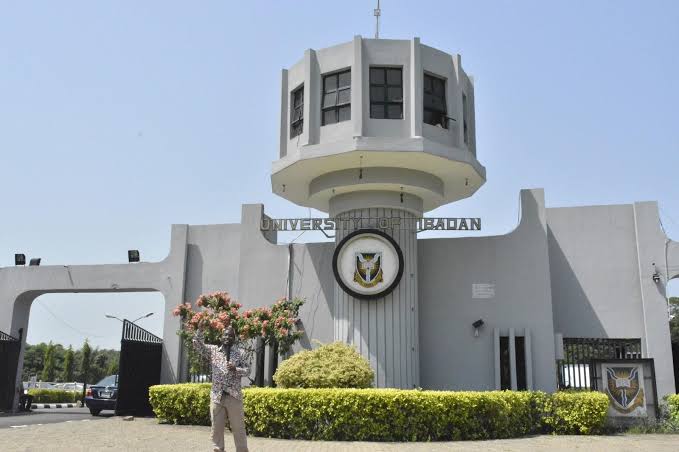
File photo of the University of Ibadan Entrance

The industrial dispute between the Academic Staff Union of Universities (ASUU) and the Federal Government of Nigeria (FGN) have dominated the media for many months. Throughout, ASUU leaders stated and restated the position of their members, often informing the public of the Memorandum of Understanding to Memorandum of Action – going back to 2009 – leading to the current demands. The representatives of the FGN have managed to perfect the act of “majoring-in-the-minor.”  They centre one issue this month and another the next. Their narrative villainises university lecturers as greedy, uncompassionate and unpatriotic.

While the dispute escalates, familiar blame trading and finger-pointing have resurfaced. Too many and confusing information and un/informed opinions are circulating. ASUU-greed experts and professional trolls with a massive following are packaging and disseminating decontextualised data and narratives on social media platforms, especially on Twitter.

University students and prospective ones are angry, depressed and anxious. They are also divided, unsure how to rescue themselves from the educational institution that has put their lives on hold. Parents’ voices seem drowned out or lost amid incoherence in the public space.

The Nigerian academic diaspora has been an active voice as well. While divided in their opinion, some loudest voices in this group are too obsessed with comparison: “In the US…”, “In the UK…”, “In America…”, “In Europe…”, “In Canada…”, “In South …” etc. Usually, these diaspora intellectuals ignore their privilege and the systemic nature of the crisis. They “talk at” striking lecturers as “greedy and lazy” people who do not contribute to national and global knowledge, innovation and progress. In this talk, Nigerian diaspora intellectuals suppressed why they left, stayed abroad, and couldn’t return to Nigeria as lecturers.

ASUU is persistent and determined to keep fighting. As a young researcher employed in the country’s foremost university, however, I sometimes ask myself: “why bother?” High-ranking professors in Nigerian universities are already encouraging their best students to leave and never look back. Many who returned to Nigeria after studying abroad in the 1970s and 1980s quickly tell their regrets to young faculty on department corridors. Some of the finest thinkers trained in the 1990s and 2000s did not stay long enough to have their spirits crushed. More so, from 2010 to date, young PhDs who entered the system are pursuing needless second PhDs abroad to escape the fast-crumbling university system. So, “why bother?”

I concluded that some people stayed back to train the next generation of Nigerians. They stayed even if it meant struggling through their careers to ensure the son and daughters of ordinary people had access to quality and globally competitive university education. Their struggle over the years is not just to save a critical social institution; they stayed to rescue the future and soul of a society. Their struggle is right. Their struggle is just. Their struggle is patriotic.

Again, ASUU is persistent and determined to keep fighting. Still, this struggle is not and cannot be a struggle for ASUU and allied organisations alone.

We must rally to build a unified voice against common enemies of our collective future: those who understand the depth of the crisis and choose to play politics. The common enemies comprise the state and the intelligent and crafty stooges, political appointees and mouthpieces who know but pretend and speak vacuously. They are the people who feel young people should be lined-up indefinitely at the altar of sacrifice for the benefit of the few. They are comfortable proposing that your early-career lecturer with a PhD in a specialised field resign from the university instead of complaining that ₦137,000 monthly take home – in 2022 – is not enough to take them home. They are the ones criminalising patriotism, faking elitism and truncating national progress.

Those at the top of university leadership should speak up and speak out. Your silence is complicity. The Deputy Vice Chancellor of the University of Ibadan has led the way by presenting a passionate and frank assessment of our bleeding ivory towers, the first at the highest level of Nigerian university leadership in a long time not hidden behind political-speak of “Council of VCs.” More leaders should speak up, keeping in mind that their position will end, and they will return to the rank and file of the demeaned and precarised workforce. You no longer have the luxury of playing the “bewildered generation.” It is no longer safe for you to ask, “How did we get here?”. When writing the letters, make a patriotic and sincere case for “Why we must leave here and move forward.” In the note, let the country know what you and your Bursars go through in Abuja.

Also, professors must resist the urge to keep super-dry skeletons standing. They need to help the Nigerian Universities Commission (NUC) to scrap courses lacking the required human resources by refusing to help glorified secondary schools disguise as universities. Those privileged as heads of government agencies should not sabotage their colleagues. If you cannot talk because your mouth is full, do not be a barrier to those trying to fight for a better system. I consider these simple steps without ignoring that they will come at a personal cost to you.

Statesmen and stateswomen should lend a voice. Before your departure, talk to your replacements. Remind them how we started as a nation and how far gone we are since making the wrong turn. Not tomorrow, but right now.

Politicians should know that there is more for all if we have a society that works. In a society where knowledge is valued, nurtured and accessible to all irrespective of their social status, there will be prosperity that will benefit all equitably.

Parents and students have important roles to play in all of this. As a parent, you are probably tired that your wards are not making that transition to adulthood as quickly as you hope. But delay is not denial. By seeing this struggle as your own and supporting it openly in whatever way you can, you are helping your wards have a solid foundation for their future. Your support is needed to ensure that the real bullies fail in their ploy to further impoverish university teachers. Remember also that your children will have children too, and they may not be able to japa.

To young Nigerians, students and those planning to go to university especially, your voice is more critical today than ever. By their advice that you sue ASUU, a suggestion unlikely to yield any meaningful result for you, they ask you to excuse their incompetence and mischief. It is shameful that they are demanding more sacrifices from you now. Your grandparents sacrificed. Your parents sacrificed so much. You have been making sacrifices since you were born in Nigeria as a Nigerian. Refuse to be the sacrificial goat. Secure your future.

Nigerian diaspora intellectuals should appreciate the delicate situation of university lecturers. As many of you as possible should speak truth to power and resist the urge to villainise ASUU. Take time to talk to your former colleagues and friends in Nigerian universities. Ask them questions, listen and reflect on where you are and where you could have been, and then speak based on conviction and truth. By all means, criticise ASUU, but ask the stooges and mouthpieces of the state on social media what they are gaining by demeaning, demoralising and degrading university lecturers.

To end, we should have an honest and public conversation about what we want for ourselves as a society and the role we want the university to play in it. In doing this, we must also ask what a fair working environment is to make the university play that role, given the required quality and cost of talents. This is how we can start the journey toward saving public universities in Nigeria. However, the journey must start today, now – not tomorrow.


Dr Adebayo is a Research Fellow at the Institution of African Studies, University of Ibadan, Nigeria

Comments

Education

Ogun govt.  moves to fortify schools, unveils multi-sector security steering committee

Published

on

The Ogun State Government has inaugurated a multi-sectoral Safe Schools Steering Committee as part of renewed efforts to strengthen security architecture across schools in the state amid rising concerns over the safety of pupils, students, and teachers.

The committee is expected to drive the formulation and implementation of policies, strategies, and intervention programmes aimed at preventing security breaches, enhancing emergency preparedness, and ensuring that schools remain safe, stable, and conducive for learning.

Inaugurating the committee in Abeokuta, the state capital, the Commissioner for Education, Science and Technology, Prof. Abayomi Arigbabu, described the initiative as a deliberate and strategic response to emerging security challenges in the education sector.

He said the composition of the committee reflected a careful selection of professionals drawn from relevant sectors, based on competence, experience, and institutional responsibility.

According to him, the government recognises that schools can no longer be treated as isolated institutions, but must be protected through coordinated action involving government agencies, security operatives, communities, and development partners.

“The inauguration of the Ogun State Safe Schools Steering Committee is a strategic response aimed at strengthening collaboration among government agencies, security services, communities, development partners and all stakeholders in the education sector,” Arigbabu said.

He stressed that the task before the committee was urgent and non-negotiable, warning that the future of children in the state depended on the quality and timeliness of their decisions.

“As members of this committee, your selection was based on expertise, experience, and institutional responsibilities. This task is both important and urgent. The future of our children depends on the effectiveness of the decisions and actions we take today,” he said.

Arigbabu urged members to discharge their duties with “dedication, professionalism, integrity and a strong sense of purpose,” adding that every school in Ogun State must remain a place of safety, hope, and opportunity rather than fear.

“I therefore charge you to approach this assignment with dedication, professionalism, integrity, and a strong sense of purpose. Let us work together to ensure that every school in Ogun State remains a place of safety, learning, hope, and opportunity,” he added.

Other stakeholders at the inauguration reinforced the need for collective responsibility, stressing that school safety cannot rest on government alone but requires sustained collaboration from all segments of society.

They noted that communities, parents, security agencies, and development partners must work in synergy to safeguard learning environments and protect the future of children.

“As we inaugurate this committee today, let us recognise that school safety is not the responsibility of government alone. It is a shared responsibility requiring partnership, vigilance, innovation, and collective action,” one of the stakeholders said.

“The decisions we take and the commitment we make here today will contribute significantly to shaping the future of thousands of learners across our state,” the stakeholder added.

Continue Reading

Education

Oyo teachers begin indefinite strike over abducted colleagues, pupils

Published

on

The Nigeria Union of Teachers (NUT), Oyo State Wing, has directed all public primary and secondary school teachers in the state to embark on an indefinite strike over the continued abduction of teachers and pupils.

The strike, which takes effect from Monday, June 1, 2026, is expected to ground academic activities across public schools in the state.

The union said the action became imperative following what it described as growing insecurity in schools and the prolonged captivity of abducted teachers and pupils whose whereabouts remain unknown.

In a statement jointly signed by the Chairman of the Oyo State Wing of the NUT, Hassan Fatai, and the Secretary, Salami Olukayode, the union expressed concerns over the psychological impact of the incidents on teachers, learners and parents.

According to the union, the lingering abduction cases have created fear and anxiety among teachers, weakened confidence in the safety of schools and discouraged many parents from sending their children to school.

The statement read in part, “The Nigeria Union of Teachers, Oyo State Wing, hereby directs all public primary and secondary school teachers across the state to commence an indefinite strike action effective from Monday, June 1, 2026, pending urgent and decisive action by relevant authorities on the abduction of teachers and pupils.”

The union explained that the industrial action was aimed at compelling the government and security agencies to intensify efforts toward the immediate and unconditional release of the victims.

It urged teachers across the state to comply fully with the directive, remain peaceful and law-abiding, and prioritise their safety while staying away from classrooms during the strike.

The NUT also expressed solidarity with the abducted victims and their families, assuring that it would continue to engage relevant authorities until the victims were safely rescued.

The union reaffirmed its commitment to the welfare, safety and security of teachers and pupils, stressing that the protection of school communities remained non-negotiable.

Continue Reading

Education

2.24m candidates participate in 2026 UTME, police assure security

Published

on

No fewer than 2,243,816 candidates on Thursday commenced the 2026 Unified Tertiary Matriculation Examination conducted by the Joint Admissions and Matriculation Board across accredited Computer-Based Test centres nationwide.

The figure represents a 10.5 per cent increase from the 2.03 million candidates recorded in 2025.

The examination, which began on April 16, is being conducted in about 1,000 CBT centres nationwide, with candidates scheduled in four daily sessions to reduce congestion and improve verification processes.

The board said it had deployed biometric verification and real-time monitoring systems to safeguard the integrity of the exercise, noting that candidates whose biometric details could not be authenticated would be rescheduled.

Candidates were advised to print their examination slips from the JAMB portal to confirm their schedules and arrive at least one hour before their examination time.

Under the revised timetable, first-session candidates are expected at 7:00 a.m., followed by 9:00 a.m. for the second session, 11:00 a.m. for the third session, and 2:00 p.m. for the final session.

JAMB disclosed that Lagos State recorded the highest number of registered candidates with 381,814, followed by Ogun with 137,156 and Oyo with 122,662. Kaduna recorded 103,498 candidates, while the Federal Capital Territory had 102,961.

Other states include Rivers with 105,584 candidates and Kano with 83,167, while Borno and Zamfara recorded the lowest figures with 13,483 and 14,861 candidates respectively.

Outside Nigeria, participation remained low, with Côte d’Ivoire recording 32 candidates, followed by Equatorial Guinea with 16, Burkina Faso with 14, and the United Kingdom with 12 candidates.

As part of efforts to enhance efficiency, the board increased the number of CBT centres but delisted 23 centres across several states, including Lagos, Ogun, Oyo, Delta, Edo, Plateau and the Federal Capital Territory, over technical deficiencies observed during the mock examination.

The board said the action was necessary to maintain operational standards and ensure the credibility of the examination process.

Meanwhile, the Nigeria Police Force dismissed reports of insecurity at some centres, describing such claims as unfounded.

The police said it had deployed additional personnel, including patrol teams, perimeter surveillance units and rapid response squads, to ensure the safety of candidates nationwide.

The force added that it was collaborating with other security agencies to monitor the exercise and respond swiftly to any threats.

It assured parents and candidates of adequate security, urging candidates to comply with examination guidelines, arrive early and report suspicious activities.

The police also advised the public to disregard unverified information on social media and rely on official communication channels.

JAMB reiterated its commitment to transparency, warning candidates against accepting admissions outside its Central Admissions Processing System.
It stressed that any admission conducted outside CAPS would be considered illegal and would not be recognised.

Continue Reading

Advertisement

Entertainment

Advertisement

MegaIcon Magazine Facebook Page

Advertisement

MEGAICON TV

Advertisement

Trending