News
Patrice Lumumba: Why Belgium is returning a Congolese hero’s golden tooth

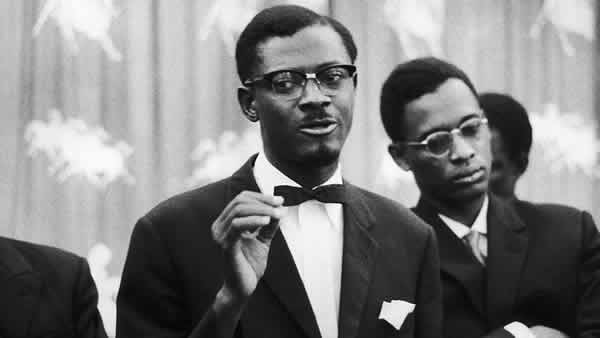
Patrice Lumumba led Congo to independence
A gold-crowned tooth is all that remains of assassinated Congolese independence hero Patrice Lumumba.
Shot dead by a firing squad in 1961 with the tacit backing of former colonial power Belgium, his body was then buried in a shallow grave, dug up, transported 200km (125 miles), interred again, exhumed and then hacked to pieces and finally dissolved in acid.
The Belgian police commissioner, Gerard Soete, who oversaw and participated in the destruction of the remains took the tooth, he later admitted.
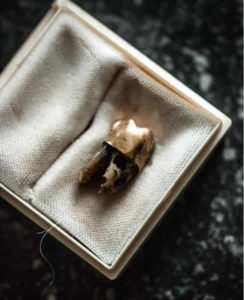
He also talked about a second tooth and two of the corpse’s fingers, but these have not been found.
The tooth has now been returned to the family at a ceremony in Brussels.
Soete’s impulse to pocket the body parts echoed the behaviour of European colonial officials down the decades who took remains back home as macabre mementoes.
But it also served as a final humiliation of a man that Belgium considered an enemy.
Soete, appearing in a documentary in 1999, described the tooth and fingers he took as “a type of hunting trophy”. The language suggests that for the Belgian policeman, Lumumba – who was revered across the continent as a leading voice of African liberation – was less than human.
For Lumumba’s daughter, Juliana, the question is whether the perpetrators were human.
“What amount of hatred must you have to do that?” she asks.
“This is a reminder of what happened with the Nazis, taking pieces of people – and that’s a crime against humanity,” she told the BBC.
Picture of a tooth in a display boxImage source, Jelle Vermeersch
Image caption,
Gerard Soete’s daughter showed the tooth, in a padded box, to a photographer in 2016
1px transparent line
Lumumba had risen to become prime minister at the age of 34. Elected in the final days of colonial rule, he headed the cabinet of the newly independent nation.
In June 1960, at the handover of power, Belgian King Baudouin praised the colonial administration and spoke about his ancestor, Léopold II, as the “civiliser” of the country.
There was no mention of the millions who died or were brutalised under his reign when he ruled what was then known as the Congo Free State as his personal property.
This failure to acknowledge the past foreshadowed years of denial in Belgium, which it has only now begun to come to terms with.
Lumumba was not so reticent.
In an address that was not scheduled on the official programme, the prime minister spoke about the violence and degradation that the Congolese had suffered.
In devastating rhetoric, interrupted by rounds of applause and a standing ovation when he concluded, he described “the humiliating slavery that was imposed on us by force”.
The Belgians were stunned, according to academic Ludo De Witte, who wrote a ground-breaking account of the assassination.
Never before had a black African dared to speak like this in front of Europeans. The prime minister, who De Witte says had been described as an illiterate thief in the Belgian press, was seen as having humiliated the king and other Belgian officials.
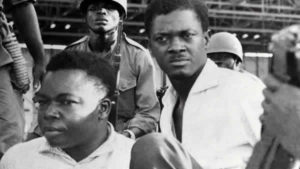
A picture taken in December 1960, shows soldiers guarding Patrice Lumumba (R), Prime Minister of then Congo-Kinshasa, and Joseph Okito (L), vice-president of the Senate, upon their arrest in Leopoldville (now Kinshasa)Image source, AFP
Image caption,
Patrice Lumumba (R) and ally Joseph Okito (L) were arrested in December 1960
Some have said that with his speech Lumumba signed his own death warrant, but his murder the following year was also wrapped up in Cold War manoeuvres and a Belgian desire to maintain control.
The Americans also plotted his death because of a possible pivot towards the Soviet Union and his uncompromising anti-colonialism, while a British official wrote a memo suggesting that killing him was an option.
Nevertheless, there seemed to be a personal element to the way Lumumba was vilified and pursued.
The total destruction of the body, as well as a way to get rid of the evidence, seems like an effort to obliterate Lumumba from the memory. There would be no memorial, making it almost possible to deny that he existed at all. It was not enough just to bury him.
But he is still remembered.
Not least by his daughter Juliana – a prime mover in the campaign to get the tooth returned home, who went to Brussels to receive it.
Media caption,
Watch: A coffin containing Patrice Lumumba’s gold tooth was passed to his family members at a ceremony in Brussels
She lets out a warm chuckle as she recalls her childhood memories. As the youngest, and the only girl in the family, she says she was very close to her father.
Ms Lumumba was “less than five” when he became prime minister. She remembers being allowed to be in his office “just sitting and looking at my father when he was working. For me it was daddy.”
But she recognises that her father “belongs to the country, because he died for Congo… and for his own values and convictions of the dignity of the African person”.
She acknowledges that the handing over of the tooth in Belgium and bringing it back to the Democratic Republic of Congo is symbolic “because what remains is not really enough. But he has to come back to his country where his blood was shed.”
The tooth will be taken around the vast country before being buried in the capital.
For years, though, the Lumumba family did not know exactly what had happened to their father as official silence surrounded the circumstances of his death.
Lumumba’s journey from prime minister to victim of assassination took less than seven months.
Shortly after independence, the country was hit by a secessionist crisis as the mineral-rich south-eastern Katanga province declared that it was splitting off from the rest of the country.
In the political chaos that followed, Belgian troops were sent in on the grounds that they would protect Belgian nationals, but they also helped support the Katangan administration, which was seen as more sympathetic.
Lumumba himself was dismissed as prime minster by the president and just over a week later army chief of staff Col Joseph Mobutu seized power.
Lumumba was then placed under house arrest, escaped and re-arrested in December 1960, before being held in the west of the country.
His presence there was seen as a possible source of instability and the Belgian government encouraged his transfer to Katanga.
During the flight there on 16 January 1961 he was assaulted. He was also beaten on arrival as the Katangan leaders pondered what to do with him.
‘No trace left’
Eventually it was decided that he would face a firing squad and on 17 January he was shot, along with two allies.
This is when police commissioner Soete stepped in. Realising that the bodies could be discovered, a decision was taken “to make them disappear once and for all! There must be no trace left,” according to testimony quoted in De Witte’s book The Assassination of Lumumba.
Armed with saws, sulphuric acid, face masks and whisky, Soete then led a team to move, destroy and dispose of the remains. It was a process that he was later to describe as travelling “to the depths of hell”.
But it was not until nearly 40 years later, in 1999, that he publicly acknowledged that he was involved and that he still actually had a tooth in his possession. He said he had got rid of the other body parts he took.
Ms Lumumba sighs deeply when she recalls hearing that there was a part of her father that still existed.
“You can understand what I felt about that,” she says, her voice full of emotion.
It is not known what Soete did with the tooth when it was in his possession. A photograph shows it in a padded box, but whether it was on display is not clear.
But it did remain in his family.
It resurfaced in 2016 when Soete’s daughter, Godelieve, gave an interview to Belgian magazine Humo, published just before the 55th anniversary of Lumumba’s killing.
Black and white photo pf two men standing – one in uniformImage source, Jelle Vermeersch
Image caption,
A picture in Godelieve Soete’s photo album shows her father, Gerard, on the right with his brother, Michel, who also took part in the destruction of the bodies
1px transparent line
She spoke about her “poor daddy” who had to suffer with the knowledge of what he did. Ms Soete also thought her family should get an apology for the order the Belgian authorities gave her father.
She said he had kept a private archive and though after his death in 2000 a lot was thrown away, she “was able to save interesting things”.
Among those things was the tooth that she brought out to show the interviewer and photographer.
It was then seized by the Belgian police after De Witte filed a complaint and following a four-year legal battle, a court ruled that it should be returned to the Lumumba family.
As part of the campaign to get it back, Ms Lumumba wrote a moving and poetic open letter to King Philippe.
“Why, after his terrible murder, have Lumumba’s remains been condemned to remain a soul forever wandering, without a grave to shelter his eternal rest?” she asked.
With the return of the tooth, the former prime minister will have a final resting place in a special mausoleum in the capital, Kinshasa.
“This is what we usually do in our culture, we like to bury our dead,” said Congolese historian and the country’s UN ambassador, Georges Nzongola-Ntalaja.
“It is a comfort for the family and the people of the Congo because Lumumba is our hero and we would like to give him a decent burial.”
Despite the burial there is still a need to reckon with the past.
De Witte’s book, which shattered years of official silence, led to the creation in 1999 of a parliamentary inquiry charged with determining the “exact circumstances of the assassination… and the possible involvement of Belgian politicians”.
In its conclusions two years later it wrote that the “norms of international politically correct thinking were different” in the 1960s. Nevertheless, despite not uncovering a document ordering the murder of Lumumba, the inquiry found that certain members of the government “were morally responsible for circumstances leading to the death”.
‘Need to know our past’
The Belgian foreign minister at the time, Louis Michel, then expressed “apologies” and “profound and sincere” regrets to the Lumumba family and the Congolese people.
Prof Nzongola-Ntalaja, speaking to the BBC in a personal capacity, does not believe Belgium has fully accepted its role in the killing. “Belgium refuses to take responsibility for something which they know they did – so it is not totally satisfactory,” he said.
Belgian prosecutors are treating the murder as a war crime but 10 of the 12 suspects identified have died and, a decade in, the investigation is moving very slowly.
The handover of the tooth will be another element in the process towards reconciliation between Belgium and DR Congo over the colonial era and Lumumba’s death.
“It’s a step – and we need to go further,” his daughter says.
But she also argues that there needs to be some reckoning on the Congolese side, as some of her compatriots were also involved in her father’s death.
“We have to accept our history – the good and the bad of it.”
And in a flourish worthy of the former prime minster, she says “we need to know our past, to build our future and to live in the present”.
The burial of the tooth – planned to coincide with the 61st anniversary of Lumumba’s famous independence-day speech – will offer an opportunity to revisit that past.



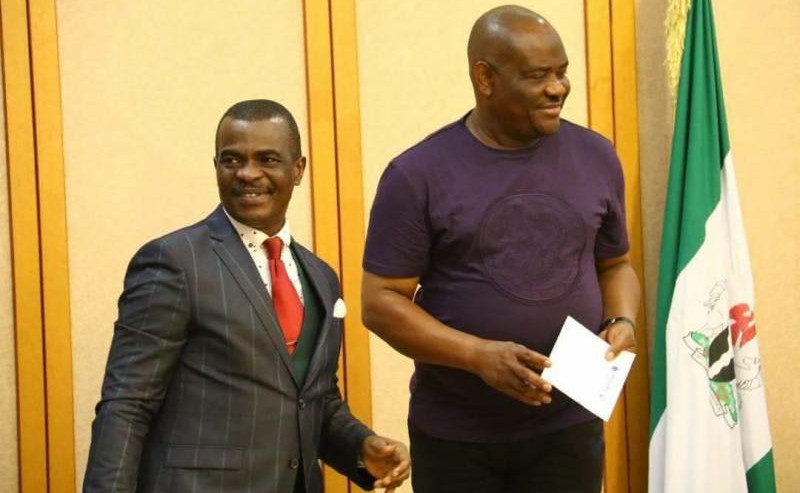


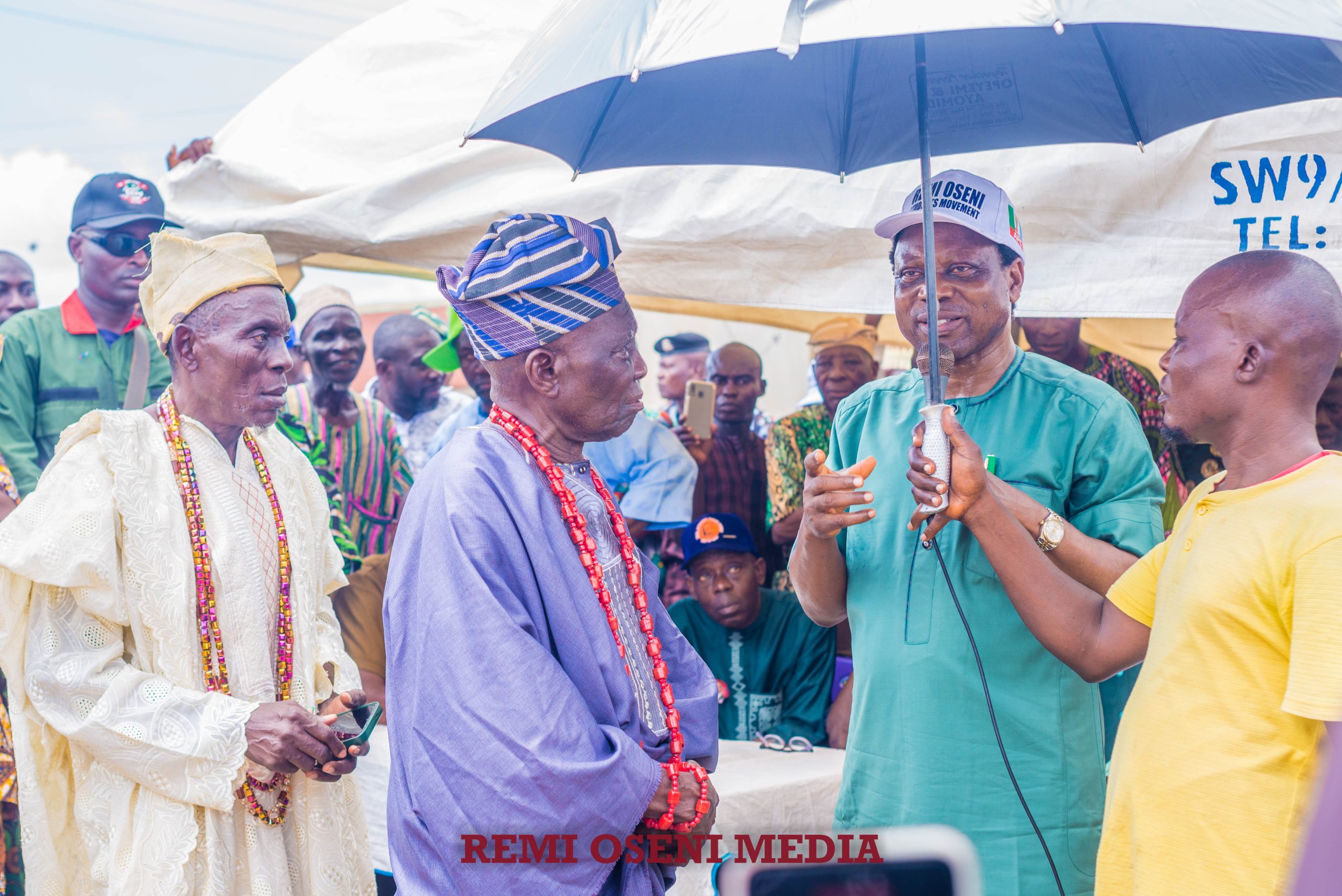
The All Progressives Congress (APC) candidate for Oyo South Senatorial District, Hon. Aderemi Oseni, has approved N100 million for the immediate rehabilitation of a major access road linking seven communities in Ido Local Government Area of Oyo State.
Oseni, who represents Ibarapa East/Ido Federal Constituency in the House of Representatives, announced the intervention on Saturday at a town hall meeting with residents and community leaders from Power Line, Awonsoso, Siba, Olupoyi, Balogun, Baba Agba and Agaloke communities.
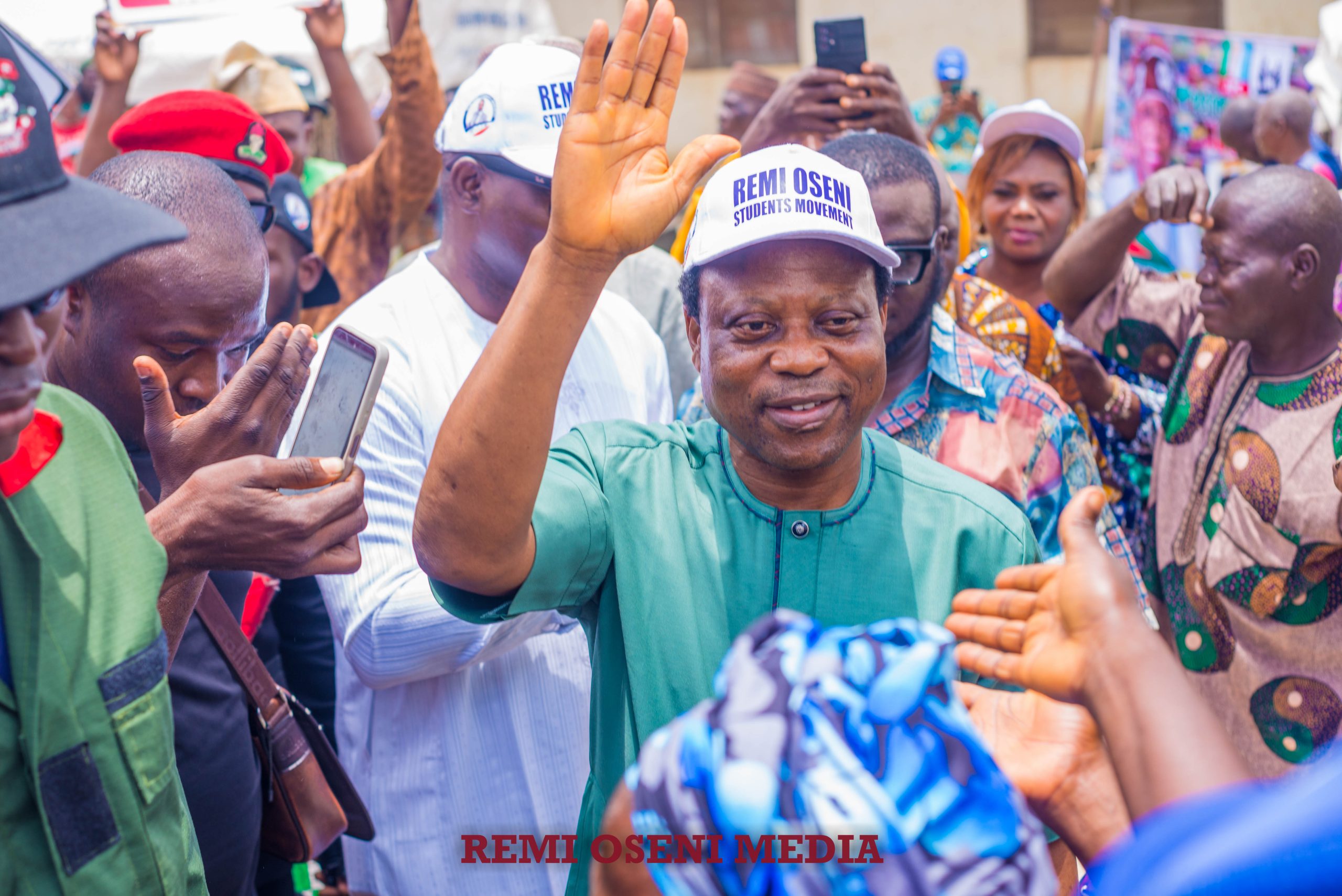
The lawmaker said the decision followed a request by the community stakeholders, who identified the poor condition of the road as their most pressing need. He assured the residents that the rehabilitation would be completed within four months.
Oseni said the intervention was part of his commitment to people-centred representation, stressing that his legislative activities had been focused on issues capable of improving the lives of Nigerians.
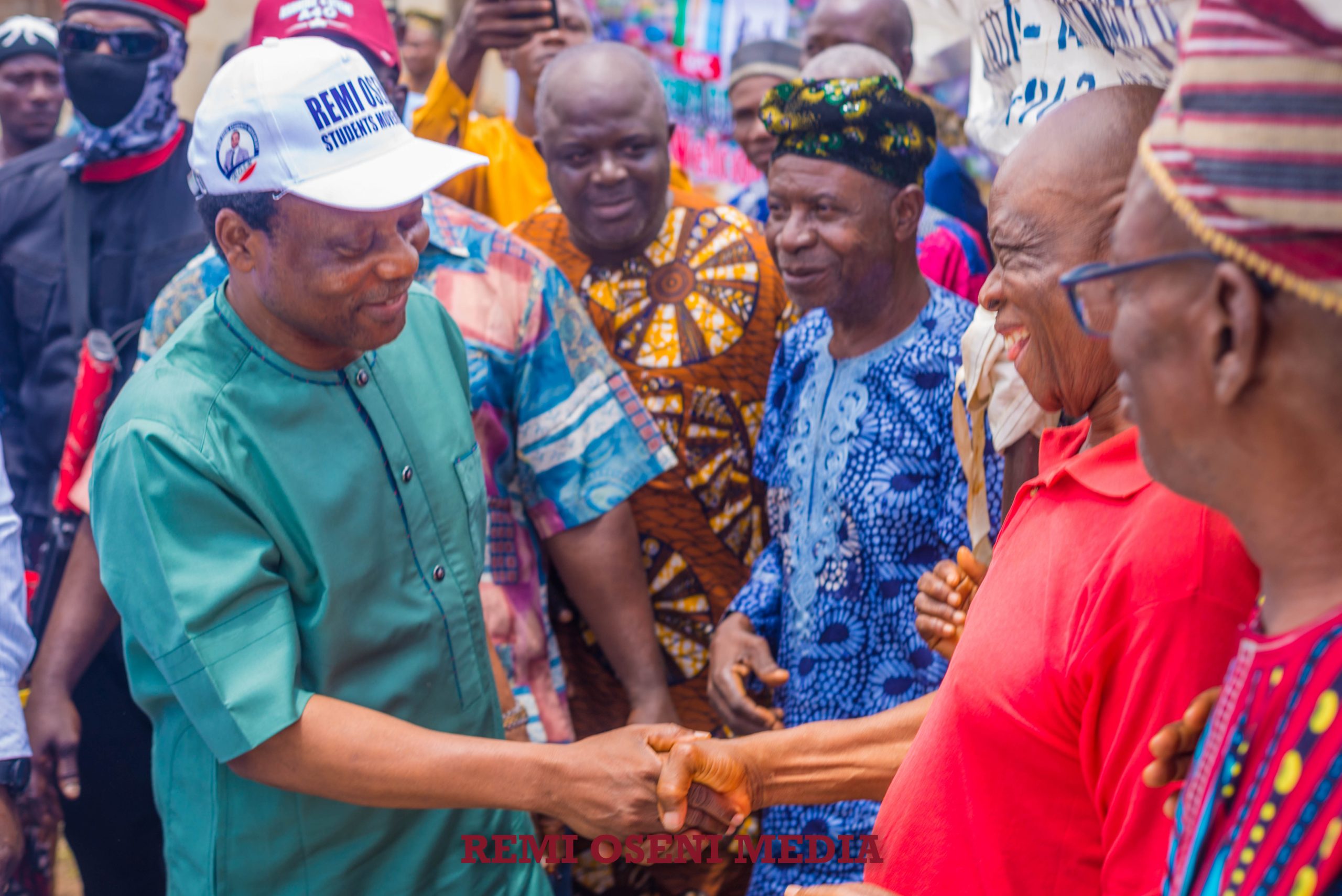
He said, “Within the three years plus, I have sponsored bills and moved motions that are carefully designed to positively impact the lives and livelihoods of citizens.”
According to him, some of the legislative initiatives include moves to amend the Federal Medical Centres Act to establish a Federal Medical Centre in Ido Local Government Area, stronger sanctions for contractors who fail to execute government projects according to specifications, and measures to improve accountability in the management of public contracts.
Oseni added that he had also advocated subsidised farm machinery for farmers, measures to reduce the cost of cancer treatment, improved food storage through modern silos and processing facilities, as well as urgent action on flooding and recurring building collapses in major cities among several others.
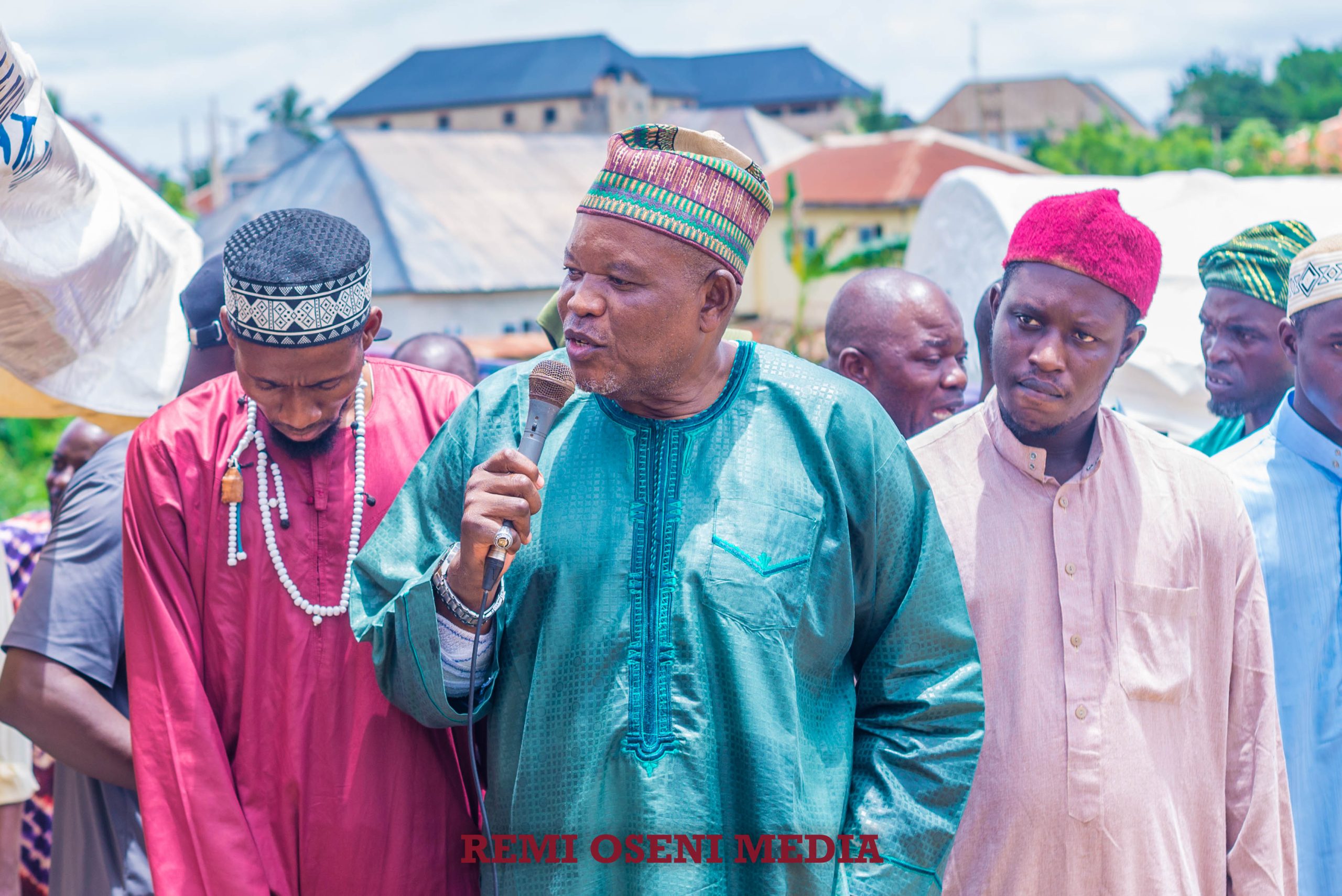
The lawmaker said his engagements with communities across Oyo South should not be viewed solely through the prism of the 2027 elections, despite the commencement of political activities.
“My visit here today is not to solicit for votes, but to listen and find practical ways to attend to the requests and plights of my people,” he said.
Oseni also disclosed that he had facilitated the distribution of 31 transformers across Ido and Ibarapa, with about 80 per cent of the cost funded through his foundation. He added that other interventions had included solar-powered street lights, boreholes, bridges, public toilets, educational support, infrastructure, health care services, youth and women empowerment, and assistance to artisans, traders and markets across the senatorial district.
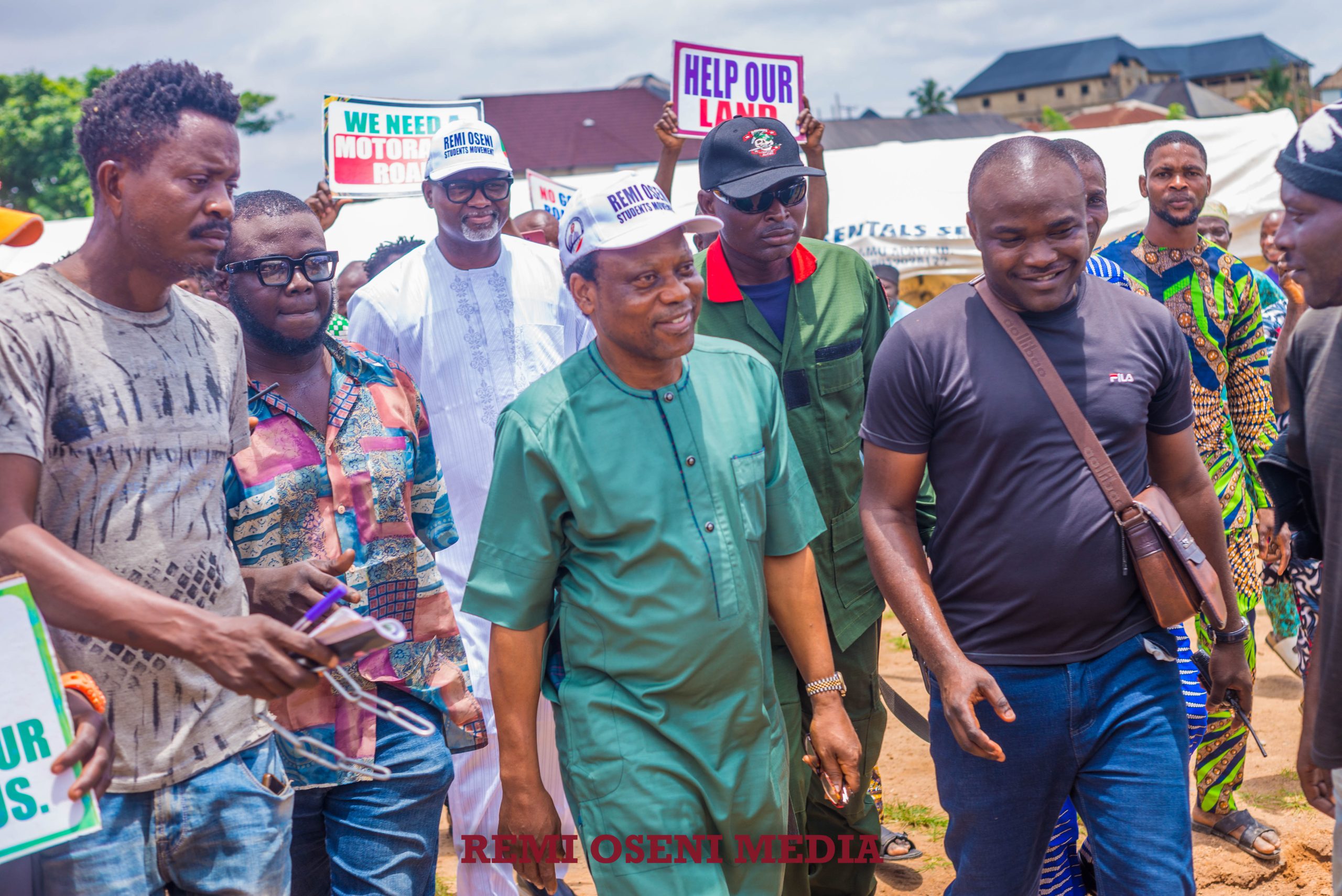
The APC chieftain further noted that some youths had also received N1 million each as seed capital to start small businesses.
Oseni acknowledged that his primary responsibility as a federal lawmaker was to make laws and provide effective representation, but said the gap created by ineffective governance at the grassroots had made it necessary for him to support communities through interventions.
He urged youths to remain focused and resilient, recounting how he worked as a bus conductor to raise money for his secondary education before becoming an engineer, businessman and legislator.
Earlier, Chief Muibi Adegoke, Baale of Awonsoso, and Chief Azeez Saka, Baale of Elere Apata, commended the lawmaker for what they described as his performance in legislation and community development. They pledged their support for his political aspiration ahead of the 2027 election.
The meeting was attended by traditional rulers, religious leaders, community elders, women and youth leaders from the affected communities.
(c) Mega Icon Magazine

Seven Factors That Keep Sharafadeen Alli Ahead in 2027 Oyo Governorship Race

Sunday Bandit Attack: Oyo APC Queries Makinde Over N7.8bn Surveillance Aircraft