Connect with us

National Issues

OPINION: Drawing a line between hate speech and Constructive criticism

Published

on

Few weeks back, the Nigerian government drew a line on hate speech in the country, equating it to terrorism. The Acting President, Yemi Osinbajo, stated this at the National Economic Council security retreat held at the Presidential Villa in Abuja.

He said the intimidation of a population by words or speech is an act of terrorism and will no longer be tolerated by the President Muhammadu Buhari administration. He warned that the government intends to take the matter seriously.

Although the acting president did not mention any name or groups in his speech, some of those who have been accused of hate speech include Nnamdi Kanu, leader of the secessionist pro-Biafra group, IPOB, and some northern youth who, in various audio speeches, have spread hate against Igbos.

Since this declaration was made weeks ago, the debate about what constitutes hate speech, particularly on social media has become the new national discuss. Many pundits lamented that developing such policies runs the risk of limiting an individual’s ability to exercise free speech.

While some Nigerians supports the move by Federal government to criminalize hate speech in Nigeria, some urge the government to draw a line between hate speech and constructive criticism.

It is therefore important to explore the concept of hate speech, as it relates to the freedom of expression and determines whether or not, the criminalization of hate speech constitute an infringement on free speech.

Section 39(1) of the 1999 Constitution provides that “Every person shall be entitled to freedom of expression, including freedom to hold opinions and to receive and impart information without interference”. Similarly, Article19 of the United Nations Universal Declaration of Human Rights provides that “Everyone has the right to freedom of opinion and expression; this right includes freedom to hold opinions without interference and to seek, receive and impart information and ideas through any media and regardless of frontiers.” By the same token, Article IX of the African Charter on Human and Peoples Rights provides that “Every individual shall have the right to receive information and the right to express and disseminate his opinions within the law.”

While hate speech is any speech that offends, threatens, or insults groups, based on race, color, religion, national origin, sexual orientation, disability, or other traits, constructive criticism is designed to help someone “do better”, such as a boss pointing out mistakes that need correcting.

In common usage, people use “hate speech” to refer to speech that expresses hatred towards a group of people, or towards a person as a member of such a group. Speech criticizing an individual as an individual or a political party, should not be described as “hate speech.”

However, public criticism can be brought to the degree of hate speech when the criticizer uses the racial, ethnic, sexual, religious, etc. traits of a certain person to criticize that person, but most often is not brought to that extent.

Criticism of a government isn’t the same as criticism of an entire religion or ethnic group. For example, if someone fairly or unfairly criticizes Nigeria’s foreign policies, it doesn’t mean the person hates Nigeria or the government.

Hate speech is so pervasive in Nigeria that it is doubtful if there are many Nigerians that are completely free from the vice. Today it is evident all over the internet going by interactions by youths on numerous online platforms. This does not strengthen unity or the cords of oneness.

As Nigeria take the giant step to ensure sanity in its polity by taking steps to hold every citizen accountable to their freely expressed speeches, we should understand that this it is not the first to do so.

Hate speech is prohibited in several jurisdictions such as Canada where advocating genocide or inciting hatred against any ‘identifiable group’ is an indictable offence under the country’s Criminal Code with maximum prison terms of two to fourteen years. In the United Kingdom, several statutes criminalize hate speech against several categories of persons. In South Africa, hate speech (along with incitement to violence and propaganda for war) is specifically excluded from protection of free speech in the Constitution.

While hate speech isn’t free speech, free speech and criticizing of the government should not be restricted on Nigerians.

It is important we do make a distinction between the right to free speech/criticism and the rights of others not to be abused or threatened. constructive criticism and questioning play a positive role in every nation’s polity. Hate does not.

By Gbenga Odunsi, Abuja.

Comments

National Issues

OLOJO FESTIVAL: Nigeria bigger than all of us, Ooni tells politicians

Published

on

Monarch begins seven-day seclusion, prays for peace, unity

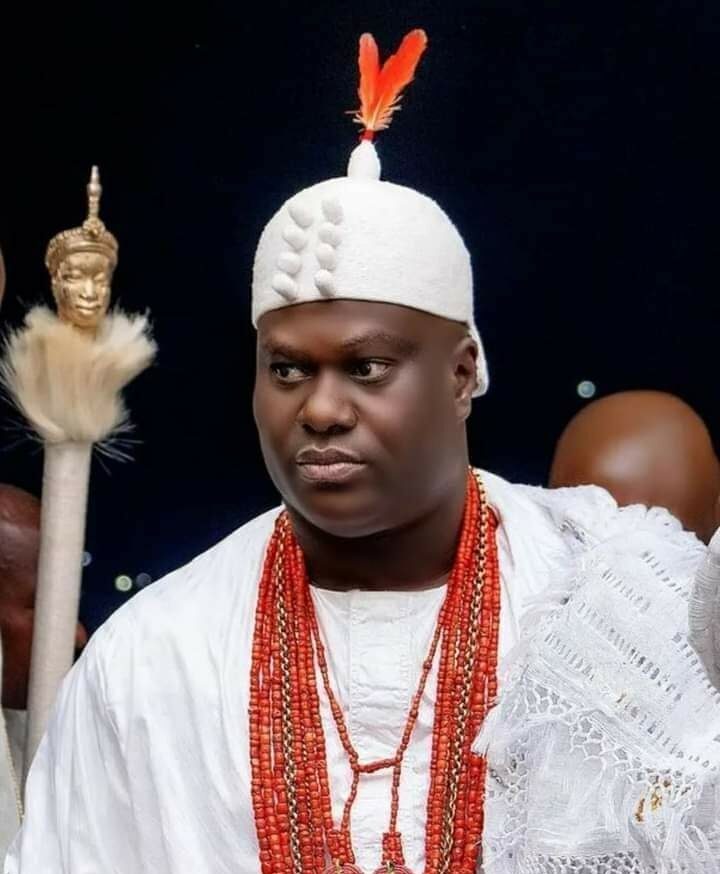
The Ooni of Ife, Oba Adeyeye Ogunwusi, Ojaja II, has urged Nigerian politicians to put the interest of the country above their political differences, saying Nigeria is bigger than any individual or political interest.

The monarch spoke on Sunday shortly before commencing a seven-day spiritual seclusion ahead of the 2026 Olojo Festival in Ile-Ife, Osun State.

The annual seclusion is part of the traditional rites preceding the Olojo Festival, one of the major cultural celebrations associated with Ile-Ife and the Yoruba people.

The Ooni, who is also the Co-Chairman of the National Council of Traditional Rulers of Nigeria, said his period in seclusion would be devoted to prayers for Nigeria, particularly for peace, unity and sustainable development.

“I am appealing to our politicians. They might have differences, but we should know ultimately that Nigeria is bigger than all of us,” the monarch said.

“It is very important for our political leaders to always look inwardly on how to better the lot of the average Nigerians.”

The Ooni urged political leaders to avoid words and actions capable of threatening national cohesion, reminding them that political power was temporary.

“Some have ruled this country before as political leaders, and others will come after them,” he said.

He said his prayers would also cover Nigeria’s democratic process, particularly as the country prepares for the next general elections.

The monarch commended President Bola Tinubu over what he described as non-interference in the activities of the Independent National Electoral Commission, saying such a practice could strengthen public confidence in the electoral process.

He also commended Osun residents for participating in the recently concluded governorship election, saying the outcome demonstrated the ability of citizens to determine their leaders through the ballot.

According to him, Nigerians should continue to have the opportunity to freely choose their leaders without actions capable of undermining the democratic process.

The Ooni’s seven-day seclusion, which began on Sunday evening, will also provide him with an opportunity to prepare spiritually for the sacred rites of the Olojo Festival and deepen his connection with the ancestors.

The exercise precedes the annual wearing of the sacred Aare Crown, one of the major highlights of the festival.

A statement by the Senior Media Officer of the Ooni’s Palace, Sodiq Lawal, issued on behalf of the Director of Media and Public Affairs, Otunba Moses Olafare, said the seclusion marked the beginning of the spiritual phase of the 2026 Olojo Festival.

The festival celebrates Ile-Ife’s indigenous traditions and ancestral heritage and attracts traditional rulers, cultural enthusiasts, visitors and members of the Yoruba diaspora.

The public ceremonies are expected to follow the spiritual rites and culminate in the Ooni’s emergence in the sacred crown.

Continue Reading

National Issues

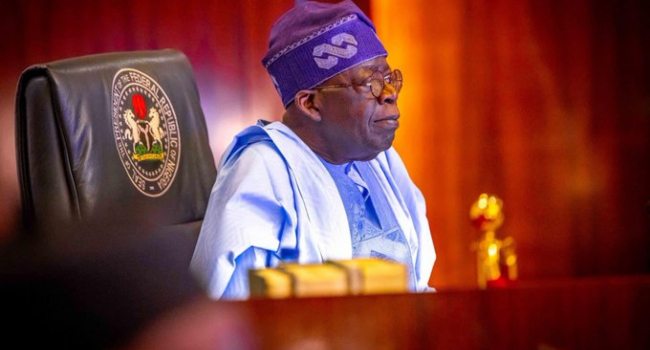
Tinubu vows intelligence-led rescue of abducted Oyo pupils, teachers

Published

on

President Bola Tinubu on Monday assured residents of Oyo State that ongoing efforts to rescue abducted pupils and teachers in Oriire Local Government Area would be intelligence-driven, coordinated and sustained.

The President said the Federal Government would deploy every lawful means, including kinetic and non-kinetic measures, to ensure the safe return of the victims abducted during the May 15, 2026 attack in Esiele and Yawota communities.

“Our rescue efforts will be intelligence-led, careful, coordinated, and sustained. We will deploy every lawful tool available, both kinetic and non-kinetic, to ensure our children and teachers are safely returned home,” Tinubu stated in a statement posted on his X handle on Monday.

The President also expressed sorrow over the killing of a school teacher during the abduction and extended condolences to his wife, Mrs Mary Oyedokun, and the bereaved family.

“I also extend my deepest condolences to Mrs Mary Oyedokun, the wife of the late school teacher and her family. Their sacrifice will not be forgotten, and his family will not be abandoned,” he said.

Tinubu stressed that children should never be exposed to the trauma of abduction, noting that no parent should endure the pain associated with such incidents.

“No child should be taken from the safety of a classroom. No parent should have to endure this anguish,” the President added.

He assured affected communities that efforts to secure the release of the abducted pupils and teachers would remain sustained and intelligence-driven.

The statement comes amid growing concerns over insecurity in schools and rural communities following the abduction, which prompted the Federal Government to dispatch a high-powered delegation to the affected communities in Oriire Local Government Area.

The delegation included the Chief of Staff to the President, Femi Gbajabiamila; the National Security Adviser, Nuhu Ribadu; the Minister of Defence; and the Inspector-General of Police, Kayode Egbetokun, alongside other senior government and security officials.

Tinubu further disclosed that he had approved additional security measures, including the deployment of a specialised security unit equipped with advanced rescue capabilities to intensify efforts towards the safe return of the victims.

“I have also directed the deployment of a specialised security unit with advanced rescue capabilities to intensify efforts to secure the safe return of the abducted pupils and teachers,” he stated.

The President also revealed that the Federal Government, in collaboration with the Oyo State Government, was mobilising 1,000 forest guards to improve surveillance in forest corridors frequently exploited by criminal elements.

According to him, the initiative would be complemented by broader operational measures aimed at strengthening rescue operations and preventing future attacks.

Tinubu added that a request for the establishment of a military base in the affected area was receiving urgent consideration as part of efforts to bolster security.

Authorities have continued rescue operations amid rising concerns over the safety of schools and rural settlements, insisting that efforts remain focused on securing the release of the abducted victims and preventing a recurrence.

Continue Reading

National Issues

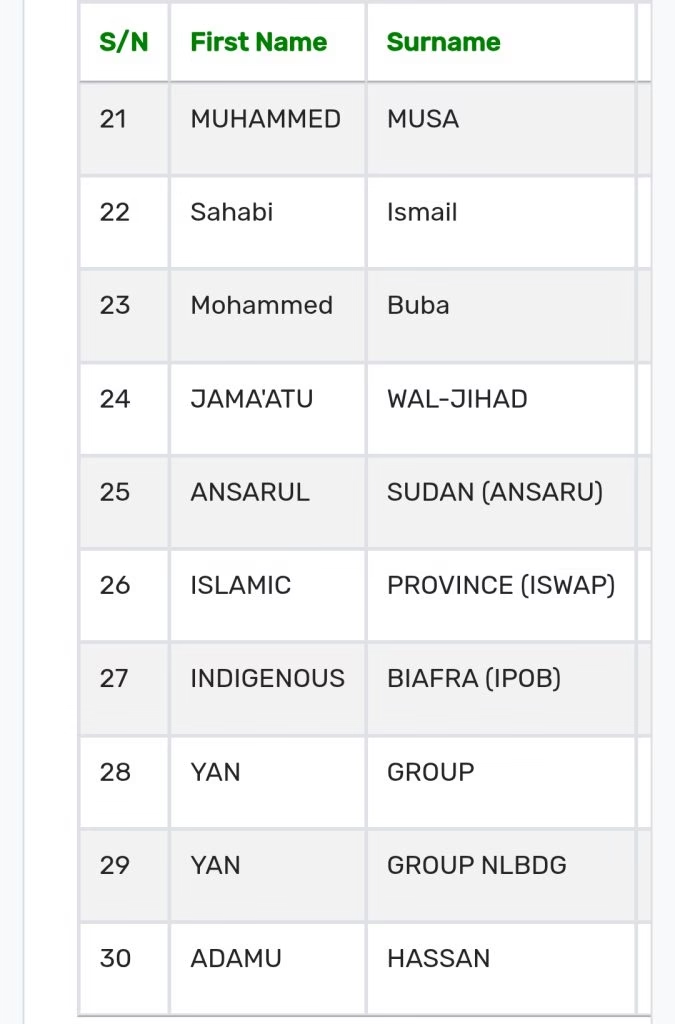
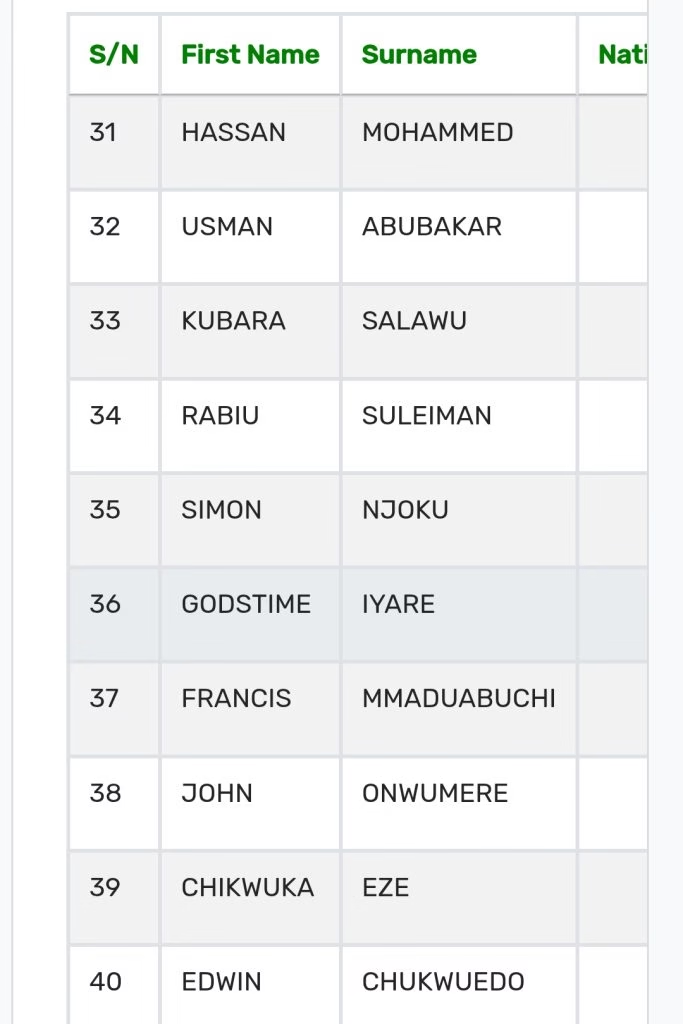
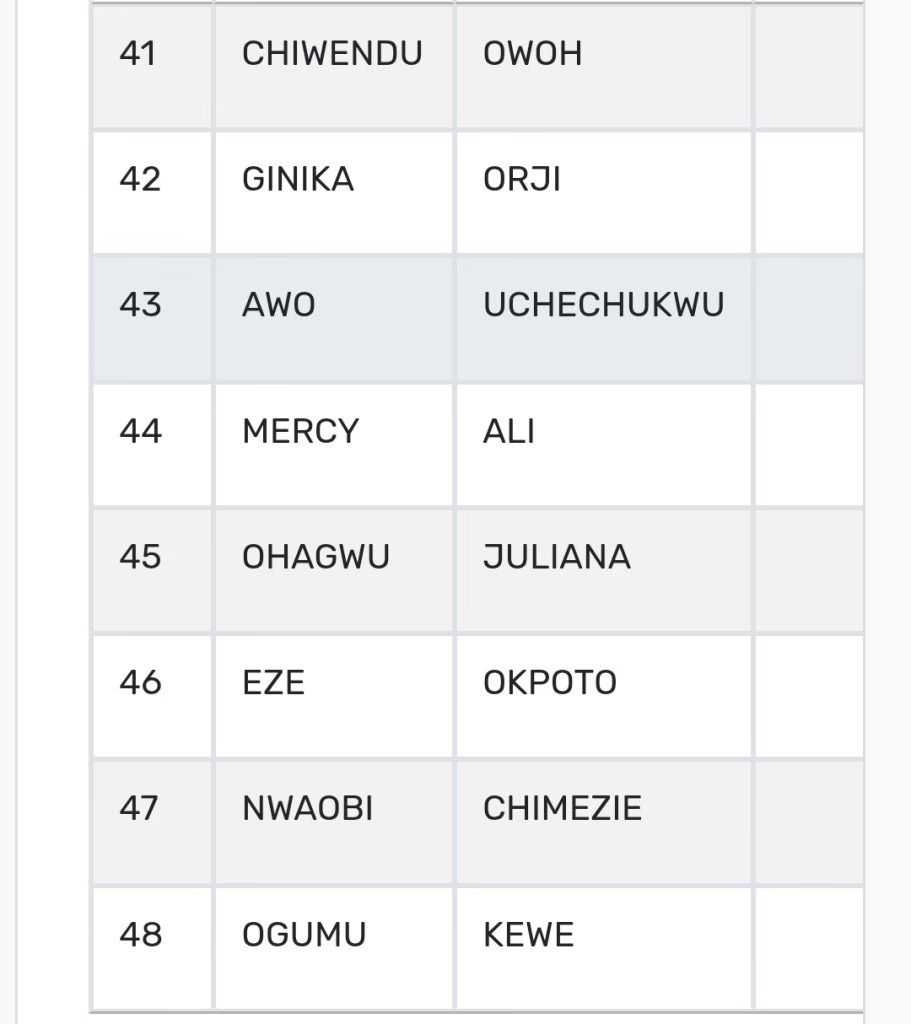
48 alleged terror financiers named by FG {SEE FULL LIST}

Published

on

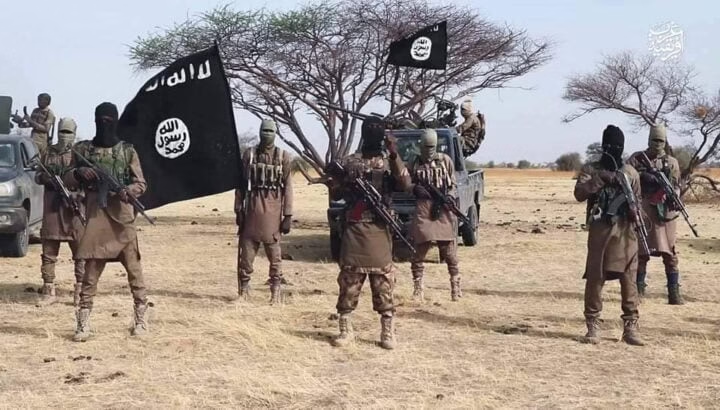
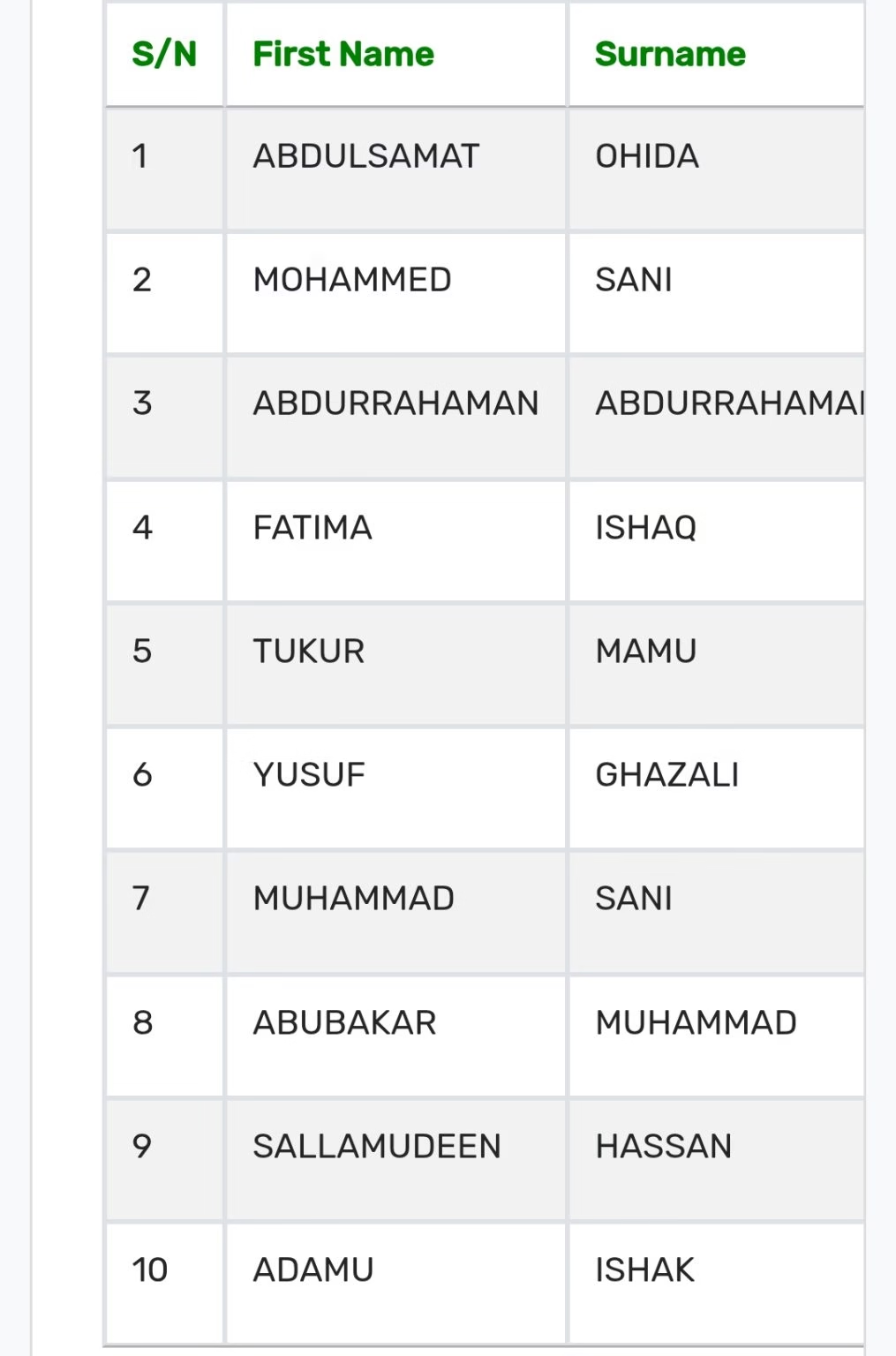
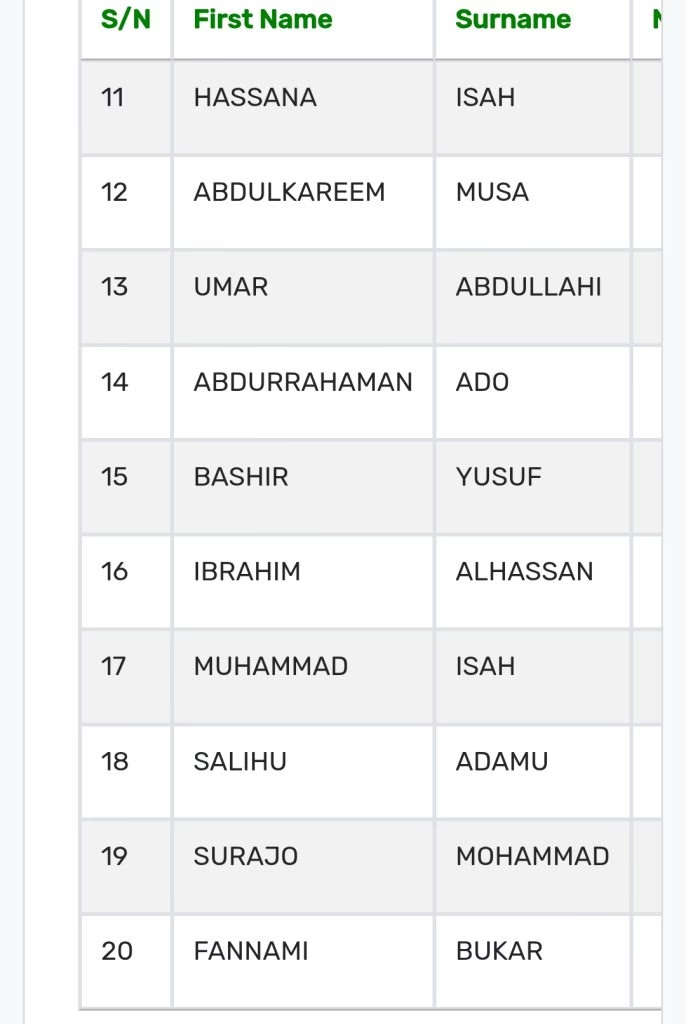
The Federal Government, on Saturday, published a list of 48 individuals and entities allegedly linked to terrorism financing in Nigeria, naming suspects with reported ties to outlawed groups including the Indigenous People of Biafra, Ansaru, and the Islamic State West Africa Province.

The list was released by the Nigeria Sanctions Committee as part of intensified efforts to disrupt financial networks sustaining terrorist activities across the country.

In a statement accompanying the publication, the committee said the designation of the individuals and organisations was in line with Nigeria’s legal and international obligations to combat terrorism financing.

“The Nigeria Sanctions Committee has approved the designation of the following individuals and entities for their alleged involvement in terrorism financing,” the statement read.

It added, “The action is pursuant to relevant laws and regulations aimed at identifying and freezing assets of persons and organisations linked to terrorist activities.”

The committee explained that the move was targeted at dismantling the financial backbone of insurgent and extremist groups operating within and beyond Nigeria’s borders.

Among those listed are individuals reportedly associated with the Indigenous People of Biafra, a proscribed separatist group; Ansaru, a faction linked to Al-Qaeda; and the Islamic State West Africa Province, one of the most active terrorist groups in the region.

Security experts have repeatedly stressed that cutting off funding sources remains a critical strategy in weakening terrorist operations.

Speaking on the development, a senior government official familiar with the process said the publication sends a strong signal about Nigeria’s resolve to confront terrorism at its roots.

“This is not just about naming names; it is about choking the financial lifelines of terror networks. Once funding is disrupted, their operational capacity is significantly weakened,” the source said.

The committee further noted that relevant authorities and financial institutions have been directed to take necessary steps in enforcing sanctions, including the identification and freezing of assets linked to the designated persons and entities.

“The public is also advised to remain vigilant and report suspicious financial activities to appropriate authorities,” the statement added.

The Federal Government reiterated its commitment to safeguarding national security, insisting that individuals or groups found culpable would face the full weight of the law.

As of the time of filing this report, detailed breakdowns of the sanctions and timelines for enforcement were yet to be made public.
 

Continue Reading

Trending