Connect with us

National Issues

Opinion: Brouhaha Over 120 Cut Off Point For University Admissions

Published

on

THE year 2017 policy meeting of Joint Admissions and Matriculation Board (JAMB) has come and gone with complaints and distasteful reactions. Some reacted based on ignorance while some were deliberately mischievous.

In the first category are persons that had the wrong notion about the approved admission policy. What the policy intends to do is to streamline the admission process rather than to undermine the autonomy of the universities. The policy meeting does not fix a uniform cut-off point for all the universities. What the JAMB did was to allow each institution fix its cut-off point. And once it is communicated to the Board, the concerned institution cannot admit any candidates that score less than the giving cut off point. So, the Board did not in all intents and purposes force any cut off point on institutions in Nigeria.

What the JAMB Registrar announced was the consensus of all the stakeholders including Heads of tertiary institutions, Registrars and even the Admissions Officers of Universities, Polytechnics, Monotechnics and Colleges of Education across the country.

Reasonably, one would expect the cut off point for first generation universities to be different from newly established ones with lesser admission demand. It was this reality that informed the variation in the approved cut-off points and obviously this ranges from 120 to 200 depending on institution’s tone, admission demand and other criteria set by the senate of each university.

If a newly established private university with fewer than a thousand first choice candidates chooses 120 cut-off point, such reality shouldn’t be a basis for subjecting the policy to hasty generalisation. In my own view, JAMB had restored the university autonomy by allowing each institution to fix its cut-off point.

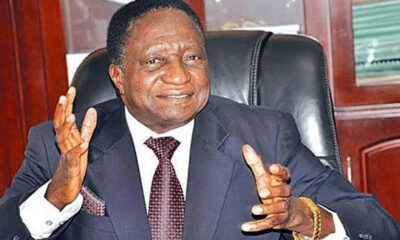
Arising from the same policy meeting is the lifting of the ban on POST UTME.The implication is that institutions can now use each candidate’s aggregate score for admission process. Given the circumstances under which the Honourable Minister For Education lifted the ban on the conduct of POST UTME, it portrays Mallam Adamu Adamu as an intelligent, credible and reasonable educational administrators. The courage and humility he displayed in reversing the ban on POST UTME signals that hope is not totally lost on the future of the nation’s educational system.

What constitutes a candidate’s aggregate score is the summation of candidate’s JAMB score, O’ Level graded score/point and POST UTME score. Obviously, the policy re-direction will help address the challenges of admitting not suitably qualified candidates.

In the second category are those who are being mischievous with their opposition to the outcome of the policy meeting. From media reports, some universities out of pride and by mere dispay of arrogance have created an impression that the policy meeting had introduced a uniform cut off point of 120 for all universities.

Whatever the motive behind this propaganda, my candid opinion is that the institutions that are behind the distorted information are just trying to deliberately spread falsehood or twist the letter and spirit of the laudable policy.The disdain and opposition is however not acceptable as a normal academic culture.

For the avoidance of doubts, what the new cut off point policy is saying is that an institution cannot admit any candidate that scores below the submitted cut off point in all circumstances. In any case, the apprehension that 120 cut off point will cause dramatic fall in the standard of education is a mere wishful thinking so far it does not applies to all universities.

Given the implications of the above background information, the outcry by some universities that they cannot accept any policy that would cause them to lower their standard is baseless and unwarranted. So far, JAMB has not imposed any cut off point on tertiary institutions or attempted to usurp the universities’ autonomy.

While the erroneous impression created by the cynics is clarified, I think Prof. Isiaq Oloyede, the JAMB Registrar deserves commendation for introducing a Central Admissions Processing System (CAPS) effective from 2017 admissions. Truly, CAPS as a technological innovation would not just eliminate multiple cases of admission, it will create market place to enable institutions source candidates from the pool based on various criteria such as JAMB score, state of origin, gender and specialisations. One other advantage of CAPS is that admissions can be processed in batches as well as instantaneously with candidates being able to check and track their admission status at any point in time on the JAMB portal. The innovation is not only plausible, it is equally going to be an enduring legacy of the current JAMB Registrar.

However, the 2017/2018 admission exercise will be conducted on dual mode such that the current manual system will run in parallel with the implementation of CAPS with the intention of full transmission in the immediate future.

It is hoped that the mischief makers would take time to study and understand the merit and workings of the innovative strategies introduced by JAMB for a more credible admission process in the country before unnecessary criticism of the new policy. Again, the JAMB Registrar needs to create more awareness on rationale behind the new approach to cut off system and further intensify efforts on sensitisation of stakeholders, students and parents on short and long term benefits of the new policy.


By Rahaman Onike
Writes from Oyo State College of Agriculture and Technology, Igboora, Oyo State.


Comments

National Issues

Tinubu vows intelligence-led rescue of abducted Oyo pupils, teachers

Published

on

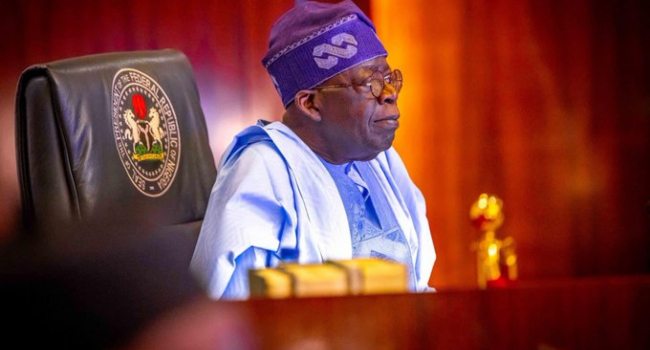
President Bola Tinubu on Monday assured residents of Oyo State that ongoing efforts to rescue abducted pupils and teachers in Oriire Local Government Area would be intelligence-driven, coordinated and sustained.

The President said the Federal Government would deploy every lawful means, including kinetic and non-kinetic measures, to ensure the safe return of the victims abducted during the May 15, 2026 attack in Esiele and Yawota communities.

“Our rescue efforts will be intelligence-led, careful, coordinated, and sustained. We will deploy every lawful tool available, both kinetic and non-kinetic, to ensure our children and teachers are safely returned home,” Tinubu stated in a statement posted on his X handle on Monday.

The President also expressed sorrow over the killing of a school teacher during the abduction and extended condolences to his wife, Mrs Mary Oyedokun, and the bereaved family.

“I also extend my deepest condolences to Mrs Mary Oyedokun, the wife of the late school teacher and her family. Their sacrifice will not be forgotten, and his family will not be abandoned,” he said.

Tinubu stressed that children should never be exposed to the trauma of abduction, noting that no parent should endure the pain associated with such incidents.

“No child should be taken from the safety of a classroom. No parent should have to endure this anguish,” the President added.

He assured affected communities that efforts to secure the release of the abducted pupils and teachers would remain sustained and intelligence-driven.

The statement comes amid growing concerns over insecurity in schools and rural communities following the abduction, which prompted the Federal Government to dispatch a high-powered delegation to the affected communities in Oriire Local Government Area.

The delegation included the Chief of Staff to the President, Femi Gbajabiamila; the National Security Adviser, Nuhu Ribadu; the Minister of Defence; and the Inspector-General of Police, Kayode Egbetokun, alongside other senior government and security officials.

Tinubu further disclosed that he had approved additional security measures, including the deployment of a specialised security unit equipped with advanced rescue capabilities to intensify efforts towards the safe return of the victims.

“I have also directed the deployment of a specialised security unit with advanced rescue capabilities to intensify efforts to secure the safe return of the abducted pupils and teachers,” he stated.

The President also revealed that the Federal Government, in collaboration with the Oyo State Government, was mobilising 1,000 forest guards to improve surveillance in forest corridors frequently exploited by criminal elements.

According to him, the initiative would be complemented by broader operational measures aimed at strengthening rescue operations and preventing future attacks.

Tinubu added that a request for the establishment of a military base in the affected area was receiving urgent consideration as part of efforts to bolster security.

Authorities have continued rescue operations amid rising concerns over the safety of schools and rural settlements, insisting that efforts remain focused on securing the release of the abducted victims and preventing a recurrence.

Continue Reading

National Issues

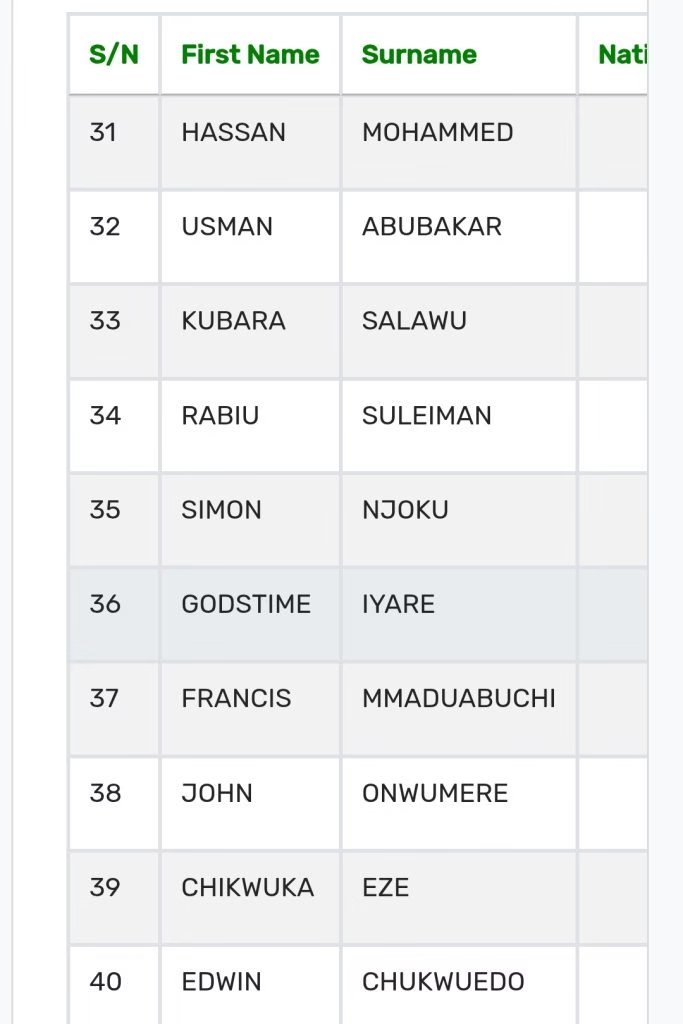
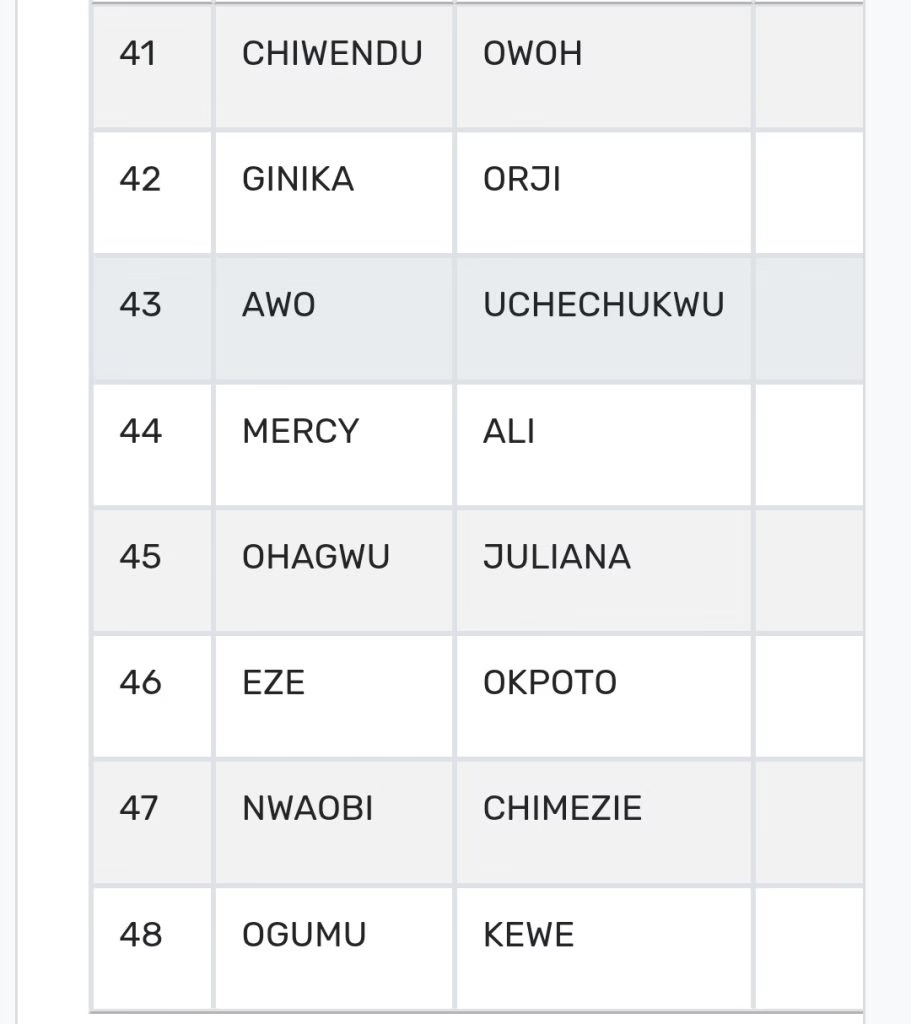
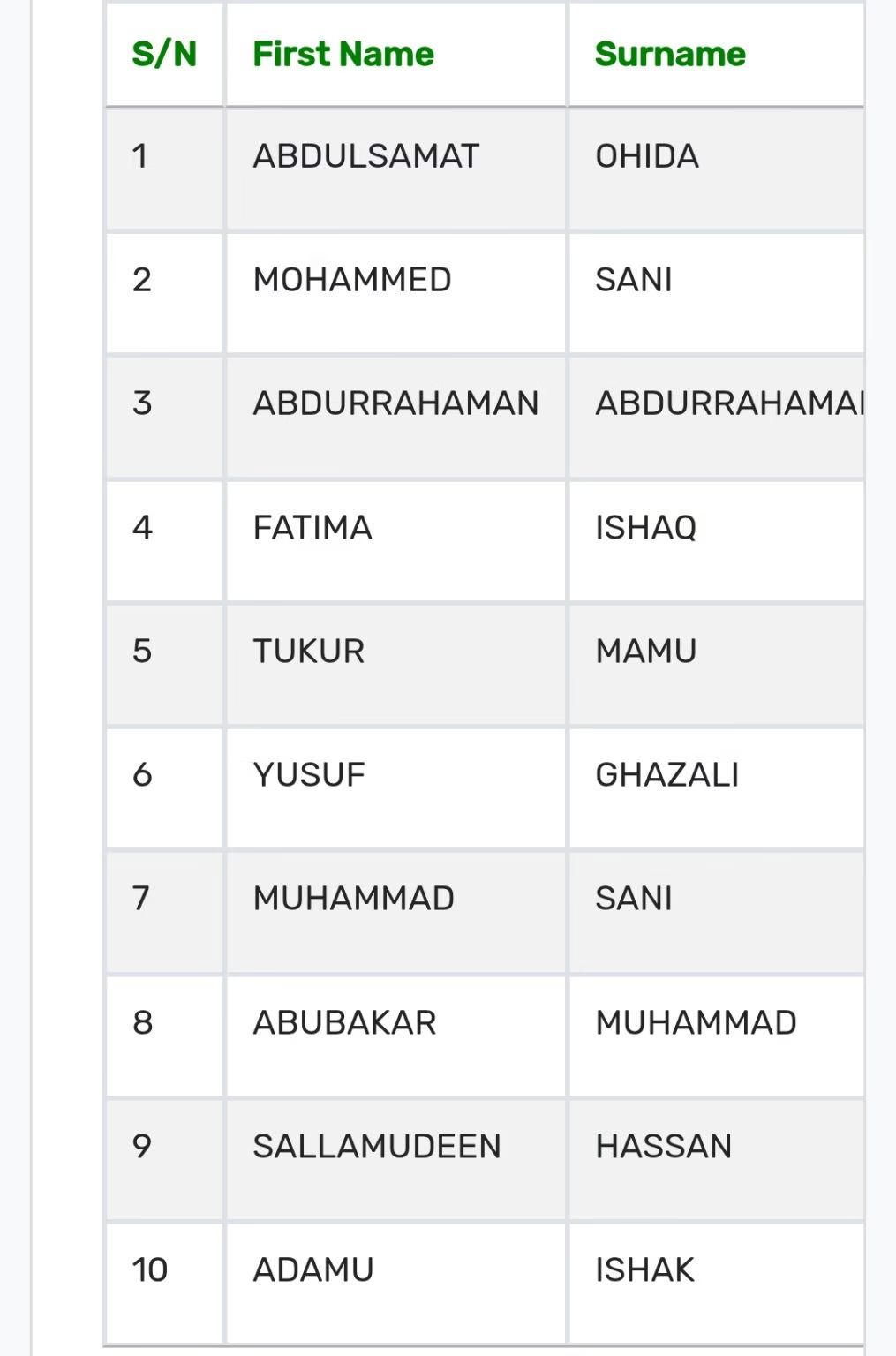
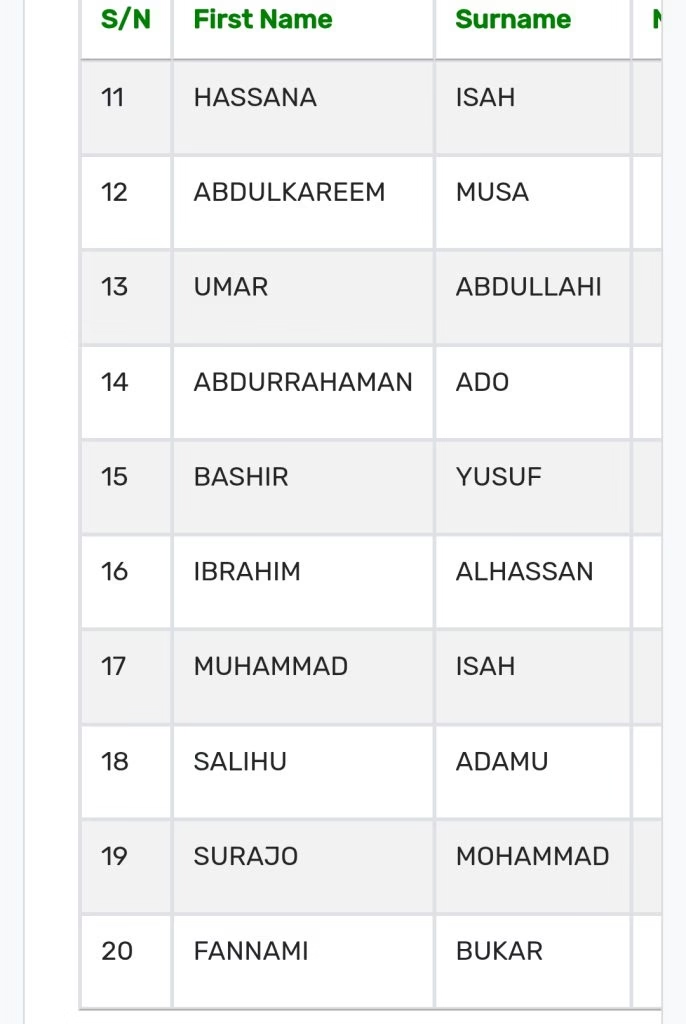
48 alleged terror financiers named by FG {SEE FULL LIST}

Published

on

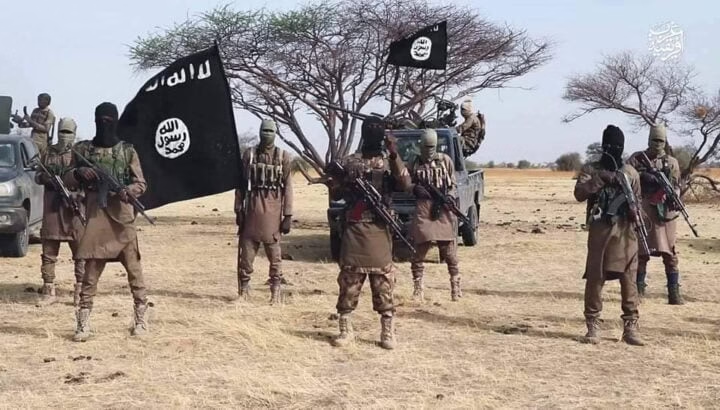
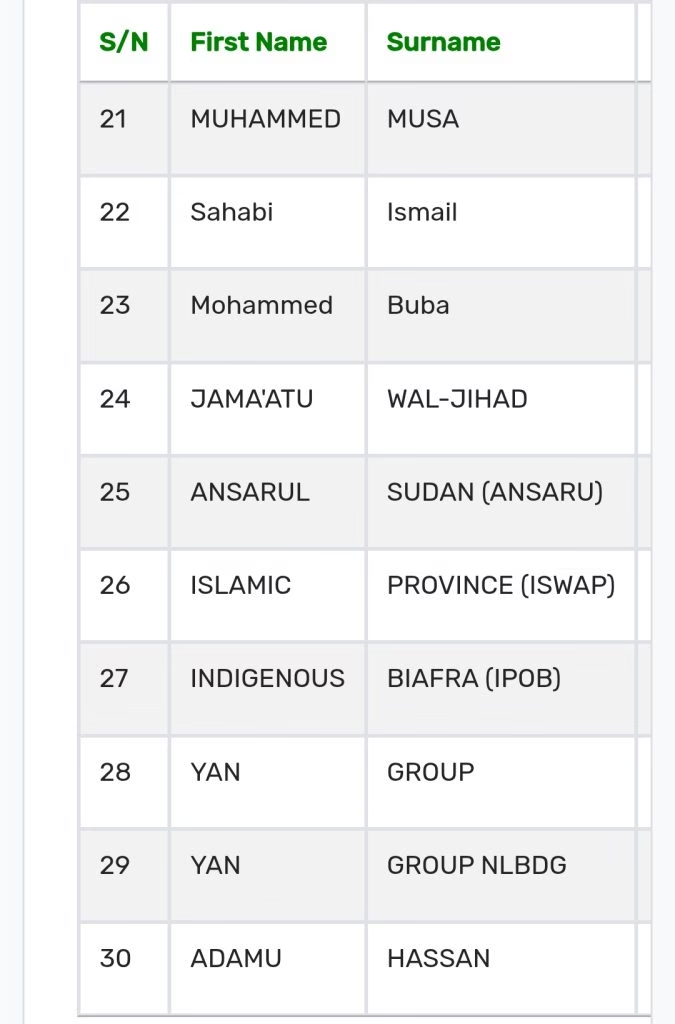
The Federal Government, on Saturday, published a list of 48 individuals and entities allegedly linked to terrorism financing in Nigeria, naming suspects with reported ties to outlawed groups including the Indigenous People of Biafra, Ansaru, and the Islamic State West Africa Province.

The list was released by the Nigeria Sanctions Committee as part of intensified efforts to disrupt financial networks sustaining terrorist activities across the country.

In a statement accompanying the publication, the committee said the designation of the individuals and organisations was in line with Nigeria’s legal and international obligations to combat terrorism financing.

“The Nigeria Sanctions Committee has approved the designation of the following individuals and entities for their alleged involvement in terrorism financing,” the statement read.

It added, “The action is pursuant to relevant laws and regulations aimed at identifying and freezing assets of persons and organisations linked to terrorist activities.”

The committee explained that the move was targeted at dismantling the financial backbone of insurgent and extremist groups operating within and beyond Nigeria’s borders.

Among those listed are individuals reportedly associated with the Indigenous People of Biafra, a proscribed separatist group; Ansaru, a faction linked to Al-Qaeda; and the Islamic State West Africa Province, one of the most active terrorist groups in the region.

Security experts have repeatedly stressed that cutting off funding sources remains a critical strategy in weakening terrorist operations.

Speaking on the development, a senior government official familiar with the process said the publication sends a strong signal about Nigeria’s resolve to confront terrorism at its roots.

“This is not just about naming names; it is about choking the financial lifelines of terror networks. Once funding is disrupted, their operational capacity is significantly weakened,” the source said.

The committee further noted that relevant authorities and financial institutions have been directed to take necessary steps in enforcing sanctions, including the identification and freezing of assets linked to the designated persons and entities.

“The public is also advised to remain vigilant and report suspicious financial activities to appropriate authorities,” the statement added.

The Federal Government reiterated its commitment to safeguarding national security, insisting that individuals or groups found culpable would face the full weight of the law.

As of the time of filing this report, detailed breakdowns of the sanctions and timelines for enforcement were yet to be made public.
 

Continue Reading

National Issues

Tinubu declares nationwide security emergency, orders massive recruitment

Published

on


Amid rising killings and a wave of mass abductions by gunmen and suspected terrorists across the country, President Bola Tinubu on Wednesday declared a nationwide security emergency.

The President, in a statement personally signed and released in Abuja, also ordered an immediate expansion of the manpower of the Armed Forces and the Nigeria Police Force as the Federal Government rushes to halt the worsening insecurity.

“Today, in view of the emerging security situation, I have decided to declare a nationwide security emergency and order additional recruitment into the Armed Forces,” Tinubu said.

“By this declaration, the police and the army are authorised to recruit more personnel. The police will recruit an additional 20,000 officers, bringing the total to 50,000.”

Tinubu explained that he had already approved upgrades of police training facilities nationwide and authorised the use of selected National Youth Service Corps camps as police training depots.

He added that officers withdrawn from VIP guard duties would undergo “crash training” before being redeployed to areas battling heightened insecurity.

The President also directed the Department of State Services to immediately deploy all trained forest guards to flush out terrorists and bandits hiding in forests across the country. The DSS was further authorised to recruit additional personnel.

“There will be no more hiding places for agents of evil. This is a national emergency. We are deploying more boots on the ground, especially in vulnerable communities. The times require all hands on deck. As Nigerians, we must all get involved in securing our nation,” he said.

Tinubu commended security agencies for jointly securing the release of 24 abducted schoolgirls in Kebbi State and 38 worshippers in Kwara State. He assured that efforts were ongoing to rescue students of Catholic schools in Niger State and other kidnapped Nigerians still in captivity.

“To the leadership and rank and file of our Armed Forces, I commend your courage and sacrifice. This is a challenging moment for our nation and for the military itself. I charge you to remain resolute, restore peace across all theatres of operation, and uphold the highest standards of discipline. There must be no compromise, no collusion, and no negligence,” he added.

The President announced that the Federal Government would support state governments operating community-based security outfits.

Tinubu also urged the National Assembly to begin reviewing laws that would allow states seeking to establish their own police forces to do so.

He warned states against maintaining boarding schools in remote areas without adequate security and advised churches and mosques in vulnerable areas to engage security agencies when organising large gatherings.

On the lingering farmer–herder clashes, Tinubu restated that the newly created Ministry of Livestock Development would provide long-term solutions. He appealed to herders to embrace ranching, end open grazing, and surrender illegal weapons.

“I sympathise with the families who have lost their loved ones in recent attacks on soft targets in Kebbi, Borno, Zamfara, Niger, Yobe, and Kwara states. I also pay tribute to our brave soldiers who have made the ultimate sacrifice, including Brigadier-General Musa Uba,” he said.

Warning criminal groups not to undermine the state, Tinubu emphasised that his administration possessed the resolve and capacity to secure the country.

“Fellow compatriots, I urge you not to give in to fear or despair. Stand firm to defend our freedom and values. Our administration will continue to guarantee peaceful co-existence and preserve our union.”

He called on citizens to remain vigilant, report suspicious activities, and cooperate with security agencies.

Tinubu’s declaration came amid nationwide outrage after the killing of at least five people in Kebbi and Kwara states, and the abduction of over 300 schoolchildren from Government Girls Comprehensive Secondary School, Maga, in Kebbi State, and St Mary’s Catholic School, Papiri, in Niger State.

Continue Reading

Advertisement

Entertainment

Advertisement

MegaIcon Magazine Facebook Page

Advertisement

MEGAICON TV

Advertisement

Trending