Connect with us

News

Nigeria: 19 million children internaly displaced by conflict, violence in 2019 is highest number ever – UNICEF

Published

on

UNICEF  on Tuesday warned that internally displaced children, including in Nigeria  are among the world’s most vulnerable to the COVID-19 pandemic.

The warning came as the organization released a report looking at the risks and challenges facing internally displaced children, and the urgent actions needed to protect them.

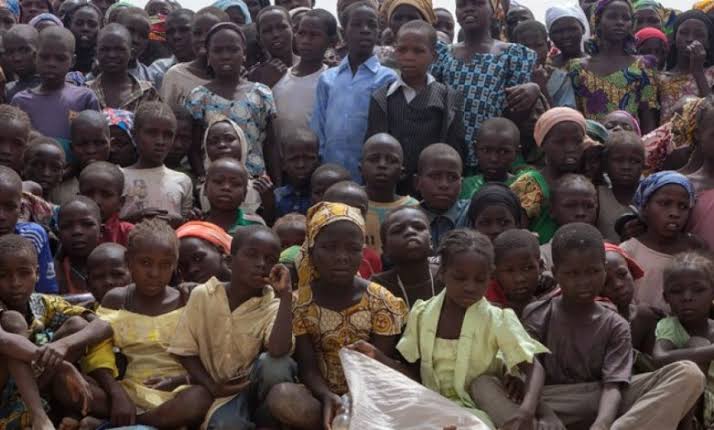
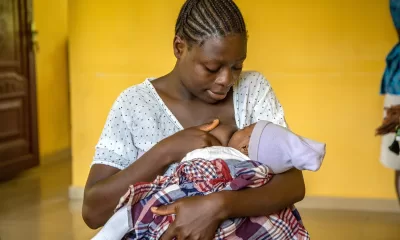
In north-east Nigeria, there are currently 1.9 million people displaced from their homes. Sixty percent of them are children, with 1 in 4 under the age of five.

Globally, an estimated 19 million children – more than ever before, according to UNICEF – were living in displacement within their own countries due to conflict and violence in 2019 – some of them for years.

The report, ‘Lost at Home’, looks at the risks and challenges internally displaced children face, and the urgent actions needed to protect them. As COVID-19 continues to spread around the world, these children are among the most vulnerable to its direct and indirect impacts.

“Hundreds of thousands of children in north-east Nigeria are living in the shadow of conflict – and now in the increasingly challenging shadow of a global pandemic and it’s potential socio-economic aftermath,” said Peter Hawkins, UNICEF Representative in Nigeria.

“When a new crisis like the COVID-19 pandemic emerges, displaced children are especially vulnerable and the gaps in our ability to keep them safe are even more stark. We must urgently work together – all of us, government and humanitarian partners – to keep them safe, healthy, learning and protected.”

The COVID-19 pandemic is making a critical situation for displaced children and families around the world even worse. They often live in overcrowded camps or informal settlements, where access to basic hygiene and health services is limited, and where physical distancing is not possible. This is true in Nigeria’s north-east, where conditions pose a particular challenge to containing the possible spread of diseases like COVID-19.

Internally displaced children around the world often lack access to basic services and are at risk of exposure to violence, exploitation, abuse and trafficking, according to the UNICEF report. They are also at risk of child labour, child marriage and family separation, which all pose direct threats to their health and safety.

According to the report, there were 12 million new displacements of children in 2019 – 3.8 million of them were caused by conflict and violence, and 8.2 million by disasters linked mostly to weather-related events like flooding and storms.

UNICEF and partners are currently working to protect displaced children in north-east Nigeria through critical health and nutrition services, providing access to life-saving WASH services through accelerated construction of facilities, and adapted solutions to continuing education – including the provision of radios for distance learning while schools are closed.

“What we really need now are strategic investments and a united effort from government, civil society, private sector, humanitarian actors and children themselves to find solutions that can protect children from the affects of displacement – especially as we face the COVID-19 pandemic – and also address and help mitigate the longer term impacts this can have on children’s health and education,” said Peter Hawkins.

Comments

News

Inflation drops marginally to 15.39% — NBS

Published

on

Nigeria’s headline inflation rate fell marginally to 15.39 per cent in August 2026 from 15.43 per cent in July, according to the National Bureau of Statistics.

The NBS disclosed this in its Consumer Price Index released on Tuesday, saying the latest figure represented a 0.04 percentage point decline from the previous month.

The statistics agency, however, reported a sharper decline in the month-on-month inflation rate, which dropped to 0.71 per cent in August from 1.57 per cent in July.

The month-on-month rate, according to the bureau, declined by 0.86 percentage points compared with the July figure.

The NBS explained that the development indicated that the rate at which the average price level increased in August was slower than that recorded in July.

The latest data also showed a significant moderation in food inflation, which stood at 19.57 per cent year-on-year in August.

The figure was substantially lower than the 25.30 per cent recorded in August 2025.

On a month-on-month basis, food inflation fell to 1.02 per cent in August from 5.56 per cent in July, representing a decline of 4.55 percentage points.

The NBS said the development showed that food prices were still rising, but at a slower rate during the month under review.

It attributed the decline largely to changes in the average prices of a number of food items, including palm oil, carrots, pepper, onions, cassava flour, beef, yam flour, water yam, melon (egusi), fresh ginger, fresh fish, Irish potatoes, wheat grain, frozen chicken and turkey meat.

At the state level, Adamawa recorded the highest year-on-year food inflation rate in August at 38.85 per cent.

It was followed by Zamfara with 37.96 per cent and Bayelsa with 36.20 per cent.

On the other hand, Borno recorded the lowest year-on-year food inflation rate at -4.04 per cent, followed by Jigawa at -0.23 per cent and Kebbi at 3.47 per cent.

The month-on-month figures presented a different picture, with Katsina recording the highest food inflation rate at 9.48 per cent.

Rivers and Osun followed with 8.86 per cent and 8.32 per cent respectively.

Taraba recorded the lowest month-on-month food inflation rate at -12.42 per cent, followed by Borno at -12.15 per cent and Bauchi at -8.88 per cent.

The latest figures indicate a moderation in the pace of price increases, particularly in the food sector, although the NBS data show that consumers continue to face varying price pressures across the states.

Continue Reading

News

Nigeria’s Oil Output Rises to 1.68m Barrels Per Day

Published

on

Nigeria’s crude oil and condensate production rose to 1.68 million barrels per day in August 2026, representing a 0.4 per cent increase from the 1.67 million barrels per day recorded in July.

The Nigerian Upstream Petroleum Regulatory Commission disclosed this in its latest production report released on Sunday.

Excluding condensate, the country produced an average of 1,500,190 barrels of crude oil per day in August, allowing Nigeria to meet its Organisation of Petroleum Exporting Countries quota for the fourth consecutive month.

Daily combined crude oil and condensate production ranged between 1.64 million barrels and 1.71 million barrels during the month under review.

A breakdown of production by terminals showed that Bonny Terminal recorded the highest output at 320.04 thousand barrels per day, followed by Forcados Terminal with 317.40 thousand barrels per day.

Qua Iboe Terminal recorded an average production of 171.72 thousand barrels per day, while Escravos Oil Terminal posted 131.71 thousand barrels per day.

Bonga ranked fifth among the highest-producing terminals, with an average output of 92.50 thousand barrels per day.

The NUPRC attributed the modest improvement in August production largely to the resolution of operational challenges involving the Single Buoy Mooring at the Erha field.

The commission said the challenges had adversely affected production in the preceding month.

“The restoration of normal evacuation and production operations at the asset contributed positively to overall production volumes during the period under review,” the commission’s spokesperson, Eniola Akinkuotu, said in a statement on Sunday.

The regulator added that production activities across most other producing assets remained relatively stable during the month.

“Production activities across most other producing assets remained relatively stable, with operators sustaining implementation measures aimed at optimising production efficiency, maintaining asset integrity, and minimising operational disruptions,” the statement said.

The latest figures indicate a continued improvement in Nigeria’s oil production, with the country maintaining its OPEC quota compliance for the fourth consecutive month.

Continue Reading

News

Oyo South: Oseni Approves N100m for Ibadan Community Road Rehabilitation

Published

on

The All Progressives Congress (APC) candidate for Oyo South Senatorial District, Hon. Aderemi Oseni, has approved N100 million for the immediate rehabilitation of a major access road linking seven communities in Ido Local Government Area of Oyo State.

Oseni, who represents Ibarapa East/Ido Federal Constituency in the House of Representatives, announced the intervention on Saturday at a town hall meeting with residents and community leaders from Power Line, Awonsoso, Siba, Olupoyi, Balogun, Baba Agba and Agaloke communities.

‎The lawmaker said the decision followed a request by the community stakeholders, who identified the poor condition of the road as their most pressing need. He assured the residents that the rehabilitation would be completed within four months.

‎Oseni said the intervention was part of his commitment to people-centred representation, stressing that his legislative activities had been focused on issues capable of improving the lives of Nigerians.

He said, “Within the three years plus, I have sponsored bills and moved motions that are carefully designed to positively impact the lives and livelihoods of citizens.”

According to him, some of the legislative initiatives include moves to amend the Federal Medical Centres Act to establish a Federal Medical Centre in Ido Local Government Area, stronger sanctions for contractors who fail to execute government projects according to specifications, and measures to improve accountability in the management of public contracts.

Oseni added that he had also advocated subsidised farm machinery for farmers, measures to reduce the cost of cancer treatment, improved food storage through modern silos and processing facilities, as well as urgent action on flooding and recurring building collapses in major cities among several others.

‎The lawmaker said his engagements with communities across Oyo South should not be viewed solely through the prism of the 2027 elections, despite the commencement of political activities.

“My visit here today is not to solicit for votes, but to listen and find practical ways to attend to the requests and plights of my people,” he said.

‎Oseni also disclosed that he had facilitated the distribution of 31 transformers across Ido and Ibarapa, with about 80 per cent of the cost funded through his foundation. He added that  other interventions had included solar-powered street lights, boreholes, bridges, public toilets, educational support,  infrastructure, health care services,  youth and women empowerment, and assistance to artisans, traders and markets across the senatorial district.

The APC chieftain further noted that some youths had also received N1 million each as seed capital to start small businesses.

‎Oseni acknowledged that his primary responsibility as a federal lawmaker was to make laws and provide effective representation, but said the gap created by ineffective governance at the grassroots had made it necessary for him to support communities through interventions.

He urged youths to remain focused and resilient, recounting how he worked as a bus conductor to raise money for his secondary education before becoming an engineer, businessman and legislator.

Earlier,  Chief Muibi Adegoke, Baale of Awonsoso, and Chief Azeez Saka, Baale of Elere Apata, commended the lawmaker for what they described as his performance in legislation and community development. They pledged their support for his political aspiration ahead of the 2027 election.

‎The meeting was attended by traditional rulers, religious leaders, community elders, women and youth leaders from the affected communities.

(c) Mega Icon Magazine 

Continue Reading

Trending

All Rights Reserved. Copyright © 2026 MegaIcon Magazine