Connect with us

News

Over 600 Malnourished Children Die in Northern Nigeria Amid Aid Cuts – MSF

Published

on


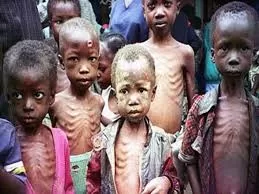
More than 600 malnourished children have died in northern Nigeria within six months due to a lack of access to proper care, international medical charity, Médecins Sans Frontières (Doctors Without Borders), has said.

The organisation described the situation as an “alarming malnutrition crisis,” warning that the scale of the emergency exceeds previous projections, with foreign aid drying up and compounding the problem.

According to a statement released by MSF on Friday, the most severe and life-threatening form of malnutrition among children increased by a staggering 208 per cent between January and June 2025, compared to the same period last year.

“Unfortunately, 652 children have already died in our facilities since the beginning of 2025 due to a lack of timely access to care,” MSF said.

The group linked the worsening crisis to sharp cuts in international funding, particularly from the United States, under the administration of former President Donald Trump. Similar reductions in support from the United Kingdom and the European Union have further strained efforts to tackle the growing emergency.

MSF’s country representative in Nigeria, Ahmed Aldikhari, said the funding shortfalls, alongside soaring living costs and increasing jihadist attacks in the region, were having a devastating impact on vulnerable communities.

“The true scale of the crisis exceeds all predictions,” Aldikhari said.

Pregnant and breastfeeding women are also being hit hard. A recent MSF survey involving 750 mothers showed that more than half were “acutely malnourished,” with 13 per cent suffering from the most severe form of malnutrition.

The United Nations World Food Programme (WFP) also raised the alarm earlier in the week, revealing that nearly 31 million Nigerians are currently grappling with acute hunger.

WFP’s country director, David Stevenson, warned that the agency would be forced to suspend emergency food and nutrition assistance for 1.3 million people in northeast Nigeria by the end of July due to “critical funding shortfalls.”

Northern Nigeria has long struggled with insurgency, but the current wave of malnutrition threatens to deepen the region’s humanitarian crisis unless urgent interventions are made.

Comments

News

Kola Oyewo’s family to Adeleke, Ooni, Atiku: Your condolences are our pillar of strength

Published

on

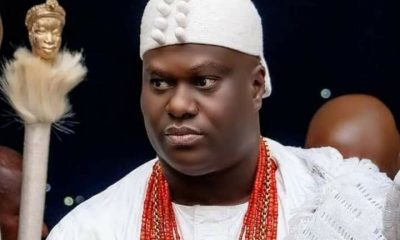
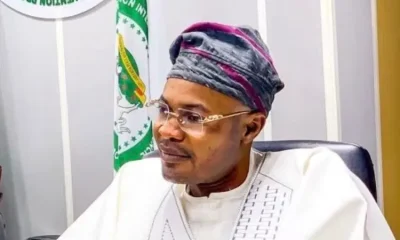
The family of the late veteran actor and scholar, Chief (Prof.) Adekola “Kola” Oyewo, has expressed deep appreciation to Governor Ademola Adeleke of Osun State, the Ooni of Ife, Oba Adeyeye Enitan Ogunwusi, Ojaja II, and former Vice President Atiku Abubakar, among other Nigerians, for their messages of condolence and support following the death of their patriarch.

In a statement issued on Saturday by Dr. Adewale Oyewo on behalf of the family, the bereaved household said the overwhelming show of sympathy, prayers, visits and acts of kindness from across Nigeria and beyond had served as a strong pillar of comfort in their period of grief.

The family described the late Oyewo as a respected community leader, accomplished academic, devoted family man, and traditional title holder whose life was defined by service, integrity, and unwavering commitment to societal development.

According to the statement, the tributes received in his honour reflect the far-reaching impact he made on students, colleagues, cultural practitioners and the wider society.

The family particularly appreciated Governor Ademola Adeleke for his condolence message and prayers, noting that his support had been deeply comforting.

It also expressed gratitude to the Ooni of Ife, whose words of encouragement were described as uplifting and consoling during the mourning period.

The statement further acknowledged the Oloba of Oba-Ile, Oba (Prof.) Adekunle Ashamu Oyeyemi (Tewogbade I), the Oloba-in-Council, and other traditional institutions for their fatherly support and solidarity.

Former Vice President Atiku Abubakar was also commended for his message of sympathy, which the family said brought reassurance in their moment of loss.

The family extended appreciation to professional bodies including the National Association of Nigerian Theatre Arts Practitioners (NANTAP) and the Theatre Arts and Motion Pictures Practitioners Association of Nigeria (TAMPAN), as well as academic communities of Obafemi Awolowo University, Redeemer’s University, Ekiti State University, and Elizade University, where the deceased served.

They also thanked friends, associates and well-wishers who stood by them with prayers and support.

“As we continue preparations to honour the life and legacy of our beloved patriarch, we humbly seek continued prayers and support,” the statement added, praying for the peaceful repose of his soul.

Continue Reading

News

IGP appoints Iniedu Force spokesman, replaces Placid

Published

on

photo combo of Anietie Iniedu and outgoing Force spokesman, Anthony Placid

The Inspector-General of Police, Tunji Disu, has appointed Anietie Iniedu as the new Public Relations Officer of the Nigeria Police Force, succeeding Anthony Placid, who was appointed to the position barely three months ago.

The appointment was announced in a statement issued on Friday by Placid, who described his successor as a seasoned police officer with extensive experience in public communication, operational policing, intelligence management, institutional accountability and administration.

An indigene of Etinan Local Government Area of Akwa Ibom State, Iniedu holds a Bachelor of Science degree in Pure Chemistry from the University of Uyo and has attended several professional courses in investigative interviewing, crime scene management, intelligence analysis, strategic communication and human rights-based policing.

Before his latest appointment, Iniedu headed the Complaint Response Unit at the Force Headquarters, Abuja, where he coordinated the management of public complaints and drove initiatives aimed at deepening transparency, accountability and public trust in the Nigeria Police Force.

He also served as Public Relations Officer of the Police College of Information Technology, Kobape, Ogun State, in addition to holding several operational and administrative positions across the country.

His previous postings include Operations Officer at the Maisandari Division in Yobe State, Area Crime Officer at the Umuahia Area Command in Abia State, Staff Officer at the IGP Secretariat, Force Headquarters, Second-in-Command of the 50 Police Mobile Force Squadron, Kubwa, and Officer-in-Charge of the Force Headquarters Situation Room, where he coordinated the dissemination of crime and security information nationwide.

The statement quoted the Inspector-General as expressing confidence in Iniedu’s capacity to lead the Force Public Relations Department, noting that his wealth of experience and professional background would further strengthen the police’s strategic communication architecture and enhance engagement with members of the public.

Continue Reading

News

Govs Back State Police, Power Reform, Nutrition Drive, World Bank Partnership

Published

on

Insist state policing must align with federalism, citizens’ rights as governors deepen talks on constitutional review, energy transition, agriculture, social protection

The 36 state governors under the umbrella of the Nigerian Governors’ Forum have renewed their support for the establishment of state police and sweeping reforms in Nigeria’s power sector, signalling fresh momentum for key constitutional and economic restructuring efforts.

The position was contained in a communiqué issued at the end of the Forum’s second meeting held on Wednesday, where the governors deliberated on security, energy, nutrition, agriculture and development partnerships affecting the country.

According to the communiqué, the governors engaged in extensive consultations with Attorneys-General across the states to review proposed constitutional amendments relating to state policing and other governance reforms.

They stressed that any framework for state police must be “constitutionally sound, consistent with federalism, and protective of citizens’ rights,” adding that ongoing legal consultations would help shape a unified and stronger position for the states ahead of national engagement.

The Forum noted that the collaborative review process with legal advisers was already producing inputs expected to strengthen the collective stance of states on security restructuring in the country.

On social development, the governors received a presentation from the Federal Ministry of Budget and Economic Planning on progress under the National Nutrition 774 (N-774) Initiative, aimed at tackling malnutrition at the grassroots.

They reaffirmed their commitment to improving nutrition outcomes across Nigeria, particularly in reducing child malnutrition, and expressed support for the ongoing consideration of the National Nutrition Bill.

The governors also called for sustained engagement with stakeholders to strengthen the legal and institutional framework guiding nutrition governance nationwide.

In another briefing, the Forum was updated by the World Bank Country Office on the proposed Country Partnership Framework (CPF) for Nigeria (FY2026–2032), alongside the Nigeria Sustainable Agricultural Value-Chains for Growth (AGROW) Programme.

The AGROW initiative is designed to boost agricultural productivity, strengthen value chains, attract private sector investment, improve food security, and support early childhood development interventions across participating states.

The governors expressed support for continued collaboration with the Federal Government, the World Bank and development partners, while endorsing state-specific interventions aimed at ensuring effective implementation and measurable impact.

They further urged stronger inter-sectoral coordination in health, nutrition, education, water and sanitation, and social protection systems to improve outcomes for citizens.

On energy reform, the Forum considered the National Solar Super-Grid (NSSG) Initiative, a plan to expand electricity access through decentralised solar generation integrated into a national transmission backbone.

The governors noted the initiative’s potential to improve energy security, deepen industrialisation, strengthen state electricity markets and accelerate economic growth across the federation.

Reaffirming their commitment to power sector reforms, the governors pledged sustained collaboration with stakeholders to expand access to reliable and affordable electricity, describing energy reform as central to job creation, productivity and national development.

The meeting ended with a renewed resolve by the governors to deepen cooperation on reforms seen as critical to economic stability, security restructuring and improved welfare for Nigerians.

Continue Reading

Advertisement

Entertainment

Advertisement

MegaIcon Magazine Facebook Page

Advertisement

MEGAICON TV

Advertisement

Trending