Connect with us

News

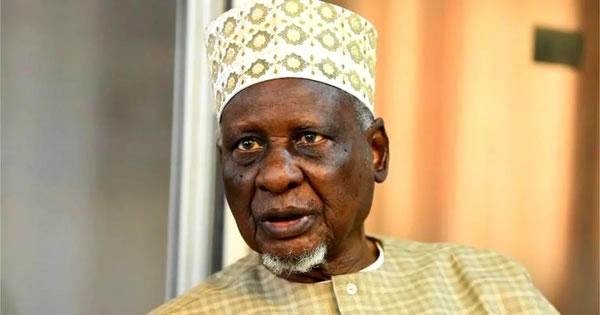
MUSLIM-MUSLIM TICKET: Political exigency made Tinubu choose Shettima – Yakassai

Published

on

2023: Nothing wrong with Muslim-Muslim ticket — Tanko Yakassai
•Says Southern Muslim/Northern Christian ticket cannot win presidential poll in Nigeria

In this interview with John Alechenu, Elder statesman, Tanko Yakassai, speaks about the controversy generated by the Muslim/Muslim ticket of the All Progressives Congress, APC, and the danger posed to Nigeria’s democracy by the growing monetization of politics.

There has been an outcry over the decision of the Presidential Candidate of the APC, Asiwaju Ahmed Tinubu, to choose a fellow Muslim, Senator Kashim Shettima, as his running mate. Some have expressed fears that the decision could further polarize the country.

Do you think these fears are justified?

No, the fear is not justified. What do you think is the percentage of Christians in the North when compared to Muslims? There are six Muslim majority states in the North-Kano, Jigawa, Sokoto, Katsina, Zamfara and Kebbi states. When you add the population of these states, take it out of the total population of Northern Nigeria, then divide the remaining population in terms of Muslim/Christian dichotomy.

I will tell you my estimates which if anyone so desires, he can go and verify. My guess is that out of the population of the North, Christians will be about anywhere between 30 and 35 per cent. There are 19 states in the North, only one state which is an absolutely Christian majority, which is Benue. Then there are states where the ratio is 65/35 per cent or 60/40 and so on. Only Benue is having about 90 per cent Christian and 5 to 10 per cent Muslims.

Plateau at best; a conservative estimate is 55 per cent Christian, 35 per cent Muslims and others forming the rest. If you go to Bauchi, the figure is more in favour of Muslims, the same in Kaduna, Niger and Kogi states. Not to talk of Borno, Yobe, Adamawa, Gombe and so on. My conservative estimate is 30/70 in favour of Muslims.

If you go to Southern Nigeria, my conservative estimate is 30 per cent Muslim, 70 per cent Christian. So, in the entire population of Nigeria, 70 in the South and 30 in the North, now take the whole country, Tinubu from the South-West or let’s say a minority from the South if you’re looking at religion as the factor.

Muslims are more than 30 per cent in the South, if you look at it closely. They are the majority in Lagos, Oyo, and Ogun states. If you take it at even conservative estimate for the entire South, 30/70, now you compare the Southern 30 per cent, you have a minority Muslim from the South and the minority Christian from the North put together, you cannot get majority votes.

But in Nigeria, it is only now that people are looking at this in terms of Christian/Muslim. If you look at states where Christians are in the majority, take Plateau for example, they are always Christian/Christian. The Governor is Christian, his Deputy is Christian but if you go to the South, even the only place where Muslims produce Governors are Oyo and Lagos; even there most times you get Christians as deputies. By these rough estimates, Southern Muslim/Northern Christian ticket cannot win the Presidential election in Nigeria speaking practically.

During the First and Second republics which you were a part of, adherents of the two major faiths were given a sense of belonging at the national level. What are your thoughts about the argument that the way the President Muhammadu Buhari-led APC administration has governed is responsible for the fears being expressed by a cross section of Nigerians?

We are faced with a new reality; people are going to cast their votes. Do you see a majority Muslim Nigerians voting for a Christian Minority northerner and a Southern Minority Muslim ticket?

It is unlikely. When Buhari came in 2014/2015, northerners and southerners came together to say he was the one. Remember, I came out and cautioned Nigerians, I said clearly that Buhari was not competent, that he has no capacity to govern. I was lucky at the time otherwise I would have been killed by Buhari die-hards.

By divine intervention, a lot of people now are wiser. A lot of people who believed then that Buhari was the right person at that time now know that he is not. When you come to talk of elections, my experience is that it’s the Christians who are raising this issue today, not Muslims. There are many states in Nigeria in the North and in the South where you have a Christian Governor and a Christian deputy. Nobody has ever raised issue with that. Now that this is becoming a problem, it is because of the mischief of certain individuals or their shortsightedness. If they didn’t do it wouldn’t be a problem today.

Would you say glaring monetization of our electoral system, which has seen some political parties selling Presidential nomination forms for as high as N100 million is healthy for the development of our democracy?

Certainly not, the way money is being elevated in our democratic process, I’m afraid we are gradually making it impossible for Nigerians who have something to offer in terms of leadership but have no money to join the political arena. There is a limit to what people can tolerate in this country.

My fear is that if we continue like this, I feel-I don’t pray that we create a situation where the military will attempt to return to further disrupt the system-God forbid. All this money politics was brought to the fore by successive military regimes. It was not like this before. By the time Shehu Shagari was elected as president of this country, I was a founding member of the defunct National Party of Nigeria, NPN.

I was a member of the party’s National Executive Committee; I have a fair knowledge of how things were done. I was a member of the campaign council; I was deputy chairman of the party in Kano State at that time. I was right inside the thick of the action; I can tell you when we were campaigning for Shagari to become president, and he had no money to buy return tickets to visit his home state Sokoto after each campaign. He never asked for it but we knew as members of the party that he didn’t have it, so we decided to buy tickets for him and one of his close aides, one Isa, to go and return from Sokoto each time they needed to.

Neither Rimi nor Sabo Bakin Zuwo had money to run for elections at the time they won. I can say the same for most of the governors back then, the party and the people of the various states saw their capacity that was the main consideration not how much they had in their bank accounts. It is not the case anymore, sadly.

What in your view is responsible for the obvious desperation among our later day politicians for public office?

Money! In Nigeria today, the amount of money in your pocket will determine which office you aspire for. If you have enough to make you win the nomination as councillor, Chairman, member of the State or National Assembly, Governor or President, that is what you go for.

Even Buhari was said to have no money I don’t know how true, but I know how many rich people contributed huge amounts of money for him in 2014 and I asked a member of his party one day whether he paid all the money donated to him for the election into the party’s coffers for the campaigns. He said no, never. All the contributions made to Buhari were kept by Buhari not the party. I pray there will be some evidence to the contrary.

What can you say about the clamour for party supremacy? With happenings today, do you think our political parties are returning to this era where it can truly be supreme?

I’m afraid, they are not. What we have today is a situation where governors because of their access to huge public funds control everything. They decide who becomes what; money decides virtually everything these days, why do you think Tinubu and Atiku emerged as candidates of the two major parties?

Now, even if the money that will be required for the election is legitimate, I’m telling you what happened during the second Republic. Only two weeks ago, when Tinubu decided to pick Shettima as his running mate, I read from the newspapers that governors teamed up and sent a delegation to Buhari and I suspect they wanted Buhari to facilitate a change.

Most of the other parties wanted the running mates to be chosen from among their ranks. This is something which cannot last in this country. Governors now decide who should be a councillor, council chairman, Senators, House of Representative members. This is very dangerous because the voice of ordinary citizens is becoming extinct in the nomination process.

The 36 state governors decide the fate of Nigerians when it comes to elections; this is not how democracy is designed to work. A time will come in this country when Nigerians will say enough is enough.

Comments

News

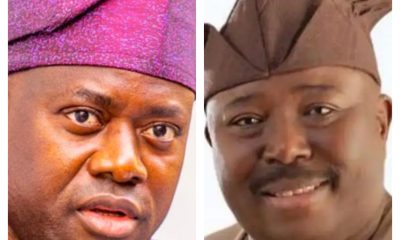
‎OYO 2027: ‘Fact-Check Always’ – Oseni’s Aide Replies Ex-AGF , Ojo Over Alli’s Campaign Billboard Claims

Published

on

The media aide to the All Progressives Congress (APC) senatorial candidate for Oyo South, Hon. Aderemi Oseni,  Com. Idowu Ayodele, has dismissed allegations that his principal deliberately excluded the party’s governorship candidate, Senator Sharafadeen Alli, from his campaign activities.

‎Idowu described the allegation by a former Attorney-General and Commissioner for Justice in Oyo State, Mutalubi Ojo Adebayo, SAN, as unfounded, saying it was based on hearsay rather than facts.

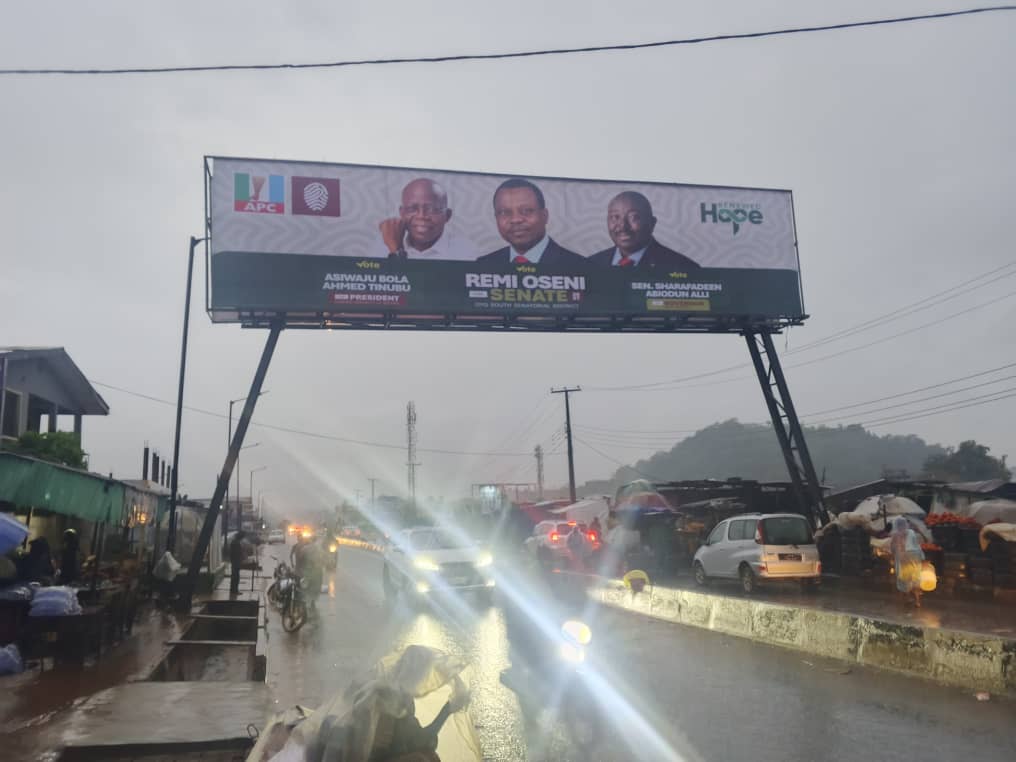
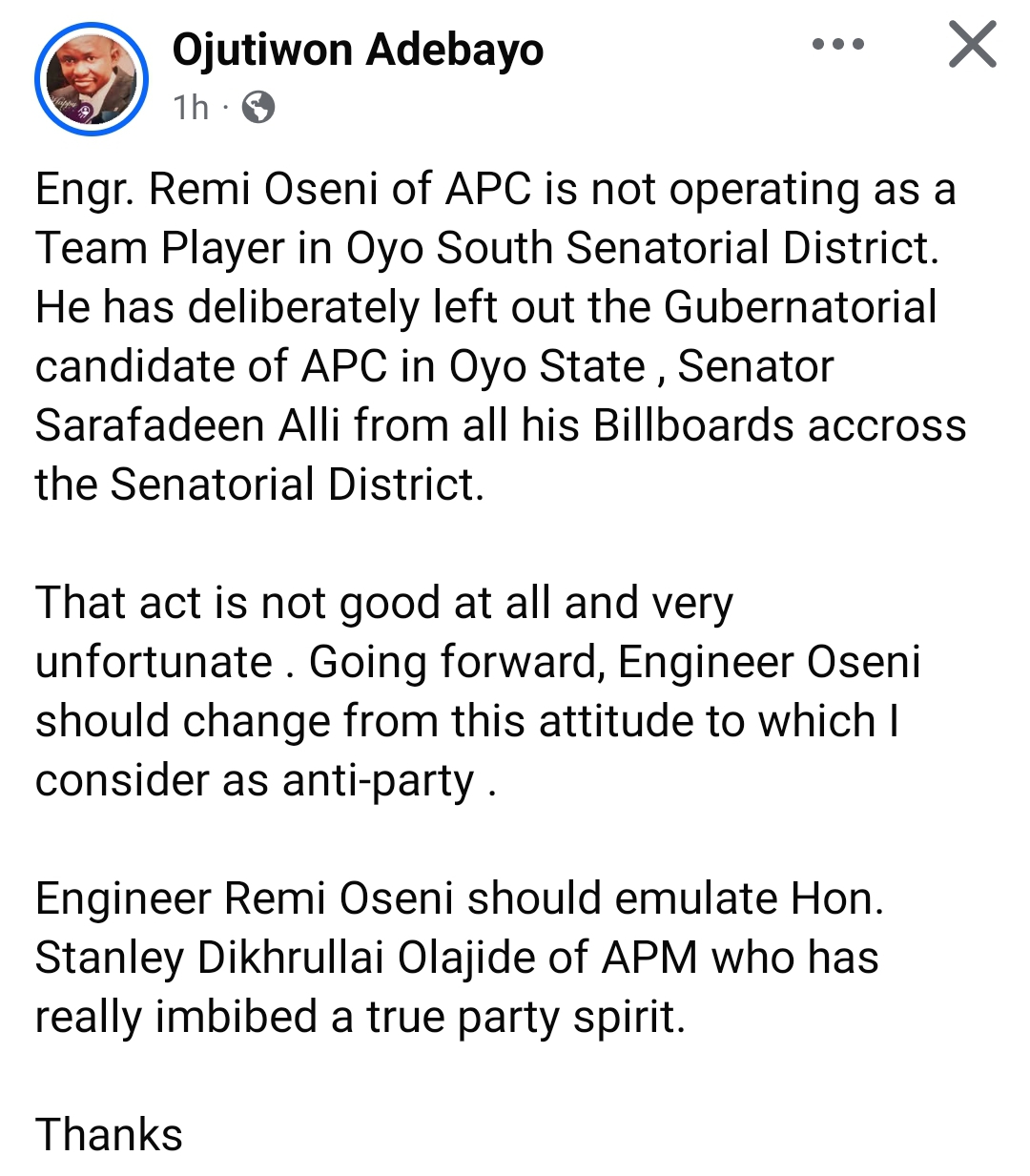
‎Adebayo had, in a Facebook post on Friday, accused Oseni of not being a team player and alleged that the lawmaker deliberately left Alli out of his campaign billboards across Oyo South Senatorial District.

The former Attorney-General described the alleged action as anti-party and unfortunate, urging Oseni to retrace his steps in the interest of party unity ahead of the 2027 general elections.

‎Adebayo also appealed to the APC leadership in Oyo State to intervene and ensure a united and coordinated campaign structure.

‎However, Idowu, while reacting to the allegation, urged the former Attorney-General to verify his facts before making such claims.

‎“I cannot pre-empt your reason or say exactly what informed your decision or the motive behind your post.

“But knowing your nature and what you stand for, I believe your submissions on issues like this should not be based on hearsay. They should be based on facts, proper checks, genuine information and, where necessary, investigation,” he said.

‎Idowu said contrary to the allegation, Oseni had sponsored and erected no fewer than 20 billboards across Oyo South featuring Alli.

“For the record, there are no fewer than twenty billboards presently across Oyo South Senatorial District, sponsored and erected by Hon. Aderemi Oseni, featuring the APC governorship candidate, Senator Sharafadeen Alli,” he stated.

‎According to him, Oseni’s support for Alli was not limited to billboard publicity, as the lawmaker had also actively campaigned and solicited support for the APC governorship candidate, President Bola Tinubu and other candidates of the party.

“Oseni did not just sponsor or erect billboards. He also actively campaigned and solicited support for President Tinubu, Senator Alli and other APC candidates.

“This is a known fact, and Senator Alli himself can attest to it,” Idowu added.

The media aide urged Adebayo to verify the information and correct the impression created by his post.

“I therefore expect you, as a man of honour and integrity, to do the needful by verifying the facts and honourably debunking the falsehood contained in your post,” he stressed.

Idowu also appealed to APC leaders and stakeholders in the state to exercise caution in their public statements, warning that unverified allegations could create unnecessary tension among party leaders.

Continue Reading

News

FG vows to tackle power crisis, commissions 3MW solar plant at Abuja varsity

Published

on

Joseph Tegbe

The Federal Government has vowed to tackle Nigeria’s power challenges, with the Minister of Power, Joseph Tegbe, assuring Nigerians that the administration of President Bola Tinubu will deliver on its promise of improved electricity supply.

Tegbe gave the assurance on Wednesday in Abuja while commissioning a 3MW solar hybrid power project at Yakubu Gowon University, formerly the University of Abuja.

The project, delivered under Phase II of the Federal Government’s Energising Education Programme, is expected to provide more reliable electricity for teaching, research, laboratories, digital services and other critical activities at the university.

The intervention was implemented by the Rural Electrification Agency through the World Bank-funded Nigeria Electrification Project.

The facility comprises a 3.3MW solar array, 3MW AC output capacity and 2MWh battery storage designed to support critical loads beyond daylight hours. The project also includes 388 solar-powered streetlights to improve lighting and security across the campus.

Speaking at the commissioning, Tegbe said the project demonstrated how investment in electricity could directly support human capital development.

“There is perhaps no better place to demonstrate the practical value of Nigeria’s energy transition than a university,” the minister said.

He explained that universities required dependable power not only for classrooms, but also for research, laboratories, technology, administration and digital services.

Tegbe, who described the commissioning as the beginning rather than the end of the investment, said the government was also working to ensure that renewable energy facilities remained functional over the long term.

He said the newly established Renewable Asset Management Company would play a role in ensuring proper management and maintenance of renewable energy assets.

The minister also disclosed that efforts were underway to extend electricity coverage to other parts of the university, including student hostels, following requests from the institution’s Student Union Government and management.

He said the government would work towards ensuring that other areas of the university were covered within six months.

The Managing Director of the REA, Abba Aliyu, said the Energising Education Programme had evolved from simply providing electricity infrastructure to supporting education, research and human capital development.

According to him, the programme has so far delivered renewable energy infrastructure to 22 federal universities and three affiliated teaching hospitals, deploying more than 100MW of clean energy nationwide.

Aliyu said the experience gained from the projects had shown the need to pay as much attention to maintenance and long-term performance as to construction.

“We have become very good at asking, ‘How do we build more?’ We must now become equally rigorous about asking, ‘How do we protect what we have already built? How do we make it perform? And how do we preserve its value?’” he said.

The Head of the Nigeria Electrification Project, Olufemi Akinyelure, said the impact of the project should be measured beyond the electricity generated.

He said reliable electricity would enable laboratories to function, support research and create better conditions for students and lecturers.

“Government may not be in the business of making profit, but it must always be in the business of making progress,” Akinyelure said.

The Vice-Chancellor of Yakubu Gowon University, Prof. Hakeem Fawehinmi, described the project as a major investment in the institution’s academic mission.

Fawehinmi said the university could not effectively teach, conduct meaningful research, operate laboratories or sustain digital services without dependable electricity.

He assured the Federal Government and other partners that the university would properly utilise and maintain the facility.

Also speaking, the Chairman of the Senate Committee on Power, Senator Enyinnaya Abaribe, said the project underscored the need to connect government investment with sustainable outcomes.

Abaribe urged the university to take ownership of the facility and ensure that appropriate arrangements were made for its operation, maintenance and protection.

Beyond electricity generation, the project includes a Renewable Energy Workshop and Training Centre designed to support practical learning and skills development in renewable energy technologies.

The programme also has a female STEM component aimed at giving students practical exposure to renewable energy and opportunities in the sector.

The project was delivered through collaboration among the Federal Government, REA, the Nigeria Electrification Project, the World Bank, Yakubu Gowon University and EMONE Energy Solutions.

With the facility now commissioned, the focus shifts to keeping it operational and ensuring that improved electricity translates into better learning, stronger research and greater opportunities for innovation at the university.

Continue Reading

News

IGP Disu seeks NIPR partnership to boost public trust in police

Published

on

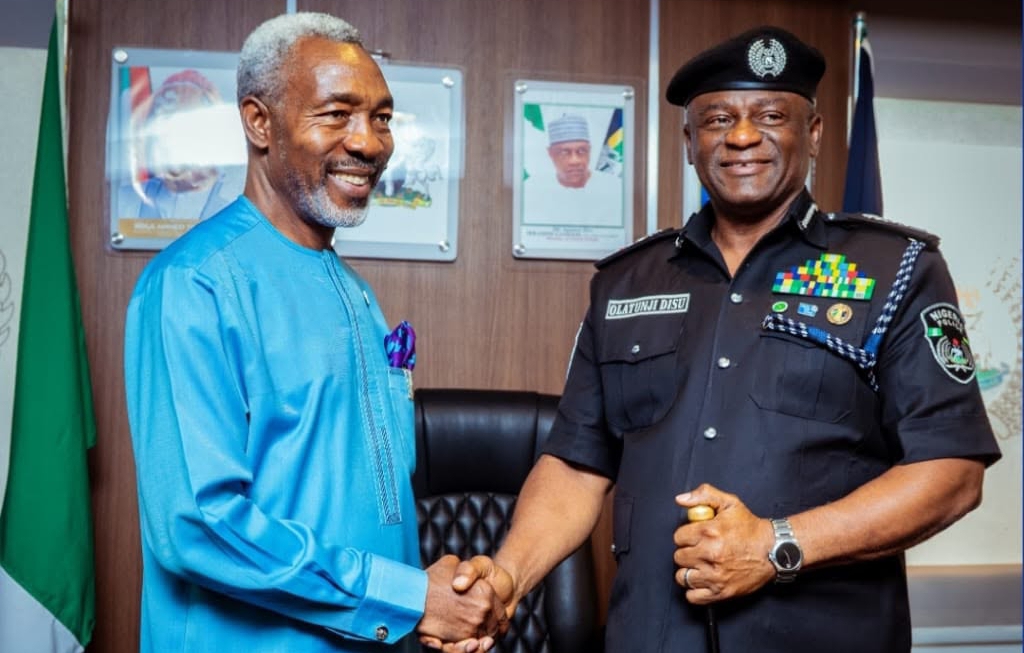
NIPR President, Dr Ike Neliaku, in a handshake with the Inspector-General of Police, Olatunji Disu, at the Force Headquarters in Abuja on Tuesday.

The Inspector-General of Police, IGP Olatunji Disu, has called for stronger collaboration between the Nigeria Police Force (NPF) and the Nigerian Institute of Public Relations (NIPR) to enhance public confidence in the police.

The IGP made the call on Tuesday when he received a delegation of the NIPR, led by its President and Chairman of Council, Dr Ike Neliaku, on a courtesy visit to the Force Headquarters, Abuja.

According to a statement issued by the Force Public Relations Officer, CSP Ani Iniedu, the IGP emphasised the importance of effective communication, professionalism, transparency and fairness in strengthening the relationship between the police and members of the public.

Disu noted that every police officer was an image-maker of the Force, adding that the conduct of personnel in their daily interactions with citizens had a direct impact on public perception of the police.

He said the Nigeria Police Force (NPF) remained committed to policing by consent and promoting a service-oriented policing culture built on professionalism, empathy, accountability and respect for human rights.

The IGP also sought the support of the NIPR in providing specialised communication training for police personnel and developing a coherent communication framework that would effectively communicate the sacrifices and contributions of police officers to public safety and national security.

Earlier, Neliaku commended the IGP for his professional accomplishments and briefed him on Nigeria’s hosting of the 2026 World Public Relations Forum and Africa Charter Forum.

The international event is scheduled to hold at the Transcorp Hilton, Abuja, and is expected to attract more than 3,000 delegates from 126 member countries of the Global Alliance for Public Relations.

The NIPR delegation also sought the support of the Nigeria Police Force in security planning and coverage for the event.

Neliaku further invited the IGP to serve as a keynote speaker at the forum and encouraged police officers to register and participate as delegates.

The delegation included the Secretary-General of the African Public Relations Association, Dr Omoniyi Ibietan; Dr Suleiman Haruna; Mrs Maryam Sanusi; Mrs Olubunmi Badejo; Commandant Olusola Odumosu; Chief Uzoma Oyegbadu; Chief Moji Makanjuola; Mr Stanley Ogadigo and other members of the institute.

Iniedu said the meeting reflected the commitment of the  Police Force to building productive partnerships with professional bodies and other stakeholders to strengthen public trust, enhance public safety and promote national security.


Continue Reading

Trending

All Rights Reserved. Copyright © 2026 MegaIcon Magazine