Connect with us

News

How Taliban’s return has changed Afghan women’s lives

Published

on

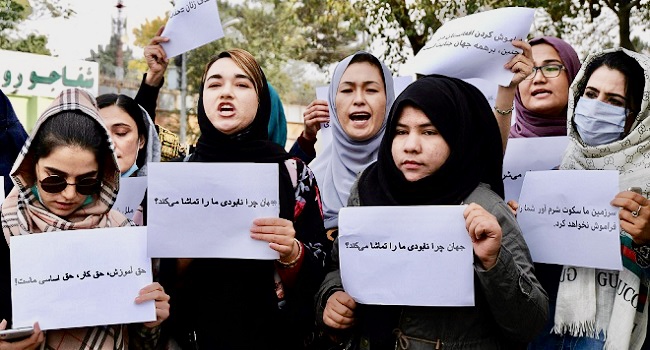
Women hold placards during a protest in Kabul on October 26, 2021, calling for the international community to speak out in support of Afghans living under Taliban rule. (Photo by James EDGAR / AFP)

After seizing control of Afghanistan in August 2021 the Taliban promised a softer version of the harsh rule that characterised their first stint in power when women were stripped of most of their rights.

This time around the movement has largely refrained from issuing rigid national edicts, but authorities at a provincial level have introduced rules and guidelines dictating how women should live.

Here are some areas of women’s lives impacted by the Taliban’s return:

Employment

The Taliban say they allow women to work as long as they are segregated from men.

In practice, however, women are effectively barred from employment — particularly for the government — apart from in specialised sectors such as health care and education.

Even women working in the private sector complain of being harassed going to and from their offices, while Taliban intelligence operatives frequently visit commercial enterprises to make sure strict segregation is enforced.

In some places, however, small women-only cooperatives have been able to continue — such as a jasmine processing facility in the ancient western city of Herat, long considered liberal by Afghan standards.

Still, tens of thousands of Afghan women have been made jobless by the Taliban’s return, overturning two decades of progress in diversifying all aspects of their employment — from the police to courts.

Education 

The Taliban say all girls are entitled to an education, but the majority of secondary schools at least — for those aged from 13 to 18 — have not reopened since August.

Officials now say education for all will resume by the end of March, but an exodus of teachers and a ban on men leading classes for girls means it will be difficult for them to meet that target.

Most private universities have resumed, also while suffering a teacher shortage. But classes must be segregated by sex and there can be no mingling of men and women between lessons.

Some government universities resumed under similar constraints last week, but there was only a trickle of attendance by women at most facilities.

 Personal Freedoms 

During their first stint in power, the Taliban made it compulsory for women to wear an all-covering burqa in public, and agents of the feared Ministry for the Promotion of Virtue and Prevention of Vice would lash anyone caught without.

The ministry put up posters across Kabul last month “suggesting” women should at least wear the less restrictive hijab or headscarf — but the message was accompanied by pictures of the burqa.

An order was also issued saying women could not travel between cities and towns unless accompanied by a male relative, and taxi drivers were told not to pick up female passengers unless they wore head coverings.

Beauty parlours and fashion boutiques were booming before the Taliban’s return, but they have largely disappeared.

Meanwhile, shop mannequins have been beheaded in Herat and billboards featuring the human form taken down because they are deemed un-Islamic.

 Sport And Culture 

Television channels have been ordered to stop showing dramas and soap operas featuring women actors, while female journalists must wear a hijab in front of cameras.

A senior Taliban official has said it is “unnecessary” for women to play sport, but they have been wary of formalising that philosophy because funding from the organisations that govern world sport — including football and cricket — depends on allowing all sexes to play.

Many of the country’s leading singers, musicians, artists, and photographers have fled since the Taliban’s return, while those who couldn’t escape have gone into hiding or are keeping a very low profile.



Comments

News

IGP Disu seeks NIPR partnership to boost public trust in police

Published

on

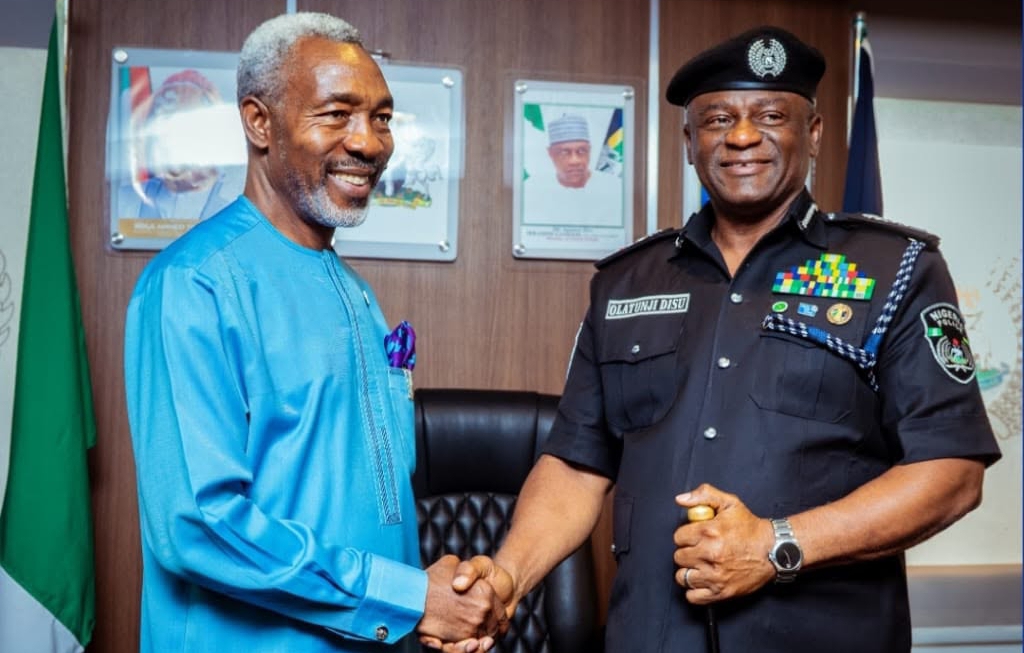
NIPR President, Dr Ike Neliaku, in a handshake with the Inspector-General of Police, Olatunji Disu, at the Force Headquarters in Abuja on Tuesday.

The Inspector-General of Police, IGP Olatunji Disu, has called for stronger collaboration between the Nigeria Police Force (NPF) and the Nigerian Institute of Public Relations (NIPR) to enhance public confidence in the police.

The IGP made the call on Tuesday when he received a delegation of the NIPR, led by its President and Chairman of Council, Dr Ike Neliaku, on a courtesy visit to the Force Headquarters, Abuja.

According to a statement issued by the Force Public Relations Officer, CSP Ani Iniedu, the IGP emphasised the importance of effective communication, professionalism, transparency and fairness in strengthening the relationship between the police and members of the public.

Disu noted that every police officer was an image-maker of the Force, adding that the conduct of personnel in their daily interactions with citizens had a direct impact on public perception of the police.

He said the Nigeria Police Force (NPF) remained committed to policing by consent and promoting a service-oriented policing culture built on professionalism, empathy, accountability and respect for human rights.

The IGP also sought the support of the NIPR in providing specialised communication training for police personnel and developing a coherent communication framework that would effectively communicate the sacrifices and contributions of police officers to public safety and national security.

Earlier, Neliaku commended the IGP for his professional accomplishments and briefed him on Nigeria’s hosting of the 2026 World Public Relations Forum and Africa Charter Forum.

The international event is scheduled to hold at the Transcorp Hilton, Abuja, and is expected to attract more than 3,000 delegates from 126 member countries of the Global Alliance for Public Relations.

The NIPR delegation also sought the support of the Nigeria Police Force in security planning and coverage for the event.

Neliaku further invited the IGP to serve as a keynote speaker at the forum and encouraged police officers to register and participate as delegates.

The delegation included the Secretary-General of the African Public Relations Association, Dr Omoniyi Ibietan; Dr Suleiman Haruna; Mrs Maryam Sanusi; Mrs Olubunmi Badejo; Commandant Olusola Odumosu; Chief Uzoma Oyegbadu; Chief Moji Makanjuola; Mr Stanley Ogadigo and other members of the institute.

Iniedu said the meeting reflected the commitment of the  Police Force to building productive partnerships with professional bodies and other stakeholders to strengthen public trust, enhance public safety and promote national security.


Continue Reading

News

Inflation drops marginally to 15.39% — NBS

Published

on

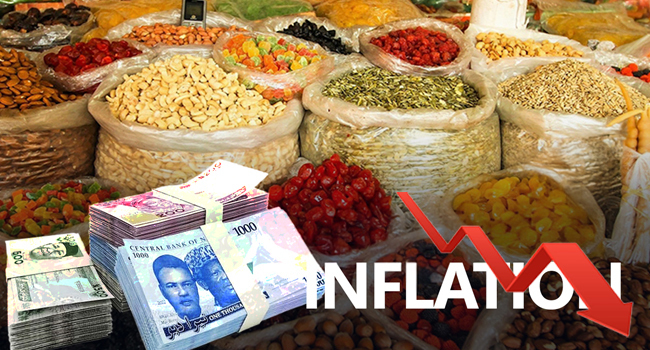
Nigeria’s headline inflation rate fell marginally to 15.39 per cent in August 2026 from 15.43 per cent in July, according to the National Bureau of Statistics.

The NBS disclosed this in its Consumer Price Index released on Tuesday, saying the latest figure represented a 0.04 percentage point decline from the previous month.

The statistics agency, however, reported a sharper decline in the month-on-month inflation rate, which dropped to 0.71 per cent in August from 1.57 per cent in July.

The month-on-month rate, according to the bureau, declined by 0.86 percentage points compared with the July figure.

The NBS explained that the development indicated that the rate at which the average price level increased in August was slower than that recorded in July.

The latest data also showed a significant moderation in food inflation, which stood at 19.57 per cent year-on-year in August.

The figure was substantially lower than the 25.30 per cent recorded in August 2025.

On a month-on-month basis, food inflation fell to 1.02 per cent in August from 5.56 per cent in July, representing a decline of 4.55 percentage points.

The NBS said the development showed that food prices were still rising, but at a slower rate during the month under review.

It attributed the decline largely to changes in the average prices of a number of food items, including palm oil, carrots, pepper, onions, cassava flour, beef, yam flour, water yam, melon (egusi), fresh ginger, fresh fish, Irish potatoes, wheat grain, frozen chicken and turkey meat.

At the state level, Adamawa recorded the highest year-on-year food inflation rate in August at 38.85 per cent.

It was followed by Zamfara with 37.96 per cent and Bayelsa with 36.20 per cent.

On the other hand, Borno recorded the lowest year-on-year food inflation rate at -4.04 per cent, followed by Jigawa at -0.23 per cent and Kebbi at 3.47 per cent.

The month-on-month figures presented a different picture, with Katsina recording the highest food inflation rate at 9.48 per cent.

Rivers and Osun followed with 8.86 per cent and 8.32 per cent respectively.

Taraba recorded the lowest month-on-month food inflation rate at -12.42 per cent, followed by Borno at -12.15 per cent and Bauchi at -8.88 per cent.

The latest figures indicate a moderation in the pace of price increases, particularly in the food sector, although the NBS data show that consumers continue to face varying price pressures across the states.

Continue Reading

News

Nigeria’s Oil Output Rises to 1.68m Barrels Per Day

Published

on

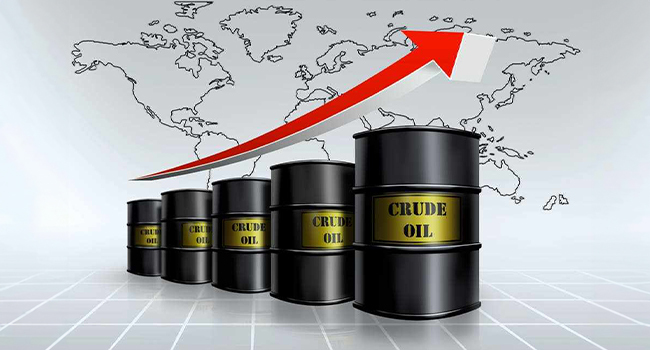
Nigeria’s crude oil and condensate production rose to 1.68 million barrels per day in August 2026, representing a 0.4 per cent increase from the 1.67 million barrels per day recorded in July.

The Nigerian Upstream Petroleum Regulatory Commission disclosed this in its latest production report released on Sunday.

Excluding condensate, the country produced an average of 1,500,190 barrels of crude oil per day in August, allowing Nigeria to meet its Organisation of Petroleum Exporting Countries quota for the fourth consecutive month.

Daily combined crude oil and condensate production ranged between 1.64 million barrels and 1.71 million barrels during the month under review.

A breakdown of production by terminals showed that Bonny Terminal recorded the highest output at 320.04 thousand barrels per day, followed by Forcados Terminal with 317.40 thousand barrels per day.

Qua Iboe Terminal recorded an average production of 171.72 thousand barrels per day, while Escravos Oil Terminal posted 131.71 thousand barrels per day.

Bonga ranked fifth among the highest-producing terminals, with an average output of 92.50 thousand barrels per day.

The NUPRC attributed the modest improvement in August production largely to the resolution of operational challenges involving the Single Buoy Mooring at the Erha field.

The commission said the challenges had adversely affected production in the preceding month.

“The restoration of normal evacuation and production operations at the asset contributed positively to overall production volumes during the period under review,” the commission’s spokesperson, Eniola Akinkuotu, said in a statement on Sunday.

The regulator added that production activities across most other producing assets remained relatively stable during the month.

“Production activities across most other producing assets remained relatively stable, with operators sustaining implementation measures aimed at optimising production efficiency, maintaining asset integrity, and minimising operational disruptions,” the statement said.

The latest figures indicate a continued improvement in Nigeria’s oil production, with the country maintaining its OPEC quota compliance for the fourth consecutive month.

Continue Reading

Trending

All Rights Reserved. Copyright © 2026 MegaIcon Magazine