Connect with us

News

AfDB launches record breaking $3 billion “Fight COVID-19” Social Bond

Published

on

The African Development Bank (AfDB) has raised an exceptional $3 billion in a three-year bond to help alleviate the economic and social impact the Covid-19 pandemic will have on livelihoods and Africa’s economies.

The Fight Covid-19 Social bond, with a three-year maturity, garnered interest from central banks and official institutions, bank treasuries, and asset managers including Socially Responsible Investors, with bids exceeding $4.6 billion. This is the largest dollar denominated Social Bond ever launched in international capital markets to date, and the largest US Dollar benchmark ever issued by the Bank. It will pay an interest rate of 0.75%.

The African Development Bank Group is moving to provide flexible responses aimed at lessening the severe economic and social impact of this pandemic on its regional member countries and Africa’s private sector.

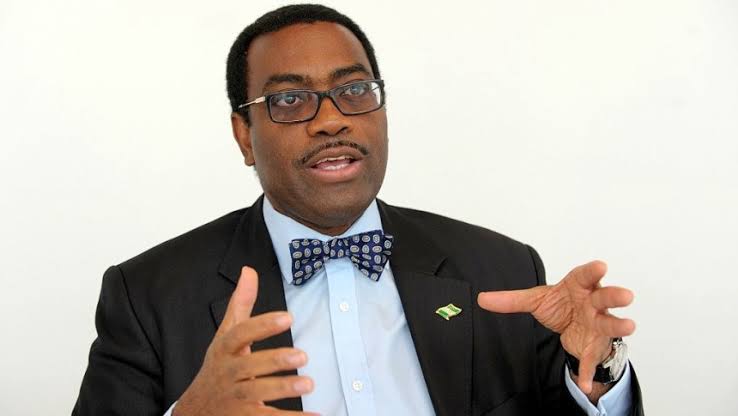
“These are critical times for Africa as it addresses the challenges resulting from the Coronavirus. The African Development Bank is taking bold measures to support African countries. This $3 billion Covid-19 bond issuance is the first part of our comprehensive response that will soon be announced. This is indeed the largest dollar social bond transaction to date in capital markets. We are here for Africa, and we will provide significant rapid support for countries,” said Dr. Akinwumi Adesina, President of the African Development Bank Group.

The order book for this record-breaking bond highlights the scale of investor support, which the African Development Bank enjoys, said the arrangers.

“As the Covid-19 outbreak is dangerously threatening Africa, the African Development Bank lives up to its huge responsibilities and deploys funds to assist and prepare the African population, through the financing of access to health and to all other essential goods, services and infrastructure,” said Tanguy Claquin, Head of Sustainable Banking, Crédit Agricole CIB.

Coronavirus cases were slow to arrive in Africa, but the virus is spreading quickly and has infected nearly 3,000 people across 45 countries, placing strain on already fragile health systems.

It is estimated that the continent will require many billions of dollars to cushion the impact of the disease as many countries scrambled contingency measures, including commercial lockdowns in desperate efforts to contain it. Globally, factories have been closed and workers sent home, disrupting supply chains, trade, travel, and driving many economies toward recession.

Commenting on the landmark transaction, George Sager, Executive Director, SSA Syndicate, Goldman Sachs said: “In a time of unprecedented market volatility, the African Development Bank has been able to brave the capital markets in order to secure invaluable funding to help the efforts of the African continent’s fight against Covid-19. Not only that, but in the process, delivering their largest ever USD benchmark. A truly remarkable outcome both in terms of its purpose but also in terms of a USD financing”.

The Bank established its Social Bond framework in 2017 and raised the equivalent of  $2 billion through issuances denominated in Euro and Norwegian krone. In 2018 the Bank was designated by financial markets, ‘Second most impressive social or sustainability bond issuer” at the Global Capital SRI Awards.

“We are thankful for the exceptional level of interest the Fight Covid-19 Social Bond has raised across the world, as the African Development Bank moves towards lessening the social and economic impact of the pandemic on a continent already severely constrained. Our Social bond program enables us to highlight our strong development mandate to the investor community, allowing them to play a part in improving the lives of the people of Africa. This was an exceptional outcome for an exceptional cause,” said Hassatou Diop N’Sele, Treasurer, African Development Bank.

Fight Covid-19 was allocated to central banks and official institutions (53%), bank treasuries (27%) and asset managers (20%). Final bond distribution statistics were as follows: Europe (37%), Americas (36%), Asia (17%) Africa (8%,) and Middle-East (1%).

Comments

News

Oseni mourns ex-Oyo lawmaker Akeem ‘Able’, says Oyo APC has lost loyal progressive

Published

on

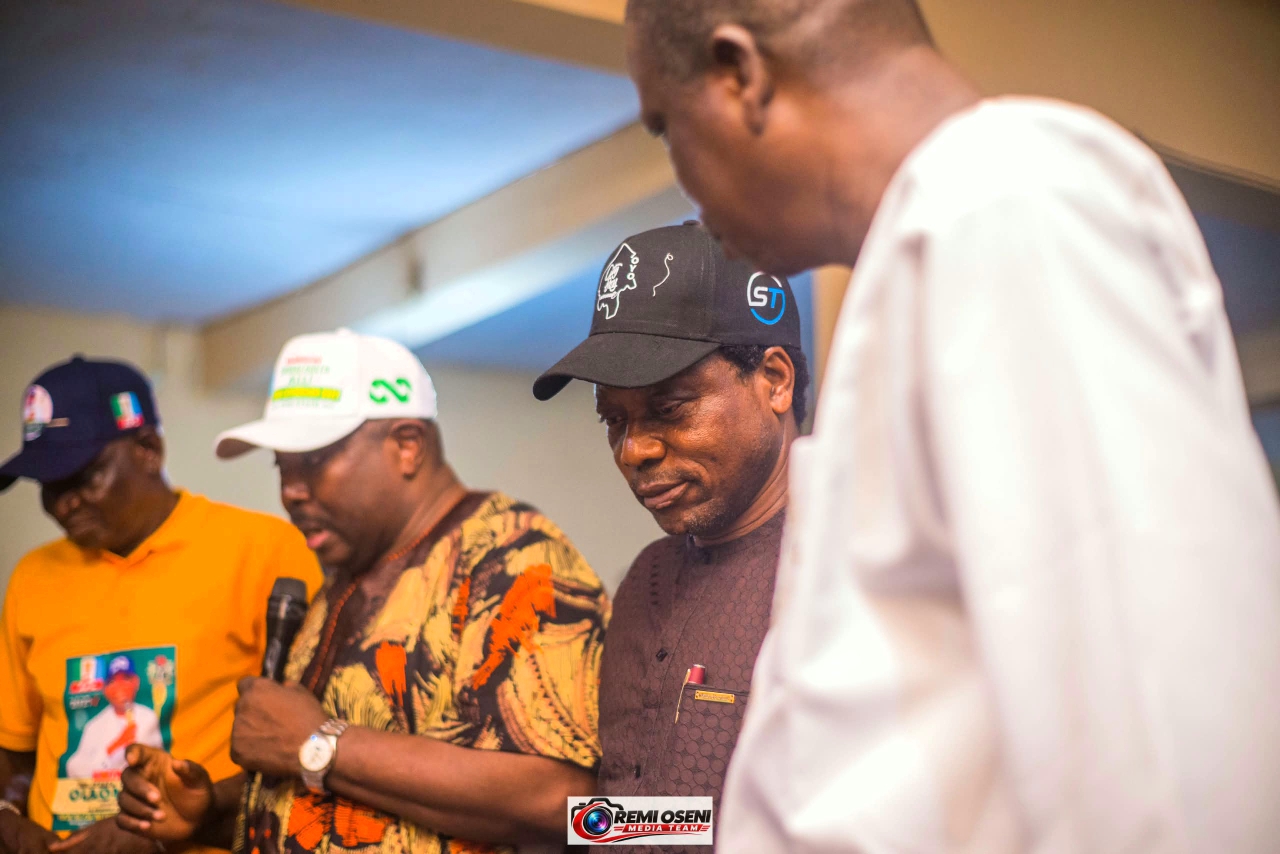
The lawmaker representing Ibarapa East/Ido Federal Constituency in the House of Representatives, Engr. Aderemi Oseni, has mourned the death of a chieftain of the All Progressives Congress (APC) in Oyo State and former member of the Oyo State House of Assembly, Hon. Akeem Abimbola Oladipupo, popularly known as Able, describing his demise as a painful loss to the progressive family.

Oladipupo, who represented Ibadan North-West Constituency in the Oyo State House of Assembly, was widely regarded as a grassroots politician and committed party loyalist until his passing.

Oseni, who is also the Chairman, House Committee on Federal Roads Maintenance Agency and the APC candidate for Oyo South Senatorial District, said the late politician’s death had created a vacuum within the party and among those who benefitted from his unwavering commitment to public service.

In a condolence statement issued on Monday by his Media Aide, Idowu Ayodele, and made available to journalists in Ibadan, the Oyo State capital, the federal lawmaker described the late Oladipupo as a dependable progressive, humble political actor and loyal party stalwart whose impact would remain indelible.

He said the deceased dedicated his life to serving humanity, strengthening the progressive movement and supporting the aspirations of many at the grassroots.

Oseni said, “The death of Hon. Akeem Abimbola Oladipupo (Able) came to me as a rude shock. Oyo State and the progressive family have indeed lost a committed, loyal and selfless leader whose passion for service, humility and dedication to the people stood him out.

“He was not just a politician but a bridge-builder, a dependable ally and a grassroots mobiliser who believed strongly in the ideals of our great party. His contributions to the growth of the APC in Oyo State and his service to humanity will remain unforgettable.”

The APC senatorial candidate noted that the late former lawmaker remained steadfast in promoting peace, unity and political development, adding that his simplicity and accessibility endeared him to many across political divides.

According to Oseni, the late politician’s legacy of service and sacrifice would continue to inspire younger politicians and party faithful.

He, however, urged members of the APC, associates and family members of the deceased to take solace in the remarkable life he lived and the positive impact he made during his lifetime.

Oseni also prayed for the repose of the deceased’s soul and for God to grant his family the fortitude to bear the painful loss.

Continue Reading

News

Governors Push N100,000 Minimum Wage to Ease Workers’ Economic Burden

Published

on

State governors have proposed a new national minimum wage of N100,000 for Nigerian workers as part of efforts to cushion them from the biting effects of inflation and the rising cost of living.

Governor AbdulRahman AbdulRazaq of Kwara State, who is also the Chairman of the Nigeria Governors’ Forum (NGF), disclosed the proposal on Saturday in a post by the state government’s official Facebook page. He said the move aims to improve workers’ welfare while ensuring that government finances remain sustainable.

“State governments recognise the urgent need to improve workers’ welfare in response to the current economic realities facing Nigerians,” AbdulRazaq said.

“We are actively engaging with the Federal Government and organised labour to arrive at a wage structure that is fair to workers and sustainable for government finances.”

The NGF chairman explained that ongoing discussions are focused on balancing the need to boost workers’ purchasing power with the capacity of governments to deliver essential public services and development projects.

“The goal is to improve the living conditions of workers while ensuring that states can continue to meet their obligations and sustain projects that directly impact citizens,” he added.

The proposed N100,000 minimum wage is expected to intensify national debates on salaries, inflation, and broader economic reforms as Nigerians continue to contend with rising food prices, transportation costs, and other living expenses.

Currently, Nigeria’s statutory minimum wage stands at N70,000 per month. Some states, including Lagos, Rivers, and Imo, are already paying above the national benchmark to support workers amid the country’s economic challenges.

Meanwhile, the Nigeria Labour Congress (NLC) has continued to call for a comprehensive review of salaries, insisting that workers deserve a living wage that reflects present-day economic realities rather than merely guaranteeing survival.

Continue Reading

News

Petrol hits N1,533/litre as cooking gas prices jump nationwide

Published

on

The average retail price paid by consumers for Premium Motor Spirit, popularly known as petrol, rose to N1,532.93 per litre in April 2026, representing a 23.69 per cent increase compared to the N1,239.33 recorded in the corresponding period of 2025, findings by the National Bureau of Statistics (NBS) have shown.

The sharp rise in petrol prices came amid mounting inflationary pressure and worsening living costs, with Nigerians grappling with soaring transportation and food expenses that have continued to shrink household purchasing power.

The NBS disclosed this in its Premium Motor Spirit (Petrol) Price Watch for April 2026, released on Friday.

The report further showed that on a month-on-month basis, petrol prices rose by 18.97 per cent from N1,288.54 recorded in March 2026, underscoring persistent volatility in the downstream petroleum market.

A breakdown of prices across states revealed that Yobe recorded the highest average retail price for petrol at N1,599.05 per litre during the review period.

Edo and Bauchi followed closely with average prices of N1,595.74 and N1,589.07, respectively.

However, Niger residents paid the least for petrol at an average of N1,403.89 per litre, while Sokoto and Katsina recorded N1,404.16 and N1,406.28 respectively.

At the zonal level, the South-South recorded the highest average retail price at N1,566.76 per litre, while the North-West posted the lowest at N1,508.81.

The latest petrol price increase comes as millions of Nigerians continue to battle the ripple effects of rising inflation, with higher energy costs worsening transportation fares and the prices of essential commodities.

Similarly, the NBS said the average retail price for refilling a 5kg cylinder of Liquefied Petroleum Gas, also known as cooking gas, rose by 13.73 per cent month-on-month to N8,706.93 in April 2026 from N7,655.73 recorded in March.
On a year-on-year basis, the price increased by 10.42 per cent from N7,885.60 recorded in April 2025.

Lagos recorded the highest average price for refilling a 5kg cylinder at N9,745.10, followed by Nasarawa at N9,451.70 and Bayelsa at N9,422.74.

In contrast, Anambra recorded the lowest average price at N7,204.76, while Ondo and Ogun followed with N7,239.49 and N7,825.75, respectively.

At the regional level, the North-West recorded the highest average retail price for refilling a 5kg cylinder at N9,025.07, followed by the North-East at N8,847.16, while the South-East posted the lowest average price at N8,224.37.

Also, the average retail price for refilling a 12.5kg cylinder of cooking gas increased by 13.89 per cent month-on-month to N22,382.20 in April 2026 from N19,652.83 in March.

Compared to April 2025, the price rose by 10.43 per cent from N20,268.06.

According to the NBS LPG Price Watch for April, Katsina recorded the highest average retail price for refilling a 12.5kg cylinder at N25,596.71, followed by Kogi at N24,558.25 and Gombe at N24,438.97.

Ogun recorded the lowest average price at N19,564.36, while Bauchi and Anambra followed at N20,178.87 and N20,511.90 respectively.

The North-West recorded the highest zonal average retail price for refilling a 12.5kg cylinder at N23,276.95, followed by the North-Central at N22,865.29, while the South-East posted the lowest average at N21,060.92.

The latest figures signal growing pressure on household energy costs, raising concerns over the implications for inflation and the cost of living in the coming months.

Continue Reading

Advertisement

Entertainment

Advertisement

MegaIcon Magazine Facebook Page

Advertisement

MEGAICON TV

Advertisement

Trending