Connect with us

News

Adeolu Akande expresses worry over rising insecurity in Oyo

Published

on

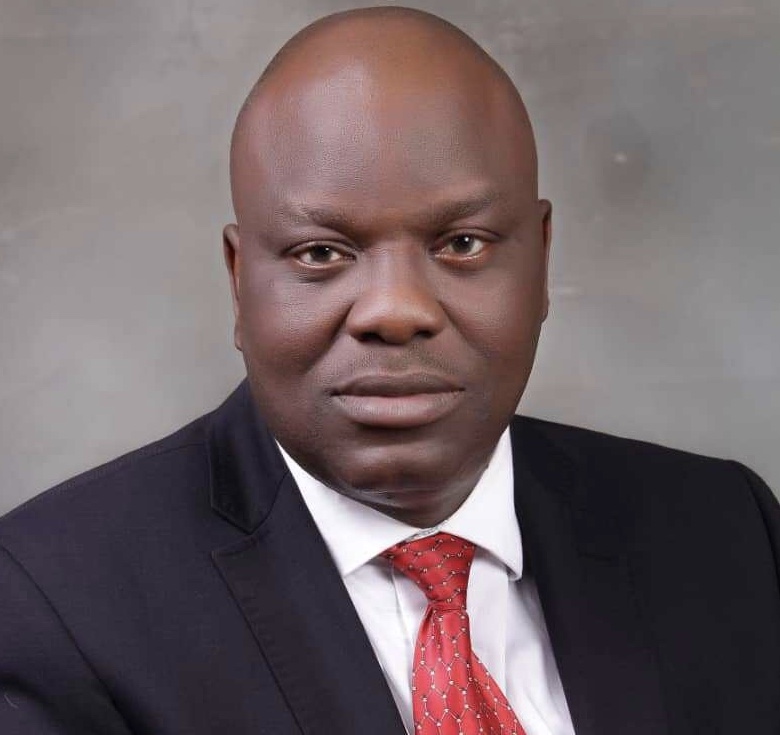
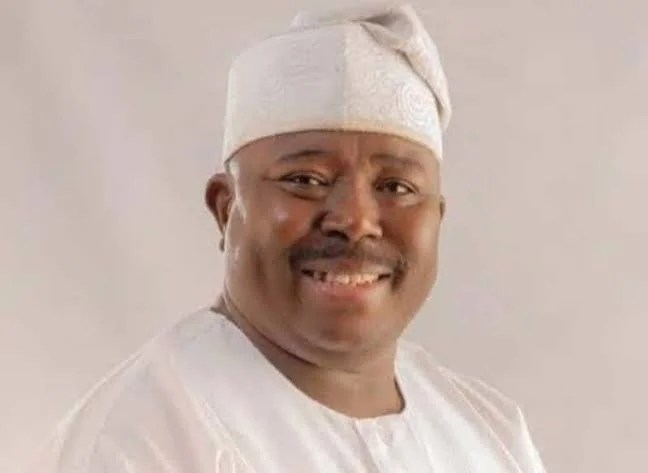
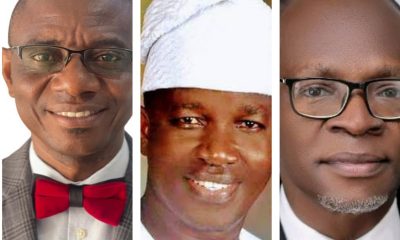
Chairman of the Nigerian Communication Commission, (NCC), Prof. Adeolu Akande, Sunday, raised alarmed over the rising insecurity in Oyo state, urging Governor Seyi Makinde to convene a stakeholders’ meeting to address the challenges.

Prof. Akande, also noted that kidnapping, armed robbery, gang war, thuggery and other social vices which had become alien to the state since 2011 are now the order of the day.

According to the University Don, “I am disturbed by the events of the past few weeks in Oyo State. While Ibarapaland, which used to be very peaceful, has become a haven for kidnappers to operate and assassins to kill, gang wars have not been abated in Ibadan and Oyo. In Okeogun and Ogbomoso, the stories are not different. It is now one day, many crimes.

“Like I said in my Christmas message to the people of our dear state, insecurity has assumed an alarming rate. It is neither time to blame anybody or fold our arms because of our political leanings and watch things degenerate. There is no doubt that Governor Seyi Makinde needs help and we have got to support him with whatever we have”, he added.

While asking Governor Makinde who has been holidaying in Houston Texas, United States of America to return to the country immediately, the APC chieftain, also urged all indigenes, irrespective of their political leanings, to identify with the governor at this critical time.

He continued, “In the present situation we have found ourselves, nothing can thrive and the state, especially its residents are bound to be at the receiving end. When there is insecurity, job owners flee and this will lead to job loss and dwindling IGR. This will lead to more insecurity as many jobless individuals may consider kidnapping and other vices lucrative to survive.

“Yes, Governor Makinde has purchased vehicles and distributed to various security outfits across the state. It is beyond that. They need equipment, they need motivation from both government and the governed, they need training and retraining and more. It is sad that despite the fact that our governor has more than five former police commissioners as advisers, insecurity is rearing its ugly head. I am sure Governor Makinde has not made good use of our friend and former Lagos police commissioner, Mr. Fatai Owoseni, a super cop who led the flushing of the dreaded Badoo boys in Lagos.

“To those of us in the opposition, it is time we dropped our political toga and offer advise to the incumbent administration. Let’s deploy our network of connection to assist the administration as we don’t have any other place to call our state other than Oyo State. Governor Seyi Makinde should, as a matter of fact, be receptive to advise and assistance. Anything that is done to tame this insecurity will be to his credit. Nobody is competing with him as it is not yet election time.

“Governor Seyi Makinde should cut short his vacation to the United States and return home. It is high time we convened a security meeting involving representatives of all of us- farmers, youths, students, community leaders, security agencies, political parties, business owners, monarchs and others. Some of us would be willing to offer advise and strategies and as well deploy our network so as to return our state to what it used to be.

“Government should also be committed to creating gainful employment and conducive environment for job creators to operate. By creating jobs, insecurity would be tamed. Unemployment is one of the reasons insecurity has not reduced,” Akande concluded.

Comments

News

FG vows to tackle power crisis, commissions 3MW solar plant at Abuja varsity

Published

on

Joseph Tegbe

The Federal Government has vowed to tackle Nigeria’s power challenges, with the Minister of Power, Joseph Tegbe, assuring Nigerians that the administration of President Bola Tinubu will deliver on its promise of improved electricity supply.

Tegbe gave the assurance on Wednesday in Abuja while commissioning a 3MW solar hybrid power project at Yakubu Gowon University, formerly the University of Abuja.

The project, delivered under Phase II of the Federal Government’s Energising Education Programme, is expected to provide more reliable electricity for teaching, research, laboratories, digital services and other critical activities at the university.

The intervention was implemented by the Rural Electrification Agency through the World Bank-funded Nigeria Electrification Project.

The facility comprises a 3.3MW solar array, 3MW AC output capacity and 2MWh battery storage designed to support critical loads beyond daylight hours. The project also includes 388 solar-powered streetlights to improve lighting and security across the campus.

Speaking at the commissioning, Tegbe said the project demonstrated how investment in electricity could directly support human capital development.

“There is perhaps no better place to demonstrate the practical value of Nigeria’s energy transition than a university,” the minister said.

He explained that universities required dependable power not only for classrooms, but also for research, laboratories, technology, administration and digital services.

Tegbe, who described the commissioning as the beginning rather than the end of the investment, said the government was also working to ensure that renewable energy facilities remained functional over the long term.

He said the newly established Renewable Asset Management Company would play a role in ensuring proper management and maintenance of renewable energy assets.

The minister also disclosed that efforts were underway to extend electricity coverage to other parts of the university, including student hostels, following requests from the institution’s Student Union Government and management.

He said the government would work towards ensuring that other areas of the university were covered within six months.

The Managing Director of the REA, Abba Aliyu, said the Energising Education Programme had evolved from simply providing electricity infrastructure to supporting education, research and human capital development.

According to him, the programme has so far delivered renewable energy infrastructure to 22 federal universities and three affiliated teaching hospitals, deploying more than 100MW of clean energy nationwide.

Aliyu said the experience gained from the projects had shown the need to pay as much attention to maintenance and long-term performance as to construction.

“We have become very good at asking, ‘How do we build more?’ We must now become equally rigorous about asking, ‘How do we protect what we have already built? How do we make it perform? And how do we preserve its value?’” he said.

The Head of the Nigeria Electrification Project, Olufemi Akinyelure, said the impact of the project should be measured beyond the electricity generated.

He said reliable electricity would enable laboratories to function, support research and create better conditions for students and lecturers.

“Government may not be in the business of making profit, but it must always be in the business of making progress,” Akinyelure said.

The Vice-Chancellor of Yakubu Gowon University, Prof. Hakeem Fawehinmi, described the project as a major investment in the institution’s academic mission.

Fawehinmi said the university could not effectively teach, conduct meaningful research, operate laboratories or sustain digital services without dependable electricity.

He assured the Federal Government and other partners that the university would properly utilise and maintain the facility.

Also speaking, the Chairman of the Senate Committee on Power, Senator Enyinnaya Abaribe, said the project underscored the need to connect government investment with sustainable outcomes.

Abaribe urged the university to take ownership of the facility and ensure that appropriate arrangements were made for its operation, maintenance and protection.

Beyond electricity generation, the project includes a Renewable Energy Workshop and Training Centre designed to support practical learning and skills development in renewable energy technologies.

The programme also has a female STEM component aimed at giving students practical exposure to renewable energy and opportunities in the sector.

The project was delivered through collaboration among the Federal Government, REA, the Nigeria Electrification Project, the World Bank, Yakubu Gowon University and EMONE Energy Solutions.

With the facility now commissioned, the focus shifts to keeping it operational and ensuring that improved electricity translates into better learning, stronger research and greater opportunities for innovation at the university.

Continue Reading

News

IGP Disu seeks NIPR partnership to boost public trust in police

Published

on

NIPR President, Dr Ike Neliaku, in a handshake with the Inspector-General of Police, Olatunji Disu, at the Force Headquarters in Abuja on Tuesday.

The Inspector-General of Police, IGP Olatunji Disu, has called for stronger collaboration between the Nigeria Police Force (NPF) and the Nigerian Institute of Public Relations (NIPR) to enhance public confidence in the police.

The IGP made the call on Tuesday when he received a delegation of the NIPR, led by its President and Chairman of Council, Dr Ike Neliaku, on a courtesy visit to the Force Headquarters, Abuja.

According to a statement issued by the Force Public Relations Officer, CSP Ani Iniedu, the IGP emphasised the importance of effective communication, professionalism, transparency and fairness in strengthening the relationship between the police and members of the public.

Disu noted that every police officer was an image-maker of the Force, adding that the conduct of personnel in their daily interactions with citizens had a direct impact on public perception of the police.

He said the Nigeria Police Force (NPF) remained committed to policing by consent and promoting a service-oriented policing culture built on professionalism, empathy, accountability and respect for human rights.

The IGP also sought the support of the NIPR in providing specialised communication training for police personnel and developing a coherent communication framework that would effectively communicate the sacrifices and contributions of police officers to public safety and national security.

Earlier, Neliaku commended the IGP for his professional accomplishments and briefed him on Nigeria’s hosting of the 2026 World Public Relations Forum and Africa Charter Forum.

The international event is scheduled to hold at the Transcorp Hilton, Abuja, and is expected to attract more than 3,000 delegates from 126 member countries of the Global Alliance for Public Relations.

The NIPR delegation also sought the support of the Nigeria Police Force in security planning and coverage for the event.

Neliaku further invited the IGP to serve as a keynote speaker at the forum and encouraged police officers to register and participate as delegates.

The delegation included the Secretary-General of the African Public Relations Association, Dr Omoniyi Ibietan; Dr Suleiman Haruna; Mrs Maryam Sanusi; Mrs Olubunmi Badejo; Commandant Olusola Odumosu; Chief Uzoma Oyegbadu; Chief Moji Makanjuola; Mr Stanley Ogadigo and other members of the institute.

Iniedu said the meeting reflected the commitment of the  Police Force to building productive partnerships with professional bodies and other stakeholders to strengthen public trust, enhance public safety and promote national security.


Continue Reading

News

Inflation drops marginally to 15.39% — NBS

Published

on

Nigeria’s headline inflation rate fell marginally to 15.39 per cent in August 2026 from 15.43 per cent in July, according to the National Bureau of Statistics.

The NBS disclosed this in its Consumer Price Index released on Tuesday, saying the latest figure represented a 0.04 percentage point decline from the previous month.

The statistics agency, however, reported a sharper decline in the month-on-month inflation rate, which dropped to 0.71 per cent in August from 1.57 per cent in July.

The month-on-month rate, according to the bureau, declined by 0.86 percentage points compared with the July figure.

The NBS explained that the development indicated that the rate at which the average price level increased in August was slower than that recorded in July.

The latest data also showed a significant moderation in food inflation, which stood at 19.57 per cent year-on-year in August.

The figure was substantially lower than the 25.30 per cent recorded in August 2025.

On a month-on-month basis, food inflation fell to 1.02 per cent in August from 5.56 per cent in July, representing a decline of 4.55 percentage points.

The NBS said the development showed that food prices were still rising, but at a slower rate during the month under review.

It attributed the decline largely to changes in the average prices of a number of food items, including palm oil, carrots, pepper, onions, cassava flour, beef, yam flour, water yam, melon (egusi), fresh ginger, fresh fish, Irish potatoes, wheat grain, frozen chicken and turkey meat.

At the state level, Adamawa recorded the highest year-on-year food inflation rate in August at 38.85 per cent.

It was followed by Zamfara with 37.96 per cent and Bayelsa with 36.20 per cent.

On the other hand, Borno recorded the lowest year-on-year food inflation rate at -4.04 per cent, followed by Jigawa at -0.23 per cent and Kebbi at 3.47 per cent.

The month-on-month figures presented a different picture, with Katsina recording the highest food inflation rate at 9.48 per cent.

Rivers and Osun followed with 8.86 per cent and 8.32 per cent respectively.

Taraba recorded the lowest month-on-month food inflation rate at -12.42 per cent, followed by Borno at -12.15 per cent and Bauchi at -8.88 per cent.

The latest figures indicate a moderation in the pace of price increases, particularly in the food sector, although the NBS data show that consumers continue to face varying price pressures across the states.

Continue Reading

Trending

All Rights Reserved. Copyright © 2026 MegaIcon Magazine