Connect with us

News

Senate passes state police bill, governors to appoint CPs

Published

on

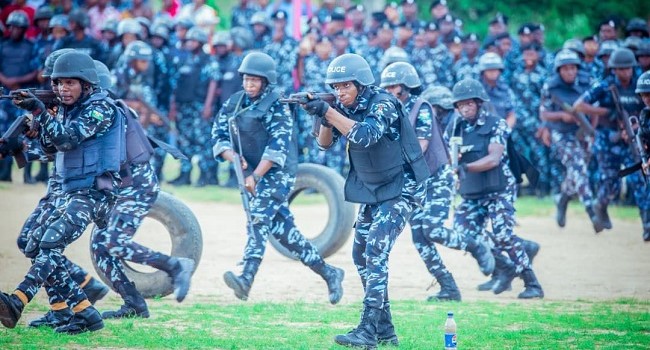
The Senate on Wednesday passed a bill seeking to amend the 1999 Constitution to establish state police services across the country, a major milestone in ongoing efforts to decentralise policing and tackle Nigeria’s worsening security challenges.

The proposed legislation introduces a dual policing framework comprising a Federal Police Service and State Police Services, effectively replacing the existing structure under which policing is exclusively controlled by the Federal Government through the Nigeria Police Force.

The bill was passed after Senate Leader, Opeyemi Bamidele, presented its general principles on the floor of the Red Chamber.

It subsequently scaled second reading, underwent a rigorous clause-by-clause consideration and was passed for third reading after securing the support of more than two-thirds of the senators.

A key provision of the constitutional amendment empowers governors to appoint Commissioners of Police for their respective states, subject to confirmation by the state Houses of Assembly.

Clause 17 of the bill provides that a State Police Service shall be headed by a Commissioner of Police appointed by the governor on the recommendation of the National Police Council and confirmed by the House of Assembly of the state.

The proposed law further defines the operational relationship between governors and state police commands, allowing governors to issue lawful written directives of a general policy nature to Commissioners of Police on matters relating to the maintenance of public safety and order within their states.

To address widespread concerns over possible abuse of the proposed policing structure, lawmakers incorporated safeguards aimed at protecting political freedoms and civil liberties.

The bill expressly states that a state Commissioner of Police shall not arrest, detain, investigate or deploy force against any individual, political party or group merely for criticising the government, except in accordance with the law.

The provision is intended to prevent state police formations from being used to intimidate political opponents, activists, journalists and other dissenting voices while ensuring that all actions taken conform with due process.

The amendment also empowers the Federal Police Service to temporarily intervene in the internal security affairs of a state where there is an actual or imminent breakdown of public order or public safety which the state police are unable or unwilling to contain.

Such intervention must be authorised in writing by the President, who is required to state the grounds, territorial scope, functions and duration of the operation.

The President must also notify the governor, the Speaker of the state House of Assembly, the National Police Council and the National Assembly within 48 hours of the commencement of the intervention.

The bill further provides that no federal intervention shall continue beyond a period to be prescribed by an Act of the National Assembly unless approved by a resolution of the Senate.

The Senate’s approval came barely a day after President Bola Tinubu transmitted the bill to the National Assembly as part of his administration’s efforts to reform Nigeria’s security architecture.

According to the President, the proposed amendment is designed to provide a legal framework for a dual policing structure that would allow states to establish and operate their own police services alongside the federal police.

Tinubu said the proposal is a critical component of ongoing efforts to reorganise the country’s policing system, enhance security and better protect citizens, adding that communities, municipalities and local government areas would play more active roles in policing responsibilities under the new arrangement.

The renewed push for state police comes amid growing concerns over insecurity, banditry and mass kidnappings across parts of the country.

Supporters of the proposal argue that decentralised policing would strengthen grassroots intelligence gathering, deepen community-based security initiatives and ensure quicker responses to crimes and emergencies.

Critics, however, have cautioned against possible political interference by governors, funding challenges and the risk of exacerbating ethnic or communal tensions.

Tinubu had earlier described state police as inevitable in addressing the nation’s security challenges and urged lawmakers to fast-track constitutional amendments aimed at bringing the proposal to fruition.

Comments

News

Published

on

Swegop to Politicians: Stop Mudslinging, Fix Roads

The South West Guild of Online Publishers (SWEGOP) has urged politicians to stop mudslinging and focus on issues affecting Nigerians, while calling on the Federal Government and state governments to declare a state of emergency on roads ravaged by rainfall.

The guild said political campaigns should be centred on policies, development plans and practical solutions to the people’s problems, rather than false information, unsubstantiated allegations and personal attacks.

The position was contained in a statement signed by the guild’s Acting Chairman, Chief Tunde Busari, and Publicity Secretary, Mr Remi Oladoye.

SWEGOP warned that spreading misinformation during political campaigns could erode public confidence in the democratic process, urging politicians to tell the electorate what they intend to do and how they plan to deliver on their promises.

It called on political actors to embrace responsible communication and constructive engagement, stressing that campaigns should provide voters with clear choices on policies and programmes capable of improving their lives.

In a related development, the guild called on the Federal Government and state governments to urgently address the worsening condition of roads following damage caused by rainfall in several areas.

It expressed concern that some roads had been washed away or rendered impassable, making movement difficult for motorists and other road users.

The guild urged the relevant authorities to prioritise the rehabilitation of damaged roads, improve drainage systems and implement lasting solutions to prevent recurring damage, particularly during the rainy season.

It warned that the deteriorating road network posed risks to road users and could disrupt the movement of people and goods, with consequences for commercial activities and the wider economy.

SWEGOP stressed that emergency repairs must be backed by proper drainage, effective maintenance and coordinated action by the different levels of government to prevent the problem from recurring.

The guild maintained that responsible political campaigns and urgent action on failing infrastructure were both necessary to address public concerns and improve the lives of Nigerians.

Continue Reading

News

2027: Alli, Oseni Tour Ibarapa, Seek Support for APC Candidacies

Published

on

Governorship, Oyo South senatorial candidates meet traditional rulers, religious leaders and community groups

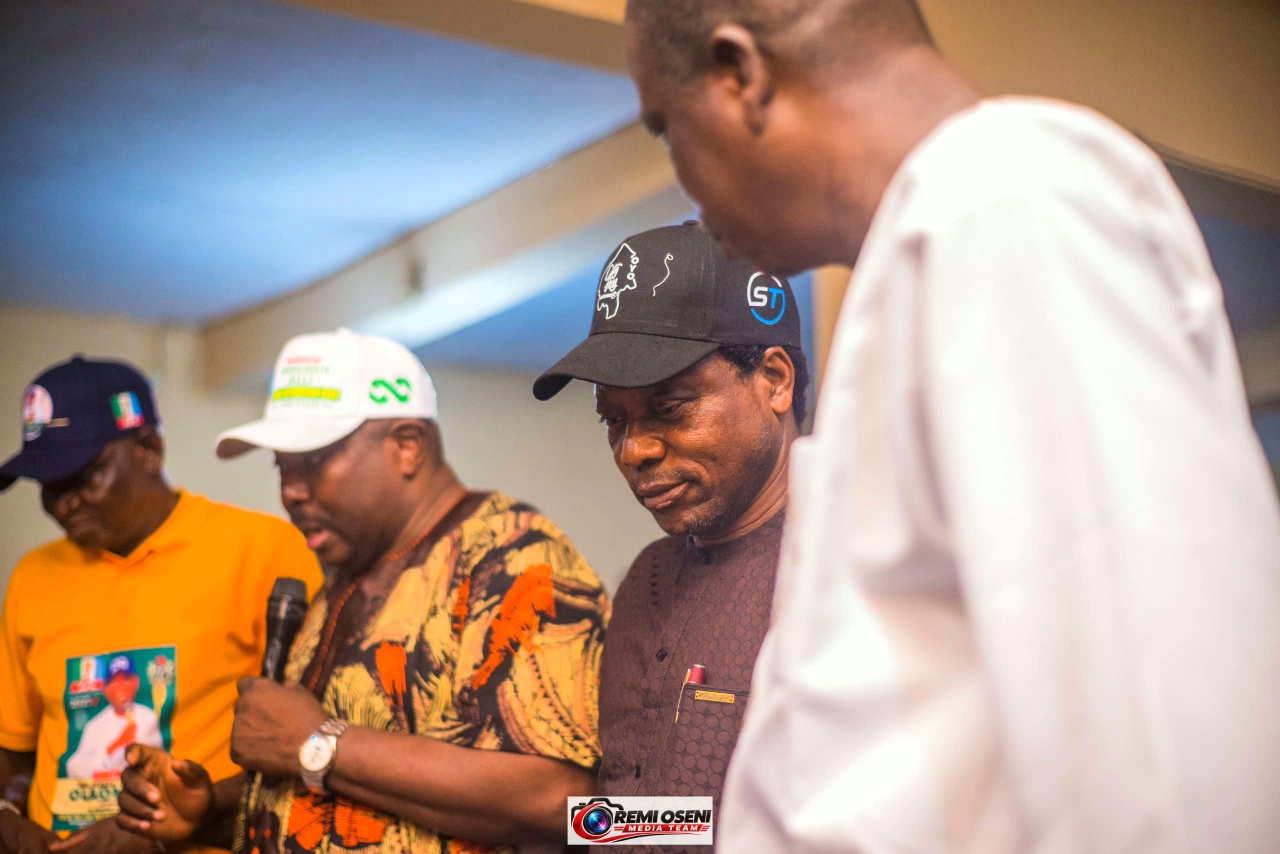
The All Progressives Congress (APC) governorship candidate in Oyo State, Senator Sharafadeen Alli, and the party’s Oyo South senatorial candidate, Hon. Remi Oseni, have toured Ibarapa North, Central and East Local Government Areas to seek stakeholders’ support for their 2027 candidacies and other APC candidates across the ballot.

The two-day tour, which took place on Monday and Tuesday, covered Igangan, Tapa, Ayete, Idere, Igbo-Ora and Eruwa, where the candidates met traditional rulers, religious leaders, community groups and other stakeholders to discuss the area’s development challenges and solicit their backing ahead of the 2027 general elections.

During the engagements, Alli outlined his priorities for Oyo State, promising to prioritise the reconstruction of the Ibadan-Ibarapa road, extending to Igangan, improve the education sector, revive public water supply and strengthen local government administration if elected governor.

The delegation visited the palaces of the Asigangan of Iganganland, Oba Rafiu Adeniyi; the Asawo of Ayete, Oba Emanuel Ewuola Okeniyi; the Elempe of Tapa, Oba Sunday Oyekanmi Titiloye (Abioje I); the Olu of Igbo-Ora, Oba Jimoh Olajide Titiloye (Asoroolu Ayinla V); and the Eleruwa of Eruwa, Oba Samuel Adebayo Adegbola (Ajobo Olurin I). The team was also hosted by Dr. Olusola Ayandele Eruobodo at his residence on Monday evening.

Speaking during the meetings, Alli identified effective local government administration as critical to grassroots development, noting that local councils must be empowered to deliver meaningful improvements to their communities. He pledged to work towards a functional local government system that would make development more visible at the grassroots.

On education, the APC governorship candidate expressed concern about the standard of learning in the state and proposed limiting class sizes to a maximum of 30 pupils to improve teaching and learning outcomes.

He also promised to ensure that Oyo State’s financial resources, including federal allocations, translate into tangible improvements in infrastructure and public services. As part of his plans to improve residents’ welfare, he pledged to work towards reviving the state water corporation to ensure a more reliable supply of clean water across the state.

On infrastructure, Alli reiterated his commitment to reconstructing the Ibadan-Ibarapa road, extending to Igangan. He also promised to create greater opportunities for indigenous construction firms in the award of public contracts, while engaging external contractors for projects beyond the capacity of local companies.

The APC candidate also criticised the reported N5.5 billion expenditure on a stadium, questioning whether the facility met international standards and adequately served the needs of the state’s football clubs, particularly Shooting Stars Sports Club (3SC).

He cited difficulties faced by the club in arranging matches, including playing several away fixtures within a week and receiving a hostile reception at its temporary home ground in Ogun State. He attributed these challenges to the stadium facility’s reported failure to meet the required standards.

Also addressing the gatherings, Oseni, who is seeking election to the Senate to represent Oyo South Senatorial District, highlighted his contributions to the development of communities across Ibarapa and appealed to residents and community leaders to support his senatorial ambition.

He urged stakeholders to support APC candidates across the ballot, arguing that stronger cooperation between the state and the Federal Government could improve Oyo State’s access to federal opportunities, resources and development initiatives.

At a meeting with the League of Imams in Igbo-Ora, Alli acknowledged that disunity within the Muslim community might have affected communication with political leaders. He assured the religious leaders that his administration would not marginalise any religious group and appealed for their support for his aspiration and those of other APC candidates.

The tour was attended by APC leaders and campaign officials, including the Director-General of the Sharafadeen Alli Campaign, Hon. Yemi Aderibigbe; the Director-General of the Remi Oseni Campaign Council, Chief Lowo Obisesan; and the APC Deputy National Auditor, Hon. Gbenga Ariba, alongside other party leaders from across Oyo State.

Continue Reading

News

Watchdog Alleges Pressure on Oyo LG Chairmen, Warns Against Releasing N2.57bn for election

Published

on

Group questions budgetary provision, cites pending court cases

The Watchdogs for Good Governance has warned the 33 local government chairmen in Oyo State against releasing council funds for the planned December 29 local government election, questioning the legality and financial implications of a proposed N4.28bn funding arrangement.

The group alleged that the councils were being pressured to contribute N2.57bn towards the exercise despite claims that no provision was made for the expenditure in their 2026 budgets.

Under the proposed arrangement announced by the state government, the local governments are expected to bear 60 per cent of the election cost, amounting to N2,566,800,000, while the state government will contribute the remaining 40 per cent, or N1,711,200,000.

The controversy followed an announcement by the Commissioner for Information, Prince Dotun Oyelade, that the State Executive Council had approved funding for the Oyo State Independent Electoral Commission to conduct the election scheduled for December 29.

But the Watchdogs for Good Governance, in a statement issued on Tuesday and signed by its convener, Comrade Ahmed Adeyemo, questioned why the councils should commit billions of naira to the election when, according to the group, the expenditure was not captured in their approved budgets.

Adeyemo argued that the proposed spending could further limit the resources available to local governments to address pressing needs in their communities, including bad roads, inadequate infrastructure and poor access to primary healthcare.

“Where is the budgetary provision for OYSIEC? Why resort to milking the councils dry when grassroots communities are grappling with bad roads, lack of basic infrastructure and poor access to quality primary healthcare?” he asked.

The group also raised concerns over pending court cases challenging the conduct of the election, warning that the councils could face financial consequences if the exercise were subsequently nullified.

According to Adeyemo, at least three suits had been filed by members of the Allied Peoples Movement over the election, including grievances relating to the selection of chairmanship and councillorship candidates across the 33 local government areas.

He maintained that proceeding with the election while the cases remained pending raised questions about the prudence of committing such a substantial amount of public money to the exercise.

“Spending billions on an election that is sub judice and may be voided by the courts is the height of administrative irresponsibility and financial recklessness,” Adeyemo said.

The group further alleged that council chairmen were under intense pressure from the state government to release their respective contributions, although it did not provide documentary evidence to substantiate the claim.

It consequently urged the chairmen not to authorise any transfer of council funds for the election without addressing the budgetary and legal concerns it had raised.

Adeyemo warned that any chairman found to have improperly diverted public funds for the exercise should be held accountable, insisting that local government resources should be used to meet the needs of residents.

“The funds belong to the people of Oyo State for development, not for funding an election whose legality is being contested,” he said.

The group called on the relevant authorities to clarify the financial arrangements for the election and address the concerns surrounding the pending litigation.

Efforts to obtain reactions from the affected council chairmen as of press time were unsuccessful.

Continue Reading

Trending