Connect with us

Politics

Osun 2026: Adeleke, Oyebamiji, Salaam Lock Horns as Three-Way Guber Battle Takes Shape

Published

on

Incumbency, structure and disruption redefine Osun’s next political test
Osun State is gradually slipping into full electioneering mode as the 2026 governorship contest assumes clearer shape, with Governor Ademola Adeleke of the Accord Party (AP), former Finance Commissioner Bola Oyebamiji of the All Progressives Congress (APC) and ex-Speaker of the Osun State House of Assembly, Rt. Hon. Najeem Salaam of the African Democratic Congress (ADC), emerging as the central figures in a high-stakes three-way race.

Behind the relative calm in the polity, political calculations, regional permutations and strategic mobilisation are intensifying, with analysts describing the contest as one of the most consequential in the state’s recent political history.

Governor Adeleke’s decision to seek re-election on the platform of the Accord Party has continued to reshape the political landscape. Controversies surrounding the party’s governorship primary have, however, worked in his favour. Attempts by his perceived political opponents to derail his emergence failed after the Independent National Electoral Commission (INEC) distanced itself from a parallel primary allegedly conducted by a faction of the party.
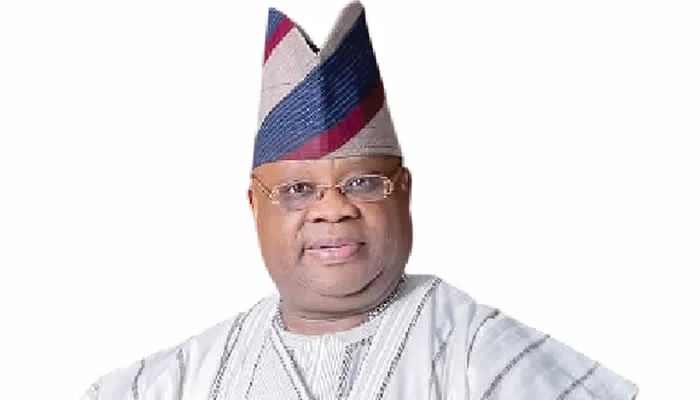
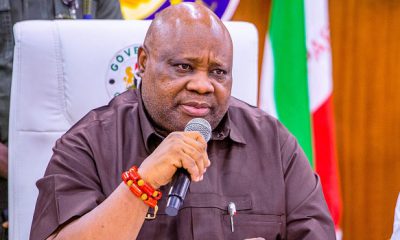
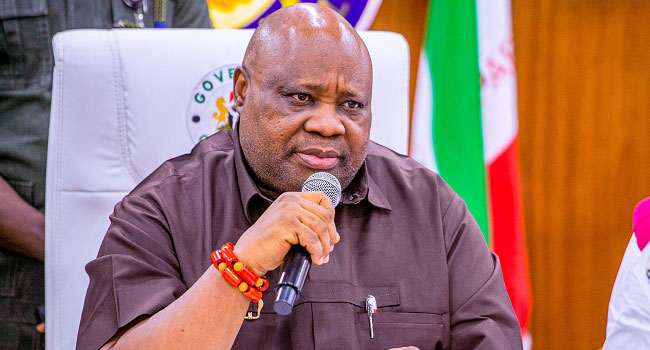
Governor Ademola Adeleke

INEC maintained that it only monitored the exercise that produced Adeleke as the valid candidate, a position that party leaders say effectively neutralised internal dissent. Political observers argue that the episode consolidated Adeleke’s grip on the party and reinforced his authority ahead of the August 8, 2026 governorship election.

Hailing from Ede in Ede North Local Government Area of Osun West Senatorial District, Adeleke is leaning heavily on incumbency, public visibility and the enduring influence of the Adeleke political brand. His strongest electoral base remains Osun West, where loyalty to the Adeleke dynasty runs deep across Ede North, Ede South, Ejigbo,

Irewole and Ayedade local governments.
The governor’s camp is optimistic that his administration’s emphasis on workers’ welfare, regular payment of salaries and pensions, road rehabilitation and revived public health facilities will resonate beyond his traditional base, particularly in Osun Central and parts of Osun East where swing voters often decide electoral outcomes.

Yet, Adeleke’s departure from a major party structure has exposed vulnerabilities. While his personal popularity is not in doubt, the Accord Party lacks the entrenched statewide machinery of the older parties. Analysts note that low voter education in some rural areas and the absence of long-established structures could pose challenges. As a result, Adeleke’s re-election strategy rests on converting personal appeal into a cross-party movement capable of neutralising structural disadvantages, especially in APC-leaning local governments such as Osogbo, Olorunda, Boripe and Ifelodun.

Determined to reclaim the state after its 2022 loss, the APC has moved swiftly to consolidate its ranks. The emergence of Bola Oyebamiji as the party’s consensus candidate reflects a conscious effort to avoid the internal divisions that undermined its previous campaign.
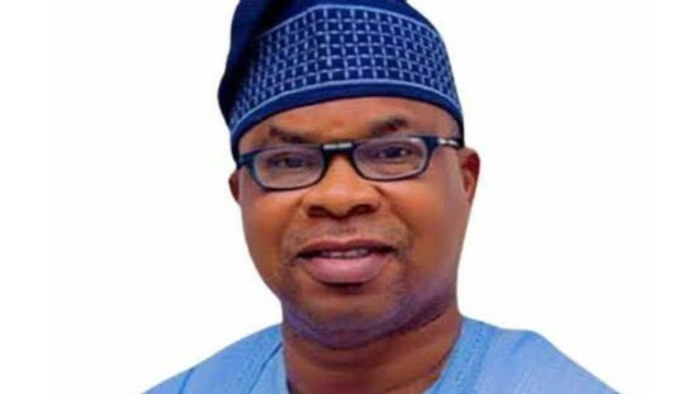
APC’,s Guber Nominee, Bola Oyebamiji

Oyebamiji, a former Commissioner for Finance in Osun State and immediate past Managing Director of the National Inland Waterways Authority, is from Ikire in Irewole Local Government Area of Osun West.

Within APC calculations, Oyebamiji’s technocratic profile and administrative experience are expected to appeal to civil servants, professionals and party loyalists who prioritise structure, competence and policy coherence. The party retains strong support across Osun Central and parts of Osun East, including Ife North, Ife Central, Oriade and Atakunmosa West, where progressive politics enjoys deep historical roots.
The APC is also leveraging its alignment with the Federal Government while intensifying grassroots mobilisation aimed at cutting into Adeleke’s Osun West stronghold.

Adding a disruptive layer to the contest is the African Democratic Congress (ADC), which has formally joined the race with the emergence of former Speaker Najeem Salaam as its governorship candidate. Salaam, who represented Ejigbo State Constituency and served as Speaker between 2011 and 2015, clinched the ADC ticket at the party’s governorship primary, elevating the party from a fringe option to a serious contender.
Salaam’s candidacy has complicated the Osun West equation, as all three major contenders hail from the same senatorial district. Political analysts say this intra-zonal convergence could significantly fragment votes in the state’s most populous bloc. With his legislative experience, grassroots connections and long-standing political network, Salaam is positioning the ADC as a credible alternative for voters disenchanted with both incumbency and the APC’s comeback push.
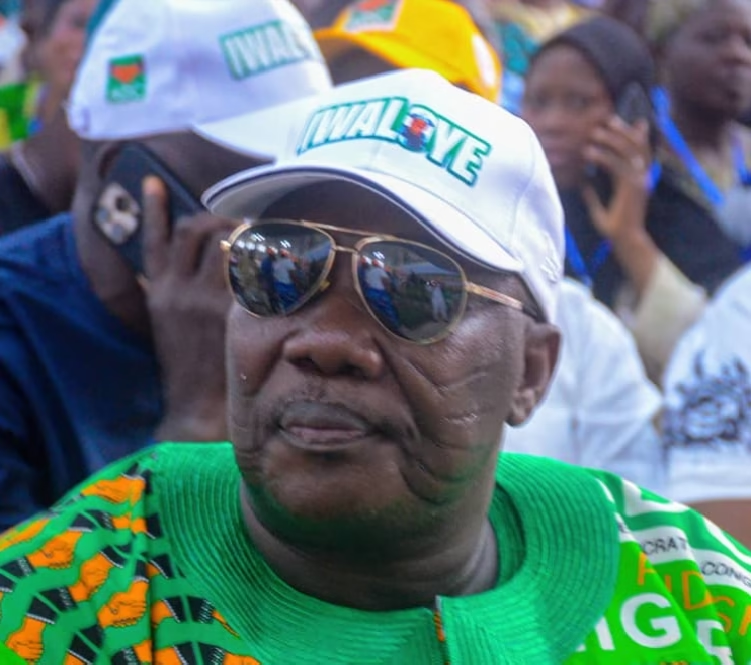
ADC’s governorship candidate, former Speaker Najeem Salaam

The ADC’s reformist message, combined with growing national relevance, is expected to gain traction in urban centres such as Osogbo, Ile-Ife and Ilesa, while Salaam’s roots in Ejigbo could help the party penetrate Adeleke’s traditional base.

As always, geography and voter distribution will be decisive. Osun West remains the central battleground due to its population advantage, Osun Central is emerging as the APC’s primary recovery theatre, while Osun East is likely to function as the ultimate swing zone where narrow margins could determine the outcome.

Beyond party labels and personalities, voter sentiment is shifting. Economic pressures, youth unemployment, infrastructure quality and access to basic services are shaping political conversations across the state. Many voters appear increasingly focused on performance and credibility rather than party rhetoric.

With campaigns gradually gathering momentum, Osun’s political class recognises that the 2026 governorship election will be anything but routine. Framed by continuity, comeback and disruption, the three-way battle between Adeleke, Oyebamiji and Salaam is set to test not just party strength, but the electorate’s evolving expectations in a state long known for electoral surprises.
Comments

Politics

Oyo South market men, women back Oseni, Tinubu, hail N90m support

Published

on

Market men and women across Oyo South Senatorial District have declared support for the senatorial ambition of the All Progressives Congress (APC) candidate in the district, Engr. Aderemi Oseni, and reaffirmed their backing for President Bola Tinubu’s re-election bid.

The traders said their endorsement was driven by the lawmaker’s sustained grassroots interventions and what they described as his people-centred representation.

‎The endorsement came on Monday during an interactive engagement in Ibadan with market stakeholders drawn from the nine local government areas of the senatorial district.

At the event, Oseni supported market men and women across the district with N90 million, with each of the nine local government areas receiving N10 million to boost petty trading, expand businesses and stimulate grassroots economic activity.

‎In a statement by his media aide, Idowu Ayodele, the lawmaker said the intervention was part of efforts to improve livelihoods and deepen economic inclusion, particularly among small-scale traders.

Oseni, who represents Ibarapa East/Ido Federal Constituency in the House of Representatives and chairs the House Committee on the Federal Roads Maintenance Agency (FERMA), said empowering market operators remained central to his development agenda.

‎He said markets remained the heartbeat of local communities, noting that traders’ resilience continues to sustain families and drive local economies.

“This intervention is aimed at strengthening their businesses, easing economic pressure and encouraging enterprise at the grassroots,” he said.

The APC chieftain added that his representation would continue to focus on practical interventions with visible impact.

‎“Leadership must translate into visible impact. I remain committed to initiatives that support small businesses, create opportunities for growth and complement the Renewed Hope Agenda of President Bola Ahmed Tinubu,” he said.

Oseni also canvassed support for President Tinubu among traders in Oyo South, saying stronger alignment between federal, state, senatorial and local government leadership would accelerate development in the state.

‎He listed the Tinubu administration’s initiatives to include the Nigerian Education Loan Fund (NELFUND, measures to curb industrial actions in tertiary institutions, tuition-free technical colleges, construction and rehabilitation of major highways, agricultural support programmes and subsidies for cancer treatment, fuel subsidy removal, which he noted has boosted state and local government revenues.

‎He urged traders to mobilise support for APC candidates in the next general elections, expressing confidence that Tinubu’s re-election would further improve residents’ welfare.

Speaking on behalf of the traders, the Coordinator of Market Men and Women in Oyo South Senatorial District and Babaloja of Omi-Adio and Ido Local Government, Chief Odedele Waheed, commended the turnout and described the engagement as a demonstration of confidence in Oseni’s leadership.

He lauded the lawmaker for sustained grassroots development efforts, noting that the N90 million support would strengthen businesses across the district.

‎Odedele also commended the leadership of market men and women in Oyo State for granting traders approval to meet and interact with the lawmaker, saying the platform allowed them to express concerns and understand his vision for Oyo South.

The traders pledged to mobilise support across markets in the district in favour of Oseni’s electoral bid and President Tinubu’s re-election.

‎Those present included the Babaloja of Ibadan North East, Ibrahim Balogun; Babaloja of Ibadan South West, Rafiu Iyo; Babaloja of Ibadan North West, Alhaji Tajudeen Hammed; Alhaji Abdulraman Salawudeen; Asiwaju Oloja of Ibarapa Zone, Chief Okanlawon John Adebisi; Babaloja of Ibadan North, Chief Adewole Basirat; and Iyaloja of Ibarapa Central, Chief Ige Fausat, among others.

Continue Reading

Politics

INEC declares Oyebanji winner, APC retains Ekiti

Published

on

The Independent National Electoral Commission has declared the Governor of Ekiti State and candidate of the All Progressives Congress, Biodun Oyebanji, winner of Saturday’s governorship election in the state.

The Returning Officer for the election, Prof. Adenike Oladiji, announced the result at about 3:13 a.m. on Sunday in Ado-Ekiti, saying Oyebanji polled 319,224 votes to defeat his closest rivals and secure a second term in office.

According to Oladiji, who is the Vice-Chancellor of the Federal University of Technology, Akure, the candidate of the Peoples Democratic Party, Oluwole Oluyede, garnered 40,543 votes, while the African Democratic Congress candidate, Dare Bejide, secured 12,872 votes.

She said 384,940 voters were accredited for the election, while 375,777 valid votes were recorded. The electoral umpire also announced that 6,332 votes were rejected, bringing the total number of votes cast to 382,109.

The declaration capped a governorship poll largely adjudged peaceful by observers and security agencies, despite complaints of malfunctioning Bimodal Voter Accreditation System machines, delayed commencement of voting in some polling units and allegations of voter intimidation by opposition parties.

INEC said voting was conducted in all the 2,445 polling units across the state’s 16 local government areas, noting that 2,257 units, representing 92.31 per cent, opened before 8.30 a.m., while 188 polling units commenced accreditation and voting before 10.30 a.m. after experiencing minor delays.

The commission also commenced uploading polling unit results to its Results Viewing Portal shortly after the completion of voting and counting in several centres.

The PDP candidate, Oluyede, had expressed dissatisfaction with the conduct of the exercise at Ugele/Arokun Ward in Ikere Local Government Area, alleging that many prospective voters were disenfranchised due to BVAS-related challenges.

Speaking with journalists after voting at Polling Unit 006, he further alleged cases of harassment and intimidation of voters in the area.

Some elderly voters at the polling unit also lamented difficulties encountered during accreditation and urged INEC to urgently rectify the technical glitches.

The ADC candidate, Bejide, similarly alleged irregularities during the exercise.
However, Oyebanji dismissed the claims, insisting that those making allegations of electoral misconduct should provide credible evidence to support them.

The governor, who voted at Polling Unit 003, Okelele, Ikogosi-Ekiti, in Ekiti West Local Government Area, described the election as satisfactory and urged eligible voters yet to cast their ballots to do so peacefully.

The Commissioner of Police in charge of election security, Abayomi Shogunle, said no case of vote-buying was reported to security agencies throughout the exercise.

Election observers commended the peaceful atmosphere that characterised the poll but raised concerns over procedural inconsistencies.

The First Vice-President of the Nigerian Bar Association, Sebastian Anyia, described the process as orderly and peaceful, saying voter turnout was encouraging.

Similarly, the Chief Executive Officer of the Nigerian Women Trust Fund, Brenda Anugwom, lauded the resilience of female voters, many of whom remained at polling units for several hours with their children to exercise their franchise.

Yiaga Africa, however, expressed concern over discrepancies involving ballot papers, result sheets and INEC’s published list of candidates, warning that such inconsistencies could create challenges during collation and reconciliation of results.

The election observer group urged INEC to provide further clarification on the final list of participating parties and candidates and issue clear guidance to electoral officials handling result documentation.

Ahead of the poll, INEC and security agencies had repeatedly assured residents of their preparedness to deliver a peaceful, credible and transparent election, deploying personnel and restricting vehicular movement to forestall electoral violence and other offences.

Continue Reading

Politics

Oyo APC rejects Makinde’s planned December LG poll, vows boycott

Published

on

The opposition All Progressives Congress (APC) in Oyo State has rejected plans by the administration of Governor Seyi Makinde to conduct another local government election on December 26, 2026, describing the proposed exercise as illegal, premature and a calculated move to retain political influence at the grassroots beyond the governor’s tenure.

The party declared that it would neither participate in the election nor remain silent over what it termed an attempt to squander public resources on a process allegedly designed to install loyalists in the 33 local government councils and 351 wards across the state.

The controversy followed the decision of the Oyo State Independent Electoral Commission (OYSIEC) to shift the date earlier fixed for January 2027 to December 26, 2026, after the Independent National Electoral Commission (INEC) released the timetable for the 2027 general elections.

The move has continued to generate debate among political observers, many of whom have questioned the urgency of conducting another council poll barely six months before the expiration of the tenure of the incumbent chairmen and councillors elected in the 2024 local government elections.

In a statement issued on Thursday in Ibadan by its Publicity Secretary, Olawale Sadare, the APC said it would not stop at boycotting the election but would also collaborate with “patriots and rational minds” to resist what it called an unnecessary expenditure of taxpayers’ money.

The party accused Governor Makinde of lacking commitment to local government autonomy, alleging that the administration had exercised undue control over council resources for more than seven years.

“The whole world knows that Governor Makinde does not believe in local government autonomy and, when it comes to democracy at the grassroots, he cannot be trusted for anything,” the statement said.

The APC alleged that the proposed poll was aimed at positioning individuals loyal to the governor in local councils before his exit from office on May 29, 2027, arguing that such a move would enable him to sustain political influence after leaving the Agodi Government House.

According to the opposition party, expectations among many residents are centred on ongoing efforts by the administration of President Bola Ahmed Tinubu to strengthen local government autonomy and ensure that councils enjoy direct access to their statutory allocations without interference from state governments.

The APC also linked what it described as poor development outcomes in some rural communities to the operation of the state-local government joint account system. It cited communities such as Ahoro Esiele and Yawota in Oriire Local Government Area, which have reportedly faced security challenges, as examples of areas where local government resources should have translated into visible improvements.

“It is sad that Governor Makinde appears determined to sustain a system that has left many rural communities vulnerable despite huge allocations accruing to local governments monthly,” the party said.

The opposition further dismissed the local government elections conducted in 2020 and 2024 as lacking credibility, alleging that winners emerged through predetermined outcomes rather than a transparent electoral process.

“The fraud called local government polls in 2020 and 2024 should be the last the people of Oyo State would witness. Governor Makinde and his supporters should bury any thought of staging another charade in which results are announced without genuine voting and public offices become tools for the diversion of public funds,” the statement added.

The APC consequently urged officials of OYSIEC to halt preparations for the proposed December election, warning against actions capable of undermining democratic values and public confidence in the electoral process.

As of the time of filing this report, neither the Oyo State Government nor OYSIEC had issued an official response to the allegations raised by the opposition party.

Continue Reading

Advertisement

Entertainment

Advertisement

MegaIcon Magazine Facebook Page

Advertisement

MEGAICON TV

Advertisement

Trending