Connect with us

Opinion

The Ikoyi high-rise rubble

Published

on

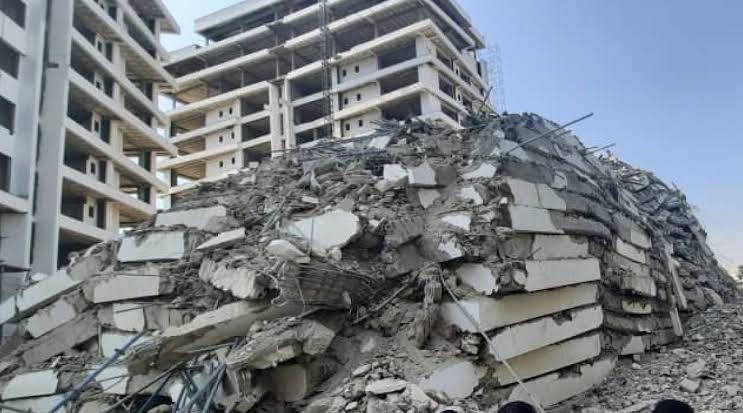
The Ikoyi skyscraper tragedy has more than its 21 fatal floors. It is like wood falling on wood; and more wood falling on wood; a tangled narrative woven by fate and circumstances. The building came down in style: a very huge structure collapsing on itself in a matter of seconds. It wasn’t an implosion and it was not an explosion. It just got tired of standing and fell on its bottom. What force failed the feet of the building and what was the impact of the fall on its immediate neighbours, including its two sister high-rise buildings?

If this happened in black man’s ancient times, the skyline crash would be blamed on thunder and its celts of precision fire. But this is the year of our Lord 2021, the divining priests are different. That is why, I, a stark illiterate in architecture and engineering matters, will be asking unschooled questions. I start from the first pictures of what remains of the Ikoyi building. Look at them. I see a huge pile of sliced concrete – I wanted to say sliced bread, almost neatly packed, but no; this is death. Is that how they fall – and sit- like a tired mountain of serrated rocks?

Lagos and its leaders are habitual newsmakers; they are a stubborn riddle. The headline last year was about the Lekki Toll Gate; this time, it is about an Ikoyi skyscraper that crashed. Those in the news last year are in this news again. I read Dele Momodu and his Pendulum two days ago. He described the tragedy as a jigsaw. In the good old jigsaw puzzle, the game starts when a picture is cut up into odd shapes. You get back that your picture -and win- only if you can correctly piece together the pieces. We have a complex case on our hands. The Ikoyi free fall has more than 21 levels of tragedy. At the very base are the raw wounds of personal losses; in the middle is the question of what went wrong; occupying the upper floors are bolts of the intriguing politics of who benefits from this misfortune. You’ve seen statements and exhumation of long buried videos; you’ve heard allegations and denials and threats; you’ve read of a fierce Berlin scramble for the assets of the unburied dead; we’ve also seen complementary visits by the government of Lagos and by the owners of Lagos. The fall is as huge as its elephantine benefits; every knife of imaginable curves is out, carving pounds of political capital.

There is a panel of inquiry charged with answering all questions connected with this tragedy. What will it find? The ones before this one, what were the fruits of their labour? The government said the developer got approval for 15 floors but jerked the building up to 21. That was an addition of six floors! And were those additional floors built in a day? Where was the law when the money-man rewrote the approval in his own image? Now, when buildings collapse, who do we blame? The owner? The builder? The construction workers? The regulators? Or all? I I think the last option is the correct answer. Did the Ikoyi building give any warning signs that were ignored? We do not know and may never know. It is a jigsaw, a puzzle. Every star you’ve seen in the skies of that place was involved in the making of that horror. But the living among them are exhaling relief sighs because so much has died with the dead in that mound.

Dele Momodu said the developer wanted his own residence in that particular tower. What he was building was a condominium, not a death-house. The man was not known to be tired of living and so could not have built for himself a fatal trap by cutting corners. He was also neither an investor in suicidal terrorism nor a self-killing Samson fulfilling a morbid divine purpose. Now, did the man put his trust too much in the expertise of his specialists, ignoring fatal fissures and crevices? If he didn’t trust the foundation of his dream, the super and sub-structures, would he be caught taking his lords, spiritual and temporal, on a triumphal tour of the floors? What really happened? We saw a showy video of some white wizards of construction. Were the white men in the building when it fell? If they weren’t, where were they? We saw another video of praise and worship, of prayers and electrifying songs of victory over the enemy. Who was that enemy?

How long are buildings, especially tall ones, destined to stand? Zaria Gorvett of the BBC answered a similar question in August 2016.

Gorvett said “Egypt’s pyramids were the skyscrapers of their day – and they are still standing 5,000 years later.” So, what brought down that 21-floor building in our Lagos before its full moon? That is the question to ask and for which we must get the correct answer(s) if there won’t be another crash. Everyone knows that vultures forever hover over Lagos lands. For this one and its precious ruins, hawks and vultures appear fighting already. Read the news. Going forward, we will see the horrors clearly by the time ‘widow’ inheritors take over. Greek biographer and historian, Plutarch, recorded the feat of a man called Crassus. The man was famed as Rome’s wealthiest man of the first century BCE. Rome of that era was always on fire but it had no fire service. Crassus saw business here and proceeded to build a vast empire of riches from the mass misery of victims of fire disasters. Was he involved in the fire breakouts?

History is silent on this but check out how he acquired his vast fortune: “Crassus or his agents would, on the spot, purchase buildings that were still ablaze and the buildings abutting the flaming structure at a fraction of the buildings’ worth. Once the deal had been concluded, Crassus’s personal fire brigade would step in and seek to halt the damage…” (See ‘The Great Fire of Rome: Life and Death in the Ancient City’ By Joseph J. Walsh, at page 32). The Crassuses of Nigeria must be salivating over that Gerrad Road property already. Sadly, we may not hear a whimper after they are done ringing their bells.

History pays a generous attention to disasters and whatever may have caused them. It assumes that man would read and sweat to prevent a silly repeat of what was bad and destructive. But is it in the nature of man to learn? Like a massive stroke, something snapped in that Ikoyi building and levelled the rich and the poor. Was there any sign of an impending crash? We think disasters are thieves in the night; that they very rarely whistle their coming. We think tragedies usually come crashing in to laugh at the folly of wise men. There was the mythical Tower of Babel, an audacious attempt to “take the celestial kingdom, piling mountains up to the stars.” What crashed it? Was it the fault of man or the force of God that fractured and crashed the lofty house?

Beyond myths, there have been many disastrous crashes that claimed lives and sealed fates because of the greed of man. One such bad story happened in Rome in 27 CE. Historian William Slater said “as destructive as a major war, it began and ended in a moment.” The tragedy of Fidenae theatre – that is the incident. Its casualties were so many that imperial Rome never forgot the calamity. Slater said the builder, one Atilius, an ex-slave, wanted an amphitheater of outstanding stature, but he “neither rested its foundations on solid ground nor fastened the superstructure securely.” Motives matter in what we build and how we build it. In this case, Atilius, as recorded in history “had undertaken the project not because of great wealth or municipal ambition but for sordid profits.” He completed the construction and threw it open “to host gladiatorial spectacles.” Then, Slater wrote, thousands flocked the stadium “—men and women of all ages.” Sorrow, tears and blood visited the stadium almost immediately. Slater, the historian, puts the tragedy elegantly in this narration: “The packed structure collapsed, subsiding both inwards and outwards and precipitating or overwhelming a huge crowd of spectators and bystanders. Those killed at the outset of the catastrophe at least escaped torture, as far as their violent deaths permitted. More pitiable were those, mangled but not yet dead, who knew their wives and children lay there too. In daytime they could see them, and at night they heard their screams and moans. The news attracted crowds, lamenting kinsmen, brothers, and fathers.

Even those whose friends and relations had gone away on other business were alarmed, for while the casualties remained unidentified, uncertainty gave free range for anxieties. When the ruins began to be cleared, people reached to embrace and kiss the corpses—and even quarrelled over them, when features were unrecognizable but similarities of physique or age had caused wrong identifications. Fifty thousand people were mutilated or crushed to death in the disaster.” Ancient Rome blamed Atilius, the owner/builder of the amphitheater; history blames him too. But should he solely carry the burden of guilt?

Some works should represent the ethical immanence of God. The construction industry is one. Regulators and building specialists, workmen and artisans have people’s lives right there in the cusps of their palms. They will go to hell whose greed cracks roads and crashes buildings and kills people. Steve Jobs has an interesting viewpoint here. He warned that “your work is going to fill a large part of your life,” and “the only way to be truly satisfied is to do great work.” What then is great work? It is work that endures.

A jigsaw tragedy is what we have in Ikoyi, Lagos. Ghostly questions stomp that eerie place demanding answers. Will they ever get justice? Men and machine have been busy on that plate of fate since last Monday. They are still there, roaring round the rubble like lions in search of lost cubs. How do we piece together life and its meaning from this pile of death and tears?

The man who built the failed skyscraper was its ‘inmate’ when it crashed. It was his labour room; he went in there very expectant of joy in bouncing bundles. But he was brought out dead, his pot and its precious water got lost in the debris of death. And it wasn’t as if the man was a daily face there. Yet, the crash waited and chose his very presence to end everything, including the dreamer. I have heard questions on how and where the man got his billions. We’ve heard and read other stories and the stories of others. We’ve heard repeated shouts of horror, the sighs of receding hope and thunder claps of escape. A job seeker failed to get what he sought there; he left that spot sad and crest-fallen. He soon had cause to thank his God for making him fail. ‘Blessings of Failure’ won’t be a bad title for his memoirs.

One youth corps member flew off the killing field of North East Nigeria; she landed on the velvet laps of Lagos and sadly died at the safe harbour of Ikoyi. There is a word called fate, inscrutable is its sole adjective. The white man calls it destiny; the Yoruba say it is Ayanmo. There is no armour against its darts. It is the handcuff which chains man to where his portion lays. May God heal the wounded and repose the souls of the dead.


Celebrated columnist, Lasisi Olagunju, writes  from Ibadan, Oyo state 

Comments

Opinion

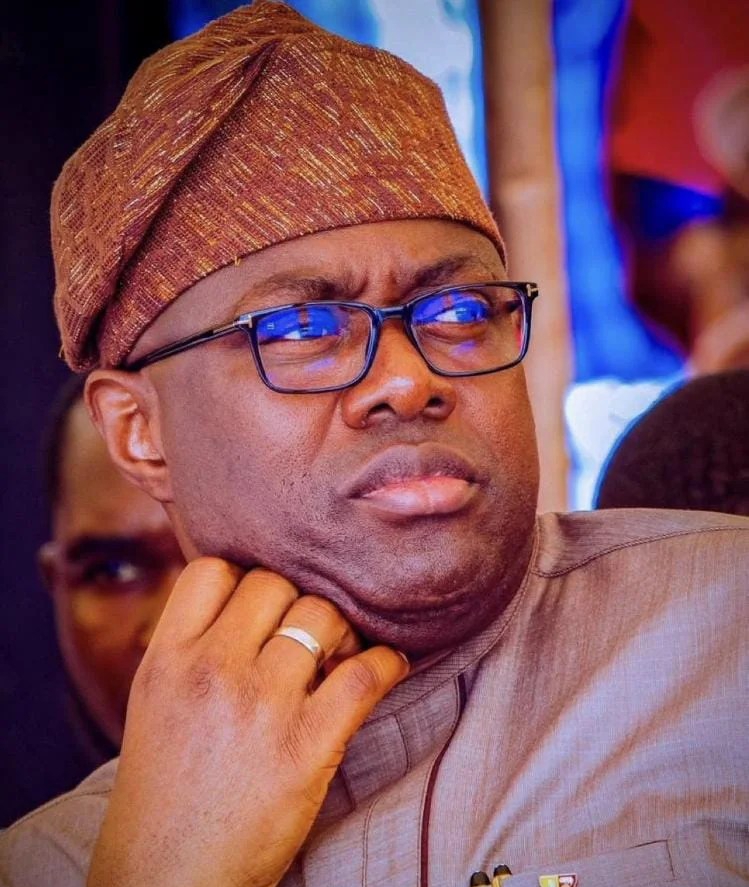
Makinde Deserves No Sympathy: He Brought His Present Predicament Upon Himself

Published

on

In response to my brother, Shuaib Idris, who wrote the piece titled “Seyi Makinde Deserves Our Sympathy,” I submit that Seyi Makinde does not deserve our sympathy. How do you sympathise with somebody who brought political calamity upon himself?

There is a point in every political journey when a leader must pause, look around and ask himself a difficult question: How did I get here? For Governor Seyi Makinde, that moment has long arrived.

Much has been written and said about the governor’s increasingly combative public interventions, his exchanges with political opponents and his determination to market the candidacy of his preferred successor. Some have interpreted these developments as signs of pressure surrounding him. But sympathy, in this circumstance, may be misplaced.

If Governor Makinde is under pressure today, much of that pressure is self-inflicted. If his administration is now being subjected to increasingly intense scrutiny, he cannot reasonably blame those asking the questions. And if political opponents have become emboldened enough to challenge his record openly, he should perhaps examine the decisions and conduct that have created the circumstances in which those challenges are now flourishing.

The governor’s recent political conduct provides ample illustration.

At the 70th birthday celebration of Bishop Francis Wale Oke, the governor reportedly used his appearance to introduce Bimbo Adekanmbi, the APM governorship candidate whom he supports. Adekanmbi’s emergence as the APM candidate is not in dispute; the party adopted him as its consensus candidate in May.

Two things continue to haunt him: his subpar performance in office and what critics describe as his imposition of Adekanmbi and Open Salawu, new entrants into his team, on his “first eleven.”

The question, therefore, is not whether Governor Makinde has the right to support a candidate. He does. The question is why a governor who repeatedly speaks of his administration’s achievements appears increasingly eager to make the 2027 succession contest a personal project.

A governor nearing the end of his tenure should ordinarily be concerned about preserving the dignity of the office, defending his record with facts and allowing his preferred candidate to present his own credentials. Indeed, Adekanmbi himself has publicly said he would not be a political stooge and that he would take responsibility for his own decisions if elected. That is political rhetoric. However, everything about Adekanmbi, according to his critics, points to the possibility of his being a stooge waiting to be planted to do Makinde’s bidding after the latter leaves office in 2027.

Yet Governor Makinde has increasingly inserted himself into the political conversation surrounding his successor. That creates an unavoidable question: if Adekanmbi is sufficiently qualified and politically prepared to succeed him, why does the governor so frequently feel compelled to fight the successor’s battles himself?

This is where the argument about pressure becomes particularly relevant. Political pressure does not simply descend from heaven. It can be generated by the choices of the politician himself.

Consider the recent exchange with Senator Sharafadeen Alli over the legal profession. Governor Makinde reportedly questioned Alli’s experience as a lawyer, arguing that he had never entered a courtroom. Alli’s campaign organisation subsequently responded by detailing his legal background and professional experience.

There is nothing wrong with political candidates examining one another’s records. That is part of democratic competition. But reducing a lawyer’s professional identity to courtroom appearances is a curious line of attack, particularly when the political argument ought ultimately to be about competence, experience, policy and public record.

A lawyer can practise in several areas of the profession without making litigation the centre of his career. Administrative work, corporate practice, legal consultancy, governance and institutional management are among the possible avenues available to members of the profession.

The larger point, however, is this: when an incumbent administration turns the professional credentials of an opponent into a central campaign issue, it invites its own record to be placed under the microscope. So, why does he need to be sympathised with over what he brought upon himself?

The response from Alli’s camp has shifted attention towards questions about Makinde’s own record as an engineer and governor, particularly the controversy surrounding diesel-powered streetlights and the renovation of the Lekan Salami Stadium. Those are now matters of public political debate, with competing claims about expenditure and performance. How do you sympathise with someone who threw a stone and received a Scud missile?

This is the unavoidable consequence of political combat: once you open the door to scrutiny of another man’s credentials, you should expect yours to be examined with equal intensity. Governor Makinde cannot reasonably demand immunity from the same standard he applies to others.

The same principle applies to his much-advertised “first eleven.” If the governor describes his administration as being driven by a carefully assembled team of exceptional people, the public is entitled to ask what became of that team when the question of succession arose. Why was the search for a successor extended beyond this celebrated first eleven?

A football coach who constantly boasts about his first eleven naturally invites the question of who among that eleven can step forward when the captain leaves the field. If none is selected, his team’s fans will ask why. That is not persecution. It is accountability.

There is another issue the governor should confront: political loyalty. Governor Makinde did not arrive at the Government House in 2019 in isolation. His political journey involved alliances with people and groups who contributed to the coalition that eventually produced his victory. The political history of that period is well known and should not be rewritten simply because former allies and associates are now on different sides of the political divide.

The problem with “use and discard” politics is that yesterday’s ally eventually becomes tomorrow’s witness. People who helped build a political structure do not disappear simply because their usefulness has expired. And when they begin speaking, the politician who once relied on them may find himself answering questions he never anticipated.

That appears to be part of the political atmosphere surrounding Governor Makinde today. His confrontation with traditional institutions is another matter that requires careful reflection. Whatever one’s political affiliation, Yoruba traditional institutions occupy a distinctive place in the cultural architecture of Oyo State. Political disagreement with individual traditional rulers is legitimate; treating the institution itself with disdain is entirely wrong, and it raises questions about Makinde’s Omoluabi values.

A governor may disagree with a monarch’s political preference. He may even believe traditional rulers should remain politically neutral. But the language employed in expressing that disagreement matters.

The office of governor carries enormous constitutional authority, but it also carries a moral obligation to exercise restraint. A governor should not need to be reminded that words spoken from Government House do not remain personal words. They acquire the weight of the office. That is why some of Governor Makinde’s recent public exchanges have generated such controversy.

The irony is that political power is temporary, while institutions and relationships often outlive individual office holders. The governor should know this better than most.

He is approaching the end of his constitutionally permitted tenure in Oyo State. The political question before him is therefore not how to remain governor indefinitely, but what legacy he will leave behind. Will he be remembered primarily for the projects executed under his administration? For the policies introduced? For the institutions strengthened? Or increasingly for the political battles fought during the final phase of his tenure? The last question is what will occupy people’s minds most after Makinde has left office.

The most consequential political mistake an incumbent can make is to interpret every criticism as persecution and every opponent as an enemy. Criticism is not necessarily hatred. Opposition is not necessarily sabotage. Questions about public expenditure are not necessarily attacks on a person. And scrutiny of an administration is not evidence of an organised conspiracy.

A mature government answers questions. A confident administration publishes records. A secure political movement allows its candidate to speak. And a governor who believes his record speaks for itself should have little reason to spend every available political moment speaking for his preferred successor.

That is why sympathy for Governor Makinde is evidently misplaced. The political pressure surrounding him today is not simply something that happened to him. It is also the product of political decisions, alliances, rhetoric and strategies that he and his political associates have consciously pursued.

He chose his successor. He chose his political platform. He chose to engage his opponents. He chose to make their records a subject of public debate. He chose to defend his administration through increasingly political exchanges. Those choices have consequences.

The electorate is now watching. And when the people begin to ask questions, the appropriate response from a governor is not to complain about pressure. It is to provide answers. Oyo people do not owe any politician sympathy for the consequences of his political choices. They owe themselves something far more important: a careful examination of every candidate, every record, every promise and every claim before making their decision in 2027.

Continue Reading

Opinion

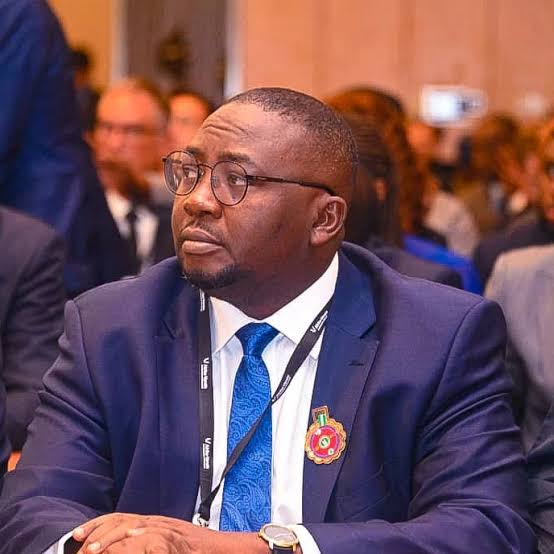
Bayo Adelabu and the Art of Treachery: When the Boy Who Was Fed Bites the Finger

Published

on

Politics — that masquerade that never dances the same step twice.

Who would have thought it?

Who, after the political bruising of 2023, after the detour to Accord and the eventual return to the political fold, culminating in a ministerial appointment under President Bola Ahmed Tinubu, would have imagined that Bayo Adelabu would one day find himself politically associated with a movement backing Seyi Makinde and the Allied Peoples Movement (APM)?

Yet here we are.

Recent developments surrounding the Boye Nation movement have raised questions in Oyo’s political circles. Ajiboye Akande Sangogade, popularly known as Boye Nation and identified in reports as an aide to Adelabu, is leading a movement that is expected to formally declare for the APM at a youth-focused event scheduled for September 21, 2026, at the Lekan Salami Stadium, Adamasingba, Ibadan. Organisers say Governor Seyi Makinde is expected to attend.

That development naturally raises a political question: where exactly does Adelabu stand?

The question becomes even more compelling against the background of the 2027 Oyo governorship contest.

Adelabu had sought the APC governorship ticket, but Senator Sharafadeen Alli eventually emerged as the party’s candidate. The APC formally unveiled Alli and his running mate, Adesoji Adedeji, in July. Adelabu, however, had previously rejected the claim that Alli’s emergence represented a consensus arrangement and maintained that President Tinubu had backed his own ambition.

Now, with one of his prominent political associates leading a movement into the camp of another party, the political temperature has understandably risen.

The question being whispered across Ibadan is simple: is this merely the independent political decision of an aide and his supporters, or does it reflect a larger political strategy?

That question deserves an answer.

Because in politics, proximity is rarely meaningless.

If an associate who has operated closely within a politician’s political structure suddenly becomes a leading face of another political platform, observers will naturally ask whether the principal is aware, supportive, opposed or simply indifferent.

But there is an important distinction.

Association is not proof of instruction.

The fact that Boye Nation is associated with Adelabu does not, by itself, establish that Adelabu authorised the movement, financed it or personally endorsed APM’s presidential project. Those are matters that require evidence or a direct statement from the former minister.

And that is precisely where the real political conversation should begin.

Adelabu’s political history has never been short of twists. From his 2019 governorship bid to the 2023 political realignment and his appointment as Minister of Power, his journey has demonstrated the fluid nature of Oyo politics.

Today, however, the political arithmetic appears to be changing again.

The same APC that accommodated him after his 2023 political excursion now has another candidate carrying its governorship flag. Meanwhile, people identified with Adelabu’s political structure are appearing at an APM event expected to have Makinde at its centre.

For APC loyalists, that development may understandably raise questions about loyalty and party discipline.

For Adelabu, it presents an opportunity to clarify his position.

Is he still fully committed to the APC?

Does he support the activities of Boye Nation?

Does he have any connection with the planned APM mobilisation?

Or is Ajiboye Sangogade acting entirely on his own political conviction?

These are not unreasonable questions.

Indeed, they are questions that political actors should answer openly rather than leave the public to fill the gaps with speculation.

One thing, however, is certain: politics in Oyo is entering another season of realignment.

The September 21 gathering at Adamasingba may therefore be more than a concert. Organisers have described it as a youth mobilisation platform and a formal declaration of Boye Nation for the APM. Reports also indicate that the event is expected to receive members of the movement into the party.

That makes it politically significant.

Whether it represents a personal decision by Sangogade, a broader movement by Adelabu’s associates or something more strategic remains to be seen.

But one lesson from politics remains timeless:

When political friendships are tested, silence often creates more questions than answers.

And as the 2027 political season gathers momentum, Oyo’s political actors may soon discover that yesterday’s alliances can become tomorrow’s fault lines.

The masquerade has changed its dance.

Everybody is watching the drummer.

Continue Reading

Opinion

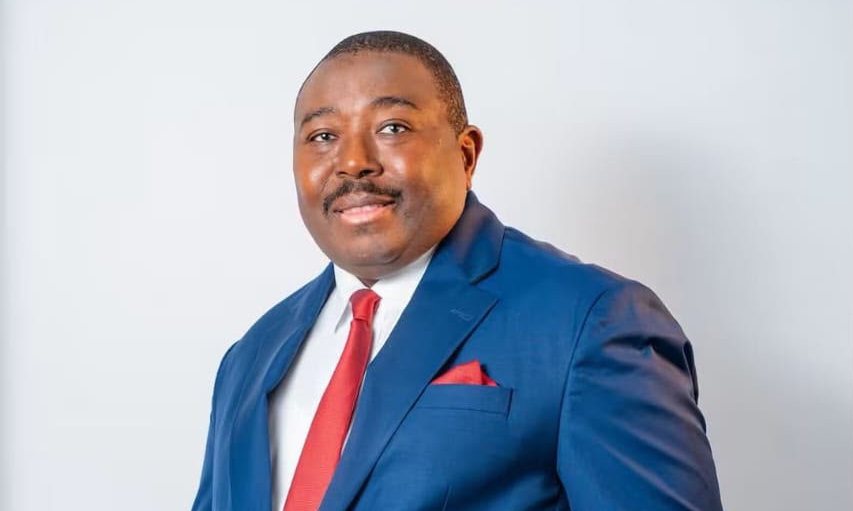
Seven Factors That Keep Sharafadeen Alli Ahead in 2027 Oyo Governorship Race

Published

on

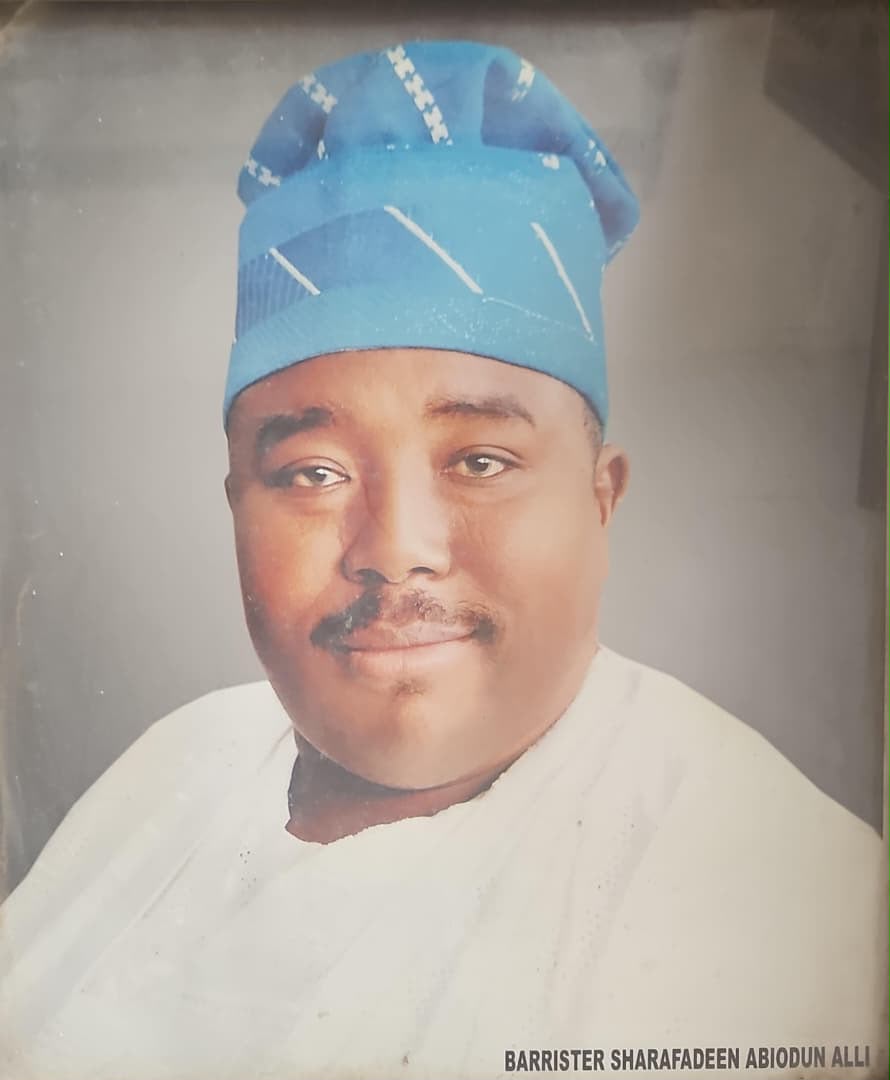
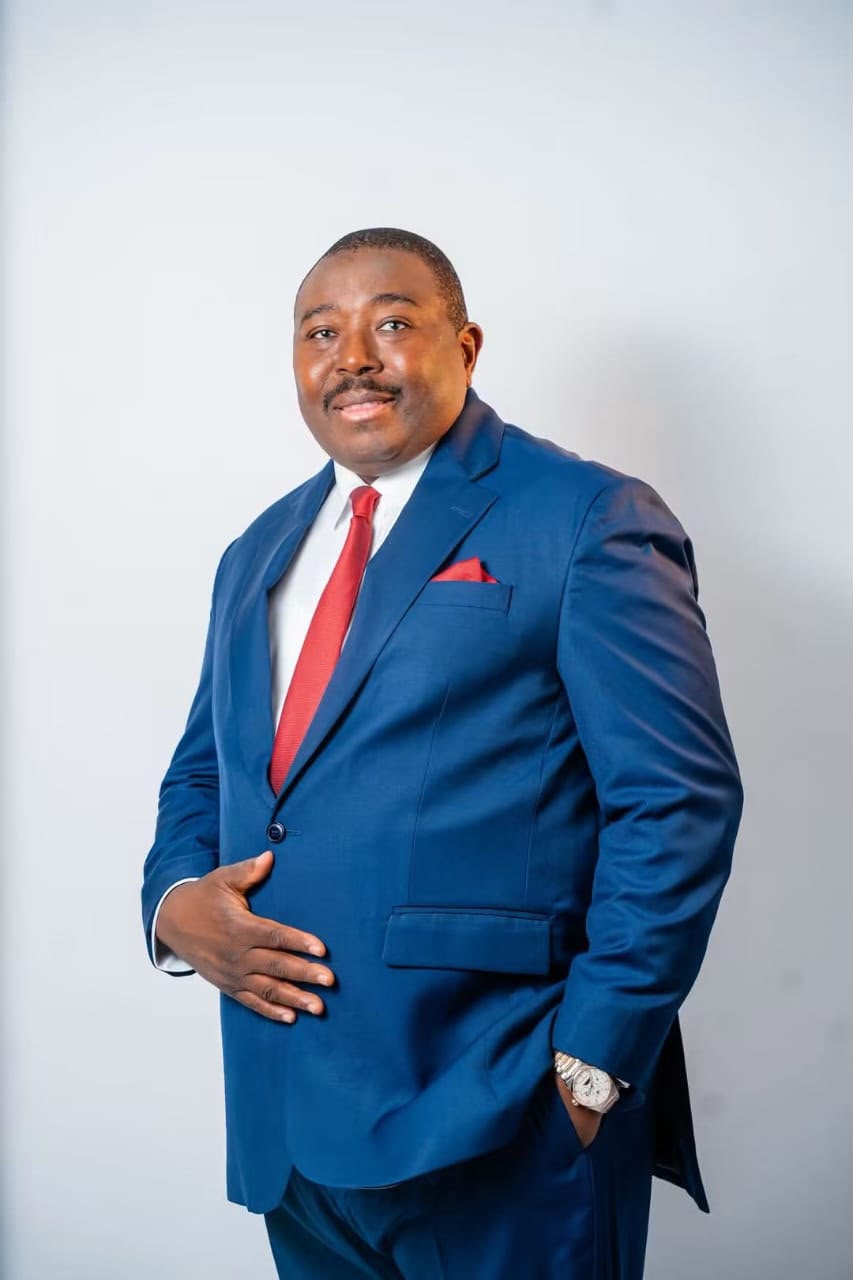
File photo of Sen. Sarafadeen Alli


Fact 1: Homegrown Leader with Unmatched Grassroots Experience

Senator Alli’s political journey began at the grassroots level in Ibadan, where he made history in 1991 as the first democratically elected Executive Chairman of Ibadan North Local Government. This early leadership role demonstrates a deep, foundational understanding of local governance and the needs of the people, a critical asset for a state governor.

Fact 2: Rare Combination of Top-Tier Academic and Professional Credentials

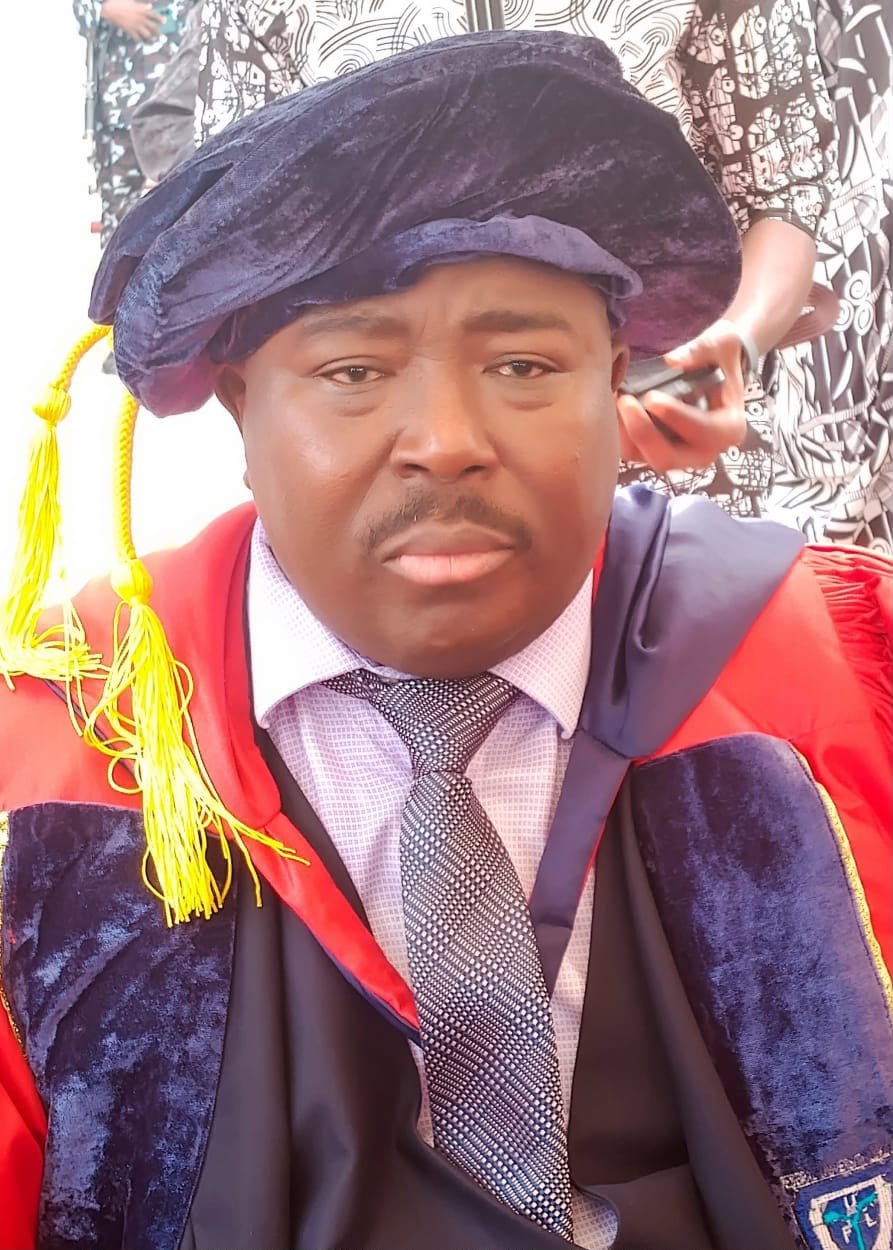
Senator Alli is not just a politician but also a distinguished legal practitioner with a Ph.D. in Legislative and Strategic Studies. His extensive education, including degrees from the University of Ibadan, combined with his fellowships from prestigious professional institutes, provides him with the analytical, legal and strategic acumen required to manage the complex affairs of Oyo State.

Fact 3: Proven Executive Administrative Competence at the Highest State Level

His tenures as Secretary to the Oyo State Government (SSG) and later as Chief of Staff (CoS) to the Governor showcase his direct experience in the engine room of state administration.


He has been intimately involved in policy formulation, committee leadership and the day-to-day running of the state, making him uniquely prepared to assume the governorship and hit the ground running from day one.

Fact 4: Demonstrated Executive Business Leadership with Regional Impact

As Chairman, Board of Directors of Odu’a Investment Company Limited, Senator Alli was not just an administrator but a visionary economic leader. He spearheaded landmark investments such as the Cocoa Mall and Heritage Mall in Ibadan, which transformed the economic landscape of Oyo State. This proven ability to attract and drive large-scale economic development is directly transferable to governing Oyo State.

Fact 5: Battle-Tested and Consistent Political Figure

Senator Alli’s political career spans more than three decades, weathering the annulment of his 1996 Senate election and consistently remaining a relevant and influential force. He has contested for Deputy Governor and Governor in the past, giving him a comprehensive understanding of statewide campaigns and the diverse political landscape of Oyo State. His journey demonstrates resilience, deep political networks and unwavering commitment.

Fact 6: Current, Performing Senator and Influential Figure

As the sitting Senator for Oyo South, he is actively delivering quality representation, impactful constituency projects and people-oriented legislation. He has sponsored five Bills and raised six Motions to promote development. Senator Alli has also facilitated employment for 100 constituents across Federal Government agencies.

His role as Chairman of the Senate Committee on Agricultural Colleges and Research Institutions, as well as his membership in the ECOWAS Parliament, demonstrate that he is not only focused on local issues but is also equipped with a broader perspective on governance, trade and regional integration.

Fact 7: Unifying and Respected Traditional Title Holder

Senator Alli’s position as the Ekaarun Balogun of Ibadanland, one of the highest-ranking chieftaincy titles in the ancient city, signifies his deep-rooted connection to tradition and his standing as a respected community leader.

His reputation as a calm, wise, simple, relatable and inclusive bridge-builder who unites people across political, religious and ethnic divides positions him as a leader capable of fostering peace, stability and consensus across the entire state.


Oladele is the Director of Media & Publicity, Senator Sharafadeen Alli Campaign Organization.

Continue Reading

Trending