Connect with us

News

Taliban warns of dire ‘consequences’ if US delays troops beyond next week

Published

on

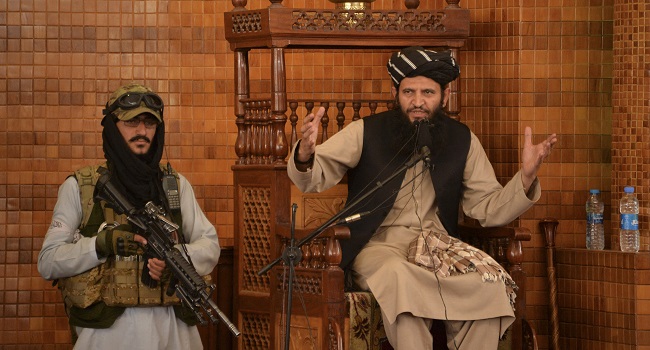
An Imam speaks next to an armed Taliban fighter during Friday prayers at the Abdul Rahman Mosque in Kabul on August 20, 2021, following the Taliban’s stunning takeover of Afghanistan. (Photo by Hoshang Hashimi / AFP)

The Taliban warned on Monday there would be “consequences” if the United States and its allies extend the presence of troops in Afghanistan beyond next week, as chaos continued to overwhelm Kabul airport.

The rapid fall of the country to the hardliners last weekend shocked Western nations, coming just two weeks before an August 31 deadline for all troops to fully withdraw from the country.

Instead, thousands of soldiers have poured back in to manage the frantic airlifting of foreigners and Afghans — many who fear reprisals for working with Western nations — out of Taliban-controlled Afghanistan.

“If the US or UK were to seek additional time to continue evacuations — the answer is no. Or there would be consequences,” Taliban spokesman Suhail Shaheen told Sky News on Monday.

Staying beyond the agreed deadline would be “extending occupation”, he added.

The rush to leave Kabul has sparked harrowing scenes and killed at least eight people, some crushed to death while at least one person died after falling from a moving plane.

One Afghan was killed and three others were injured in a dawn firefight on Monday that according to the German military erupted between Afghan guards and unknown assailants.

German and American troops “participated in further exchange of fire”, the German army said in a statement.

The Taliban, infamous for an ultra-strict interpretation of sharia law during their initial 1996-2001 rule, have repeatedly vowed a softer version this time.

– Impossible to meet deadline –

The Taliban’s victory ended two decades of war, as they took advantage of US President Joe Biden’s decision to exit the country and end America’s longest war.

Biden has insisted he wants to end the US military presence and the airlifts by August 31.

But with the European Union and Britain saying it would be impossible to get everyone out by then, Biden is under pressure to extend the deadline.

Speaking at the White House on Sunday, Biden said talks were under way to explore the possibility of extending the deadline.

He also acknowledged the tragic scenes at the airport, which have also included babies and children being passed to soldiers over razor-wire fences and men clinging to the outside of departing planes.

But he said they were part of the cost of departure.

“There is no way to evacuate this many people without pain and loss and heartbreaking images you see,” he said.

– ‘Peace and calm’ –

Biden spoke after the Taliban, who have been holding talks with elders and politicians to set up a government, slammed the evacuation.

“America, with all its power and facilities… has failed to bring order to the airport,” Taliban official Amir Khan Mutaqi said.

“There is peace and calm all over the country, but there is chaos only at Kabul airport.”

In the streets of the capital, the Taliban have indeed enforced a calm of a kind, with their armed forces patrolling the streets and manning checkpoints.

Visually, they have also been looking to stamp their authority, ensuring the tri-coloured national flag is replaced with their white banner.

At a roadside in Kabul at the weekend, young men sold Taliban flags, which bear in black text the Muslim proclamation of faith and the regime’s formal name: “Islamic Emirate of Afghanistan”.

“Our goal is to spread the flag of the Islamic Emirate throughout Afghanistan,” said seller Ahmad Shakib, who studies economics at university.

– Resistance –

Outside of Kabul, there have been flickers of resistance against the Taliban.

Some ex-government troops have gathered in the Panjshir Valley, north of the capital — long known as an anti-Taliban bastion.

The Taliban said Monday their fighters had surrounded resistance forces holed up in the valley, but were looking to negotiate rather than take the fight to them.

Taliban fighters “are stationed near Panjshir”, spokesman Zabihullah Mujahid tweeted, saying they had the area surrounded on three sides.

“The Islamic Emirate is trying to resolve this issue peacefully,” he added.

The announcement follows scattered reports of clashes overnight, with pro-Taliban social media accounts claiming gunmen were massing, and Afghanistan’s former vice president Amrullah Saleh saying resistance forces were holding strong.

One of the leaders of the movement in Panjshir, named the National Resistance Front, is the son of famed anti-Taliban commander Ahmad Shah Massoud.

The NRF is prepared for a “long-term conflict” but is also still seeking to negotiate with the Taliban about an inclusive government, its spokesman Ali Maisam Nazary told AFP in an interview on the weekend.

“The conditions for a peace deal with the Taliban are decentralisation, a system that ensures social justice, equality, rights, and freedom for all,” he said.

Comments

News

IGP Disu seeks NIPR partnership to boost public trust in police

Published

on

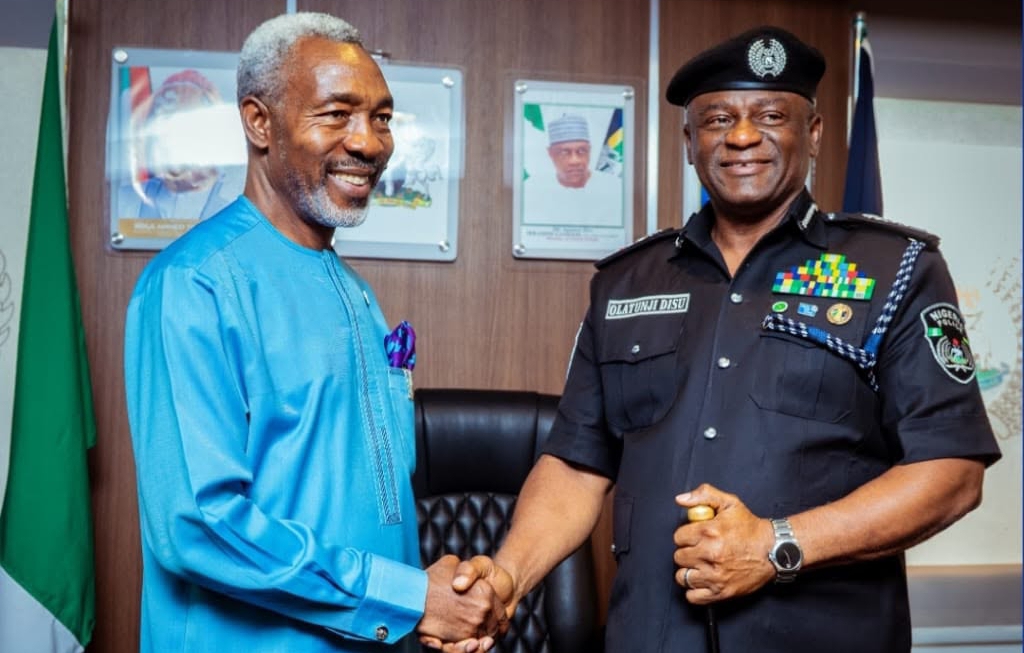
NIPR President, Dr Ike Neliaku, in a handshake with the Inspector-General of Police, Olatunji Disu, at the Force Headquarters in Abuja on Tuesday.

The Inspector-General of Police, IGP Olatunji Disu, has called for stronger collaboration between the Nigeria Police Force (NPF) and the Nigerian Institute of Public Relations (NIPR) to enhance public confidence in the police.

The IGP made the call on Tuesday when he received a delegation of the NIPR, led by its President and Chairman of Council, Dr Ike Neliaku, on a courtesy visit to the Force Headquarters, Abuja.

According to a statement issued by the Force Public Relations Officer, CSP Ani Iniedu, the IGP emphasised the importance of effective communication, professionalism, transparency and fairness in strengthening the relationship between the police and members of the public.

Disu noted that every police officer was an image-maker of the Force, adding that the conduct of personnel in their daily interactions with citizens had a direct impact on public perception of the police.

He said the Nigeria Police Force (NPF) remained committed to policing by consent and promoting a service-oriented policing culture built on professionalism, empathy, accountability and respect for human rights.

The IGP also sought the support of the NIPR in providing specialised communication training for police personnel and developing a coherent communication framework that would effectively communicate the sacrifices and contributions of police officers to public safety and national security.

Earlier, Neliaku commended the IGP for his professional accomplishments and briefed him on Nigeria’s hosting of the 2026 World Public Relations Forum and Africa Charter Forum.

The international event is scheduled to hold at the Transcorp Hilton, Abuja, and is expected to attract more than 3,000 delegates from 126 member countries of the Global Alliance for Public Relations.

The NIPR delegation also sought the support of the Nigeria Police Force in security planning and coverage for the event.

Neliaku further invited the IGP to serve as a keynote speaker at the forum and encouraged police officers to register and participate as delegates.

The delegation included the Secretary-General of the African Public Relations Association, Dr Omoniyi Ibietan; Dr Suleiman Haruna; Mrs Maryam Sanusi; Mrs Olubunmi Badejo; Commandant Olusola Odumosu; Chief Uzoma Oyegbadu; Chief Moji Makanjuola; Mr Stanley Ogadigo and other members of the institute.

Iniedu said the meeting reflected the commitment of the  Police Force to building productive partnerships with professional bodies and other stakeholders to strengthen public trust, enhance public safety and promote national security.


Continue Reading

News

Inflation drops marginally to 15.39% — NBS

Published

on

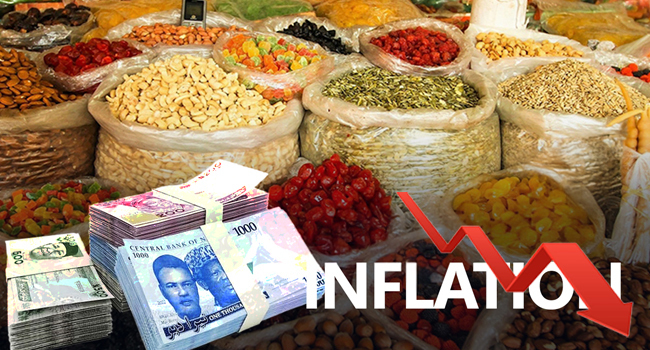
Nigeria’s headline inflation rate fell marginally to 15.39 per cent in August 2026 from 15.43 per cent in July, according to the National Bureau of Statistics.

The NBS disclosed this in its Consumer Price Index released on Tuesday, saying the latest figure represented a 0.04 percentage point decline from the previous month.

The statistics agency, however, reported a sharper decline in the month-on-month inflation rate, which dropped to 0.71 per cent in August from 1.57 per cent in July.

The month-on-month rate, according to the bureau, declined by 0.86 percentage points compared with the July figure.

The NBS explained that the development indicated that the rate at which the average price level increased in August was slower than that recorded in July.

The latest data also showed a significant moderation in food inflation, which stood at 19.57 per cent year-on-year in August.

The figure was substantially lower than the 25.30 per cent recorded in August 2025.

On a month-on-month basis, food inflation fell to 1.02 per cent in August from 5.56 per cent in July, representing a decline of 4.55 percentage points.

The NBS said the development showed that food prices were still rising, but at a slower rate during the month under review.

It attributed the decline largely to changes in the average prices of a number of food items, including palm oil, carrots, pepper, onions, cassava flour, beef, yam flour, water yam, melon (egusi), fresh ginger, fresh fish, Irish potatoes, wheat grain, frozen chicken and turkey meat.

At the state level, Adamawa recorded the highest year-on-year food inflation rate in August at 38.85 per cent.

It was followed by Zamfara with 37.96 per cent and Bayelsa with 36.20 per cent.

On the other hand, Borno recorded the lowest year-on-year food inflation rate at -4.04 per cent, followed by Jigawa at -0.23 per cent and Kebbi at 3.47 per cent.

The month-on-month figures presented a different picture, with Katsina recording the highest food inflation rate at 9.48 per cent.

Rivers and Osun followed with 8.86 per cent and 8.32 per cent respectively.

Taraba recorded the lowest month-on-month food inflation rate at -12.42 per cent, followed by Borno at -12.15 per cent and Bauchi at -8.88 per cent.

The latest figures indicate a moderation in the pace of price increases, particularly in the food sector, although the NBS data show that consumers continue to face varying price pressures across the states.

Continue Reading

News

Nigeria’s Oil Output Rises to 1.68m Barrels Per Day

Published

on

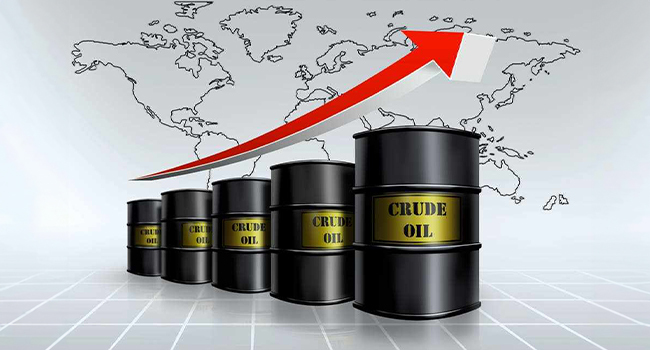
Nigeria’s crude oil and condensate production rose to 1.68 million barrels per day in August 2026, representing a 0.4 per cent increase from the 1.67 million barrels per day recorded in July.

The Nigerian Upstream Petroleum Regulatory Commission disclosed this in its latest production report released on Sunday.

Excluding condensate, the country produced an average of 1,500,190 barrels of crude oil per day in August, allowing Nigeria to meet its Organisation of Petroleum Exporting Countries quota for the fourth consecutive month.

Daily combined crude oil and condensate production ranged between 1.64 million barrels and 1.71 million barrels during the month under review.

A breakdown of production by terminals showed that Bonny Terminal recorded the highest output at 320.04 thousand barrels per day, followed by Forcados Terminal with 317.40 thousand barrels per day.

Qua Iboe Terminal recorded an average production of 171.72 thousand barrels per day, while Escravos Oil Terminal posted 131.71 thousand barrels per day.

Bonga ranked fifth among the highest-producing terminals, with an average output of 92.50 thousand barrels per day.

The NUPRC attributed the modest improvement in August production largely to the resolution of operational challenges involving the Single Buoy Mooring at the Erha field.

The commission said the challenges had adversely affected production in the preceding month.

“The restoration of normal evacuation and production operations at the asset contributed positively to overall production volumes during the period under review,” the commission’s spokesperson, Eniola Akinkuotu, said in a statement on Sunday.

The regulator added that production activities across most other producing assets remained relatively stable during the month.

“Production activities across most other producing assets remained relatively stable, with operators sustaining implementation measures aimed at optimising production efficiency, maintaining asset integrity, and minimising operational disruptions,” the statement said.

The latest figures indicate a continued improvement in Nigeria’s oil production, with the country maintaining its OPEC quota compliance for the fourth consecutive month.

Continue Reading

Trending

All Rights Reserved. Copyright © 2026 MegaIcon Magazine