Connect with us

Top Stories

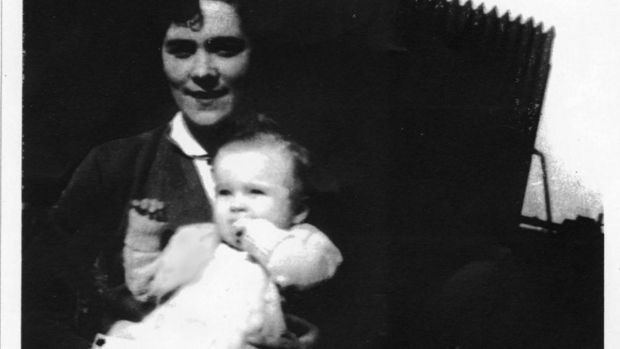
Raped by a priest, abused, incarcerated and no apology – Magdalene survivor narrates ordeal

Published

on

Seven years ago a small red exercise book was put on display in the Little Museum of Dublin. A sticker announces its purpose: “Laundry Lists Writing-In Book.”

The artefact was ignored by most visitors, which is hardly surprising. At first glance the contents are innocuous, for the copybook contains only a list of names: of families, companies, schools, clubs, religious orders and State institutions. They were clients of the largest Magdalene laundry in Ireland.
In the museum, small objects are used to tell a larger story – about Dublin, about Ireland and about the large, very odd family to which we all belong. But in trying to record our complex shared history, we also want to be inclusive. Some visitors are religious, others are not. Most people come to be entertained as much as educated.

“More than 10,000 women and girls spent time in the laundries, which operated with the blessing of an unholy trinity of family, church and State

For these reasons we struggled to find an appropriate way to talk about the ledger on guided tours of the museum. It is not something that can be referenced with a quip. It demands scrutiny. Because that copybook, in which neat red ticks denote the completion of a job, is not merely a list of clients.

It is also a damning indictment.
In the 1950s this country locked up 1 per cent of its population. We incarcerated more people per head of population than Stalin did in Russia. And the Catholic Church played a leading role. Until very recently, religious institutions ran orphanages, industrial schools, homes for single mothers and the now-notorious Magdalene laundries.
The laundries started before the foundation of the State, apparently as places of respite and training for women, prostitutes in particular. However after independence they soon became places of arbitrary detention: for orphans who had grown up in State care; for cruelly named “fallen women” who had given birth outside marriage (often as a result of rape); for girls who were simply outspoken or even high-spirited.

Moral code

Women who didn’t conform to the demands of a society with a strict moral code were locked away “for their own protection” – the medieval logic of the laundries – and forced to do backbreaking unpaid work in businesses run by religious orders. Mortality rates were shockingly high, and some victims were buried in communal graves, sometimes unmarked and unrecorded.

More than 10,000 women and girls spent time in the laundries, which operated with the blessing of an unholy trinity of family, church and State. Nobody knew what was going on behind those walls – and everyone knew. In fact, every Irish person over a certain age is implicated in this story, whether they like it or not. That includes me.

“She still has the scars on her body. She still wakes up crying in the middle of the night

I was 24 years old when the last Magdalene laundry closed in Dublin in 1996. Old enough, that is, to vote, to care about notions such as truth and justice and to feel outraged by human rights abuses in Rwanda and Bosnia. Yet here at home I ignored the shocking reality of life for some people – a reality that was hiding in plain sight. (As a nun once put it to The Irish Times,

“There are very serious problems in Dublin if we could only get our hands on them. Girls arriving up here from the country with no money and nowhere to go.”
Two decades later, Irish society was beginning to come to terms with the brutal reality of life in the laundries. Our ledger had come from High Park, a laundry in Drumcondra that was run by the Religious Sisters of Our Lady of Charity. In addition to the many ordinary families whose names are listed, there are also emblems of Official Ireland, such as the Department of Justice and Áras an Uachtaráin. This copybook could be used to tell a larger story. But how?
We knew that the power of one person’s story might be the best way to explore its meaning. However, many of the survivors were reluctant to talk in public, while others had escaped from Ireland for a new life overseas. Among the emigres was Mary Merritt, who was interviewed for the BBC Panorama programme in 2015. Born in a Dublin workhouse, Mary spent her childhood in Ballinasloe, in the care of the Sisters of Mercy.
At the age of 16 – “I was a bold child” – she was caught stealing a few apples from an orchard and was sent to High Park. Renamed Attracta by the nuns, she spent the next 14 years enduring horrific trauma and abuse. Escaping from the convent, she went to a priest and begged for help. Mary was raped by the priest and became pregnant with a baby she met only once before the girl was given up for adoption. She told her story to Miriam O’Callaghan on RTÉ radio in March 2018.

Memories

At the age of 83, Mary was brave enough to share her story with the BBC. Would she be willing to share her memories of High Park with our visitors? A couple of phone calls later I had her email address. Mary was living in Tunbridge Wells, and eager to talk: “I would like to take up your invitation and tell you my heartbreaking story. It is with me always.”

Over the next 12 months I spent many hours with Mary and her husband Bill. Married for more than 50 years, they are utterly devoted to each other, and today, at the age of 88, Mary remains as “bold” as ever. Chatty and warm, she has a loud, slightly wicked laugh and delights in spending some of her compensation money by staying in a posh hotel on her visits to Dublin.
Mary once met Paul McCartney and still raves about the experience; takes her neighbour’s dog for a walk every morning; sends thoughtful cards in the post. But her voice hardens when she recalls the misery of life in High Park. She still has the scars on her body; still wakes up crying in the middle of the night; still wants an apology from the church. When she talks about these things it is with the resolve of an extraordinarily strong woman who would not be silenced by malicious forces.
Last year, Mary was in Áras An Uachtaráin when President Michael D Higgins apologised to the Magdalene survivors on behalf of the State. Mary used to do the laundry for the Áras.
However, she admires our current President. “He is,” she says, “a lovely man.” Reflecting on this it is tempting to conclude that the story has played itself out, that we are now reconciled to the past and that wrongs have been addressed. But Mary Merritt is still waiting.
“I never received an apology from the church,” she told me recently. “And I am still angry. I want that apology before I die. And until then, I will continue to speak out.”
In Ireland, artists were once internal exiles.
These days they play a key role in commemorating the past, which Fintan O’Toole has memorably described as “an act of imaginative sympathy as it is of historical reconstruction.”
Inspired by the remarkable work of theatre-makers like Louise Lowe and Selina Cartmell, and encouraged to be fearless by Mary herself, we introduced her to the writer and director Gerry Stembridge, the designer Stephen Dodd and the actor Amy Kidd. Together we have created a new work that will receive its premiere at the Dublin Theatre Festival. Lasting 15 minutes, it can only be seen by one person at a time. At the end the audience is invited to inspect the High Park ledger.
You Can Leave at Any Time is not exactly a play, a memoir, an art installation or a museum exhibition, although it is indebted to each of these forms. We don’t care what people call it, though we do know that some will find it an uncomfortable experience. If my contemporaries feel a measure of shame, that is not inappropriate.
Younger visitors may be shocked to discover quite how recent it all was. We hope that people of all ages will be transported, horrified and ultimately inspired by the story of a woman who refused to allow her life to be ruined by powerful men and women who were almost unimaginably cruel.
Source: irishtimes


Comments

Politics

Ex-Oyo deputy governor Adeyemo sworn in as APC chair, rallies support for Tinubu

Published

on

By

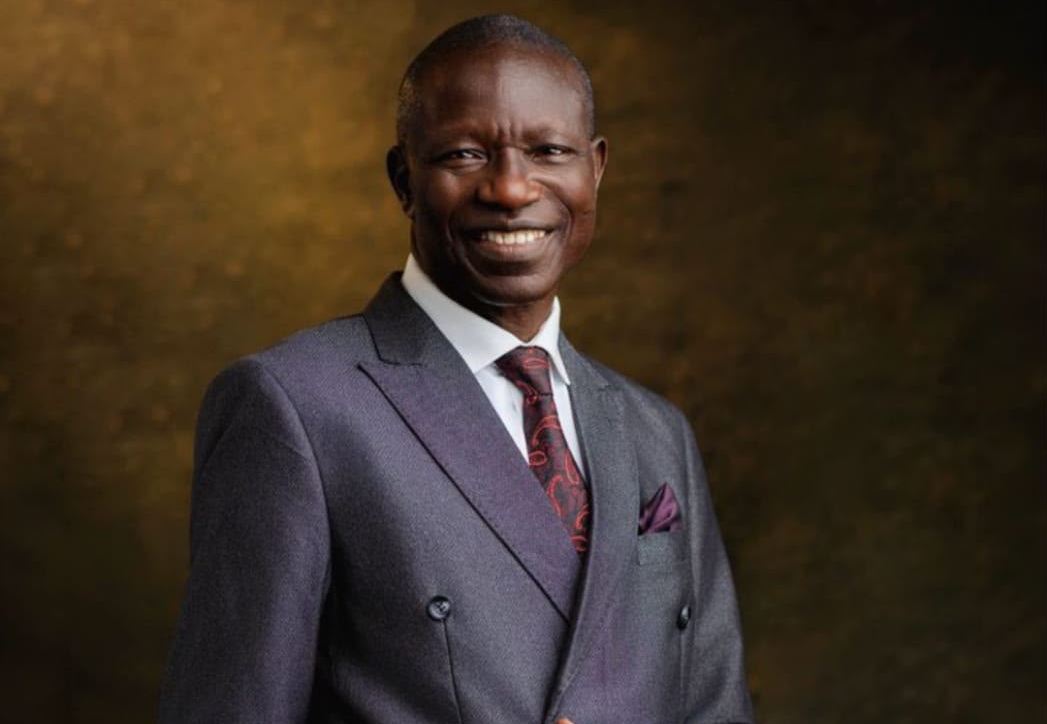
A former Deputy Governor of Oyo State, Chief Moses Alake Adeyemo, has been sworn in as the Chairman of the Oyo State chapter of the All Progressives Congress (APC), urging members of the party to rally support for President Bola Tinubu ahead of the 2027 general elections.

Adeyemo formally assumed office on Friday following the inauguration of the newly elected State Executive Committee members who will manage the affairs of the party in the state for the next four years.

The inauguration ceremony, held at the party’s State Secretariat in Oke-Ado, Ibadan, marked the climax of the party’s 2026 congresses in the state.

The South-West Zonal Legal Adviser of the APC, Kolawole Majaro, administered the oath of office on Adeyemo and 35 other members of the State Executive Committee.

The executives had emerged through a consensus arrangement during the March 3, 2026 state congress held at the Obafemi Awolowo Stadium, Ibadan, under the supervision of a committee led by Amos Gombi from the APC National Secretariat in Abuja.

In his acceptance speech, Adeyemo described his emergence as a renewed call to service, pledging to strengthen the party and sustain unity among members.

He appreciated party leaders within and outside the state for ensuring a smooth and successful congress process.

Adeyemo also commended members of the Local Organising Committee, particularly Fatai Ibikunle and Afeez Bolaji Repete, for their contributions to the success of the exercise.

He said, “This new State Executive Committee under my leadership is being put in place to add value and strengthen our great party in view of the challenges ahead.

“We have used the opportunity of the congresses to showcase our collective commitment to unity and harmony as progressives and democrats.”

The new chairman expressed optimism that the atmosphere of peace within the party would be sustained ahead of future party primaries and the 2027 elections.

According to him, the party’s target is to secure 90 per cent of the votes in Oyo State for President Tinubu while also reclaiming the state’s Government House in 2027.

Adeyemo praised the President’s leadership, saying the administration was delivering on its promises.

“President Tinubu is, no doubt, performing beyond our expectations and the best way to appreciate his good work is to retain him in Aso Rock until 2031,” he said.

“Against all odds, the President is pursuing his Renewed Hope Agenda with vigour and passion, while the positive results are being felt across sectors of the economy and national life.”

Other members of the newly inaugurated executive include Taofeek Lamidi as Deputy Chairman, Fatai Adesina as State Secretary, Adekemi Opatunde as Woman Leader, Olawale Sadare as Publicity Secretary, Olalekan Oladejo as Youth Leader, and Remi Adepoju as Organising Secretary.

Also inaugurated were Ajiboye Akinsanya as Treasurer, Sunday Aborisade as Legal Adviser, Tinuade Adigun as Auditor, Lukman Owonikoko as Assistant State Secretary, Fatimah Hassan as Deputy Woman Leader, and Jimoh Osundara as the Leader of Persons Living With Disabilities, among others.

Continue Reading

News

Kano Assembly Moves to Impeach Deputy Governor Gwarzo Over ₦1.6bn Alleged Fraud

Published

on

By

Deputy Governor of Kano State Aminu Gwarzo

The Kano State House of Assembly has initiated impeachment proceedings against Deputy Governor Aminu Abdussalam Gwarzo over allegations of gross misconduct, abuse of office, and breach of public trust.

The notice was presented yesterday during plenary by the Majority Leader, Lawan Hussaini Dala, who said the action follows Section 188 of the 1999 Constitution of the Federal Republic of Nigeria.

Dala said the allegations stem from Abdussalam’s tenure as Commissioner for Local Government (2023–2024) and his current role as deputy governor. He accused the deputy governor of diverting funds meant for the 44 local government councils.

According to the majority leader, Abdussalam allegedly received N1.5 million monthly from each council between June 2023 and January 2024, totaling N462 million. Between February and July 2024, he allegedly collected N3.255 million monthly from each council under the guise of special assignments, amounting to N726 million.

Dala also accused the deputy governor of abuse of office, claiming he facilitated payments of N10 million from each council to NovoMed Pharmaceuticals Limited, totaling N440 million, in violation of state procurement laws.

“The misuse of official capacity to confer undue advantage constitutes abuse of power and undermines public trust,” Dala told lawmakers, adding that the allegations amount to gross misconduct under the Constitution.

The impeachment notice was reportedly endorsed by 38 lawmakers, meeting the constitutional threshold to proceed. The Speaker has acknowledged receipt, and the House is expected to serve the allegations on the deputy governor.

If approved, a panel may be constituted by the state Chief Judge to investigate the claims.

As of filing, Abdussalam had yet to respond publicly to the allegations.

Continue Reading

Politics

2027: Sen. Dickson Dumps PDP, Joins Newly Registered NDC

Published

on

By

Senator Seriake Dickson receiving the flag of the NDC

The Senator representing Bayelsa West, Seriake Dickson, on Thursday announced his resignation from the Peoples Democratic Party (PDP), declaring that he had joined the newly registered Nigeria Democratic Congress (NDC).

Dickson, a former governor of Bayelsa State, made the announcement during a media briefing in Abuja, attributing his decision to what he described as irreconcilable differences within the PDP.

The lawmaker said the emergence of the NDC would strengthen Nigeria’s democratic system by providing a credible opposition platform.

According to him, the party recently received its certificate of registration from the Independent National Electoral Commission.

He said, “Last week INEC issued a certificate of registration and we now have the newest party in Nigeria known as the Nigeria Democratic Congress and our symbol is victory, the victory sign.

“So, my dear Nigerians, you now have a credible alternative opposition party known as the Nigeria Democratic Congress.”

Dickson noted that although the party’s registration took longer than expected, its eventual approval was a welcome development for the country’s democratic landscape.

“Yes, it is coming at this time. We would have wished it started some years or months back. We don’t control INEC and their processes; they delayed. We don’t also control the judiciary, but thank God it has finally arrived,” he said.

The senator also stressed that Nigeria’s democracy must not slide into a one-party system, insisting that political diversity remained vital for national stability.

“This nation cannot be a one-party state. Nigeria cannot be a one-party state. Nigeria is not designed to be a one-party state.

“We are a very diverse nation culturally, religiously and politically and that is the beauty of our country.

“So anyone or any party promoting one-party rule in Nigeria is mistaken. We build political parties and get involved in movements to access power for the good of the people, not for our personal benefit,” he added.

Meanwhile, the Independent National Electoral Commission recently announced the registration of two new political parties.

The parties are the Democratic Leadership Alliance and the Nigeria Democratic Congress, bringing the total number of registered political parties in Nigeria to 21.

The announcement was made by the INEC Chairman, Prof. Joash Amupitan, during the commission’s first quarterly consultative meeting with political party stakeholders for 2026.

According to him, the Democratic Leadership Alliance completed the required verification process, while the Nigeria Democratic Congress was registered in compliance with a Federal High Court order.

Continue Reading

Advertisement

Entertainment

Advertisement

MegaIcon Magazine Facebook Page

Advertisement

MEGAICON TV

Advertisement

Trending