Connect with us

National Issues

Nigeria: Hunger crisis deepens, spills over into Lake Chad Basin.

Published

on

As conflict and instability continue, the food security situation in Nigeria and the Lake Chad Basin is drastically deteriorating, FAO warned today, as it called for swift and decisive action from the international community to protect the livelihoods of millions of families dependent on farming, livestock and fishing for their food and livelihoods. 

With the next planting season starting in May, and with scarcity of animal fodder and water points during the lean season, it is crucial that crop seeds, tools and livestock support reach families urgently to limit the scope of the deepening crisis that now involves four countries: Cameroon, Chad, Niger and Nigeria.

Some 7.1 million people are now severely food insecure across the four countries. Among them are 515 000 children who are suffering from severe acute malnutrition – a condition which, if untreated, can lead to permanent damage to a child’s development and even death.

FAO is among the UN agencies and governments attending the Oslo Humanitarian Conference today, organized to mobilize international funding for the crisis-struck region, where 80 to 90 percent of people rely on farming, fishing and herding for their livelihoods.

“In the worst-affected areas, famine continues to loom — and millions will remain trapped in cycles of severe hunger if we don’t enable farmers to start cropping now,” said Dominique Burgeon, Director of FAO’s Emergency and Rehabilitation Division, who is representing FAO at the conference. “Our collective efforts cannot be limited to merely avoiding massive famine – they need to allow people to return to a dignified life. And supporting agriculture is the key to both,” he said.

Besides reducing hunger and boosting nutrition, investing in farmers also provides much needed job opportunities that reduce migration and limit the potential for radicalization of unemployed youth, according to Burgeon.

Crisis spilling across borders

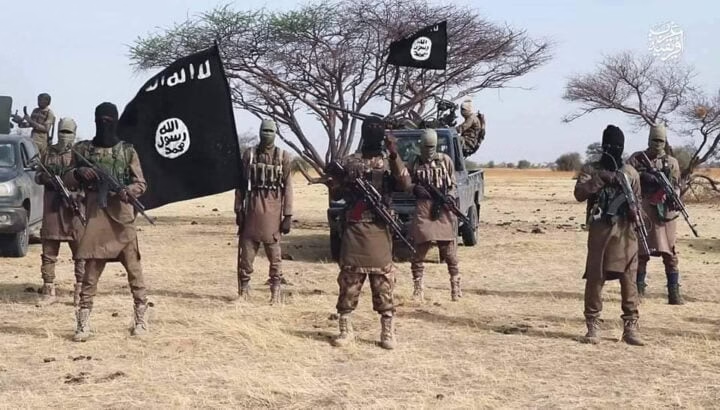
Violence related to the armed group Boko Haram in northeastern Nigeria has spilled over to parts of neighboring countries in the Lake Chad Basin – specifically, Cameroon’s Far North, western Chad and southeastern Niger – with devastating effects on food security and livelihoods.

“The UN foresees around 120 000 people facing famine conditions in Nigeria”.

With the Lake Chad Basin approaching a critical period in the agricultural calendar, FAO is urgently calling for $30 million in immediate emergency support to help farming families in the four countries get ready to plant in the upcoming May planting season and prevent them from slipping into long-term dependency on food aid.

A total of $232 million will be needed to secure food production and access to food for three million people in the worst-hit areas over the next three years. The vast majority of the requested funds – some $191 million – is designated for Nigeria, which is bearing the brunt of the crisis.

Violence and displacement drive severe hunger

Violence has driven millions across the four countries from their homes and hampered access to agricultural lands and assets, creating massive humanitarian needs in an area already struggling with food insecurity, poverty and environmental degradation. Host communities, in particular, have been struggling for several years now to feed the displaced as well as their own.

As humanitarian access improves, revealing the magnitude of impact of the conflict, time has come to support both people who remained on their land and those who decide to return to their original livelihoods.

In Borno State alone, the population in crisis, emergency and catastrophe phases of food insecurity (Phases 3 to 5 on the five-tiered scale used by humanitarian agencies) increased from 2 million in August 2016 to 3.3 million in October-December 2016. The worst-affected in this group are not able to feed themselves and have exhausted all resources by selling off their belongings, including seeds, tools and animals. Without intervention, that number is expected to climb to 3.6 million at the height of the lean season in August 2017.

The UN foresees around 120 000 people facing famine conditions in Nigeria. Of this number, the vast majority – some 96 percent — are expected to be in Borno.

Targeting the most vulnerable 

Emergency farming assistance must go hand in hand with food assistance for it to be successful throughout the upcoming lean season. To this end, FAO is collaborating with the World Food Programme to ensure vulnerable families — mainly IDPs and host communities — receive food assistance, and at the same time  agriculture-based livelihood support in the form of provision of seeds, tools and fertilizer. This way, they will able to restore and protect their livelihoods and farming assets for ongoing food production.

FAO’s long-term strategy for the Lake Chad region puts a special emphasis on supporting refugees, internally displaced families and host communities, as these are the most vulnerable groups in this crisis. Interventions are geared to improving their food security and nutrition and building their resilience so they are better equipped to handle future shocks. In addition, restoring agriculture-based livelihoods will offer a unique opportunity to pave the way to recovery and peace in the affected areas.

The strategy incorporates not only provision of farming and livestock inputs but also technical training, cash transfers, instruction in natural resource management, and support in setting up community-managed funds that can reduce vulnerability to shocks.

Comments

National Issues

OLOJO FESTIVAL: Nigeria bigger than all of us, Ooni tells politicians

Published

on

Monarch begins seven-day seclusion, prays for peace, unity

The Ooni of Ife, Oba Adeyeye Ogunwusi, Ojaja II, has urged Nigerian politicians to put the interest of the country above their political differences, saying Nigeria is bigger than any individual or political interest.

The monarch spoke on Sunday shortly before commencing a seven-day spiritual seclusion ahead of the 2026 Olojo Festival in Ile-Ife, Osun State.

The annual seclusion is part of the traditional rites preceding the Olojo Festival, one of the major cultural celebrations associated with Ile-Ife and the Yoruba people.

The Ooni, who is also the Co-Chairman of the National Council of Traditional Rulers of Nigeria, said his period in seclusion would be devoted to prayers for Nigeria, particularly for peace, unity and sustainable development.

“I am appealing to our politicians. They might have differences, but we should know ultimately that Nigeria is bigger than all of us,” the monarch said.

“It is very important for our political leaders to always look inwardly on how to better the lot of the average Nigerians.”

The Ooni urged political leaders to avoid words and actions capable of threatening national cohesion, reminding them that political power was temporary.

“Some have ruled this country before as political leaders, and others will come after them,” he said.

He said his prayers would also cover Nigeria’s democratic process, particularly as the country prepares for the next general elections.

The monarch commended President Bola Tinubu over what he described as non-interference in the activities of the Independent National Electoral Commission, saying such a practice could strengthen public confidence in the electoral process.

He also commended Osun residents for participating in the recently concluded governorship election, saying the outcome demonstrated the ability of citizens to determine their leaders through the ballot.

According to him, Nigerians should continue to have the opportunity to freely choose their leaders without actions capable of undermining the democratic process.

The Ooni’s seven-day seclusion, which began on Sunday evening, will also provide him with an opportunity to prepare spiritually for the sacred rites of the Olojo Festival and deepen his connection with the ancestors.

The exercise precedes the annual wearing of the sacred Aare Crown, one of the major highlights of the festival.

A statement by the Senior Media Officer of the Ooni’s Palace, Sodiq Lawal, issued on behalf of the Director of Media and Public Affairs, Otunba Moses Olafare, said the seclusion marked the beginning of the spiritual phase of the 2026 Olojo Festival.

The festival celebrates Ile-Ife’s indigenous traditions and ancestral heritage and attracts traditional rulers, cultural enthusiasts, visitors and members of the Yoruba diaspora.

The public ceremonies are expected to follow the spiritual rites and culminate in the Ooni’s emergence in the sacred crown.

Continue Reading

National Issues

Tinubu vows intelligence-led rescue of abducted Oyo pupils, teachers

Published

on

President Bola Tinubu on Monday assured residents of Oyo State that ongoing efforts to rescue abducted pupils and teachers in Oriire Local Government Area would be intelligence-driven, coordinated and sustained.

The President said the Federal Government would deploy every lawful means, including kinetic and non-kinetic measures, to ensure the safe return of the victims abducted during the May 15, 2026 attack in Esiele and Yawota communities.

“Our rescue efforts will be intelligence-led, careful, coordinated, and sustained. We will deploy every lawful tool available, both kinetic and non-kinetic, to ensure our children and teachers are safely returned home,” Tinubu stated in a statement posted on his X handle on Monday.

The President also expressed sorrow over the killing of a school teacher during the abduction and extended condolences to his wife, Mrs Mary Oyedokun, and the bereaved family.

“I also extend my deepest condolences to Mrs Mary Oyedokun, the wife of the late school teacher and her family. Their sacrifice will not be forgotten, and his family will not be abandoned,” he said.

Tinubu stressed that children should never be exposed to the trauma of abduction, noting that no parent should endure the pain associated with such incidents.

“No child should be taken from the safety of a classroom. No parent should have to endure this anguish,” the President added.

He assured affected communities that efforts to secure the release of the abducted pupils and teachers would remain sustained and intelligence-driven.

The statement comes amid growing concerns over insecurity in schools and rural communities following the abduction, which prompted the Federal Government to dispatch a high-powered delegation to the affected communities in Oriire Local Government Area.

The delegation included the Chief of Staff to the President, Femi Gbajabiamila; the National Security Adviser, Nuhu Ribadu; the Minister of Defence; and the Inspector-General of Police, Kayode Egbetokun, alongside other senior government and security officials.

Tinubu further disclosed that he had approved additional security measures, including the deployment of a specialised security unit equipped with advanced rescue capabilities to intensify efforts towards the safe return of the victims.

“I have also directed the deployment of a specialised security unit with advanced rescue capabilities to intensify efforts to secure the safe return of the abducted pupils and teachers,” he stated.

The President also revealed that the Federal Government, in collaboration with the Oyo State Government, was mobilising 1,000 forest guards to improve surveillance in forest corridors frequently exploited by criminal elements.

According to him, the initiative would be complemented by broader operational measures aimed at strengthening rescue operations and preventing future attacks.

Tinubu added that a request for the establishment of a military base in the affected area was receiving urgent consideration as part of efforts to bolster security.

Authorities have continued rescue operations amid rising concerns over the safety of schools and rural settlements, insisting that efforts remain focused on securing the release of the abducted victims and preventing a recurrence.

Continue Reading

National Issues

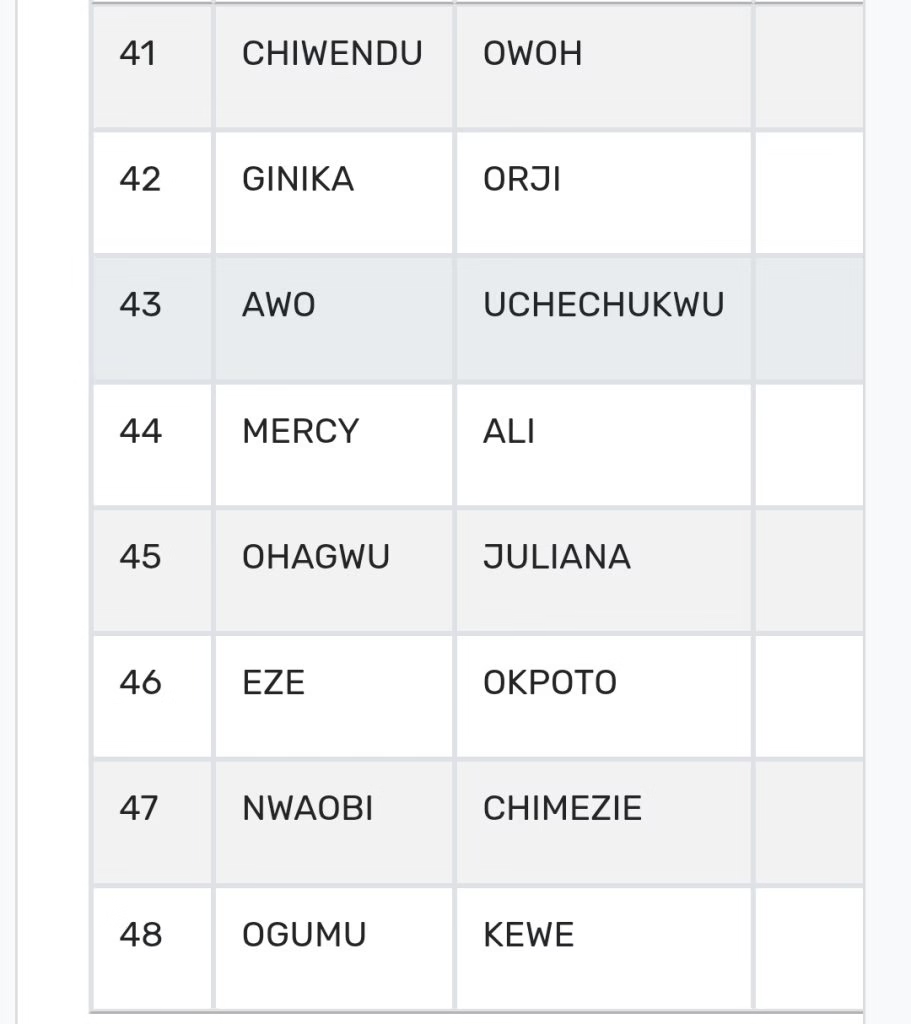
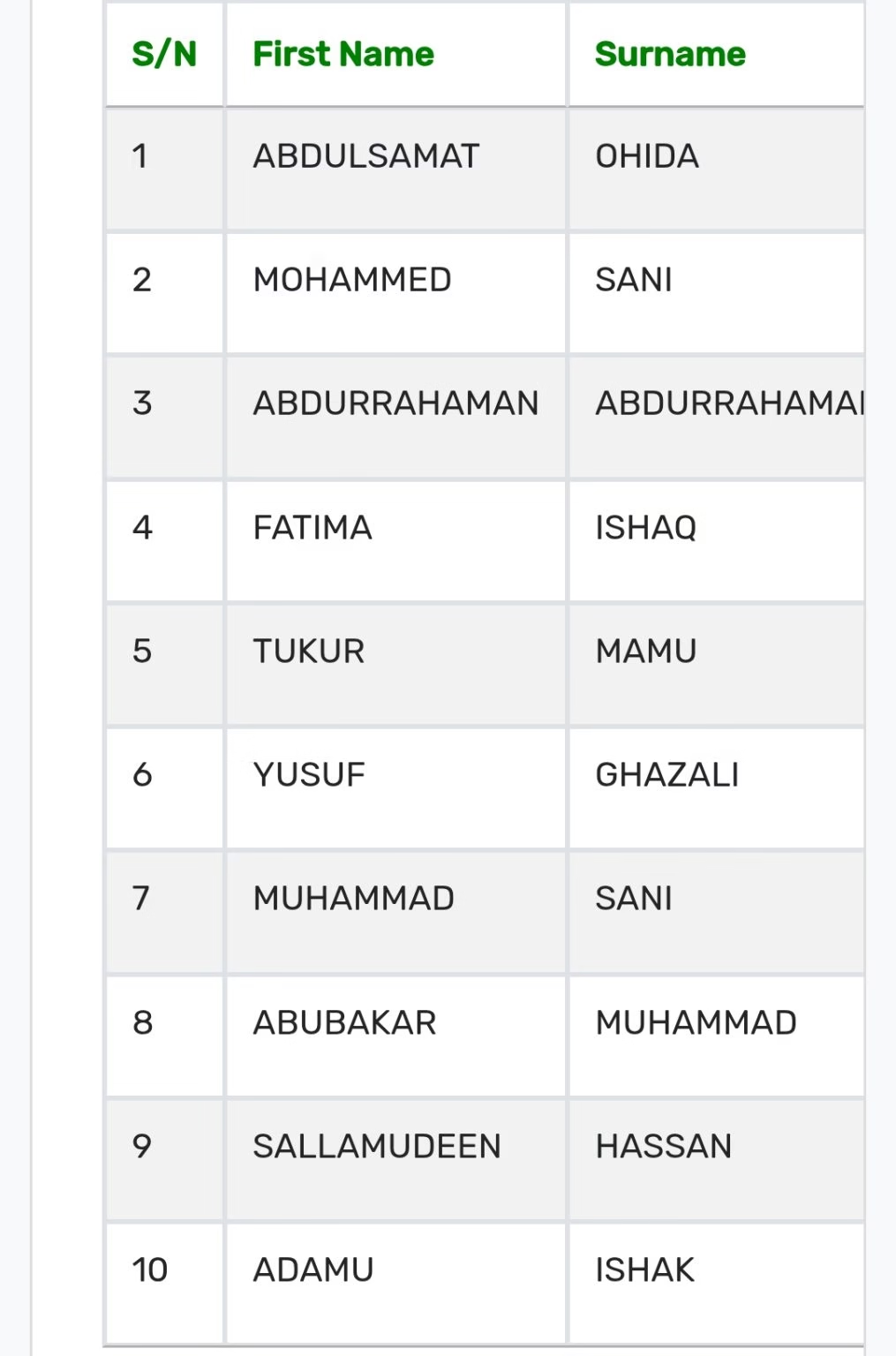
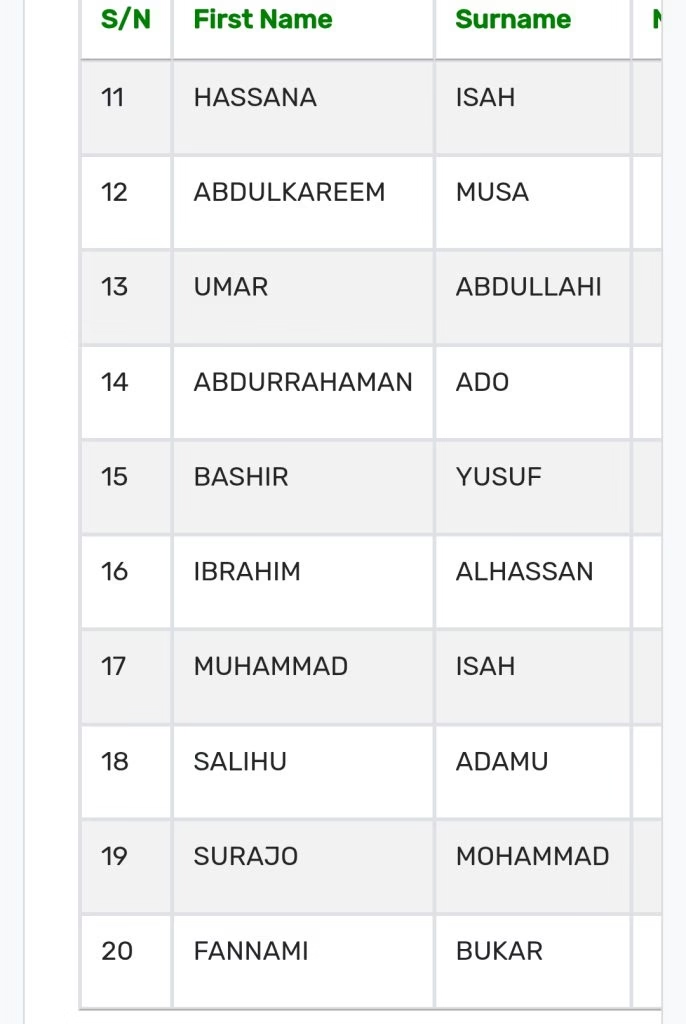
48 alleged terror financiers named by FG {SEE FULL LIST}

Published

on

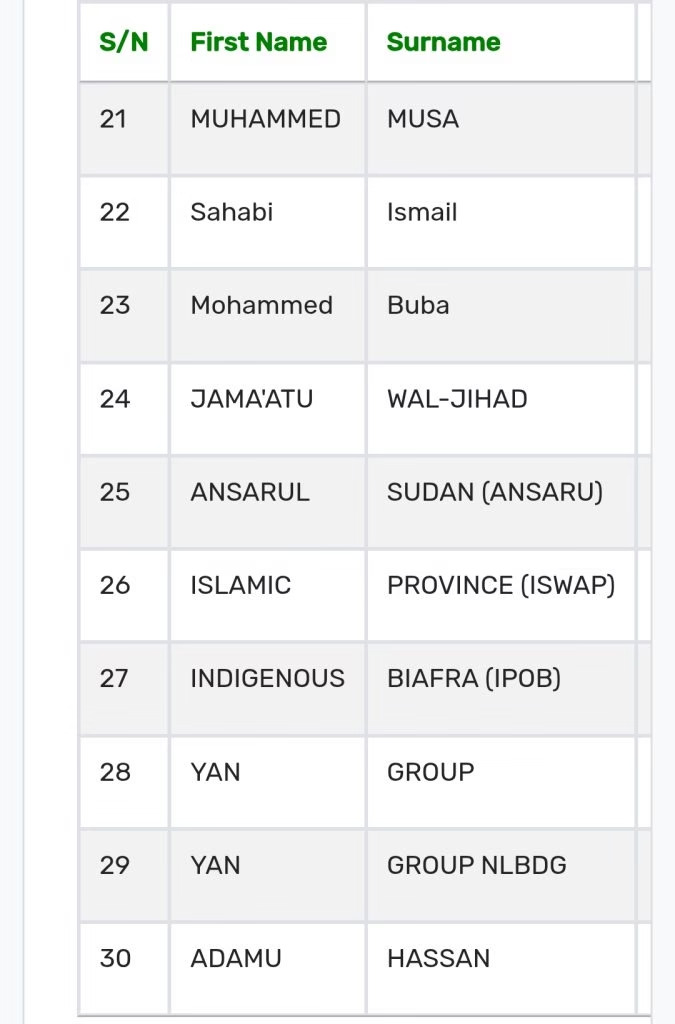
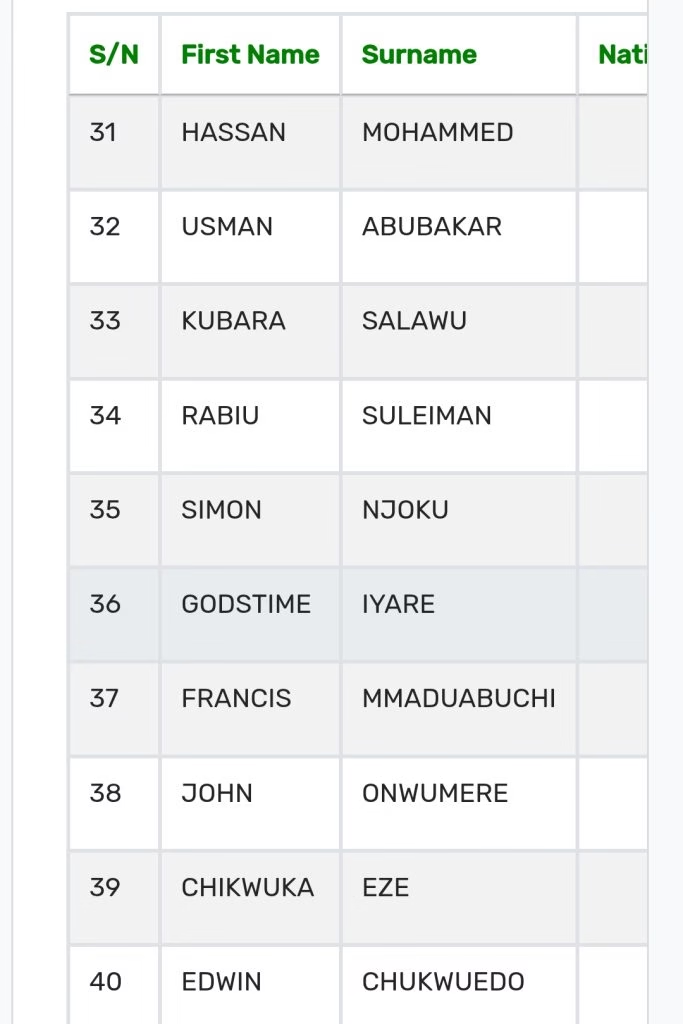
The Federal Government, on Saturday, published a list of 48 individuals and entities allegedly linked to terrorism financing in Nigeria, naming suspects with reported ties to outlawed groups including the Indigenous People of Biafra, Ansaru, and the Islamic State West Africa Province.

The list was released by the Nigeria Sanctions Committee as part of intensified efforts to disrupt financial networks sustaining terrorist activities across the country.

In a statement accompanying the publication, the committee said the designation of the individuals and organisations was in line with Nigeria’s legal and international obligations to combat terrorism financing.

“The Nigeria Sanctions Committee has approved the designation of the following individuals and entities for their alleged involvement in terrorism financing,” the statement read.

It added, “The action is pursuant to relevant laws and regulations aimed at identifying and freezing assets of persons and organisations linked to terrorist activities.”

The committee explained that the move was targeted at dismantling the financial backbone of insurgent and extremist groups operating within and beyond Nigeria’s borders.

Among those listed are individuals reportedly associated with the Indigenous People of Biafra, a proscribed separatist group; Ansaru, a faction linked to Al-Qaeda; and the Islamic State West Africa Province, one of the most active terrorist groups in the region.

Security experts have repeatedly stressed that cutting off funding sources remains a critical strategy in weakening terrorist operations.

Speaking on the development, a senior government official familiar with the process said the publication sends a strong signal about Nigeria’s resolve to confront terrorism at its roots.

“This is not just about naming names; it is about choking the financial lifelines of terror networks. Once funding is disrupted, their operational capacity is significantly weakened,” the source said.

The committee further noted that relevant authorities and financial institutions have been directed to take necessary steps in enforcing sanctions, including the identification and freezing of assets linked to the designated persons and entities.

“The public is also advised to remain vigilant and report suspicious financial activities to appropriate authorities,” the statement added.

The Federal Government reiterated its commitment to safeguarding national security, insisting that individuals or groups found culpable would face the full weight of the law.

As of the time of filing this report, detailed breakdowns of the sanctions and timelines for enforcement were yet to be made public.
 

Continue Reading

Trending