Connect with us

Health

Never Ignore Lime Again For These Health Benefits It Offers

Published

on

The health benefits of lime include weight loss, skin care, eye care, improved digestion, respiratory disorders, urinary disorders and relief from constipation, and treatment of scurvy, piles, peptic ulcer, gout and gums.

Lime, bearing the scientific name Citrus Aurantifolia, has been well known for its medicinal properties and uses in the treatment of various ailments for ages. Due to its unique flavour, the lime fruit is widely consumed all over the world and has various culinary and non-culinary uses. It is also used in preparation of various cosmetic and health products. Extracted from lime’s peel or skin, lime essential oil is extensively used in aromatherapy and perfumes.

Lime Nutrition Facts

Lime consists of mainly water and is an extremely good source of vitamin C. It is also rich in dietary fiber and minerals like calcium, iron, potassium, copper, magnesium and phosphorous. The best thing about lime is that it has least amount of calories, carbohydrates and zero fats. Moreover, lime peel and pulp are also rich in diverse phytochemicals like polyphenols and terpenes.

Health Benefits Of Lime

Limes can do a lot more for our skin and overall health than just adding a refreshing zest to any drink, cleansing our body and boosting our immunity. Let’s take a look at some more benefits they offer;

Scurvy:

Use of lime is a well-known cure for scurvy, a disease which is caused due to the deficiency of vitamin C. It is characterized by frequent infections that show as normal cold symptoms, cracked lips and lip corners, ulcers on the tongue and in the mouth. You can also diagnose scurvy if you see spongy, swollen and bleeding gums.

In the past, soldiers and sailors were given lime to keep them safe from scurvy, which was a horrible and potentially fatal disease back then. Even now, it is distributed among the workers working in polluted environments like furnaces, painting shops, heat treatments, cement factories, mines, and other dangerous work environments to protect them from scurvy. A moderate intake of natural vitamin C can easily be sourced from limes and can keep you away from scurvy.

Skin Care:

Limejuice can be consumed orally and used in topical applications. It rejuvenates the skin and protects it from infections. It also helps reduce body odor due to the presence of high amount of vitamin C and flavonoids in it. Both lime juice and lime essential oil are high in antioxidants, and have antibiotic and disinfectant properties. When applied externally on the skin, its acids scrub out dead cells, and cure dandruff, rashes and bruises. It can also be used to create a refreshing bathing experience if its juice or oil is mixed in your bath.

Digestion:

Lime has an irresistible aroma which causes your mouth to water and this actually aids primary digestion (the digestive saliva floods your mouth even before you taste it). The natural acidity in lime does the rest. While they break down the macro molecules of the food, the flavonoids, the compounds found in the fragrant oils extracted from lime, stimulate the digestive system and increase secretion of digestive juices, bile and acids. This flood of flavonoids also stimulates the peristaltic motion. This is the reason behind lemon pickle consumed along with lunch and dinner being a traditional practice in India and various neighboring countries.

Weight Loss:

A glass of warm water with a full lime’s worth of juice is an excellent weight reducer as well as a brilliant refresher and antioxidant drink. The citric acid present in lime is an excellent fat burner. You can consume two glasses of warm water with lime juice a day and see remarkable results within a week.

Constipation: Primarily, the ample amount of acid present in lime helps clear the excretory system by washing and cleaning the tracts, just as some acids are used to clean floors and toilets. The roughage in lime is also helpful in easing constipation. An overdose of lime juice with salt also acts as an excellent purgative without any side effects, thereby relieving constipation.

Diabetes:

According to the American Diabetes Association, limes and other citrus fruits are considered a superfood for diabetes for a number of reasons. Mainly, high levels of soluble fiber found in limes make it an ideal dietary support to help regulate the body’s absorption of sugar into the bloodstream, reducing the occurrence of blood sugar spikes that are a serious risk to diabetic patients. Also, limes and other citrus fruits have a low glycemic index, which means they will not cause unexpected spike in glucose levels.

Heart Disease:

That same soluble fiber which can help diabetics maintain their blood sugar levels can also lower blood pressure and eliminate the presence of LDL cholesterol (“bad” cholesterol). Furthermore, soluble fiber can cut down on inflammation of the blood vessels, which is a known preventative measure against heart diseases, heart attacks and strokes.

Peptic Ulcer:

In addition to vitamin C, lime contains special compounds called flavonoids (limonoids such as limonin glucoside) which have antioxidant, anti-carcinogenic, antibiotic and detoxifying properties that stimulate the healing process of peptic and oral ulcers.

Respiratory Disorders: The flavonoid-rich oil that is extracted from limes is extensively used in anti-congestive medicines such as balms, vaporizers, and inhalers due to the presence of Kaempferol. Just scratching the peel of a lime and inhaling it gives immediate relief from congestion and nausea.

Arthritis:

One of the many causes of arthritis is an excess build-up of uric acid in the body. Uric acid is one of the waste products that normal urination clears out of the body, but unfortunately, when too much of it builds up, it can make the pain and inflammation from arthritis even worse. The citric acid found in limes is a solvent in which uric acid can dissolve, increasing the amounts that are eliminated in the urine. Citrus fruits in general have anti-inflammatory properties and can be used for a number of inflammatory issues.

Eye Care:

Vitamin-C again! Its anti-oxidant properties protect eyes from aging and macular degeneration. On top of that, flavonoids help protect them from infections.

Fever:

If someone is suffering from a fever, limes or lime juice can be of great importance. Citrus fruits in general have fever-reducing qualities because of vitamin C found in high concentrations in them, which naturally lowers the temperature of the body.

Gout:

There are two main causes of gout. The first source is the accumulation of free radicals in the body, and the second is accumulation of toxins in the body, primarily uric acid. Limes can help prevent both of these causes. It is a wonderful source of antioxidants & detoxifiers (vitamin-C & Flavonoids) which reduce the number of free radicals as well as detoxify the body.

Gums:

The root cause of gum problems is a deficiency of vitamin C (scurvy, which results in bleeding and spongy gums) and microbial growth. Sometimes, the ulcers come from physical trauma. In all of these situations, limes can help. The vitamin C in it cures scurvy, flavonoids inhibit microbial growth and along with potassium heal ulcers and wounds.

Piles:

Since lime helps heal ulcers and wounds in the digestive system and excretory system while providing relief from constipation, it eradicates all the root causes of piles. Piles are a different term for hemorrhoids, an uncomfortable condition that occurs in the anal region, and can result in bleeding and discomfort both during excretion. It can also lead to certain forms of cancer, and limes can help prevent their formation or recurrence.

Cholera:

Although, it has disappeared in many parts of the world, cholera is still a dangerous and deadly disease in some places on the planet, and luckily, limes and other citrus fruits can help defend against this fatal condition. The lime juice, when added to potentially infected water, works effectively as a disinfectant. Numerous studies were done on this application of lime juice, particularly following the horrible outbreak of cholera in Guinea-Bissau in 1994.

Urinary Disorders:

The high potassium content in limes is very effective in removal of the toxic substances and the precipitates deposited in kidneys and the urinary bladder. The disinfectant properties of lime also help cure infections in the urinary system. Furthermore, it stops prostrate growth (very common in males above 40) and clears blockage of urine caused due to buildup of calcium in the urinary tract.

Other Benefits: Lime is a good appetizer and helps in digestion. It can help cure rheumatism, prostate and colon cancer, cholera, arteriosclerosis and fatigue.

Comments

Health

Ondo bans unverified alcohol after 29 die

Published

on

The Ondo State Government has ordered the immediate ban on the sale and distribution of unverified alcoholic drinks and other substances following the deaths of 29 people in Odigbo Local Government Area of the state.

The government also directed security agencies to take immediate action against the sale and distribution of illegal and unapproved products across the state.

The Commissioner for Information and Orientation, Idowu Ajanaku, announced the directive in a statement on Saturday following the deaths and reported cases of illness in several communities in Odigbo.

The state Commissioner for Health, Dr Banji Awolowo-Ajaka, had earlier confirmed that 29 people had died after consuming a suspected contaminated alcoholic drink, while 60 suspected cases had been recorded.

Ajaka said three of the affected persons were receiving treatment in hospitals, while 27 others were under medical observation.

According to him, 95 per cent of those affected were males aged between 16 and 55, with cases reported mainly in Orita Odigbo, Araromi-Obu, Newtown, Odole, Okele and Oniparaga communities.

The commissioner listed the symptoms recorded among the victims as headache, body pain, general weakness, visual disturbance, difficulty in breathing and altered consciousness.

He said some of the patients deteriorated rapidly, resulting in death within a few hours.

Ajaka, however, said the government had yet to establish scientifically that the suspected alcoholic drink was responsible for the deaths.

“The pattern of illness and reported history of exposure have raised strong epidemiological suspicion of exposure to a probable toxic alcoholic substance.

“However, we are yet to have laboratory evidence of the cause of the deaths,” he said.

The commissioner said 36 blood and urine samples had been collected from affected persons for laboratory analysis, while samples of the suspected alcoholic substances had also been submitted for toxicological investigations.

Meanwhile, the state government said scientific officers from the Ministry of Health had been deployed to the affected communities to investigate the substance suspected to be responsible for the deaths and determine its exact composition.

The government urged residents to stop purchasing or consuming unverified alcoholic drinks and other substances, particularly products packaged in sachets or bottles without the approval of the National Agency for Food and Drug Administration and Control.

It also warned sellers and distributors against purchasing, selling or making available for public consumption any substance whose source, content or regulatory status could not be verified.

“Anyone found violating this directive will face the full wrath of the law,” the government warned.

The government said the directive was aimed at preventing further loss of lives and ensuring that the incident did not spread to other parts of the state.

It urged residents to remain vigilant and report suspicious products and activities to the relevant authorities.

The government said the directive was part of the efforts of the administration of Governor Lucky Orimisan Aiyedatiwa to unravel the circumstances surrounding the deaths, protect residents and prevent further casualties.

It assured residents that the investigation would continue until the substance responsible for the deaths, if confirmed, was identified.

Continue Reading

Health

Ebola: WHO seeks 5,000 health workers for DR Congo

Published

on

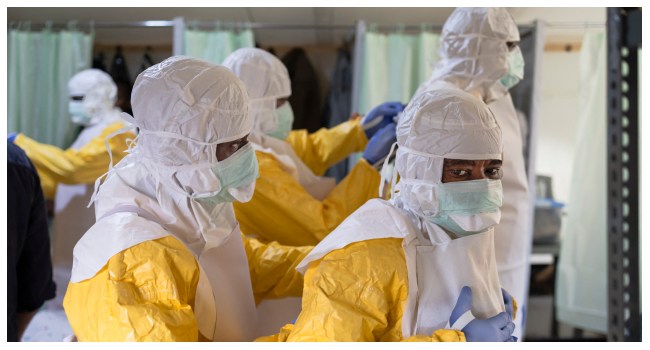
Health workers in Personal Protective Equipment (PPE) practice safety check protocols on each other during a training by medical charity, Médecins Sans Frontières (MSF) to reinforce regional emergency response capacity for Ebola in the Democratic Republic of Congo (DRC) at Ongata Rongai, Kajiado County in Kenya on July 10, 2026.

The World Health Organisation (WHO) on Tuesday said it needed an additional 5,000 health workers to help contain the Ebola outbreak spreading across the Democratic Republic of Congo.

The outbreak, officially detected on May 15, has spread to six provinces in the country’s conflict-affected eastern and northeastern regions.

The WHO, citing official Congolese figures, said more than 6,600 people had been confirmed infected, while 3,175 had died since the outbreak began.

The development has put further pressure on health facilities in the affected areas, many of which are already struggling with shortages of medical personnel and other essential resources.

Ebola is a highly contagious viral disease transmitted through contact with the bodily fluids of infected persons. It can cause severe bleeding, organ failure and death.

The UN health agency said it was working to establish 3,000 beds in Ebola treatment centres across the affected areas to cope with the rising number of patients.

A senior technical official with the WHO, Luca Fontana, said the expansion would require thousands of additional healthcare workers.

“More than 900 beds have been built within the first two months of the response, and we have now reached close to 1,400 beds across 59 treatment centres,” Fontana told a press briefing in Geneva.

He said another 1,600 beds would be required to meet the rapidly increasing demand.

“Despite this extraordinary effort, we estimate that another 1,600 beds will be required to meet the rapidly growing needs,” he said.

Fontana said nearly 4,000 healthcare workers were currently working in the treatment centres, adding that 5,000 more were urgently needed.

He said the Congolese Ministry of Health was racing against time to identify qualified medical personnel from other parts of the country for deployment to the affected provinces.

“The problem is to identify those fast enough to make sure that we can cover the growing need,” Fontana said.

He stressed that fully staffed treatment centres would be critical to saving lives and bringing the outbreak under control.

“Every treatment centre that is fully staffed and functional means more life saved and a stronger chance of bringing this outbreak under control,” he said.

The current outbreak is caused by the Bundibugyo strain of Ebola, for which there is currently no approved vaccine or treatment. Several vaccines and treatments, however, are being tested.

The outbreak has also been complicated by the security situation in the affected regions, where government presence is weak, healthcare infrastructure is limited and armed groups have operated for decades.

Fontana said the geographical spread of patients seeking treatment was another indication that the outbreak was expanding.

He explained that while most patients initially admitted to treatment centres came from Bunia, the capital of Ituri Province, infected people were now arriving from villages “far beyond” the original epicentre.

He described the development as “a clear sign” that the outbreak was spreading and said the WHO response would have to adapt accordingly.

Ebola has killed more than 15,000 people in Africa over the past 50 years.

The previous major Ebola outbreak in the Democratic Republic of Congo, which lasted from 2018 to 2020, killed nearly 2,300 people out of about 3,500 reported infections.

Continue Reading

Health

Trump cleared for office, doctor orders weight loss ahead of 80th birthday

Published

on

By

United States President Donald Trump has been declared medically fit to continue in office, with his physician describing him as being in “excellent health” while recommending weight loss and increased physical activity weeks before his 80th birthday.

The White House disclosed on Friday that Trump underwent his annual medical and dental examination on Tuesday at Walter Reed Military Hospital near Washington, amid growing scrutiny over his health and fitness for office.

In a three-page medical memo released by the White House, Trump’s physician, US Navy Captain Sean Barbabella, said the president demonstrated strong overall physical and mental capacity.

“President Trump remains in excellent health, demonstrating strong cardiac, pulmonary, neurological, and overall physical function,” Barbabella stated, adding that the president was “fully fit to carry out all duties of the Commander-in-Chief and Head of State.”

However, the physician advised Trump to adopt healthier lifestyle measures, including dietary adjustments, increased physical activity, continued weight loss and low-dose aspirin therapy for cardiovascular prevention.

According to the report, Trump, who will turn 80 on June 14, stands at 6ft 3in tall and weighs 238 pounds (108 kilograms), about 14 pounds more than he weighed during his last full annual medical check-up in April last year.

Despite concerns surrounding his age, the report noted that Trump’s cardiac health reflected an estimated age roughly 14 years younger than his chronological age.

The president also reportedly scored a perfect “30 out of 30” in a cognitive assessment, a result Trump has repeatedly cited in public while contrasting himself with his Democratic predecessor, former President Joe Biden.

The medical report further addressed concerns over bruising frequently seen on Trump’s right hand, attributing it to “minor soft tissue irritation” caused by repeated handshaking and aspirin use.

The memo also referenced scarring on Trump’s right ear linked to the assassination attempt against him during a campaign rally in Butler, Pennsylvania, in 2024, when a gunman opened fire, killing a supporter and slightly wounding the president.

Trump’s latest health evaluation comes amid public concerns after he was occasionally seen appearing drowsy during White House meetings and events. He had also previously been diagnosed with chronic venous insufficiency, a condition that affects blood circulation in the veins and can lead to swelling in the legs.

Reacting shortly after Tuesday’s examination, Trump wrote on his Truth Social platform that the medical exercise had gone “PERFECTLY,” while the White House later shared his photograph online with the caption, “PERFECT BILL OF HEALTH!”

The release of the report also sparked debate in the United States after the White House initially delayed making the medical details public, breaking with the traditional practice of releasing presidential health summaries shortly after such examinations.

Trump has long faced criticism over transparency regarding his health records, with questions also raised over the scheduling and description of his medical evaluations since returning to office.

Continue Reading

Trending

All Rights Reserved. Copyright © 2026 MegaIcon Magazine