Connect with us

News

MSF nurse emerges winner of HIV-TB prize for life-saving TB test research.

Published

on

Chenai Mathabire, Zimbabwean Doctors Without Borders (MSF) nurse and researcher has won an HIV/TB Research Prize at this year’s International Aids Society Conference on HIV Science (IAS2017). Through a study conducted in Malawi and Mozambique, Chenai has provided strong evidence that an easy-to-use point-of-care TB LAM test, which quickly diagnoses tuberculosis (TB) in severely ill HIV patients, is feasible to use in real-life clinics with high numbers of HIV-TB patients.

TB is the biggest killer of people living with advanced HIV, with over 400,000 patients dying each year from the disease. People with advanced HIV, also known as Acquired Immune Deficiency Syndrome (AIDS) have very weakened immune systems, leaving them susceptible to common infections, which can quickly become deadly.

Successfully treating ill AIDS patients involves rapidly assessing the strength of their immune systems and putting them on the right treatment straight away, whether they have TB or another disease deadly to HIV patients, cryptococcal meningitis.

However, in poorer countries, limited laboratory and X-ray facilities, and the time spent waiting on results can mean long and often deadly delays for sick patients arriving at clinics or hospitals. At the same time, people with late-stage HIV often can’t produce enough sputum for more common TB sputum tests so common tests such as sputum microscopy cannot be done. X-rays are also less useful to detect TB in people with advanced HIV.

At $3 per test, the TB LAM test offers a quick, simple and cost-effective alternative that gives on-the-spot results in 30 minutes. Yet despite being available since 2010, only 140,000 TB LAM tests are used each year.

“In Malawi, some HIV patients with suspected TB were waiting months for laboratory or X-ray results to come back. Clinicians don’t like to start patients on treatment based only on clinical signs and symptoms, they prefer to have a diagnostic test result,” says Chenai, who was responsible for implementing and supervising the study. “The TB LAM test helped them make that decision, and they felt better about starting HIV patients on TB treatment. It doesn’t replace existing tests, but adding this test helps us identify more TB cases and can improve the patients’ chances of survival.”

The test uses the HIV patient’s urine to detect LAM (Lipoarabinomanan), a protein created when TB bacteria cells break down. The lower the patients’ immunity, which is measured by numbers of CD4 T-cells, the more LAM appears in the urine and the more sensitive the test becomes. This is why the test is recommended for use in patients with CD4 cells below 100. The MSF study found the test was well accepted by staff, easy to use, and led to better, faster results than sputum or X-ray tests. Nearly 99% of TB LAM test patients received a timely result, versus 70% with sputum and 35% with X-rays.

Currently the main barrier to wider use of the TB LAM test by national governments is that it isn’t included in country guidelines and national TB programmes are not actively pushing it. Use of the TB LAM test has been recommended by the new WHO guidelines for advanced HIV for use in severely ill patients in hospitals but not yet in primary care, given the test’s decreased accuracy in patients with stronger immune responses.

MSF will use the study to advocate for health ministries in countries with high HIV TB burdens to use the TB LAM test in primary care and hospital centres, as well as include TB LAM within a diagnostic package for patients with advanced HIV. This would include point-of-care tests for CD4 (to allow rapid bed-side assessment of immune strength), cryptococcal meningitis and TB to help quick diagnosis and, most importantly, improve patients’ chances of survival.

MSF currently uses TB LAM as part of a diagnostic package in HIV projects in Democratic Republic of Congo (DRC), Guinea, Kenya, Malawi, Mozambique, Niger, Uganda and Zimbabwe. MSF currently supports over 230,000 people living with HIV on antiretrovirals in 19 countries, with a focus on free quality care, and provides free hospital-based care for people living with advanced HIV in DRC, Kenya Guinea, and Malawi.

Comments

News

IGP Disu seeks NIPR partnership to boost public trust in police

Published

on

NIPR President, Dr Ike Neliaku, in a handshake with the Inspector-General of Police, Olatunji Disu, at the Force Headquarters in Abuja on Tuesday.

The Inspector-General of Police, IGP Olatunji Disu, has called for stronger collaboration between the Nigeria Police Force (NPF) and the Nigerian Institute of Public Relations (NIPR) to enhance public confidence in the police.

The IGP made the call on Tuesday when he received a delegation of the NIPR, led by its President and Chairman of Council, Dr Ike Neliaku, on a courtesy visit to the Force Headquarters, Abuja.

According to a statement issued by the Force Public Relations Officer, CSP Ani Iniedu, the IGP emphasised the importance of effective communication, professionalism, transparency and fairness in strengthening the relationship between the police and members of the public.

Disu noted that every police officer was an image-maker of the Force, adding that the conduct of personnel in their daily interactions with citizens had a direct impact on public perception of the police.

He said the Nigeria Police Force (NPF) remained committed to policing by consent and promoting a service-oriented policing culture built on professionalism, empathy, accountability and respect for human rights.

The IGP also sought the support of the NIPR in providing specialised communication training for police personnel and developing a coherent communication framework that would effectively communicate the sacrifices and contributions of police officers to public safety and national security.

Earlier, Neliaku commended the IGP for his professional accomplishments and briefed him on Nigeria’s hosting of the 2026 World Public Relations Forum and Africa Charter Forum.

The international event is scheduled to hold at the Transcorp Hilton, Abuja, and is expected to attract more than 3,000 delegates from 126 member countries of the Global Alliance for Public Relations.

The NIPR delegation also sought the support of the Nigeria Police Force in security planning and coverage for the event.

Neliaku further invited the IGP to serve as a keynote speaker at the forum and encouraged police officers to register and participate as delegates.

The delegation included the Secretary-General of the African Public Relations Association, Dr Omoniyi Ibietan; Dr Suleiman Haruna; Mrs Maryam Sanusi; Mrs Olubunmi Badejo; Commandant Olusola Odumosu; Chief Uzoma Oyegbadu; Chief Moji Makanjuola; Mr Stanley Ogadigo and other members of the institute.

Iniedu said the meeting reflected the commitment of the  Police Force to building productive partnerships with professional bodies and other stakeholders to strengthen public trust, enhance public safety and promote national security.


Continue Reading

News

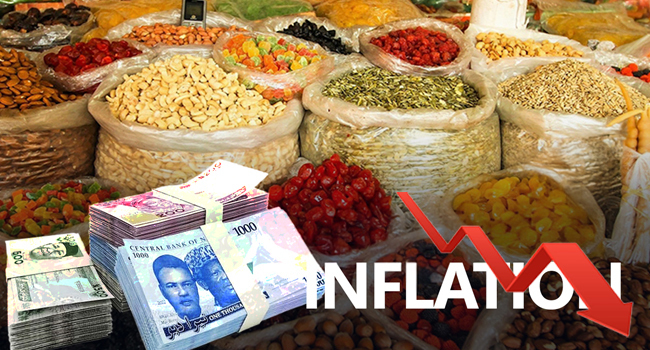
Inflation drops marginally to 15.39% — NBS

Published

on

Nigeria’s headline inflation rate fell marginally to 15.39 per cent in August 2026 from 15.43 per cent in July, according to the National Bureau of Statistics.

The NBS disclosed this in its Consumer Price Index released on Tuesday, saying the latest figure represented a 0.04 percentage point decline from the previous month.

The statistics agency, however, reported a sharper decline in the month-on-month inflation rate, which dropped to 0.71 per cent in August from 1.57 per cent in July.

The month-on-month rate, according to the bureau, declined by 0.86 percentage points compared with the July figure.

The NBS explained that the development indicated that the rate at which the average price level increased in August was slower than that recorded in July.

The latest data also showed a significant moderation in food inflation, which stood at 19.57 per cent year-on-year in August.

The figure was substantially lower than the 25.30 per cent recorded in August 2025.

On a month-on-month basis, food inflation fell to 1.02 per cent in August from 5.56 per cent in July, representing a decline of 4.55 percentage points.

The NBS said the development showed that food prices were still rising, but at a slower rate during the month under review.

It attributed the decline largely to changes in the average prices of a number of food items, including palm oil, carrots, pepper, onions, cassava flour, beef, yam flour, water yam, melon (egusi), fresh ginger, fresh fish, Irish potatoes, wheat grain, frozen chicken and turkey meat.

At the state level, Adamawa recorded the highest year-on-year food inflation rate in August at 38.85 per cent.

It was followed by Zamfara with 37.96 per cent and Bayelsa with 36.20 per cent.

On the other hand, Borno recorded the lowest year-on-year food inflation rate at -4.04 per cent, followed by Jigawa at -0.23 per cent and Kebbi at 3.47 per cent.

The month-on-month figures presented a different picture, with Katsina recording the highest food inflation rate at 9.48 per cent.

Rivers and Osun followed with 8.86 per cent and 8.32 per cent respectively.

Taraba recorded the lowest month-on-month food inflation rate at -12.42 per cent, followed by Borno at -12.15 per cent and Bauchi at -8.88 per cent.

The latest figures indicate a moderation in the pace of price increases, particularly in the food sector, although the NBS data show that consumers continue to face varying price pressures across the states.

Continue Reading

News

Nigeria’s Oil Output Rises to 1.68m Barrels Per Day

Published

on

Nigeria’s crude oil and condensate production rose to 1.68 million barrels per day in August 2026, representing a 0.4 per cent increase from the 1.67 million barrels per day recorded in July.

The Nigerian Upstream Petroleum Regulatory Commission disclosed this in its latest production report released on Sunday.

Excluding condensate, the country produced an average of 1,500,190 barrels of crude oil per day in August, allowing Nigeria to meet its Organisation of Petroleum Exporting Countries quota for the fourth consecutive month.

Daily combined crude oil and condensate production ranged between 1.64 million barrels and 1.71 million barrels during the month under review.

A breakdown of production by terminals showed that Bonny Terminal recorded the highest output at 320.04 thousand barrels per day, followed by Forcados Terminal with 317.40 thousand barrels per day.

Qua Iboe Terminal recorded an average production of 171.72 thousand barrels per day, while Escravos Oil Terminal posted 131.71 thousand barrels per day.

Bonga ranked fifth among the highest-producing terminals, with an average output of 92.50 thousand barrels per day.

The NUPRC attributed the modest improvement in August production largely to the resolution of operational challenges involving the Single Buoy Mooring at the Erha field.

The commission said the challenges had adversely affected production in the preceding month.

“The restoration of normal evacuation and production operations at the asset contributed positively to overall production volumes during the period under review,” the commission’s spokesperson, Eniola Akinkuotu, said in a statement on Sunday.

The regulator added that production activities across most other producing assets remained relatively stable during the month.

“Production activities across most other producing assets remained relatively stable, with operators sustaining implementation measures aimed at optimising production efficiency, maintaining asset integrity, and minimising operational disruptions,” the statement said.

The latest figures indicate a continued improvement in Nigeria’s oil production, with the country maintaining its OPEC quota compliance for the fourth consecutive month.

Continue Reading

Trending

All Rights Reserved. Copyright © 2026 MegaIcon Magazine