Opinion
Monguno’s missing $1 billion: Fraud or Freudian slip? | By Festus Adedayo
Published
6 years agoon
Unbeknown to many Nigerians who haven’t heard him speak, Major General Babagana Monguno (rtd), President Muhammadu Buhari’s National Security Adviser (NSA) secretly admires self-styled Mr. Bombastic, Jamaican–American reggae musician, singer and Disc Jockey, Orville Richard Burrel, better known by his stage name, Shaggy. Suave and glib, with words gliding effortlessly through his mouth like okra soup skids at the slightest prodding, Monguno can electrify and disarm his audience, not with guns but with bombasts. A few weeks ago, Monguno addressed the press on what he labeled the Federal Government’s newfound resolve – after thousands of Nigerians had been killed by bandits, kidnappers and insurgents – to smoke them and their sponsors out of their hiding places.
Donning a straight-faced, stern and no-smiling visor, with cadences of a motivational speaker, Monguno thundered, in my paraphrase, that “enough is enough with activities of scoundrels and scallywags” in Nigeria. In their graves, the trio of Mbonu Ejike, Adelabu Adegoke and Agadagbachiriuzo of Arondizuogu and Maye of Lagos, Chief Kingsley Ozumba Mbadiwe, must have chuckled in their graves. As pre-colonial, post-colonial and First Republic Nigeria burnt with the fire of political intolerance, the three politicians electrified Nigerian politics with their bombasts and sent ribs cracking with their roof-shattering, highfalutin lexicons.
Elizabethan playwright, poet, satirist and pamphleteer, Thomas Nashe, in his 1859-published The Anatomy of Absurdities, described this inflated and turgid language as that of “braggarts (who) employ the swelling bombast to out-brave out-wit better pens.” While Mbonu, newspaper analyst and one of Nnamdi Azikiwe’s trusted political allies, enriched the political lexicon with his “boycott the boycottables,” Adelabu, also renowned for his Peculiar Mess thesis which later turned into penkelemesi, regaled his audience with his first bombast-sounding book, Africa in Ebulition, Mbadiwe, nationalist, politician, statesman and Federal Minister of Nigeria’s First Republic, as well as Nigeria’s first and only Ambassador Extraordinary and Plenipotentiary, was popularly known as one who authored the “Man of Timber and Caliber” and bamboozled his listeners with highfalutin coinages.
From the national campaign to institute zoning system to remedy slow national development, KO chiseled the bombast, “zoning to unzone,” and “handshake across the Niger.” As Minister of Aviation in the government of Tafawa Balewa and entrusted with the task to drive the initiative of the maiden Lagos to New York flight, Mbadiwe took Atilogwu dancers and Kano trumpeters on that flight which he called “Operation Fantastic.” The NPN/NPP alliance of the Second Republic, the original Mr. Bombastic called “accord concodiale,” even as he labeled political upheavals, “When the come comes to become, we shall come out.” In writing an epithet for Mbadiwe at his death on August 29, 1990, Emeka Odumegwu-Ojukwu said of him: “KO was grand, his actions grandiose; his speeches grandiloquent.”
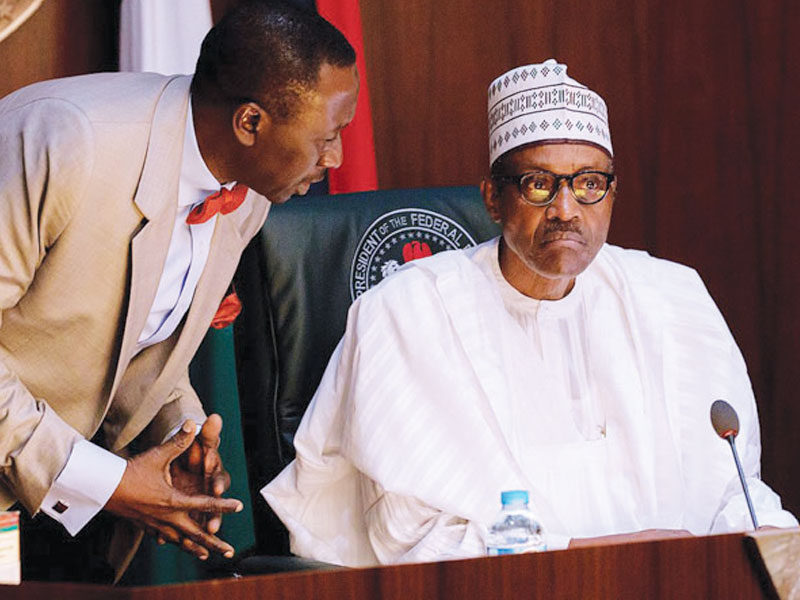
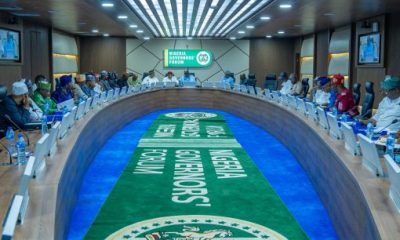
As it is, NSA Monguno seems not to be only Mr. Bombastic, he is nooks. On Friday, while appearing on the BBC Hausa Service, he detonated a bomb which immediately reverberated through the nooks and cranny of Nigeria. Saying in Hausa, Kudade dai sun salwanta – literally, the money is gone, Monguno literally set the country on fire. “We don’t know where the money went to. The president has done his best by ensuring that he released exorbitant funds for the procurement of weapons which are yet to be procured, they are not there…Mr. President is going to investigate those funds. As we are talking with you at present, the state governors, the Governors Forum have started raising questions in that direction. $1 billion has been released, that and that has been released, and nothing seems to be changing. So I assure you that the president will not take this lightly. The funds are nowhere to be found and the weapons have not been seen and the newly appointed service chiefs have declared that they have not seen the weapons,” he said.
Nigerians will recall that, in 2018, the release of $1 billion for procurement of military equipment in fighting the Boko Haram insurgency was made by President Buhari. After approval by the governors, the sum of $1 billion was withdrawn from the Nigerian Excess Crude Account (ECA). Not long after this approval, snide comments and hushed tone whispers emerged that the $1billion was money sourced for the prosecution of the 2019 elections. In the thick of this, highly influential Wall Street Journal caused a furore when it alleged that over 1000 soldiers were secretly buried at night in unmarked graves at the Maimalari barracks, Maiduguri.
“The sprawling secret graveyard in Maiduguri and an official cemetery at the base, the operational command for the north-eastern front in Borno State, now hold the bodies of at least 1,000 soldiers killed since the terror groups began an offensive last summer,” the WSJ had written. Quoting soldiers, diplomats and senior government officials who said that soldiers’ corpses were surreptitiously transported in trucks from a local mortuary at the dead of the night, WSJ said they were hurled into “trenches dug by infantrymen or local villagers paid a few dollars per shift…(at the) Maimalari barracks.”
As the insurgency war deteriorates, with huge casualty on the part of our soldiers, lack of equipment and ammunition in fighting the insurgency has been blamed for the field of blood that the Northeast of Nigeria has become. Soldiers with big epaulettes on their shoulders are alleged to be profiting from the war, cornering huge chunk of armament budgets and seeking all means to make the war interminable.
But, not to worry, the presidency has spoken. QED. In a quick riposte to Monguno’s allegation, Garba Shehu, Buhari’s Senior Special Assistant on Media, deployed the usual suspect – quotation out of context – as the villain, in an apparent bid to deescalate Monguno’s bomb. “I want to assure you that nothing of that money is missing,” he told Channels Television’s Politics Today. “The reference by it in the interview with Hausa Service of the BBC by the National Security Adviser, I think, has been misconstrued and mistranslated.” Then he journeyed into a very big waffle on how the procurements that were made had not been fully delivered and that, about $536 million of the cost of the armaments was paid directly to the United States government.
The office of the National Security Adviser, a few hours after this explosive comment, recanted what Monguno said. According to it, “the NSA was quoted out of context” and “he did not categorically say that funds meant for arms procurement were missing under the Former Service Chiefs as reported or transcribed by some media outlets from the BBC interview.” The NSA office said that what he only did in the interview was to reiterate “the Federal Government’s commitment to deal decisively with insecurity and stated President Muhammadu Buhari’s continued commitment to provide all necessary support to the Armed Forces, including the provision of arms and equipment.”
Some critical questions emanate from Shehu’s waffle and the NSA Office’s peremptory denial. What is obvious is that they are both trying to be clever by half. The variance between what Monguno’s office claimed he said and what was attributed to him in the media are too diametrically opposed that no one needed to be told that someone had attempted to play pranks in this episode. It is too puerile to hold the translation process of the Hausa comment of Monguno to English as the culprit, hoping it will be “and they live happily ever thereafter.”
No. As a first step, those who attempted this abracadabra should not be allowed to go away with what appears to be blue murder. Good that the transcript in Hausa on the BBC is in the public domain. The verbatim transcription of it, availed the public by The Cable, has finally rammed the nails in, revealing that Monguno could not have been quoted out of context at all. My haunch is that, convinced that Nigerians are not thorough people and hold public fact crosschecking in terrible disdain, Aso Rock believes it could get away with this consequential Freudian slip which meandered into the public domain.
What the interview revealed to Nigerian is a Monguno who is at the periphery of the center of goings-on in the Villa. It revealed that critical security decisions are taken outside of the loops of the NSA. For instance, he claimed to be unaware that the governor of Zamfara State and Buhari had reached a mutual decision for 6,000 soldiers to be deployed to his state to stem the tide of banditry and kidnapping. Kudade dai sun salwanta may thus be an attempt to hit back at the system that ostracized him or an attempt to deploy the Samson option as response to the Villa’s lukewarm-ness to the security situation.
The truth is, Monguno is not an ordinary appointee of President Buhari. Though appointed by him, his responsibility to the presidency is only tangential. That office’s greatest responsibility is to Nigeria and its people. He owes Nigeria absolute and full disclosure of the byzantine arms purchase conundrum, even if it hurts the system. This is where the concept of national security comes in. What Monguno was appointed to secure is not Buhari per se but Nigeria. In securing Nigeria, he must stop the bleeding of our young children who are serially killed by insurgents, not because they do not have the skills but because of their obsolete weapons. We cannot afford to populate a snakes’ farm while depopulating our soldiers.
The second issue for consideration is that, no reasonable man can say that Monguno is a dunce. Or that he does not know the consequences of making spurious allegations. During a recent Cybercrime law sensitization in Aso Rock, which had Buhari in attendance, Monguno electrified his audience with his grasp, knowledge and power of delivery. That same man cannot be said not to know what he was saying. As coordinator of all the ambits of Nigeria’s security, key of which is the military, it will be foolhardy for anyone to say the NSA does not have information either. What Shehu, Monguno’s office and Aso Rock power apparatchik have not addressed their minds to or are afraid to own up, is that Monguno is a bomb which can self-detonate at any time. Shehu and the NSA office’s interventions were just fire brigade measures to shore up a sagging situation and save a corruption-ridden system from total collapse.
Pedigree-wise, throwing explosives and minding seldom whose ox was gored, is not new to Monguno. Bold, courageous and a risk-taker, with that BBC Hausa service revelation, Monguno was just on a home turf. In a leaked acidic memo dated December 9, 2019, the NSA had warned all the then service chiefs to refrain from taking further directives from Buhari’s Almighty Chief of Staff, Abba Kyari. He accused Kyari of undue and dangerous interference in matters that bordered on national security.
“Chief of staff to the president is not a presiding head of security, neither is he sworn to an oath of defending the country. As such, unprofessional practices such as presiding over meetings with service chiefs and heads of security organizations, as well as ambassadors and high commissioners, to the exclusion of the NSA and/or supervising ministers are a violation of the Constitution and directly undermine the authority of Mr President,” he had said. Not up to months after Kyari’s unfortunate death, facts which validated Monguno’s claim began to sidle out.
So how will the NSA not know that there were procurement problems in the weaponry allegedly paid for by the Nigerian Army? Worse still, is it conceivable that the NSA was unaware of a said diplomatic imbroglio between Nigeria and the United Arab Emirates (UAE) that was claimed to be delaying the delivery of the arms? How would the Nigerian Minister of Defence hold a meeting with the Ambassador of the UAE to Nigeria, a la Shehu, on the alleged delay, without the knowledge of the NSA? It is a confirmation that he is probably sidelined, the naivety of which he displayed in the kudade dai sun salwanta interview.
If you properly articulate all the back and forth on the $1 billion withdrawn from ECA and place them side by side the weaponry disaster that has obviously led to hundreds of deaths of our soldiers who have been killed between the 2018 date of withdrawal of the $1 billion for arms purchase and now by insurgents, you will realize the need for Monguno to come clean with the facts. General Segun Adeniyi spoke about the paucity of arms to fight at the war front, despite this selfsame $1 billion withdrawal and was recompensed with military trial and demotion. Until Monguno thawed that ice, neither Buhari nor anyone in the presidency was bothered enough to ask questions. Even the Buhari lickspittle National Mis-Assembly was too supine to bother about such “trivia.” After summoning the ex-Service Chiefs to a forum where they could properly give accounts and they stubbornly refused to appear, the same National Mis-Assembly cleared them when the president nominated them for nebulous ambassadorial postings.
We must thank Buhari for giving us a man who is like nooks as NSA; a man whose stubbornness, probable loyalty to Nigeria rather than to the President, or because he is prone to frequent Freudian slips, give us periodic insights into the damp recesses of the Nigerian power architecture. We may however be dealing with intra-systemic rebellion. For the sake of our children, brothers and fathers fighting Boko Haram insurgents, literally with their bare hands, we must get to the roots of this arms purchase, mis-purchase or nil-purchase matter.

You may like
-
Reps panel declares alleged Presidential council DG’s appointment letter fake
-
Beyond Deportations: What South Africa’s Immigration Crisis Reveals About Nationhood and Economic Frustration
-
Senate passes state police bill, governors to appoint CPs
-
Govs Back State Police, Power Reform, Nutrition Drive, World Bank Partnership
Opinion
Seven Factors That Keep Sharafadeen Alli Ahead in 2027 Oyo Governorship Race
Published
4 days agoon
September 14, 2026By
Bisi Oladele
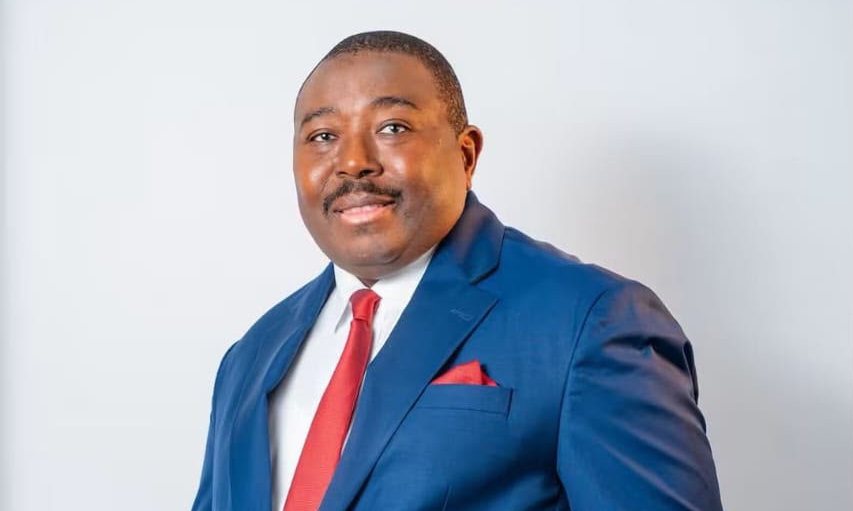
Fact 1: Homegrown Leader with Unmatched Grassroots Experience
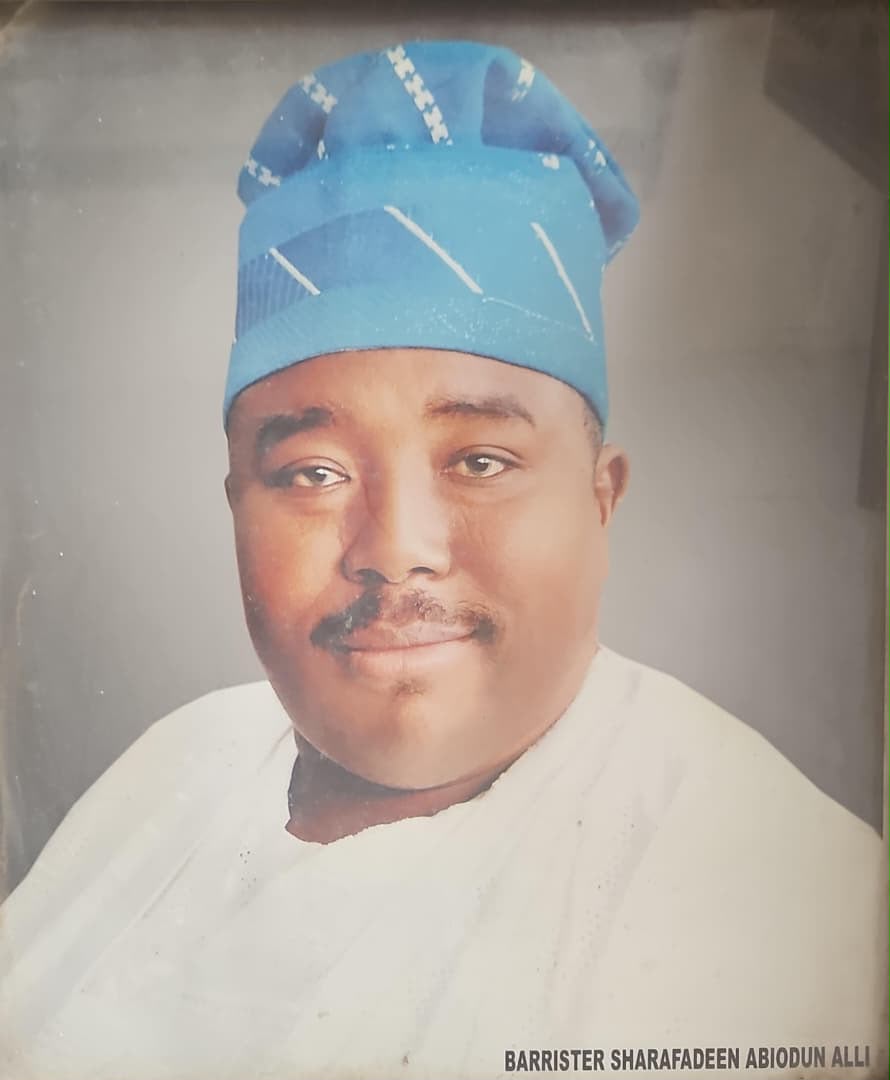
Senator Alli’s political journey began at the grassroots level in Ibadan, where he made history in 1991 as the first democratically elected Executive Chairman of Ibadan North Local Government. This early leadership role demonstrates a deep, foundational understanding of local governance and the needs of the people, a critical asset for a state governor.
![]()
Fact 2: Rare Combination of Top-Tier Academic and Professional Credentials
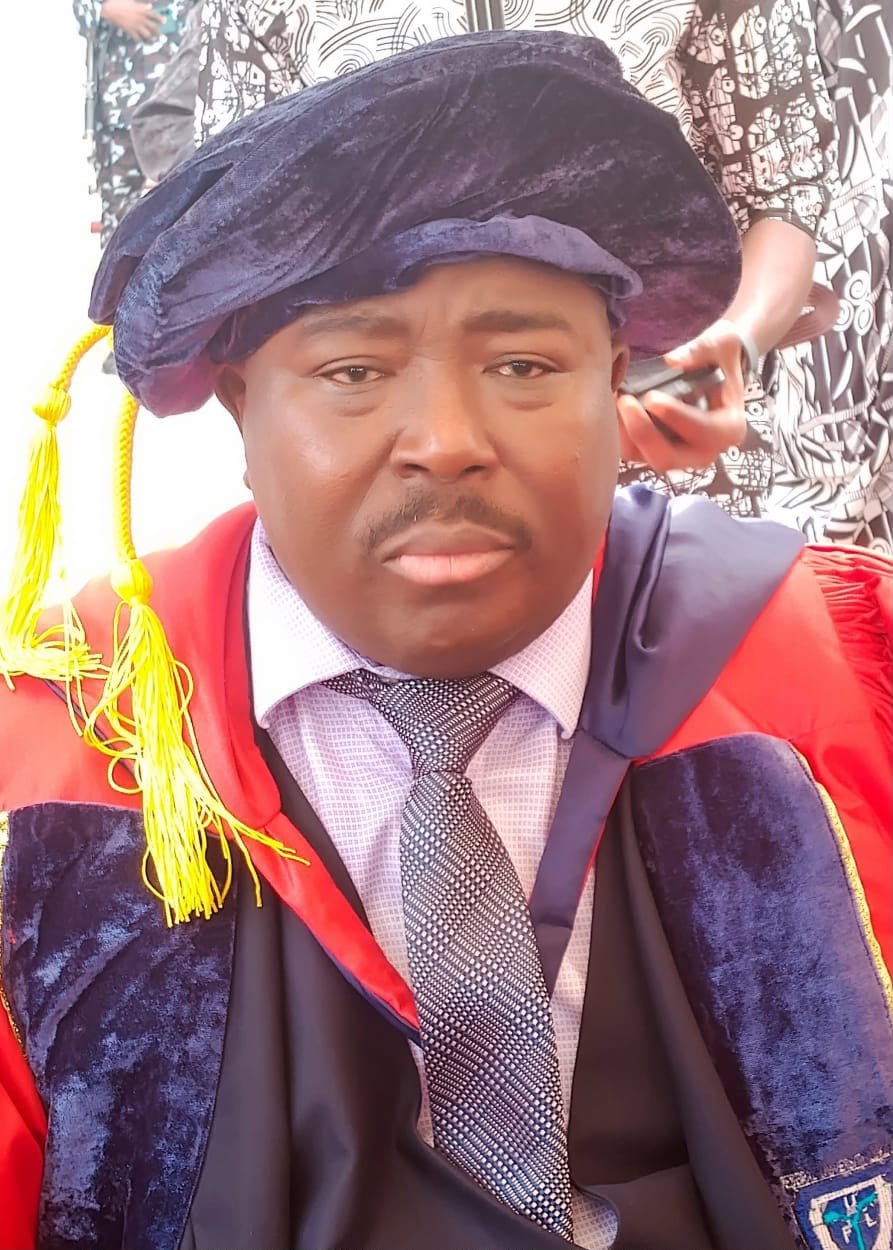
Senator Alli is not just a politician but also a distinguished legal practitioner with a Ph.D. in Legislative and Strategic Studies. His extensive education, including degrees from the University of Ibadan, combined with his fellowships from prestigious professional institutes, provides him with the analytical, legal and strategic acumen required to manage the complex affairs of Oyo State.
![]()
Fact 3: Proven Executive Administrative Competence at the Highest State Level
His tenures as Secretary to the Oyo State Government (SSG) and later as Chief of Staff (CoS) to the Governor showcase his direct experience in the engine room of state administration.
![]()
He has been intimately involved in policy formulation, committee leadership and the day-to-day running of the state, making him uniquely prepared to assume the governorship and hit the ground running from day one.
Fact 4: Demonstrated Executive Business Leadership with Regional Impact
As Chairman, Board of Directors of Odu’a Investment Company Limited, Senator Alli was not just an administrator but a visionary economic leader. He spearheaded landmark investments such as the Cocoa Mall and Heritage Mall in Ibadan, which transformed the economic landscape of Oyo State. This proven ability to attract and drive large-scale economic development is directly transferable to governing Oyo State.
![]()
Fact 5: Battle-Tested and Consistent Political Figure
Senator Alli’s political career spans more than three decades, weathering the annulment of his 1996 Senate election and consistently remaining a relevant and influential force. He has contested for Deputy Governor and Governor in the past, giving him a comprehensive understanding of statewide campaigns and the diverse political landscape of Oyo State. His journey demonstrates resilience, deep political networks and unwavering commitment.
Fact 6: Current, Performing Senator and Influential Figure
As the sitting Senator for Oyo South, he is actively delivering quality representation, impactful constituency projects and people-oriented legislation. He has sponsored five Bills and raised six Motions to promote development. Senator Alli has also facilitated employment for 100 constituents across Federal Government agencies.
![]()
His role as Chairman of the Senate Committee on Agricultural Colleges and Research Institutions, as well as his membership in the ECOWAS Parliament, demonstrate that he is not only focused on local issues but is also equipped with a broader perspective on governance, trade and regional integration.
Fact 7: Unifying and Respected Traditional Title Holder
Senator Alli’s position as the Ekaarun Balogun of Ibadanland, one of the highest-ranking chieftaincy titles in the ancient city, signifies his deep-rooted connection to tradition and his standing as a respected community leader.
His reputation as a calm, wise, simple, relatable and inclusive bridge-builder who unites people across political, religious and ethnic divides positions him as a leader capable of fostering peace, stability and consensus across the entire state.
Oladele is the Director of Media & Publicity, Senator Sharafadeen Alli Campaign Organization.
Opinion
Oloye Lekan Alabi: Memories Ere Death Beckoned Both Caller and Called |By Wole Adejumo
Published
1 month agoon
August 7, 2026By
Mega IconThe young lady who usually delivers packaged moinmoin for members of staff who want it for lunch came in as she usually did, and after the exchange of pleasantries, I asked if she knew the difference between Ọọlẹ and Moinmoin. My colleagues looked at me strangely when I disagreed with her response that both were the same. I promised to tell her the difference later. I, however, told my colleagues the difference as explained to me by Oloye Lekan Alabi. Though a suave, urbane and sophisticated Ibadan chief, he took time to explain the similarities and differences as we prepared for the annual Oke ‘Badan Festival some years back.
He had retired from the service of Odua Investment Company Limited, where he demonstrated competence and character then, but that did not in any way diminish his encyclopaedic knowledge of history. He sat beside the Aboke, Chief Ifamapowa and some other stakeholders at the press conference heralding the ceremony that year.
My first real contact with him happened after I had written a short piece, ‘The Man Who Would Be King’, about him. Oloye, who bore the titles of Jagun Olubadan and Akogun of Lalupon agreed to have an interview. My Bureau Chief, Bola Davies (now of blessed memory) directed me to go and when I got to his office in Cocoa House, he thanked me for wishing him well. He thereafter took time to explain the Olubadan ascension system. The interview was published in one of the earliest editions of City People Quarterly back then. That interview and some other things I wrote about him eventually earned me a mention in one of his books.
Oloye Alabi was no doubt an aficionado when history, music and culture are up for discussion. Of course, with his rich cultural heritage, he stood out anywhere and everywhere. Little wonder His Imperial Majesty, the Ooni of Ife hosted his investiture when he was appointed as the first Cultural Ambassador of the National Museum, Ile Ife. His immense breadth of knowledge will give him a place in history just as it did to the likes of Chiefs John Adeyemi Ayorinde, Theophilus Akinyele and Alaafin Lamidi Adeyemi III. His love for good music too was more than obvious. Like a true connoisseur, he did everything with class and style. He wrote countless articles about Chief Commander Ebenezer Obey, King Sunny Ade, Chief Eddy Okonta and many more. His love for Yusuf Olatunji’s Sakara music defied competent description. It was so great that he named his youngest son after the Sakara legend.
In one of his many philosophical volumes, ‘Baba L’Egba’ as Olatunji was fondly called, sang that “o ye ka ni ‘fura taa ba nsin ale eni lo” (one should be watchful when seeing off a concubine) and the only person I felt I could ask what was on Baba L’Egba’s mind then was Oloye ‘Lekan Alabi. Sadly, the auspicious time to ask never came.
A reception was once hosted in his honour by Ambassador Ibironke Adefope at Bodija and it was regal! Everyone who mattered came to honour Oloye ‘Lekan Alabi. Reporting the event for City People then, one of the most unusual sights was Otunba Adebayo Alao-Akala, the then Deputy Governor of Oyo State. His simplicity was indescribable. Aside driving his convertible BMW, he came in a yellow sweatshirt and jeans.
And when he turned 60, it was like everyone else joined the Ibadan establishment to celebrate Oloye ‘Lekan Alabi. Aare Arisekola Also spoke about the celebrant in glowing terms as he emphasized that Oloye Alabi was indeed a man destined for greatness. The party afforded me the opportunity of seeing Alhaja Batile Alake live on stage. Her sonorous voice actually brought great childhood memories of when songs of Batile Alake, Olubowale Ajasco, Alalaye Ilorin and others were regular on the television.
Apart from his respectable dress sense and indepth knowledge of issues, other admirable traits of the late Abese Olubadan were his timeliness and punctuality. He once told me the story of how he had suggested that card be presented to the then military President, General Ibrahim Babangida on the birth of his baby girl back then. It turned out that the picture of where he handed the card over was published in dailies the following day. Apart from personal discipline, working with four Governors of Oyo State obviously rubbed off on him, he never attended an event late. There was a day we had to apologize as we started an event behind schedule at the Premier Hotel, Ibadan. He was about the first guest and after accepting our apologies, he didn’t become vexatious, rather, with a smile he told us that he would be in his room upstairs. He said all we needed to do was put call through to him when we were ready to start the programme.
I stood close by him at certain event and heard Chief Lateef Oyelade praying for Oloye Alabi who had just greeted him in Yoruba, he said “Olubadan o kan o” (may it be your turn to become the Olubadan). Like many of his mentees, I looked forward to seeing him on the exalted Olubadan throne, it was however not to be.
Reflecting on those golden days of celebrity journalism; the Bodija reception, the grand 60th birthday, the laughter of legends now silent; one is reminded that time eventually beckons both the caller and the called. Bola Davies, His Excellency, Otunba Alao-Akala, Aare Arisekola Alao, Chief Lateef Oyelade, Ambassador Adefope and now Oloye himself have all answered that ultimate call. Though the exalted Olubadan throne eluded him, Oloye ’Lekan Alabi leaves behind a legacy as towering as Cocoa House itself. Like his noble forebears – Oyetunde Olundegun, ‘Erin o P’ojo Logun’, and Ekerin Suberu Ajengbe, he came, he saw, he lived with unmatched panache, and he left an indelible mark on the sands of time.
Adejumo sent this piece from Ogbomoso
Opinion
Beyond Deportations: What South Africa’s Immigration Crisis Reveals About Nationhood and Economic Frustration
Published
2 months agoon
July 9, 2026By
Mega IconThe popular saying that “one good turn deserves another” appears increasingly absent from present-day South Africa’s national consciousness. It is difficult not to ask whether many South Africans have forgotten the history of their country’s liberation and the immense sacrifices made by Nigeria and other African nations in the long struggle against apartheid.
For days, I have been deeply troubled by reports of South Africa’s worsening immigration crisis and the forceful, vigilante-style eviction of African migrants, particularly Nigerians. Beyond the headlines are broken families, shattered dreams and livelihoods painstakingly built over many years. It is a painful development that should concern every African who once believed in the ideals of continental solidarity.
Anti-immigrant sentiments in South Africa are not new. For more than two decades, campaigns against foreign nationals have been fuelled by high unemployment, widespread poverty, rising crime and frustration over inadequate public services. Many South Africans believe undocumented immigrants compete with them for jobs, housing, healthcare and social services, thereby denying citizens access to these basic necessities.
Yet, available evidence tells a more complex story. Research has consistently shown that immigrants alone cannot be blamed for South Africa’s economic and social challenges. Reducing such deep-rooted problems to the presence of foreign nationals oversimplifies a crisis that has been decades in the making.
What is often overlooked is the country’s structural economic reality. A significant skills mismatch, coupled with weaknesses in the quality of education, has left many job seekers ill-equipped for the demands of an economy increasingly driven by technology, innovation and specialised skills. This challenge is not peculiar to South Africa. Across much of sub-Saharan Africa, thousands of graduates enter the labour market every year without the technical, vocational and digital competencies employers now demand.
Beyond this, crime, insecurity, systemic corruption and poor governance continue to weigh heavily on South Africa’s economy. The country has one of the highest youth unemployment rates in the world. Persistent violent crime discourages investment, while corruption and the mismanagement of public resources have weakened service delivery, slowed infrastructure development and eroded investor confidence.
Equally significant is the enduring legacy of apartheid. More than three decades after democracy, inequalities in education, housing, infrastructure and economic opportunities remain deeply entrenched. Many Black communities still live with the consequences of decades of institutional discrimination and economic exclusion.
Against this backdrop, blaming undocumented immigrants for South Africa’s economic difficulties amounts to little more than scapegoating. It is a convenient narrative that diverts attention from the country’s more fundamental governance and developmental challenges.
The recurring xenophobic attacks against Nigerians and other African nationals make the situation even more painful. The recent killing of Emeka Iroegbu and Musa Yunana Joe on June 28, 2026, amid rising anti-migrant tensions, is a tragic reminder of how dangerous such sentiments can become.
One cannot help but ask: Is this the same South Africa for which Nigeria and many other African countries stood firmly during the anti-apartheid struggle?
I vividly remember growing up in the 1980s, listening to songs such as Free Mandela and Stop Apartheid in South Africa by iconic Nigerian musicians, including Majek Fashek, Onyeka Onwenu and Sonny Okosun. Those songs dominated the airwaves on NTA and became powerful symbols of African solidarity.
As a child, I even believed Nelson Mandela was Nigerian because Nigerians embraced his cause with such passion.
Mandela was released from prison in 1990 and became South Africa’s first Black President in 1994, bringing an end to decades of institutionalised racial segregation and apartheid. Today, just over three decades later, many Africans who once stood shoulder to shoulder with South Africans in their darkest hour are treated as unwelcome strangers.
History can be painfully ironic.
Perhaps, then, the saying that one good turn deserves another does not always reflect reality. Human beings are capable of repaying kindness with hostility. It is an uncomfortable truth, but one that life repeatedly teaches.
At a personal level, this reminds us to live with fewer expectations and strive for greater self-reliance. A heart that expects little, even after giving much, is less likely to be broken.
At the national level, however, the lesson is far more profound. Nigeria must build a country where its citizens can thrive without feeling compelled to seek survival elsewhere. Studies have shown that the overwhelming motivation behind the Japa phenomenon is the search for better opportunities and improved living conditions. If those opportunities existed at home, many Nigerians would gladly remain and contribute to national development.
The experience in South Africa—and, indeed, recent developments in the United States—demonstrates that immigration policies are shaped by changing political realities. No foreign country offers permanent guarantees.
Although the U.S. Supreme Court recently ruled against President Donald Trump’s executive order seeking to abolish birthright citizenship on constitutional grounds, the episode illustrates that even long-established policies can become subjects of political contestation. A constitutional principle that has existed since 1868 could still become a matter of national debate. That alone should remind us that every nation ultimately prioritises its own interests.
The enduring lesson is simple: no country can offer Nigerians greater long-term security than a well-governed Nigeria.
Nigeria’s greatest asset remains its people. Sustainable national prosperity can only be built through visionary leadership, accountable institutions, respect for the rule of law and responsible citizenship. When government creates an enabling environment and citizens embrace innovation, productivity and accountability, Nigeria can become a destination for investment rather than a source of economic migration.
As dozens of Nigerians return home following their repatriation from South Africa, government must move beyond sympathy and symbolic gestures. Some have returned with nothing more than the clothes they wore and a single travelling bag, leaving behind businesses, investments and years of hard work. Their return is not merely a journey home; for many, it is the painful collapse of dreams painstakingly built over decades. They deserve meaningful support to rebuild their lives and contribute productively to the nation’s economy once again.
History teaches that nations are strengthened not by chasing away strangers but by creating opportunities for their own citizens. Nigeria must therefore draw the right lessons from South Africa’s painful experience. Rather than exporting its brightest minds in search of survival, it should become a country where talent is rewarded, enterprise is encouraged and hope no longer requires a passport. Only then will Nigeria become not merely the giant of Africa by population, but by the quality of life it offers its people.
Olusegun Hassan, Ph.D
Public Policy Analyst and Social Commentator
MEGAICON TV
Oyo: ‘APM, PMS Plot to Destroy Alli’s Billboards, Posters’ – Campaign Organisation Raises Alarm
OYO 2027: ‘Fact-Check Always’ – Oseni’s Aide Replies Ex-AGF , Ojo Over Alli’s Campaign Billboard Claims
Oyo school abduction: DSS to re-arraign five suspects Thursday
Trending
-
Metro4 weeks agoOyo: Oseni Sympathises With Oranyan Traders Over Market Fire
-
Politics2 weeks agoOyo won’t become real estate company, says Alli
-
News3 weeks agoOyo: Oseni Donates 500KVA Transformer, N10m to Baptist Conference
-
News6 days agoOyo South: Oseni Approves N100m for Ibadan Community Road Rehabilitation