Connect with us

News

Mali junta expels French ambassador in fresh bout of tension

Published

on

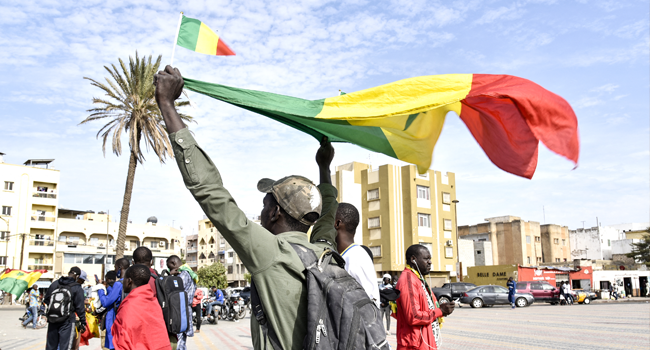
A protester holds a flag of Mali during a demonstration to support Mali on Obelisk Plazza in Dakar, on January 28, 2022. SEYLLOU / AFP

Mali on Monday said it was expelling the French ambassador in the light of “hostile” comments, a move likely to ratchet up tensions with its former colonial ruler and ally following a military coup.

A statement read on national television said, “The ambassador of France in Bamako, his excellency Joel Meyer… was notified of the decision of the government asking him to leave the national territory within 72 hours.”

The move raises further questions over France’s continued military support for Mali, a deeply poor country battling a nearly decade-long jihadist campaign.

The French foreign ministry issued a brief statement saying it “takes note” of the announcement and expressed “solidarity with its European partners” — its allies in the anti-jihadist mission.

Relations between the two countries began to fray after the army seized power in Bamako in August 2020, and worsened after the junta staged a second coup in May 2021.

Last week, French Foreign Minister Jean-Yves Le Drian told reporters that Mali’s junta was “illegitimate” and its decisions “irresponsible”.

Defence Minister Florence Parly also accused the country’s rulers of stepping up “provocations” of France.

Monday’s statement in Bamako said remarks had been made that were “hostile and outrageous”, and had been uttered “despite repeated protests” by Mali.

“The Malian government vigorously condemns and rejects these remarks, which are contrary to the development of friendly relations between nations,” it said.

However, it added, the Malian government “reiterates its readiness to maintain dialogue and pursue cooperation with all its international partners, including France, in mutual respect and on the basis of the cardinal principle of non-interference.”

Meyer, the French ambassador, was appointed to Bamako in October 2018.

Coup sparked friction

Rebel officers led a coup in August 2020 that toppled Mali’s elected leader Ibrahim Boubacar Keita, who was facing angry protests at failures to stem the jihadists.

The following May, the junta pushed out a civilian-led government appointed to oversee a transition period and named strongman Colonel Assimi Goita as interim president.

By year’s end, France and its European allies were alarmed at the junta’s reported decision to hire mercenaries from the Russian paramilitary group Wagner.

France — which stages presidential elections in April — repeatedly warned that it would be untenable for its forces to fight alongside unaccountable mercenaries.

Russian “advisors” in the Central African Republic have been accused of carrying out abuses of civilians.

Tensions have also risen since the West Africa bloc ECOWAS imposed a trade embargo and

The sanctions followed a junta proposal to stay in power for up to five years before staging

border closures with Mali on January 9, in a move backed by France, the United States and the European Union.

The sanctions followed a junta proposal to stay in power for up to five years before staging elections, despite an earlier commitment to hold a vote by the end of February 2022.

French pullback

As friction worsened last year, France started scaling back 5,100-man Barkhane Sahel operation and pulling out of some bases in northern Mali.

Its goal is to halve the contingent by the summer of 2023, but central to the plan is a French-led European force called Takuba that would shoulder some of the strain.

Under it, European allies are committing special forces to help train and fight alongside Malian units.

But Takuba has also hit problems with Mali.

Last week, the junta demanded that Denmark withdraw its newly arrived contingent of some 90 soldiers, claiming it had deployed without authorisation — a charge Copenhagen denied.

On Twitter, Danish Foreign Minister Jeppe Kofod said the ambassador’s expulsion was “unacceptable” and his country “stands in full solidarity with France.”

“Such irresponsible behaviour is not what we expect from Mali, (which will (lose) international credibility,” Kofod warned.

France’s army chief, General Pierre Schill, declined to comment on future French deployments.

“The Sahel question is overwhelmingly political,” he told reporters. “Today, on a daily basis, our units are continuing their partnership with Malian battalions.”

Comments

News

Oyo South: Oseni Distributes 40 Transformers to Ibadan Communities in Six Weeks

Published

on

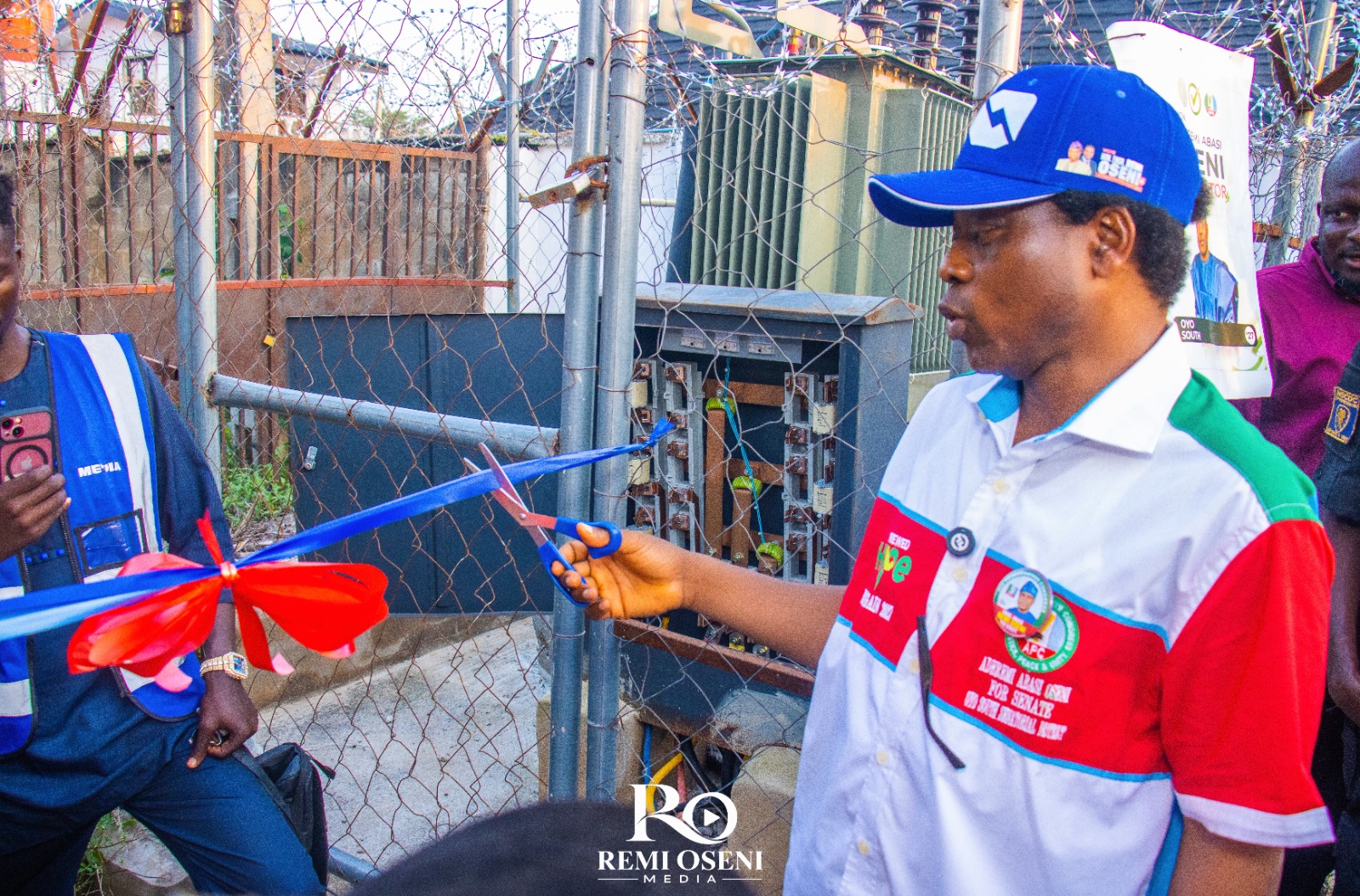
The All Progressives Congress (APC) candidate for Oyo South Senatorial District, Hon. Aderemi Oseni, has distributed no fewer than 40 electricity transformers to communities across the six Ibadan local government areas within six weeks, in a move aimed at addressing persistent power supply challenges and stimulating grassroots economic activities.

The intervention covers Ibadan North, Ibadan North-East, Ibadan North-West, Ibadan South-East, Ibadan South-West and Ido local government areas. It is expected to provide relief to residents, strengthen small businesses and improve electricity supply in beneficiary communities.

In a statement issued on Thursday by the Head of the Remi Oseni Media Office (ROMO), Idowu Ayodele, and made available to journalists in Ibadan, the state capital, the intervention was described as a response to the everyday challenges confronting residents, particularly communities that have endured prolonged power outages and deteriorating electricity infrastructure.

According to the statement, the initiative goes beyond the provision of electricity infrastructure, as it is also intended to restore economic opportunities, ease the burden on small business owners and improve living conditions. Traders in Beere, artisans in Ita Baale and Olugbode in Ibadan North-East, welders in Ibadan North-West and cold-room operators in Ibadan South-West were among those identified as having been affected by unreliable electricity supply.

It noted that several communities had struggled with ageing, overloaded, vandalised or faulty transformers, forcing residents and business owners to depend on alternative sources of electricity at additional costs. For many small-scale operators, the situation had reduced productivity, increased operating expenses and placed their livelihoods under considerable pressure.

Oseni, according to the statement, said the intervention was driven by the needs of the people rather than political affiliation, religion, ethnicity or other considerations. He stressed that meaningful representation must be inclusive, people-centred and responsive to the concerns of constituents, irrespective of their political leanings or social backgrounds.

The APC candidate described the transformers as long-term investments in the beneficiary communities, insisting that the intervention was not designed to secure electoral advantage but to address a critical need affecting households, businesses and community development.

“These transformers will power homes long after the ballots are counted. That is the hallmark of genuine service: doing what is needed, not merely what is popular,” he said.

Oseni, who represents Ibarapa East/Ido Federal Constituency in the House of Representatives, said the intervention also reflected his commitment to extending development beyond the boundaries of his immediate constituency. He noted that communities across Oyo South had continued to make requests for assistance in vital areas, including electricity, potable water, roads, education, healthcare and economic empowerment.

“Many communities across Oyo South Senatorial District have requested support in different areas, including electricity, water, roads, education and empowerment. While we may not be able to meet every need at once, we recognise these challenges and will continue to respond as resources and opportunities permit,” he said.

The lawmaker maintained that effective representation should not be limited to legislative activities but must also involve sustained engagement with constituents and practical interventions that address their everyday needs. He said the transformer distribution formed part of his broader commitment to people-oriented development and improving the welfare of communities across the senatorial district.


Continue Reading

News

Oyo: Makinde scrambles as defections threaten political structure

Published

on

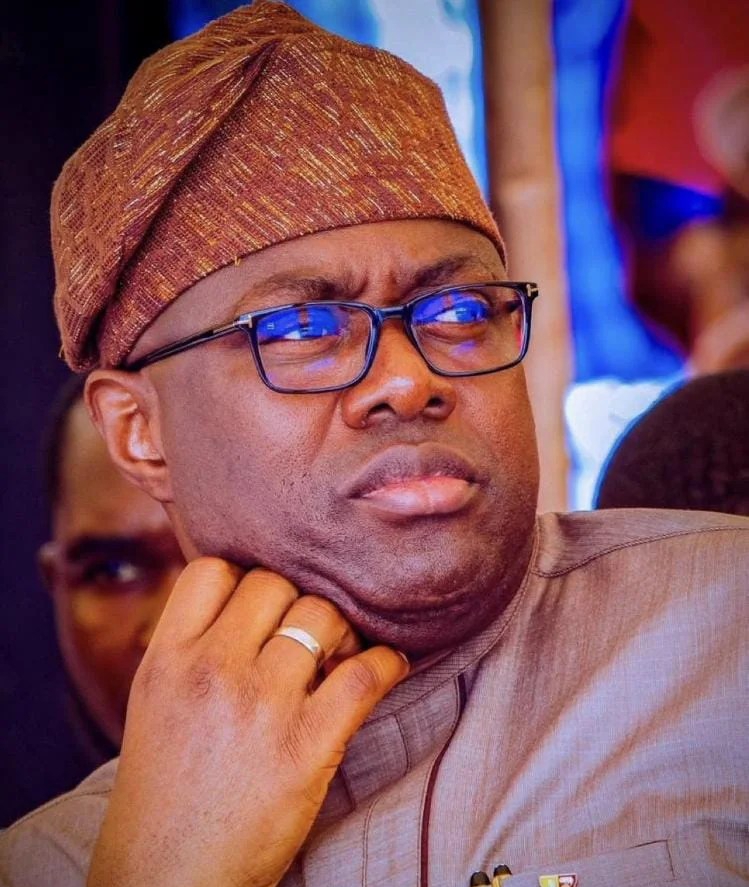
Oyo State Governor, Seyi Makinde, has reportedly begun a series of meetings with members of his cabinet and key political stakeholders in the Allied Peoples Movement in a bid to address the wave of defections and resignations affecting his political camp.

The meetings, according to sources within the camp, are aimed at addressing growing discontent among party members and preventing further departures ahead of the 2027 governorship election.

The development follows the recent defection of several prominent politicians from Ogbomoso zone to the All Progressives Congress, a move that has reportedly unsettled the governor’s political associates.

Among those who recently left the governor’s camp are his Chief of Staff, Segun Ogunwuyi; Alhaji Rasak Gbadegesin, popularly known as Agbeti; Timothy Oyeniyi; Alabi Olateju; Isaiah Adegbite; Peter Oyetunji; and Jimoh Sikiru, the APM chairman in Ogbomoso North.

Several other political figures and local government representatives from Ogbomoso North, Ogbomoso South, Surulere and Ogo-Oluwa have also reportedly joined the APC.

The latest developments came on the heels of a series of resignations from the Makinde administration.

The Commissioner for Budget and Economic Planning, Ayobami Oluwaseun Ojo, and the ministry’s Special Adviser, Simeon Adegbola Oyeleke, resigned their appointments with effect from November 2.

While Ojo did not publicly disclose the reason for his resignation, Oyeleke reportedly cited dissatisfaction with the working environment, saying it had become increasingly difficult to represent the aspirations of his people while serving in government.

Also, Sunday Olugbenga Falana resigned from the Oyo State Independent Electoral Commission, thanking the governor for the opportunity to serve without publicly stating his reason for leaving.

The Director-General of the Due Process Office, Tara Adefope, also reportedly left the administration.

Other prominent political figures who have parted ways with the governor include the Chairman of the Governor’s Advisory Council, Hosea Agboola, popularly known as Alleluyah; former Deputy Governor, Ambassador Taofeek Arapaja; and Alhaji Bisi Olopoeniyan.

Agboola and Arapaja have since moved into the APC.

The departures have also affected some of the governor’s political strategists. They include former Political Adviser to the governor, Chief Babatunde Oduyoye, and his former Special Adviser on Security, Fatai Owoseni.

Their exits have reportedly raised concerns among members of the governor’s political circle about the strength of the structures that have supported his administration and political activities.

Worried by the growing number of departures, Makinde is said to have intensified consultations with members of his cabinet, party leaders and remaining loyalists in an effort to prevent further defections.

Sources familiar with the meetings disclosed that the governor had been holding consultations with some of his associates and aggrieved stakeholders at his residences in Ikolaba and Kolapo Ishola Estate, Ibadan.

At one of the meetings, which reportedly brought together members of his diminishing inner circle, Makinde was said to have expressed concern about the trend and sought suggestions on how to retain those still within the party.

A source familiar with the discussions said the governor wanted to know what could be done to prevent further defections and protect the party’s position ahead of the next governorship election.

The source added that the meetings also provided an opportunity for some attendees to express their grievances over what they considered the causes of the crisis.

According to the source, some participants blamed the situation on the governor’s alleged unilateral decision to settle for Hon. Bimbo Adekanmbi as the party’s governorship candidate for the 2027 election.

Others reportedly criticised some policies of the administration, which they believed had generated negative public reactions and contributed to the growing discontent within the political camp.

The latest meeting, which reportedly lasted until the early hours of Thursday, ended without any clearly defined strategy to address the situation.

A source at the meeting said some participants expressed the fear that more political figures could still leave the camp if the grievances were not addressed.


Continue Reading

News

Late Lam Adesina’s Legacy Remains Enduring – Oseni

Published

on

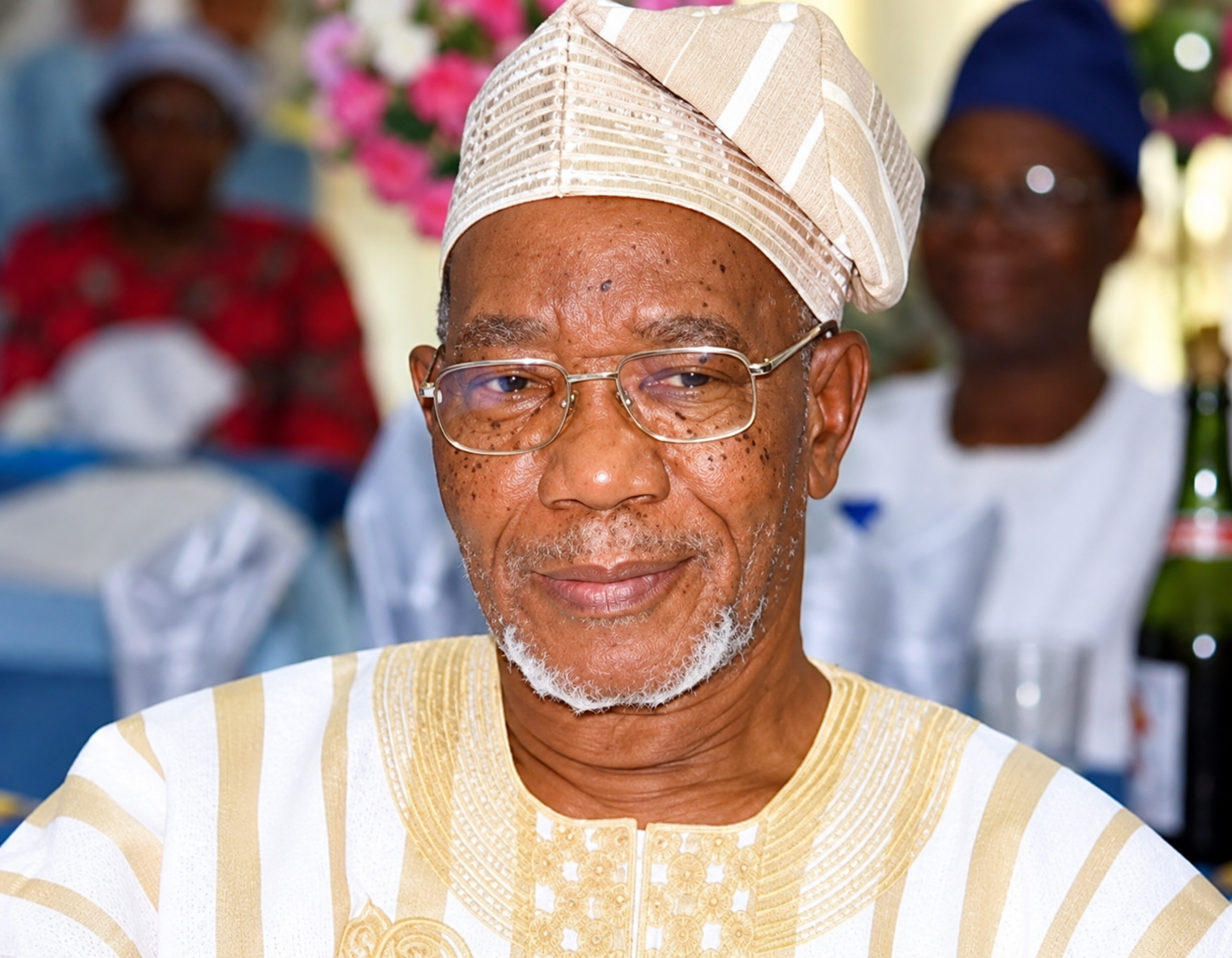
The All Progressives Congress (APC) candidate for Oyo South Senatorial District, Hon.  Aderemi  Oseni, has described the late former Governor of Oyo State, Alhaji Lamidi Onaolapo Adesina, as a political leader whose contributions to democracy, education and the development of the state remain significant.

Oseni, in a statement issued on Wednesday by his Media Aide, Idowu Ayodele, to mark the 14th anniversary of the former governor’s death, said Lam Adesina’s life and political career offered valuable lessons in courage, conviction and commitment to public service.

He recalled that the late governor, who died on November 11, 2012, at the age of 73, played an important role in Oyo State’s political history. His involvement in the struggle against military rule, particularly through the National Democratic Coalition (NADECO), reflected his commitment to democracy and the restoration of civilian rule in Nigeria.

The lawmaker who currently represents Ibarapa East/Ido Federal Constituency and chairs the House Committee on Federal Roads Maintenance Agency (FERMA) ,  also noted that Lam Adesina’s background as a teacher and journalist shaped his interest in education, public affairs and the political development of the country. He said the former governor was closely associated with the progressive political ideals of Chief Obafemi Awolowo, particularly the emphasis on education, social welfare and improving the living conditions of ordinary people.

“Lam Adesina was a politician who stood firmly by his convictions. He was part of the struggle for democracy at a time when doing so came with personal risks. His contributions to Oyo State and his commitment to the ideals he believed in remain important parts of our political history,” Oseni said.

The APC chieftain further recalled that Lam Adesina governed Oyo State between 1999 and 2003, with attention to education, healthcare, rural development and rural electrification. He noted that the former governor’s experience as an educationist was reflected in his interest in expanding educational opportunities and improving the lives of the people.

He added that the late governor’s  popular nickname, Ore Mekunnu, meaning friend of the common people, reflected his association with ordinary citizens. According to Oseni, the name remains a reminder that public office should be about serving the people and addressing their needs.

The APC Senatorial candidate noted that the annual remembrance of the late governor should provide an opportunity for political leaders to reflect on the responsibilities of leadership and the values that should guide public service. He stressed that remembering past leaders should go beyond ceremonies and tributes, adding that their contributions should serve as lessons for those currently entrusted with public responsibilities.

“Fourteen years after his passing, we should continue to remember Lam Adesina for what he stood for. His commitment to democracy, education and the welfare of the people should remind us that public office is a trust. Those of us in positions of responsibility must remain conscious of the people we serve and the legacy we hope to leave behind,” he added.

Oseni extended his thoughts to the family, political associates and admirers of the late governor, as well as the people of Oyo State. He prayed that Almighty Allah would grant his soul eternal rest, noting that his contributions to the state’s political development and Nigeria’s democratic journey remained worthy of recognition.


Continue Reading

Trending