Connect with us

News

Lagos Govt. Issues Eviction Notice to Shanty Owners Along Blue Rail Corridor

Published

on


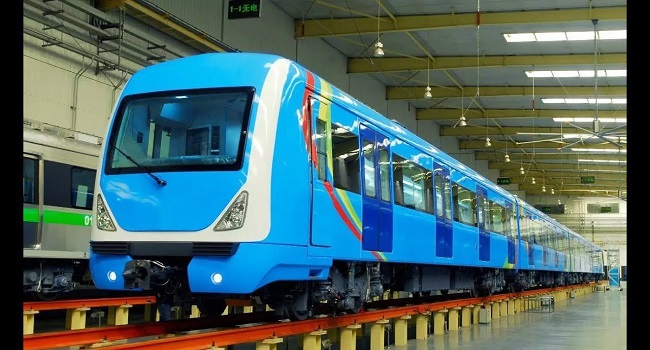
The Lagos State Government has issued a formal directive to shanty owners situated along the Blue Rail line, instructing them to vacate the premises.

This announcement was made by the Lagos State Commissioner for Environment and Water Resources, as confirmed by the ministry’s Director of Public Affairs, Kunle Adeshina.

The directive was officially conveyed during an inspection of the corridor in Orile.

The Commissioner for Environment and Water Resources, whose name was not mentioned in the statement, emphasized the importance of this move to address issues related to the Blue Rail corridor.

The Blue Rail corridor has been a point of concern due to various infractions and encroachments by informal settlements, commonly referred to as shanties.

These shanties pose both safety and developmental challenges to the government’s plans for the rail line.

The Lagos State Government’s decision to ask shanty owners to leave the Blue Rail corridor signifies a proactive effort to ensure the safety and efficiency of the transportation infrastructure.

It is expected that the government will provide further details and support to assist affected individuals or communities in relocating from the corridor.

“Commissioner for the Environment and Water Resources, Tokunbo Wahab in furtherance of the directives of Mr. Governor on Sunday supervised the removal of shanties on the setbacks and rights of way of Lagos Blue Rail line corridor from Orile to Iyana Iba urging those all those concerned to either move behind the road setback or relocate outright,” Adesina said in a Sunday statement.

“The Commissioner said the enforcement becomes imperative following the expiration of the one-month notice given by Mr Governor to all street traders, squatters, and occupiers of shanties and abandoned vehicles presently on the stretch of Lagos – Badagry Expressway from Orile up to Iyana-Iba,” the statement continued.

Comments

News

IGP Disu seeks NIPR partnership to boost public trust in police

Published

on

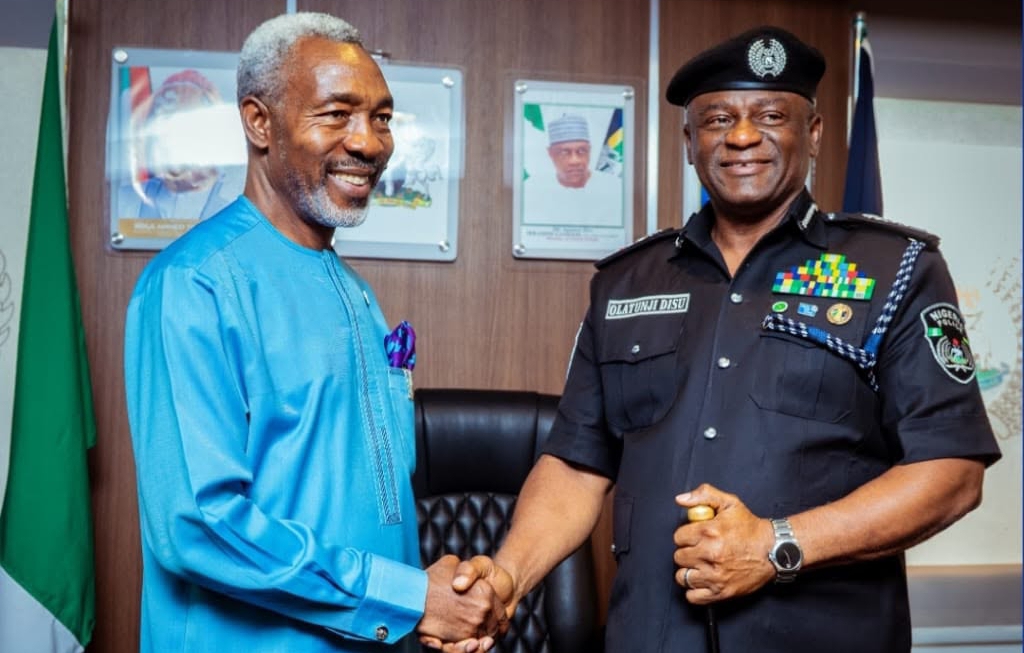
NIPR President, Dr Ike Neliaku, in a handshake with the Inspector-General of Police, Olatunji Disu, at the Force Headquarters in Abuja on Tuesday.

The Inspector-General of Police, IGP Olatunji Disu, has called for stronger collaboration between the Nigeria Police Force (NPF) and the Nigerian Institute of Public Relations (NIPR) to enhance public confidence in the police.

The IGP made the call on Tuesday when he received a delegation of the NIPR, led by its President and Chairman of Council, Dr Ike Neliaku, on a courtesy visit to the Force Headquarters, Abuja.

According to a statement issued by the Force Public Relations Officer, CSP Ani Iniedu, the IGP emphasised the importance of effective communication, professionalism, transparency and fairness in strengthening the relationship between the police and members of the public.

Disu noted that every police officer was an image-maker of the Force, adding that the conduct of personnel in their daily interactions with citizens had a direct impact on public perception of the police.

He said the Nigeria Police Force (NPF) remained committed to policing by consent and promoting a service-oriented policing culture built on professionalism, empathy, accountability and respect for human rights.

The IGP also sought the support of the NIPR in providing specialised communication training for police personnel and developing a coherent communication framework that would effectively communicate the sacrifices and contributions of police officers to public safety and national security.

Earlier, Neliaku commended the IGP for his professional accomplishments and briefed him on Nigeria’s hosting of the 2026 World Public Relations Forum and Africa Charter Forum.

The international event is scheduled to hold at the Transcorp Hilton, Abuja, and is expected to attract more than 3,000 delegates from 126 member countries of the Global Alliance for Public Relations.

The NIPR delegation also sought the support of the Nigeria Police Force in security planning and coverage for the event.

Neliaku further invited the IGP to serve as a keynote speaker at the forum and encouraged police officers to register and participate as delegates.

The delegation included the Secretary-General of the African Public Relations Association, Dr Omoniyi Ibietan; Dr Suleiman Haruna; Mrs Maryam Sanusi; Mrs Olubunmi Badejo; Commandant Olusola Odumosu; Chief Uzoma Oyegbadu; Chief Moji Makanjuola; Mr Stanley Ogadigo and other members of the institute.

Iniedu said the meeting reflected the commitment of the  Police Force to building productive partnerships with professional bodies and other stakeholders to strengthen public trust, enhance public safety and promote national security.


Continue Reading

News

Inflation drops marginally to 15.39% — NBS

Published

on

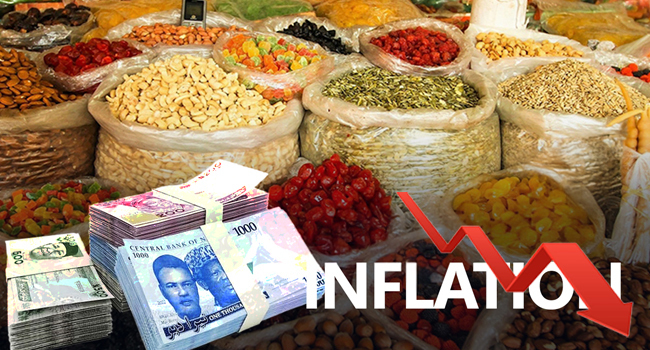
Nigeria’s headline inflation rate fell marginally to 15.39 per cent in August 2026 from 15.43 per cent in July, according to the National Bureau of Statistics.

The NBS disclosed this in its Consumer Price Index released on Tuesday, saying the latest figure represented a 0.04 percentage point decline from the previous month.

The statistics agency, however, reported a sharper decline in the month-on-month inflation rate, which dropped to 0.71 per cent in August from 1.57 per cent in July.

The month-on-month rate, according to the bureau, declined by 0.86 percentage points compared with the July figure.

The NBS explained that the development indicated that the rate at which the average price level increased in August was slower than that recorded in July.

The latest data also showed a significant moderation in food inflation, which stood at 19.57 per cent year-on-year in August.

The figure was substantially lower than the 25.30 per cent recorded in August 2025.

On a month-on-month basis, food inflation fell to 1.02 per cent in August from 5.56 per cent in July, representing a decline of 4.55 percentage points.

The NBS said the development showed that food prices were still rising, but at a slower rate during the month under review.

It attributed the decline largely to changes in the average prices of a number of food items, including palm oil, carrots, pepper, onions, cassava flour, beef, yam flour, water yam, melon (egusi), fresh ginger, fresh fish, Irish potatoes, wheat grain, frozen chicken and turkey meat.

At the state level, Adamawa recorded the highest year-on-year food inflation rate in August at 38.85 per cent.

It was followed by Zamfara with 37.96 per cent and Bayelsa with 36.20 per cent.

On the other hand, Borno recorded the lowest year-on-year food inflation rate at -4.04 per cent, followed by Jigawa at -0.23 per cent and Kebbi at 3.47 per cent.

The month-on-month figures presented a different picture, with Katsina recording the highest food inflation rate at 9.48 per cent.

Rivers and Osun followed with 8.86 per cent and 8.32 per cent respectively.

Taraba recorded the lowest month-on-month food inflation rate at -12.42 per cent, followed by Borno at -12.15 per cent and Bauchi at -8.88 per cent.

The latest figures indicate a moderation in the pace of price increases, particularly in the food sector, although the NBS data show that consumers continue to face varying price pressures across the states.

Continue Reading

News

Nigeria’s Oil Output Rises to 1.68m Barrels Per Day

Published

on

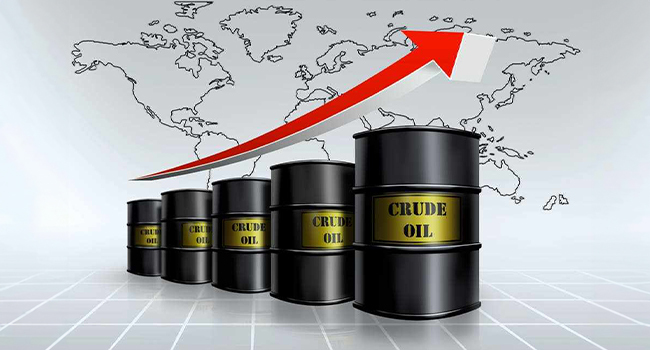
Nigeria’s crude oil and condensate production rose to 1.68 million barrels per day in August 2026, representing a 0.4 per cent increase from the 1.67 million barrels per day recorded in July.

The Nigerian Upstream Petroleum Regulatory Commission disclosed this in its latest production report released on Sunday.

Excluding condensate, the country produced an average of 1,500,190 barrels of crude oil per day in August, allowing Nigeria to meet its Organisation of Petroleum Exporting Countries quota for the fourth consecutive month.

Daily combined crude oil and condensate production ranged between 1.64 million barrels and 1.71 million barrels during the month under review.

A breakdown of production by terminals showed that Bonny Terminal recorded the highest output at 320.04 thousand barrels per day, followed by Forcados Terminal with 317.40 thousand barrels per day.

Qua Iboe Terminal recorded an average production of 171.72 thousand barrels per day, while Escravos Oil Terminal posted 131.71 thousand barrels per day.

Bonga ranked fifth among the highest-producing terminals, with an average output of 92.50 thousand barrels per day.

The NUPRC attributed the modest improvement in August production largely to the resolution of operational challenges involving the Single Buoy Mooring at the Erha field.

The commission said the challenges had adversely affected production in the preceding month.

“The restoration of normal evacuation and production operations at the asset contributed positively to overall production volumes during the period under review,” the commission’s spokesperson, Eniola Akinkuotu, said in a statement on Sunday.

The regulator added that production activities across most other producing assets remained relatively stable during the month.

“Production activities across most other producing assets remained relatively stable, with operators sustaining implementation measures aimed at optimising production efficiency, maintaining asset integrity, and minimising operational disruptions,” the statement said.

The latest figures indicate a continued improvement in Nigeria’s oil production, with the country maintaining its OPEC quota compliance for the fourth consecutive month.

Continue Reading

Trending

All Rights Reserved. Copyright © 2026 MegaIcon Magazine