Connect with us

Opinion

Lagos collapsed building: That this house may not fall

Published

on

Many atimes, Providence speaks to human beings in anecdotes. Unfortunately, man is too blind to even behold the foot of his nose; too lost in pursuit of earthly existential scrambles that the lessons of these stories are most times lost on him. Traditional Africa located the power in relating life experiences, as well as the experiences of living and non-living beings, especially those of animals, to the life of existing man. For centuries, not only did humanity learn to live by minding the landmines that consumed its recent and ancient ancestors, it also fashioned its life therefrom.

The holy writs are filled with anecdotal examples of lives lived that ended in perdition and ones lived in exemplary manner that are worthy of being copied. This is the power behind folktales, dreams and historical renditions. Relation of life experiences to occurrences that have happened could even be said to be the philosophy behind the doctrine of stare decisis in law. This doctrine arose out of the need for legal continuity, for the sake of certainty. Inherited from the English common law, in the early 18th century, English courts gave qualified obligation to judges to abide by past decisions and established rules made by former precedents whenever same points and same issues came forth for adjudications.

For a whole one week now, Nigeria has been thrown into mourning. Calamities have befallen Nigeria from all fronts before now but the calamity this time around came from the western flank; from the sudden collapse of a 21-storey Gerrard, Ikoyi, Lagos terrace building belonging to Femi Osibona, owner of Fourscore Limited. As at the time of writing this, 40 people had been pulled out of the debris of the collapse, including the remains of the Property Developer Osibona himself, his friends and workers on site.

Recriminations, blame trading and tar-brushings that bear imprimatur of politics are being spurned. The calamity has been dimensioned severally, from the architectural, engineering, spiritual to the human angles, The question to ask in all these is, could the Lagos 21-stoey terrace building collapse be speaking to a greater rot within, and a greater calamity to come that bespatter our country, which could happen unless Nigeria takes heed?

Put differently, could the collapse actually be a metaphor for understanding a collapse or a likely collapse of Nigeria unless we remedy our national structure? Can we dimension the cracks in Nigeria, taking into consideration the dimensioned fractures that eventually led to the collapse of the 21-storey Ikoyi building, with a view to averting her fall?

Osibona, from all that have so far been said about him, had a good intention for himself as an entrepreneur and a projected, even if ostensible, good intention for the property development world as at the time he conceived of the idea of the Ikoyi terrace building. While many have spoken of how Osibona transitioned from being a shoe, clothes seller in the United Kingdom, into establishing Fourscore Limited, his capacity to be able to build the high rise building cannot be questioned. Is it the same for his capability?

It may be a throwback to that maxim that says the road to hell is paved with a swathe of good intentions. There have been so many good-intentioned projects and projections that have ended in calamitous ruins. While metaphysicists talk about the unseen dimensions of human engagements, as Africans, we will be engaging in a barren venture if we take the route trodden by the Austrian British philosopher, Ludwig Wittgenstein, who maintained that metaphysical matters are nonsensical. For us as Africans, the unseen dictates the template of the seen. In our world, the fly dancing on the river has a drummer hidden from vision, the metaphysics of its being. So, could the crash and collapse of that edifice have had an eidetic significance, far more than the physical lacuna that scientists and professionals have identified as the likely cause of the collapse?

Whatever is the foundational, structural or super-structural errors that led to the collapse of the Ikoyi building can be metaphorized as Nigeria. The 1914 structural and foundational error behind virtually all ills plaguing Nigeria has been underscored severally. While the foundational colonial error of bumping together like and unlike entities into a questionable whole has been identified as a major cause of the debilitating instability in Nigeria today, over a century after, super-structural errors that came thereafter have compounded the ills that plague her.

German jurist, Friedrich Karl von Savigny of the Historical school of thought in jurisprudence, had espoused what he called the volkgeist, the national spirit, as the glue that cements and binds a people together, the absence of which can mar a jurisprudential understanding of a people’s law. In the colonial shell bequeathed to a post-colonial Nigeria, there is a clear absence of the Savigny volkgeist and manifesting in a Nigeria that is an alien and strange contraption that the people have to encounter as a vague reality. This has led to so many crises, ranging from the military putschs of 1966, the pogrom in the north, a fratricidal war, the incidence of military rule, the monumental heists that have been inflicted on Nigeria ever since and the economic stasis, as well as the security challenges that the country is facing today.

There have been so many posthumous accounts of the person of Osibona, the Fourscore property owner. Each of the accounts claimed that he never cut corners and was merely ambitious. However, there have also been other claims to the effect that the initial design of the building was eight floors and that the foundation was not designed to shoulder an edifice of that magnitude.

There was also a viral video of men of the Lagos structural enforcement outfit which stormed the Ikoyi property to bring him to book but from whose hooks he freed himself after pressing the usual Nigerian button. This is a euphemism for graft, bribery and the typical Nigerian big-man-ism. Those who claim that in the button pressed by Osibona which secured him freedom from this harassment could be found a nexus between him and those who he allegedly fronted for didn’t get the dice right. In Nigeria, you do not need to be a surrogate of a super big man to be able to secure freedom from the law. You only need to possess the right stack of cash that can drive the greed of the system and law.

The Nigerian postcolonial burden has ensured that Nigeria is a land of cutting corners. Drugs are fake, human beings are fake, promises are dross, mosques are fake and the pulpit is suffering from a fakery of cataclysmic proportion. When a man approaches you and announces that he is Pastor or Imam, flee. Did you listen to a viral video of Pastor Matthew Ashimolowo sacralizing Osibona and his pursuits? With this, it becomes very difficult to draw a line between devilish, fast-tempoed aspirations and Godly aspirations. By the way, how come that in those moments of laying hands on Osibona to “conquer territories,” Ashimolowo didn’t decipher that a man running at such supersonic speed to conquer property developments in continents could be short-changing the system? Did Ashimolowo caution against speedy sprint of this protégé of his?

Because the putting together of Nigeria lacks the metaphysical or the spiritual element, it then goes without saying that she lacks a major cohesive ingredient that holds a people together in their time of travails. There is no common goal that the people of Nigeria are pursuing as they lack what in German is called Wéltanschauung, a worldview. It symptomizes the collection of values, attitudes, narratives and expectations of the world in which a people are born and which shape them, their thoughts and actions. It is reason why there are variations in the ethos, ethics, religion, philosophy and beliefs of the people of Nigeria.

Many structural engineers have queried the substructure of the land that the 21-storey building was erected. When narratives from the top, especially from those who hold the rein of power today, claim that Nigeria’s unity is non-negotiable, they sound extremely ridiculous like a sub-structural wrong that perhaps the builders of the Ikoyi property noticed but which they believed was immaterial and that a magnificent structure erected on it will cure the wrongs.

Trust Nigerians with their multifaceted prognoses at death, we have been variously told that there was a compromise of quality and standard in the building of that fallen edifice. For instance, a Prowess Engineering Limited, a company that allegedly began the construction of the collapsed building, reportedly warned the late Osibona of the inherent dangers in circumventing process and standard in its construction. In a letter that instantly went viral, the company was said to have withdrawn its services on grounds that there was variation, both in the vision of the company, the late owner’s and the building project.

Likewise in Nigeria. Nation-building is a product of shared vision and is a collective enterprise. The moment there is no Fe of ownership of a national project and there is an absence of a consensus of ideas, cracks begin to appear. In a Nigeria where some people are perceived as lords while others are serfs, where some nationalities are kings and others their servants, the end product is always a disaster.

The administration of Nigeria, especially from 1966 till date, has yielded so many contradictions and ambiguities. Largely due to the selfish interests of the colonizers which were projected in the foundational administration of Nigeria, ethnic groups were thus balkanized as ethnicities and not as nations. This has made issues to be viewed from their ethnic prism and ethnicity used as a negative construct. Any policy, projects, appointments, infrastructure and dividends of governance is perceived and apprehended from the vantage point of ethnicity. This crack has further become more noticeable since 2015 when Mephistopheles gifted Nigeria a president who has offhandedly escalated the importance of where one comes from in Nigeria, higher than what one has to contribute to Nigeria.

Today, apart from all the challenges of making Nigeria a nation-state, Nigeria has become a recipient of dross structural padding that cannot endure. No one administers Nigeria from the position of wishing Nigeria to be great but as a honey-pot from where they could take a lick and bite. There is no synchronization in the expectations, contributions and manifestations of all the ethnic groups of Nigeria. Everybody is merely dancing to the rhythm of their own tunes and beats. The absence of unanimity of purpose has hugely stalled the possibility of nation building.

Thus, impunity is ten a dime on Nigerian streets. From the roads, offices, government, individuals and everybody in Nigeria, impunity has become the necklace we fiendishly advertise. If you come in contact with the disorder on the streets of Nigeria, you do not need to read Karl Maier’s This House Has Fallen to be able to decipher that Nigeria is going the Ikoyi 21-storey building way gradually.

Ostensibly, the fallen Ikoyi building didn’t acquire the liability of a fall overnight. It began to crack within unnoticeably a long time ago. As they say, that Rome was not built in a day, it is obvious that Rome was also not destroyed in a day. That great empire began to stink from within and the crumble began gradually. It is same with a Nigeria that we are cobbling together with great efforts and brinkmanship, without bothering to repair the wonky foundation upon which she was erected.

There are several lessons Nigeria can learn from the Ikoyi fallen high rise building. Nigeria big but fragile and its fragility has prodded many theorists to point at its probable fall. Nigeria’s collapse may not be as structural as we saw in the Ikoyi building’s collapse but the country is getting to a point where its existence is hugely threatened.

If Osibona was told of the fragility of the structure he was putting together yet stewed dangerously in his own broth of self-delusion of the strength of his magnificent structure, he would be in the same parlour with the rulers of Nigeria who believe that some metaphysical glue that has kept Nigeria from falling, right from the civil war period, would always be available to make Nigeria withstand whatever push and shove she gets from as a result of her wonky foundation. It is not too late for Nigerian rulers to avoid a calamity of the hue of Ikoyi if they come down from their high horses, accept that there are structural errors that needed to be corrected urgently about Nigeria and do that immediately.

Comments

Opinion

G-WAGON: Dare Adeleke, A Liar’ll Steal; Why’re You Desperate To Conceal The Truth? | Maroof Asudemade

Published

on

I have read Dare Adeleke’s rather vacuous response to my article on Governor Seyi Makinde’s presentation of a brand-new Mercedes-Benz G-Wagon 500 to the President-General of the Central Council of Ibadan Indigenes (CCII), Barrister Sulaimon Ajeniyi Ajewole. Unfortunately, beneath the insults, name-calling on my person and his apparent eye-service desperation to impress his political benefactor, there is hardly any substance worth engaging.

Adeleke devoted considerable space to calling me a drunken, lowly writer. Yet, in all his verbal gymnastics, he conspicuously failed to address the fundamental questions raised in my article. Has Governor Makinde paid the statutory salaries and entitlements of the Olubadan of Ibadanland, Oba Rashidi Adewolu Ladoja, and the Alaafin of Oyo, Oba Akeem Owoade, since their ascension to the respective thrones? Has his administration provided them with official vehicles, as expected under the applicable government arrangements? These were the issues Adeleke ought to address not my personality.

If he had any credible answers to these questions, he would have provided them. Instead, he chose to exhibit his wrakness as an intellectually exhausted defender. He resorted to abusing the messenger when he couldn’t dismantle the message.

However, there is one particularly interesting aspect of Dare Adeleke’s response that deserves immediate correction. He lied that Governor Makinde spent N1 billion on the completion of the Olubadan Palace. Is he sure he’s not addicted to stealing as a liar? The financial contributions towards the completion of the palace came from multiple sources, including the 11 local governments in Ibadanland, each of which contributed N50 million, amounting to N550 million.

Governor Makinde contributed N250 million. The governor’s contribution was N250 million, not N1 billion! Why would Adeleke inflate the governor’s contribution from N250 million to N1 billion? Is he so desperate to manufacture an impressive record for his political principal that figures have become expendable? Or does he imagine that exaggerating the governor’s generosity will make the unanswered questions of ridiculing our royal fathers disappear?

The 11 local governments of Ibadanland have a responsibility towards the Olubadan institution. Their contributions towards the palace should not be presented as a personal sacrifice by Governor Makinde. They are contributions made by public institutions to an institution that belongs to the people of Ibadanland.

Even more disturbing is Adeleke’s inane argument that because Makinde contributed money towards completing the Olubadan Palace, the governor deserves appreciation rather than criticism. This argument betrays a shocking failure of Adeleke to distinguish between governmental responsibilities and statutory obligations.

Let us even assume, for the sake of argument, that Makinde personally spent N1 billion on the palace. How does constructing or completing a building discharge the government’s obligation to pay the statutory salaries and entitlements of the Olubadan and the Alaafin? How does a palace building become a substitute for official vehicles? Are these royal fathers supposed to live in beautiful palaces while their statutory entitlements remain unpaid?

By Adeleke’s ‘logic’, Governor Makinde could build a magnificent headquarters for the Nigeria Labour Congress and subsequently refuse to pay workers their salaries, expecting the labour movement to applaud him for his generosity. Would that be acceptable? Could the government substitute office buildings for workers’ wages? Dare Adeleke is glaringly a peripheral thinker!

A building is a capital project. Salaries and official entitlements are separate obligations. Since Adeleke knew he could not understand this elementary distinction, he should have smelt his argument before presenting it to the public. His defence is not only logically defective; it is intellectually sour.

More importantly, the completion of the Olubadan Palace was not the subject of my article. I did not dispute the governor’s contribution. I questioned the apparent contradiction between his extravagant generosity towards the CCII President-General and the allegations of neglect concerning the official entitlements of the Olubadan and the Alaafin. Adeleke has not answered that question. He has merely introduced an unrelated expenditure in an attempt to divert attention.

I have no objection to Governor Makinde giving G-Wagons, aeroplanes or even private jets to people he loves, provided he does so with his personal resources. He is entitled to his private generosity. But public accountability should not cease because a governor is generous to his friends, associates or political admirers. The issue is not his freedom to give birthday presents. It is his responsibility to discharge governmental obligations.

As for Adeleke’s unnecessary personal attacks, I refuse to dignify his descriptions of me as a drunken or lowly writer with an elaborate defence. Neither description reflects my personality, and neither alters the substance of my argument. He only needs to be aware that despite his opinion of me as a drunken, lowly writer, I am his better by far as a family man and a responsible father – two essential duties he has failed in. I will also not allow his inability to sustain an intelligent argument to dictate the level of my engagement.

I am upset with Dare Adeleke for not living up to his claim of belonging to Oja’ba. He lacks the intellectual discipline, street wisdom and argumentative dexterity traditionally associated with the historic Ibadan community. His response has demonstrated an unfortunate deficit in all three. “Dare ò m’èsì, ó tún gọ!”

There is also something deeply incongruous about Adeleke’s pretentious defence of Governor Makinde. Those familiar with the undercurrents of Oyo politics may find his public posturing rather amusing. He presents himself as an unquestioning defender of the governor, yet political hypocrisy has a way of concealing its true colours beneath an appearance of loyalty. If the human stomach were transparent like a calabash, perhaps the governor would have a clearer view of Dare Adeleke as the green snake lurking beneath the green grass.

But my concern remains the dignity of the Olubadan and Alaafin institutions, not Adeleke’s political theatrics. He has had an opportunity to answer straightforward questions. He failed. He has had an opportunity to correct the allegations with verifiable facts. He avoided them. Instead, he manufactured a N1 billion contribution, inflated the governor’s generosity and attempted to intimidate a critic with insults.

Let me therefore restate the questions he could not answer: Has Governor Makinde paid the statutory salaries and entitlements of the Olubadan and the Alaafin since their ascension? Has he provided them with their official vehicles in accordance with applicable government policy? If yes, let Adeleke produce the evidence. If no, let him explain why.

A G-Wagon cannot answer questions about unpaid salaries. A palace cannot substitute for statutory entitlements. And N1 billion in political propaganda cannot turn N250 million into N1 billion. Dare Adeleke may choose to defend Makinde with insults, exaggerations and emotional outbursts. I will continue to interrogate the administration with facts, logic and questions that public officeholders owe the people answers to.

The dignity of the Olubadan and the Alaafin is far more important than Adeleke’s desperate attempt to earn political applause. And no amount of name-calling will make me abandon the responsibility of holding those in power accountable.

Continue Reading

Opinion

OYO AHEAD: Senator Alli Blueprint for Oyo Renewal | Muji Armstrong-Bello

Published

on

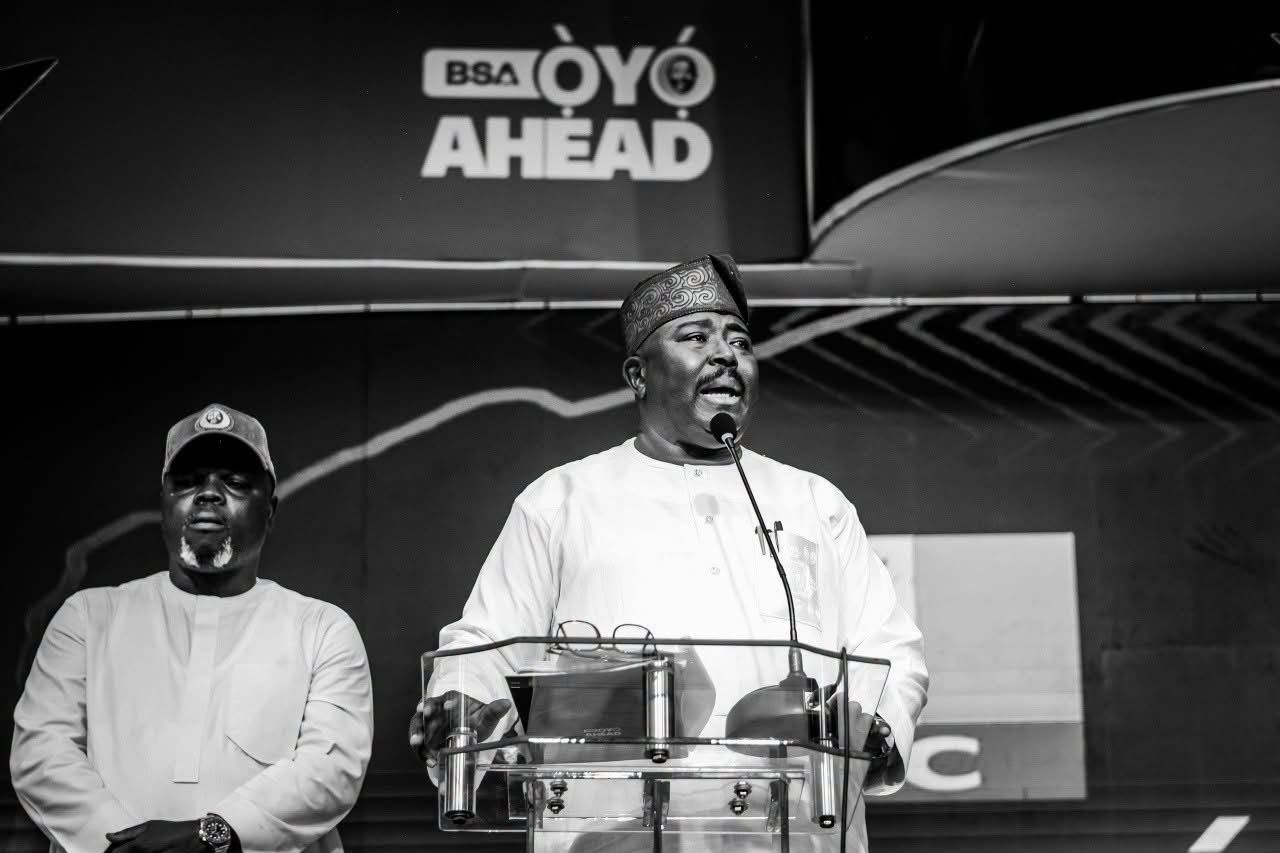
The unveiling of Senator Sharafadeen Abiodun Alli’s OYO AHEAD manifesto has introduced a new dimension to the 2027 Oyo State governorship conversation. Beyond the usual campaign promises, the document presents an attempt to define not just what a government intends to do, but how it proposes to govern. Its central message is that Oyo State needs a development model built around grassroots empowerment, economic productivity, institutional accountability and measurable performance.

What makes the manifesto politically significant is its attempt to connect the candidate’s personal political journey with a proposed programme of government. From his experience as Chairman of Ibadan North Local Government to his service as Secretary to the State Government, Chief of Staff, Senator and Chairman of Odu’a Investment Company, Alli presents himself as a politician whose experience cuts across grassroots administration, constitutional politics, legislative representation and business management. These experiences provide a solid foundation for effective governance and reinforce the expectation that his proposed agenda can be translated into tangible results for the people of Oyo State.

The first pillar, local government autonomy, may well become the most politically consequential. By promising transparent access to council allocations, monthly funding arrangements and greater freedom for local governments to address community needs, BSA is placing grassroots governance at the centre of his development philosophy. The message is unmistakable: democracy must be felt beyond the Government House, and the dividends of government must reach the communities where ordinary people live and work.

His infrastructure proposals also deserve attention. Rather than concentrating exclusively on new construction, the manifesto promises an audit of unfinished roads, published completion schedules, farm access roads, improved electricity, potable water and affordable housing. This suggests an understanding that infrastructure should be judged by its economic and social usefulness, not simply by the political visibility of projects.

In healthcare, the proposed Oyo Care Guarantee for infants, pregnant women and residents above 70 is a significant social intervention. The commitment to strengthen primary healthcare, address shortages of medical personnel and expand health insurance coverage recognises that healthcare is not a privilege reserved for those who can afford it. With the right funding arrangements, adequate staffing and firm institutional commitment, these promises can be translated into a sustainable healthcare system that delivers tangible benefits to the people of Oyo State.

Education is another area where the manifesto attempts to reconnect Oyo with its historic reputation as a pioneer of educational development. Reducing classroom congestion, repairing schools, expanding scholarships, establishing skills centres and linking graduates to employment are proposals that speak directly to the future of the state’s young population. These interventions are designed to translate educational investment into measurable improvements in learning outcomes, practical skills and employment opportunities for the next generation.

Perhaps the most compelling economic proposition is the commitment to move Oyob beyond an economy of consumption towards one of production, investment and job creation. The proposed industrial parks, revival of the Oluyole Free Trade Zone, ₦10 billion Youth Fund, digital skills programme and support for small businesses suggest an administration seeking to make employment creation a central responsibility of government. The ₦150 billion annual internally generated revenue target reflects an ambitious vision of economic growth, driven by expanded business activity, increased investment, efficient revenue administration and the elimination of financial leakages, while preserving a favourable environment for citizens and businesses to prosper.

Agriculture gives the manifesto another important regional dimension. Oyo possesses considerable agricultural potential, particularly across Oke-Ogun, Ogbomoso and Ibarapa. The proposals for processing facilities, revived farm settlements, mechanisation, storage, agricultural insurance and export promotion recognise that farmers cannot prosper merely by producing crops; they must also have access to markets, processing facilities and value chains. If properly executed, this could transform agriculture from subsistence activity into a major engine of industrial growth.

Security, appropriately, is treated as the foundation upon which every other pillar depends. The proposed strengthening of community security networks, protection and insurance for hunters and vigilantes, improved surveillance and farmer-herder mediation reflect the reality that development cannot flourish where fear controls access to farms, schools and businesses. The accompanying commitment to public disclosure of projects, contractors and costs also reinforces the argument that security and accountability are inseparable responsibilities of government.

One particularly striking feature is the candidate’s personal commitment to publish quarterly performance reports and to decline a second-term request if Oyo State is not measurably better by the end of his first tenure. This is a bold political undertaking. It shifts the conversation from the traditional entitlement of incumbency to the obligation of performance. This commitment further underscores the importance of measurable performance targets, transparent reporting and regular public assessments as the foundation for accountable and results-driven governance.

The strength of OYO AHEAD lies not only in the breadth of its promises but also in the opportunity to translate them into a practical development programme. The proposed revenue expansion, healthcare guarantee, youth and women empowerment funds, educational reforms and infrastructure projects provide an ambitious agenda for the state. With proper financial planning, sound legal frameworks, effective coordination and measurable implementation targets, these proposals can form the foundation of a purposeful and results-oriented administration.

This places an important responsibility on the OYO AHEAD Steering Committee. Beyond campaign mobilisation and public presentation, the Committee must sustain the technical work required to support the manifesto with reliable data, realistic costing, legal guidance, implementation timelines and measurable outcomes. The depth of this preparation will be central to demonstrating that OYO AHEAD is not merely a collection of campaign promises, but a carefully considered programme for governing Oyo State.

As the 2027 governorship election approaches, the debate should increasingly focus on the future of Oyo State: the governance philosophy, experience, policy direction and preparedness of those seeking the people’s mandate. Political alliances and personalities will naturally shape the contest, but the enduring question is which proposals offer a clear and practical pathway to development, prosperity and accountable leadership.

OYO AHEAD has placed such a pathway before the people of Oyo State. Its seven pillars provide a framework for addressing the state’s development priorities, while its emphasis on grassroots governance, economic productivity, human capital development and accountability speaks to the need for a new direction. With his political experience, administrative background and familiarity with the challenges of Oyo State, Senator Sharafadeen Abiodun Alli is well positioned to lead the effort to translate this blueprint into meaningful progress. The promise of OYO AHEAD is renewal; its ultimate measure will be the transformation it delivers to the lives of the people.


Prince Armstrong-Bello, JP. Akogun Aliiwo Ibadanland, Author of “Yoruba Leadership in Diaspora: Equity Justice and Tradition” is a Political Communication Strategist and Public Affairs Analyst

Continue Reading

Opinion

OYO 2027: MAKINDE EATS SOUR GRAPES, ADEKANMBI’S TEETH MUST BE SET ON EDGE

Published

on

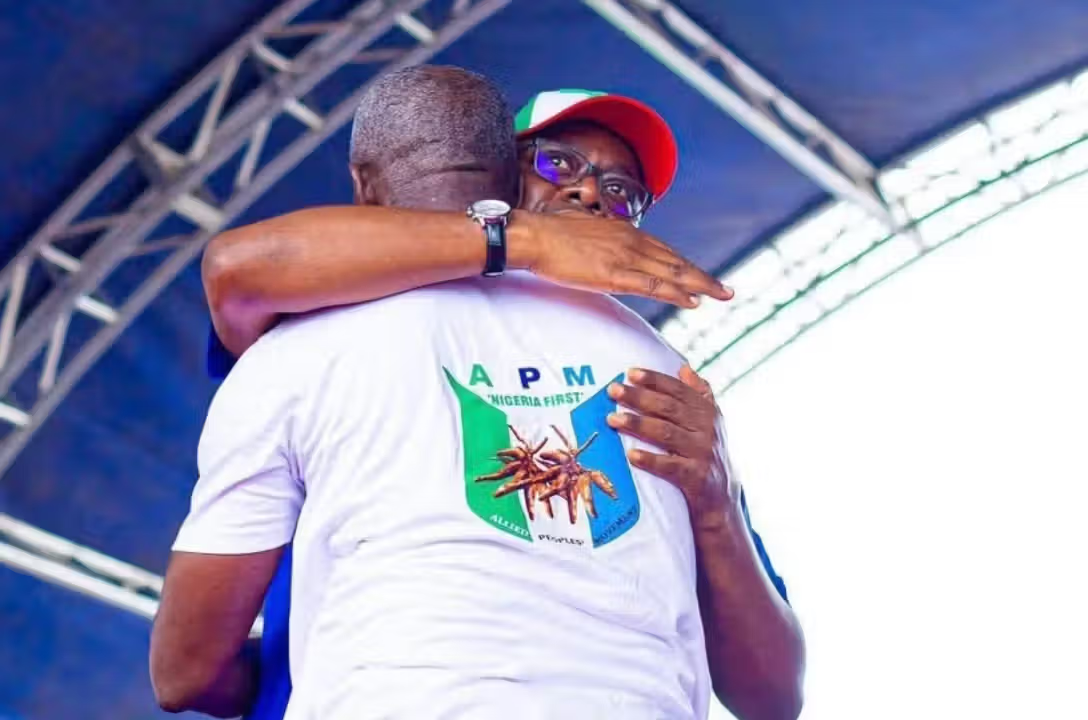
The confusion within the ranks of the Allied Peoples Movement (APM) is becoming increasingly difficult to describe.

The political empire built by Governor Seyi Makinde on what critics describe as lies, betrayals, broken promises and greed appears to be crumbling by the day.

Indeed, Makinde and his APM loyalists are providing an endless source of amusement these days.

Virtually everyone who leaves the Makinde administration is suddenly dismissed as a “paperweight” by the party’s social media attack dogs.

I have often wondered whether these fellows are unaware of the wisdom behind the Yoruba belief that even cotton wool, when gathered in sufficient quantities, can become a load too heavy for one person to carry.

As the Yoruba proverb puts it: Eni ní òwú ò t’ẹrù; ìwọ̀nba tó fẹ́ fi tan iná ló mú.

You keep losing prominent politicians and influential party stakeholders, yet you dismiss them as political nonentities. But which heavyweight has the power to cast more than one vote for a preferred candidate?

I am certain that even Bimbo Adekanmbi must be wondering how things deteriorated so badly for the APM.

Before his emergence as Governor Makinde’s anointed governorship candidate was made public, I granted an interview on a television station during which I openly predicted that Adekanmbi would get the governor’s endorsement and that his choice as successor would spell trouble for both men.

To one another, both men have become potential political albatrosses. Unfortunately, Governor Makinde’s ego appears to have blinded him to realities beyond his immediate political calculations.

I am particularly surprised that Adekanmbi failed to recognise that he was walking into a political trap by accepting Makinde’s endorsement.

Greed, indeed, can be a dangerous disease. In Adekanmbi’s position, no discerning politician would have ignored the number of political enemies Governor Makinde had accumulated during his seven years in office.

It follows, therefore, that Adekanmbi would inevitably inherit many of those political liabilities. Sadly, he either failed to appreciate the implications or simply chose to overlook the consequences.

By the time Governor Makinde, or perhaps Seye Famojuro, settled for Adekanmbi, the governor was already embroiled in disagreements with prominent political figures, including former Deputy National Chairman of the PDP, Ambassador Taofeek Oladejo Arapaja, Alhaji Bisi Olopoeyan and several first-class traditional rulers in Oyo State.

He had also fallen out with several influential political figures, including Senator Hosea Agboola, Alhaji Razak Gbadegesin, former Deputy Governor Barrister Gbolarunmi Hazeem, Chief Mrs Jumoke Akinjide, Hon. Mulikat Adeola Akande, former Deputy Governor Engr. Rauf Aderemi Olaniyan, Prince Diran Odeyemi, former Ekiti State Governor Ayodele Fayose, former Rivers State Governor Nyesom Wike and even President Bola Ahmed Tinubu.

Beyond these strained relationships, several stakeholders within the Makinde political camp were already uncomfortable with the process that produced Adekanmbi as the APM governorship candidate.

There were also contentious discussions about whether Governor Makinde should be succeeded by a Christian. Equally troubling to some stakeholders was the question of whether it made political sense for Makinde to present Adekanmbi as his preferred successor when both men hail from Ona-Ara Local Government Area.

At the time, agitations were mounting over Governor Makinde’s alleged failure to comply with the Supreme Court judgment granting financial autonomy to local governments.

Other contentious issues included the controversial Circular Road project, the sale of government assets and the proposed transfer of Oyo State farm settlements to estate developers.

The state’s debt profile, which has remained a subject of public concern and debate, was another issue that had yet to be satisfactorily addressed.

All these issues were already in the public domain before Adekanmbi accepted the offer to become Makinde’s anointed candidate.

One is therefore compelled to ask: what could have persuaded Adekanmbi to accept such a politically dangerous offer?

I can only think of one reason: greed.

When Governor Makinde claimed that he had advised Adekanmbi not to inherit his enemies, he was being economical with the truth.

The reality is that those political liabilities became Adekanmbi’s the moment he accepted Makinde’s endorsement.

The governor knows that he is carrying a political baggage that could weigh heavily on his preferred successor. Yet, he appears unwilling to be held accountable for the political consequences of his own administration.

Unfortunately for both men, even Adekanmbi’s campaign slogan tells a story of its own: “Omi Tuntun 3.0”.

How, then, does he intend to separate himself from the “Omi Tuntun” administration and the controversies surrounding it?

Governor Makinde has never hidden his discomfort with genuine local government autonomy. Adekanmbi, by his posture, appears prepared to sustain the same political template, which critics blame for weakening the 33 local government councils in the state.

On virtually every issue over which the people of Oyo State have expressed concern, Adekanmbi appears to be offering continuity rather than a departure from the policies of the present administration.

He has failed to condemn the controversy surrounding the proposed transfer of the Ogbomoso Farm Settlement to estate developers, despite protests by residents of the ancient town.

He has equally remained silent over the controversy surrounding the administration’s reported moves involving the Saki Farm Settlement.

He also appears untroubled by the reported transfer of the 4,000-hectare Eruwa Farm Settlement to investors, whose whereabouts and activities have, according to critics, remained unclear two years after the arrangement.

Indeed, Adekanmbi appears not to appreciate the extent of the challenges facing the state. For instance, Oyo State is said to be short of six general hospitals if the benchmark of one general hospital per local government area is adopted.

Yet, when Senator Sharafadeen Abiodun Alli promised in his manifesto to address this deficit, APM spokespersons reportedly went on the offensive, describing the manifesto as “lacking in originality”.

Governor Makinde has been in office for more than seven years. During this period, his administration has received ecological funds on several occasions.

The question, therefore, is simple: what has happened to those funds?

There are concerns over the utilisation and accountability of the ecological funds received by the state. The governor owes the people a clear explanation of how these resources have been deployed.

There are also questions surrounding the proposed upgrade of the Alakia Airport, a project for which Adekanmbi himself was appointed by Governor Makinde to head a committee.

I have been reliably informed that the contract sum for the airport upgrade was reportedly reviewed upwards from its original figure of over N50 billion to well above N150 billion.

I have raised this question before, but I am yet to hear Adekanmbi offer a convincing explanation or response to the allegation.

Similarly, Governor Makinde reportedly approved more than N60 billion for the renovation of the Government House, an expenditure that attracted public criticism.

As of today, the visible works include the construction of a hall, the painting of the Government House mosque and church, and the replacement of tiles in both places of worship.

I challenge Governor Makinde to tell the people of Oyo State how much of the more than N60 billion reportedly approved for the renovation has actually been released and expended.

Beyond that, the governor should invite members of the press to conduct an independent assessment of the work carried out so far. The people deserve transparency and accountability, not unanswered questions.

The state government’s performance in education is another area that demands urgent attention.

Oyo State’s performance in WAEC and NECO examinations has continued to attract concern, particularly when compared with the performance of other states, including neighbouring Osun, which has been celebrated for its fifth-place position in a recent examination ranking.

Senator Sharafadeen Abiodun Alli has argued that the state must return to an educational system that makes teaching and learning more conducive. One of his proposals is a 30-pupils-per-classroom policy.

But rather than engage constructively with the proposal, APM voices have dismissed its feasibility.

Adekanmbi, as the party’s governorship candidate, has also failed to offer a clear departure from the present arrangement, under which many public primary and secondary school classrooms remain severely overcrowded and unconducive to effective learning.

Oyo State cannot afford another administration that merely promises continuity without addressing the shortcomings of the present one.

The people deserve better, and they now have an alternative in Senator Sharafadeen Abiodun Alli.

Governor Makinde has eaten sour grapes. Unfortunately, Bimbo Adekanmbi appears destined to bear the consequences.

His teeth, indeed, must be set on edge.

Continue Reading

Trending