Connect with us

News

Korea to share its technological, industrial revolution experience with Africa, says President Moon Jae-in

Published

on

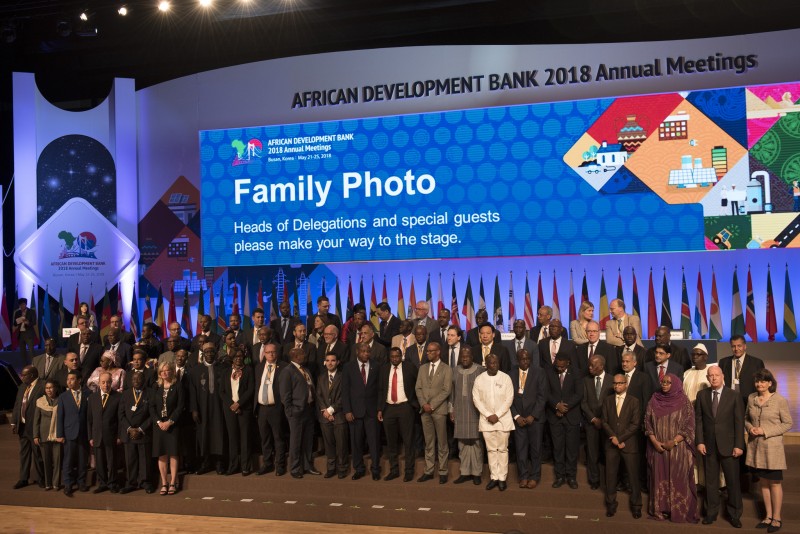
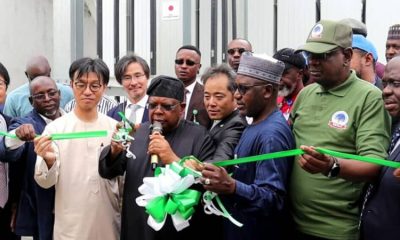
Korean President Moon Jae-in has committed to sharing Korea’s technological and industrial experience with Africa so as to help it compete in the 4th Industrial Revolution.

His message came at the opening ceremony of the 53rd Annual Meetings of the African Development Bank . “Africa is no longer the sleeping lion. Korea is happy to share its industrial experience with the continent. The theme of the Annual Meetings is appropriate for the industrial transformation of the continent, and in facilitating the sharing of experiences with Korea and other partners.”

African Development Bank President Akinwumi Adesina thanked the Government of Korea for hosting the Bank’s Annual Meetings. He recalled Korea’s transformation from a poor nation 60 years ago to the 11th largest economy in the world, noting the contribution of industrialization to its transformation.

“Today, Samsung and LG television and phones dominate globally, while Korean cars are everywhere. Korea was deliberate and consistent in its industrial drive like China and Japan. Africa must learn from Korea’s industrialization and the equally remarkable experiences of China, Japan, and other parts of the world.”

“Africa must fast-track industrialization. That is why the African Development Bank plans to invest US $35 billion over the next 10 years in its focus on industrialization. The Bank’s industrialization strategy hopes to help Africa raise its industrial GDP from a little over US $700 billion today to over US $1.72 trillion by 2030. This will allow Africa’s GDP to rise to over US $5.6 trillion, while moving GDP per capita to over US $3,350.

“The formula for the wealth of nations is clear: rich nations add value to all they produce; poor nations simply export raw materials. Africa needs to industrialize and add value to everything that it produces – from agriculture, to minerals, to oil, gas and metals. Africa needs to move from the bottom to the top of the global value chains.”

Young Africans can transform the continent given the chance. He described the experience of Clarisse Iribagiza, a young Rwandan woman who earned a master’s in Information and Communications Technology from the Kigali Institute of Science and Technology, a program supported by the Bank. With a modest contribution from the Government of Rwanda, Clarisse launched an ICT business that she recently sold for US $10 million. She is now a member of the Bank’s Presidential Youth Advisory Council.

To unlock Africa’s potential through investment, the Bank has created the Africa Investment Forum,   a transactional platform created by the African Development Bank with its partners to leverage global pension funds and sovereign wealth funds and other institutional investors to significantly invest in Africa. This new investment marketplace will set sail from November 7-9, 2018 from Johannesburg, South Africa.

Dong Yeon Kim, Deputy Prime Minister and Minister of Strategy and Finance of the Republic of Korea, said a new approach was urgently needed. He referred to Uncle Tom’s Cabin, a 19th-century American novel written by Harriet Beecher Stowe that envisioned a promising future for Africa.

“Harriet Stowe was right. Very surprisingly, we now witness strong evidence of Africa flourishing, just as she predicted. Growth in the region over the past 20 years was 3% higher than the previous period, and the absolute poverty ratio decreased to two thirds of what it was two decades ago.”

Kim stressed the need for innovative industrialization to translate Africa’s potential into economic prosperity.

“Industrialization policy should take into account the unique conditions of each country. New technologies can provide leapfrogging opportunities by speeding up the industrialization process and creating new value.” Smart infrastructure, he said, presents a promising area for Korea’s contribution.

“Smart infrastructure can provide a new solution to Africa’s shortage in roads, airports and harbours. It allows optimal use of resources and can even replace traditional infrastructure. Africa is already producing substantial outcomes in this area. Going forward, Korea is strongly committed to share its rich expertise and experience as Africa’s close partner.”

In his address, the Chairman of the African Union and Rwandan President, Paul Kagame noted that holding the Annual Meetings in Busan presents a unique opportunity to enforce the growth cooperation between Africa and the Republic of Korea.

“Korea has been a strong and reliable partner of Africa. Africa faces challenges that we can address together,” he said.

Comments

News

IGP Disu seeks NIPR partnership to boost public trust in police

Published

on

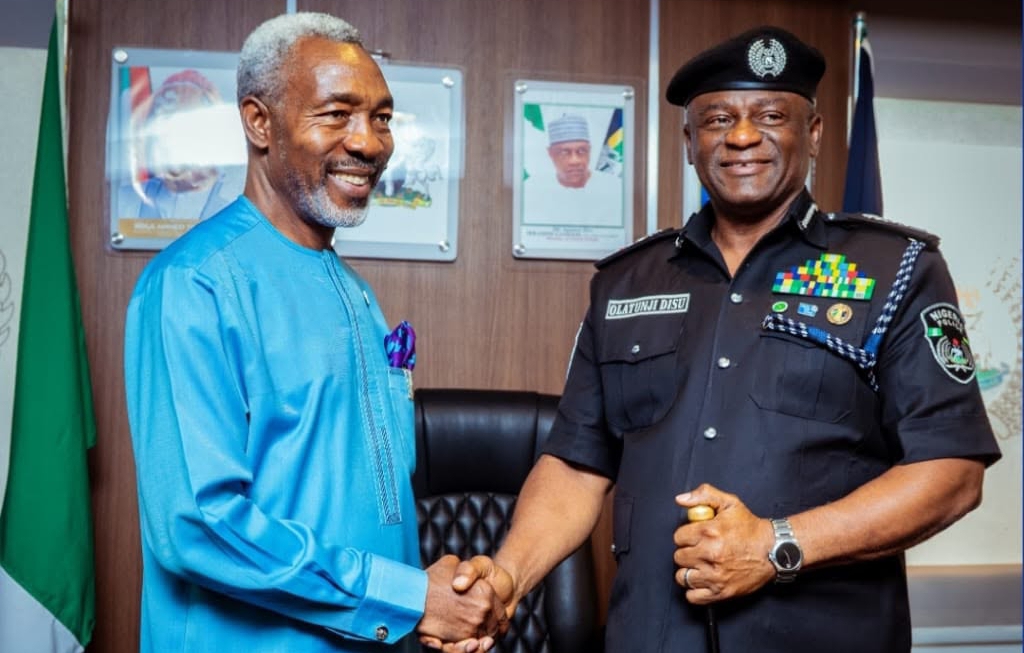
NIPR President, Dr Ike Neliaku, in a handshake with the Inspector-General of Police, Olatunji Disu, at the Force Headquarters in Abuja on Tuesday.

The Inspector-General of Police, IGP Olatunji Disu, has called for stronger collaboration between the Nigeria Police Force (NPF) and the Nigerian Institute of Public Relations (NIPR) to enhance public confidence in the police.

The IGP made the call on Tuesday when he received a delegation of the NIPR, led by its President and Chairman of Council, Dr Ike Neliaku, on a courtesy visit to the Force Headquarters, Abuja.

According to a statement issued by the Force Public Relations Officer, CSP Ani Iniedu, the IGP emphasised the importance of effective communication, professionalism, transparency and fairness in strengthening the relationship between the police and members of the public.

Disu noted that every police officer was an image-maker of the Force, adding that the conduct of personnel in their daily interactions with citizens had a direct impact on public perception of the police.

He said the Nigeria Police Force (NPF) remained committed to policing by consent and promoting a service-oriented policing culture built on professionalism, empathy, accountability and respect for human rights.

The IGP also sought the support of the NIPR in providing specialised communication training for police personnel and developing a coherent communication framework that would effectively communicate the sacrifices and contributions of police officers to public safety and national security.

Earlier, Neliaku commended the IGP for his professional accomplishments and briefed him on Nigeria’s hosting of the 2026 World Public Relations Forum and Africa Charter Forum.

The international event is scheduled to hold at the Transcorp Hilton, Abuja, and is expected to attract more than 3,000 delegates from 126 member countries of the Global Alliance for Public Relations.

The NIPR delegation also sought the support of the Nigeria Police Force in security planning and coverage for the event.

Neliaku further invited the IGP to serve as a keynote speaker at the forum and encouraged police officers to register and participate as delegates.

The delegation included the Secretary-General of the African Public Relations Association, Dr Omoniyi Ibietan; Dr Suleiman Haruna; Mrs Maryam Sanusi; Mrs Olubunmi Badejo; Commandant Olusola Odumosu; Chief Uzoma Oyegbadu; Chief Moji Makanjuola; Mr Stanley Ogadigo and other members of the institute.

Iniedu said the meeting reflected the commitment of the  Police Force to building productive partnerships with professional bodies and other stakeholders to strengthen public trust, enhance public safety and promote national security.


Continue Reading

News

Inflation drops marginally to 15.39% — NBS

Published

on

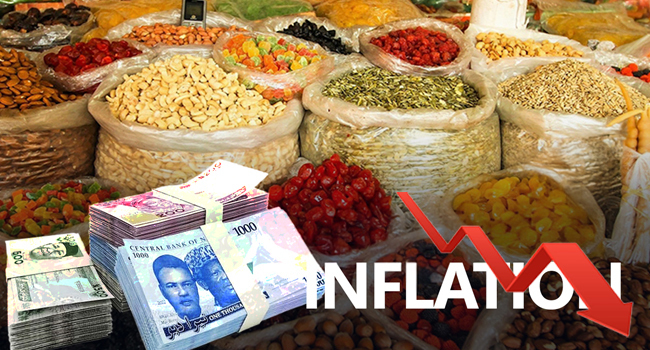
Nigeria’s headline inflation rate fell marginally to 15.39 per cent in August 2026 from 15.43 per cent in July, according to the National Bureau of Statistics.

The NBS disclosed this in its Consumer Price Index released on Tuesday, saying the latest figure represented a 0.04 percentage point decline from the previous month.

The statistics agency, however, reported a sharper decline in the month-on-month inflation rate, which dropped to 0.71 per cent in August from 1.57 per cent in July.

The month-on-month rate, according to the bureau, declined by 0.86 percentage points compared with the July figure.

The NBS explained that the development indicated that the rate at which the average price level increased in August was slower than that recorded in July.

The latest data also showed a significant moderation in food inflation, which stood at 19.57 per cent year-on-year in August.

The figure was substantially lower than the 25.30 per cent recorded in August 2025.

On a month-on-month basis, food inflation fell to 1.02 per cent in August from 5.56 per cent in July, representing a decline of 4.55 percentage points.

The NBS said the development showed that food prices were still rising, but at a slower rate during the month under review.

It attributed the decline largely to changes in the average prices of a number of food items, including palm oil, carrots, pepper, onions, cassava flour, beef, yam flour, water yam, melon (egusi), fresh ginger, fresh fish, Irish potatoes, wheat grain, frozen chicken and turkey meat.

At the state level, Adamawa recorded the highest year-on-year food inflation rate in August at 38.85 per cent.

It was followed by Zamfara with 37.96 per cent and Bayelsa with 36.20 per cent.

On the other hand, Borno recorded the lowest year-on-year food inflation rate at -4.04 per cent, followed by Jigawa at -0.23 per cent and Kebbi at 3.47 per cent.

The month-on-month figures presented a different picture, with Katsina recording the highest food inflation rate at 9.48 per cent.

Rivers and Osun followed with 8.86 per cent and 8.32 per cent respectively.

Taraba recorded the lowest month-on-month food inflation rate at -12.42 per cent, followed by Borno at -12.15 per cent and Bauchi at -8.88 per cent.

The latest figures indicate a moderation in the pace of price increases, particularly in the food sector, although the NBS data show that consumers continue to face varying price pressures across the states.

Continue Reading

News

Nigeria’s Oil Output Rises to 1.68m Barrels Per Day

Published

on

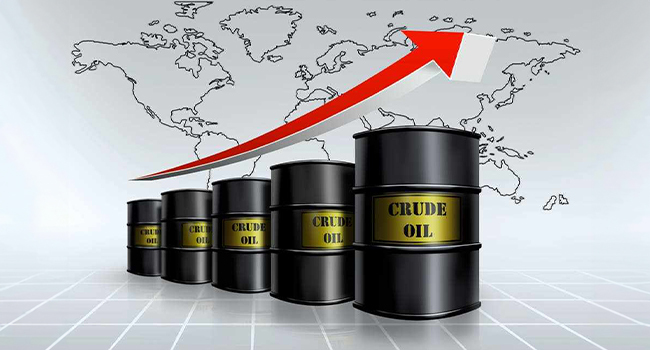
Nigeria’s crude oil and condensate production rose to 1.68 million barrels per day in August 2026, representing a 0.4 per cent increase from the 1.67 million barrels per day recorded in July.

The Nigerian Upstream Petroleum Regulatory Commission disclosed this in its latest production report released on Sunday.

Excluding condensate, the country produced an average of 1,500,190 barrels of crude oil per day in August, allowing Nigeria to meet its Organisation of Petroleum Exporting Countries quota for the fourth consecutive month.

Daily combined crude oil and condensate production ranged between 1.64 million barrels and 1.71 million barrels during the month under review.

A breakdown of production by terminals showed that Bonny Terminal recorded the highest output at 320.04 thousand barrels per day, followed by Forcados Terminal with 317.40 thousand barrels per day.

Qua Iboe Terminal recorded an average production of 171.72 thousand barrels per day, while Escravos Oil Terminal posted 131.71 thousand barrels per day.

Bonga ranked fifth among the highest-producing terminals, with an average output of 92.50 thousand barrels per day.

The NUPRC attributed the modest improvement in August production largely to the resolution of operational challenges involving the Single Buoy Mooring at the Erha field.

The commission said the challenges had adversely affected production in the preceding month.

“The restoration of normal evacuation and production operations at the asset contributed positively to overall production volumes during the period under review,” the commission’s spokesperson, Eniola Akinkuotu, said in a statement on Sunday.

The regulator added that production activities across most other producing assets remained relatively stable during the month.

“Production activities across most other producing assets remained relatively stable, with operators sustaining implementation measures aimed at optimising production efficiency, maintaining asset integrity, and minimising operational disruptions,” the statement said.

The latest figures indicate a continued improvement in Nigeria’s oil production, with the country maintaining its OPEC quota compliance for the fourth consecutive month.

Continue Reading

Trending

All Rights Reserved. Copyright © 2026 MegaIcon Magazine