Connect with us

Top Stories

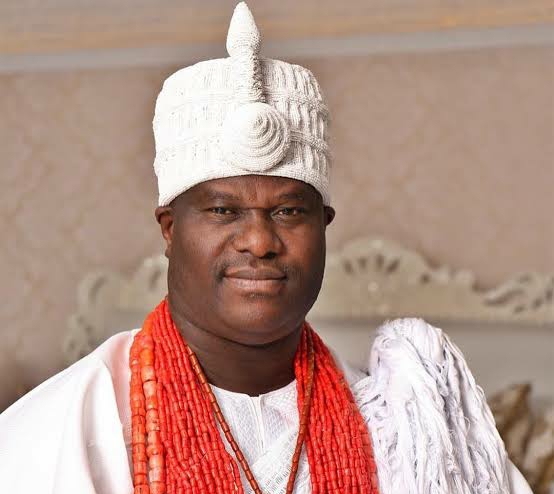
In Pictures: Ooni to commission Ife Grand Resort Friday

Published

on


unveils 3000 seater MICE centre, Ostrich hub, industrial park


The Arole Oduduwa & Ooni of Ife, Ooni Adeyeye Enitan Ogunwusi, Ojaja II will on Friday, lead top dignitaries, including Governor Gboyega Oyetola of Osun state to officially launch Ife Grand Resort & Industrial Park, in Ile-Ife.

Contained in a statement by his Director of Media and Public Affairs, Com. Yera Moses Olafare, the Grand Resort, located beside the tollgate on the Ife-Ibadan expressway is a brand new city of hubs driven by urban renewal initiatives of the Ooni Ogunwusi to serve as the hub for sustainable development, fountain of employment generation, radar of empowerment and satellite for branding and showcasing the cultural heritage and value of Ile-Ife, the source and natural headquarters of the Ile Oduduwa race globally.

According to the statement, the huge investment is a legacy project embarked upon by Ooni Ogunwusi for urban renewal and redevelopment into the current smart city global requirements in the selfless spirit of ‘Charity Begins At Home’

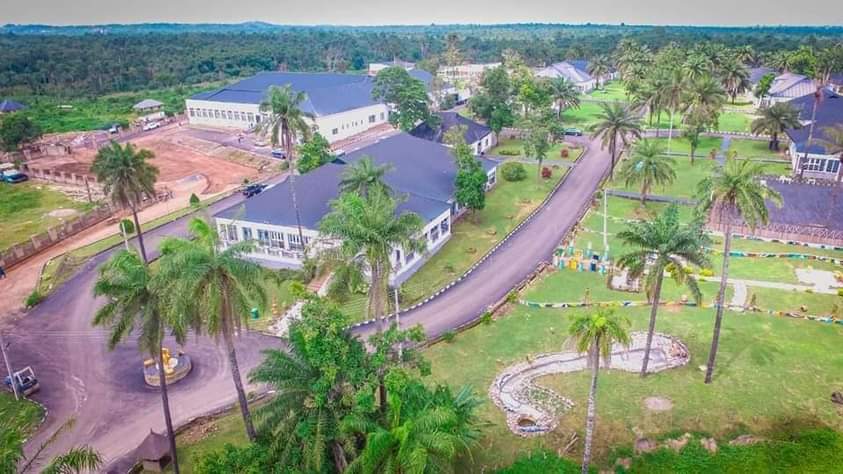
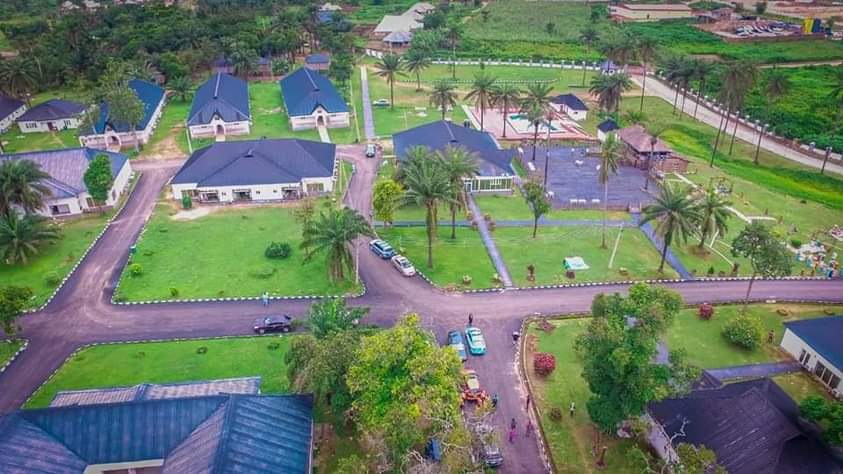
The Ife Grand Resort and Leisure, which is planted on over 1000 acres of land will aside from offering facilities for exquisite lodging/accommodation, harbour multiple industrial parks with pockets of industries currently producing many industrial and agricultural products as well as rendering essential services to the resort, the Ife community and Nigeria.
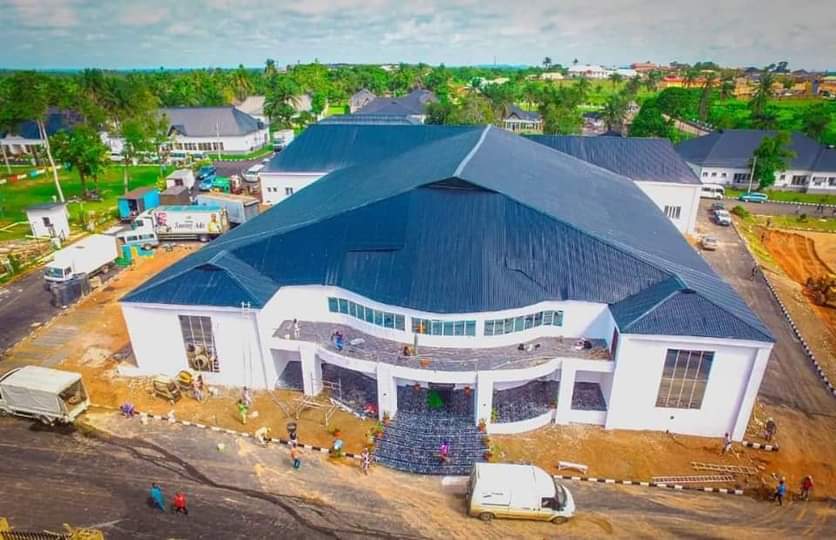
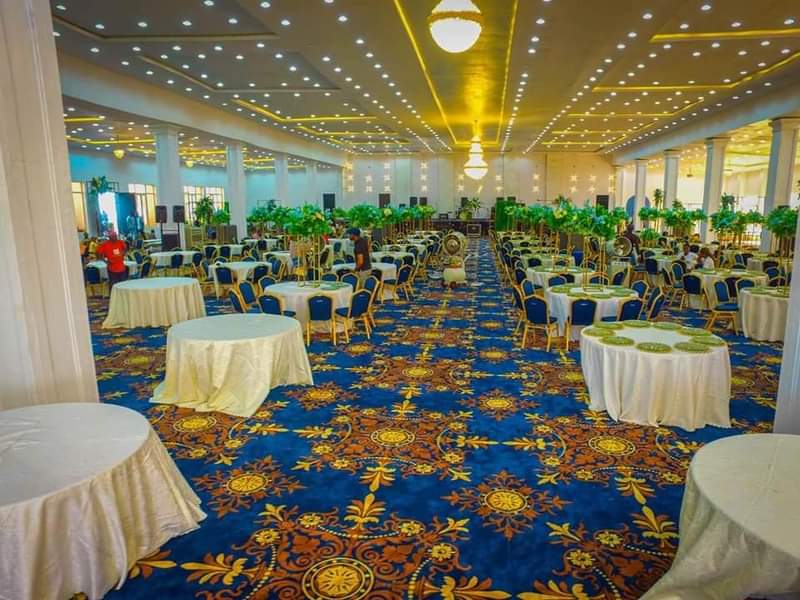
Sitting comfortably within the Ife Grand Resort which is a focal attraction on Friday is the 3000 seating capacity Meeting Incentives Conference and Event(MICE) Centre branded ‘Ojaja Arena’, a complex of architectural wonder planted by Ooni Ogunwusi to add value of relevance to urban renewal in Ile – Ife.

Ooni Ogunwusi disclosed that he deliberately brought the 3000 seating capacity event centre to make Ile-Ife the epicentre of MICE in Africa, saying that the ‘Ojaja Arena’ has been configured and positioned with all facilities to satisfy demands of Meetings, Incentives, Conference and Event adding that it would also shore up intellectual and congregational activities in Ile Ife, the ancient source of mankind.

“We are building a brand new city driven by urban renewal initiative. The Ojaja Arena is basically not built for social activities but a centre for training and manpower development for youths in this country, considering Ile-Ife to have over 500 thousand students of about 20 tertiary institutions; Universities, Polytechnics, Colleges of Education and Schools of Nursing within 100km radius surrounding Obafemi Awolowo University built at the nucleus Centre in Ife over 60 years ago.
The question in my lips has been, what will these young vibrant youths will be doing after tertiary institutions, the best bet is to set up a hub that is technology friendly to boost and drive small and medium scale industries within our country Nigeria by creating a smart city for them to display whatever they can do to become employers of labour after graduation. It is a sad truth that no industries to employ them all. We can only encourage them to create industries for and by themselves because that is the reality on ground”. Ooni said.

The natural traditional head of the House Oduduwa worldwide also revealed that “One of the industrial parks within the Ife Grand Resort Colony, the Adire hub has engaged 50 people, empowered over 150 others and started producing adire in bales which are being exported to foreign countries.

He also disclosed that one of the agricultural parks which specializes in rearing of Ostriches has also employed another set of 40 staff who have started rearing Ostriches in an unprecedented manner with the vision to produce ostrich hides and skin in high commercial quantity for export purposes .

The Co-chairman, National Council of Traditional Rulers of Nigeria(NCTRN) revealed that the various industrial parks have started receiving collaboration and acknowledgement from Africas in diaspora who are willing and ready to train and empower interested individuals in various segments of the park.

“We have received pledges for training and exchange programs between the Brazilian, Cuban and other governments in the carribeans towards the empowerment of Nigerian youths both the male and female folks for post- COVID -19 empowerment action plan”
“We are occupying over 1,000 acres, we are building a brand new city that Urban renewal and it is going to be a itech environment, it is a smart city that will have a hub, industrial hub, Ostrich farming hub, Adire Hub, Green farming, Sport Academy, film and entertainment village. The resort it is a culture and tourism destination that is close to nature. You don’t even have to move around the country.”

“What we’re doing is to replicate this, we have already commenced in Ondo, Oyo and Lagos states and we shall be launching these projects concurrently. It is a means of creating an avenue for our young minds to see Nigeria from a positive perspective, so we’re creating a country from a country.

“A country in the sense that is a localized environment, for them to be there and be successful and reach out to the world like the typical Adire hub that we have done we are exporting to 25 countries now. We are shipping to everywhere in the world and we have agents all over.
“We started that one just three months ago and it is fast gaining global recognition, the same we are going to start organic remedies (Our herbal medicinal products recently launched strategically with YEMKEM). We’ll soon have a factory here from where we’ll send it to the world.

“So it is an industrial park that is fintech driven and it is through fintech that we’re even selling what we are selling at the hub. They place orders from anywhere globally and we ship to them, life is easy for everybody.

“There is equally the African village that reminds us of our ancient ways of living and yet bring it to the modern world, everything that has to do with pan African is there. Then the sporting arena is another industry that is huge, we would have a mini camp for training and development in the sporting world. We are going to have an 18 hole Golf Course.” Ooni said.

The resort is scheduled to host the Grand reception aspect of the installation activities for the Iyalaje of Oduduwa Race worldwide to be conferred on the Lagos business magnate cum philanthropist, Princess (Dr.) Toyin Kolade by the Arole Oduduwa, Ooni Adeyeye Enitan Ogunwusi Ojaja II, the Ooni of Ife on Saturday.


 

Comments

Opinion

Nigeria’s Insecurity: Why the System Rewards Reaction, Not Prevention

Published

on

The most foolish person in a burning house is not the one who cannot find the exit. It is the one who knew the house would burn, watched it happen, and only ran when the ceiling collapsed. That is Nigeria’s governance posture toward insecurity—a pattern so consistent that it has become normalized.

“Ikú tó pa ojúgbà ẹni, òwe ló fi pa. (The death that kills your neighbour is a proverb directed at you).

The bandits did not simply arrive. They sent warnings ahead of them through a trail of violence that crossed state lines and appeared in every massacre headline we filed away as someone else’s problem.

When Insecurity Was Still “Someone Else’s Problem”

When the North was burning and the Middle Belt bleeding, the South West treated it as distant noise. Kwara became the first warning sign—the bridge between North and South—slowly slipping under the shadow of insurgency. The question every serious observer should have asked was simple: what happens when it crosses the border?

South West governors issued statements—careful, brief, and reactive. None moved with the urgency the threat demanded. Before long, violence arrived at our doorstep: herder brutality in Oke-Ogun, attacks in Oyo and Ekiti, kidnappings along the Ibadan–Ijebu-Ode expressway, and forest camps emerging in Ondo.

The warning signs had matured into reality, yet we were still searching for an exit strategy that should have been built years earlier.

The Problem: We Only Count the Dead

In safety performance management, there is a critical distinction between lagging indicators—outcomes after failure (deaths, destruction, losses)—and leading indicators, which measure prevention before failure occurs.

Aviation, oil and gas, and other high-risk industries understand this clearly: a system that obsesses over lagging indicators will always arrive after the accident.

Nigeria’s security governance is built almost entirely on lagging indicators. We count attacks after they happen. We rebuild after a collapse. We mourn after preventable deaths.

We rarely ask:

How many attacks were prevented this quarter?

How many threats were neutralized before execution?

How many cells were dismantled at the planning stage?

We do not know the answers—because we are not measuring them. The system was never designed to prevent. It was designed to respond: loudly, visibly, expensively, and always too late.

Another Base. The Same Question Nobody Asks

The presidency is reportedly considering a military base in Oriire Local Government Area of Oyo state. It is a familiar pattern: a major security incident, public outrage, and an institutional response designed to signal seriousness.

But the critical question remains unanswered: what has been the leading-indicator performance of existing bases?

How have long-standing military formations in places like Jos, Benue, and Zamfara—some active for over two decades—actually shifted the security outcome?

A military base without actionable intelligence is a stationary slaughter ground for soldiers. It does not prevent attacks; it often becomes a reactive outpost in a repeating cycle: attack, deployment, statement, investigation, and then silence—while underlying threat networks remain intact.

The Incentive Structure Behind the Chaos

The deeper issue is not the capability of security forces. It is the incentive structure of the system.

When leadership is judged only by incidents that have already occurred, governance shifts from prevention to performance management of failure. The objective becomes managing optics, not reducing probability.

Nigeria’s security budget has grown significantly over the past decade, yet insecurity has worsened. Kidnappings have become more brazen. Why? Because funding is justified by the persistence of the crisis, not its resolution.

If the problem is solved, what justifies the next budget cycle?

For years, decentralization has been proposed as the structural reform that could change the system—but it remains trapped in political rhetoric. Why? Because decentralization disperses power, and power in Nigeria’s political economy is not dispersed. It is concentrated.

Sixteen Days. Full Stop.

Forty-six children and teachers were kidnapped in Oriire. It reportedly took sixteen days for the presidency to authorize a specialized rescue framework.

Sixteen days before the Commander-in-Chief treated the abduction of forty-six human beings as a crisis requiring formal executive activation.
But responsibility in moments like this is not singular.

The Oyo State Governor, by constitutional convention regarded as the Chief Security Officer of the state and a recipient of security votes, also occupies a central coordinating role in the security architecture of the state. Within a crisis of this scale, expectations of rapid intergovernmental coordination, visible command urgency, and sustained pressure on federal response mechanisms are not optional, hey are inherent to the office.

Yet, the response cycle, from abduction to high-level coordinated action and physical engagement with affected communities, unfolded at a pace that raised legitimate public concern about the speed and intensity of institutional reaction.

By the time visible field visits and coordinated engagements occurred, the delay had already become part of the public record of the crisis itself—shaping perception as much as the incident shaped fear on the ground.

In a functional security system, crisis response is measured in hours, not days. Not for symbolism, but because time directly affects outcomes: every passing hour in an active kidnapping reduces the probability of safe recovery and increases the leverage of perpetrators.

Sixteen days, therefore, is not merely a lapse in timing. It reflects a deeper structural problem—where urgency is often declared after pressure builds, rather than operationalized when intelligence first breaks.

And in that gap between incident and action, citizens are left to absorb the consequences of delayed coordination across all tiers of authority.

The Verdict

Nigeria does not primarily need more military bases. It needs a new security measurement architecture—one that prioritizes intelligence conversion rates, early-warning response times, and pre-emptive disruption metrics over post-incident operations.

Every threat must be treated as time-sensitive, where minutes and hours determine outcomes—not weeks and statements.

Most importantly, citizens must shift the accountability question:

Not only “why did the attack happen?”

But “why was it not prevented?”

Nigeria’s security challenge is ultimately a leadership and systems failure—an institutional preference for reaction over prevention, because prevention is politically invisible.

You cannot hold a press conference about the attack that never happened.

Until this reality is named and confronted with precision, the cycle will continue.

Continue Reading

News

Oseni supports Ibadan mosque solar project with ₦5m

Published

on

Engr. Aderemi Oseni discussing with the leaders of the Anfaani Muslim Community Central Mosque during his visit on Friday

Member of the House of Representatives representing Ibarapa East/Ido Federal Constituency, Engr. Aderemi Oseni, has donated ₦5 million to the Anfaani Muslim Community Central Mosque in Ibadan South-West Local Government Area for its solar power project.

‎Oseni, who also chairs the House Committee on Federal Roads Maintenance Agency, (FERMA), made the donation on Friday, according to a statement issued  by his media aide, Idowu Ayodele.

‎The lawmaker, who is the All Progressives Congress, (APC), Senatorial Candidate for Oyo South Senatorial District in the 2027 general elections, described the gesture as a reflection of his commitment to service, faith, and community development.

‎He said supporting faith-based institutions remained a privilege that should be embraced with humility.

‎“I had the honour and privilege of supporting the Anfani Muslim Community Central Mosque with the sum of ₦5 million towards the execution of its solar power project,” Oseni said in the statement.

‎The APC senatorial candidate for Oyo South stressed that service to humanity and support for religious institutions were responsibilities that come with divine trust.

‎He added that every opportunity to contribute meaningfully to society should be valued.

‎“It is always a blessing and a profound responsibility to contribute to the work of God and support initiatives that strengthen our faith communities,” he said.

“Whenever we are presented with the opportunity to uplift institutions devoted to worship and communal development, we must embrace it with sincerity and gratitude”, the statement added.

‎Oseni noted that acts of service should not be neglected, adding that God could raise others to fulfil His purpose if one failed to act.

‎He prayed for continued peace, progress, and prosperity across communities, expressing optimism that religious institutions would remain pillars of moral and social development.

“May Almighty God continue to strengthen His church and mosque, bless our communities with peace, and prosper every effort geared towards the advancement of faith and humanity,” he prayed.

‎Speaking during the visit, the Chief Imam of the Central Mosque, Alhaji Saheed Gbadamosi, appreciated the lawmaker for the support and for personally visiting the mosque, describing the gesture as a mark of respect for the Muslim community.

He offered prayers for the lawmaker, seeking divine guidance, protection and greater accomplishments in his public service.

Continue Reading

Metro

Family Feud Turns Fatal in Akure as Son Allegedly Kills Father

Published

on

Tragedy struck Oda Community in Akure South Local Government Area of Ondo State after a 38-year-old man was arrested by the police for allegedly killing his biological father during a violent domestic dispute.

The Ondo State Police Command confirmed the arrest in a statement issued on Thursday by its spokesperson, DSP Abayomi Jimoh.

According to the police, the incident began as a heated disagreement between the father and son before it escalated into a physical confrontation that turned deadly.

“During the confrontation, the deceased reportedly sustained severe injuries, particularly to the head. He was immediately rushed to a medical facility for urgent attention,” Jimoh said.

Despite efforts by medical personnel to save his life, the father was confirmed dead by the attending doctor while receiving treatment.

The police spokesperson disclosed that the matter was formally reported to the police by another son of the deceased, identified as Daniel Moses, who is also a brother to the suspect.

“Following a formal complaint lodged at the police station by one Daniel Moses, a son of the deceased and brother to the suspect, detectives promptly commenced investigation into the matter. Acting swiftly on the report, police operatives apprehended the suspect and took him into custody for questioning,” the statement added.

Jimoh further confirmed that the remains of the deceased had been deposited in the mortuary, while the case has been transferred to the State Criminal Investigation Department (SCID) for discreet investigation.

He added that the suspect remains in custody and will be charged to court upon conclusion of investigations.

Continue Reading

Advertisement

Entertainment

Advertisement

MegaIcon Magazine Facebook Page

Advertisement

MEGAICON TV

Advertisement

Trending