Connect with us

Opinion

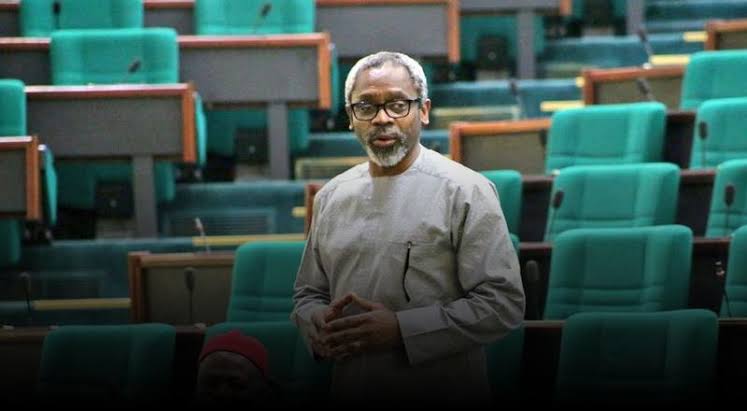
Gbajabiamila At 57: Celebrating A Man On Mission For A Greater Green Chamber | By Abba Dukawa

Published

on

IF truth be told, speaker Femi Gbajabiamila is an embodiment of a good head, a good heart and of course a literate tongue having been privileged to have experienced the best in terms of education locally and internationally. And the result so far so good has been delivery of democratic dividends and meeting expectations of his constituency teeming population and now by  extension the whole country.

Now, some people may argue that it is too early in the day to shower accolades on the Rt. Honourable Speaker but the popular expression that the signs of a beautiful Friday will be noticed from the preceding Wednesday clearly exemplifies the actions he has taken so far by since he effectively took charge of the affairs of the House of Representatives on June 11, 2019.

Like a greyhound after a rabbit, Femi Gbajabiamila  came out of the take off point with some decisive pronouncements and moves that disabused the minds of some doubting Thomases that he is actually prepared and ready for the tasks of administering the House.

I have had the unique privilege of watching his activities as a floor member since 2009.  he took over the most tasking and challenging job in the the country and one thing that is constant is that his passion, zeal and energy for a greater Nigeria remain undebatable. I mean people could recall how the Gbajabiamila vigorously campaigned across the geopolitical during the electioneering and the zestfulness on display when he met with the relevant groups and organisations across.

The good thing, however, is that he  has not stopped. In fact, he made it abundantly clear in his inaugural speech.

The Contest for the Speakership of this 9th Assembly is now over and its time to move on. Our country is presently confronted with a myriad of problems and it is our responsibility as members of this institution to set aside political , ideological and other differences that may distract us from the assignment the Nigerian people have sent us here to perform.  There is much more that unites us than divides us.

There is much work to be done and we must now pull together, roll up our sleeves , settle down and attend to the peoples business. Whatever political party each one of us may belong, we must be conscious of the fact that Nigerians are truly desirous of good governance and are looking to us to be the agents that will through meaningful legislation combat security, poverty, corruption  and other problems and contradictions that have held our country back and stunted our development.

It  is this message of unity and coming together that informed the theme of our campaign…NATION BUILDING, A JOINT TASK.” For many who rightly belong to the school of thought that talk is cheap and who were not ecstatic about speaker’s brilliant inaugural speech, which by the way he eloquently delivered, the steady implementation since his assumption can be said to be a worthy consolation.

Another critical point which I must mention is indeed,  Speaker Femi’s performance as floor member, minority and majority leader  is as a result of a combination of his background and his leadership skill, sharpen up over time from experiences gathered in various positions he held both as a member of the House and as a lawyer. In his acceptance speech he said 9th Assembly under his leadership is going to be a House of reforms or if you like a reform Assembly.

The reforms will be dished out piecemeal and at intervals so as not to shock the system.  Moving forward therefore my dear colleagues, it will not be business as usual and we will be shaking the table just a little. We will be introducing various reforms that will reposition this institution but please rest assured that they will be for the greater good.” he said.

Gbajabiamila is the most experienced and prepared candidate in the 9th national assembly speakership race. Since becoming a member in 2003, Femi has sponsored some of the most critical bills that have been debated on the floor of the House of Representatives. He has demonstrated his true passion for issues concerning his constituents and Nigeria as a whole; he worked passionately to address matters of great concern to him and quickly earned a reputation as a true and brilliant legislator. Speaker Gbajabiamila had sponsored the highest number of bills in the National Assembly amongst all the legislators.

In the last 16 years he have been a principal officer for 12years.Gbajabiamila’s occupied the office of leader of the opposition and successfully moved my party from opposition to majority in the House and thereafter assumed the position of House Leader, placing him in a uniquely advantageous position of understanding the nuances and intricacies of this very critical arm of government and the need for its independence and at same time interdependence with the executive. This accorded him to gained wealth of experience and with his burning desire for good governance that wanted to bring to the table.

He possesses the priceless acumen needed to take up this task and another pivotal point that cannot be taken away is his political worth to his party and Nigeria. He has manifested a sophisticated political capacity of which only a few can boast.  In 2014 as the Leader of Opposition in the House of Representatives led his colleagues into the merger that gave birth to the All Progressives Congress (APC). Under Femi’s leadership of the APC caucus in the House, the party increased its numbers, earning them the majority.

Speaker Femi Gbajabiamila is a personification of humanity, a selfless leader and an uncommon Nigerian, who thinks more about the other person’s feelings than of his own.  . I wish you sound health and wisdom to deliver on the mission #ForAGreaterHOR.


Abba Dukawa writes from Kano State

Comments

Opinion

The Silent Thief in Nigeria’s Petrol Stations | By Solomon Oroge

Published

on

File photo of Dr. Solomon Oroge

• How systemic fraud is draining billions, weakening businesses and threatening the future of the downstream petroleum sector

The Nigerian petroleum retail industry remains one of the most important drivers of economic activity in the country. Every day, millions of litres of petrol, diesel and other petroleum products are sold through thousands of filling stations spread across cities, towns and rural communities.

To many Nigerians, a filling station is simply a place where vehicles are refuelled. To investors and operators, however, it is a complex business environment involving inventory management, transportation logistics, cash handling, procurement processes, technology systems and human resources. When properly managed, petrol retailing can be highly profitable. When poorly controlled, it can become a breeding ground for one of the most dangerous threats to business sustainability – systemic fraud.

Unlike isolated incidents of theft or misconduct, systemic fraud is far more sophisticated and destructive. It is not the work of a single dishonest employee acting alone. Rather, it is a pattern of fraudulent activities that gradually becomes embedded within an organisation’s operational processes and culture. Over time, such practices become normalised, tolerated and, in some cases, deliberately protected by those who benefit from them.

This is what makes systemic fraud particularly dangerous. It often operates quietly beneath the surface while management remains focused on sales growth, market expansion and operational targets. By the time the full extent of the problem becomes apparent, substantial damage may already have been done.

Across Nigeria’s downstream petroleum sector, systemic fraud continues to drain significant resources from businesses every year. Revenue leakages occur through fuel diversion, stock manipulation, sales suppression, procurement abuses, payroll fraud, inventory theft and cash skimming. In many organisations, these activities take place daily, gradually eroding profitability and shareholder value.

One of the most common schemes is fuel diversion during transportation. Products that leave depots in approved quantities may arrive at their destinations with unexplained shortages. Sometimes these losses are disguised as operational variances or transportation-related discrepancies. In reality, they may be the result of organised siphoning carried out during transit.

Another common practice involves pump calibration manipulation. In such situations, customers unknowingly receive less fuel than the quantity displayed on the dispensing pump. While the discrepancy may appear insignificant on a single transaction, the cumulative financial impact can be enormous when repeated hundreds of times daily across multiple stations.

Tank dip manipulation represents another major challenge. Deliberate alteration of stock measurements allows losses to be concealed, making it difficult for management to accurately determine actual inventory positions. Similarly, sales suppression occurs when transactions are intentionally omitted from official records, creating opportunities for revenue diversion and cash theft.

Procurement fraud, inflated maintenance costs, ghost workers on payrolls, fictitious vendors and collusion between employees and suppliers have also become recurring concerns within many petroleum retail operations.
The unfortunate reality is that systemic fraud thrives where governance is weak, accountability is limited and internal controls are either poorly designed or inadequately enforced. High daily cash transactions, large fuel inventories, multiple operating locations and limited real-time supervision further increase exposure to fraud risks.

The warning signs are often visible long before losses become catastrophic.

Persistent cash shortages, unexplained stock variances, delayed banking, repeated customer complaints, inflated procurement costs and declining profitability despite rising sales should immediately attract management attention. Likewise, employees who resist transfers, refuse annual leave, display unusual secrecy or maintain lifestyles far above their legitimate income levels may warrant closer scrutiny.

Many organisations make the mistake of assessing fraud only from the perspective of direct financial losses.

However, the true cost extends much further.

Systemic fraud distorts management information and weakens decision-making. It undermines operational efficiency, damages corporate reputation, attracts regulatory sanctions and erodes customer confidence. Investors become wary, employees lose morale and businesses struggle to achieve sustainable growth.

Perhaps most damaging is the fact that fraud weakens trust—the single most important asset any organisation possesses. Once trust is compromised, rebuilding it becomes both difficult and expensive.

Addressing this challenge requires a shift from fraud detection to fraud prevention.

The most successful organisations understand that preventing fraud is significantly less costly than investigating fraud after it has occurred. Prevention begins with strong corporate governance, ethical leadership and a clear commitment to accountability at every level of the organisation.

Technology has also become an indispensable ally in the fight against fraud.

Automated tank monitoring systems, CCTV surveillance, GPS tanker tracking, integrated enterprise resource planning systems and data analytics tools provide organisations with greater visibility over operational activities and help identify unusual patterns before they escalate into major losses.

Yet technology alone cannot solve the problem.

Organisations must also invest in people, processes and culture. Employees should receive regular ethics training.

Whistleblower mechanisms must be strengthened and protected.

Responsibilities should be properly segregated and surprise verification exercises should become part of routine operational oversight.

In this regard, Internal Audit has a strategic role to play.

Modern Internal Audit functions must evolve beyond traditional compliance checks and become proactive partners in fraud risk management. Through fraud risk assessments, data analytics, control testing, fraud mapping and unannounced verification exercises, Internal Audit can provide independent assurance that critical controls are operating effectively and that emerging fraud risks are identified before they become crises.

To strengthen organisational resilience against systemic fraud, the Sedabuk Fraud Risk Management Model (SFRMM) was developed as a practical framework for fraud prevention, detection, investigation and sustainable risk management within petroleum retail operations.

The model is built around seven strategic pillars: Surveillance, Fraud Risk Assessment, Robust Internal Controls, Monitoring and Data Analytics, Management Accountability, Detection and Investigation, and Ethical Culture and Employee Engagement. Together, these pillars create a continuous cycle of identifying risks, implementing controls, monitoring activities, detecting anomalies, conducting investigations and driving continuous improvement.

The message for operators in Nigeria’s downstream petroleum sector is simple but urgent: the greatest threat to profitability may not be competition, inflation or market volatility. It may well be the silent leakage of resources occurring within their own operations.

As the industry continues to evolve under ongoing reforms and changing regulatory expectations, organisations must recognise that sustainable profitability is achieved not merely by increasing sales but by protecting every litre of fuel, every naira of revenue, every operational process and every stakeholder’s trust.

Companies that embrace ethical leadership, strong governance, proactive Internal Audit, technology-enabled monitoring and a zero-tolerance culture towards fraud will not only reduce losses but also strengthen stakeholder confidence, improve operational efficiency and position themselves for long-term success.


Dr. Solomon Oroge, PhD, is an accomplished professional in Internal Audit, Risk Management, Corporate Governance, Compliance and Fraud Risk Management with extensive experience in Nigeria’s downstream petroleum industry.

He is the developer of the Sedabuk Fraud Risk Management Model (SFRMM), a proprietary framework designed to help petroleum retail organisations proactively identify, prevent, detect and manage systemic fraud risks.

Oroge can be reached via the following contact details: saoprofessional@gmail.com or +234 806 512 6192.

Continue Reading

Opinion

State Police, Local Government Autonomy: Answers to Nigeria’s Lingering Questions | By Titilope Gbadamosi

Published

on

File photo of Dr. Titilope Gbadamosi, the Special Assistant on Youth Initiatives (Monitoring and Delivery) to President Bola Ahmed Tinubu.

Almost every democratically elected administration in Nigeria has had to grapple with pockets of insecurity in one form or another. Nigerians have watched uprisings metamorphose into banditry and terrorism, as though every administration had its own uniquely tailored brand of insecurity, defined by the modus operandi of these vicious elements.

The faces change, the methods change, but the burden on whoever occupies the highest office in the land has remained heavy and constant.

Just two administrations ago, during President Goodluck Jonathan’s tenure, we witnessed the horror of the abduction of the Chibok girls and explosives going off in public spaces in Abuja, the nation’s capital. Every well meaning Nigerian was worried, and nowhere felt truly safe. The President’s seat was not the most desirable at the time, and it was clearly a difficult job.

President Muhammadu Buhari’s administration had its own share, mostly in the form of clashes between farmers and herders, driven by grazing routes lost to farming, droughts pushing herders toward greener pastures, and old accommodations between communities slowly breaking down.

I recall quite vividly, while serving as Special Assistant to the former Governor of Oyo State, the late Senator Abiola Ajimobi, joining the head of our team in several peace talks with farmers, traditional rulers, and the Hausa and Fulani community in the state. One lesson from those rooms has stayed with me ever since. The people who understood the grievances, the terrain, and the actors were all local, yet the command of security sat far away in Abuja. That gap is the question every administration has struggled to answer.

Today, President Bola Ahmed Tinubu is in charge, and Nigerians who are students of history watched to see what shape insecurity would take and, more importantly, what this President would do differently. In recent development, the country received an answer that previous decades only debated.

On June 11, following the President’s formal request to the National Assembly to restructure our security architecture, the House of Representatives passed the constitutional amendment to establish state police, with 289 members voting in support and barely a voice against, while the Senate works to complete passage before year end. Today June 12th,2026, in his Democracy Day address, the President spoke plainly: the insecurity we face is partly the product of collapsed grassroots governance, and his administration remains committed to financial autonomy for our 774 local government councils. There it is, a two pronged solution: state police and true local government autonomy.

The first prong closes the gap I saw in those Oyo State peace talks. The amendment to Section 214 of the Constitution creates a dual policing structure under which each state may establish its own force. Security decisions will now be taken by those who know the terrain, the actors, and the grievances at first hand.

To his credit, the President did not merely champion the idea; he asked the National Assembly to institute controls to prevent abuses, the mark of a leader interested in a reform that endures rather than one that backfires. All of this rides on the largest security investment in our history, a 5.41 trillion naira commitment in the 2026 budget and over 50,000 new police officers approved for recruitment.

The second prong puts resources where the new responsibility will live. Since the Supreme Court ruled in July 2024 that federation allocations belonging to local governments must reach them directly, monthly allocations to the 774 councils have grown from roughly 387 billion naira in March 2025 to nearly 530 billion naira by September 2025. The money has never been the problem; control of it was. By pressing autonomy to its conclusion, this administration is returning both funds and accountability to the communities where insecurity actually begins, so that the grassroots governance whose collapse the President identified can finally be rebuilt.

So who wins in all of these? Nigerians win, because security decisions and development funds will finally live where the people live. Governors win the powers they have long demanded, and with them the responsibility they can no longer pass to Abuja. And the country wins a President willing to attempt what others only discussed. The President reminded us on Democracy Day that Nigerians bend and bleed but do not break. With these two reforms, we may finally stop having to prove it so often.


Dr. Titilope Gbadamosi  is the Special Assistant on Youth Initiatives (Monitoring and Delivery) to President Bola Ahmed Tinubu.

Continue Reading

Opinion

Nigeria’s Insecurity: Why the System Rewards Reaction, Not Prevention

Published

on

The most foolish person in a burning house is not the one who cannot find the exit. It is the one who knew the house would burn, watched it happen, and only ran when the ceiling collapsed. That is Nigeria’s governance posture toward insecurity—a pattern so consistent that it has become normalized.

“Ikú tó pa ojúgbà ẹni, òwe ló fi pa. (The death that kills your neighbour is a proverb directed at you).

The bandits did not simply arrive. They sent warnings ahead of them through a trail of violence that crossed state lines and appeared in every massacre headline we filed away as someone else’s problem.

When Insecurity Was Still “Someone Else’s Problem”

When the North was burning and the Middle Belt bleeding, the South West treated it as distant noise. Kwara became the first warning sign—the bridge between North and South—slowly slipping under the shadow of insurgency. The question every serious observer should have asked was simple: what happens when it crosses the border?

South West governors issued statements—careful, brief, and reactive. None moved with the urgency the threat demanded. Before long, violence arrived at our doorstep: herder brutality in Oke-Ogun, attacks in Oyo and Ekiti, kidnappings along the Ibadan–Ijebu-Ode expressway, and forest camps emerging in Ondo.

The warning signs had matured into reality, yet we were still searching for an exit strategy that should have been built years earlier.

The Problem: We Only Count the Dead

In safety performance management, there is a critical distinction between lagging indicators—outcomes after failure (deaths, destruction, losses)—and leading indicators, which measure prevention before failure occurs.

Aviation, oil and gas, and other high-risk industries understand this clearly: a system that obsesses over lagging indicators will always arrive after the accident.

Nigeria’s security governance is built almost entirely on lagging indicators. We count attacks after they happen. We rebuild after a collapse. We mourn after preventable deaths.

We rarely ask:

How many attacks were prevented this quarter?

How many threats were neutralized before execution?

How many cells were dismantled at the planning stage?

We do not know the answers—because we are not measuring them. The system was never designed to prevent. It was designed to respond: loudly, visibly, expensively, and always too late.

Another Base. The Same Question Nobody Asks

The presidency is reportedly considering a military base in Oriire Local Government Area of Oyo state. It is a familiar pattern: a major security incident, public outrage, and an institutional response designed to signal seriousness.

But the critical question remains unanswered: what has been the leading-indicator performance of existing bases?

How have long-standing military formations in places like Jos, Benue, and Zamfara—some active for over two decades—actually shifted the security outcome?

A military base without actionable intelligence is a stationary slaughter ground for soldiers. It does not prevent attacks; it often becomes a reactive outpost in a repeating cycle: attack, deployment, statement, investigation, and then silence—while underlying threat networks remain intact.

The Incentive Structure Behind the Chaos

The deeper issue is not the capability of security forces. It is the incentive structure of the system.

When leadership is judged only by incidents that have already occurred, governance shifts from prevention to performance management of failure. The objective becomes managing optics, not reducing probability.

Nigeria’s security budget has grown significantly over the past decade, yet insecurity has worsened. Kidnappings have become more brazen. Why? Because funding is justified by the persistence of the crisis, not its resolution.

If the problem is solved, what justifies the next budget cycle?

For years, decentralization has been proposed as the structural reform that could change the system—but it remains trapped in political rhetoric. Why? Because decentralization disperses power, and power in Nigeria’s political economy is not dispersed. It is concentrated.

Sixteen Days. Full Stop.

Forty-six children and teachers were kidnapped in Oriire. It reportedly took sixteen days for the presidency to authorize a specialized rescue framework.

Sixteen days before the Commander-in-Chief treated the abduction of forty-six human beings as a crisis requiring formal executive activation.
But responsibility in moments like this is not singular.

The Oyo State Governor, by constitutional convention regarded as the Chief Security Officer of the state and a recipient of security votes, also occupies a central coordinating role in the security architecture of the state. Within a crisis of this scale, expectations of rapid intergovernmental coordination, visible command urgency, and sustained pressure on federal response mechanisms are not optional, hey are inherent to the office.

Yet, the response cycle, from abduction to high-level coordinated action and physical engagement with affected communities, unfolded at a pace that raised legitimate public concern about the speed and intensity of institutional reaction.

By the time visible field visits and coordinated engagements occurred, the delay had already become part of the public record of the crisis itself—shaping perception as much as the incident shaped fear on the ground.

In a functional security system, crisis response is measured in hours, not days. Not for symbolism, but because time directly affects outcomes: every passing hour in an active kidnapping reduces the probability of safe recovery and increases the leverage of perpetrators.

Sixteen days, therefore, is not merely a lapse in timing. It reflects a deeper structural problem—where urgency is often declared after pressure builds, rather than operationalized when intelligence first breaks.

And in that gap between incident and action, citizens are left to absorb the consequences of delayed coordination across all tiers of authority.

The Verdict

Nigeria does not primarily need more military bases. It needs a new security measurement architecture—one that prioritizes intelligence conversion rates, early-warning response times, and pre-emptive disruption metrics over post-incident operations.

Every threat must be treated as time-sensitive, where minutes and hours determine outcomes—not weeks and statements.

Most importantly, citizens must shift the accountability question:

Not only “why did the attack happen?”

But “why was it not prevented?”

Nigeria’s security challenge is ultimately a leadership and systems failure—an institutional preference for reaction over prevention, because prevention is politically invisible.

You cannot hold a press conference about the attack that never happened.

Until this reality is named and confronted with precision, the cycle will continue.

Continue Reading

Advertisement

Entertainment

Advertisement

MegaIcon Magazine Facebook Page

Advertisement

MEGAICON TV

Advertisement

Trending