Connect with us

News

Flood: Oyo govt reveals LGs on red alert

Published

on

•asks residents to take precautionary measures seriously


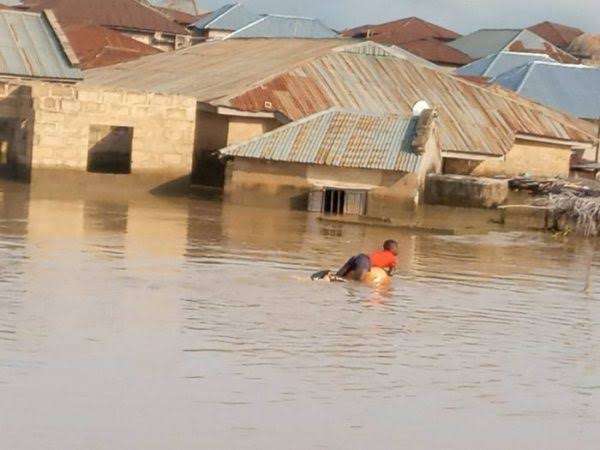
The Oyo State Government, on Wednesday, urged residents of the state, especially those in flood-prone local government areas, to take precautionary measures in respect of the flood alert from the administration.

The state government, which spoke through the Secretary to the State Government, SSG, Mrs Olubamiwo Adeosun, stated that every necessary step must be taken to avoid disaster.

According to her, to forestall flooding and its attendant effects, residents of the state, especially those in Ona Ara, Lagelu, Oyo East, Kajola, Egbeda, Ogbomoso South, Iseyin, Ibarapa North, Ibadan South-West, Ibadan North-West and Ibadan South-East Local Government Areas, are required to clear surrounding and street drain channels and avoid dumping wastes improperly.

“It is even of paramount importance that our people should take necessary precautions during heavy rainfall or in the event of flooding. People living in houses built along floodplains should relocate to safer places, avoid the use of low bridges and culverts when the rain is persistent, and whenever there is rainfall, people should avoid staying under high tension electricity installations,”she said.

A statement by the Chief Press Secretary to Governor Seyi Makinde, Mr. Taiwo Adisa, quoted the SSG as adding that residents must also ensure “that each household keeps a dustbin and patronizes government-approved waste disposal contractors, avoid building on floodplains, obtain building approvals from relevant statutory bodies before commencing building, among others.”

Mrs. Adeosun stated that as part of efforts to put an end to the menace of flooding in the state, the government has given its full backing to the total implementation of the Ibadan Urban Flood Management Project, ( IUFMP), the state-owned flood risk mitigation project with funding and technical assistance from the World Bank.

She noted that the project has constructed ultramodern hydraulic structures at 17 locations in Ibadan as well as construction of extensive drains/adjoining roads to the structures, adding that the rehabilitation of the 78-year-old Eleyele Dam recently commissioned by the governor is also part of the efforts to contain flooding.

According to the SSG, the warning alert became imperative following the Annual Flood Outlook (AFO) and Seasonal Rainfall Predictions (SRP) released by the Nigeria Hydrological Services Agency (NIHSA) and the Nigerian Meteorological Agency (NiMet) respectively, which, she said, signposted the state among those prone to some extent of flooding in 2020.

She said: “Earlier this year, the Nigeria Hydrological Services Agency (NIHSA) and the Nigerian Meteorological Agency (NiMet) had released their Annual Flood Outlook (AFO) and Seasonal Rainfall Predictions (SRP) respectively, both of which pinpointed Oyo State among the states that are prone to some extent of flooding in the Year 2020. The reports went further to outline the specific local government areas likely to experience flooding, which in the case of Oyo State include Ona Ara, Lagelu, Oyo East, Kajola, Egbeda, Ogbomoso South, Iseyin, Ibarapa North, Ibadan South-West, Ibadan North-West, and Ibadan South-East.

“More recently  in June 2020, a follow-up correspondence was done to the Office of His Excellency by the National Emergency Management Agency (NEMA), charging our state to intensify its flood risk mitigating measures ahead of the predicted heavy downpours.

“The vulnerability of Ibadan and some other towns in Oyo State to river and urban flooding is induced by our towns’ topographic terrain; the problem of indiscriminate waste disposal and building of houses on flood plains.

“There is the tendency that the foregoing could even be aggravated by the universal menace of global warming and climate change.

“It is in the light of this that the government of the day in Oyo State has given its full backing to the full implementation of the Ibadan Urban Flood Management Project, the state-owned flood risk mitigation project with funding and technical assistance from the World Bank.

“Under this Project, the highly capacious ultramodern hydraulic structures constructed at 17 different locations of the Ibadan Metropolis, complemented by the extensive drains and approach/adjoining roads to them, are already completed and functional, thus helping to rid those hitherto flood-ravaged areas of incessant flooding and the attendant calamities that came in its wake.

“On a larger scale, processing of the proposed channelization of major rivers and water channels in Ibadan under the IUFMP scheme, is at an advanced stage, with some of the works already awarded to reputable contractors. This implies that major water courses in Ibadan like Ona, Ogbere, Orogun, Kudeti, Agodi Channel, etc. will soon undergo major channelization which, when completed, would boost the runoff draining capacity of the city.

“Beyond the massive hydraulic interventions listed above, the Oyo State Government has revved up the machinery of averting the predicted flooding across all the cities, towns and villages of Oyo State. As we speak, a comprehensive Radio and Television campaign is running on some major channels in the state, the thrust of which message is to enjoin our people to clear neighbourhood drains, avoid improper waste dumping, shun building on waterways, move out of flood-prone areas, avoid wading into flooded spots, etc.

“Also, earlier today, a Multi Stakeholders’ Meeting was held in this same location to galvanize stakeholders from some of the identified LGAs, LCDAs, Communities, as well as relevant MDAs and other regulatory agencies on their roles and responsibilities towards this new charge. That way, we will be able to present a common front and jointly avert another crisis within a pandemic.

“May I now use the opportunity presented by this forum to charge our people, both individually and collectively, to take the flood advisories to heart and commit wholeheartedly to their messages. We are required now, more than ever before, to clear our surrounding and street drain channels, avoid dumping wastes improperly, ensure that each household keeps a dustbin and patronizes government-approved waste disposal contractors, avoid building on floodplains, obtain building approvals from relevant statutory bodies before commencing building, among others.

“It is even of paramount importance that our people should take necessary precautions during heavy rainfall or in the event of flooding. People living in houses built along floodplains should relocate to safer places, avoid the use of low bridges and culverts when the rain is persistent, and whenever there is rainfall, people should avoid staying under high tension electricity installations.

“As a responsible government, the Engr. Seyi Makinde administration cares about the safety of the lives and property of our citizens and would not want them to suffer avoidable losses.”

The government called on all media houses in the state, which it noted are critical stakeholders and co-partners for development, to make dissemination of warning messages on flooding part of their daily routine, to safeguard the state from calamities, saying “the situation at hand demands our proactive response and collaborative effort.”

 

Comments

News

IGP Disu seeks NIPR partnership to boost public trust in police

Published

on

NIPR President, Dr Ike Neliaku, in a handshake with the Inspector-General of Police, Olatunji Disu, at the Force Headquarters in Abuja on Tuesday.

The Inspector-General of Police, IGP Olatunji Disu, has called for stronger collaboration between the Nigeria Police Force (NPF) and the Nigerian Institute of Public Relations (NIPR) to enhance public confidence in the police.

The IGP made the call on Tuesday when he received a delegation of the NIPR, led by its President and Chairman of Council, Dr Ike Neliaku, on a courtesy visit to the Force Headquarters, Abuja.

According to a statement issued by the Force Public Relations Officer, CSP Ani Iniedu, the IGP emphasised the importance of effective communication, professionalism, transparency and fairness in strengthening the relationship between the police and members of the public.

Disu noted that every police officer was an image-maker of the Force, adding that the conduct of personnel in their daily interactions with citizens had a direct impact on public perception of the police.

He said the Nigeria Police Force (NPF) remained committed to policing by consent and promoting a service-oriented policing culture built on professionalism, empathy, accountability and respect for human rights.

The IGP also sought the support of the NIPR in providing specialised communication training for police personnel and developing a coherent communication framework that would effectively communicate the sacrifices and contributions of police officers to public safety and national security.

Earlier, Neliaku commended the IGP for his professional accomplishments and briefed him on Nigeria’s hosting of the 2026 World Public Relations Forum and Africa Charter Forum.

The international event is scheduled to hold at the Transcorp Hilton, Abuja, and is expected to attract more than 3,000 delegates from 126 member countries of the Global Alliance for Public Relations.

The NIPR delegation also sought the support of the Nigeria Police Force in security planning and coverage for the event.

Neliaku further invited the IGP to serve as a keynote speaker at the forum and encouraged police officers to register and participate as delegates.

The delegation included the Secretary-General of the African Public Relations Association, Dr Omoniyi Ibietan; Dr Suleiman Haruna; Mrs Maryam Sanusi; Mrs Olubunmi Badejo; Commandant Olusola Odumosu; Chief Uzoma Oyegbadu; Chief Moji Makanjuola; Mr Stanley Ogadigo and other members of the institute.

Iniedu said the meeting reflected the commitment of the  Police Force to building productive partnerships with professional bodies and other stakeholders to strengthen public trust, enhance public safety and promote national security.


Continue Reading

News

Inflation drops marginally to 15.39% — NBS

Published

on

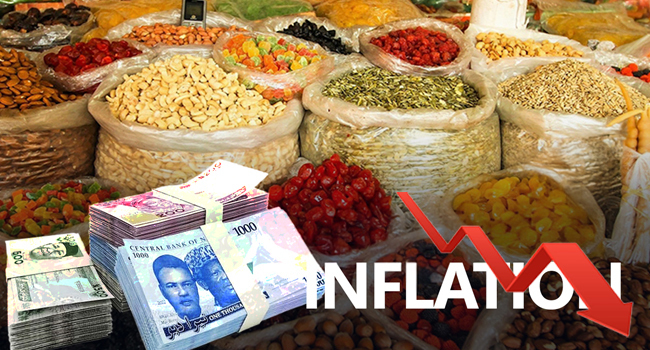
Nigeria’s headline inflation rate fell marginally to 15.39 per cent in August 2026 from 15.43 per cent in July, according to the National Bureau of Statistics.

The NBS disclosed this in its Consumer Price Index released on Tuesday, saying the latest figure represented a 0.04 percentage point decline from the previous month.

The statistics agency, however, reported a sharper decline in the month-on-month inflation rate, which dropped to 0.71 per cent in August from 1.57 per cent in July.

The month-on-month rate, according to the bureau, declined by 0.86 percentage points compared with the July figure.

The NBS explained that the development indicated that the rate at which the average price level increased in August was slower than that recorded in July.

The latest data also showed a significant moderation in food inflation, which stood at 19.57 per cent year-on-year in August.

The figure was substantially lower than the 25.30 per cent recorded in August 2025.

On a month-on-month basis, food inflation fell to 1.02 per cent in August from 5.56 per cent in July, representing a decline of 4.55 percentage points.

The NBS said the development showed that food prices were still rising, but at a slower rate during the month under review.

It attributed the decline largely to changes in the average prices of a number of food items, including palm oil, carrots, pepper, onions, cassava flour, beef, yam flour, water yam, melon (egusi), fresh ginger, fresh fish, Irish potatoes, wheat grain, frozen chicken and turkey meat.

At the state level, Adamawa recorded the highest year-on-year food inflation rate in August at 38.85 per cent.

It was followed by Zamfara with 37.96 per cent and Bayelsa with 36.20 per cent.

On the other hand, Borno recorded the lowest year-on-year food inflation rate at -4.04 per cent, followed by Jigawa at -0.23 per cent and Kebbi at 3.47 per cent.

The month-on-month figures presented a different picture, with Katsina recording the highest food inflation rate at 9.48 per cent.

Rivers and Osun followed with 8.86 per cent and 8.32 per cent respectively.

Taraba recorded the lowest month-on-month food inflation rate at -12.42 per cent, followed by Borno at -12.15 per cent and Bauchi at -8.88 per cent.

The latest figures indicate a moderation in the pace of price increases, particularly in the food sector, although the NBS data show that consumers continue to face varying price pressures across the states.

Continue Reading

News

Nigeria’s Oil Output Rises to 1.68m Barrels Per Day

Published

on

Nigeria’s crude oil and condensate production rose to 1.68 million barrels per day in August 2026, representing a 0.4 per cent increase from the 1.67 million barrels per day recorded in July.

The Nigerian Upstream Petroleum Regulatory Commission disclosed this in its latest production report released on Sunday.

Excluding condensate, the country produced an average of 1,500,190 barrels of crude oil per day in August, allowing Nigeria to meet its Organisation of Petroleum Exporting Countries quota for the fourth consecutive month.

Daily combined crude oil and condensate production ranged between 1.64 million barrels and 1.71 million barrels during the month under review.

A breakdown of production by terminals showed that Bonny Terminal recorded the highest output at 320.04 thousand barrels per day, followed by Forcados Terminal with 317.40 thousand barrels per day.

Qua Iboe Terminal recorded an average production of 171.72 thousand barrels per day, while Escravos Oil Terminal posted 131.71 thousand barrels per day.

Bonga ranked fifth among the highest-producing terminals, with an average output of 92.50 thousand barrels per day.

The NUPRC attributed the modest improvement in August production largely to the resolution of operational challenges involving the Single Buoy Mooring at the Erha field.

The commission said the challenges had adversely affected production in the preceding month.

“The restoration of normal evacuation and production operations at the asset contributed positively to overall production volumes during the period under review,” the commission’s spokesperson, Eniola Akinkuotu, said in a statement on Sunday.

The regulator added that production activities across most other producing assets remained relatively stable during the month.

“Production activities across most other producing assets remained relatively stable, with operators sustaining implementation measures aimed at optimising production efficiency, maintaining asset integrity, and minimising operational disruptions,” the statement said.

The latest figures indicate a continued improvement in Nigeria’s oil production, with the country maintaining its OPEC quota compliance for the fourth consecutive month.

Continue Reading

Trending

All Rights Reserved. Copyright © 2026 MegaIcon Magazine