Connect with us

Opinion

Dowen College, cults and the beast in our children’s hearts

Published

on

In the last one week in the American and Nigerian cities of Michigan and Lagos, 1983 Nobel Literature winner and British author, William Golding, was literally woken up from the dead. Golding, novelist, playwright and poet, wrote the highly celebrated novel, Lord of the Flies. 

If you underestimate the holy writ’s admonition that foolishness resides (is bound up) in the heart of a child, then you need to read this Golding’s 1954 debut novel. Woven round myriad thematic concerns, chief of which was the innate bestiality in man, Lord of the Flies, as a name, derived its etymology from the word, which in Latin means Prince of Devils and in Hebrews, a Philistine god, the Beelzebub.

It is the story of a group of British schoolboys, while Britain was entrapped in a raging war, who had the plane evacuating them shot down and were lucky to survive in a deserted tropical island. Stranded on this desolate and uninhabited island, the boys then resolved on the need, which eventually turned disastrous, to govern themselves. This led them to the process of formation of rules and a system of administration of their island. However, lacking the civilizing impulse of an adult, they eventually relapsed into their Hobbesian state of nature, exhibiting feral, warlike behavior, violence, brute force and cannibalism, with Golding teasing out the theme of man’s fundamentally savage human nature from the novel.

Last Tuesday, three students were killed in a shooting which occurred at Oxford High School, Oxford, Michigan in the United States. The Oakland County Sheriff’s Office identified the victims as Tate Myre (16), Hana St. Juliana (14), and Madisyn Baldwin, (17). Eight other victims were shot but sustained various degrees of injuries, including a teacher in the school. Of the lot, three’s cases were dire, including a 15-year-old boy who got shot in the head, a 14-year-old girl who was hit by  bullets in the chest and is on a ventilator, as well as a 17-year-old girl, who was also shot in the chest.

The students were shot by their fellow student, Ethan Crumbley, a 15-year-old sophomore, in whose custody a semiautomatic handgun was found as at the time of his arrest.  Police’s preliminary investigation revealed that the instrument of violence, the gun, was purchased by Ethan’s father on November 26, with three 15-round clips. Police also said that the suspect had recently posted photos on social media of himself shooting at imaginary targets and from investigations, the weapon of crime appeared similar to the gun Ethan practiced with. Immediately, James and Jennifer Crumbley, parents of the teenager, who has since been charged in the shooting, were arrested and charged with four counts each of involuntary manslaughter.

In Lagos, Nigeria, one of the raging subjects of the people’s anger today is the death of Sylvester Oromoni (Junior), a 12-year-old pupil of elite Dowen College, in the Lekki area of Lagos State. Two diametrically opposed allegations have been made about circumstances surrounding his death. While the family claimed that the lad sustained fatal injuries from wounds sustained from his colleagues’ attempt to forcefully initiate him into a school cult, hinging their claims on the disclosures made by the now deceased boy, the school claimed that Oromoni died from injuries he sustained from a football game.

The above two cases are one of the many incidents of adolescent asocial behavior that the world is grappling with today. Not strictly a new phenomenon, antisocial behavior operates as a cluster of related behaviours which range from aggression, violence, temper tantrums, lying, burglary, stealing, substance abuse, early sexual behavior, among others, rampant among adolescents. Though psychologists say the behavior is normative and is one of the features of certain ages of child development, these malevolent manifestations among children act as strong predictors of potential criminal behavior in adulthood.

Many of the adults who eventually grew into responsible parents and citizens today were at some point in their developmental growths notorious antisocial elements who gave their parents and society headaches. However, the reality is that, a huge chunk of these adults, weaned from the ashes of these antisocial behaviours, never recovered from the blows of the effects of their antisocial behavior. By the time they attempt to take up their destinies in their hands, it is almost always too late, thereby consigning them to the heaps and dustbins of life.

So many reasons have been adduced as reasons why children, many of whom hail from responsible homes, dither into reprehensible antisocial behavior. While peer group pressure and pollution by playmates who themselves are products of fractured homes, are factors that loom large in reasons why children go off the handle in their adolescence, parental influence is another major factor. Studies have revealed that antisocial parents, in their display of these behavioural patterns at home, rub off hugely on their wards who internalize these behaviours, unbeknown to them. Thus, psychologists have established that possessing an antisocial parent is a major force in the prediction of violent or serious delinquency found in adolescent and young children.

Lord of the Flies and the holy writ earlier cited above tell us that within the child is resident innate bestiality that parents and society must pertinently and painstakingly tame in a child. The problem is that parents have very wrong conception of the period of childhood and adolescence. They misinterpret the period as a time when the child is naïve and incapable of taking on delinquent behaviours. This is why parenting is a big job, something in the mould of the structural platform of a house construction which bespeaks the kind of super-structural objects that may be placed on the foundation. In the Michigan shooting event, unknown to James and Jennifer Crumbley, the couple was the ethos that Ethan learnt by rote. When they thought he was inattentive or absent from occurrences in his surroundings, he was fascinated by the piece of metal that his father had just purchased and perhaps secretly wished that someday, he would get to that same level of accomplishment of wielding a weapon that conferred on him power over the unknown other. The fatal shooting at Oxford High School, Michigan, for Ethan, was the culmination of that dream, the power to subjugate the other under his awesome powers.

The holy writ earlier cited was not oblivious of the constitutive innate bestial nature of the child. It recommended that “the rod of correction shall drive it (the Beelzebub) far from him.” Traditional African society also learnt early enough that the heart of the child is stony and only chastisement could soften it. Unfortunately, the technological modern age has purged punishment from the list of objects that can be used to rid the heart of the child of the Lord of the Flies. In some western societies, it is even criminal, a violation of the child’s rights, for parents to administer cudgel on their children. This has made the Beelzebub in the children to acquire multiple notorieties like the biblical Madman of Gadarene and the inability of society to dimension its bestial inclinations. Technology has further worsened the lot of the children, literally ensuring that a community of maggots meanders out of the bodies of our children. They have access to occurrences in practically all parts of the world within a twinkle of an eye and, rather than being a blessing, this exposure has further aggravated the rot in their hearts.

The world is witnessing a complex metastasis of violence, in nodes that are unprecedented. Weapons are acquiring frightening sophistication and small arms are as widespread as mushroom on the farm. Our children, whose brains are admittedly more sophisticated than ours, their parents, are moving with the tide of a sophisticated world. Deploying technology and the wizardry of their brains, they get involved in antisocial behaviors and crimes which, in our wildest imaginations, we cannot grapple with or anticipate in them.

While not prejudging what the outcome of investigations into the Dowen College death from alleged cult initiation will be, our society is just crying where we should exhibit admittance of our errs. The incidence of secret cultism in our schools has become a matter of concern to those who know how this negative growth is becoming a crisis. By 1999, more than 56 secret cults were said to have existed in Nigeria’s 133 higher institutions of learning and had penetrated secondary and even primary schools. Right now, the figure must have quadrupled because, the more civilization we receive, the more we sink into complex notorieties.

I have spoken in earlier pieces about the power of the dreaded ancient secret cult, Ogboni fraternity in Yoruba traditional African society. Membership of it is borne out of search for power, protection and fame/wealth. Cultism is one of the carryovers of traditional African society that has survived to this age of modernism. It arose from the need to protect and sustain some basic interests among a group of people, whose details are shrouded from being exposed to outsiders. Cult membership is usually a restricted affair and members are known to swear themselves to oaths of allegiance. This is how secret cults/societies have festered in centuries.

There are a plethora of metaphysical powers that initiates of blood, especially in fraternities and cults like Ogboni cult, wield and which entrap those in search of such authorities. Believing in the potent power of the Earth as a binding force, Ogboni use the edan (a twin object of a man and woman pegged on a cylindrical brass spare) in their lledi (shrine house) and sprinkles of blood to subtly encode obedience to rules and secrets. Not only does Ogboni ensure secrecy of affairs among its initiates, an espirit de corps is prized out of the initiates by blood oaths, thus suborning potential squealers off revelations of Ogboni secrets and dark acts of the initiates.

Peter Morton-Williams, former pro-vice chancellor of Ulster University and an eminent anthropologist, who worked for many years in Nigeria and Ghana, researching West African social anthropology, a leading authority on the history and culture of the Yoruba people, did an anthropological study of the Ogboni, entitled The Yoruba Ogboni cult in Oyo and An Outline of the Cosmology and Cult Organization of the Oyo Yoruba (1964).  In them, Morton-Williams outlines the potency of blood in sacrifices and oath, explaining the interface with and how the public sphere is being recently inundated with hackneyed recounts of the cultic oath mess of our children. This work is a study in what probably drives interests in secret societies and why the elite take unqualified voyage into it, in spite of rapacious embrace of Christianity and Islam, and why the Ogboni still has controlling importance in Yoruba religious organization, centuries after it was established.

If it was found out that indeed, the pupils of Dowen College were attempting to recreate what their fathers and forefathers practiced for centuries, with same ferocity and manifest wickedness, how does our society want to blame the messenger and refrain from blaming the message? Golding’s Lord of the Flies, represented in boy characters like Ralph, Simon and Piggy (with his perceived metaphysical eyeglasses) not only built a central paranoia among the boys, it elasticized the concept of struggle and contestations in a metaphysical felon that must be battled. This, the novelist represented in the boys’ belief that a supposed monster called the “beast” existed on the island. The “beast” which at one point was felt to be the pilot who ejected from a crashed plane and whose carcass hung on the tree, soon became a fetish around which the whole of the children began contestations. The Dowen College students, while not likely to have totally apprehended what a cult was, perhaps also had the paranoia of power contestation that the boys in Golding’s had. Flexing of muscles, mixed up with violence and toughness, are fed into this game of wanting to behave like their fathers at home.

While we wail and cry over the calamity that befell the Oromonis and the victims of the Crumbley murders in Michigan – if it is found to be true – can we also press charges against the parents of the allegedly offending pupils at Dowen, especially if they are found to be accessories after the fact of the violent behavior of their wards, as the police did with the Crumbleys?

 The greater worry for us should be that antisocial behaviors of all kinds have wormed themselves into the hearts of many of our children. It behooves parents and guardians to create time for the proper moral and psychological nurturing of their children, especially in this age where everyone is busy in the rat race for existentialist desires.  Now is the time to mould their future, rather than heap on teachers the responsibility of keeping our wards on the straight and narrow, forgetting that the teachers also have their own demons that they daily contend with.


Celebrated columnist, Dr. Festus Adedayo writes from Ibadan 

Comments

Opinion

Makinde Deserves No Sympathy: He Brought His Present Predicament Upon Himself

Published

on

In response to my brother, Shuaib Idris, who wrote the piece titled “Seyi Makinde Deserves Our Sympathy,” I submit that Seyi Makinde does not deserve our sympathy. How do you sympathise with somebody who brought political calamity upon himself?

There is a point in every political journey when a leader must pause, look around and ask himself a difficult question: How did I get here? For Governor Seyi Makinde, that moment has long arrived.

Much has been written and said about the governor’s increasingly combative public interventions, his exchanges with political opponents and his determination to market the candidacy of his preferred successor. Some have interpreted these developments as signs of pressure surrounding him. But sympathy, in this circumstance, may be misplaced.

If Governor Makinde is under pressure today, much of that pressure is self-inflicted. If his administration is now being subjected to increasingly intense scrutiny, he cannot reasonably blame those asking the questions. And if political opponents have become emboldened enough to challenge his record openly, he should perhaps examine the decisions and conduct that have created the circumstances in which those challenges are now flourishing.

The governor’s recent political conduct provides ample illustration.

At the 70th birthday celebration of Bishop Francis Wale Oke, the governor reportedly used his appearance to introduce Bimbo Adekanmbi, the APM governorship candidate whom he supports. Adekanmbi’s emergence as the APM candidate is not in dispute; the party adopted him as its consensus candidate in May.

Two things continue to haunt him: his subpar performance in office and what critics describe as his imposition of Adekanmbi and Open Salawu, new entrants into his team, on his “first eleven.”

The question, therefore, is not whether Governor Makinde has the right to support a candidate. He does. The question is why a governor who repeatedly speaks of his administration’s achievements appears increasingly eager to make the 2027 succession contest a personal project.

A governor nearing the end of his tenure should ordinarily be concerned about preserving the dignity of the office, defending his record with facts and allowing his preferred candidate to present his own credentials. Indeed, Adekanmbi himself has publicly said he would not be a political stooge and that he would take responsibility for his own decisions if elected. That is political rhetoric. However, everything about Adekanmbi, according to his critics, points to the possibility of his being a stooge waiting to be planted to do Makinde’s bidding after the latter leaves office in 2027.

Yet Governor Makinde has increasingly inserted himself into the political conversation surrounding his successor. That creates an unavoidable question: if Adekanmbi is sufficiently qualified and politically prepared to succeed him, why does the governor so frequently feel compelled to fight the successor’s battles himself?

This is where the argument about pressure becomes particularly relevant. Political pressure does not simply descend from heaven. It can be generated by the choices of the politician himself.

Consider the recent exchange with Senator Sharafadeen Alli over the legal profession. Governor Makinde reportedly questioned Alli’s experience as a lawyer, arguing that he had never entered a courtroom. Alli’s campaign organisation subsequently responded by detailing his legal background and professional experience.

There is nothing wrong with political candidates examining one another’s records. That is part of democratic competition. But reducing a lawyer’s professional identity to courtroom appearances is a curious line of attack, particularly when the political argument ought ultimately to be about competence, experience, policy and public record.

A lawyer can practise in several areas of the profession without making litigation the centre of his career. Administrative work, corporate practice, legal consultancy, governance and institutional management are among the possible avenues available to members of the profession.

The larger point, however, is this: when an incumbent administration turns the professional credentials of an opponent into a central campaign issue, it invites its own record to be placed under the microscope. So, why does he need to be sympathised with over what he brought upon himself?

The response from Alli’s camp has shifted attention towards questions about Makinde’s own record as an engineer and governor, particularly the controversy surrounding diesel-powered streetlights and the renovation of the Lekan Salami Stadium. Those are now matters of public political debate, with competing claims about expenditure and performance. How do you sympathise with someone who threw a stone and received a Scud missile?

This is the unavoidable consequence of political combat: once you open the door to scrutiny of another man’s credentials, you should expect yours to be examined with equal intensity. Governor Makinde cannot reasonably demand immunity from the same standard he applies to others.

The same principle applies to his much-advertised “first eleven.” If the governor describes his administration as being driven by a carefully assembled team of exceptional people, the public is entitled to ask what became of that team when the question of succession arose. Why was the search for a successor extended beyond this celebrated first eleven?

A football coach who constantly boasts about his first eleven naturally invites the question of who among that eleven can step forward when the captain leaves the field. If none is selected, his team’s fans will ask why. That is not persecution. It is accountability.

There is another issue the governor should confront: political loyalty. Governor Makinde did not arrive at the Government House in 2019 in isolation. His political journey involved alliances with people and groups who contributed to the coalition that eventually produced his victory. The political history of that period is well known and should not be rewritten simply because former allies and associates are now on different sides of the political divide.

The problem with “use and discard” politics is that yesterday’s ally eventually becomes tomorrow’s witness. People who helped build a political structure do not disappear simply because their usefulness has expired. And when they begin speaking, the politician who once relied on them may find himself answering questions he never anticipated.

That appears to be part of the political atmosphere surrounding Governor Makinde today. His confrontation with traditional institutions is another matter that requires careful reflection. Whatever one’s political affiliation, Yoruba traditional institutions occupy a distinctive place in the cultural architecture of Oyo State. Political disagreement with individual traditional rulers is legitimate; treating the institution itself with disdain is entirely wrong, and it raises questions about Makinde’s Omoluabi values.

A governor may disagree with a monarch’s political preference. He may even believe traditional rulers should remain politically neutral. But the language employed in expressing that disagreement matters.

The office of governor carries enormous constitutional authority, but it also carries a moral obligation to exercise restraint. A governor should not need to be reminded that words spoken from Government House do not remain personal words. They acquire the weight of the office. That is why some of Governor Makinde’s recent public exchanges have generated such controversy.

The irony is that political power is temporary, while institutions and relationships often outlive individual office holders. The governor should know this better than most.

He is approaching the end of his constitutionally permitted tenure in Oyo State. The political question before him is therefore not how to remain governor indefinitely, but what legacy he will leave behind. Will he be remembered primarily for the projects executed under his administration? For the policies introduced? For the institutions strengthened? Or increasingly for the political battles fought during the final phase of his tenure? The last question is what will occupy people’s minds most after Makinde has left office.

The most consequential political mistake an incumbent can make is to interpret every criticism as persecution and every opponent as an enemy. Criticism is not necessarily hatred. Opposition is not necessarily sabotage. Questions about public expenditure are not necessarily attacks on a person. And scrutiny of an administration is not evidence of an organised conspiracy.

A mature government answers questions. A confident administration publishes records. A secure political movement allows its candidate to speak. And a governor who believes his record speaks for itself should have little reason to spend every available political moment speaking for his preferred successor.

That is why sympathy for Governor Makinde is evidently misplaced. The political pressure surrounding him today is not simply something that happened to him. It is also the product of political decisions, alliances, rhetoric and strategies that he and his political associates have consciously pursued.

He chose his successor. He chose his political platform. He chose to engage his opponents. He chose to make their records a subject of public debate. He chose to defend his administration through increasingly political exchanges. Those choices have consequences.

The electorate is now watching. And when the people begin to ask questions, the appropriate response from a governor is not to complain about pressure. It is to provide answers. Oyo people do not owe any politician sympathy for the consequences of his political choices. They owe themselves something far more important: a careful examination of every candidate, every record, every promise and every claim before making their decision in 2027.

Continue Reading

Opinion

Bayo Adelabu and the Art of Treachery: When the Boy Who Was Fed Bites the Finger

Published

on

Politics — that masquerade that never dances the same step twice.

Who would have thought it?

Who, after the political bruising of 2023, after the detour to Accord and the eventual return to the political fold, culminating in a ministerial appointment under President Bola Ahmed Tinubu, would have imagined that Bayo Adelabu would one day find himself politically associated with a movement backing Seyi Makinde and the Allied Peoples Movement (APM)?

Yet here we are.

Recent developments surrounding the Boye Nation movement have raised questions in Oyo’s political circles. Ajiboye Akande Sangogade, popularly known as Boye Nation and identified in reports as an aide to Adelabu, is leading a movement that is expected to formally declare for the APM at a youth-focused event scheduled for September 21, 2026, at the Lekan Salami Stadium, Adamasingba, Ibadan. Organisers say Governor Seyi Makinde is expected to attend.

That development naturally raises a political question: where exactly does Adelabu stand?

The question becomes even more compelling against the background of the 2027 Oyo governorship contest.

Adelabu had sought the APC governorship ticket, but Senator Sharafadeen Alli eventually emerged as the party’s candidate. The APC formally unveiled Alli and his running mate, Adesoji Adedeji, in July. Adelabu, however, had previously rejected the claim that Alli’s emergence represented a consensus arrangement and maintained that President Tinubu had backed his own ambition.

Now, with one of his prominent political associates leading a movement into the camp of another party, the political temperature has understandably risen.

The question being whispered across Ibadan is simple: is this merely the independent political decision of an aide and his supporters, or does it reflect a larger political strategy?

That question deserves an answer.

Because in politics, proximity is rarely meaningless.

If an associate who has operated closely within a politician’s political structure suddenly becomes a leading face of another political platform, observers will naturally ask whether the principal is aware, supportive, opposed or simply indifferent.

But there is an important distinction.

Association is not proof of instruction.

The fact that Boye Nation is associated with Adelabu does not, by itself, establish that Adelabu authorised the movement, financed it or personally endorsed APM’s presidential project. Those are matters that require evidence or a direct statement from the former minister.

And that is precisely where the real political conversation should begin.

Adelabu’s political history has never been short of twists. From his 2019 governorship bid to the 2023 political realignment and his appointment as Minister of Power, his journey has demonstrated the fluid nature of Oyo politics.

Today, however, the political arithmetic appears to be changing again.

The same APC that accommodated him after his 2023 political excursion now has another candidate carrying its governorship flag. Meanwhile, people identified with Adelabu’s political structure are appearing at an APM event expected to have Makinde at its centre.

For APC loyalists, that development may understandably raise questions about loyalty and party discipline.

For Adelabu, it presents an opportunity to clarify his position.

Is he still fully committed to the APC?

Does he support the activities of Boye Nation?

Does he have any connection with the planned APM mobilisation?

Or is Ajiboye Sangogade acting entirely on his own political conviction?

These are not unreasonable questions.

Indeed, they are questions that political actors should answer openly rather than leave the public to fill the gaps with speculation.

One thing, however, is certain: politics in Oyo is entering another season of realignment.

The September 21 gathering at Adamasingba may therefore be more than a concert. Organisers have described it as a youth mobilisation platform and a formal declaration of Boye Nation for the APM. Reports also indicate that the event is expected to receive members of the movement into the party.

That makes it politically significant.

Whether it represents a personal decision by Sangogade, a broader movement by Adelabu’s associates or something more strategic remains to be seen.

But one lesson from politics remains timeless:

When political friendships are tested, silence often creates more questions than answers.

And as the 2027 political season gathers momentum, Oyo’s political actors may soon discover that yesterday’s alliances can become tomorrow’s fault lines.

The masquerade has changed its dance.

Everybody is watching the drummer.

Continue Reading

Opinion

Seven Factors That Keep Sharafadeen Alli Ahead in 2027 Oyo Governorship Race

Published

on

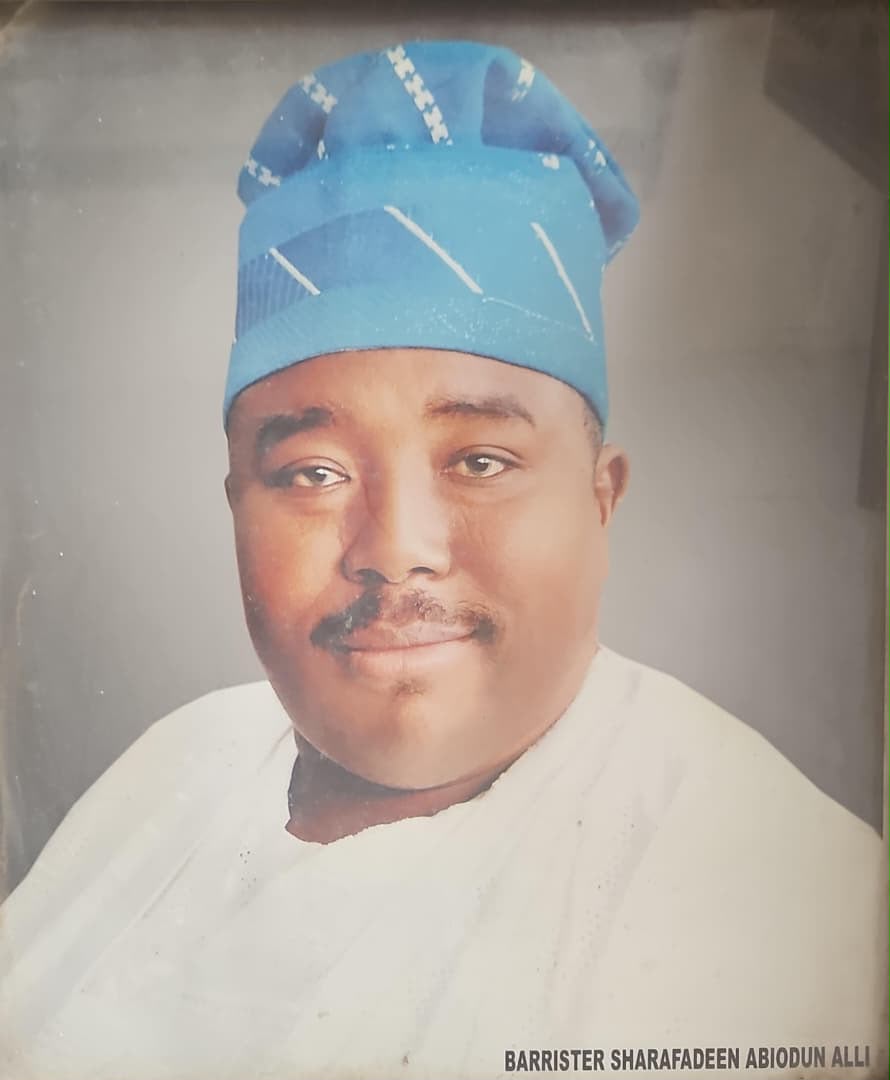
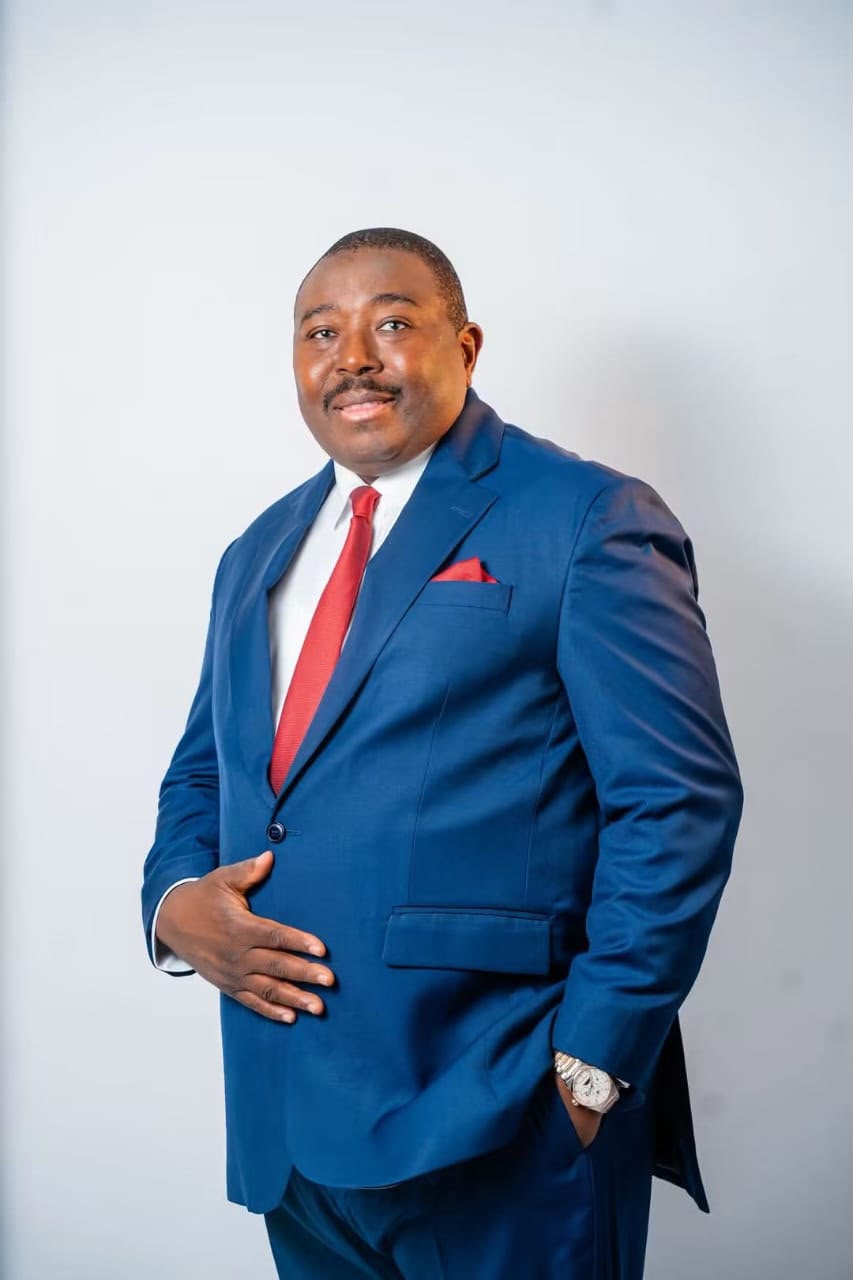
File photo of Sen. Sarafadeen Alli


Fact 1: Homegrown Leader with Unmatched Grassroots Experience

Senator Alli’s political journey began at the grassroots level in Ibadan, where he made history in 1991 as the first democratically elected Executive Chairman of Ibadan North Local Government. This early leadership role demonstrates a deep, foundational understanding of local governance and the needs of the people, a critical asset for a state governor.

Fact 2: Rare Combination of Top-Tier Academic and Professional Credentials

Senator Alli is not just a politician but also a distinguished legal practitioner with a Ph.D. in Legislative and Strategic Studies. His extensive education, including degrees from the University of Ibadan, combined with his fellowships from prestigious professional institutes, provides him with the analytical, legal and strategic acumen required to manage the complex affairs of Oyo State.

Fact 3: Proven Executive Administrative Competence at the Highest State Level

His tenures as Secretary to the Oyo State Government (SSG) and later as Chief of Staff (CoS) to the Governor showcase his direct experience in the engine room of state administration.


He has been intimately involved in policy formulation, committee leadership and the day-to-day running of the state, making him uniquely prepared to assume the governorship and hit the ground running from day one.

Fact 4: Demonstrated Executive Business Leadership with Regional Impact

As Chairman, Board of Directors of Odu’a Investment Company Limited, Senator Alli was not just an administrator but a visionary economic leader. He spearheaded landmark investments such as the Cocoa Mall and Heritage Mall in Ibadan, which transformed the economic landscape of Oyo State. This proven ability to attract and drive large-scale economic development is directly transferable to governing Oyo State.

Fact 5: Battle-Tested and Consistent Political Figure

Senator Alli’s political career spans more than three decades, weathering the annulment of his 1996 Senate election and consistently remaining a relevant and influential force. He has contested for Deputy Governor and Governor in the past, giving him a comprehensive understanding of statewide campaigns and the diverse political landscape of Oyo State. His journey demonstrates resilience, deep political networks and unwavering commitment.

Fact 6: Current, Performing Senator and Influential Figure

As the sitting Senator for Oyo South, he is actively delivering quality representation, impactful constituency projects and people-oriented legislation. He has sponsored five Bills and raised six Motions to promote development. Senator Alli has also facilitated employment for 100 constituents across Federal Government agencies.

His role as Chairman of the Senate Committee on Agricultural Colleges and Research Institutions, as well as his membership in the ECOWAS Parliament, demonstrate that he is not only focused on local issues but is also equipped with a broader perspective on governance, trade and regional integration.

Fact 7: Unifying and Respected Traditional Title Holder

Senator Alli’s position as the Ekaarun Balogun of Ibadanland, one of the highest-ranking chieftaincy titles in the ancient city, signifies his deep-rooted connection to tradition and his standing as a respected community leader.

His reputation as a calm, wise, simple, relatable and inclusive bridge-builder who unites people across political, religious and ethnic divides positions him as a leader capable of fostering peace, stability and consensus across the entire state.


Oladele is the Director of Media & Publicity, Senator Sharafadeen Alli Campaign Organization.

Continue Reading

Trending