Opinion
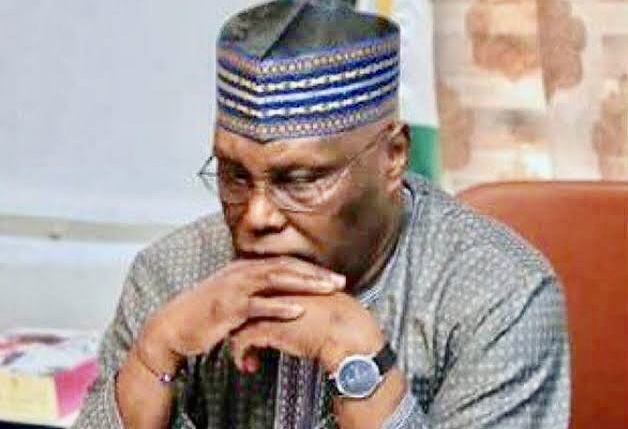
Deborah: Atiku Abubakar and why votes are thicker than blood
Published
4 years agoon
Distressing pieces of bad news are everywhere. From the murder of Miss Deborah Samuel Yakubu by students of Shehu Shagari College of Education in Sokoto last Thursday, to the immediate distancing of Nigerian politicians from her killing, hope that a post-Muhammadu Buhari Nigeria will not be clone of its unjust and inequitable era seems to be fading. Between the Deborah murder, the political mockery on the political arena and the lack of regards for Nigerians by Nigerian rulers, two explainers respond to the distresses: They are the Sekere and the forest.
Sekere, the Yoruba musical instrument, is reputed never to be found wherever tears are being shed. Made of a gourd that is knitted round by beads and which its user twists, shakes or slaps to produce a medley of exciting sounds, Sekere and sorrow are strange bedfellows as this musical instrument can never be found in an assemblage of poets engaged in dirges. Proud of Sekere’s pedigree of being a springboard of joy and conviviality, Yoruba proudly thump their chests that Sekere does not cavort in an assembly of the downcast. Unlike the Sekere however, last week, and as it has been its wont, Nigeria again showed that Sekere’s antithesis excites it. From the political, the social, to the economic, the Sekere became a rare object in sight in Nigeria.
But the ululating sound of the Gbedu was everywhere. Before its virginity was violently taken off it by emerging trends of modernity, the Gbedu was a sacred drum that you found in groves of Ogboni secret cult adherents. Also known as the Ogido, the Gbedu belongs to one of the four major families of Yoruba drums. To set it aside as unique and underscore its sacredness, the Gbedu in ancient time was shawled by carvings of animals, birds and the phallus, which depicted its masculinity. During traditional sacrifice ceremonies, the Gbedu was brought out with blood sprinkled on its outward coverings of carvings and an assortment of sacrificial offerings is festooned round it which ranged from feathers of hens, sprinkles of palm wine and egg yolks.
As the week that just ended was meandering into its twilight, Northern Nigerian drummers went inside their bloodied groove to bring out and beat the Gbedu drum. The drum’s howling beat had hardly subsided when the female student, Deborah, was stoned to death and burnt like a ram in Sokoto. Her sin for deserving the fate of a ram in the abattoir was that she allegedly blasphemed the name of Muhammed, the Islamic prophet who died thousands of years ago.
Thereafter, the country was set on edge. Ordinarily, in a country where politicians strive to outdo one another in hypocritical scramble for the hearts of the people in the public square, Deborah’s murder was an opportunity for the political elite to wax lyrical in righteous indignation and casuistry. Press releases that are far distant from the dark groves of the politicians’ hearts are issued at an auspicious moment like this, written in emotion-laden language that points at their belief and desire for a better country.
As the news of Deborah’s murder filtered in on the social media last Thursday, it occasioned a scramble among, especially, presidential aspirants who are sprinting to Nigeria’s Aso Rock gate. You wouldn’t find any difference between their scramble and the one between 1881 and 1914, nicknamed the Scramble for and Partition of Africa, which resulted in its conquest. As Western European powers invaded Africa for the purpose of its annexation, these politicians also scrambled to share a chunk of the people’s hearts in the art of shedding crocodile tears over this bestial killing.
Serial presidential contender, Atiku Abubakar, would seem to have breasted the tape before anyone else. Couched in a distraught voice that spoke like a father and a nationalist genuinely touched and saddened by the barbarism, Atiku’s statement got to Twitter at exactly 12.20am on Friday morning and empathized admirably thus: “There cannot be a justification for such gruesome murder. Deborah Yakubu was murdered and all those behind her death must be brought to justice. My condolences to her family and friends”.
In the language of Nigerian power, however, the above was not apropos. For Nigerian politicians, justice has no corresponding alphabet to politicking. So, when, a few minutes after the tweet, vultures that suck the flesh with their talons stained with blood, hopped on Twitter’s comment section threatening that, by that tweet, Atiku had lost their votes, with implicit threats that whenever he came to Sokoto, they would make him feel the pang of his infelicitous comment against Islam, it occurred to Atiku that votes were thicker than blood. One of them, going by the name, Otunba of Sokoto, told Atiku: “You just lost a million votes in Sokoto”.
That threat seemed to jolt the Turakin Adamawa who sprinted to delete the empathetic message.
While outrage gripped the land that had been painted with crimson, politicians, especially those seeking electors’ votes, weighed the ounces of their statements in empathy to Deborah. It took Vice President Yemi Osinbajo more than 24 hours before his comment came. As I write this, none has come from Bola Ahmed Tinubu. Even the president’s was steeped in the usual puritanical escapism associated with lame duck government statements. Even if it did, nobody would believe him. Buhari has run a government in the last seven years that is lean on justice against malefactors but lusciously rotund in cavalier grandstanding. “No person has the right to take the law into his or her own hands in this country. Violence has and never will solve any problem,” Buhari said.
Pray, why would a president, held to be an emblem of justice and equity, now be seeking to upstage the ecumenical cadences and spiritual narratives of the Imam or the pulpit sermon of the pastor? The animals of Sokoto go luscious because Nigeria has been a consequence-less country. It is worse under a man like Buhari who sees his first responsibility in Aso Rock as a defender of the Islamic faith. In virtually all continents of the world where human beings inhabit, you cannot rule out the tendency of some of our brothers extending their hands in a handshake to our ape brothers. This they do in an attempt to link up with their pre-historical mammalian ancestry. Wherever this occurs, flaunting the scorching fangs of the law, governments of such countries always come out to violently reset the brains of these apes. But we know that this won’t happen under this president. It has never happened. Buhari himself, as a presidential aspirant, had espoused this religious fundamentalism and crude lawlessness when he made reference to the blood of baboon and dogs.
Many people have been talking tongue-in-cheek since Deborah was murdered. The truth is that, Northern Nigeria is home to one of the most horrendous religious fundamentalism that the hapless people of Nigeria are forced to stomach. The killing of Deborah and reactions to it have proved very graphically that yoking the north and south together was one of the most fundamental errors of Nigeria’s nation-statehood. While a negligible percentage of northern purists shudder at this barbarism, millions others believe that religion and its tenets should take precedence over human life. This is the root of the fundamentalism that killed Deborah. It is sickening that in this 21st century, a people could be this dogmatically wedged to and rigidly affixed to an interpretation of scriptures, at the detriment of humanity. There is no difference between the religious fundamentalism and extremism of the Sokoto animal butchers who killed Deborah and the ones of ISIS and Al-Qaeda. They are both sired by and linked to negative outcomes such as prejudice, hostility or even armed conflict that religious fundamentalism brings.
In southern Nigeria, the character of religion is more discerned and indeed discernible. What is my business if you blaspheme Jesus Christ? Am I His armour bearer? Or that you tore pages of the Bible and defecate on it? That is your business for which you will have your day with Him in judgment – if indeed there is one. Why should anyone seek martyrdom for foreign religions whose hereafter theologies are basically guesswork?
Christianah Oluwasesin, Grace Ushang, Gideon Akaluka and others after them are products of the useless martyrdom that some adherents of Islamic religion crave. Their claim for those horrendous murders was that the holy writ says they would be beatified if they kill their fellow beings. Oluwasesin got lynched in Gombe in 2007 by secondary school students. They had accused her of rubbishing the Qur’an. What happened was that, while invigilating an exam, she was confronted by cheating students. Irked, Oluwasesin snatched the paper from them. To her chagrin, she discovered that the leaflet was a Qur’an. She met her waterloo. Ushang, in 2009 in Maiduguri, got raped and murdered. Her sin? She had the effrontery of wearing the trousers of the NYSC. I remember that in Yelwa-Yauri in 1992, my female colleague corps members were almost lynched inside the Yauri market for wearing similar trousers. Gideon Akaluka was the precursor of the earlier two. He was beheaded in Kano in 1995. His sin too was disrespecting the Qur’an.
Bible and Quran, written thousands of years ago, must be made to adhere to the quests of today’s world. You cannot ask for an unthinkable adherence to a call to kill “infidels” written in an almost pre-historic era at a modern time like this. Whether in Christianity, Islam or any other faith, the moment you allow your brain to go on sabbatical while you read the writs of the faiths, you have become indistinguishable from an animal. The Bible or Quran cannot be bigger than humanity. Man was not made for religion but religion was made for man. Nothing weighs as hugely as humanity and its essence.
Aside the Deborah murder, there are other parallels to the strange weirdness that has gripped Nigeria in recent time. And the forest seems the most fitting description of where we have found ourselves. In Africa, the forest is not just a mosaic of long stretches of scary landscape, huge trees that seem to offer handshakes to one another; it is not merely the habitat where scary chirps of crickets and birds and animals are heard, neither is it just the abode of flaura and fauna. The forest is the place where the unexplained and the inexplicable live. If you doubt this, read the classics of D.O. Fagunwa. It is why hunters who make the forest their dwelling places, who suddenly get lost inside its strange labyrinth, are highly respected and venerated as superhuman. Hunters are reputed to tango, in a life and death battle, with strange and deadly animals, deploying their physical brawns and supernatural powers inherited from their forebears.
Our children have been at home for months now, no thanks to the ASUU-government imbroglio and no one seems to care. In the states of the north-central, north-east and north-west, there is a greater harvest of human bodies than they do annual crops. Hopelessness has seized the land like a pestilence. Yet, politicians are stone deaf and morbid dumb to this reign of crimson. All they do is muzzling and stampeding for political offices. We now have a canvass of serious contenders for positions and appointment-inspired declarations of intents. Billions of naira of government’s money and already stashed away cash are being floated in space to attain life-long ambitions of politicians while hunger persistently wracks the bellies of the people.
In situating where we have found ourselves, I will go to the forest still to secure an explainer. Especially, for the cat-and-mouse game between the political and governmental elites and the people. When hunters go to the forest to hunt game, they use this peculiar, centuries-old expedition methodology that is aptly captured by the “we” and “them” bifurcation. The hunting crew encircles a forest which is believed to be the habitation of games – mongoose, impala, antelope and so on. Those with guns and cutlasses, with their weapons on the ready, are ranged at the front while the rest of the crew is saddled with the task of beating the bush with huge woods from the back.
With this, experience tells them that the animals will scramble out of their holes. When the animals thus try to escape, the armed hunting crew shoots them to death. At the close of the day when the whole crew gets home with their spoils and the animals are shared, the armed hunters, who do next to nothing but shoot, get what the Yoruba call the Itafa which consists of the meaty thighs and head. The yokel who beat the bush get the almost meat-less portions of the animal. Espousing the sense in not being a yokel, late Apala musician, Ayinla Omowura, sang that his opponents merely beat the bush in a hunt for games and he was the hunter with the gun who would coast home with the chunkiest meat – “E f’awon were sile…” he upbraided them. Resigning to fate in an unholy alliance as this, Sikiru Ayinde Barrister, another musician of that age, sang that when given the bony back of the animal in this equation, it signified that he would see his enemies’ end, their back.
In the hunting for the goodness of the land of Nigeria, the elites – political, governmental, business etc – secure an unfair advantage over the generality of the people. In saner climes, that ambivalence by Atiku Abubakar should open the door out of the presidential race for him. It will however not, because this unfair dealing with the people is normal in elite-people tango. His scramble to explain this gaffe worsens the gravity of the deletion of the tweet. It is why justice, to the political and governmental elite, has dual colour. It is why murderers deserve empathy and the ones murdered do not. It is why Godwin Emefiele, Nigeria’s No 1 banker, could mock Nigerians that he was not bothered if they had heart attacks in their quest to have the best man to administer them. It is why Goodluck Jonathan could tell that humongous lie that Miyetti Allah bought him his presidential form on the platform of a party that tore the remnants of his credibility to shreds. It is why our votes, rather than our humanity, matter more to Atiku Abubakar, Tinubu and the rest political harlots. It is why Nigeria is not wired to be ruled by brainy but hare-brained politicians. It is why we are where we are.
Dr. Adedayo, a lawyer, journalist and columnist writes from Ibadan, Oyo State Nigeria

You may like
Opinion
Bayo Adelabu and the Art of Treachery: When the Boy Who Was Fed Bites the Finger
Published
1 day agoon
September 21, 2026Politics — that masquerade that never dances the same step twice.
Who would have thought it?
Who, after the political bruising of 2023, after the detour to Accord and the eventual return to the political fold, culminating in a ministerial appointment under President Bola Ahmed Tinubu, would have imagined that Bayo Adelabu would one day find himself politically associated with a movement backing Seyi Makinde and the Allied Peoples Movement (APM)?
Yet here we are.
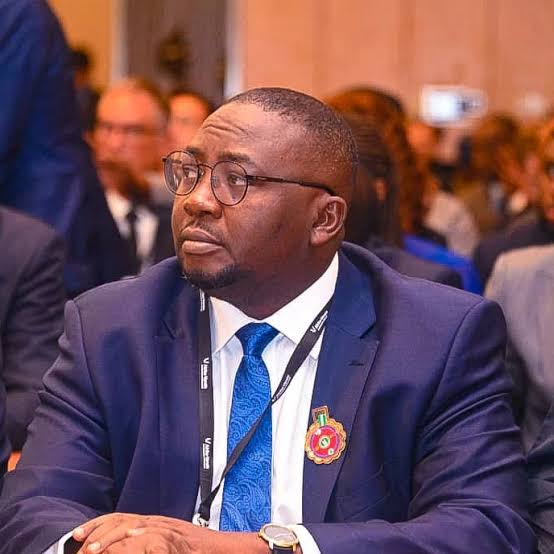
Recent developments surrounding the Boye Nation movement have raised questions in Oyo’s political circles. Ajiboye Akande Sangogade, popularly known as Boye Nation and identified in reports as an aide to Adelabu, is leading a movement that is expected to formally declare for the APM at a youth-focused event scheduled for September 21, 2026, at the Lekan Salami Stadium, Adamasingba, Ibadan. Organisers say Governor Seyi Makinde is expected to attend.
That development naturally raises a political question: where exactly does Adelabu stand?
The question becomes even more compelling against the background of the 2027 Oyo governorship contest.
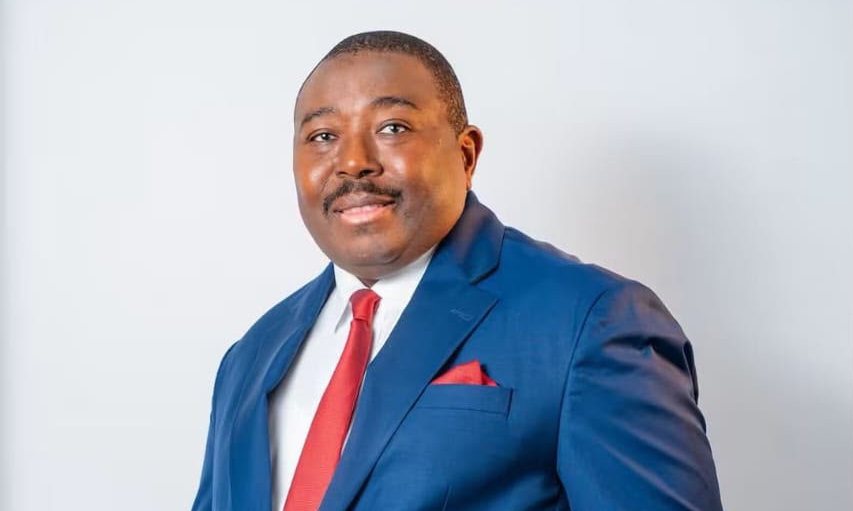
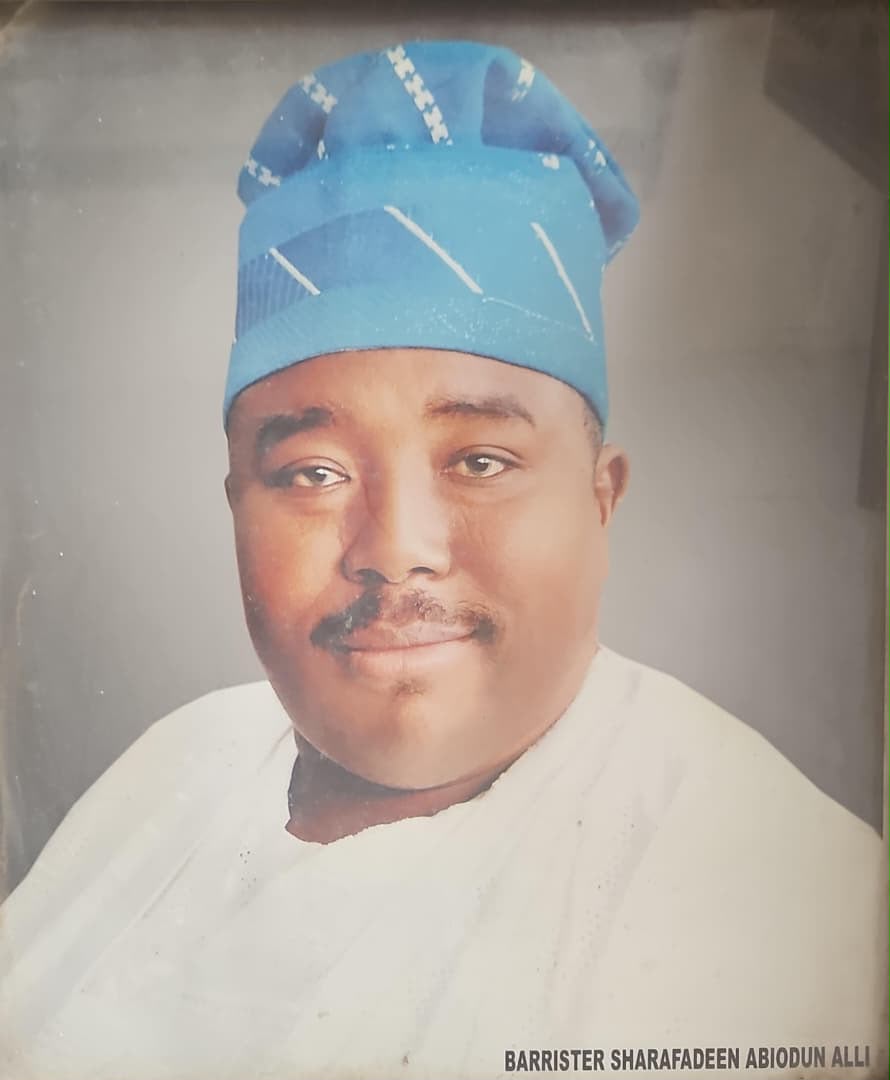
Adelabu had sought the APC governorship ticket, but Senator Sharafadeen Alli eventually emerged as the party’s candidate. The APC formally unveiled Alli and his running mate, Adesoji Adedeji, in July. Adelabu, however, had previously rejected the claim that Alli’s emergence represented a consensus arrangement and maintained that President Tinubu had backed his own ambition.
Now, with one of his prominent political associates leading a movement into the camp of another party, the political temperature has understandably risen.
The question being whispered across Ibadan is simple: is this merely the independent political decision of an aide and his supporters, or does it reflect a larger political strategy?
That question deserves an answer.
Because in politics, proximity is rarely meaningless.
If an associate who has operated closely within a politician’s political structure suddenly becomes a leading face of another political platform, observers will naturally ask whether the principal is aware, supportive, opposed or simply indifferent.
But there is an important distinction.
Association is not proof of instruction.
The fact that Boye Nation is associated with Adelabu does not, by itself, establish that Adelabu authorised the movement, financed it or personally endorsed APM’s presidential project. Those are matters that require evidence or a direct statement from the former minister.
And that is precisely where the real political conversation should begin.
Adelabu’s political history has never been short of twists. From his 2019 governorship bid to the 2023 political realignment and his appointment as Minister of Power, his journey has demonstrated the fluid nature of Oyo politics.
Today, however, the political arithmetic appears to be changing again.
The same APC that accommodated him after his 2023 political excursion now has another candidate carrying its governorship flag. Meanwhile, people identified with Adelabu’s political structure are appearing at an APM event expected to have Makinde at its centre.
For APC loyalists, that development may understandably raise questions about loyalty and party discipline.
For Adelabu, it presents an opportunity to clarify his position.
Is he still fully committed to the APC?
Does he support the activities of Boye Nation?
Does he have any connection with the planned APM mobilisation?
Or is Ajiboye Sangogade acting entirely on his own political conviction?
These are not unreasonable questions.
Indeed, they are questions that political actors should answer openly rather than leave the public to fill the gaps with speculation.
One thing, however, is certain: politics in Oyo is entering another season of realignment.
The September 21 gathering at Adamasingba may therefore be more than a concert. Organisers have described it as a youth mobilisation platform and a formal declaration of Boye Nation for the APM. Reports also indicate that the event is expected to receive members of the movement into the party.
That makes it politically significant.
Whether it represents a personal decision by Sangogade, a broader movement by Adelabu’s associates or something more strategic remains to be seen.
But one lesson from politics remains timeless:
When political friendships are tested, silence often creates more questions than answers.
And as the 2027 political season gathers momentum, Oyo’s political actors may soon discover that yesterday’s alliances can become tomorrow’s fault lines.
The masquerade has changed its dance.
Everybody is watching the drummer.
Opinion
Seven Factors That Keep Sharafadeen Alli Ahead in 2027 Oyo Governorship Race
Published
1 week agoon
September 14, 2026By
Bisi Oladele
Fact 1: Homegrown Leader with Unmatched Grassroots Experience
Senator Alli’s political journey began at the grassroots level in Ibadan, where he made history in 1991 as the first democratically elected Executive Chairman of Ibadan North Local Government. This early leadership role demonstrates a deep, foundational understanding of local governance and the needs of the people, a critical asset for a state governor.
![]()
Fact 2: Rare Combination of Top-Tier Academic and Professional Credentials
Senator Alli is not just a politician but also a distinguished legal practitioner with a Ph.D. in Legislative and Strategic Studies. His extensive education, including degrees from the University of Ibadan, combined with his fellowships from prestigious professional institutes, provides him with the analytical, legal and strategic acumen required to manage the complex affairs of Oyo State.
![]()
Fact 3: Proven Executive Administrative Competence at the Highest State Level
His tenures as Secretary to the Oyo State Government (SSG) and later as Chief of Staff (CoS) to the Governor showcase his direct experience in the engine room of state administration.
![]()
He has been intimately involved in policy formulation, committee leadership and the day-to-day running of the state, making him uniquely prepared to assume the governorship and hit the ground running from day one.
Fact 4: Demonstrated Executive Business Leadership with Regional Impact
As Chairman, Board of Directors of Odu’a Investment Company Limited, Senator Alli was not just an administrator but a visionary economic leader. He spearheaded landmark investments such as the Cocoa Mall and Heritage Mall in Ibadan, which transformed the economic landscape of Oyo State. This proven ability to attract and drive large-scale economic development is directly transferable to governing Oyo State.
![]()
Fact 5: Battle-Tested and Consistent Political Figure
Senator Alli’s political career spans more than three decades, weathering the annulment of his 1996 Senate election and consistently remaining a relevant and influential force. He has contested for Deputy Governor and Governor in the past, giving him a comprehensive understanding of statewide campaigns and the diverse political landscape of Oyo State. His journey demonstrates resilience, deep political networks and unwavering commitment.
Fact 6: Current, Performing Senator and Influential Figure
As the sitting Senator for Oyo South, he is actively delivering quality representation, impactful constituency projects and people-oriented legislation. He has sponsored five Bills and raised six Motions to promote development. Senator Alli has also facilitated employment for 100 constituents across Federal Government agencies.
![]()
His role as Chairman of the Senate Committee on Agricultural Colleges and Research Institutions, as well as his membership in the ECOWAS Parliament, demonstrate that he is not only focused on local issues but is also equipped with a broader perspective on governance, trade and regional integration.
Fact 7: Unifying and Respected Traditional Title Holder
Senator Alli’s position as the Ekaarun Balogun of Ibadanland, one of the highest-ranking chieftaincy titles in the ancient city, signifies his deep-rooted connection to tradition and his standing as a respected community leader.
His reputation as a calm, wise, simple, relatable and inclusive bridge-builder who unites people across political, religious and ethnic divides positions him as a leader capable of fostering peace, stability and consensus across the entire state.
Oladele is the Director of Media & Publicity, Senator Sharafadeen Alli Campaign Organization.
Opinion
Oloye Lekan Alabi: Memories Ere Death Beckoned Both Caller and Called |By Wole Adejumo
Published
2 months agoon
August 7, 2026By
Mega IconThe young lady who usually delivers packaged moinmoin for members of staff who want it for lunch came in as she usually did, and after the exchange of pleasantries, I asked if she knew the difference between Ọọlẹ and Moinmoin. My colleagues looked at me strangely when I disagreed with her response that both were the same. I promised to tell her the difference later. I, however, told my colleagues the difference as explained to me by Oloye Lekan Alabi. Though a suave, urbane and sophisticated Ibadan chief, he took time to explain the similarities and differences as we prepared for the annual Oke ‘Badan Festival some years back.
He had retired from the service of Odua Investment Company Limited, where he demonstrated competence and character then, but that did not in any way diminish his encyclopaedic knowledge of history. He sat beside the Aboke, Chief Ifamapowa and some other stakeholders at the press conference heralding the ceremony that year.
My first real contact with him happened after I had written a short piece, ‘The Man Who Would Be King’, about him. Oloye, who bore the titles of Jagun Olubadan and Akogun of Lalupon agreed to have an interview. My Bureau Chief, Bola Davies (now of blessed memory) directed me to go and when I got to his office in Cocoa House, he thanked me for wishing him well. He thereafter took time to explain the Olubadan ascension system. The interview was published in one of the earliest editions of City People Quarterly back then. That interview and some other things I wrote about him eventually earned me a mention in one of his books.
Oloye Alabi was no doubt an aficionado when history, music and culture are up for discussion. Of course, with his rich cultural heritage, he stood out anywhere and everywhere. Little wonder His Imperial Majesty, the Ooni of Ife hosted his investiture when he was appointed as the first Cultural Ambassador of the National Museum, Ile Ife. His immense breadth of knowledge will give him a place in history just as it did to the likes of Chiefs John Adeyemi Ayorinde, Theophilus Akinyele and Alaafin Lamidi Adeyemi III. His love for good music too was more than obvious. Like a true connoisseur, he did everything with class and style. He wrote countless articles about Chief Commander Ebenezer Obey, King Sunny Ade, Chief Eddy Okonta and many more. His love for Yusuf Olatunji’s Sakara music defied competent description. It was so great that he named his youngest son after the Sakara legend.
In one of his many philosophical volumes, ‘Baba L’Egba’ as Olatunji was fondly called, sang that “o ye ka ni ‘fura taa ba nsin ale eni lo” (one should be watchful when seeing off a concubine) and the only person I felt I could ask what was on Baba L’Egba’s mind then was Oloye ‘Lekan Alabi. Sadly, the auspicious time to ask never came.
A reception was once hosted in his honour by Ambassador Ibironke Adefope at Bodija and it was regal! Everyone who mattered came to honour Oloye ‘Lekan Alabi. Reporting the event for City People then, one of the most unusual sights was Otunba Adebayo Alao-Akala, the then Deputy Governor of Oyo State. His simplicity was indescribable. Aside driving his convertible BMW, he came in a yellow sweatshirt and jeans.
And when he turned 60, it was like everyone else joined the Ibadan establishment to celebrate Oloye ‘Lekan Alabi. Aare Arisekola Also spoke about the celebrant in glowing terms as he emphasized that Oloye Alabi was indeed a man destined for greatness. The party afforded me the opportunity of seeing Alhaja Batile Alake live on stage. Her sonorous voice actually brought great childhood memories of when songs of Batile Alake, Olubowale Ajasco, Alalaye Ilorin and others were regular on the television.
Apart from his respectable dress sense and indepth knowledge of issues, other admirable traits of the late Abese Olubadan were his timeliness and punctuality. He once told me the story of how he had suggested that card be presented to the then military President, General Ibrahim Babangida on the birth of his baby girl back then. It turned out that the picture of where he handed the card over was published in dailies the following day. Apart from personal discipline, working with four Governors of Oyo State obviously rubbed off on him, he never attended an event late. There was a day we had to apologize as we started an event behind schedule at the Premier Hotel, Ibadan. He was about the first guest and after accepting our apologies, he didn’t become vexatious, rather, with a smile he told us that he would be in his room upstairs. He said all we needed to do was put call through to him when we were ready to start the programme.
I stood close by him at certain event and heard Chief Lateef Oyelade praying for Oloye Alabi who had just greeted him in Yoruba, he said “Olubadan o kan o” (may it be your turn to become the Olubadan). Like many of his mentees, I looked forward to seeing him on the exalted Olubadan throne, it was however not to be.
Reflecting on those golden days of celebrity journalism; the Bodija reception, the grand 60th birthday, the laughter of legends now silent; one is reminded that time eventually beckons both the caller and the called. Bola Davies, His Excellency, Otunba Alao-Akala, Aare Arisekola Alao, Chief Lateef Oyelade, Ambassador Adefope and now Oloye himself have all answered that ultimate call. Though the exalted Olubadan throne eluded him, Oloye ’Lekan Alabi leaves behind a legacy as towering as Cocoa House itself. Like his noble forebears – Oyetunde Olundegun, ‘Erin o P’ojo Logun’, and Ekerin Suberu Ajengbe, he came, he saw, he lived with unmatched panache, and he left an indelible mark on the sands of time.
Adejumo sent this piece from Ogbomoso
MEGAICON TV
Oyo: No APC Defection To APM, Makinde Lied — APM Scribe
N8.5bn Power Project Failed, Diesel Streetlights Wasteful — Alli Campaign Organisation Faults Makinde
OLOJO FESTIVAL: Nigeria bigger than all of us, Ooni tells politicians
Trending
-
Metro4 weeks agoOyo: Oseni Sympathises With Oranyan Traders Over Market Fire
-
Politics2 weeks agoOyo won’t become real estate company, says Alli
-
News1 week agoOyo South: Oseni Approves N100m for Ibadan Community Road Rehabilitation
-
News4 weeks agoOyo: Oseni Donates 500KVA Transformer, N10m to Baptist Conference