Connect with us

Health

COVID-19 response in southern Nigeria boosts surveillance of other diseases

Published

on

In many countries, tackling the COVID-19 pandemic has taken cues from other disease approaches, such as lessons from protecting communities against Ebola. But in Nigeria’s Niger Delta, health workers have found inspiration from guarding against the coronavirus.

They have exploited the rigorous surveillance standard set by the COVID-19 response to keep from losing sight of other priority diseases. Mostly what they have learned is how not to divide their attention.

The unifying surveillance strategy they have enveloped is quickly producing significant and – possibly oddly – uplifting results.

“I recorded my first acute flaccid paralysis case since last year while I was following up on the contact of a confirmed case of COVID-19,” says Sarah Oladimeji, a Diseases and Surveillance Notification Officer in charge of finding cases of preventable and infectious diseases in Oredo Local Government Area of Nigeria’s Edo State.

When COVID-19 crept into the southern Delta region in April, health workers had to learn to overcome their worries and hunkered down to the needed work. The odds seemed stacked against the six states that make up the South-South zone: Akwa Ibom, Bayelsa, Cross River, Delta, Edo and Rivers. COVID-19 cases increased daily while community attitudes towards the virus grew lax. Health workers scrambled to manage the time and resources available to respond to both COVID-19 and other endemic-prone diseases.

One solution government teams and health workers hit upon: bring the aggressive COVID-19 surveillance into the systems used to monitor priority diseases.

Across the Niger Delta, the World Health Organization (WHO) and its partners retrained 3874 surveillance officers who had been mobilized to detect COVID-19 cases in hospitals and communities to also look for acute flaccid paralysis (AFP), polio, meningitis, cholera, neonatal tetanus, yellow fever, measles and more.

After the Government decentralized the COVID-19 response in April, some states began also training religious and community leaders – who are often important decision-makers, influencers and informants – to help find and report suspected COVID-19 and other priority diseases in their communities.

Now, four months into the region’s COVID-19 outbreak, health workers are seeing spectacular efficiency. Detected cases of AFP, for example, increased substantially (doubling and even tripling in one state) between the end of March and end of July as the harmonized surveillance ramped up.

Protecting immunization gains

Keeping eyes on both COVID-19 and other diseases, most of which are vaccine-preventable, is an important but challenging task in the Niger Delta where immunization coverage had been low for years. Located along the Niger River and the Gulf of Guinea, the Niger Delta, or South-South zone, comprises a system of coastal communities that rely on farming and fishing. Waterway systems here are often inadequate and moving around is difficult. In the past, residents in the deepest riverine communities, far from a mainland, had little luck accessing a health centre. Many were discouraged by the distance from taking their children for vaccinations, which led the region to its poor immunization coverage and thus heightened risk of disease outbreaks.

Since 2016, community engagement, better access to health care and increased surveillance have led to rising numbers of vaccinated children. Health workers now attend patients in on-sea treatment centres or travel into the deep-river communities by canoe to provide services.

Navigating the creek communities may be hard but health workers accept that medical care has no boundaries, says Dr Edmund Ogbe, WHO Coordinator for Bayelsa State. Public health commitment and resourcefulness seem to be ingrained characteristics of this region.

Increased detection of measles and yellow fever

To protect their gains in immunization coverage and keep from neglecting other worrisome diseases in these times of COVID-19, the integrated surveillance is making a difference. In March, Bayelsa State recorded nine cases of AFP. But 16 new cases were investigated over the next four months – a 180% increase.

With COVID-19 case findings now meshed with the systems used to detect and report priority diseases, more cases of measles and yellow fever are emerging, too. The reported numbers of both diseases increased considerably between the end of March and the end of July. In a couple states, case detection nearly doubled.

The next step will be to accelerate case search throughout the region. State governments in the South-South zone, supported by WHO, continue to train more surveillance officers and community informants on combining COVID-19 and preventable-disease surveillance. Involving communities by educating them and appointing them as public health informants will help ensure that the combined surveillance continues to be a success, says Dr Olubowale Ekundare Famiyesin, WHO Zonal Coordinator of the Niger Delta.

Early detection of any disease is the goal for health workers in the Delta. “All resources for surveillance at our disposal will be deployed to improve early infectious disease detection and reporting, including COVID-19,” Dr Famiyesin promises.

Comments

Health

Ebola: WHO seeks 5,000 health workers for DR Congo

Published

on

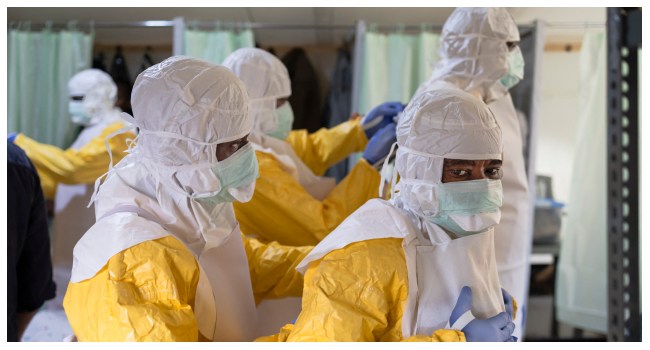
Health workers in Personal Protective Equipment (PPE) practice safety check protocols on each other during a training by medical charity, Médecins Sans Frontières (MSF) to reinforce regional emergency response capacity for Ebola in the Democratic Republic of Congo (DRC) at Ongata Rongai, Kajiado County in Kenya on July 10, 2026.

The World Health Organisation (WHO) on Tuesday said it needed an additional 5,000 health workers to help contain the Ebola outbreak spreading across the Democratic Republic of Congo.

The outbreak, officially detected on May 15, has spread to six provinces in the country’s conflict-affected eastern and northeastern regions.

The WHO, citing official Congolese figures, said more than 6,600 people had been confirmed infected, while 3,175 had died since the outbreak began.

The development has put further pressure on health facilities in the affected areas, many of which are already struggling with shortages of medical personnel and other essential resources.

Ebola is a highly contagious viral disease transmitted through contact with the bodily fluids of infected persons. It can cause severe bleeding, organ failure and death.

The UN health agency said it was working to establish 3,000 beds in Ebola treatment centres across the affected areas to cope with the rising number of patients.

A senior technical official with the WHO, Luca Fontana, said the expansion would require thousands of additional healthcare workers.

“More than 900 beds have been built within the first two months of the response, and we have now reached close to 1,400 beds across 59 treatment centres,” Fontana told a press briefing in Geneva.

He said another 1,600 beds would be required to meet the rapidly increasing demand.

“Despite this extraordinary effort, we estimate that another 1,600 beds will be required to meet the rapidly growing needs,” he said.

Fontana said nearly 4,000 healthcare workers were currently working in the treatment centres, adding that 5,000 more were urgently needed.

He said the Congolese Ministry of Health was racing against time to identify qualified medical personnel from other parts of the country for deployment to the affected provinces.

“The problem is to identify those fast enough to make sure that we can cover the growing need,” Fontana said.

He stressed that fully staffed treatment centres would be critical to saving lives and bringing the outbreak under control.

“Every treatment centre that is fully staffed and functional means more life saved and a stronger chance of bringing this outbreak under control,” he said.

The current outbreak is caused by the Bundibugyo strain of Ebola, for which there is currently no approved vaccine or treatment. Several vaccines and treatments, however, are being tested.

The outbreak has also been complicated by the security situation in the affected regions, where government presence is weak, healthcare infrastructure is limited and armed groups have operated for decades.

Fontana said the geographical spread of patients seeking treatment was another indication that the outbreak was expanding.

He explained that while most patients initially admitted to treatment centres came from Bunia, the capital of Ituri Province, infected people were now arriving from villages “far beyond” the original epicentre.

He described the development as “a clear sign” that the outbreak was spreading and said the WHO response would have to adapt accordingly.

Ebola has killed more than 15,000 people in Africa over the past 50 years.

The previous major Ebola outbreak in the Democratic Republic of Congo, which lasted from 2018 to 2020, killed nearly 2,300 people out of about 3,500 reported infections.

Continue Reading

Health

Trump cleared for office, doctor orders weight loss ahead of 80th birthday

Published

on

By

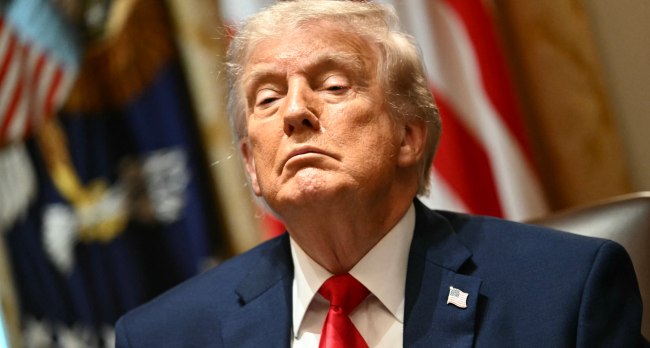
United States President Donald Trump has been declared medically fit to continue in office, with his physician describing him as being in “excellent health” while recommending weight loss and increased physical activity weeks before his 80th birthday.

The White House disclosed on Friday that Trump underwent his annual medical and dental examination on Tuesday at Walter Reed Military Hospital near Washington, amid growing scrutiny over his health and fitness for office.

In a three-page medical memo released by the White House, Trump’s physician, US Navy Captain Sean Barbabella, said the president demonstrated strong overall physical and mental capacity.

“President Trump remains in excellent health, demonstrating strong cardiac, pulmonary, neurological, and overall physical function,” Barbabella stated, adding that the president was “fully fit to carry out all duties of the Commander-in-Chief and Head of State.”

However, the physician advised Trump to adopt healthier lifestyle measures, including dietary adjustments, increased physical activity, continued weight loss and low-dose aspirin therapy for cardiovascular prevention.

According to the report, Trump, who will turn 80 on June 14, stands at 6ft 3in tall and weighs 238 pounds (108 kilograms), about 14 pounds more than he weighed during his last full annual medical check-up in April last year.

Despite concerns surrounding his age, the report noted that Trump’s cardiac health reflected an estimated age roughly 14 years younger than his chronological age.

The president also reportedly scored a perfect “30 out of 30” in a cognitive assessment, a result Trump has repeatedly cited in public while contrasting himself with his Democratic predecessor, former President Joe Biden.

The medical report further addressed concerns over bruising frequently seen on Trump’s right hand, attributing it to “minor soft tissue irritation” caused by repeated handshaking and aspirin use.

The memo also referenced scarring on Trump’s right ear linked to the assassination attempt against him during a campaign rally in Butler, Pennsylvania, in 2024, when a gunman opened fire, killing a supporter and slightly wounding the president.

Trump’s latest health evaluation comes amid public concerns after he was occasionally seen appearing drowsy during White House meetings and events. He had also previously been diagnosed with chronic venous insufficiency, a condition that affects blood circulation in the veins and can lead to swelling in the legs.

Reacting shortly after Tuesday’s examination, Trump wrote on his Truth Social platform that the medical exercise had gone “PERFECTLY,” while the White House later shared his photograph online with the caption, “PERFECT BILL OF HEALTH!”

The release of the report also sparked debate in the United States after the White House initially delayed making the medical details public, breaking with the traditional practice of releasing presidential health summaries shortly after such examinations.

Trump has long faced criticism over transparency regarding his health records, with questions also raised over the scheduling and description of his medical evaluations since returning to office.

Continue Reading

Health

Oyo confirms Lassa fever death in Ibadan, activates emergency response, traces contacts

Published

on

The Oyo State Government has confirmed a Lassa fever case at the University College Hospital, Ibadan, where a 44-year-old woman died, prompting the activation of emergency response measures and immediate contact tracing to contain the disease.

The state Commissioner for Health, Oluwaserimi Ajetunmobi, disclosed this in a statement on Wednesday, saying, “The patient died on April 11, 2026, while receiving treatment, while laboratory confirmation of Lassa fever was received on April 13.”

She added that the Ministry of Health had swiftly activated its emergency response system, including the establishment of an Incident Management System to coordinate response activities across the state.

According to her, “All identified contacts of the deceased are being closely monitored, while necessary measures have been taken to ensure a safe and dignified burial in line with public health protocols.”

Ajetunmobi urged residents to seek immediate medical attention if they experience symptoms such as persistent fever, weakness, sore throat, vomiting, diarrhoea, unexplained bleeding, chest pain or difficulty breathing.

She stressed, “Early presentation at health facilities significantly improves the chances of survival.”

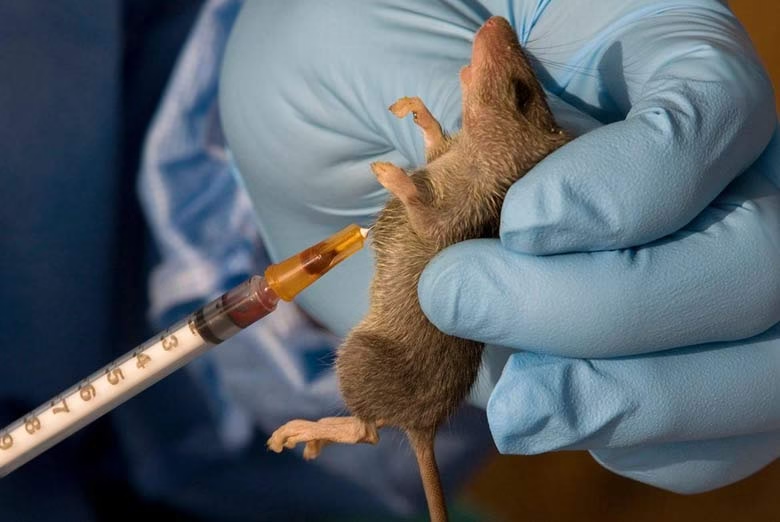
The commissioner explained that Lassa fever is a viral haemorrhagic disease transmitted primarily through contact with food or household items contaminated by urine or faeces of infected rodents.

“It can also spread from person to person through contact with bodily fluids, especially in healthcare settings where infection prevention measures are not strictly observed,” she said.

She advised residents to maintain strict environmental hygiene, including proper waste disposal, safe storage of food in rodent-proof containers and avoiding drying food items on bare ground or roadsides.

Ajetunmobi also urged households to seal holes and entry points to prevent rodent access, while emphasising regular handwashing and good personal hygiene.

Residents, she said, should report suspected cases through designated emergency lines, while health workers must strictly adhere to infection prevention and control protocols.

Reaffirming the government’s commitment, the commissioner said surveillance had been intensified across the state, with all health facilities placed on alert.

“There is no cause for panic. The situation is under control, and Lassa fever is both preventable and treatable when detected early,” she assured.

Continue Reading

Trending

All Rights Reserved. Copyright © 2026 MegaIcon Magazine