Connect with us

News

Bad Roads: ‘Focus on Message, Not Messenger’ – Nigerians Tell Works Minister, Umahi

Published

on

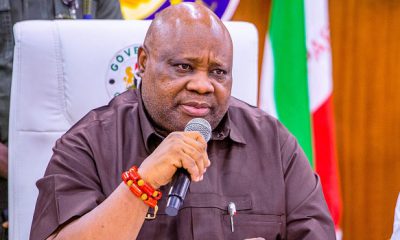
The Nigerian Minister of Works, David Umahi, has ignited widespread public reaction following his response to recent criticisms by Engr. Aderemi Oseni, Chairman of the House of Representatives Committee on Federal Roads Maintenance Agency (FERMA).

Oseni, who represents Ibarapa East/Ido Federal Constituency in Oyo State, had accused Umahi of neglecting essential infrastructure needs, alleging that the minister has “no plan for the nation.”

At a committee oversight meeting last Thursday, the lawmaker expressed his frustration over the worsening state of roads across the country.

“You are not here to tell us what we already know in the area of resources,” Oseni stated. “If you are telling us the reason you have failed in fixing our road infrastructure is because of resources, don’t let me take you up on that, because you concentrated your energy as a minister on less priority issues.”
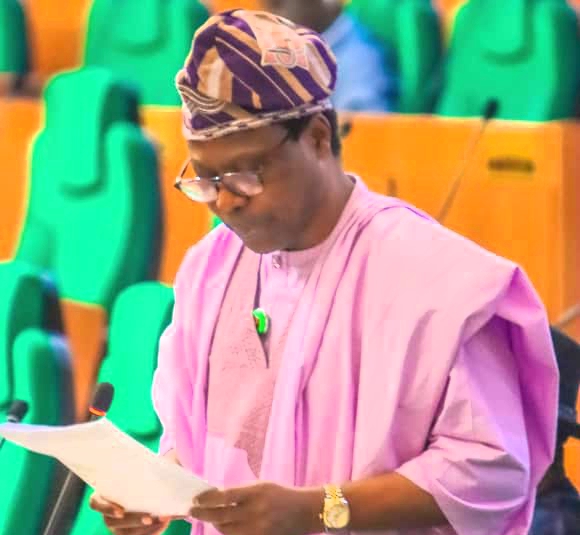
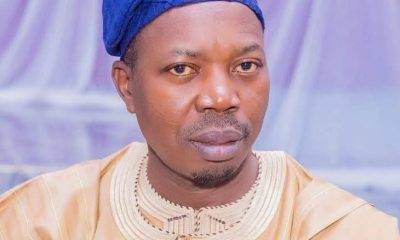
Hon. (Engr.) Aderemi Oseni, representing Ibarapa East/Ido federal constituency of Oyo state


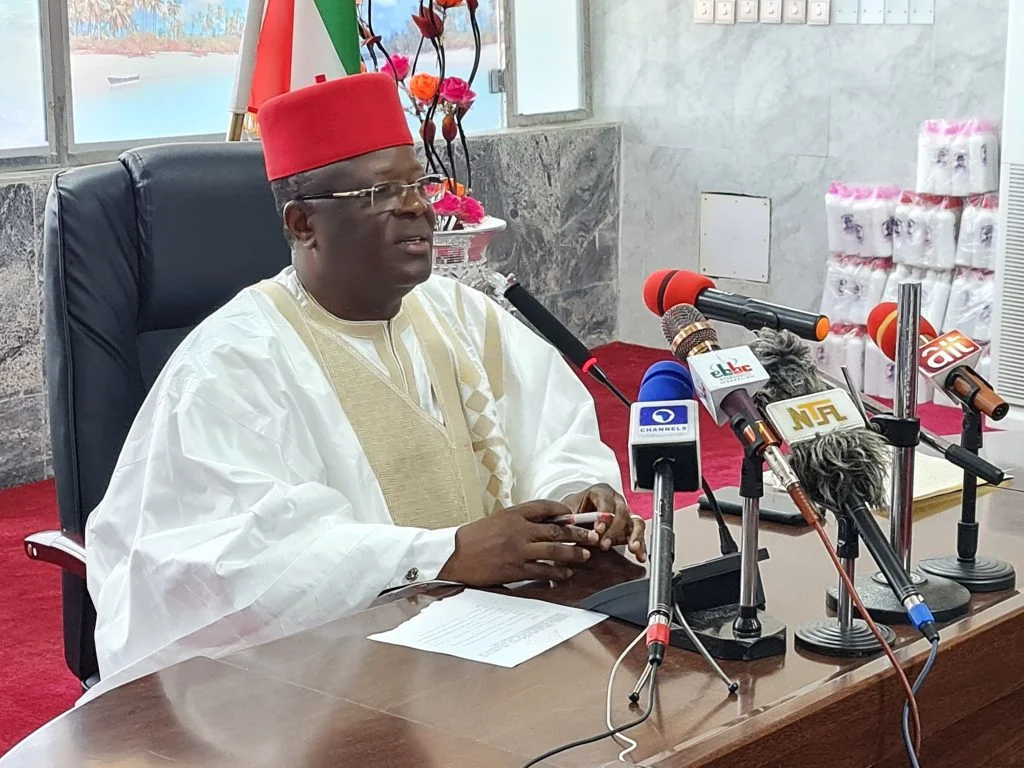
In response, Umahi addressed a press briefing at the ministry’s headquarters in Abuja on Monday, dismissing Oseni’s comments.

He remarked that Oseni “had not attained half of what I have achieved in life” and added that he would “not join issues with the lawmaker” out of respect for the Speaker of the House of Representatives and the National Assembly.

Speaking further, the minister suggested that Oseni was representing contractors affected by recent reforms in the Ministry of Works.

“Let me say that I was not physically present at the meeting, nor was my permanent secretary,” Umahi said. “Nobody can talk to me like that in my presence. It’s not possible.”

Public Outcry: Nigerians Demand Accountability

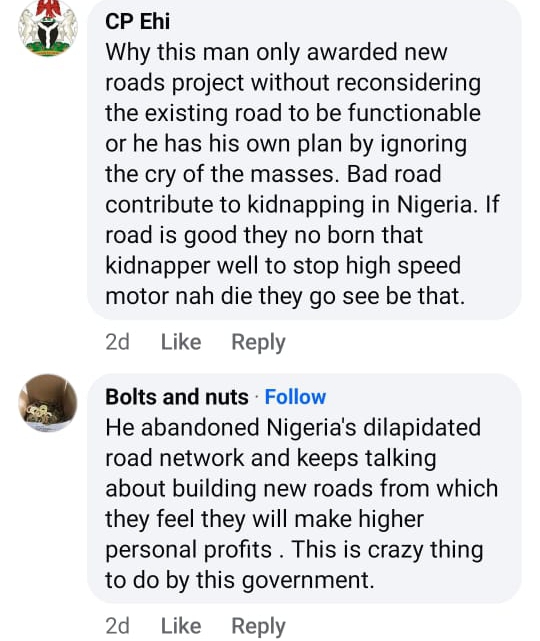
Umahi’s remarks have drawn backlash on social media, where Nigerians urged him to focus on addressing their concerns about deplorable road conditions rather than deflecting criticisms.

Many expressed frustration with the state of federal roads, calling on the minister to prioritize solutions over defensiveness.

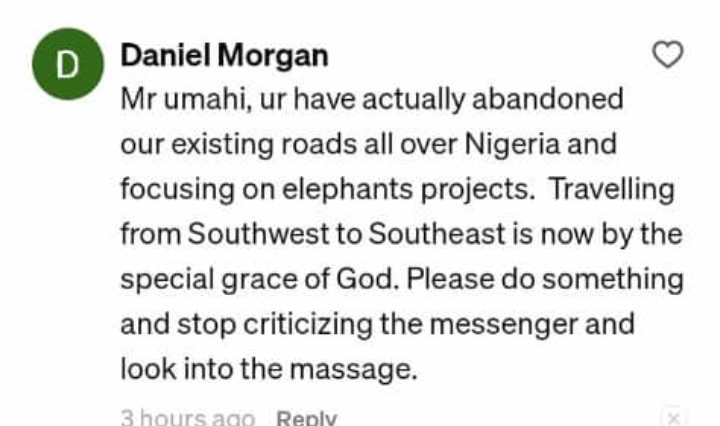
“Mr umahi, ur have actually abandoned our existing roads all over Nigeria and focusing on elephants projects”, commented Daniel Morgan. “Travelling from Southwest to Southeast is now by the special grace of God. Please do something and stop criticizing the messenger and look into the massage.”
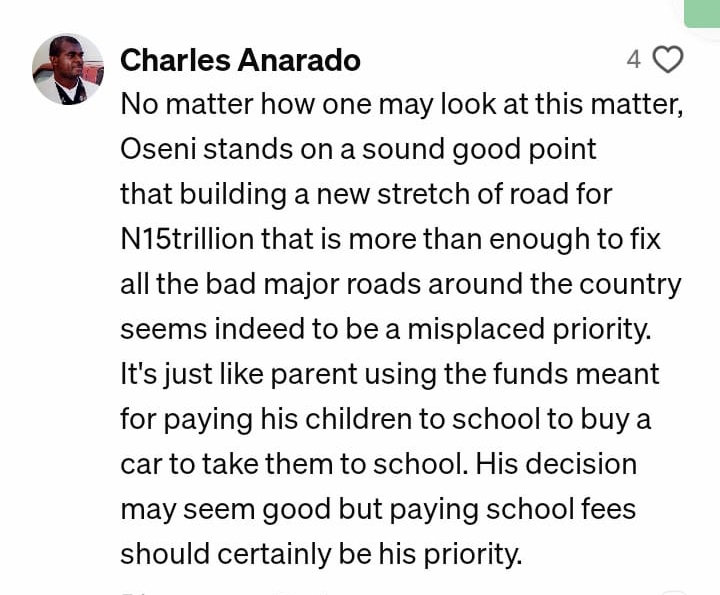
Charles Anarado added, “No matter how one may look at this matter, Oseni stands on a sound good point that building a new stretch of road for N15trillion that is more than enough to fix all the bad major roads around the country seems indeed to be a misplaced priority. It’s just like parent using the funds meant for paying his children to school to buy a car to take them to school. His decision may seem good but paying school fees should certainly be his priority”.
Calls for Transparency and Priority on Repairs

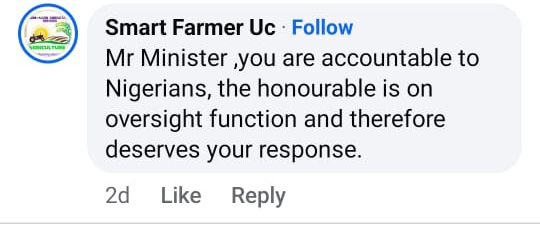
Other Nigerians joined the conversation, with some social media users demanding more accountability from the minister.

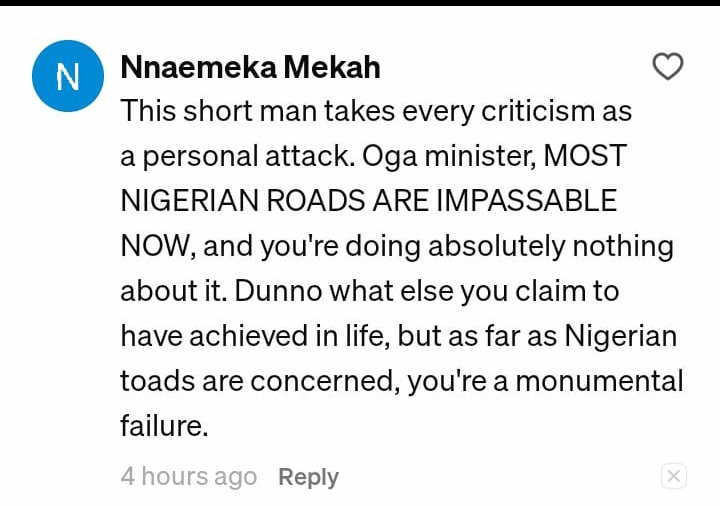
Nnaemeka Mekah voiced frustration over Umahi’s response to criticism, stating, “This short man takes every criticism as a personal attack. Oga minister, MOST NIGERIAN ROADS ARE IMPASSABLE NOW, and you’re doing absolutely nothing about it. Dunno what else you claim to have achieved in life, but as far as Nigerian toads are concerned, you’re a monumental failure”.
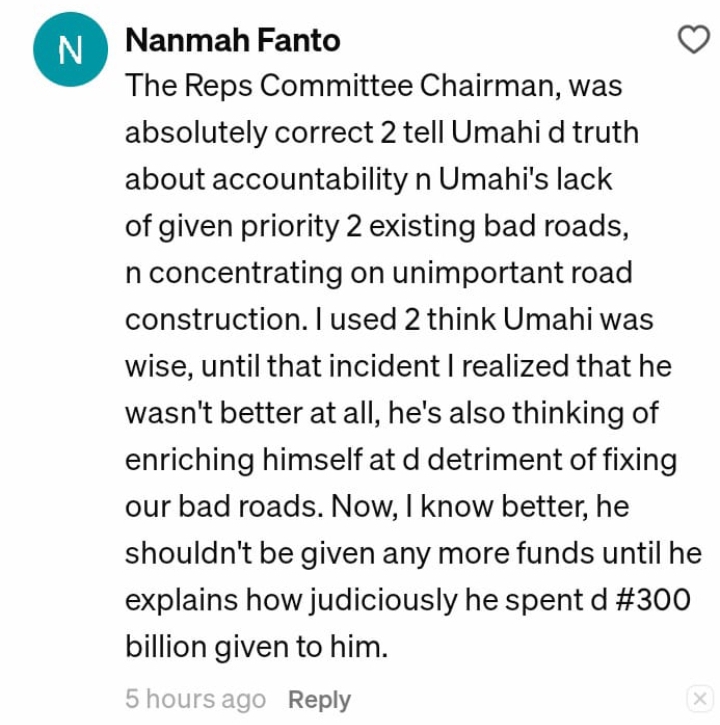
Another user, Nanmah Fanto, supported Oseni’s criticisms, commenting, , “The Reps Committee Chairman, was absolutely correct 2 tell Umahi d truth about accountability n Umahi’s lack of given priority 2 existing bad roads, n concentrating on unimportant road construction. I used 2 think Umahi was wise, until that incident I realized that he wasn’t better at all, he’s also thinking of enriching himself at d detriment of fixing our bad roads. Now, I know better, he shouldn’t be given any more funds until he explains how judiciously he spent d #300 billion given to him”.
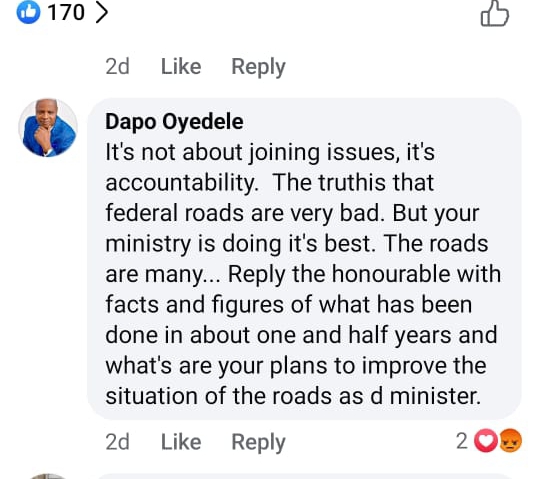
Meanwhile, Facebook user, Dapo Oyedele suggested a constructive approach, urging Umahi to respond with facts.

“It’s not about joining issues, it’s accountability. The truth is that federal roads are very bad. But your ministry is doing it’s best. The roads are many… Reply the honourable with facts and figures of what has been done in about one and half years and what’s are your plans to improve the situation of the roads as d minister”.
Nationwide Demand for Effective Solutions

Frustration over Nigeria’s roads continued to echo online, with many demanding that Umahi focus on repairing existing infrastructure.

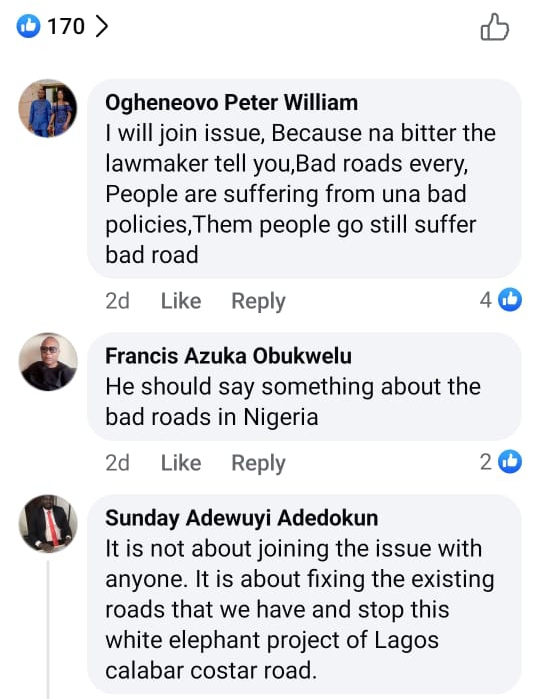
Ogheneovo Peter William, another Facebook user remarked, “I will join issue Because na bitter the lawmaker tell you, Bad roads every, People are suffering from una bad policies, Them people go still suffer bad road”? he questioned.
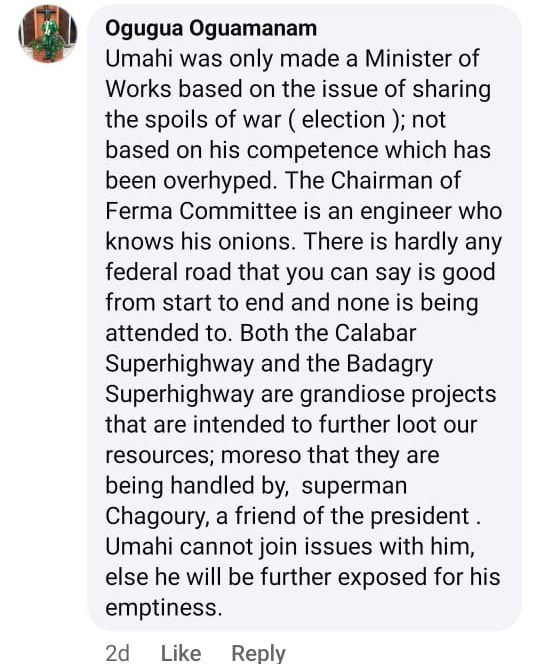
“It is not about joining the issue with anyone. It is about fixing the existing roads that we have and stop this white elephant project of Lagos calabar costar road”, a user on Facebook, Sunday Adewuyi Adedokun said.
Continuing, Francis Azuka Obukwelu opined on the ‘blue App’, “He should say something about the bad roads in Nigeria”.
Comments

News

IGP Disu seeks NIPR partnership to boost public trust in police

Published

on

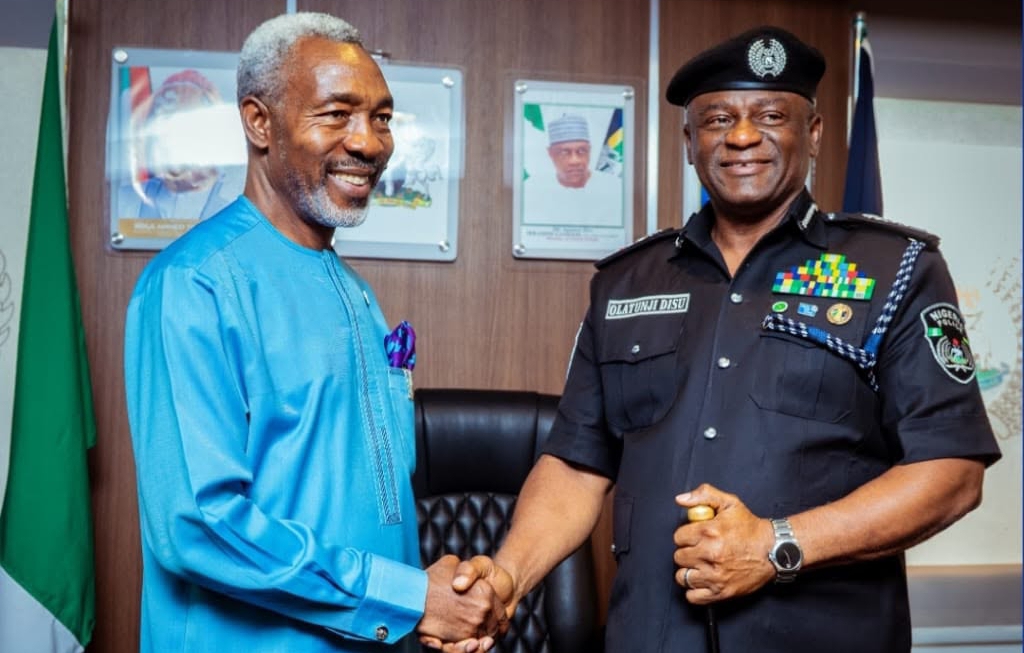
NIPR President, Dr Ike Neliaku, in a handshake with the Inspector-General of Police, Olatunji Disu, at the Force Headquarters in Abuja on Tuesday.

The Inspector-General of Police, IGP Olatunji Disu, has called for stronger collaboration between the Nigeria Police Force (NPF) and the Nigerian Institute of Public Relations (NIPR) to enhance public confidence in the police.

The IGP made the call on Tuesday when he received a delegation of the NIPR, led by its President and Chairman of Council, Dr Ike Neliaku, on a courtesy visit to the Force Headquarters, Abuja.

According to a statement issued by the Force Public Relations Officer, CSP Ani Iniedu, the IGP emphasised the importance of effective communication, professionalism, transparency and fairness in strengthening the relationship between the police and members of the public.

Disu noted that every police officer was an image-maker of the Force, adding that the conduct of personnel in their daily interactions with citizens had a direct impact on public perception of the police.

He said the Nigeria Police Force (NPF) remained committed to policing by consent and promoting a service-oriented policing culture built on professionalism, empathy, accountability and respect for human rights.

The IGP also sought the support of the NIPR in providing specialised communication training for police personnel and developing a coherent communication framework that would effectively communicate the sacrifices and contributions of police officers to public safety and national security.

Earlier, Neliaku commended the IGP for his professional accomplishments and briefed him on Nigeria’s hosting of the 2026 World Public Relations Forum and Africa Charter Forum.

The international event is scheduled to hold at the Transcorp Hilton, Abuja, and is expected to attract more than 3,000 delegates from 126 member countries of the Global Alliance for Public Relations.

The NIPR delegation also sought the support of the Nigeria Police Force in security planning and coverage for the event.

Neliaku further invited the IGP to serve as a keynote speaker at the forum and encouraged police officers to register and participate as delegates.

The delegation included the Secretary-General of the African Public Relations Association, Dr Omoniyi Ibietan; Dr Suleiman Haruna; Mrs Maryam Sanusi; Mrs Olubunmi Badejo; Commandant Olusola Odumosu; Chief Uzoma Oyegbadu; Chief Moji Makanjuola; Mr Stanley Ogadigo and other members of the institute.

Iniedu said the meeting reflected the commitment of the  Police Force to building productive partnerships with professional bodies and other stakeholders to strengthen public trust, enhance public safety and promote national security.


Continue Reading

News

Inflation drops marginally to 15.39% — NBS

Published

on

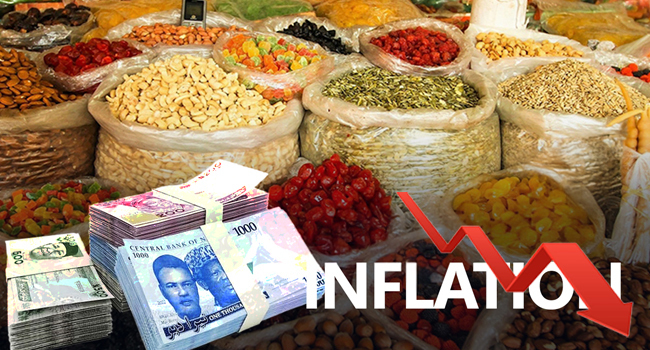
Nigeria’s headline inflation rate fell marginally to 15.39 per cent in August 2026 from 15.43 per cent in July, according to the National Bureau of Statistics.

The NBS disclosed this in its Consumer Price Index released on Tuesday, saying the latest figure represented a 0.04 percentage point decline from the previous month.

The statistics agency, however, reported a sharper decline in the month-on-month inflation rate, which dropped to 0.71 per cent in August from 1.57 per cent in July.

The month-on-month rate, according to the bureau, declined by 0.86 percentage points compared with the July figure.

The NBS explained that the development indicated that the rate at which the average price level increased in August was slower than that recorded in July.

The latest data also showed a significant moderation in food inflation, which stood at 19.57 per cent year-on-year in August.

The figure was substantially lower than the 25.30 per cent recorded in August 2025.

On a month-on-month basis, food inflation fell to 1.02 per cent in August from 5.56 per cent in July, representing a decline of 4.55 percentage points.

The NBS said the development showed that food prices were still rising, but at a slower rate during the month under review.

It attributed the decline largely to changes in the average prices of a number of food items, including palm oil, carrots, pepper, onions, cassava flour, beef, yam flour, water yam, melon (egusi), fresh ginger, fresh fish, Irish potatoes, wheat grain, frozen chicken and turkey meat.

At the state level, Adamawa recorded the highest year-on-year food inflation rate in August at 38.85 per cent.

It was followed by Zamfara with 37.96 per cent and Bayelsa with 36.20 per cent.

On the other hand, Borno recorded the lowest year-on-year food inflation rate at -4.04 per cent, followed by Jigawa at -0.23 per cent and Kebbi at 3.47 per cent.

The month-on-month figures presented a different picture, with Katsina recording the highest food inflation rate at 9.48 per cent.

Rivers and Osun followed with 8.86 per cent and 8.32 per cent respectively.

Taraba recorded the lowest month-on-month food inflation rate at -12.42 per cent, followed by Borno at -12.15 per cent and Bauchi at -8.88 per cent.

The latest figures indicate a moderation in the pace of price increases, particularly in the food sector, although the NBS data show that consumers continue to face varying price pressures across the states.

Continue Reading

News

Nigeria’s Oil Output Rises to 1.68m Barrels Per Day

Published

on

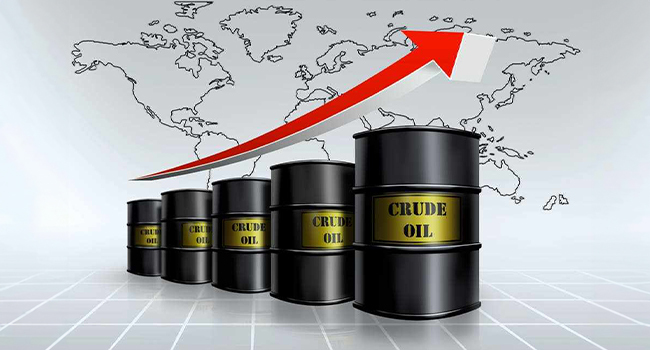
Nigeria’s crude oil and condensate production rose to 1.68 million barrels per day in August 2026, representing a 0.4 per cent increase from the 1.67 million barrels per day recorded in July.

The Nigerian Upstream Petroleum Regulatory Commission disclosed this in its latest production report released on Sunday.

Excluding condensate, the country produced an average of 1,500,190 barrels of crude oil per day in August, allowing Nigeria to meet its Organisation of Petroleum Exporting Countries quota for the fourth consecutive month.

Daily combined crude oil and condensate production ranged between 1.64 million barrels and 1.71 million barrels during the month under review.

A breakdown of production by terminals showed that Bonny Terminal recorded the highest output at 320.04 thousand barrels per day, followed by Forcados Terminal with 317.40 thousand barrels per day.

Qua Iboe Terminal recorded an average production of 171.72 thousand barrels per day, while Escravos Oil Terminal posted 131.71 thousand barrels per day.

Bonga ranked fifth among the highest-producing terminals, with an average output of 92.50 thousand barrels per day.

The NUPRC attributed the modest improvement in August production largely to the resolution of operational challenges involving the Single Buoy Mooring at the Erha field.

The commission said the challenges had adversely affected production in the preceding month.

“The restoration of normal evacuation and production operations at the asset contributed positively to overall production volumes during the period under review,” the commission’s spokesperson, Eniola Akinkuotu, said in a statement on Sunday.

The regulator added that production activities across most other producing assets remained relatively stable during the month.

“Production activities across most other producing assets remained relatively stable, with operators sustaining implementation measures aimed at optimising production efficiency, maintaining asset integrity, and minimising operational disruptions,” the statement said.

The latest figures indicate a continued improvement in Nigeria’s oil production, with the country maintaining its OPEC quota compliance for the fourth consecutive month.

Continue Reading

Trending

All Rights Reserved. Copyright © 2026 MegaIcon Magazine