Connect with us

Opinion

ASUU’s ‘Valentine’ Strike and ‘Maradona’ Government

Published

on

In the Spirit of the season of Love, the Academic Staff Union of Universities (ASUU) on February 14 commenced a “four-week roll-over, total and comprehensive strike action” over failure of the Federal Government (FG) to fully implement the Memorandum of Action (MoA) it signed with the Union on 23rd December, 2020. The Union is angry that the draft report of the renegotiated 2009 FGN/ASUU agreement which has been submitted to FG for finalization and signing has been delayed for over nine months. ASUU is unhappy with FG’s delay tactic in the adoption of the University Transparency and Accountability Solution (UTAS) and the forceful payment of salaries and emoluments of her members through the Integrated Payroll and Personnel Information System (IPPIS). In this piece, attempt is made to unpack the factors underlying the current warning strike and the likelihood that it may become indefinite if the leopard of FG does not change its spots. This piece reveals the irresponsibility in high places and unveil a deliberate attempt to enslave the intellectual community. How did we get to the warning strike?

Ladies and gentlemen, on March 9, 2020, ASUU began an indefinite strike to: ask government to revitalize public universities with funding, pay arrears of earned academic allowances from 2013 to date, pay salary shortfall, halt proliferation of state universities, make FG constitute visitation panels to her universities to assess governance challenges, ensure FG constitute 2009 FGN/ASUU renegotiation Committee, get government to adopt University Transparency and Accountability Solution (UTAS), and get withheld salaries paid to members as well as ensure that deducted but un-remitted check-off Union dues are paid to Union accounts. The Federal government failed to use the period of lockdown to engage the Union until it was time for students to return to school. By December 22, 2020, the Union, considered the implorations from parents and other stakeholders and signed a Memorandum of Action (MoA) with timelines to each item in the agreement assigned.

On the re-constitution of the 2009 FGN/ASUU re-negotiation committee, it was agreed that the committee would be inaugurated on December 2nd 2020 and given eight weeks to conclude its work. “Government posited with certainty that the negotiated position shall be implemented without delays. The Minister of Labour and Employment undertook to liaise with the leadership of the Governors forum, Senate and Chief of Staff of Mr President to actualize the expeditious implementation of the agreement that would ensue from the re-negotiation”. Ladies and gentlemen, the renegotiation that was supposed to end in eight weeks didn’t end until May, 2021, because some members of the FG team contracted COVID-19 and everything had to wait until they recovered. However, months after the submission of the renegotiated agreement, the FG has been dribbling the Union against their promise to “implement without delay” as contained in the 2020 MoA. Why is this renegotiation important?

For 13 years, ASUU had relegated pursuing better welfare of their members and elevated getting better infrastructure and conducive learning environment. But each time ASUU pursues these altruistic goals, the principal beneficiaries (parents and students) stand as opposition to the struggle. Does the holy book say love thy neighbour more than yourself? Lecturers, therefore told their leadership pointblank to prioritize their welfare and liberate them with a living wage and a world class conditions of service. In August 2021, I wrote on ‘greedy Nigerian professors and their fat salaries’. Let me tell you that no professor in Nigerian public universities earn $1000 in a month. See what other cadres earn: Assistant lecturer (N118,277 -N137, 334); Lecturer II has a doctorate degree (N129, 724 – N153, 563); Lecturer I has at least three years post-PhD experience on the job (N160, 809 – N203, 778); Senior Lecturer with at least six years experience on the job (N222,229 –314, 159); Associate Professor (with at least nine years experience on the job: N277, 179 – N350, 169) and a full Professor with more than 12 years of experience on the job (N332, 833 – 416, 743). This is what they have been earning since 2009. Divide their earnings with dollar and you will know why they are bitter.

In Ugandan public varsities, Assistant Lecturer earns $1,631; Senior lecturer, $2,432; Associate Professor, $3,891 and Professor, $4,054 per month, respectively. In University of South Africa, a Junior Lecturer earns N10, 453, 326 – N17,427,663; Lecturer, N12,547,744-N20,910,248; Senior Lecturer, N16,272,983 – N27,891,819; Associate Professor, N20,224,232 – N32,564,902) and Professor, N22,325,844 – N37,209,741 per annum. Nigeria cant even attract a lecturer from Ugandan let alone scholars from South Africa! While a politician from Uganda and South Africa will be happy to work as politician in Nigeria, their scholars will never come to Nigeria. This is why Nigeria can’t attract foreign scholars to our ivory towers.

What about the funding for revatilisation? The 2013 MOU stipulates that Nigerian public varsity would need the sum of N1.3trilion for a modest revitalisation. The fund was to be paid in tranches of N200billion (2013), 220b (2014), 220billion (2015), 220billion (2016), N220b (2017) and 220billion (2018) respectively. Only the former President Goodluck Jonathan government released 200billion in 2014. It took another strike before the Muhammadu Buhari government released N20billion in 2019 “as a show of commitment to the MoU of 2013”. In the 2020 MoA, government offered to pay N30billion “on or before January 2021”. It will shock you that the N30billion was just paid last November/December 2021. This leaves a balance of N170billion to be paid for year 2014. It should be noted that the money for revitalization goes to university administration and not ASUU as government will want people to believe. When you say ASUU loves strike, remember that students live in zoo-like hostels, take lecturers in crowded and poorly ventilated lecture rooms and ill-equipped laboratories. The implication is that students produced in such conditions will not have pity on others when they get to position of leadership in future.

Earned academic allowances (EAA) are also owed lecturers in public varsities spanning 2013 through 2020. The last disbursement made by government was only for 2021 because a provision for it was forced to be made in the supplementary budget of 2021. Earned Academic Allowances is an agreement reached to compensate lecturers who do excess work more than required since government refuse to employ and students’ population keeps increasing. There is a minimum number of student-lecturer ratio approved. In some disciplines, it is one lecturer to 40 students but in Nigerian public varsities, a lecturer could teach a class size of about 300students or more. It is the excess of what ought to be taught that is calculated as EAA. Since, 2013, lecturers have been supervising students on credit with government owing them in excess of over sixty billion naira!

There is also the issue of UTAS. ASUU opposes the use of IPPIS in paying salaries of lecturers because it does not capture the peculiarities of the university system. It developed University Transparency and Accountability Solution (UTAS). The Minister of Labour and Employment Chris Ngige gave his assurance in 2020 to follow up with Nigeria Information Technology Development Agency (NITDA) and Federal Ministry of Education (FME) to expedite action on the test process and ensure the deployment of the UTAS for the payment of salaries of staff of universities. The timeline was February 2021 for the discussion of time for its deployment. These agencies tested the UTAS platform and rated it 87percent and only asked the Union to correct the observed issues. But while the assessment was concluded in August 2021, government refused to release the assessment report to ASUU until December 16, 2021. ASUU is now angry because, government says the Union will start the test process all over!

Lecturers continue to do researches with their money and that is the only grace Nigerian public universities are still enjoying to feature in webometric rankings. When strike happens, students suffer and lecturers whose promotions are due get trapped in it but we must fight and sacrifice. Ideally, students ought to be the one fighting government to get better infrastructure and conducive learning environment but lecturers, through their Union have decided to do this as a sacrifice for the children of the masses. I know many ASUU chairmen who face the ethical dilemma of having to prosecute strike while their children at home ask them: “Daddy, why don’t you people just let me graduate first?”. Everyone is in a hurry going nowhere. No pain, no gain. Years ago, ASUU warned that one day, the children of the poor will have nothing left to eat but the children of the rich. This is already happening. The untrained millions of out-of-school children are unleashing the beast the system planted in them through banditry, terrorism, armed robbery, kidnapping among others. Parents and other stakeholders have options to pick from: join government to destroy public funded university education or support ASUU to extract commitment and funding from government so that children of the masses will have hope of becoming responsible leaders of tomorrow.


Dr Tade, a sociologist writes via dotad2003@yahoo.com

Comments

Opinion

G-WAGON: Dare Adeleke, A Liar’ll Steal; Why’re You Desperate To Conceal The Truth? | Maroof Asudemade

Published

on

I have read Dare Adeleke’s rather vacuous response to my article on Governor Seyi Makinde’s presentation of a brand-new Mercedes-Benz G-Wagon 500 to the President-General of the Central Council of Ibadan Indigenes (CCII), Barrister Sulaimon Ajeniyi Ajewole. Unfortunately, beneath the insults, name-calling on my person and his apparent eye-service desperation to impress his political benefactor, there is hardly any substance worth engaging.

Adeleke devoted considerable space to calling me a drunken, lowly writer. Yet, in all his verbal gymnastics, he conspicuously failed to address the fundamental questions raised in my article. Has Governor Makinde paid the statutory salaries and entitlements of the Olubadan of Ibadanland, Oba Rashidi Adewolu Ladoja, and the Alaafin of Oyo, Oba Akeem Owoade, since their ascension to the respective thrones? Has his administration provided them with official vehicles, as expected under the applicable government arrangements? These were the issues Adeleke ought to address not my personality.

If he had any credible answers to these questions, he would have provided them. Instead, he chose to exhibit his wrakness as an intellectually exhausted defender. He resorted to abusing the messenger when he couldn’t dismantle the message.

However, there is one particularly interesting aspect of Dare Adeleke’s response that deserves immediate correction. He lied that Governor Makinde spent N1 billion on the completion of the Olubadan Palace. Is he sure he’s not addicted to stealing as a liar? The financial contributions towards the completion of the palace came from multiple sources, including the 11 local governments in Ibadanland, each of which contributed N50 million, amounting to N550 million.

Governor Makinde contributed N250 million. The governor’s contribution was N250 million, not N1 billion! Why would Adeleke inflate the governor’s contribution from N250 million to N1 billion? Is he so desperate to manufacture an impressive record for his political principal that figures have become expendable? Or does he imagine that exaggerating the governor’s generosity will make the unanswered questions of ridiculing our royal fathers disappear?

The 11 local governments of Ibadanland have a responsibility towards the Olubadan institution. Their contributions towards the palace should not be presented as a personal sacrifice by Governor Makinde. They are contributions made by public institutions to an institution that belongs to the people of Ibadanland.

Even more disturbing is Adeleke’s inane argument that because Makinde contributed money towards completing the Olubadan Palace, the governor deserves appreciation rather than criticism. This argument betrays a shocking failure of Adeleke to distinguish between governmental responsibilities and statutory obligations.

Let us even assume, for the sake of argument, that Makinde personally spent N1 billion on the palace. How does constructing or completing a building discharge the government’s obligation to pay the statutory salaries and entitlements of the Olubadan and the Alaafin? How does a palace building become a substitute for official vehicles? Are these royal fathers supposed to live in beautiful palaces while their statutory entitlements remain unpaid?

By Adeleke’s ‘logic’, Governor Makinde could build a magnificent headquarters for the Nigeria Labour Congress and subsequently refuse to pay workers their salaries, expecting the labour movement to applaud him for his generosity. Would that be acceptable? Could the government substitute office buildings for workers’ wages? Dare Adeleke is glaringly a peripheral thinker!

A building is a capital project. Salaries and official entitlements are separate obligations. Since Adeleke knew he could not understand this elementary distinction, he should have smelt his argument before presenting it to the public. His defence is not only logically defective; it is intellectually sour.

More importantly, the completion of the Olubadan Palace was not the subject of my article. I did not dispute the governor’s contribution. I questioned the apparent contradiction between his extravagant generosity towards the CCII President-General and the allegations of neglect concerning the official entitlements of the Olubadan and the Alaafin. Adeleke has not answered that question. He has merely introduced an unrelated expenditure in an attempt to divert attention.

I have no objection to Governor Makinde giving G-Wagons, aeroplanes or even private jets to people he loves, provided he does so with his personal resources. He is entitled to his private generosity. But public accountability should not cease because a governor is generous to his friends, associates or political admirers. The issue is not his freedom to give birthday presents. It is his responsibility to discharge governmental obligations.

As for Adeleke’s unnecessary personal attacks, I refuse to dignify his descriptions of me as a drunken or lowly writer with an elaborate defence. Neither description reflects my personality, and neither alters the substance of my argument. He only needs to be aware that despite his opinion of me as a drunken, lowly writer, I am his better by far as a family man and a responsible father – two essential duties he has failed in. I will also not allow his inability to sustain an intelligent argument to dictate the level of my engagement.

I am upset with Dare Adeleke for not living up to his claim of belonging to Oja’ba. He lacks the intellectual discipline, street wisdom and argumentative dexterity traditionally associated with the historic Ibadan community. His response has demonstrated an unfortunate deficit in all three. “Dare ò m’èsì, ó tún gọ!”

There is also something deeply incongruous about Adeleke’s pretentious defence of Governor Makinde. Those familiar with the undercurrents of Oyo politics may find his public posturing rather amusing. He presents himself as an unquestioning defender of the governor, yet political hypocrisy has a way of concealing its true colours beneath an appearance of loyalty. If the human stomach were transparent like a calabash, perhaps the governor would have a clearer view of Dare Adeleke as the green snake lurking beneath the green grass.

But my concern remains the dignity of the Olubadan and Alaafin institutions, not Adeleke’s political theatrics. He has had an opportunity to answer straightforward questions. He failed. He has had an opportunity to correct the allegations with verifiable facts. He avoided them. Instead, he manufactured a N1 billion contribution, inflated the governor’s generosity and attempted to intimidate a critic with insults.

Let me therefore restate the questions he could not answer: Has Governor Makinde paid the statutory salaries and entitlements of the Olubadan and the Alaafin since their ascension? Has he provided them with their official vehicles in accordance with applicable government policy? If yes, let Adeleke produce the evidence. If no, let him explain why.

A G-Wagon cannot answer questions about unpaid salaries. A palace cannot substitute for statutory entitlements. And N1 billion in political propaganda cannot turn N250 million into N1 billion. Dare Adeleke may choose to defend Makinde with insults, exaggerations and emotional outbursts. I will continue to interrogate the administration with facts, logic and questions that public officeholders owe the people answers to.

The dignity of the Olubadan and the Alaafin is far more important than Adeleke’s desperate attempt to earn political applause. And no amount of name-calling will make me abandon the responsibility of holding those in power accountable.

Continue Reading

Opinion

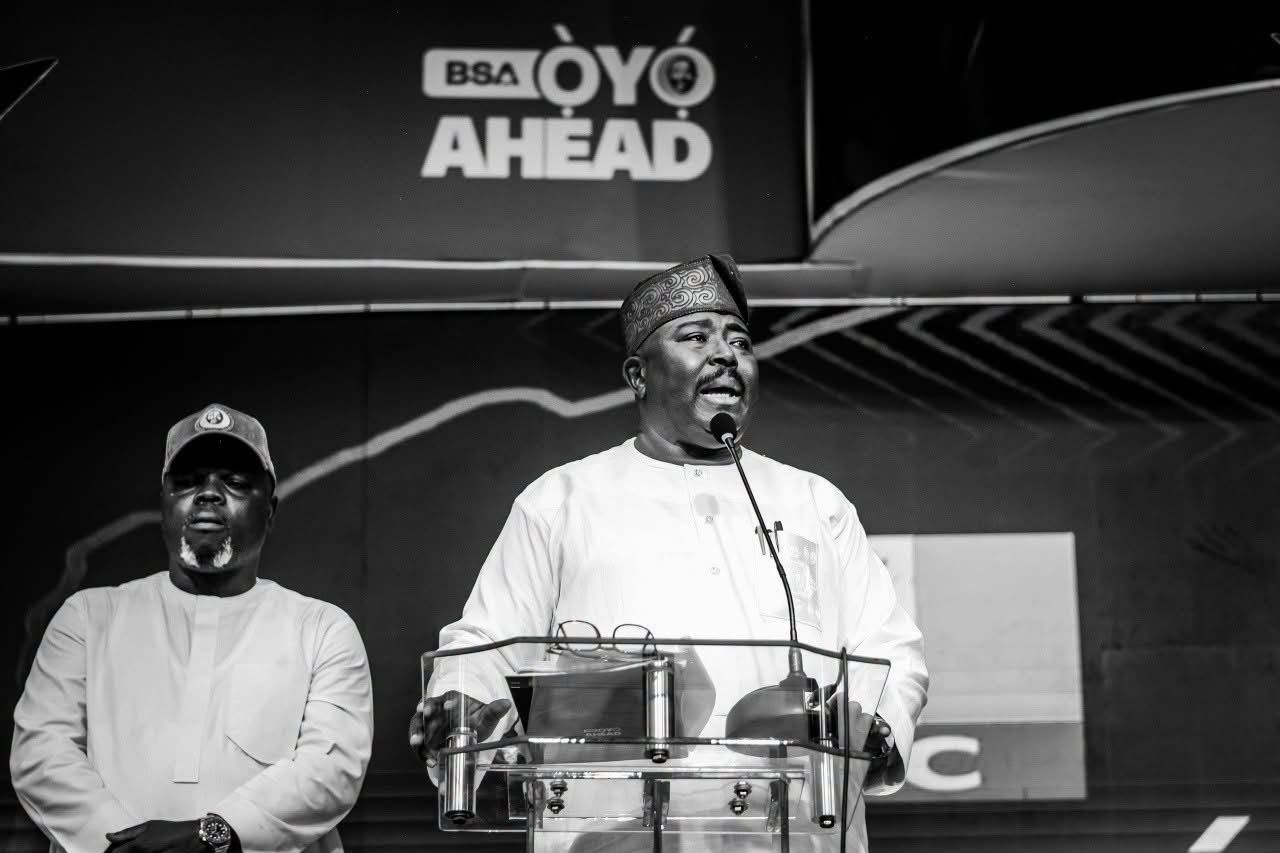
OYO AHEAD: Senator Alli Blueprint for Oyo Renewal | Muji Armstrong-Bello

Published

on

The unveiling of Senator Sharafadeen Abiodun Alli’s OYO AHEAD manifesto has introduced a new dimension to the 2027 Oyo State governorship conversation. Beyond the usual campaign promises, the document presents an attempt to define not just what a government intends to do, but how it proposes to govern. Its central message is that Oyo State needs a development model built around grassroots empowerment, economic productivity, institutional accountability and measurable performance.

What makes the manifesto politically significant is its attempt to connect the candidate’s personal political journey with a proposed programme of government. From his experience as Chairman of Ibadan North Local Government to his service as Secretary to the State Government, Chief of Staff, Senator and Chairman of Odu’a Investment Company, Alli presents himself as a politician whose experience cuts across grassroots administration, constitutional politics, legislative representation and business management. These experiences provide a solid foundation for effective governance and reinforce the expectation that his proposed agenda can be translated into tangible results for the people of Oyo State.

The first pillar, local government autonomy, may well become the most politically consequential. By promising transparent access to council allocations, monthly funding arrangements and greater freedom for local governments to address community needs, BSA is placing grassroots governance at the centre of his development philosophy. The message is unmistakable: democracy must be felt beyond the Government House, and the dividends of government must reach the communities where ordinary people live and work.

His infrastructure proposals also deserve attention. Rather than concentrating exclusively on new construction, the manifesto promises an audit of unfinished roads, published completion schedules, farm access roads, improved electricity, potable water and affordable housing. This suggests an understanding that infrastructure should be judged by its economic and social usefulness, not simply by the political visibility of projects.

In healthcare, the proposed Oyo Care Guarantee for infants, pregnant women and residents above 70 is a significant social intervention. The commitment to strengthen primary healthcare, address shortages of medical personnel and expand health insurance coverage recognises that healthcare is not a privilege reserved for those who can afford it. With the right funding arrangements, adequate staffing and firm institutional commitment, these promises can be translated into a sustainable healthcare system that delivers tangible benefits to the people of Oyo State.

Education is another area where the manifesto attempts to reconnect Oyo with its historic reputation as a pioneer of educational development. Reducing classroom congestion, repairing schools, expanding scholarships, establishing skills centres and linking graduates to employment are proposals that speak directly to the future of the state’s young population. These interventions are designed to translate educational investment into measurable improvements in learning outcomes, practical skills and employment opportunities for the next generation.

Perhaps the most compelling economic proposition is the commitment to move Oyob beyond an economy of consumption towards one of production, investment and job creation. The proposed industrial parks, revival of the Oluyole Free Trade Zone, ₦10 billion Youth Fund, digital skills programme and support for small businesses suggest an administration seeking to make employment creation a central responsibility of government. The ₦150 billion annual internally generated revenue target reflects an ambitious vision of economic growth, driven by expanded business activity, increased investment, efficient revenue administration and the elimination of financial leakages, while preserving a favourable environment for citizens and businesses to prosper.

Agriculture gives the manifesto another important regional dimension. Oyo possesses considerable agricultural potential, particularly across Oke-Ogun, Ogbomoso and Ibarapa. The proposals for processing facilities, revived farm settlements, mechanisation, storage, agricultural insurance and export promotion recognise that farmers cannot prosper merely by producing crops; they must also have access to markets, processing facilities and value chains. If properly executed, this could transform agriculture from subsistence activity into a major engine of industrial growth.

Security, appropriately, is treated as the foundation upon which every other pillar depends. The proposed strengthening of community security networks, protection and insurance for hunters and vigilantes, improved surveillance and farmer-herder mediation reflect the reality that development cannot flourish where fear controls access to farms, schools and businesses. The accompanying commitment to public disclosure of projects, contractors and costs also reinforces the argument that security and accountability are inseparable responsibilities of government.

One particularly striking feature is the candidate’s personal commitment to publish quarterly performance reports and to decline a second-term request if Oyo State is not measurably better by the end of his first tenure. This is a bold political undertaking. It shifts the conversation from the traditional entitlement of incumbency to the obligation of performance. This commitment further underscores the importance of measurable performance targets, transparent reporting and regular public assessments as the foundation for accountable and results-driven governance.

The strength of OYO AHEAD lies not only in the breadth of its promises but also in the opportunity to translate them into a practical development programme. The proposed revenue expansion, healthcare guarantee, youth and women empowerment funds, educational reforms and infrastructure projects provide an ambitious agenda for the state. With proper financial planning, sound legal frameworks, effective coordination and measurable implementation targets, these proposals can form the foundation of a purposeful and results-oriented administration.

This places an important responsibility on the OYO AHEAD Steering Committee. Beyond campaign mobilisation and public presentation, the Committee must sustain the technical work required to support the manifesto with reliable data, realistic costing, legal guidance, implementation timelines and measurable outcomes. The depth of this preparation will be central to demonstrating that OYO AHEAD is not merely a collection of campaign promises, but a carefully considered programme for governing Oyo State.

As the 2027 governorship election approaches, the debate should increasingly focus on the future of Oyo State: the governance philosophy, experience, policy direction and preparedness of those seeking the people’s mandate. Political alliances and personalities will naturally shape the contest, but the enduring question is which proposals offer a clear and practical pathway to development, prosperity and accountable leadership.

OYO AHEAD has placed such a pathway before the people of Oyo State. Its seven pillars provide a framework for addressing the state’s development priorities, while its emphasis on grassroots governance, economic productivity, human capital development and accountability speaks to the need for a new direction. With his political experience, administrative background and familiarity with the challenges of Oyo State, Senator Sharafadeen Abiodun Alli is well positioned to lead the effort to translate this blueprint into meaningful progress. The promise of OYO AHEAD is renewal; its ultimate measure will be the transformation it delivers to the lives of the people.


Prince Armstrong-Bello, JP. Akogun Aliiwo Ibadanland, Author of “Yoruba Leadership in Diaspora: Equity Justice and Tradition” is a Political Communication Strategist and Public Affairs Analyst

Continue Reading

Opinion

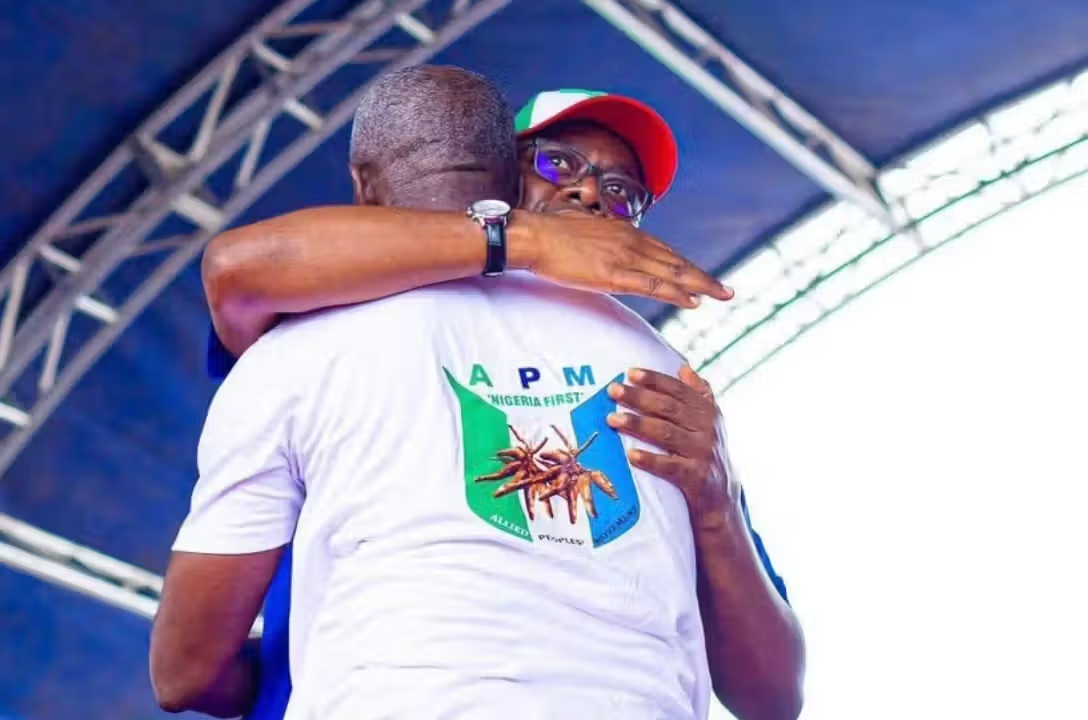
OYO 2027: MAKINDE EATS SOUR GRAPES, ADEKANMBI’S TEETH MUST BE SET ON EDGE

Published

on

The confusion within the ranks of the Allied Peoples Movement (APM) is becoming increasingly difficult to describe.

The political empire built by Governor Seyi Makinde on what critics describe as lies, betrayals, broken promises and greed appears to be crumbling by the day.

Indeed, Makinde and his APM loyalists are providing an endless source of amusement these days.

Virtually everyone who leaves the Makinde administration is suddenly dismissed as a “paperweight” by the party’s social media attack dogs.

I have often wondered whether these fellows are unaware of the wisdom behind the Yoruba belief that even cotton wool, when gathered in sufficient quantities, can become a load too heavy for one person to carry.

As the Yoruba proverb puts it: Eni ní òwú ò t’ẹrù; ìwọ̀nba tó fẹ́ fi tan iná ló mú.

You keep losing prominent politicians and influential party stakeholders, yet you dismiss them as political nonentities. But which heavyweight has the power to cast more than one vote for a preferred candidate?

I am certain that even Bimbo Adekanmbi must be wondering how things deteriorated so badly for the APM.

Before his emergence as Governor Makinde’s anointed governorship candidate was made public, I granted an interview on a television station during which I openly predicted that Adekanmbi would get the governor’s endorsement and that his choice as successor would spell trouble for both men.

To one another, both men have become potential political albatrosses. Unfortunately, Governor Makinde’s ego appears to have blinded him to realities beyond his immediate political calculations.

I am particularly surprised that Adekanmbi failed to recognise that he was walking into a political trap by accepting Makinde’s endorsement.

Greed, indeed, can be a dangerous disease. In Adekanmbi’s position, no discerning politician would have ignored the number of political enemies Governor Makinde had accumulated during his seven years in office.

It follows, therefore, that Adekanmbi would inevitably inherit many of those political liabilities. Sadly, he either failed to appreciate the implications or simply chose to overlook the consequences.

By the time Governor Makinde, or perhaps Seye Famojuro, settled for Adekanmbi, the governor was already embroiled in disagreements with prominent political figures, including former Deputy National Chairman of the PDP, Ambassador Taofeek Oladejo Arapaja, Alhaji Bisi Olopoeyan and several first-class traditional rulers in Oyo State.

He had also fallen out with several influential political figures, including Senator Hosea Agboola, Alhaji Razak Gbadegesin, former Deputy Governor Barrister Gbolarunmi Hazeem, Chief Mrs Jumoke Akinjide, Hon. Mulikat Adeola Akande, former Deputy Governor Engr. Rauf Aderemi Olaniyan, Prince Diran Odeyemi, former Ekiti State Governor Ayodele Fayose, former Rivers State Governor Nyesom Wike and even President Bola Ahmed Tinubu.

Beyond these strained relationships, several stakeholders within the Makinde political camp were already uncomfortable with the process that produced Adekanmbi as the APM governorship candidate.

There were also contentious discussions about whether Governor Makinde should be succeeded by a Christian. Equally troubling to some stakeholders was the question of whether it made political sense for Makinde to present Adekanmbi as his preferred successor when both men hail from Ona-Ara Local Government Area.

At the time, agitations were mounting over Governor Makinde’s alleged failure to comply with the Supreme Court judgment granting financial autonomy to local governments.

Other contentious issues included the controversial Circular Road project, the sale of government assets and the proposed transfer of Oyo State farm settlements to estate developers.

The state’s debt profile, which has remained a subject of public concern and debate, was another issue that had yet to be satisfactorily addressed.

All these issues were already in the public domain before Adekanmbi accepted the offer to become Makinde’s anointed candidate.

One is therefore compelled to ask: what could have persuaded Adekanmbi to accept such a politically dangerous offer?

I can only think of one reason: greed.

When Governor Makinde claimed that he had advised Adekanmbi not to inherit his enemies, he was being economical with the truth.

The reality is that those political liabilities became Adekanmbi’s the moment he accepted Makinde’s endorsement.

The governor knows that he is carrying a political baggage that could weigh heavily on his preferred successor. Yet, he appears unwilling to be held accountable for the political consequences of his own administration.

Unfortunately for both men, even Adekanmbi’s campaign slogan tells a story of its own: “Omi Tuntun 3.0”.

How, then, does he intend to separate himself from the “Omi Tuntun” administration and the controversies surrounding it?

Governor Makinde has never hidden his discomfort with genuine local government autonomy. Adekanmbi, by his posture, appears prepared to sustain the same political template, which critics blame for weakening the 33 local government councils in the state.

On virtually every issue over which the people of Oyo State have expressed concern, Adekanmbi appears to be offering continuity rather than a departure from the policies of the present administration.

He has failed to condemn the controversy surrounding the proposed transfer of the Ogbomoso Farm Settlement to estate developers, despite protests by residents of the ancient town.

He has equally remained silent over the controversy surrounding the administration’s reported moves involving the Saki Farm Settlement.

He also appears untroubled by the reported transfer of the 4,000-hectare Eruwa Farm Settlement to investors, whose whereabouts and activities have, according to critics, remained unclear two years after the arrangement.

Indeed, Adekanmbi appears not to appreciate the extent of the challenges facing the state. For instance, Oyo State is said to be short of six general hospitals if the benchmark of one general hospital per local government area is adopted.

Yet, when Senator Sharafadeen Abiodun Alli promised in his manifesto to address this deficit, APM spokespersons reportedly went on the offensive, describing the manifesto as “lacking in originality”.

Governor Makinde has been in office for more than seven years. During this period, his administration has received ecological funds on several occasions.

The question, therefore, is simple: what has happened to those funds?

There are concerns over the utilisation and accountability of the ecological funds received by the state. The governor owes the people a clear explanation of how these resources have been deployed.

There are also questions surrounding the proposed upgrade of the Alakia Airport, a project for which Adekanmbi himself was appointed by Governor Makinde to head a committee.

I have been reliably informed that the contract sum for the airport upgrade was reportedly reviewed upwards from its original figure of over N50 billion to well above N150 billion.

I have raised this question before, but I am yet to hear Adekanmbi offer a convincing explanation or response to the allegation.

Similarly, Governor Makinde reportedly approved more than N60 billion for the renovation of the Government House, an expenditure that attracted public criticism.

As of today, the visible works include the construction of a hall, the painting of the Government House mosque and church, and the replacement of tiles in both places of worship.

I challenge Governor Makinde to tell the people of Oyo State how much of the more than N60 billion reportedly approved for the renovation has actually been released and expended.

Beyond that, the governor should invite members of the press to conduct an independent assessment of the work carried out so far. The people deserve transparency and accountability, not unanswered questions.

The state government’s performance in education is another area that demands urgent attention.

Oyo State’s performance in WAEC and NECO examinations has continued to attract concern, particularly when compared with the performance of other states, including neighbouring Osun, which has been celebrated for its fifth-place position in a recent examination ranking.

Senator Sharafadeen Abiodun Alli has argued that the state must return to an educational system that makes teaching and learning more conducive. One of his proposals is a 30-pupils-per-classroom policy.

But rather than engage constructively with the proposal, APM voices have dismissed its feasibility.

Adekanmbi, as the party’s governorship candidate, has also failed to offer a clear departure from the present arrangement, under which many public primary and secondary school classrooms remain severely overcrowded and unconducive to effective learning.

Oyo State cannot afford another administration that merely promises continuity without addressing the shortcomings of the present one.

The people deserve better, and they now have an alternative in Senator Sharafadeen Abiodun Alli.

Governor Makinde has eaten sour grapes. Unfortunately, Bimbo Adekanmbi appears destined to bear the consequences.

His teeth, indeed, must be set on edge.

Continue Reading

Trending