Opinion
Is Èmil’ókàn audacity or incantation ritual? | By Festus Adedayo
Published
10 months agoon
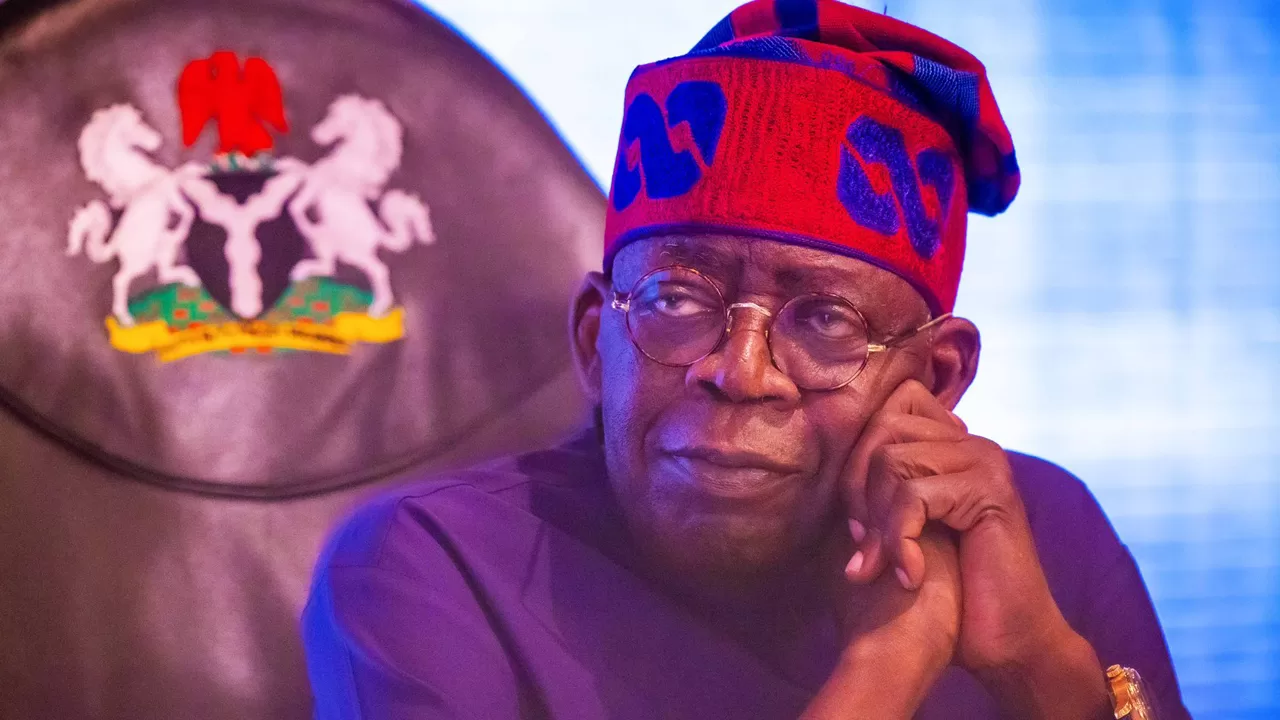
A few weeks ago, an outburst of then aspirant for Nigeria’s presidential office, Bola Ahmed Tinubu, marked its third anniversary. On June 2, 2022, in Abeokuta, the Ogun State capital, Tinubu bit the bullet in what has now become an epochal ad-lib commentary. In a retort to attempts to deny him the Nigerian presidency, he had said, “Èmi l’ó kàn, ẹ gbé kinní yìí wá” – It is my turn, bring this thing. At a meeting with Ogun State governor, Dapo Abiodun, as well as leaders and delegates of the APC at the presidential lodge, Ibara, Abeokuta on that same day, Tinubu rained subtle invective on Muhammadu Buhari, Nigeria’s then sitting president. He had come to meet the party’s delegates in Abeokuta ahead of its presidential primaries slated for about a week to that day.
Like Sango, the Yoruba god of thunder, lightning and fire or an enraged cobra, Tinubu spat out the magical words. “If not for me who stood behind Buhari, he wouldn’t have become the president,” he began, in an audacity many believe was sterner than Barack Obama’s. “He tried the first time, he fell; the second time, he fell; the third, he fell… He even wept on national television and vowed never to contest again but I went to meet him in Kaduna and told him he will run again. I will stand by you and you will win, but you must not joke with Yorubas and he agreed. Since he became the president, I have never got ministerial slots, I didn’t collect any contract, I have never begged for anything from him. Èmi l’ó kàn, ẹ gbé kinní yìí wá”; it is the turn of Yoruba, it is my turn.”
Anyone in alignment with the Nigerian political barometer of this period in time would know that, as at the morning of June 2, 2022, Tinubu was not in the reckoning of the powers-that-be for a Buhari successor. For his presidential dream, in the words of immortal Nigerian nationalist, K. O. Mbadiwe, the come (has) come to become. Or better put, from the tone and timbre of Fela Anikulapo-Kuti’s saxophonist, “rẹrẹ (ti) run” – a political calamity was afoot. Shortly after the outburst, however, what was thought to be a speech fiasco morphed into a catapult that shot Tinubu up. In spite of his visible opposition to his candidacy, Buhari almost instantly got sucked into it, inexplicably. You could feel the grudge and reluctance in Buhari thereafter. The gang-ups against Tinubu thereafter melted like ice in the sun. Not long after, a major stumbling block, Godwin Emefiele’s Naira re-denomination, fell face flat on the floor. Before you could say Jack, what was thought to be Tinubu’s baggage became his greatest wattage.
What actually transpired in Abeokuta that day? Scholars have since then subjected that audacious and epochal Tinubu statement to different analytical studies. Was it a pure biting of the bullet? A daring Tinubu owns its patent since he hopped into third republic politics? Or, was it an omnivorous appetite for things magical that many claim cannot be divorced from Tinubu’s politics? After all, Yoruba say a child’s behavioural manifestation propels him to seek anti-machete protection charm (Ìwà omo l’óń mú omo se òkígbé). In other words, was that Abeokuta statement a product of unscience and metaphysics (òògùn ab’ẹnu gòngò), a flavour that has been known to be part and parcel of African politics?
In April 2024, during the beginning of the travails of former Kogi State governor, Yahaya Bello, a similar pronouncement, thought to have spiritual implication, went viral in a video. It had an enchanter recite an incantation with utmost fury. It went thus: “River Niger and River Benue, the confluence is in Kogi State. Except say River Niger and River Benue no come meet for Kogi; if River Niger and River Benue come meet for Kogi, dem no go fit arrest Bello… Dem dey use EFCC pursue am, dem no go succeed o. Dem go lay siege for im house for Abuja… Except say I no be born of Igala kingdom… EFCC dey front, you dey back; you dey back, dem dey front; you dey left, dem dey right; you dey right, dem dey left; you dey centre, dem come there, you jump dem pass!…a lion cannot give birth to a goat…”
Those in the know claim it would be ludicrous to claim that, since 2007 when he left the governorship of Lagos, Tinubu has welded his leadership of Lagos together only with political sagacity and tons of cash. Extra-terrestial intelligence in the form of occult practices, membership of a cult of leadership where allegiances are suborned in blood oaths, are alleged to be interwoven into the much-touted Lagos hold of power. In Africa as a whole, empirical evidence given by practitioners often interviewed to give participant observations of the phenomenon has shown that, while the electorate sees the formal practices of voting, primaries and elections, unseen, chilling, blood-curdling informal recourse to black magic is an unwritten but potent credential of African political practices. So, the question is, does metaphysics influence outcomes of electoral practices? Or put more succinctly, do politicians’ occult and traditional magical practices have any bearing on voter behaviour or electoral outcomes?
Of a truth, science has denounced the validity of the above reasoning. Austro-British philosopher of language, Ludwig Wittgeinstein, was one of those who rubbished it. In his Tractatus which contained criticisms of traditional metaphysical investigation like the Èmil’ókàn outburst, Ludwig considered such as “abstract speculations” and meaningless linguistic confusion. He even said that such engagements were “metaphysical chatter(s)”. It must be said that three centuries before Wittgenstein, that is the seventeenth century, were a period in which philosophy and science could not be sharply demarcated from the occult. There, occult and reason existed side by side.
To thus think that Nigeria’s electoral politics is solely what transpires in the physical will be naivety of the highest order. In my little interface with politicians in southern Nigeria, I can confirm that there is a spiritual dimension to political leadership. A most notorious example was the Chris Ngige and Chris Uba saga in the Okija shrine while the former was Anambra governor. Indeed, there exists a seeming incestuous relationship between politics and spirituality, especially rituals. It exists in northern Nigeria as well, solely cobbled together by the marabout system brought into Nigeria by hermitic and itinerant North African Islamic Malams. Because elections and electioneering are seen as war, Nigerian politicians visit spiritualists to fortify themselves with Òkígbé, a charm perceived to insulate them from piercing machetes, guns and machinations of political adversaries. With Òkígbé, it is said that someone thus fortified, if inflicted with machete, the metal breaks into two.
In southwest Nigeria, guests visiting homes of politicians where a mass of people throng will not fail to notice grains of millet and corns splashed on roads. They are rituals which are believed to attract a motley crowd to the sides of the politicians. Those in the know also say that, as we gravitate towards the 2027 elections, there will be a spate of ritual murders known to be handiwork of politicians in need of human parts to aid their political ambitions. Non-politicians also engage in it. When you go to road junctions where three footpaths meet (orítaméta) in the southwest, you cannot fail to see ritual offerings in calabashes which are many times spiritual electoral interventions. Election times are periods rituals, libations and incantations reign. Effigies of political opponents are sometimes also made, on which are poured frightening incantations. The belief is that such political opponents are caged and their political destinies padlocked. Nigerian politicians also visit spiritualists, either the Christian variant, the Islamic-flavoured ones or traditionalists.
In earlier pieces I did, both on September 26, 2021 and April 28, 2024, with the headlines, “Nigeria’s huge market of blood and human sacrifice” and “The marabouts of Yahaya Bello”, respectively, I explored the themes of magical and ritual practices as a pervasive phenomenon in power relations in Nigeria. I stated that this affirms that when complicated issues and challenges of life confront Nigerian politicians, they quickly run to their traditions and origins. These syncretic practices do not affect their worship in church on Sunday nor mosque on Friday. This equally demonstrates the ease with which politicians momentarily throw away their Christian and Islamic cloaks to hold on to the utilitarian purpose that magic and sorcery serve them.
Late University of Leiden scholar, Stephen Ellis, in a 2001 article, “Mystical Efforts: Some evidence from the Liberian war” (Journal of Religion in Africa, XXX1, 2) described how young fighters in the Liberian war, sporting amulets which assumably made them bullet-proof, filled the streets with corpses. Monrovians were shocked at how soldiers “(disemboweled) the bodies of their victims and (eat) their flesh or internal organs, particularly the heart.” The art of eating a human heart is borne of a residue of practices in Africa. The belief is that a person’s essence is contained in the heart and the blood. So, once the hearts and blood of these warriors are eaten and drunk, “the one who had just eaten them acquires some of the power formerly possessed by his victim.”
In prehistoric time, human rituals and cannibalism were racial-blind. So many works have historicized cannibalism and human rituals in Africa. Milan Kalous’ Cannibals and Tongo Players of Sierra Leone gave an account of deadly cannibalism practice in Sierra Leone during the nineteenth and twentieth centuries by a set of people called “were-animals” notoriously labeled “human alligators,” “human leopards” and “human chimpanzees.” Their renown was capturing and ritually slaughtering their victims and harvesting their vital organs to make wealth-producing charms.
Cannibalism isn’t strictly African as empirical documentation confirmed that during the trans-Atlantic trade, European cannibals were also on the prowl seeking the succulent fleshes of Africans to make delicacies. Andre Donelha, a Cape Verdean, who travelled in Upper Guinea from 1574 to 1585, recalled how the Mane, invaders who operated during the first half of the sixteenth century, attacked the Western coast of Africa from the eastern flank and “(ate) human flesh at any time and while at war, even that which belongs to one of their own nation. When they make war, the conquerors eat the conquered.” In fact, the Manes were reputed to bear the grisly and cruel name of Sumbas which, translated, means “eaters of human flesh,” a practice which Walter Rodney explained was “for courage and ferocity.”
With its domicile in West Africa in early to mid-20th century, Human Leopard, Alligator and Baboon Societies were dreaded secret societies originally active in Sierra Leone. They eventually spread to Liberia, Nigeria and Cote d’Ivoire. In Nigeria, it was predominant among the Efik of Calabar and bore the native name, Mforoekpe. Their appearance was in leopard skin dresses. At midnight, they waylaid travelers and were armed in sharp instruments that looked like a leopard’s teeth and claws. Once they succeeded in killing their prey, the Mforoekpe then cut the flesh into pieces which were then distributed to members of this dreaded secret society. Upon eating human flesh, members believed they were revitalised spiritually and physically while the entire Efik tribe received vitality thereby. Late Stephen Ellis in his The Mask of Anarchy: The Destruction of Liberia and the Religious Dimension of an African Civil War (1999 and 2006) also wrote about the cruelty of the Leopard Society.
So many myths surround the Yoruba Ogboni secret cult, Sierra Leone’s ancient Mende and Temne chiefdoms’ Poro (men) and Sande (women) cults and the Liberian Vai people’s Mende-Temne Poro cult called Beri and the Sande’s Bundu. The Yoruba Ogboni society of the old Oyo Empire was a powerful cult notorious for its power to enthrone and dethrone traditional rulers, as well as powers that permeated Yoruba political organizations like the judiciary, governance among others. Last week, I cited Peter Morton-Williams’ anthropological study of this dreaded ancient Yoruba secret cult, entitled The Yoruba Ogboni cult in Oyo.
There are a plethora of metaphysical powers that initiates of blood, especially in fraternities and cults like Ogboni, wield and which entrap those in search of political authorities. Believing in the potent power of the Earth as a binding force, Ogboni use the ẹdan (a twin object of a man and woman pegged on a cylindrical brass spare) in their lledi (shrine house) and sprinkles of blood to subtly encode obedience to rules and secrets. Not only does Ogboni ensure secrecy of affairs among its initiates, esprit-de-corps that is prized out of the initiates by blood oaths suborns potential squealers off revelations of Ogboni secrets.
Blood oaths, essential component of Ogboni cult rituals, are administered to safeguard secrets and ensure they do not leak to third parties. They were also to secure loyalty of one to another. Oaths also carve brotherhood where none exists.
Christianity and Islam have sought to wipe out blood oath, human sacrifice and cannibalism to no avail. The Ogboni itself was a recipient of this rout in 1948 in Oyo by Alaafin Raji Adeniran Adeyemi II, a pious Muslim monarch, who sought to de-link the palace from ancient voodoo practices. Hitherto, the palace held a great link to and derived its existence from the immense powers of the Ogboni fraternity.
Though a great attempt is made by the present cyber age to delink secret cults from the operations of society, they flower greatly among African elite, especially among political power cabals who run to them for metaphysical shields at moments of existential turmoil. Indeed, judges, politicians, lawyers and many leaders of societies are said to belong to these fraternal secret cults, all in the stampede for power and protection against inclement weathers of life. Pastors, Imams and many society leaders are said to be card-carrying members of the cult.
The question to ask is, how then do political leaders who take this syncretic path of rituals to power bear any allegiance to the electorate? It is believed that many of them, rather than to the electorate, show gratitude to leaders of cult groups, Babalawo, Pastors and Imams after their victory. So, what is the scale of harm of this practice on Nigerians?
Students of philosophy and traditional African religion would need to help us situate Tinubu’s June 2, 2022 outburst which culminated in the world-renowned phrase, “Èmi l’ó kàn, ẹ gbé kinní yìí wá”. To be where he is, did Tinubu have a dalliance with the elderly who are known to be spiritual leaders of his domain? Having hailed from a core Yoruba area of Iragbiji in Osun State, nobody needs to teach Tinubu the potent powers of autochthonous Yoruba people’s spiritual powers. For anyone who understands the lingo of the coven, the phrase “Èmi l’ó kàn, ẹ gbé kinní yìí wá” sounds more like an incantation ritual than the outburst of an enraged politician. It is almost synonymous with the chant, “Agbe, bring goodies to me,” Agbe, being a bird known in English as the Great Blue Turaco, a vibrant, culturally significant bird among the Yoruba which has blue plumage.
I have heard a sprinkle of scholars and practitioners say that the talismanic effect of that Tinubu outburst removes it from the ordinary. So, was it science, unscience, Realpolitik or spiritual politics that brought Tinubu to power? Did he, in 2023, realizing the eternal wisdom in the native Yoruba wisdom which says, if you do not have what elders fortify themselves with, you would remain a suckling, (B’á ò ní nnkan àgbà, bí èwe làá rí) decide to use what he had to get what he needed?
You may like
Opinion
The Silent Thief in Nigeria’s Petrol Stations | By Solomon Oroge
Published
1 week agoon
June 17, 2026• How systemic fraud is draining billions, weakening businesses and threatening the future of the downstream petroleum sector
The Nigerian petroleum retail industry remains one of the most important drivers of economic activity in the country. Every day, millions of litres of petrol, diesel and other petroleum products are sold through thousands of filling stations spread across cities, towns and rural communities.
To many Nigerians, a filling station is simply a place where vehicles are refuelled. To investors and operators, however, it is a complex business environment involving inventory management, transportation logistics, cash handling, procurement processes, technology systems and human resources. When properly managed, petrol retailing can be highly profitable. When poorly controlled, it can become a breeding ground for one of the most dangerous threats to business sustainability – systemic fraud.
Unlike isolated incidents of theft or misconduct, systemic fraud is far more sophisticated and destructive. It is not the work of a single dishonest employee acting alone. Rather, it is a pattern of fraudulent activities that gradually becomes embedded within an organisation’s operational processes and culture. Over time, such practices become normalised, tolerated and, in some cases, deliberately protected by those who benefit from them.
This is what makes systemic fraud particularly dangerous. It often operates quietly beneath the surface while management remains focused on sales growth, market expansion and operational targets. By the time the full extent of the problem becomes apparent, substantial damage may already have been done.
Across Nigeria’s downstream petroleum sector, systemic fraud continues to drain significant resources from businesses every year. Revenue leakages occur through fuel diversion, stock manipulation, sales suppression, procurement abuses, payroll fraud, inventory theft and cash skimming. In many organisations, these activities take place daily, gradually eroding profitability and shareholder value.
One of the most common schemes is fuel diversion during transportation. Products that leave depots in approved quantities may arrive at their destinations with unexplained shortages. Sometimes these losses are disguised as operational variances or transportation-related discrepancies. In reality, they may be the result of organised siphoning carried out during transit.
Another common practice involves pump calibration manipulation. In such situations, customers unknowingly receive less fuel than the quantity displayed on the dispensing pump. While the discrepancy may appear insignificant on a single transaction, the cumulative financial impact can be enormous when repeated hundreds of times daily across multiple stations.
Tank dip manipulation represents another major challenge. Deliberate alteration of stock measurements allows losses to be concealed, making it difficult for management to accurately determine actual inventory positions. Similarly, sales suppression occurs when transactions are intentionally omitted from official records, creating opportunities for revenue diversion and cash theft.
Procurement fraud, inflated maintenance costs, ghost workers on payrolls, fictitious vendors and collusion between employees and suppliers have also become recurring concerns within many petroleum retail operations.
The unfortunate reality is that systemic fraud thrives where governance is weak, accountability is limited and internal controls are either poorly designed or inadequately enforced. High daily cash transactions, large fuel inventories, multiple operating locations and limited real-time supervision further increase exposure to fraud risks.
The warning signs are often visible long before losses become catastrophic.
Persistent cash shortages, unexplained stock variances, delayed banking, repeated customer complaints, inflated procurement costs and declining profitability despite rising sales should immediately attract management attention. Likewise, employees who resist transfers, refuse annual leave, display unusual secrecy or maintain lifestyles far above their legitimate income levels may warrant closer scrutiny.
Many organisations make the mistake of assessing fraud only from the perspective of direct financial losses.
However, the true cost extends much further.
Systemic fraud distorts management information and weakens decision-making. It undermines operational efficiency, damages corporate reputation, attracts regulatory sanctions and erodes customer confidence. Investors become wary, employees lose morale and businesses struggle to achieve sustainable growth.
Perhaps most damaging is the fact that fraud weakens trust—the single most important asset any organisation possesses. Once trust is compromised, rebuilding it becomes both difficult and expensive.
Addressing this challenge requires a shift from fraud detection to fraud prevention.
The most successful organisations understand that preventing fraud is significantly less costly than investigating fraud after it has occurred. Prevention begins with strong corporate governance, ethical leadership and a clear commitment to accountability at every level of the organisation.
Technology has also become an indispensable ally in the fight against fraud.
Automated tank monitoring systems, CCTV surveillance, GPS tanker tracking, integrated enterprise resource planning systems and data analytics tools provide organisations with greater visibility over operational activities and help identify unusual patterns before they escalate into major losses.
Yet technology alone cannot solve the problem.
Organisations must also invest in people, processes and culture. Employees should receive regular ethics training.
Whistleblower mechanisms must be strengthened and protected.
Responsibilities should be properly segregated and surprise verification exercises should become part of routine operational oversight.
In this regard, Internal Audit has a strategic role to play.
Modern Internal Audit functions must evolve beyond traditional compliance checks and become proactive partners in fraud risk management. Through fraud risk assessments, data analytics, control testing, fraud mapping and unannounced verification exercises, Internal Audit can provide independent assurance that critical controls are operating effectively and that emerging fraud risks are identified before they become crises.
To strengthen organisational resilience against systemic fraud, the Sedabuk Fraud Risk Management Model (SFRMM) was developed as a practical framework for fraud prevention, detection, investigation and sustainable risk management within petroleum retail operations.
The model is built around seven strategic pillars: Surveillance, Fraud Risk Assessment, Robust Internal Controls, Monitoring and Data Analytics, Management Accountability, Detection and Investigation, and Ethical Culture and Employee Engagement. Together, these pillars create a continuous cycle of identifying risks, implementing controls, monitoring activities, detecting anomalies, conducting investigations and driving continuous improvement.
The message for operators in Nigeria’s downstream petroleum sector is simple but urgent: the greatest threat to profitability may not be competition, inflation or market volatility. It may well be the silent leakage of resources occurring within their own operations.
As the industry continues to evolve under ongoing reforms and changing regulatory expectations, organisations must recognise that sustainable profitability is achieved not merely by increasing sales but by protecting every litre of fuel, every naira of revenue, every operational process and every stakeholder’s trust.
Companies that embrace ethical leadership, strong governance, proactive Internal Audit, technology-enabled monitoring and a zero-tolerance culture towards fraud will not only reduce losses but also strengthen stakeholder confidence, improve operational efficiency and position themselves for long-term success.
Dr. Solomon Oroge, PhD, is an accomplished professional in Internal Audit, Risk Management, Corporate Governance, Compliance and Fraud Risk Management with extensive experience in Nigeria’s downstream petroleum industry.
He is the developer of the Sedabuk Fraud Risk Management Model (SFRMM), a proprietary framework designed to help petroleum retail organisations proactively identify, prevent, detect and manage systemic fraud risks.
Oroge can be reached via the following contact details: saoprofessional@gmail.com or +234 806 512 6192.
Opinion
State Police, Local Government Autonomy: Answers to Nigeria’s Lingering Questions | By Titilope Gbadamosi
Published
2 weeks agoon
June 12, 2026Almost every democratically elected administration in Nigeria has had to grapple with pockets of insecurity in one form or another. Nigerians have watched uprisings metamorphose into banditry and terrorism, as though every administration had its own uniquely tailored brand of insecurity, defined by the modus operandi of these vicious elements.
The faces change, the methods change, but the burden on whoever occupies the highest office in the land has remained heavy and constant.
Just two administrations ago, during President Goodluck Jonathan’s tenure, we witnessed the horror of the abduction of the Chibok girls and explosives going off in public spaces in Abuja, the nation’s capital. Every well meaning Nigerian was worried, and nowhere felt truly safe. The President’s seat was not the most desirable at the time, and it was clearly a difficult job.
President Muhammadu Buhari’s administration had its own share, mostly in the form of clashes between farmers and herders, driven by grazing routes lost to farming, droughts pushing herders toward greener pastures, and old accommodations between communities slowly breaking down.
I recall quite vividly, while serving as Special Assistant to the former Governor of Oyo State, the late Senator Abiola Ajimobi, joining the head of our team in several peace talks with farmers, traditional rulers, and the Hausa and Fulani community in the state. One lesson from those rooms has stayed with me ever since. The people who understood the grievances, the terrain, and the actors were all local, yet the command of security sat far away in Abuja. That gap is the question every administration has struggled to answer.
Today, President Bola Ahmed Tinubu is in charge, and Nigerians who are students of history watched to see what shape insecurity would take and, more importantly, what this President would do differently. In recent development, the country received an answer that previous decades only debated.
On June 11, following the President’s formal request to the National Assembly to restructure our security architecture, the House of Representatives passed the constitutional amendment to establish state police, with 289 members voting in support and barely a voice against, while the Senate works to complete passage before year end. Today June 12th,2026, in his Democracy Day address, the President spoke plainly: the insecurity we face is partly the product of collapsed grassroots governance, and his administration remains committed to financial autonomy for our 774 local government councils. There it is, a two pronged solution: state police and true local government autonomy.
The first prong closes the gap I saw in those Oyo State peace talks. The amendment to Section 214 of the Constitution creates a dual policing structure under which each state may establish its own force. Security decisions will now be taken by those who know the terrain, the actors, and the grievances at first hand.
To his credit, the President did not merely champion the idea; he asked the National Assembly to institute controls to prevent abuses, the mark of a leader interested in a reform that endures rather than one that backfires. All of this rides on the largest security investment in our history, a 5.41 trillion naira commitment in the 2026 budget and over 50,000 new police officers approved for recruitment.
The second prong puts resources where the new responsibility will live. Since the Supreme Court ruled in July 2024 that federation allocations belonging to local governments must reach them directly, monthly allocations to the 774 councils have grown from roughly 387 billion naira in March 2025 to nearly 530 billion naira by September 2025. The money has never been the problem; control of it was. By pressing autonomy to its conclusion, this administration is returning both funds and accountability to the communities where insecurity actually begins, so that the grassroots governance whose collapse the President identified can finally be rebuilt.
So who wins in all of these? Nigerians win, because security decisions and development funds will finally live where the people live. Governors win the powers they have long demanded, and with them the responsibility they can no longer pass to Abuja. And the country wins a President willing to attempt what others only discussed. The President reminded us on Democracy Day that Nigerians bend and bleed but do not break. With these two reforms, we may finally stop having to prove it so often.
Dr. Titilope Gbadamosi is the Special Assistant on Youth Initiatives (Monitoring and Delivery) to President Bola Ahmed Tinubu.
Opinion
Nigeria’s Insecurity: Why the System Rewards Reaction, Not Prevention
Published
3 weeks agoon
June 6, 2026The most foolish person in a burning house is not the one who cannot find the exit. It is the one who knew the house would burn, watched it happen, and only ran when the ceiling collapsed. That is Nigeria’s governance posture toward insecurity—a pattern so consistent that it has become normalized.
“Ikú tó pa ojúgbà ẹni, òwe ló fi pa. (The death that kills your neighbour is a proverb directed at you).
The bandits did not simply arrive. They sent warnings ahead of them through a trail of violence that crossed state lines and appeared in every massacre headline we filed away as someone else’s problem.
When Insecurity Was Still “Someone Else’s Problem”
When the North was burning and the Middle Belt bleeding, the South West treated it as distant noise. Kwara became the first warning sign—the bridge between North and South—slowly slipping under the shadow of insurgency. The question every serious observer should have asked was simple: what happens when it crosses the border?
South West governors issued statements—careful, brief, and reactive. None moved with the urgency the threat demanded. Before long, violence arrived at our doorstep: herder brutality in Oke-Ogun, attacks in Oyo and Ekiti, kidnappings along the Ibadan–Ijebu-Ode expressway, and forest camps emerging in Ondo.
The warning signs had matured into reality, yet we were still searching for an exit strategy that should have been built years earlier.
The Problem: We Only Count the Dead
In safety performance management, there is a critical distinction between lagging indicators—outcomes after failure (deaths, destruction, losses)—and leading indicators, which measure prevention before failure occurs.
Aviation, oil and gas, and other high-risk industries understand this clearly: a system that obsesses over lagging indicators will always arrive after the accident.
Nigeria’s security governance is built almost entirely on lagging indicators. We count attacks after they happen. We rebuild after a collapse. We mourn after preventable deaths.
We rarely ask:
How many attacks were prevented this quarter?
How many threats were neutralized before execution?
How many cells were dismantled at the planning stage?
We do not know the answers—because we are not measuring them. The system was never designed to prevent. It was designed to respond: loudly, visibly, expensively, and always too late.
Another Base. The Same Question Nobody Asks
The presidency is reportedly considering a military base in Oriire Local Government Area of Oyo state. It is a familiar pattern: a major security incident, public outrage, and an institutional response designed to signal seriousness.
But the critical question remains unanswered: what has been the leading-indicator performance of existing bases?
How have long-standing military formations in places like Jos, Benue, and Zamfara—some active for over two decades—actually shifted the security outcome?
A military base without actionable intelligence is a stationary slaughter ground for soldiers. It does not prevent attacks; it often becomes a reactive outpost in a repeating cycle: attack, deployment, statement, investigation, and then silence—while underlying threat networks remain intact.
The Incentive Structure Behind the Chaos
The deeper issue is not the capability of security forces. It is the incentive structure of the system.
When leadership is judged only by incidents that have already occurred, governance shifts from prevention to performance management of failure. The objective becomes managing optics, not reducing probability.
Nigeria’s security budget has grown significantly over the past decade, yet insecurity has worsened. Kidnappings have become more brazen. Why? Because funding is justified by the persistence of the crisis, not its resolution.
If the problem is solved, what justifies the next budget cycle?
For years, decentralization has been proposed as the structural reform that could change the system—but it remains trapped in political rhetoric. Why? Because decentralization disperses power, and power in Nigeria’s political economy is not dispersed. It is concentrated.
Sixteen Days. Full Stop.
Forty-six children and teachers were kidnapped in Oriire. It reportedly took sixteen days for the presidency to authorize a specialized rescue framework.
Sixteen days before the Commander-in-Chief treated the abduction of forty-six human beings as a crisis requiring formal executive activation.
But responsibility in moments like this is not singular.
The Oyo State Governor, by constitutional convention regarded as the Chief Security Officer of the state and a recipient of security votes, also occupies a central coordinating role in the security architecture of the state. Within a crisis of this scale, expectations of rapid intergovernmental coordination, visible command urgency, and sustained pressure on federal response mechanisms are not optional, hey are inherent to the office.
Yet, the response cycle, from abduction to high-level coordinated action and physical engagement with affected communities, unfolded at a pace that raised legitimate public concern about the speed and intensity of institutional reaction.
By the time visible field visits and coordinated engagements occurred, the delay had already become part of the public record of the crisis itself—shaping perception as much as the incident shaped fear on the ground.
In a functional security system, crisis response is measured in hours, not days. Not for symbolism, but because time directly affects outcomes: every passing hour in an active kidnapping reduces the probability of safe recovery and increases the leverage of perpetrators.
Sixteen days, therefore, is not merely a lapse in timing. It reflects a deeper structural problem—where urgency is often declared after pressure builds, rather than operationalized when intelligence first breaks.
And in that gap between incident and action, citizens are left to absorb the consequences of delayed coordination across all tiers of authority.
The Verdict
Nigeria does not primarily need more military bases. It needs a new security measurement architecture—one that prioritizes intelligence conversion rates, early-warning response times, and pre-emptive disruption metrics over post-incident operations.
Every threat must be treated as time-sensitive, where minutes and hours determine outcomes—not weeks and statements.
Most importantly, citizens must shift the accountability question:
Not only “why did the attack happen?”
But “why was it not prevented?”
Nigeria’s security challenge is ultimately a leadership and systems failure—an institutional preference for reaction over prevention, because prevention is politically invisible.
You cannot hold a press conference about the attack that never happened.
Until this reality is named and confronted with precision, the cycle will continue.
Advertisement
Entertainment
Nigeria must be a place where children can dream without fear — Sean Dampte
Adekunle Gold, Simi welcome twins
Ayefele drops new album, Reflections
Reggae Legend, Jimmy Cliff, Dies At 81
Photos: Davido blows $3.7m on lavish Miami white wedding for Chioma
FAAN probes K1 for spilling alcohol on airport officer during boarding
MegaIcon Magazine Facebook Page
MEGAICON TV
Advertisement
Trending
-
News6 days agoKola Oyewo’s family to Adeleke, Ooni, Atiku: Your condolences are our pillar of strength
-
Opinion1 week agoThe Silent Thief in Nigeria’s Petrol Stations | By Solomon Oroge
-
News1 week agoGovs Back State Police, Power Reform, Nutrition Drive, World Bank Partnership
-
Politics1 week agoOyo APC rejects Makinde’s planned December LG poll, vows boycott