Connect with us

Opinion

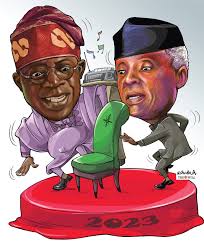
Feeble dance of the Tinubu, Osinbajo masquerade

Published

on


The most appropriate representation of the impending 2023 presidential election contest for the Yoruba is what is called the Odun e’gun or the Egungun Festival contest. It is a festival cum contest in which masquerades file out in their rainbow colour regalia, with a mammoth crowd gathered to watch them dance. As of today, Bola Ahmed Tinubu and Yemi Osinbajo are the Yoruba people’s two biggest masquerades in this odun egun. 

The Alagbaa, one entrusted with the traditional right to preside over the ancestral rites of the festival is however a Fulani – Muhammadu Buhari. By the way, the Alagbaa is very central to every masquerade festival. He is a hereditary chief who heads the Egungun society and who determines the tone and tenor of the festival. Preparatory to the contest, the Alagbaa of the 2023 Nigerian Egungun Festival had literally decapitated the masquerades, succeeding in destroying the masquerades’ worth and credibility in the estimation of the mammoth crowd at the marketplace.

The masquerade festival is also a time to offer sacrifices to divinities, one of whom is Èsù-Òdàrà, known as the mediator divinity. Yoruba do not joke with making such propitiations to their dead. It is believed that if the wrath of these divinities is not appeased and in this case, through the Egungun festival, incongruities will besiege the land, so much that rats in the forests will lose their divinely ordained squeaking sound and birds, their chirps – “eku o ni ke bi eku, eye o ni dun bi eye”.

The masquerades, wearing long, multifarious colourful robes to court the aesthetic sense of the spectators, are masked according to the insignia of the spirits of their deceased ancestors and are welcomed to the marketplace by shouts of excitement and melodious drumming. The Egungun then file to the marketplace to perform several shades of dances. Though humans, but generally perceived to have transmuted into spirit beings on account of their regalia, the Egungun is expected not to be in conformity with the sedate norms of this world, and are thus held on a leash by men who wield cudgels, preventing intruders from coming close to spirit beings. Worshippers then dance to percussions of bata drum and in the process, become possessed by ancestral spirits, with those holding the whips flogging everybody within the precincts of their whips.

A religious practice of the people that has lasted centuries, the Egungun Festival is a ceremony in which the Yoruba honour what they perceive to be the annual return of their ancestors to the world of the living. At the marketplace, when the Egungun dances eclectically to the front to contest, he invokes the spirits of his ancestors long deceased, precursors of such interventions with the people, to grant him the grace of making brilliant dancing strides in the contest and go home with the village’s trophy of success.

For the Yoruba, however, even at this preparatory stage for the Nigerian 2023 Egungun festival, it is getting ominous. The omen writ large is that, even with Tinubu and Osinbajo dancing this spasmodically to the crowd’s frenzied excitement, the opportunity for the Yoruba Egungun to coast home with the trophy by succeeding in occupying the Aso Rock seat of power in 2023 is becoming almost a mirage. Either as a reflection of that hunch or premonition, in the last couple of weeks, especially on social media, Yoruba analysts and commentators have drawn three unpleasant anchors and images in the service of an explanation for the race’s impending plight. One is that they are drawing a similarity between the 2023 contest and the First Republic consuming fight between two of their recent ancestors, Chiefs Obafemi Awolowo and Samuel Ladoke Akintola.

Second is that these analysts are fleeing into Christian eschatology to locate their plight in a similar relationship that went haywire in Israel some 2000 years ago, between Jesus the Christ and his sidekick, Judas Iscariot. The third of their engagements is to go into the ancient Yoruba narrative of the curse of Alaafin Aole who, miffed at his betrayal, had reportedly cursed generations thereafter that they would be afflicted by rancour at critical points of their national development.

Whichever way you choose to look at their dilemma, the Egungun still represents the best explainer of the Yoruba crossroads. A secret society, on the day of the Egungun festival, masquerades come to the marketplace in various long, coloured regalia to perform the dual role of deity, listening to the requests of the living who gather by their feet in supplication and who are then believed to carry the supplicants’ requests back to their ancestral community in heaven, ultimately depositing them by the feet of Olodumare – God. Thus, women facing challenges of procreation beseech the masked spirit to grant them children and the people as a whole ask for continued guidance from the spirit being. The Egungun, in a high-pitched voice, in turn, prays for the supplicants, to which they answer ase – amen.

By especially shuttling into the First Republic to bring out the ghosts and personas of Awolowo and Akintola as referents and explainers for the 2023 contest, I submit here that this trait has always been part and parcel of the Yoruba. Indeed, in African cosmology, ancestors play very conspicuous and important roles. They represent very important sources of power and are believed to be capable of acting on behalf of or against their descendants. Ancestors also function as divinities even though they exhibit less spiritual power than the gods – Orisa, somewhat. When a descendant of an ancestor faces existential challenges in life, they go to their family groves, offer sacrificial offerings and invoke the destiny – ori of their fathers in heaven to intervene in their plights. Ancestor worship is very central to the religion of the Yoruba.

While the two big masquerades, Tinubu and Osinbajo, prepare to dance in the marketplace, their supporters have been invoking several epithets, parallels, epigrams and symbols as prologues to explain the two masquerades’ impending dancing steps. The epilogue has been coming in the form of a narrative put in the public sphere that Osinbajo, foremost professor of law and attorney general was moulded by Bola Tinubu while he was governor of Lagos state. Indeed, the strategy of interfacing Tinubu with the public by his supporters has been an audacious carving of the ex-Lagos governor in the mould of the Yoruba god, Orunmila, the orisa of wisdom, knowledge, and divination. Orunmila’s epithet is one who moulds the destinies of his appendages, the “mo’ri mo’ri omo tuntun“. Tinubu’s apologists have since cited people at the top who, upon coming in contact with this orisa, got their destinies moulded and catapulted to the top.

One of a series of devious stratagem used in the service of this bid is drawing a parallel between Awolowo and Akintola’s feud of the First Republic as an explainer of the interface between Tinubu and Osinbajo. This came to the fore with brute force immediately after Osinbajo’s declaration for the 2023 presidency. Upon examination, however, it will be found to be very hollow, shallow and lacking in any rigour of a historical understanding. Let me explain.

After being systematically rigged out of the 1959 federal election, Awolowo decided not to go back to his premiership of the western region. This is unlike eastern region premier, Nnamdi Azikiwe, who accepted Prime Minister Balewa’s overture to form a government with him, thereafter becoming Nigeria’s only ceremonial president. Azikiwe left his turf in the hands of Michael Okpara, a very grits-full medical doctor with a very strong mind of his own. while Ahmadu Bello of the northern region sent a junior politician, Balewa, to the centre to become Nigeria’s prime minister.

It is no longer news that though Akintola was his deputy in the Action Group, Awolowo favoured either Anthony Enahoro or Chief FRA Williams as his successor. He however had to succumb to party elders like Dr Akanni Doherty and Akinola Maja who articulated the need to pick Akintola who had then become the deputy leader of the AG after the death of Chief Bode Thomas. In his own words, however, Awolowo maintained that those who dissuaded him from picking Chief Williams as successor were Chief S. O. Gbadamosi and Dr Akanni Doherty.

In late 1961, the Action Group constituted a group of young men who prepared memoranda for a cogent ideology for the AG. The party’s federal executive council meeting thus agreed on the adoption of democratic socialism as its ideology and, among others, that, “nobody, especially government or party functionaries must have more than one plot of government land; fringe benefits and perks for ministers and parliamentary secretaries were slashed; and thirdly, the party pronounced that the party was supreme and that anybody who held office did so at the pleasure of the party and that anyone who held any governmental position must see that his policies were either laid down by the party or were in line with party policies”. This did not go down well with the premier, Akintola, who mocked the ideology of democratic socialism openly. More fundamentally, while Akintola believed that the west should bond with the north to gain power at the centre, Awolowo believed that the west must go eastwards in seeking allies.

To buttress this, Akintola, in his witty aphorisms and government policies, slammed the managing director of the Nigerian Railways, Dr Ikejiani Clark, for nepotism in his recruitment of staff into the railway company. This he did in his famous “ikeji a ni, iketa a ni” and in the squabble for the VC-ship of the University of Lagos between Professor Eni Njoku and Saburi Biobaku, Akintola played on the Yoruba common denominator of “death” in the names of the VC contestants and asked why the Lagos university community would prefer someone who ate dead bodies (literal translation of Eni Njoku) as against someone who did not want to die (literal meaning of Biobaku).

What the above signifies is that the duo of Awolowo and Akintola disagreed and fought on the place of their Yoruba people in the scheme of things in post-colonial Nigeria and not on inanities of who made who and who betrayed who. I scooped many documents, newspapers and magazines on the tiff between Awo and SLA and never for once did I stumble on that petty magisterialism of Awo ascribing Akintola’s rise to the premiership to his imperious power. So, when supporters of especially Tinubu try to reduce the contest to betrayal, it smacks of a spurious attempt to leave the substance of the right of a sixty-something-year-old man to aspire to any office in the land and pursue shadows of tar-brushing him as a turncoat.

In the last eight years of Tinubu and Osinbajo people’s sufferings under Buhari, both of them never demonstrated any fidelity to them or the boldness to wear their Yorubaness on their lapels. They never demonstrated that their people’s plight was worthy of any amplification and resolution. When kidnappers killed and ransomed their people of the south-west without let, the duo of Tinubu and Osinbajo bonded with the Alagbaa in his taciturn cold-bloodedness. They even literally abetted him in his nepotistic embrace of his Fulani people and discard of others. While Tinubu told the world that, to become the Nigerian president has been his lifelong ambition, Osinbajo has not demonstrated that he is possessed of any unique love for his Yoruba people, nor that Yoruba people should queue behind him as a matter of mutual kinsman fidelity.

Yes, while in their respective political offices, they have both favoured their political and religious clienteles – apologies again to Professor Farooq Kperogi – I am not aware that any one of them bent over backwards to articulate the plight of the Yoruba in a different pitch, in a federal Nigeria under Buhari.

With the above in mind, it then means that those haranguing supporters of both Tinubu and Osinbajo on account of their disparate views, citing the so-called Aole curse of disunity among Yoruba, are merely walking on a barren historical route. While it is a feel-good feeling to have one’s kinsman as president of Nigeria, the Olusegun Obasanjo presidency exemplifies that Yoruba wise-saying that one’s benefactor is not necessarily your kinsman – “ajumobi o kan t’anu…” It is arguable if Yoruba’s south-west was not the least considered for development of Nigeria’s six zones under Obasanjo.

So, while the two masquerades – Tinubu and Osinbajo – prepare to have their individual day at the marketplace to dance, Yoruba should clap their hands for any one of them that catches their fancy, feel free to get scintillated by their multi-coloured Egungun masquerade regalia. They may mop up as many frills and personal excitements as they can from the eclectic dance steps of the masquerades, get entranced by their beautiful costumes and be awed by the whiplash that each of them lashes on each other. To now Yorubanize the presidential bids of these masquerades and approximate their travails and baggage as the Yoruba race’s is is absurd and inappropriate, something in the mould of a journey doomed to fail.


Dr. Festus Adedayo, a lawyer, journalist and columnist writes 

Comments

Opinion

Re: Adekambi vs Alli: Dr. Olanrewaju’s Descent To Soliloquizing | Sola Abegunde

Published

on


I have read Dr. Sulaimon Olanrewaju’s piece titled ” Adekambi vs Alli: Between Substance And Sensationalism” and it offers me a lot of entertainment.

Dr. Sulaimon Olanrewaju is a seasoned Journalist no doubt. Very brilliant mind, but, he needs a lecture on politics and governance.

No matter how educated or professional you could be, if you lack basic knowledge about raw politics and governance at different tiers of Government, you are bound to struggle like a fish out of the water each time you attempt to defend certain positions.

Very obviously, Dr. Olanrewaju doesn’t know how a Local Government should operate on a normal situation, even, before the Judgment of the Supreme Court obtained by president Bola Ahmed Tinubu.

I will refer Dr. Olanrewaju to a document titled ” Financial Memorandum for Local Governments”.

That document speaks to how funds belonging to the Local Governments could be legally spent.

It will also provide accurate information about the roles and powers of the Local Government Chairmen, Head of Local Government Administration, the Finance and General Purposes Committee, F&GPC, how approvals for funds, projects and how contracts are signed at the Local Government level.

Had it been that Dr. Olanrewaju had proper information, I am sure that he wouldn’t have advertised his ignorance the way he did, in the argument about Financial autonomy for Local Governments which Senator Sarafadeen Abiodun Alli is promising.

He would also have known that his Principal, Governor Seyi Makinde had been engaged in criminal activities in the manner he had been withdrawing and spending resources belonging to the 33 Local Governments illegally since 2019.

Perhaps I need to repeat this for emphasis sake. There is no Law that empowers a state Governor to withdraw money belonging to the Local Governments for the execution of projects on behalf of the Local Governments.

The fact that the monthly allocations for the 33 Local Governments would have to drop on a joint account does not confer any authority on a state Governor to illegally withdraw and spend same.

It is the responsibility of the F&GPC for each of the Local Governments to identify projects it wants to execute, approve funds for same and if the funds are beyond the approving limits of the F&GPC, it will seek approval from the Governor through the office of the Commissioner for Local Governments.

If the project would be executed as a contract, it is the sole responsibility of the HLGA to sign the contract agreement.

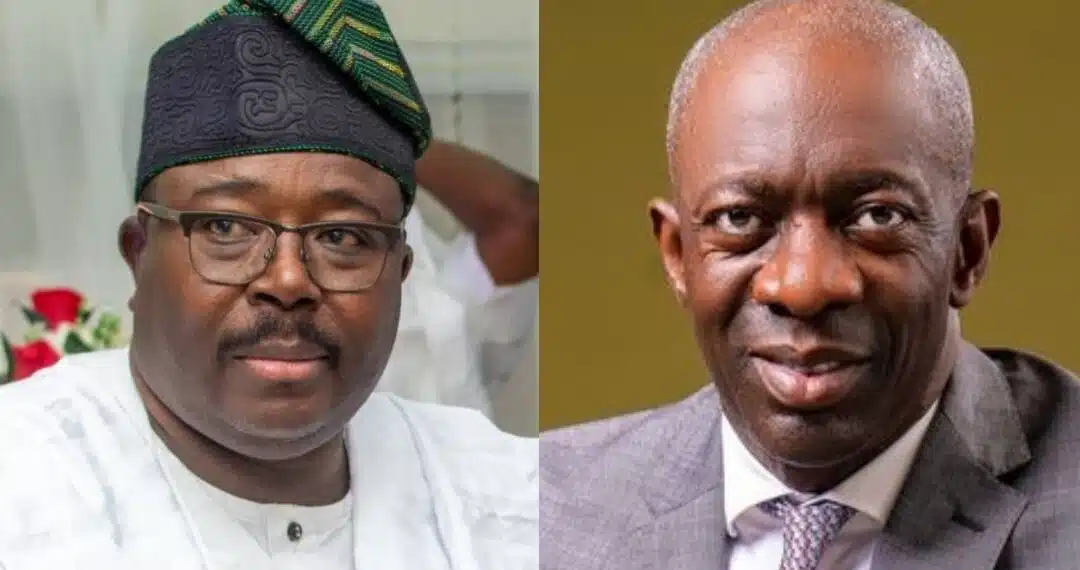
That is what Senator Sarafadeen Abiodun Alli is saying. That he would not make illegal withdrawals from the Local Governments funds. That he will allow the F&GPC for the 33 Local Governments to function without hinderance. That he will allow the Career officers to do their duties assigned to them by Law.

If Governor Seyi Makinde doesn’t believe in the existence of the Local Governments and he is not hiding this fact and Sarafa Alli is saying, I believe in a functional and free Local Government, where is the sensationalism in that?

Truth hurts. Dr. Olanrewaju can not, through his essay, which I consider an afterthought, rewrite the fact that, his Principal publicly declared that he doesn’t believe in the existence of the Local Governments, not to talk of allowing them to function freely.

I am surprised that Dr. Olanrewaju is of the opinion that Senator Sarafadeen Abiodun Alli is not saying what he would do differently.

I know that the Special Adviser on Media to Governor Seyi Makinde is not deaf. Neither is he blind or dumb. He is only being hypocritical.

How else does the Allied People’s Movement, APM and its Gubernatorial candidate want the All Progressives Congress, APC Gubernatorial candidate to say what he is going to do differently?

On this issue of Financial autonomy for Local Governments, Sarafadeen Alli is saying, contrary to the illegalities of the past seven years plus, he will not concern himself with the responsibilities that are ordinarily that of the Local Governments.

On Education, he has declared that he will ensure that we go back to the 30 Pupils per classroom policy of the former Governor, Senator Rasidi Adewolu Ladoja, now, H. I . M, Oba Senator Rasidi Adewolu Ladoja.

He said he will revive the Broadcasting Corporations of Oyo state, BCOS which is gasping for breath under Governor Seyi Makinde.

He was emphatic about the fact that he would set up a Committee to review the crisis created at the Circular Road by Governor Seyi Makinde within 72 hours when he is elected as the Governor of Oyo state.

He said he would review the sales and handing over of our Farm Settlements to Estate Developers amongst other promises.

On these issues, what are the clear positions taken by Adekambi?

If Dr. Olanrewaju wants us to believe his cock and bull stories about the performance of the 33 Local Governments under Seyi Makinde, I challenge him to ask his Principal to publish the statement of income and expenditures for the 33 Local Governments in the past seven years plus.

He should give us a breakdown of the total figure of the monthly allocations received on behalf of the 33 Local Governments, the breakdown of salaries and allowances paid, the number of projects executed, identities of the contractors who handled projects, the contract agreements, total figure of the Internally Generated Revenues, IGR received by the Local Governments and the VAT.

In the absence of these vital information, which I am certain they will never dare to make public, I want to humbly suggest that Dr. Olanrewaju should go and update his knowledge about how certain things are done.

Continue Reading

Opinion

Ladoja @82: When the ladder becomes too tall and Makinde’s sin of ingratitude | By Ayinla Joseph

Published

on

The Yoruba say, when a man forgets the ladder that took him to the top of the iroko tree, the fall that awaits him will be narrated as a proverb.

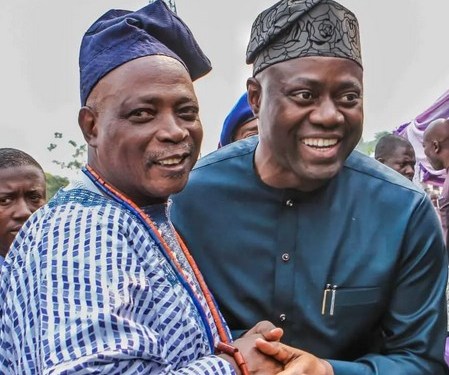
On Thursday, Ibadan stood still for its king. Oba Rashidi Adewolu Ladoja clocked 82. Not 82 years of mere age, but 82 years of bruises, battles, betrayals and benediction. A former Senator. A former Governor. An elder statesman who, like Oduduwa, returned as king. The following day, Friday, Oba Ladoja also clocked one year on the throne of his forefathers.

Ibadan celebrated him. Nigeria celebrated him. The Presidency sent greetings. Former governors knelt. Serving governors bowed. The Alaafin of Oyo paid tribute. The Soun of Ogbomoso poured libation of words. Even the Aseyin, far in Iseyin, bought a full page in a national daily to say: our father lives.

But in Agodi Government House, there was silence. Cold, deliberate, imperial silence.

Governor Seyi Makinde did not felicitate his king. No advert. No statement. No courtesy of any sort extended. Nothing. His protégé, Bimbo Adekanmbi, toed the same line of contempt. For 48 hours, Ibadan people waited for a word that never came, until shame forced a whisper.

We must ask: what manner of politics is this?

In 2019, it was this same Ladoja who held Makinde’s hand when Makinde had no hand to hold. It was Ladoja who coordinated the coalition, who gathered the angry, the broken and the hopeful, and stitched them into a garment called victory for a man who had never won anything before. Without Ladoja, there would have been no Omituntun in 2019. And the man knows it.

Philosophers call it the Paradox of Power. Machiavelli warned about it in “The Prince”: that power acquired through the mercy of others must be sustained by gratitude, otherwise it consumes itself. Plato called such rulers philosopher-kings who failed philosophy. Men who know how to win power but not how to carry it.

History is littered with them.

Emperor Nero of Rome who burnt the city that made him emperor. King Rehoboam in the Bible who told the elders who made him king: “My little finger shall be thicker than my father’s waist.” Emperor Commodus who thought Rome was his father’s farm and turned the palace into a circus until the circus swallowed him.

Seyi Makinde governs like them — as an emperor, not as an Omoluabi. A man who believes loyalty must flow upwards to him, but must never flow downwards from him. He rides on the shoulders of giants and then complains that the giants are too tall.

Today it is Ladoja he snubs. Yesterday it was the Alaafin. The day before, the Soun. Tomorrow, which Oba will taste his disdain? He has transferred his personal hatred for the Olubadan stool into a war against all royal stools in Oyo State. That is not politics. That is poison.

And what shall we say of Bimbo Adekanmbi, his political son, who has learnt this ignoble art of ingratitude so perfectly? The Yoruba say, “the child who says his mother will not sleep, he too will not sleep.” To watch a man seeking to be governor practise contempt for the throne he seeks to govern is a disaster foretold.

Oyo people know Omituntun 2.0 for what it is — a poisonous pill coated with sweet advertisement. If 2.0 can openly humiliate an 82-year-old first-class monarch who made him, what will Omituntun 3.0, headed by his anointed, do? It will be the unkindest cut of all. It will be the complete desecration of the Omoluabi ethos that Ibadan and Oyo hold sacred.

Seyi Makinde will be remembered. Not for the roads that crack before commissioning. Not for the parks that lead to nowhere. He will be remembered as the governor who rode on the backs of eminent men and made every one of them regret that they ever lent him their shoulders.

Ladoja at 82 needs no advert from Agodi to be great. The king’s greatness is not conferred by the governor. But the governor’s smallness is exposed by how he treats his king.

Oyo people, shine your eyes. This affliction must not rise a second time.

Continue Reading

Opinion

Makinde Deserves No Sympathy: He Brought His Present Predicament Upon Himself

Published

on

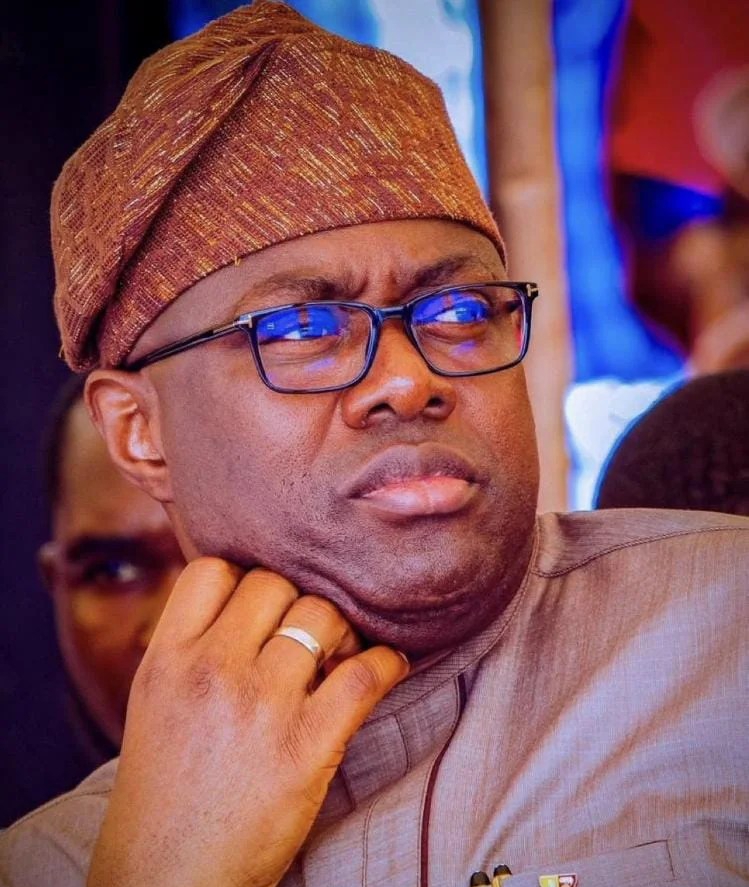
In response to my brother, Shuaib Idris, who wrote the piece titled “Seyi Makinde Deserves Our Sympathy,” I submit that Seyi Makinde does not deserve our sympathy. How do you sympathise with somebody who brought political calamity upon himself?

There is a point in every political journey when a leader must pause, look around and ask himself a difficult question: How did I get here? For Governor Seyi Makinde, that moment has long arrived.

Much has been written and said about the governor’s increasingly combative public interventions, his exchanges with political opponents and his determination to market the candidacy of his preferred successor. Some have interpreted these developments as signs of pressure surrounding him. But sympathy, in this circumstance, may be misplaced.

If Governor Makinde is under pressure today, much of that pressure is self-inflicted. If his administration is now being subjected to increasingly intense scrutiny, he cannot reasonably blame those asking the questions. And if political opponents have become emboldened enough to challenge his record openly, he should perhaps examine the decisions and conduct that have created the circumstances in which those challenges are now flourishing.

The governor’s recent political conduct provides ample illustration.

At the 70th birthday celebration of Bishop Francis Wale Oke, the governor reportedly used his appearance to introduce Bimbo Adekanmbi, the APM governorship candidate whom he supports. Adekanmbi’s emergence as the APM candidate is not in dispute; the party adopted him as its consensus candidate in May.

Two things continue to haunt him: his subpar performance in office and what critics describe as his imposition of Adekanmbi and Open Salawu, new entrants into his team, on his “first eleven.”

The question, therefore, is not whether Governor Makinde has the right to support a candidate. He does. The question is why a governor who repeatedly speaks of his administration’s achievements appears increasingly eager to make the 2027 succession contest a personal project.

A governor nearing the end of his tenure should ordinarily be concerned about preserving the dignity of the office, defending his record with facts and allowing his preferred candidate to present his own credentials. Indeed, Adekanmbi himself has publicly said he would not be a political stooge and that he would take responsibility for his own decisions if elected. That is political rhetoric. However, everything about Adekanmbi, according to his critics, points to the possibility of his being a stooge waiting to be planted to do Makinde’s bidding after the latter leaves office in 2027.

Yet Governor Makinde has increasingly inserted himself into the political conversation surrounding his successor. That creates an unavoidable question: if Adekanmbi is sufficiently qualified and politically prepared to succeed him, why does the governor so frequently feel compelled to fight the successor’s battles himself?

This is where the argument about pressure becomes particularly relevant. Political pressure does not simply descend from heaven. It can be generated by the choices of the politician himself.

Consider the recent exchange with Senator Sharafadeen Alli over the legal profession. Governor Makinde reportedly questioned Alli’s experience as a lawyer, arguing that he had never entered a courtroom. Alli’s campaign organisation subsequently responded by detailing his legal background and professional experience.

There is nothing wrong with political candidates examining one another’s records. That is part of democratic competition. But reducing a lawyer’s professional identity to courtroom appearances is a curious line of attack, particularly when the political argument ought ultimately to be about competence, experience, policy and public record.

A lawyer can practise in several areas of the profession without making litigation the centre of his career. Administrative work, corporate practice, legal consultancy, governance and institutional management are among the possible avenues available to members of the profession.

The larger point, however, is this: when an incumbent administration turns the professional credentials of an opponent into a central campaign issue, it invites its own record to be placed under the microscope. So, why does he need to be sympathised with over what he brought upon himself?

The response from Alli’s camp has shifted attention towards questions about Makinde’s own record as an engineer and governor, particularly the controversy surrounding diesel-powered streetlights and the renovation of the Lekan Salami Stadium. Those are now matters of public political debate, with competing claims about expenditure and performance. How do you sympathise with someone who threw a stone and received a Scud missile?

This is the unavoidable consequence of political combat: once you open the door to scrutiny of another man’s credentials, you should expect yours to be examined with equal intensity. Governor Makinde cannot reasonably demand immunity from the same standard he applies to others.

The same principle applies to his much-advertised “first eleven.” If the governor describes his administration as being driven by a carefully assembled team of exceptional people, the public is entitled to ask what became of that team when the question of succession arose. Why was the search for a successor extended beyond this celebrated first eleven?

A football coach who constantly boasts about his first eleven naturally invites the question of who among that eleven can step forward when the captain leaves the field. If none is selected, his team’s fans will ask why. That is not persecution. It is accountability.

There is another issue the governor should confront: political loyalty. Governor Makinde did not arrive at the Government House in 2019 in isolation. His political journey involved alliances with people and groups who contributed to the coalition that eventually produced his victory. The political history of that period is well known and should not be rewritten simply because former allies and associates are now on different sides of the political divide.

The problem with “use and discard” politics is that yesterday’s ally eventually becomes tomorrow’s witness. People who helped build a political structure do not disappear simply because their usefulness has expired. And when they begin speaking, the politician who once relied on them may find himself answering questions he never anticipated.

That appears to be part of the political atmosphere surrounding Governor Makinde today. His confrontation with traditional institutions is another matter that requires careful reflection. Whatever one’s political affiliation, Yoruba traditional institutions occupy a distinctive place in the cultural architecture of Oyo State. Political disagreement with individual traditional rulers is legitimate; treating the institution itself with disdain is entirely wrong, and it raises questions about Makinde’s Omoluabi values.

A governor may disagree with a monarch’s political preference. He may even believe traditional rulers should remain politically neutral. But the language employed in expressing that disagreement matters.

The office of governor carries enormous constitutional authority, but it also carries a moral obligation to exercise restraint. A governor should not need to be reminded that words spoken from Government House do not remain personal words. They acquire the weight of the office. That is why some of Governor Makinde’s recent public exchanges have generated such controversy.

The irony is that political power is temporary, while institutions and relationships often outlive individual office holders. The governor should know this better than most.

He is approaching the end of his constitutionally permitted tenure in Oyo State. The political question before him is therefore not how to remain governor indefinitely, but what legacy he will leave behind. Will he be remembered primarily for the projects executed under his administration? For the policies introduced? For the institutions strengthened? Or increasingly for the political battles fought during the final phase of his tenure? The last question is what will occupy people’s minds most after Makinde has left office.

The most consequential political mistake an incumbent can make is to interpret every criticism as persecution and every opponent as an enemy. Criticism is not necessarily hatred. Opposition is not necessarily sabotage. Questions about public expenditure are not necessarily attacks on a person. And scrutiny of an administration is not evidence of an organised conspiracy.

A mature government answers questions. A confident administration publishes records. A secure political movement allows its candidate to speak. And a governor who believes his record speaks for itself should have little reason to spend every available political moment speaking for his preferred successor.

That is why sympathy for Governor Makinde is evidently misplaced. The political pressure surrounding him today is not simply something that happened to him. It is also the product of political decisions, alliances, rhetoric and strategies that he and his political associates have consciously pursued.

He chose his successor. He chose his political platform. He chose to engage his opponents. He chose to make their records a subject of public debate. He chose to defend his administration through increasingly political exchanges. Those choices have consequences.

The electorate is now watching. And when the people begin to ask questions, the appropriate response from a governor is not to complain about pressure. It is to provide answers. Oyo people do not owe any politician sympathy for the consequences of his political choices. They owe themselves something far more important: a careful examination of every candidate, every record, every promise and every claim before making their decision in 2027.

Continue Reading

Trending