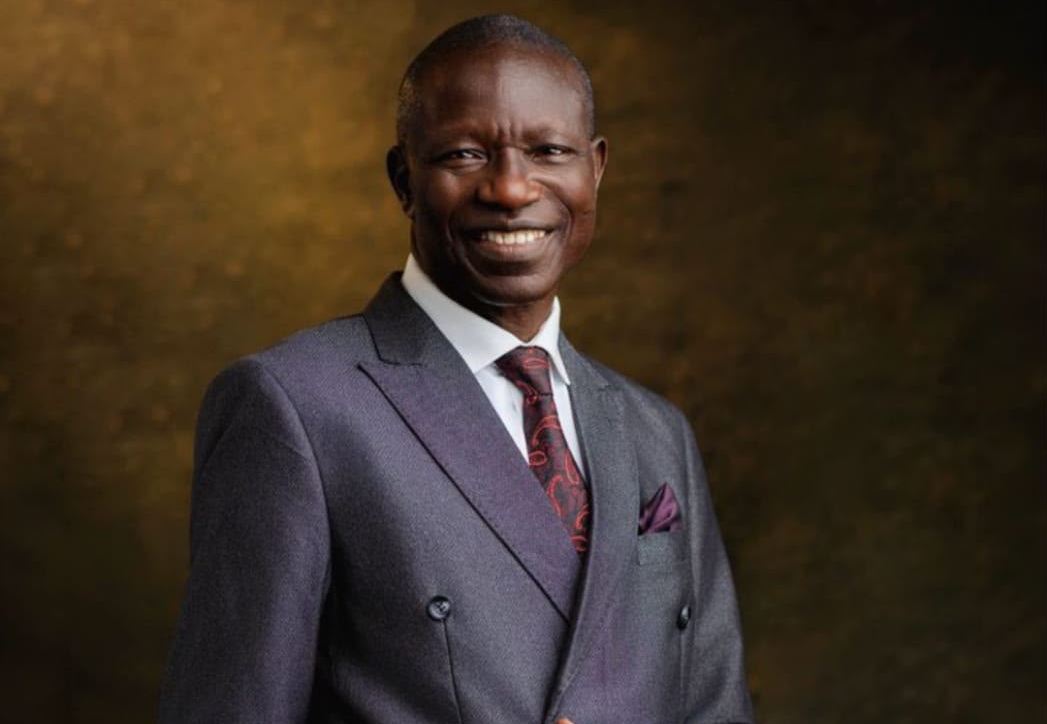
A governorship aspirant on the platform of the All Progressives Congress, APC, in Oyo state, Prof. Adeolu Akande, has suggested ranching as the only solution to farmers/herdsmen’s crisis .
Akande, who was recently inaugurated as Chairman of the Board of the Nigeria Information Technology Development Agency, NITDA, averred that if that is adopted, herdsmen crisis will stop being a major source of inter-ethnic tension.
Speaking recently on the topic entitled “Grazing Reserve Bill: An Elixir to recent crisis between Fulani herdsmen and farmers at an event organised by the Students Representatives Council of the Lead City University, Ibadan, Akande said the grazing reserve bill is a proposal frozen in time.
According to him, ”the elixir to the frequent conflict between farmers and herdsmen is to adopt the ranching model which will keep the herds of cattle away from the farms of farmers and away from our roads. It will not only guarantee peaceful co-existence of farmers and herdsmen, it will also stop being a major source of inter-ethnic tension. Finally, it will also enhance productivity of livestock and contribute to food security in Nigeria and the west Africa sub-region.”
“The activities of herdsmen have become worrisome in recent times. There have been reported cases of farmer-herdsmen attacks across the country. Many people commit heinous crimes in the name of herdsmen. The spate of atrocities masterminded by herdsmen has continued to threaten national integration vis and vis national security. It further intensifies suspicion between ethnic nationalities in Nigeria. The Fulbe/Fulani usually graze cattle, goats, and sheep and live throughout the Sahel region, in Senegal, Mali, Niger, Chad, Cameroon and Northern Nigeria. At the end of the rainy season, the pastoralists move southward from the Sahara Desert. Mobility enables pastoralists to get the most out of the sporadic rainy seasons that are characteristic of these dry lands.
Nigerians don’t see Igbo armed robbers, Yoruba 419ers but call Fulanis killers – APC chieftain, Momoh
“Another factor responsible for conflict between pastoralists and farmer is that grazing resources including pasture and water are found in different places at different times of the year, hence the need for constant mobility among cattle herders for opportunistic resource use.
“The incidence of herdsmen/farmers conflict in Nigeria has been accentuated by the factors of climate change which has made it imperative for Fulani herdsmen to stay longer, if not permanently, in the North Central and Southern part of the country because of green pasture for their cattle. There is also the dislocation caused by the disappearing Lake Chad which had shrunk from about 400,000 square kilometres according to earliest records to 26,000 square kilometres in 1960 and 1,750 square kilometres today. This has pushed herdsmen who relied on the Lake Chad region for pasture to move down south in search of pasture.
“There is also the conflict that had traversed the northern fringe of West Africa which has made the entire region unsafe for pastoralists and their stock. Again, such displaced pastoralists found refuge in the southern fringe of West Africa. Another major consequence of the conflict in the region is that herdsmen who had to arm themselves to secure themselves and their stock in the dangerous terrain of civil war soon found arms a natural companion as they traversed the sub-region such that even when they arrive at relatively peaceful zones such as southern Nigeria, they had become so accustomed to the company of their arms that they found it difficult to live without them. Finally, the rampaging Boko Haram Conflict in the North Eastern part of the Nigeria also forced the emigration of herdsmen who also moved southwards for their safety and that of their stock. The combined effect of all of this is that there was more demand for pasture than the relatively fixed land in central and Southern Nigeria could provide. There was more demand than supply and the consequence is frequent conflict between host farmer communities and the Fulani herdsmen”, he continued.
The ex- Chief of Staff to Governor Abiola Ajimobi of Oyo state stressed further that the grazing reserve bill “is conceived with the business model of centuries-old cattle rearing method in view. This method is fixated with the notion that agriculture could only be done within the natural provision of rain water hence the pastoralists have to migrate in response to the raining season. It does not have to be so. The leading countries in beef production in the world do not rely on the rain for their livestock.
“The dominant business model in those countries is the ranching method where investors buy land space to nurture their stock. This has the advantage of keeping livestock under control and without threat to the farmland of other people. The other advantage is that cattle that are nurtured in such ranches are much more productive that the ones exposed to the torture of walking hundreds and thousands of kilometres in search of pasture. Research has shown that cows nurtured in ranches have better nutrients that the ones that ate exposed to hundreds of kilometres of walk. Also, the milk production by cows nurtured in ranches is much more than the milk produced by roaming cattle. For instance, an average cow in Brazil produces 40 litres of milk per day compared to the 10 litres produced by the roaming cattle in Nigeria.
”The major cause of frequent conflicts between the farmers and herdsmen is the contest for the control of land resource which both of them need for their economic enterprises but which unfortunately are not in equal supply as the demand for it.
“The notion of the bill is that if grazing reserves are established and grazing zones delineated, it will guarantee the pastoralists of the pasture for their stock. This provision is fraught with many challenges. The first is that the issue it seeks to address, that is, the control of livestock in neither in the exclusive nor the concurrent legislative list of the 1999 Constitution (as amended).This indicates that the National Assembly before which the bill is proposed does not have the power to make laws on the matter. The states, rather than the federal government, have such powers.
“The second assumption is that by taking over land across the states and turning them into grazing reserves, the frequent conflict between farmers and herdsmen will be reduced. That stands logic on its head. As noted in the earlier part of this paper, land is considered the heritance of the family in Nigeria, just as in most part of Africa. The confiscation of the land of a community, by whatever name it is called, and the offer of same to some other people for their own economic enterprise will only accentuate inter-ethnic tension and conflict. The communities disposed of their land will only view the opportune group as impostors and will be so disposed to engaging them in clashes at the slightest provocation.
“Besides, the history of indigenes/settlers conflict in Nigeria have shown that settlers who are given access to land by host communities soon claim equal right to such land especially when succeeding generations of the original settlers who have lost contact with their original places of birth soon lay claim to the indigene ship of their new abodes. Such claims are difficult to fault in the contests of the Nigerian Constitution that guarantees that every Nigerian can live wherever he chooses to reside or where descendants of such settlers have indeed lived for hundreds of years in the new home embraced by their immediate ancestors.
- “Finally, the practice of the pastoralists traversing hundreds of kilometres as they migrate in search of pasture for their stock which the Grazing Bill seeks to preserve by demarcating and protecting Stock Routes is a recipe for crisis. Experience has shown that it is not in all instances that the pastoralists are able to keep their stock on the route. Cows do stray from the herd and destroy farmlands, instigating crisis between farmers and herdsmen,” he proferred.