Connect with us

Opinion

 Buhari’s N100 million sewage dinner with Museveni

Published

on

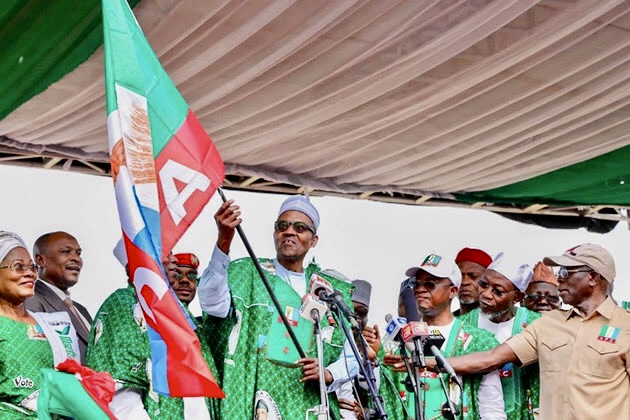
There was tension inside the main bowl of the Teslim Balogun Stadium, Lagos, on this day, December 11, 2014. President Goodluck Jonathan, having been rendered one of the most worthless clothes a people could wear on their festive day by the demolition propaganda machine of the All Progressives Congress (APC) it was obvious that whoever scored a bullseye inside the Balogun Stadium was the next president of Nigeria. On parade were Buhari himself, former Vice President Atiku Abubakar; ex-Kano state governor, Rabiu Kwankwaso; ex-Imo state governor, Rochas Okorocha and Sam Nda-Isaiah, publisher of Leadership newspapers.

All the candidates attempted to wield the power and majesty of cash to hoodwink the electorate. Money in politics had been an African pestilence. About eight months before then, specifically on April 22, 2013, Yoweri Museveni had tethered cash by the grove of the hearts of the Ugandan electorate. After addressing a crowd of supporters in Ugandan south-east region of Busogo, the source of River Nile, Museveni announced that he was donating $100,000 to a local youth group. Not long after, a security operative on his entourage appeared, dragging with great difficulty a huge sack of cash. Before then, the Ugandan Journalists Association had gotten a gift of $58,000 from this ‘benevolent’ contender for the office of the Ugandan president. The church was not left out of the saturnalia. Renovation of the Namirembe Cathedral also gulped $20,000 from Museveni who was carried shoulders high and eventually won the election. Nobody asked for the source of that irreverent benevolence.

At the Balogun Stadium, the APC, with Museveni-minded commissars like Asiwaju Bola Tinubu, had unilaterally changed the legal tender of campaign slush funds. It would no longer be Naira which had then been struck with epilepsy, necessitating its flip-flop falls. Dollar, the commissars advised, was the language of graft with which to purchase the conscience of the electorate. It was said that while Atiku Abubakar was ready to Museveni the delegates with an amount as huge as $15,000 per person, Kwakwanso offered $5,000 and the Buhari group was able to muzzle a mere $1,000. Seeing how the ghost of Museveni was walking majestically round the Balogun Stadium, the Buhari group was said to have ran round to jerk the slush fund to $3,000.

Then it was time for the candidates to address the delegates. Whoever coached the hyper-taciturn military general on what to say to win the hearts of the electorate that day was deserving of a Nobel. With the risks strung to such boldness that he later exhibited, what the general said was akin to biting the bullet. “Dollars, I don’t have,” General Buhari said in his obstinate best. “Even if I have, I won’t give. What I am offering is my integrity”.

At a time when the general impression was that Jonathan woke up every morning from the sewage, went thereafter to have breakfast with his colleague swine, Buhari instantly won the hearts of patriots who canvassed the purity of the electoral process as remedy to the rot in the land. And so, in spite of his party’s lean Musevenism, Buhari drubbed his co-contestants with 3,430 votes, followed by Kwankwaso: who had 974, Atiku: 954, Okorocha: 674 and Nda-Isaiah 10.

Fast-forward to April 2022, Buhari, apparently fascinated by the life and habitation of pigs, would seem to have shoved Jonathan off the sewer and supplanted him. Sitting regally and without a single care in the world, it was in the same Buhari’s presence that Abdullahi Adamu, the party’s national chairman, announced that APC had fixed the sum of N100 million as cost for formalising aspirations for the 2023 presidential election. While nomination form was N70 million, said Adamu, expression of interest form cost N30 million. Candidates for governorship ticket would part with N50 million.

“If a presidential aspirant cannot mobilise at least 10,000 supporters to raise such amount; that person is not a serious contestant. We are talking about the president of Nigeria, not the emir of your town. Now when the emir of your town dies, the person seeking to replace him will spend more than N100 million for just one emirate,” Adamu said. He propounded very many abstruse, illogical and dumb arguments in support of this flimflam.

Apparently told that this was gaining traction for its imbecility, Adamu went further down into his crucible of ill-logics and picked a handful of disgusting pellets. “There is nothing to compare between seeking to be Nigeria’s president and corruption using the cost of the form. If you cannot participate, there is no compulsion, if you don’t have N100 million, you have no business with becoming president,” he said. And Buhari stared emptily into void like one communicating with unseen spirits.

Granted that Senator Adamu, an ultra-conservative and a man still being tried for allegedly embezzling the sum of N15 billion by the EFCC, may have his vision blurred from seeing the amoral purport of this humongous sum being asked as cost of formalising a candidate’s aspiration, why didn’t Buhari raise a voice of dissent? If money had been the god of decision in 2014, would he have become the Nigerian president? At that same time, Jonathan had the key to the national till and shouldn’t have any problem swaying everyone to his side with cash. Nigerians, however, believed – unfortunately – that the so-called integrity which Buhari espoused was the way to go. Why then would a man who believed integrity was more valuable than money eight years ago, stand by money and deify it ahead of integrity today?

More fundamentally, the import of the crazy hike in the APC nomination fees is unjustifiable and incongruous. As Adamu took the Ekiti governorship candidate to the president this last Friday, April 29, he ought to have been asked if he saw the mockery in the fact that that same candidate paid the sum of N25 million in February as his nomination fee. Then, just two months after, his counterparts in other states are now being asked to pay N50 million, an increase of 100%. What exactly is Adamu saying? That his party, in just two months, had devalued Nigeria by 100%? What message was Adamu sending out to Nigerians by fixing the presidential fees for N100 million? That only the most corrupt could vie for the Nigerian presidency? That the Nigerian Naira is so worthless under the APC-led government that only such hefty sum was good enough?

Even the PDP, which the APC has a made a pastime of demonising, is demanding N40 million from its presidential aspirants. It raises the stake for those who have stolen enough from the national till to compete in a race that both Buhari and Adamu have rigged from the beginning. It is obvious that this race of N100 million is one whose end both Buhari and Adamu have choreographed its expected end. No one can dispute the implication of the N100 million fee as a paradise that the APC has specifically created for maggots wriggling inside the Nigerian stolen wealth. That Buhari is the masterminder – apologies to General Oladipo Diya – of this uncanny somersault of a political party and a leadership that Nigerians reposed trust is the most tragic opera in this sordid and grisly drama.

A few days earlier, Buhari had literally gone to have dinner with Museveni. On the way, he had a hearty embrace with maggots, assuring them of his filial relationship with them. Posturing that the decision was made by the National Council of State, the president granted state pardon to former Governors Joshua Dariye and Jolly Nyame of Plateau and Taraba States respectively. They were serving terms for corruption. One hundred and fifty seven other prisoners were padded to the list. Nyame, 66, was convicted and serving a 12-year jail term at the Kuje prison for misappropriation of funds while Dariye, 64, was jailed for stealing N2 billion of public funds. In defence of this, the presidency claimed that the two jailed governors were suffering from life-threatening ailments. Pray, who should?

As Buhari enters the twilight of his administration, the nauseating hypocrisy and Janus face fakery that mark the unreal essence he projected to Nigerians before becoming president jut out on a daily basis. Nigerians have, in seven years, contended with the nausea that comes with a general who has been shamelessly helpless to fight insecurity. While whiffs of corruption associated with this regime that ooze out have been mind-boggling, Buhari had never unraveled this hopelessly as he has done in the grant of pardon to corrupt politicians. So also is the corruptive ambience that oscillates round his party’s national leadership through this ascendancy of money politics, as well as how the president has unconscionably abetted the shame. By not voicing opposition to the N100 million form request and the fact that the announcement was made in his very before, Buhari’s silence approximates giving a vicarious imprimatur to the corrupting action of the Adamu-led party executive.

By and large, Buhari’s hidden reason for insisting on Adamu as the chairman of the APC is getting clearer. After collecting N100 million from each of the presidential aspirants, on Friday, Adamu announced that APC was yet to determine where it would zone its presidential ticket. While talking to state house correspondents in Abuja, he had said: “I am today privileged to be the chairman of the party. The party is greater than me. The party has not made a decision and I cannot preempt what the party decision will be”.

The ultimate Satanic broth being cooked by the duo of Buhari and Adamu will soon be ready for consumption and the whole world will see it. As my people say, the one shouting in distress, “e wa wo!” – come and see – is always the first to witness the calamity. Something however keeps telling me that this brew will be a total and final deconstruction of the pretentious glory that Buhari craves from his presidency.

However, it is still not too late for the president and his party to reinvent themselves. To do this, they must go back to the promise of the beginning made by Buhari about integrity. He told us that he represented a change from the sleaze of the Jonathan years. Today, Nigerians easily substitute Buhari’s name for perversion and who is being referred to is not obscure to anyone. For a U-turn from this barren path, Buhari must ask Adamu to refund the balance of fees paid by aspirants between last purchase of forms and now. This is the minimum route of redemption to tread.


Dr. Festus Adedayo, a journalist, lawyer and columnist  writes 


Comments

Opinion

OYO 2027: MAKINDE EATS SOUR GRAPES, ADEKANMBI’S TEETH MUST BE SET ON EDGE

Published

on

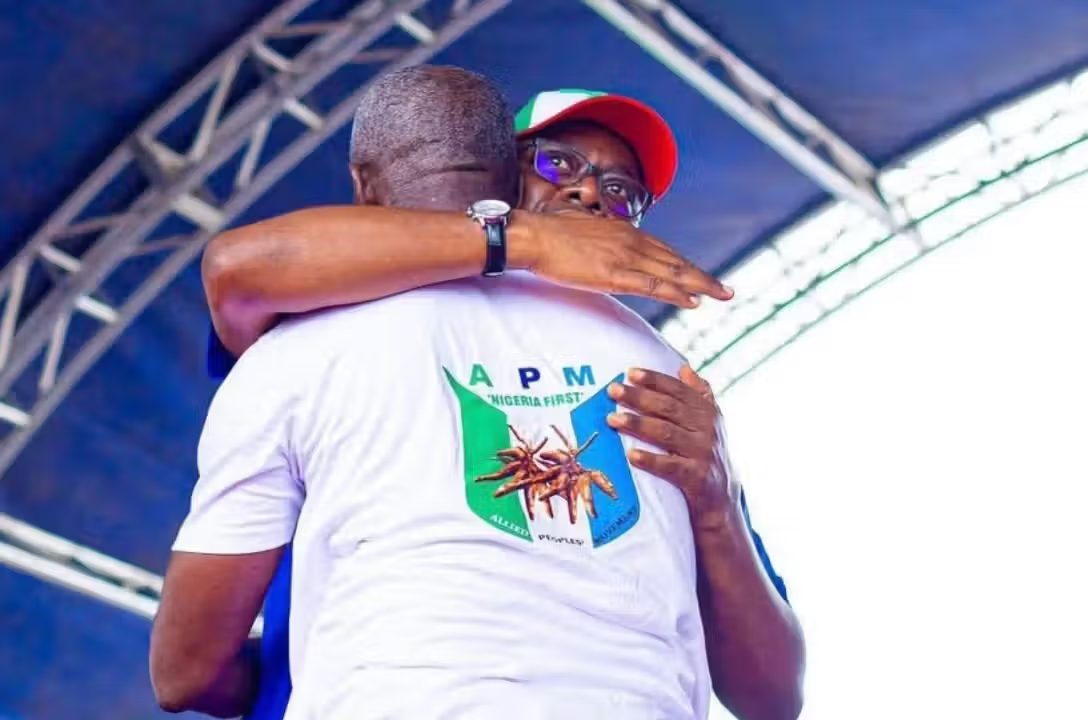
The confusion within the ranks of the Allied Peoples Movement (APM) is becoming increasingly difficult to describe.

The political empire built by Governor Seyi Makinde on what critics describe as lies, betrayals, broken promises and greed appears to be crumbling by the day.

Indeed, Makinde and his APM loyalists are providing an endless source of amusement these days.

Virtually everyone who leaves the Makinde administration is suddenly dismissed as a “paperweight” by the party’s social media attack dogs.

I have often wondered whether these fellows are unaware of the wisdom behind the Yoruba belief that even cotton wool, when gathered in sufficient quantities, can become a load too heavy for one person to carry.

As the Yoruba proverb puts it: Eni ní òwú ò t’ẹrù; ìwọ̀nba tó fẹ́ fi tan iná ló mú.

You keep losing prominent politicians and influential party stakeholders, yet you dismiss them as political nonentities. But which heavyweight has the power to cast more than one vote for a preferred candidate?

I am certain that even Bimbo Adekanmbi must be wondering how things deteriorated so badly for the APM.

Before his emergence as Governor Makinde’s anointed governorship candidate was made public, I granted an interview on a television station during which I openly predicted that Adekanmbi would get the governor’s endorsement and that his choice as successor would spell trouble for both men.

To one another, both men have become potential political albatrosses. Unfortunately, Governor Makinde’s ego appears to have blinded him to realities beyond his immediate political calculations.

I am particularly surprised that Adekanmbi failed to recognise that he was walking into a political trap by accepting Makinde’s endorsement.

Greed, indeed, can be a dangerous disease. In Adekanmbi’s position, no discerning politician would have ignored the number of political enemies Governor Makinde had accumulated during his seven years in office.

It follows, therefore, that Adekanmbi would inevitably inherit many of those political liabilities. Sadly, he either failed to appreciate the implications or simply chose to overlook the consequences.

By the time Governor Makinde, or perhaps Seye Famojuro, settled for Adekanmbi, the governor was already embroiled in disagreements with prominent political figures, including former Deputy National Chairman of the PDP, Ambassador Taofeek Oladejo Arapaja, Alhaji Bisi Olopoeyan and several first-class traditional rulers in Oyo State.

He had also fallen out with several influential political figures, including Senator Hosea Agboola, Alhaji Razak Gbadegesin, former Deputy Governor Barrister Gbolarunmi Hazeem, Chief Mrs Jumoke Akinjide, Hon. Mulikat Adeola Akande, former Deputy Governor Engr. Rauf Aderemi Olaniyan, Prince Diran Odeyemi, former Ekiti State Governor Ayodele Fayose, former Rivers State Governor Nyesom Wike and even President Bola Ahmed Tinubu.

Beyond these strained relationships, several stakeholders within the Makinde political camp were already uncomfortable with the process that produced Adekanmbi as the APM governorship candidate.

There were also contentious discussions about whether Governor Makinde should be succeeded by a Christian. Equally troubling to some stakeholders was the question of whether it made political sense for Makinde to present Adekanmbi as his preferred successor when both men hail from Ona-Ara Local Government Area.

At the time, agitations were mounting over Governor Makinde’s alleged failure to comply with the Supreme Court judgment granting financial autonomy to local governments.

Other contentious issues included the controversial Circular Road project, the sale of government assets and the proposed transfer of Oyo State farm settlements to estate developers.

The state’s debt profile, which has remained a subject of public concern and debate, was another issue that had yet to be satisfactorily addressed.

All these issues were already in the public domain before Adekanmbi accepted the offer to become Makinde’s anointed candidate.

One is therefore compelled to ask: what could have persuaded Adekanmbi to accept such a politically dangerous offer?

I can only think of one reason: greed.

When Governor Makinde claimed that he had advised Adekanmbi not to inherit his enemies, he was being economical with the truth.

The reality is that those political liabilities became Adekanmbi’s the moment he accepted Makinde’s endorsement.

The governor knows that he is carrying a political baggage that could weigh heavily on his preferred successor. Yet, he appears unwilling to be held accountable for the political consequences of his own administration.

Unfortunately for both men, even Adekanmbi’s campaign slogan tells a story of its own: “Omi Tuntun 3.0”.

How, then, does he intend to separate himself from the “Omi Tuntun” administration and the controversies surrounding it?

Governor Makinde has never hidden his discomfort with genuine local government autonomy. Adekanmbi, by his posture, appears prepared to sustain the same political template, which critics blame for weakening the 33 local government councils in the state.

On virtually every issue over which the people of Oyo State have expressed concern, Adekanmbi appears to be offering continuity rather than a departure from the policies of the present administration.

He has failed to condemn the controversy surrounding the proposed transfer of the Ogbomoso Farm Settlement to estate developers, despite protests by residents of the ancient town.

He has equally remained silent over the controversy surrounding the administration’s reported moves involving the Saki Farm Settlement.

He also appears untroubled by the reported transfer of the 4,000-hectare Eruwa Farm Settlement to investors, whose whereabouts and activities have, according to critics, remained unclear two years after the arrangement.

Indeed, Adekanmbi appears not to appreciate the extent of the challenges facing the state. For instance, Oyo State is said to be short of six general hospitals if the benchmark of one general hospital per local government area is adopted.

Yet, when Senator Sharafadeen Abiodun Alli promised in his manifesto to address this deficit, APM spokespersons reportedly went on the offensive, describing the manifesto as “lacking in originality”.

Governor Makinde has been in office for more than seven years. During this period, his administration has received ecological funds on several occasions.

The question, therefore, is simple: what has happened to those funds?

There are concerns over the utilisation and accountability of the ecological funds received by the state. The governor owes the people a clear explanation of how these resources have been deployed.

There are also questions surrounding the proposed upgrade of the Alakia Airport, a project for which Adekanmbi himself was appointed by Governor Makinde to head a committee.

I have been reliably informed that the contract sum for the airport upgrade was reportedly reviewed upwards from its original figure of over N50 billion to well above N150 billion.

I have raised this question before, but I am yet to hear Adekanmbi offer a convincing explanation or response to the allegation.

Similarly, Governor Makinde reportedly approved more than N60 billion for the renovation of the Government House, an expenditure that attracted public criticism.

As of today, the visible works include the construction of a hall, the painting of the Government House mosque and church, and the replacement of tiles in both places of worship.

I challenge Governor Makinde to tell the people of Oyo State how much of the more than N60 billion reportedly approved for the renovation has actually been released and expended.

Beyond that, the governor should invite members of the press to conduct an independent assessment of the work carried out so far. The people deserve transparency and accountability, not unanswered questions.

The state government’s performance in education is another area that demands urgent attention.

Oyo State’s performance in WAEC and NECO examinations has continued to attract concern, particularly when compared with the performance of other states, including neighbouring Osun, which has been celebrated for its fifth-place position in a recent examination ranking.

Senator Sharafadeen Abiodun Alli has argued that the state must return to an educational system that makes teaching and learning more conducive. One of his proposals is a 30-pupils-per-classroom policy.

But rather than engage constructively with the proposal, APM voices have dismissed its feasibility.

Adekanmbi, as the party’s governorship candidate, has also failed to offer a clear departure from the present arrangement, under which many public primary and secondary school classrooms remain severely overcrowded and unconducive to effective learning.

Oyo State cannot afford another administration that merely promises continuity without addressing the shortcomings of the present one.

The people deserve better, and they now have an alternative in Senator Sharafadeen Abiodun Alli.

Governor Makinde has eaten sour grapes. Unfortunately, Bimbo Adekanmbi appears destined to bear the consequences.

His teeth, indeed, must be set on edge.

Continue Reading

Opinion

Makinde’s G-Wagon Gift to CCII PG A Disrespect to Olubadan, Alaafin and A Total Disregard for Yoruba Traditional Institutions
Published

on

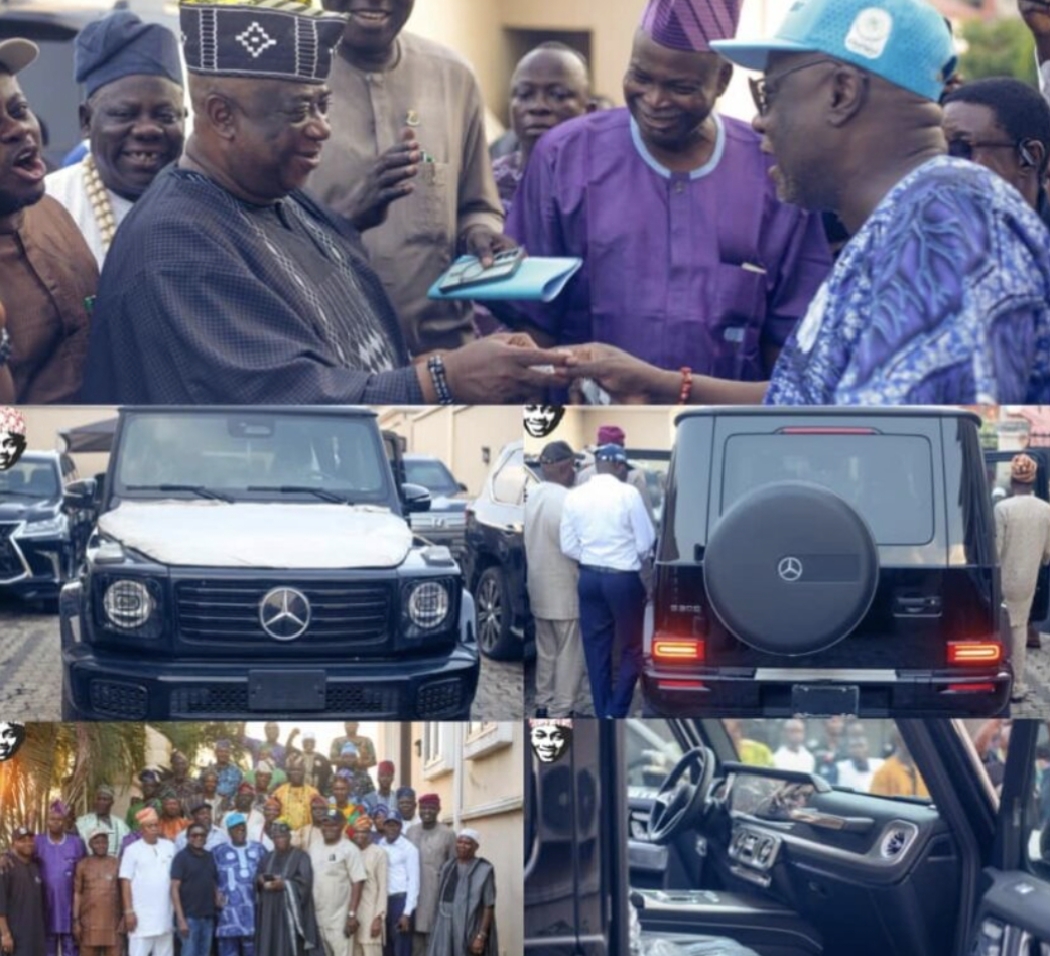
The reported presentation of a brand-new Mercedes-Benz G-Wagon 500 by Governor Seyi Makinde to the President-General of the Central Council of Ibadan Indigenes (CCII), Barrister Sulaimon Ajeniyi Ajewole, as a birthday gift has exposed a disturbing development in the governor’s attitude towards Yoruba traditional institutions. Beyond the extravagance of the gesture, it raises fundamental questions about his priorities, sense of responsibility and regard for the revered royal institutions of Ibadan and Oyo.

What is Governor Makinde trying to achieve? A division and deep-seated animosity between Olubadan and the head of a socio-cultural organisation who is supposed to be at the forefront of protecting Olubadan stool from ridicule and disrespect?

There is absolutely nothing wrong with Governor Makinde appreciating an individual for his contributions to society. Barrister Ajewole may be entitled to personal goodwill and recognition from Makinde. However, the governor’s insensitive generosity becomes difficult to defend when juxtaposed with allegations that the Olubadan of Ibadanland, Oba Rashidi Adewolu Ladoja, and the Alaafin of Oyo, Oba Akeem Owoade, have been deprived of their official vehicles and statutory salaries since ascending their respective thrones.

More than a year after Oba Ladoja became the Olubadan and approaching two years since Oba Owoade ascended the Alaafin throne, the alleged failure of the Makinde administration to fulfil these obligations is an indictment of its priorities and its understanding of the dignity attached to traditional authority.

How does a governor find the resources, enthusiasm and political will to present a luxury G-Wagon 500 to the head of a socio-cultural organisation as a birthday gift, yet allegedly fail to discharge the statutory and institutional responsibilities owed to two of the most revered traditional rulers in Yorubaland? What is the justification for celebrating an individual with an expensive automobile while the occupants of ancient royal stools are reportedly left without official vehicles and their statutory entitlements?

This is not an argument against Barrister Ajewole receiving a gift. It is an indictment of a government whose generosity appears selective and whose priorities are increasingly difficult to reconcile with its public responsibilities.The Olubadan is not just another traditional ruler. He presides over Ibadanland, one of the most historically significant cities in Yorubaland and a cultural centre whose influence extends far beyond Oyo State. The Alaafin, on the other hand, occupies a throne whose historical significance is inseparable from the evolution of Yoruba civilisation. The Alaafin institution is not an ordinary palace establishment; it is a historic symbol of Yoruba political authority, heritage and identity.

These are institutions that existed long before Makinde became governor and will continue to exist long after he leaves office. Their dignity should not depend on the personal disposition, political calculations or convenience of whoever occupies Agodi Government House. Makinde must be reminded that statutory salaries are not birthday presents, and official vehicles provided under government policy are not acts of personal generosity. They are institutional obligations. A governor does not deserve applause for fulfilling obligations that the law or established government policy imposes on his administration.

Conversely, withholding or neglecting such obligations without important justification is a serious failure of responsibility. The troubling question is whether Makinde has reduced the relationship between government and traditional institutions to a transactional arrangement in which personal relationships and political convenience determine who receives recognition and who is left unattended. Does the governor believe that the President-General of CCII deserves a brand-new G-Wagon while the Olubadan and Alaafin can be left to contend with the indignity of allegedly outstanding official entitlements?

What exactly is Makinde’s understanding of respect for Yoruba traditional institutions? A governor who routinely invokes Yoruba identity, cultural heritage and indigenous values should be the first to defend the dignity of the institutions that embody those values. Unfortunately, Makinde’s administration is creating an embarrassing impression that the prestige of traditional institutions is secondary to his personal relationships and political preferences. Oh, does Makinde think CCII PG can marshall his influence to direct members of clubs, associations and unions affiliated to CCII to vote for Makinde’s stooge guber candidate?

Traditional rulers are not political ornaments to be celebrated when convenient and neglected when inconvenient. They are custodians of history, culture, customs and ancestral authority. Their institutions deserve institutional respect irrespective of political affiliations, personal disagreements or their perceived disposition towards the government. The G-Wagon presentation has therefore become more than a birthday gesture. It has exposed a disturbing moral contradiction.

If Makinde could demonstrate such remarkable generosity towards the CCII President-General, why has his administration allegedly failed to demonstrate comparable commitment to the institutional dignity of the Olubadan and Alaafin? Is the governor suggesting, by his actions, that an individual occupying the leadership of a socio-cultural organisation deserves more official consideration than the foremost royal institutions in his state?

The governor owes the people of Oyo State an explanation. He must publicly clarify whether the statutory salaries of the two monarchs have been paid since their ascension, whether official vehicles are provided for their offices under existing government policy, and why these alleged entitlements remain outstanding. If there are administrative or legal impediments, he should explain them rather than allow the controversy to fester.

It is particularly disgraceful that the dignity of two internationally recognised Yoruba royal institutions should become a subject of public controversy under a government that ought to be protecting their prestige. By allowing the situation to persist without a satisfactory explanation, Makinde has dragged the image of Yoruba traditional institutions into unnecessary embarrassment and diminished the respect that should ordinarily accompany their exalted positions.

The governor must understand that he is a temporary occupant of political office, whereas the Olubadan and the Alaafin represent enduring institutions of Yoruba civilisation. He cannot elevate himself above the historical significance of these thrones, nor should he behave as though their dignity is subject to his personal discretion. If the G-Wagon was purchased with Makinde’s personal resources, he is entitled to give it to whomever he pleases.

But personal generosity cannot excuse governmental irresponsibility. A governor who can celebrate an individual with a luxury automobile should have no justification for allegedly neglecting the statutory institutional entitlements of the Olubadan and the Alaafin. Yoruba traditional institutions are not personal appendages of the governor, and their dignity must never be held hostage to his whims, preferences or political calculations.

The Olubadan and the Alaafin deserve honour, not humiliation; institutional respect, not selective generosity. Makinde may be governor today, but he is certainly not greater than the institutions whose dignity he has a duty to protect.

Continue Reading

Opinion

Winning Election Before the Ballot: How Oseni Is Silencing Opponents with 500KVA Transformers
Published

on

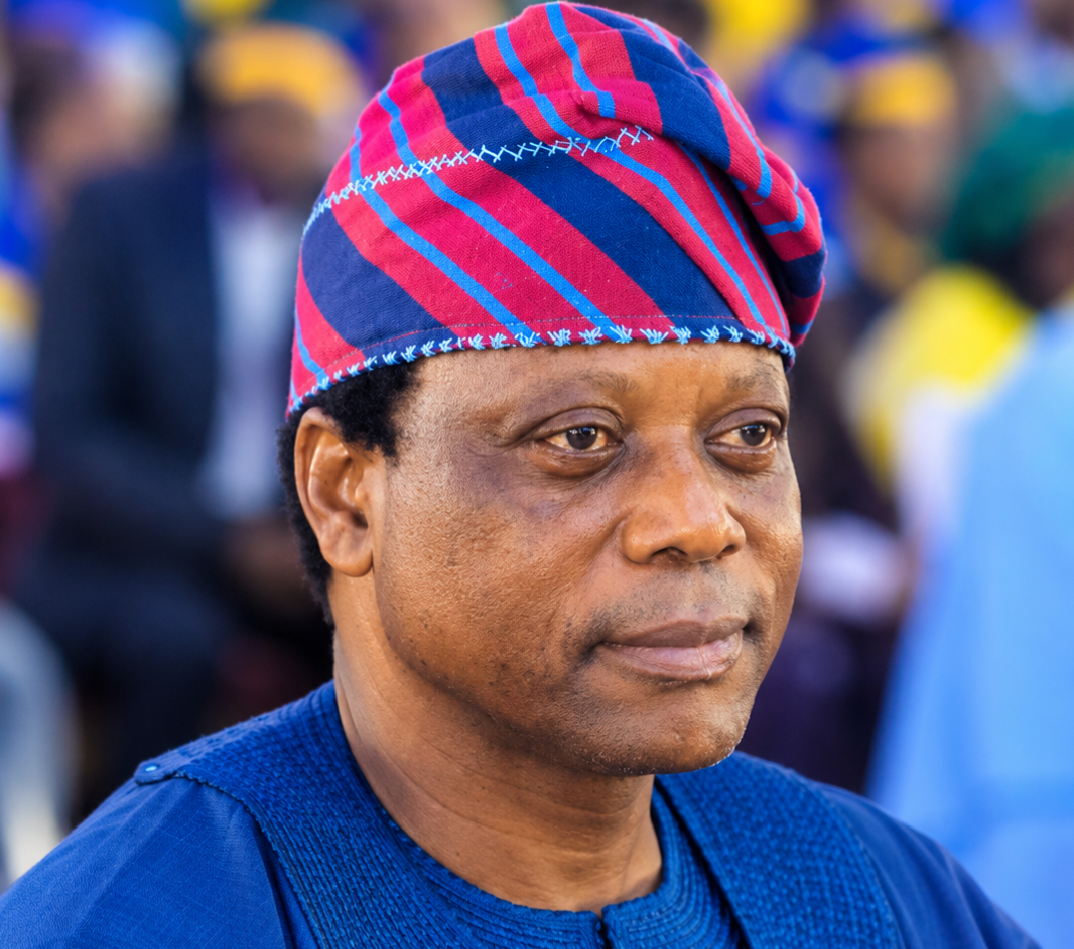
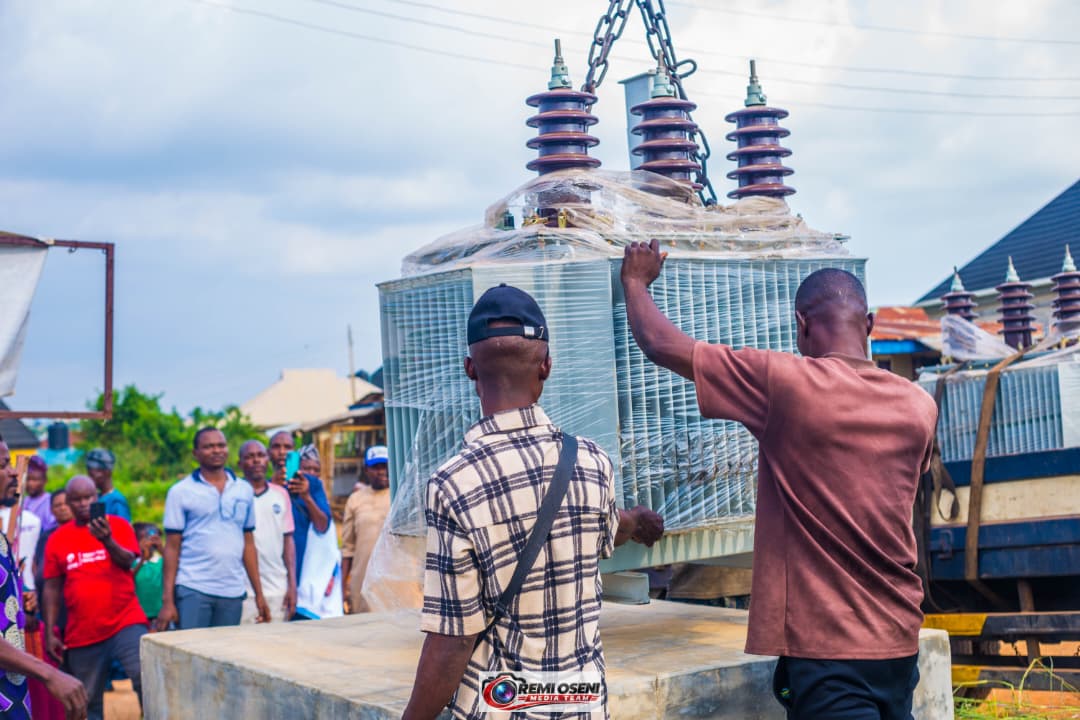
In an era when many politicians are remembered more for promises than for performance, Hon. Engr. Aderemi Oseni stands out as a rare exception — a lawmaker whose impact is visible, measurable, and felt in the daily lives of his people. The latest testament to this people-centred leadership is the ongoing delivery of 20 additional 500KVA transformers for distribution to communities across Oyo South Senatorial District.

This is not just about electricity. It is about powering dreams, businesses, and hope.

Oseni, who currently represents Ibarapa East/Ido Federal Constituency in the House of Representatives and chairs the strategic House Committee on the Federal Roads Maintenance Agency (FERMA), is contesting for the Oyo South Senatorial seat under the All Progressives Congress (APC). His candidacy is already being defined not by noise, but by concrete results.
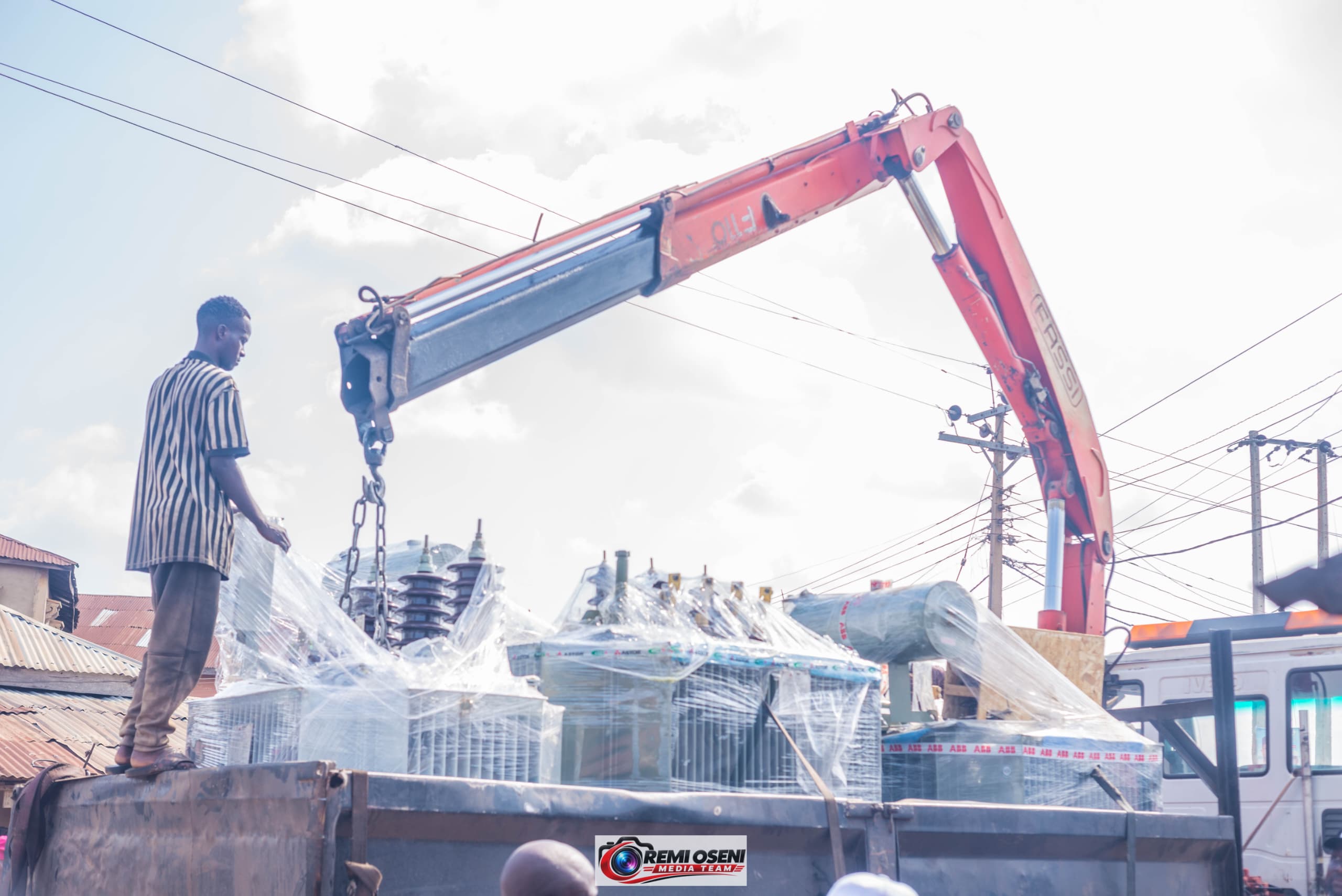
The new consignment of transformers is part of a sustained intervention to address the chronic electricity challenges confronting communities in the district.

For months, residents of Oyo South — traders in Beere, artisans in Ibarapa, welders in Ido, cold-room operators in Ibadan South-West, and students burning the midnight candle in Ibadan North-East — have groaned under the weight of an epileptic power supply. Transformers that have served for over two decades are either overloaded, vandalised, or completely grounded. In many communities, darkness has become a way of life, and with it, economic activities grind to a halt.
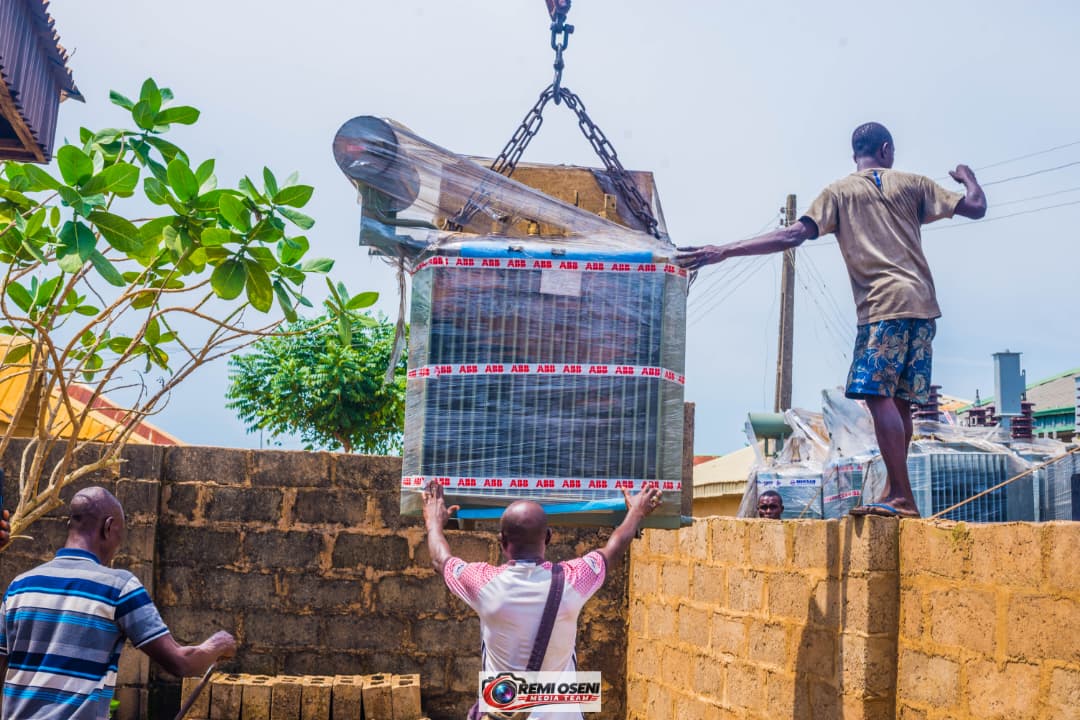
Hon. Oseni understands this pain. As an engineer by training and a grassroots politician by conviction, he knows that electricity is not a luxury; it is the oxygen of economic growth, community development, and improved living standards.

The 20 new 500KVA transformers are, therefore, a strategic economic intervention.
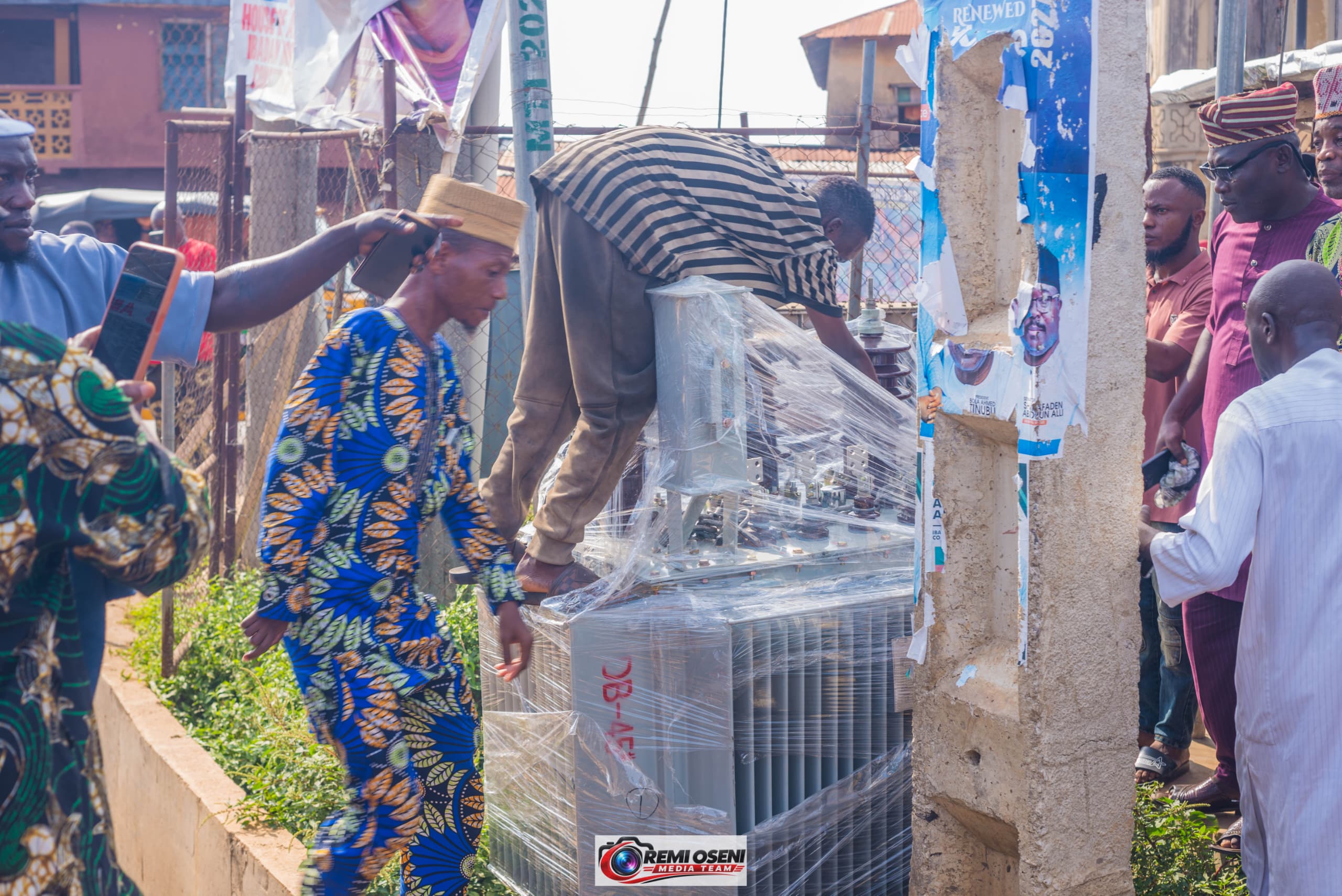
The greatest beneficiaries of this initiative are those in the informal sector — the backbone of Oyo South’s economy. For the woman frying akara in Oja Oba who needs power to grind beans early in the morning, for the barber in Apata who loses customers when there is no light to clip, for the fashion designer in Challenge whose electric sewing machine is idle, and for the young graduate running a computer business centre in Ibarapa — this intervention means everything.
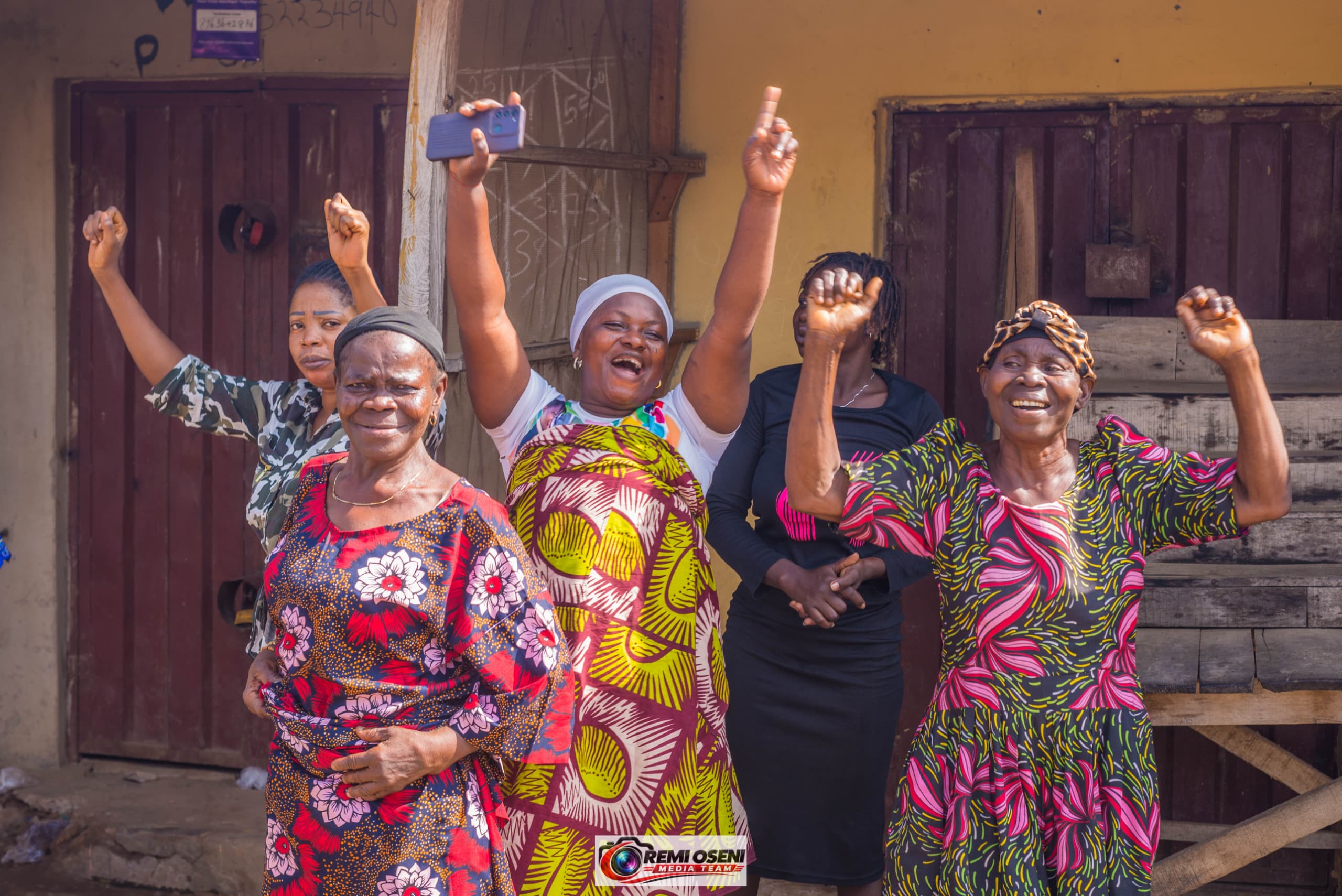
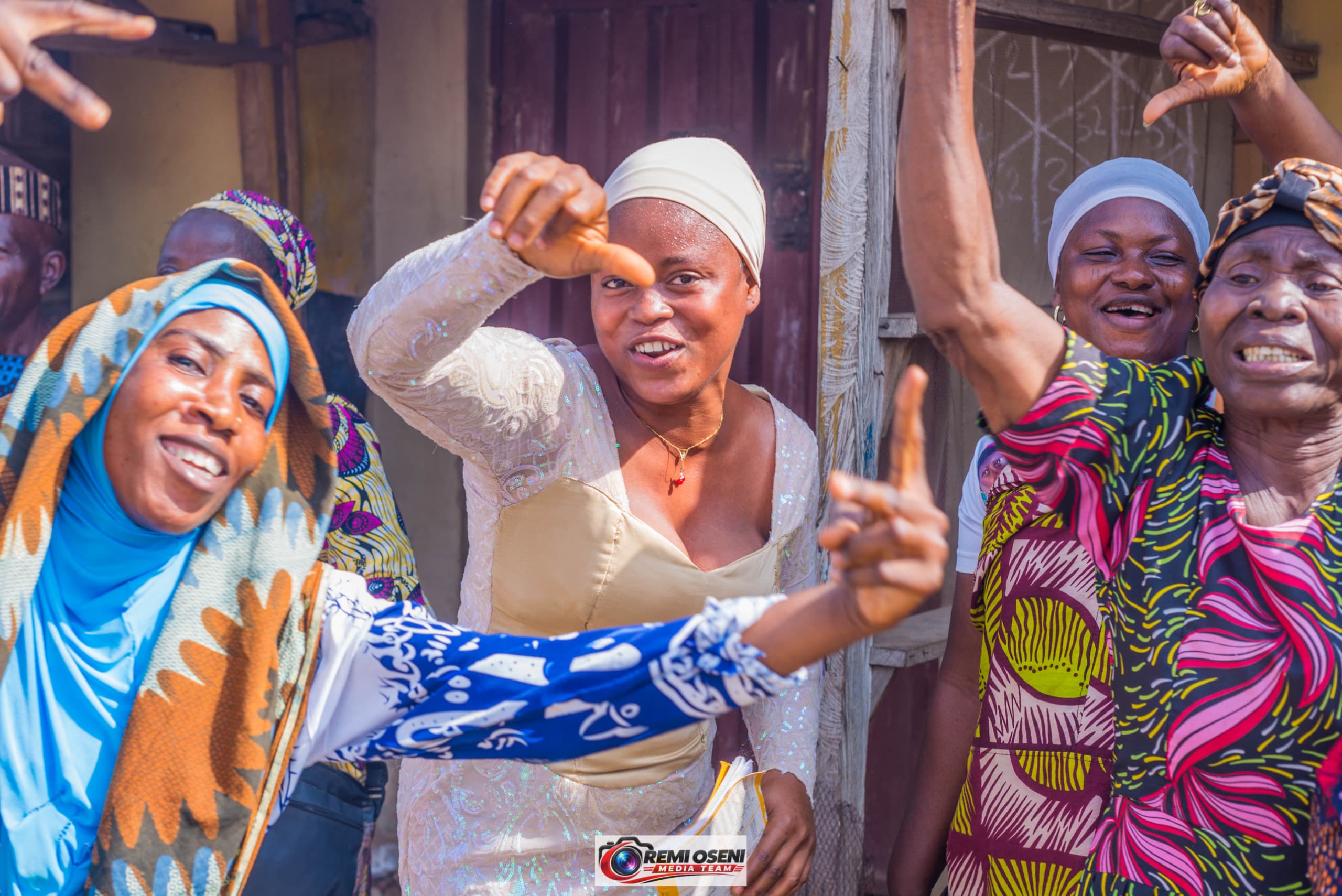
When power returns, productivity returns. When productivity returns, poverty reduces.

It is instructive that one of the beneficiary communities is Ita Baale/Olugbode in Ibadan North-East Local Government — the home community of Governor Seyi Makinde. By extending his intervention even to areas traditionally seen as opposition strongholds, Hon. Oseni has demonstrated that good governance knows no political boundaries. Light has no party colour. Development should have no discrimination.

Many other communities across the nine local governments that make up Oyo South — Ibadan North, Ibadan North-East, Ibadan North-West, Ibadan South-East, Ibadan South-West, Ibarapa East, Ibarapa North, Ibarapa Central, and Ido — are already celebrating while waiting to take delivery of the transformers, with installation already ongoing in phases in some areas.
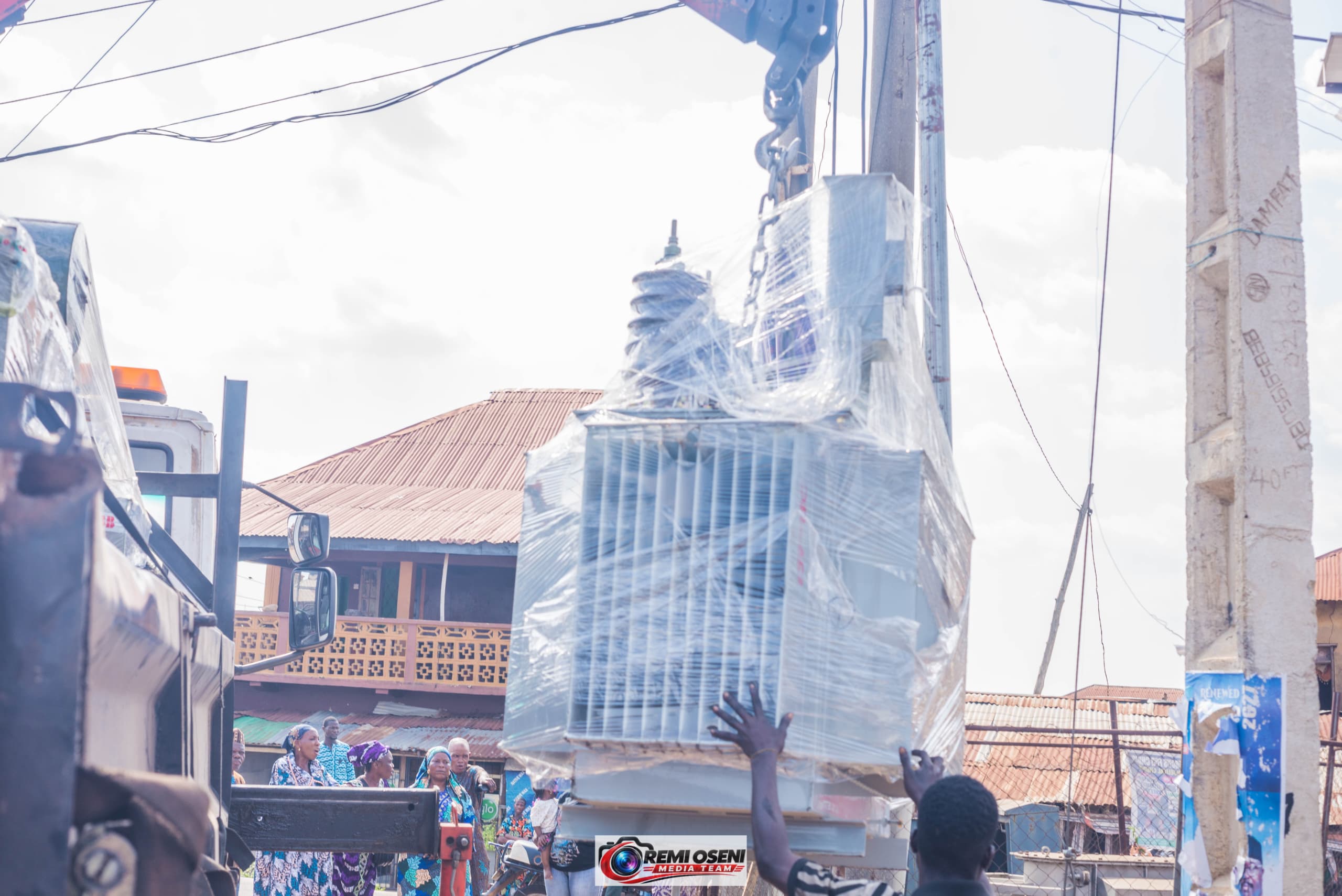
This transformer project is not an isolated act. It fits into a larger pattern of purposeful representation that has defined Hon. Oseni’s tenure in the Green Chamber.

As Chairman of the House Committee on FERMA, he has been pivotal in pushing for the rehabilitation of federal roads that crisscross Oyo South, easing the movement of farm produce from Ibarapa’s agrarian belt to Ibadan markets and reducing man-hours lost in traffic.

In Ibarapa East/Ido Federal Constituency, his current constituency, his footprints are everywhere: boreholes sunk in water-scarce communities, classroom blocks renovated, financial support for market women, scholarships for indigent students, and the facilitation of federal employment opportunities for youths.
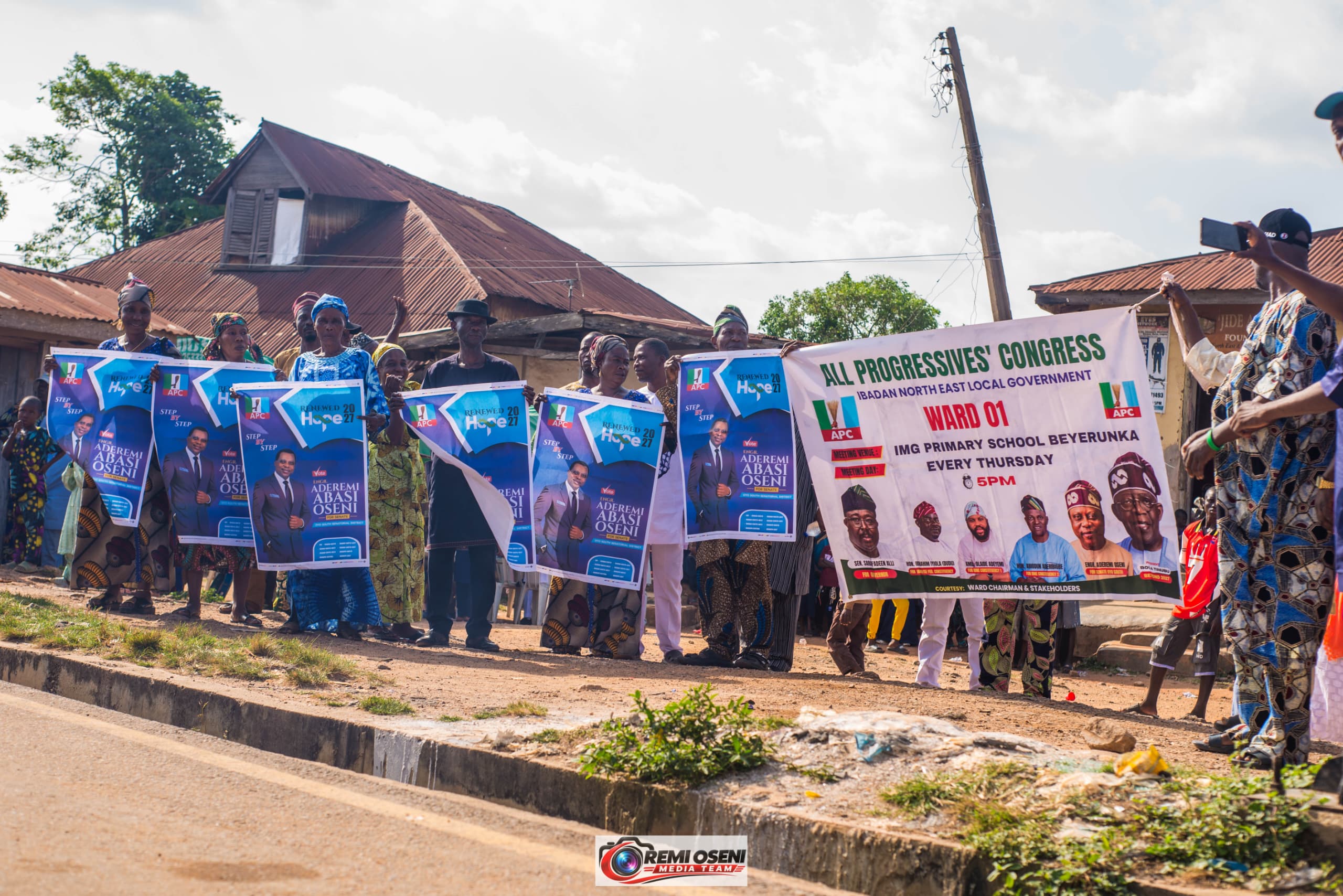
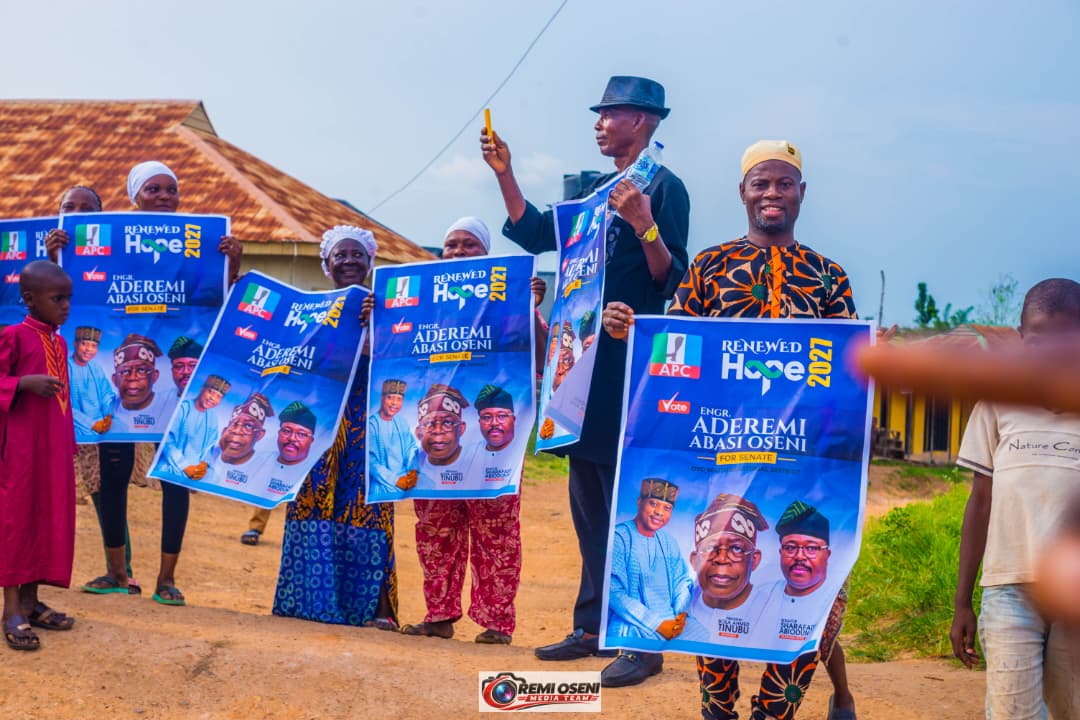
Colleagues in the House of Representatives describe him as “The Star Boy of the National Assembly.” He sits quietly but effectively, a man who prefers to let his work speak. Constituents describe him as accessible — a lawmaker whose phone number still goes through and whose gate remains open.
Oyo South is the economic heartbeat of Oyo State. It houses Ibadan, the political capital of the South-West. It needs a Senator who understands both urban renewal and rural development; a Senator who can navigate Abuja’s power corridors to attract federal presence, yet remain rooted in the palaces, markets, and streets of Ibadan and Ibarapa.

Hon. Oseni brings a rare blend: engineering expertise, legislative experience, and grassroots empathy. His years in the House have equipped him with the legislative savvy to sponsor and support bills that will address the peculiar needs of Oyo South — from urban electricity to rural roads, from youth unemployment to agricultural modernisation.

At a time when Nigeria’s energy sector is undergoing reform, Oyo South needs a Senator who will not just complain about darkness, but who has already shown he can deliver transformers, facilitate connections, and engage distribution companies to do more.
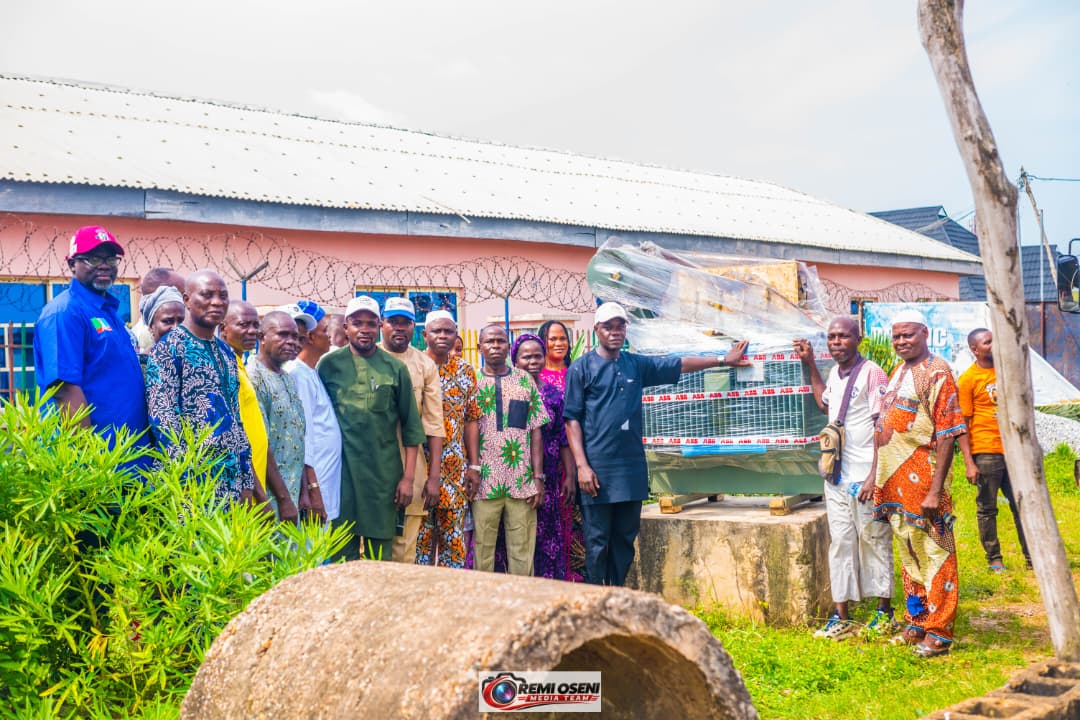
In Nigerian politics, many come with manifestos, but few come with evidence. Hon. Oseni’s campaign for Oyo South Senatorial District is not built on empty slogans; it is built on transformers delivered, roads fixed, boreholes working, and lives touched.

The 20 new transformers are not campaign props. They are installations that will outlive this election cycle. They will power homes long after the ballots are counted. That is the hallmark of genuine service — to do what is needed, not just what is popular.

As the 2027 general elections approach, the people of Oyo South are faced with a clear choice: to continue with politics as usual, or to elevate a proven performer to the Senate to do even more.
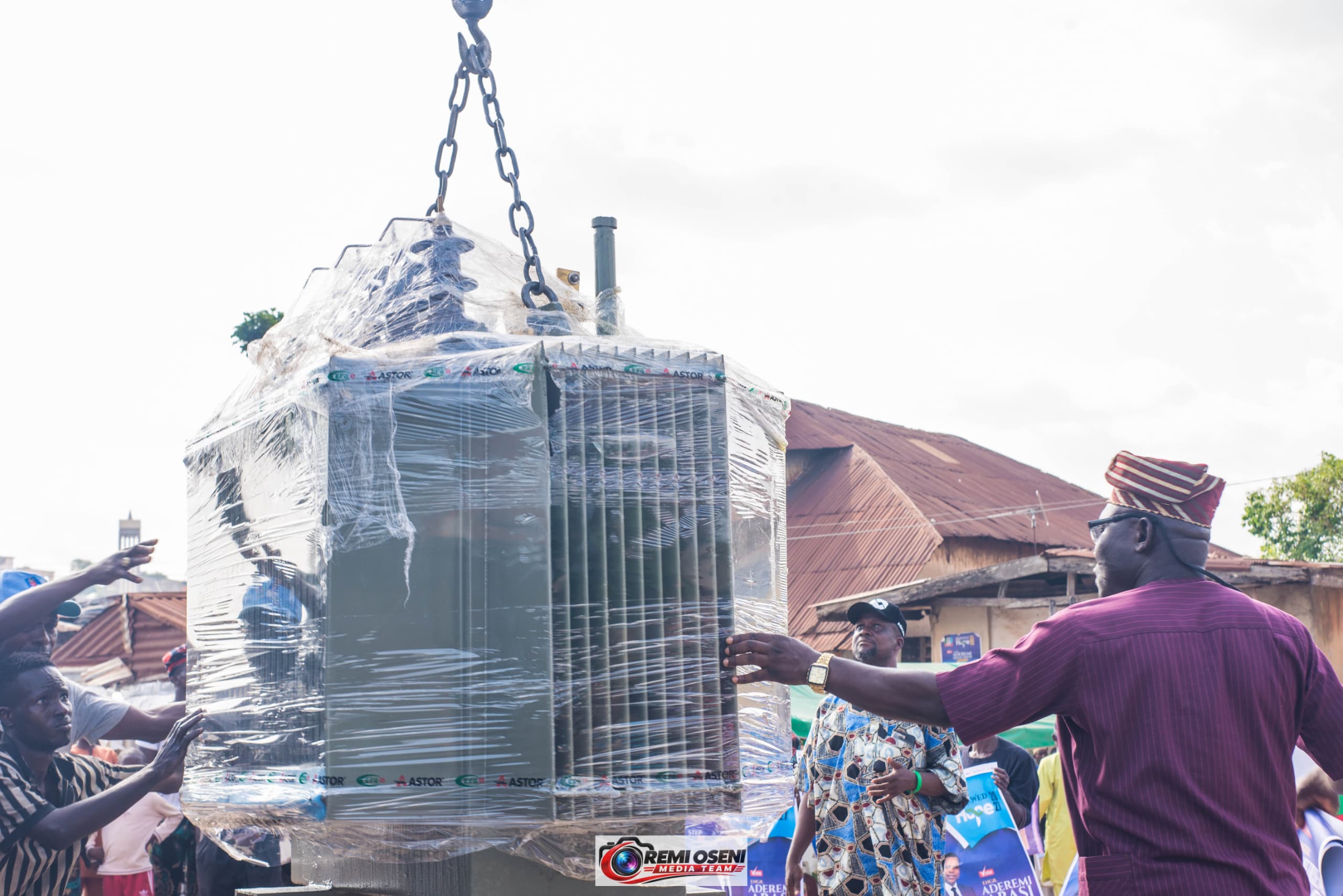
If a House of Representatives member can light up communities with 20 transformers, imagine what he can do with the greater influence of a Senator of the Federal Republic.

Indeed, Hon. Oseni is not just contesting to be Senator; he is contesting to bring more light — literally and figuratively — to Oyo South.


Joseph Okwuofu worked with The Nation newspapers and is the CEO/Publisher of Naija Examiner online newspaper.

Continue Reading

Trending