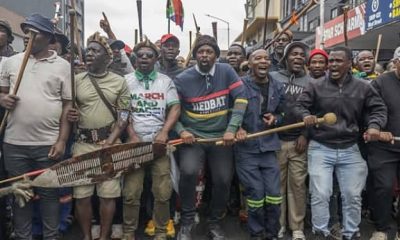
They all happened almost simultaneously, as if in a choreography. On February 9, 2011, a huge crowd of protesters had gathered at the Tahir Square in Cairo, Egypt. Unruly, eyes dilating like pellets of ice immersed in mug-full Campari liquor, it was obvious that this was a crowd determined to change the status quo.
They shouted anti-government slogans, calling for an end to oppression, economic adversities and collapse of the Arabian spirit in the Arab world.
A couple of weeks before then, specifically on January 14, 2001, at the Habib Bourguiba Boulevard in Tunis, Tunisia, it was the same huge crowd, mobilized to end the decadent order. Similarly on February 3, 2011, a mammoth crowd of dissidents gathered at the Sana’a in Yemen, calling for the resignation of President Ali Abdullahi Saleh. A couple of months after, specifically on a cold morning of April 29, 2011, hundreds of thousands of people at Baniyas, Syria, gathered to upturn the ruling order.
The overall goal of the protesters was similar: Bring down oppressive regimes that manifested in low standard of living in the Arab world. Dubbed Arab Spring, an allusion to the 1848 Revolution and the Prague Spring of 1968 by Political Scientist, Marc Lynch in an article he did for the American Foreign Policy magazine on January 6, 2011, the upheavals were a series of anti-government protests sparked off in early 2010s in Tunisia that eventually culminated in uprisings and armed rebellion that became widespread across the Arab World.
In a twinkle of an eye, they spread to five other Arab countries, namely Libya, Egypt, Syria, Yemen and Bahrain, leading to the deposition of the second President of Tunisia, Zine El Abidine Ben Ali; Egyptian Hosni Mubarak; Muammar Gaddafi and Yemeni first President, Ali Abdullah Saleh. In places where such upturns were not achieved, major social dislocations, riots, civil wars and insurgencies followed. In all of this social violence, the demonstrators’ catchphrase was, translated from Arab, “the people want to bring down the regime.”
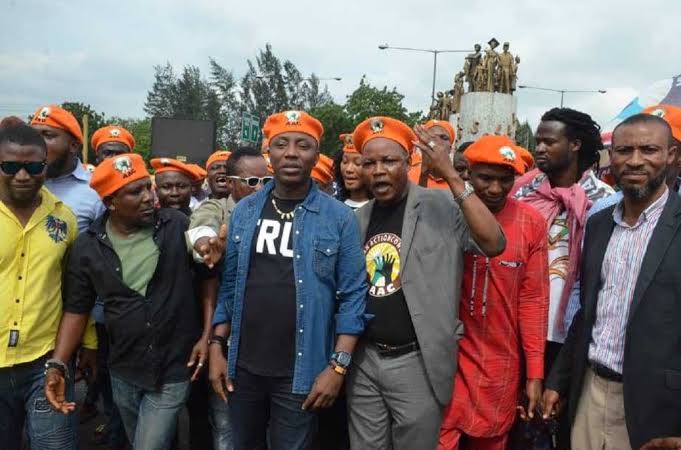
So, did the #RevolutionNow conveners actually want to bring down the Muhammadu Buhari government last week and if yes, were they representative of the people of Nigeria? I asked this question because, if the Arab Spring upheavals were what they sought to clone, we must place it side by side the gloat of the Buhari presidency which likened their own version to a child’s tantrum and a poor imitation of the original. Femi Adesina, Buhari’s spokesman, articulated the Buhari government’s disdain for and scant belief in the possibility of a rehash of an Arab Spring-like revolution in Nigeria.
My reading of this mockery of the protests was that Buhari, like the ruling class elite now and before him, was persuaded that the internal contradictions in Nigeria can never allow for a people’s revolt against governmental oppressors.
“A revolution is always a mass thing, not a sprinkle of young boys and girls you saw yesterday in different parts of the country. I think it was just a funny thing to call it a revolution protest. In a country of 200 million people and if you see a sprinkle of people saying they are doing a revolution, it was a child’s play. Revolution is something that turns the normal order. What happened yesterday, would you call it a revolution? It was just an irritation, just an irritation and some people want to cause irritation in the country and what I will say is when things boil over, they boil over because you continue to heat them,” the Buhari publicist said.
I am persuaded that the social condition of the 200 million people Adesina literally venerated for staying aloof to the #RevolutionNow is far worse than those of the Arab countries’. Like them, a tiny clique too has held the jugular of power for decades, continuously riding roughshod over their suffering people and believing that a violent upturn was a mirage. This ruling elite’s lethargy, in Nigeria, has resulted in apathy to the worsening fates of society and breeding a teeming agonizing majority.
However, my reading of the presidency’s dismissive appraisal of the #RevolutionNow protests shows that that mockery is situated on a wonky pedestal. Buhari’s basis for dismissing the protest includes its scant attendance, absence of belligerence of the protesters and the fact that things have not yet “boiled over.” Of a truth, on the outward, Omoyele Sowore’s #RevolutionNow, which provoked that disdainful appraisal of the Nigerian presidency, may look too sparse to qualify for a people’s revolt. However, proclaiming it a failure may be a fatal mis-reading of the temperature of revolts.
Though Buhari must have been buoyed into lethargy by the many contradictions of the Nigerian state that might not have allowed Nigerians to troop out in their millions to convince government that Buhari is sitting on a keg of gunpowder, things are actually fast boiling over from within. It is apparent that government has failed to see the success of the protest as a symbolism for perforation of the veneer of governmental resistance. Since it could not see this implication, government then dangerously lapsed into a couple of false assumptions which show it as incapable to properly read what people don’t say.
In his weekly Facebook epistle, Adesina was further lionized to make further fatal fallacious blunders. Citing the viral call of a 4-year old boy who urged his mum to calm down, entitled Why We Need to Calm Down, the president’s spokesman made same ruling elite mistake of equating infrastructural projects with development and imagining that the people are happy. He regaled Nigerians with construction projects which he said were unprecedented in Nigeria’s history. Does he know that development is mental and not merely physical structures?
While Nigeria may indeed have witnessed a flurry of Chinese loan-funded, ostensibly corruption-ridden infrastructural projects, Nigerians’ joy level has sunk considerably under Buhari. Development is in the peace that has eluded Nigerians in the last five years, in the widespread belief that Nigeria is rudderless under Buhari and the fear that Boko Haram, ISWAP, ISIS and bandits are presiding over the Nigerian affairs, rather than the elected political elite.
By definition, a revolution is a fundamental, sudden change in political power and political organization. It is propelled when a people revolt against an oppressive government run by generally perceived incompetent people. In human history, there have been an array of revolutions which significantly changed the status quo. While notable revolutions are the American Revolutionary War of 1775-1783, the French Revolution of 1789 to 1799 and the Russian Revolution of 1917, Africa has had its own experiences, ranging from the Angolan Revolution of 1961 – 1974, the Egyptian Revolution of 1919 and the Zanzibar Revolution of 1964. The most recent in this league in Africa is the Arab Spring.
So, what gave #RevolutionNow conveners the impression that Nigeria is ready for a revolt?
Successful revolutions have been known to succumb to some indices. James DeFronzo’s Revolutions and Revolutionary Movements, which can be regarded as a handbook for revolution, provided some insights. Mass frustration resulting in local uprisings, dissident elites, powerful unifying motivations, a severe crisis paralyzing state administrative and coercive power and a permissive or tolerant world context are some of the indices DeFronzo suggested cannot but be present if a revolt against an existing order must sail through.
A critical look at the Nigerian situation reveals the following: Whereas there is mass frustration in the country, this has seldom resulted in local uprisings, except the June 12 riots. In the same vein, the Nigerian elites, being part and parcel of the maggots that lace the Nigerian decadence, are literally having a saturnalia inside the Nigerian sewage and are far from being dissident against the status quo. Again, whereas there are motivations for revolt in virtually all parts of Nigeria, the complexities in diversities of tribe, religion and culture have compelled divisive motivations.
The Nigerian ruling elites are coercive, reckless and feckless in their rule but the contradictory indices earlier provided have restrained massive and widespread paralysis of governments. Allied to these is the fact that while there is indeed a sidon look of the international system against the slide in the affairs of Nigeria, this has lionized the ruling elite into further tightening the screw of their misrule.
Only a surface analysis would conclude that Nigeria is not ripe for a revolution. A combination of an incompetent ruling class and a gale of hopelessness is oscillating in the Nigerian sky. A conservative estimate will show that, at least 90 per cent Nigerians, from all the geopolitical zones, are miserable, hopeless and perceiving life as worthless. At every point, those purportedly elected to provide succor daily advertise confounding helplessness.
Look at the Bauchi State governor who recently appointed a Special Assistant on Unmarried Women Affairs; or the systemic chaos that is the order of the day in Nigeria. Check out the symbolism of Edo State where the unrivalled lawlessness of Adams Oshiomhole is jamming the arrogance of power of Godwin Obaseki. And of course, the massive theft of Nigeria’s inheritance and full-blown wretchedness of Nigerians, both of which are tribal-blind and religion-jaundiced.
What are those contradictions that made the #RevolutionNow look like a failure and which have made Adesina and his ilk gloat at the possibility of an overturn of the system? One is the structural default that Nigeria sits upon. No successful revolt can happen, in the words of DeFronzo, without unifying motivations. Though there is mass frustration, the motivations for revolt are not unifying. This necessitated what happened recently in Katsina, Buhari’s home state. Tired of their massive killing by bandits with a corresponding incapability of their son, Buhari and his sidekick governor, Aminu Masari, Katsina people blocked the roads and asked for their twin resignation.
Also, persuaded that the unprecedented heists in government and Buhari’s cancerous cronyism are offshoots of a systemic imbalance, Southern Nigeria has consistently called for restructuring. In the ears of a feudal North used to kowtowing, however, that singsong is absolute bunkum. Again, while bandits who come from a seeming culture that justifies slaughtering have butchered more Southern Kaduna people than the number of rams they probably slaughtered in their lifetime, the rest of Nigeria’s consternation at this bloodletting sounds strange to the sons of perdition whose DNA is violence and bloodshed. So where can there be one voice against systemic disorder as to propel people to massively gather to upturn a decadent status-quo like Buhari’s?
The above are ills resulting from the calamitous dalliance of Flora Shaw and her British soldier liaison, Lord Lugard. Unfazed by the fact that Nigeria is not a nation but a concentration of nations, with different persuasions, worldviews, cultures, social foundations, human excitements and expectations, this duo soldered the nations into a fractious whole, with dangers for their forcefully welded existence. This resulted in last week’s “sprinkle of young boys and girls,” a la the presidency’s gloat, as against a mass uprising, even though the indices of revolution, the hopelessness, the frustrations, are present everywhere. The truth is, there is no difference between the widespread despondency in Katsina-Ala, the frustration in Nkalagu or the massive disdain with Nigerian ruling class in Igboho but motivations for dissent are not the same.
Femi Adesina and the ruling class as a whole may however not have too long to gloat. To gloat at the impracticability of a revolution is a fallacious appeal to authority. It can also pass as a fallacy of the straw man. This is because it is not unlikely that the Nigerian ruling class might have been holding on to weak, phony and ridiculous beliefs that have no basis in science. The collapse of current world order, especially in this world of Coronavirus, may have underscored this.
It is in the enlightened self interest of the Nigerian ruling class to flatten the curves of inequalities and gross lack and want, otherwise, its thinking that Nigerians are incapable of rising against it will collapse.
This was the thinking of the runners of George Orwell’s Animal Farm. The lyrics of Orwellian Beasts of England say this much and are a pointer to the fact that, if the oppression and frustration in Nigeria continue unabated, it may be a push for a surge of the adrenaline of the Nigerian oppressed.
Orwell had enjoined the suffering oppressed, the “Beasts of England, Beasts of Ireland” the corollary inside the Nigerian Animal Farm cage, the, “Beasts of every land and clime” not to be downcast as “Soon or late the day is coming,//Tyrant Man shall be o’erthrown//And the fruitful fields of England//Shall be trod by beasts alone.” Rejoicing in a future of conquest of the system, Orwell also enjoined that, “Rings shall vanish from our noses//And the harness from our back//Bit and spur shall rust forever//Cruel whips no more shall crack.”
Are the Nigerian ruling elite who believe that the decadent order would continue ad infinitum listening?