The Federal Government last night expressed “deep shock and utter disappointment as Resident Doctors began yesterday an indefinite strike to press home their demand for better pay.
The action is coming three days after their leadership signed a memorandum of terms of settlement with the government.
Ministry of Labour and Employment spokesman Samuel Olowookere, in a statement, said the Federal Government was disapointed over the sudden u-turn by the leadership of the National Association of Resident Doctors (NARD ) after it had reached a Collective Bargaining Agreement (CBA) with the Federal Ministry of Health on its six-point demand.
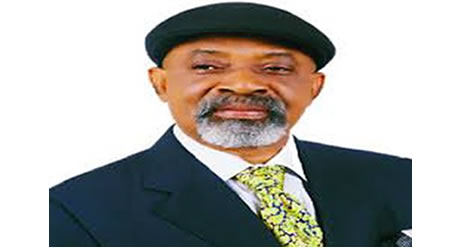
He added: “Minister of Labour and Employment Senator Chris Ngige, “in exercise of the powers conferred on him by the Trade Dispute Act 2004, has apprehended the ongoing strike by NARD. Consequently, the meeting between NARD and the government earlier scheduled for November 2 is now slated for Wednesday, September 6, 2017 (tomorrow) by noon at the Conference Room of the Minister of Labour and Employment. ”
“All stakeholders are implored to attend this crucial meeting. The health and well-being of Nigerians are cardinal to President Buhari’s administration. Hence, every measure necessary shall be taken to restore normalcy”.
Rising from their National Executive Council meeting in Abuja, the doctors said they were rejecting the terms of settlement, which would have seen the strike being suspended.
But the Medical and Dental Council of Nigeria (MDCN) warned doctors on internship not to join the strike.
They risk repeating their programme, if they do, it said.
In a notice of strike sent to chief medical directors and medical directors of hospitals and signed by the President and Secretary General, Dr. Onyebueze John and Dr. Aneke Emmanuel, the resident doctors said they rejected the terms, but did not give any reason for doing so.
The letter reads: “The National Association of Resident Doctors of Nigeria, rising from her extraordinary National Executive Council (NEC) meeting which held on Sunday, 3rd September 2017 at Parkview Hotels, Abuja, rejected the Memorandum of terms of settlement from government on the items of her demand for strike and resolved to proceed on the proposed national, total and indefinite strike with effect from 8am Monday, 4th September 2017.”
A message from the President of the Resident Doctors also reads: “Rising from our NEC meeting which started by 7pm yesterday (Sunday) and ended 3am today (Monday), NARD resolved to reject the promissory offer from government and proceed on total and indefinite strike until all items in her demand list are resolved by government.”
The doctors are contesting what they described as the government’s failure to:
pay our salary shortfall of 2016 and January to May 2017;
rectify the salary shortfall from August 2017;
circularize House Officers’ entry point;
correct the stagnation of promotion of our members and properly place them on their appropriate grade level;
enroll and capture our members on the Integrated Personnel Payment Information System (IPPIS) and
budget, deduct and remit both the employer’s and employees’ pension contributions to our retirement savings account since 2013.
After a meeting between the government’s representatives and officials of the doctors’ association and the Nigeria Medical Association on Thursday, both parties signed a memorandum of terms of agreement, pointing out that some of the issues being complained about by the association were already being addressed by the government.
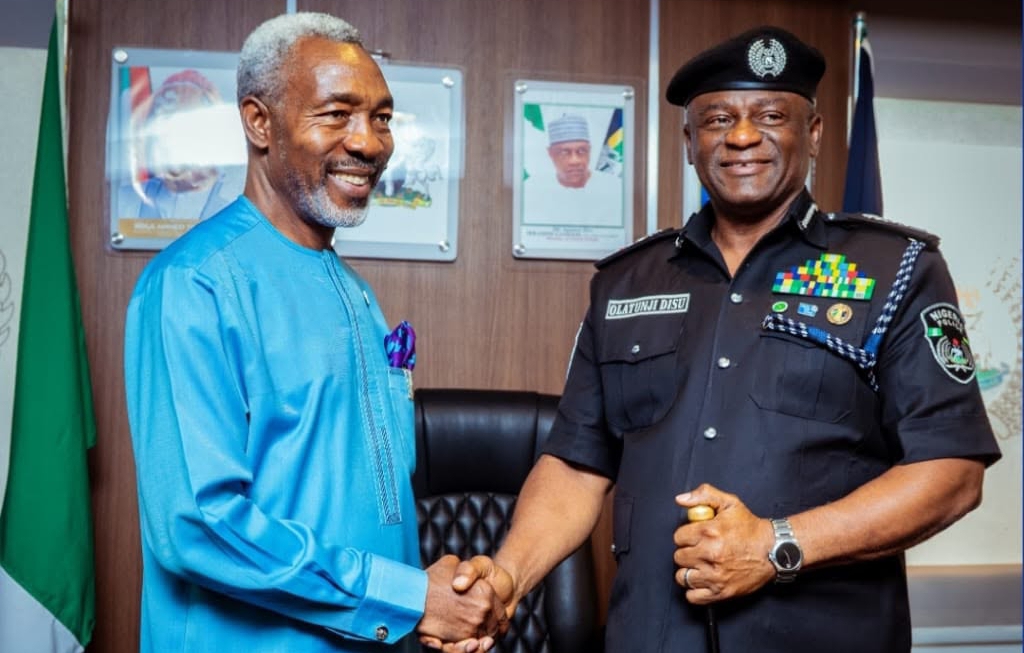
The memorandum was signed by the Minister of Labour and Employment, Minister of Health Prof. Isaac Adewole. Minister of State, Labour and Employment, Prof. Stephen Ocheni, National President of the Nigeria Medical Association (NMA) Prof. Mike O. Ogirima, National Association of Resident Doctors President Onyebueze John and of the National Salaries, Income and Wages Commission Chairman Richard Egbule.
Other signatories are representatives of Office of the Head of Civil Service of the Federation, Office of the Accountant General of the Federation and the Budget Office of the Federation.
The memorandum reads: “The meeting noted that some Federal Tertiary Health Institutions (FHTI) have paid a percentage of salaries to Resident Doctors and are consequently in arrears of salary payments to members of NARD and Honorary Consultants.
“It was also noted that the Office of the Accountant General of the Federation (OAGF) had started the process of paying the shortfall of salaries owed in batches. It was therefore concluded that the Accountant General of the Federation (AGF) should forward the list of the recipient FHTI to the Honourable Minister of Health to ensure that the released fund was used for its intended purpose. The payment for other FHTI not captured to be implemented before the end of October 2017.”
On shortfall in salaries, it was agreed that “the Director Hospital Services is to address a circular/letter to the Chief Medical Directors (CMDs) and state therein that the released funds should be used solely for salaries and shortfalls. The Federal Ministry of Finance should ensure that monthly salaries are paid in full.
“Reference was made to the Memorandum of Understanding (MoU) reached at the 7th Senate in 2014, and House of Representatives with the Speaker presiding in 2016, where parties agreed to use the quantum of monies contained in CONHESS 9:4 for CONMESS 1:1.
“It was concluded that effect should be given to previous Collective Bargaining Agreements (CBAs) reached on this issue so that CONHESS 9:4 would be in parity with CONMESS 1:1. The Chairman NSIWC to get this circularised, after getting the quantum from FMoH. All matters on this issue should be finalised before the preparation of 2018 Budget is concluded.
“Issues of skipping and matters ancillary thereto were discussed. The meeting noted that the Federal Ministry of Health had appealed against the ruling of the National Industrial Court of Nigeria (NICN) on skipping and that a date has been given by the Court of Appeal for hearing in March, 2018.
“It was further noted that a major issue is the improper placements on appropriate Salary Grade Levels. It was concluded that a proper guideline should be provided by the Office of the Head of the Civil Service of the Federation (OHCSF) and that Item 4 of the MoU of December 16, 2013 should be adopted.
“The Item 4 states that ‘the FMoH, NSIWC, NMA should urgently review the NMA’s proposal on skipping of CONTISS 10/CONHESS10/COMESS 2 in the new Scheme of Service with a view to amending it to reflect the suspension of the circular on unauthorised skipping of equivalent of CONMESS 2 for medical doctors in the Public Service.
“The amended proposal shall be forwarded to the HCSF through the FMoH for an onward presentation to the forthcoming National Council on Establishment (NCE) on 24th January, 2014 in Ilorin.” In view of this earlier position, it was concluded that the Honourable Minister of Health (HMoH) should drive this issue and that no circular should be issued on the matter until it is concluded by the HMoH.
“In view of the expected meeting of the Council of Establishment, the end of October was given as the tentative time limit to conclude the assignment by the FMoH and Office of the HCSF. Hospitals that are yet to implement skipping for doctors are to commence and henceforth, promotions should be in accordance with the Public Service Rules.
“Based on the information given by the members of NARD, it was noted that only 18 Federal Tertiary Health Institutions had so far submitted their Nominal Roll. The meeting concluded that NARD members should be on the IPPIS platform and that the CMDs as well as the MDs should be requested by the FMoH to submit their Nominal Roll to the Office of the Accountant General of The Federation (OAGF) and copy to the FMoH and FML&E on or before September 15, 2017. It was agreed that all Resident Doctors should be captured on IPPIS platform by the end of October 2017.
“It was concluded that NARD members are on pensionable appointment and, as such, the FMoH in conjunction with OAGF and Budget Office of the Federation (BOF) should take necessary steps to ensure that adequate budgetary allocations are made to cover the Pension requirements of NARD members.
“Furthermore, FMoH should issue a letter in that regard to the Head of the Civil Service of the Federation who would correspond with the Budget Office of the Federation for necessary action, as the National Pension Commission (PENCOM) had in a letter of February 12, 2015, Ref.PENCOM/INSP/C&E/CCPA/66/15/1167 to the Honourable Minister of Health affirmed that members of NARD are “employees”.
“In view of the foregoing terms of settlement, NARD agreed to meet in an Emergency Session before Monday, September 4, 2017, for the presentation of this Memorandum to her National Executive Council with a view to averting the scheduled strike.”