Connect with us

Opinion

Opinion: Beheaded Adamawa Pastor: CAN Got It Mixed Up | By Femi Adesina

Published

on

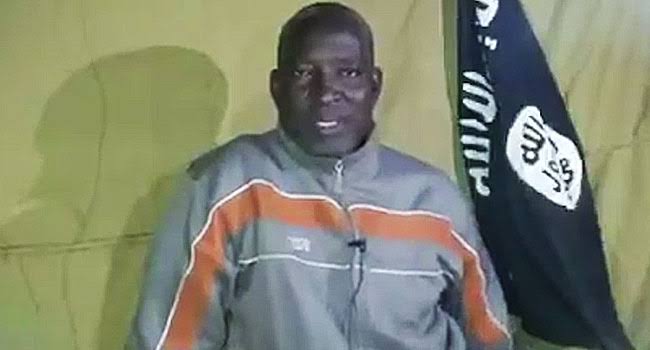
It was very sad and doleful to hear of the eventual beheading of Rev Lawan Andimi, Chairman of Christian Association of Nigeria (CAN), Michika Local Government, Adamawa State. He had been abducted by terrorists earlier this month .

I felt the killing of Andimi very keenly, not for the fact that he was a clergyman, but “any man’s death diminishes me, because I’m involved in mankind.” (John Donne).

No man should die the way Rev Andimi was killed. Beheaded by insurgents, who then proceeded to gleefully announce his decapitation. It should not happen. Evil and senseless. It is classic example of man’s inhumanity to man, and those who did it have long lost their humanity, if they ever had any.

President Muhammadu Buhari has sympathized with the family and relations of the dead. I have also been in a state of melancholy over it. May God have mercy.

I am mourning Rev Andimi, not just because he was a cleric, but because he was a human being. And my distress was increased by the statement issued on the tragic event by the central body of CAN. Too many things were mixed together, which the apex Christian body in the country should have been mindful of, lest it departs from the mind and essence of Jesus Christ, our perfect example.

For years, since he emerged on the national scene as a military leader, and later as an aspirant for the highest political office in the country, and eventually as President, spirited attempts have been made to position Muhammadu Buhari as anti-Christian faith. It worked against the man for a long time, till majority of Nigerians saw through the smokescreen, and made up their minds against the demonization.

That was why as much as some church leaders tried to dress Buhari in borrowed robes in 2015 and 2019, millions of Christians went ahead to vote for him. The inexorable truth is that in Nigeria, Muslims can’t wish Christians away, and vice-versa. We shall all stay here, and salvage it together.

However, the statement by CAN on the death of Andimi gives hint that the leadership of the Christian body still harbors some of the old narratives that have been discredited, and from which majority of people have purged themselves, except the willfully irredeemable.

Hear CAN, through its Director of Legal and Public Affairs, Evangelist Kwamkur Vondip, speaking for Rev Samson Ayokunle, President of the body: “Maintenance of security is the least responsibility of any government that knows its worth. We are once again calling on President Buhari to purge himself of the allegations of nepotism and religious favoritism by reconstituting the leadership of the security forces.”

Let’s consider this part of the press statement. Maintenance of security is the least responsibility of any government that knows its worth. Not news. The Constitution says so. But don’t you glean a hint of bile and bias in “that knows its worth?” Oh, CAN, this is not the mind of our Master. He gives praises when due.

Security is number one on the priorities of the Buhari administration. It has pumped time and humongous resources into it, and while the job is not fully done, we are not in the same position we were before the administration came. At least, to those who want to be honest. And CAN should be honest. That is what we’ve learnt from our Master. There were times bombs used to go off in this country like firecrackers, and deaths were in many scores.

Now for months on end, you may not hear of a single bomb blast. Emirs that had fled their palaces, like those of Askira and Uba, have returned after two years. Secondary schools that were shut for two years in Maiduguri have reopened. Roads long closed due to activities of insurgents are back in use. Kidnappers are being arrested in droves in different parts of the country. Clashes between farmers and herdsmen are reducing to the barest minimum.

Yet, CAN is talking about a government that knows its worth? The Buhari government does, and honest Nigerians know it, and wish it more successes. Security, in any country of the world, can only be work in progress.

Hear again: We are once again calling on President Buhari to purge himself of the allegations of nepotism and religious favoritism…Wait a minute. If any purging is to be done, is it not by those making allegations?

The allegations lasted for many years, but truth eventually overtook them. If CAN would then still dwell on the discredited accusations, it must be the one to purge itself, as millions of Nigerians, including Christians, have already done. The insecurity in the country is not about any religion. It is pure evil, from the pit of hell.
And then: …purge himself of the allegations…by reconstituting the leadership of the security forces.

CAN, oh CAN, in a condolence statement? Are you saying under a different leadership of our security forces, insurgency will vanish after they wave their fingers? Why mix the wheat and chaff together? In the leadership of the security forces as we have it now, is the position of Chief of Defence Staff not held by General Abayomi Olonisakin, who is also a pastor? Is he not a member of CAN? Is the Chief of Naval Staff, Ibok Ekwe-Ibas, not a Christian, and under the banner of CAN? Listening to the organization, you would think not even half a Christian is in the leadership of the security forces. This kind of sentiment breeds hatred and malice in a country, and CAN should not be involved in such, for Jesus would not do it. And we’ve been called to walk in His steps.

If the leadership of the security forces would be changed, it is a sitting President that has the prerogative. It will not happen when CAN begins to make such demand in what should be a sober condolence press statement. Don’t mix bias and sympathy. They don’t mesh.

And then, this completely reckless portion of the statement: “In the light of the current developments and the circumstantial facts surrounding the prevailing upsurge of attacks against the church, it will be difficult for us to believe that the Federal Government is not colluding with the insurgents to exterminate Christians in Nigeria, bearing in mind the very questionable leadership of the security sector that has been skewed towards a religion and region.”

Holy Moses! Did CAN say this? Shameful and ridiculous. These are the things that sow malice and animosity in the country, and a Christian body is not expected to be involved in such. You can’t sow discord, and expect concord.

In that statement, the Christian body urged the Federal Government to ensure the release of the prisoner of faith, Leah Sharibu, and hundreds of victims who are in Boko Haram and ISWAP captivity. It equally called for three days fasting and prayers by Christians in the country. Good. The role of the church is not just in making snide remarks and statements, it is in what the Good Book calls “the demonstration of the Spirit and power.” When Herod locked Peter up, and was going to behead him, the early church prayed fervently, and Peter was rescued miraculously the night before. Rather than cast the government as omnipotent, it is God that has all powers. And some things are never resolved spiritually except through prayer and fasting. It is not me that said so. Jesus did. So, let the Church be fully involved in supplication for divine intervention in the country, rather than playing subtle politics and unwittingly generating hate in the land.

CAN says kidnappings and killings are shameful to a government that boasts that it has conquered insurgency. Boasts. So that is all that matters to CAN, as if it was an opposition political party? Boasts. No. This would not augur for unity and cohesion in a country. We are not asking the Christian body to be in bed with government, that would not help anybody, but the organization has been sounding too long like a political party. We daily learn to walk with Jesus. His spirit is not an unduly critical one. And He left us an example “that ye should follow in his steps.”

Rev Andimi was not killed solely because he was a Christian. Those evil people kill anyone they lay their filthy hands on.

May Andimi’s soul Rest In Peace. May his loved ones be comforted. And may evildoers get their recompense, and fast too. Amen.


Femi Adesina is the Special Adviser on Media and Publicity to President Muhammadu Buhari

Comments

Opinion

Why Ibadan North youths are rooting for Repete

Published

on

Growing support has continued to trail a youthful politician and technology advocate, Hon. Khalil Mustapha Adegboyega, popularly known as Repete, as many youths in Ibadan North Federal Constituency expressed confidence in his leadership style and vision for development.

Across several communities within the constituency, residents, particularly students, artisans and young professionals, described Repete as one of the emerging political figures with strong grassroots appeal and a passion for youth empowerment.

Supporters said his growing popularity stems from his consistent advocacy for innovation, entrepreneurship and skills development aimed at addressing unemployment and creating opportunities for young people.

As an engineer and technology enthusiast, Repete is also said to possess a deep understanding of the evolving digital economy and the need to position youths for global competitiveness.

Many of his supporters noted that his approach to leadership focuses on practical solutions, mentorship and capacity-building initiatives capable of helping young people become self-reliant and economically productive.

Some community stakeholders who spoke on his rising profile said his humility, accessibility and relationship with the grassroots have continued to endear him to many residents within the constituency.

They added that Repete’s engagement with youths and community groups reflects his commitment to inclusive governance and people-oriented representation.

Observers within the constituency also maintained that the increasing support for the politician reflects a growing desire among residents for a new generation of leaders driven by innovation, competence and accountability.

According to them, many young people see Repete as a symbol of hope and progressive leadership capable of contributing meaningfully to the development of Ibadan North Federal Constituency.

Continue Reading

Opinion

Repete or Regret: APC’s Moment of Truth in Ibadan North

Published

on

File photo of Hon. Khalil Mustapha Adegboyega (Repete)

The All Progressives Congress (APC) in Oyo State stands on the edge of a consequential decision—one that may define not only its fortunes in Ibadan North Federal Constituency but also its broader political relevance in the state.

As the countdown to the party primaries intensifies, the question before APC leaders is no longer routine. It is strategic. It is urgent. And it is decisive: will the party align with the clear preference of the people or risk repeating costly political miscalculations?

At the centre of this debate is Hon. Khalil Mustapha Adegboyega, widely known as Repete—a name that has, over time, evolved from a political identity into a grassroots phenomenon.

A Candidate Rooted in the People

In contemporary Nigerian politics, where voter awareness is rising and expectations are shifting, candidates are increasingly judged not by promises but by presence. On this scale, Adegboyega stands tall.

His political journey is marked by consistent engagement with constituents—far beyond the optics of election seasons. From youth empowerment initiatives that provide practical skills and startup support, to sustained interventions in healthcare access for the elderly and indigent, his footprint across Ibadan North reflects a model of leadership anchored on service.

Unlike the transactional approach that often defines political relationships, Adegboyega’s connection with the people appears organic—built on trust, accessibility, and continuity. These are not mere campaign attributes; they are political assets.

The Danger of Political Disconnect

History offers the APC a clear lesson: parties that ignore grassroots sentiment often pay a heavy electoral price. The imposition of candidates perceived as distant or untested has, in several instances, resulted in voter apathy, internal dissent, and eventual defeat at the polls.

Ibadan North presents no exception.

With opposition parties closely monitoring the APC’s internal dynamics, any misstep in candidate selection could provide a ready opening. A divided house, coupled with a candidate lacking widespread acceptance, is a formula the opposition is well-positioned to exploit.
The implication is straightforward: this is not merely about party loyalty; it is about electoral viability.

Echoes from the Grassroots

Across the length and breadth of Ibadan North—markets, motor parks, religious centres, and community gatherings—a consistent pattern emerges in political conversations. The name “Repete” resonates with familiarity and acceptance.

Such organic support is not easily manufactured. It is cultivated over time through visible impact and sustained presence. For a party seeking electoral certainty in a competitive environment, this level of grassroots validation is not just desirable—it is critical.

A Test of Leadership and Judgment

For the APC leadership in Oyo State, the moment calls for clarity of purpose. Decisions driven by narrow interests, personal alignments, or short-term calculations may carry long-term consequences.

The task, therefore, is to balance internal considerations with external realities. Elections are ultimately decided by voters, not by party caucuses. A candidate who commands public confidence offers the strongest pathway to victory.

The Stakes Are Clear

Ibadan North is too strategic a constituency for experimentation. The cost of error is not limited to a single seat; it extends to party cohesion, credibility, and future positioning within the state’s political landscape.

In this context, the argument for Adegboyega is less about sentiment and more about strategy. His visibility, acceptability, and record of engagement place him in a strong position to consolidate support and mobilise voters effectively.

Conclusion: A Choice with Consequences

As the APC moves closer to its primaries, the decision before it is both simple and significant: align with a candidate who reflects the mood of the electorate or risk conceding advantage to a watchful opposition.

In politics, moments such as this often separate foresight from hindsight.
For APC in Ibadan North, this may well be one of those defining moments.


Aderibigbe Akanbi, a political analyst, writes from Ibadan.

Continue Reading

Opinion

Ibarapa East: Yusuf Ramon’s Quest for Responsive Representation

Published

on

Hon. Yusuf Abiodun Ramon

As the road to 2027 gradually unfolds across Oyo State, political conversations are shifting from routine permutations to deeper questions about competence, generational leadership, and measurable impact. In Ibarapa East, that conversation has found a new voice in Yusuf Abiodun Ramon — a Lanlate-born technocrat whose entry into the race for the State House of Assembly is redefining what representation could mean for the constituency.

In a political environment often dominated by familiar faces and conventional calculations, Ramon presents a profile shaped by technical discipline, structured thinking, and solution-driven engagement. His professional background, anchored in analytical precision and systems management, forms the foundation of his public service aspiration.

For him, representation must move beyond ceremonial presence to practical responsiveness — laws that reflect local realities, oversight that protects public resources, and advocacy that translates into visible development.

Ramon argues that the future of Ibarapa East lies in leadership that listens deliberately, plans strategically, and delivers measurably. He speaks of strengthening rural infrastructure, expanding youth-driven economic opportunities, and institutionalising transparency as core pillars of his agenda. In his view, governance must not merely be symbolic; it must be structured, accountable, and people-centred.

Rooted in Ile Odede, Isale Alubata Compound, Ward Seven of Ibarapa East Local Government, and maternally linked to Ile Sobaloju, Isale Ajidun Compound, Eruwa, Ramon’s story is not one of distant ambition but of lived experience. He is, in every sense, a son of the soil — shaped by the same roads, schools, and economic realities that define daily life in Ibarapa East.

“I was born here. I grew up here. I understand our struggles, our strengths, and our untapped potential,” he says. “Representation must go beyond occupying a seat; it must translate into preparation, competence, and genuine commitment to development.”

His academic journey mirrors that philosophy of steady growth. He began at Islamic Primary School, Lanlate (1995–2001), proceeded to Baptist Grammar School, Orita Eruwa (2001–2007), and later earned a National Diploma in Mechanical Engineering Technology from Federal Polytechnic, Ilaro, between 2009 and 2011. Refusing to plateau, he advanced his intellectual horizon and is now completing a Bachelor of Science in Business Administration at the University of Lagos. “Education,” he reflects, “is continuous capacity building. Leadership today requires both technical knowledge and administrative insight.”

That blend of engineering precision and managerial training has defined a professional career spanning more than a decade. Shortly after his diploma, Yusuf joined Mikano International Limited as a generator installer, gaining hands-on experience in industrial power systems — a sector central to Nigeria’s infrastructural backbone. He later transitioned into telecommunications at Safari Telecoms Nigeria Limited, where he received specialized training in Industrial, Scientific, and Medical radio bands, strengthening his expertise in network operations.

In 2013, he became a Field Support Engineer at Netrux Global Concepts Ltd., then a leading ISM service provider in Nigeria. Over four formative years, he immersed himself in telecom infrastructure deployment and maintenance, mastering field coordination, logistics management, and real-time technical problem-solving.

Since July 2017, he has served as a Field Support Engineer with Specific Tools and Techniques Ltd., a power solutions firm providing services to major operators including MTN Nigeria and Airtel Nigeria. In that capacity, he operates at the frontline of ensuring energy reliability and network uptime — responsibilities that demand discipline, accountability, and systems thinking.

For political observers in Ibarapa East, this trajectory matters. It reflects more than résumé credentials; it speaks to a mindset anchored in efficiency, coordination, and measurable outcomes — qualities increasingly demanded in legislative representation.

Beyond the private sector, Ramon’s political exposure is neither sudden nor superficial. A loyal member of the progressive political family in Lagos, he once served as a personal assistant to a former lawmaker, gaining practical insight into legislative procedure and constituency engagement. Within his community, he has quietly extended financial support to small-scale entrepreneurs and students — modest but consistent interventions rooted in personal responsibility.

“My interest is my people,” he states firmly. “Ibarapa East deserves strategic, responsive, and capable leadership at the State Assembly. We must move from rhetoric to results.”

Across the constituency — from Lanlate to Eruwa — development priorities remain clear: youth employment, vocational empowerment, rural road rehabilitation, stable power supply, agricultural value-chain expansion, improved educational standards, and stronger lawmaking that directly reflects community needs.

Political analysts argue that Ramon’s technocratic background positions him uniquely at the intersection of policy formulation and practical implementation. At a time when national discourse increasingly favours competence over grandstanding, his profile resonates with a broader generational shift toward performance-driven governance. His engineering discipline reinforces problem-solving; his business training strengthens administrative understanding; his grassroots roots anchor his empathy.

For Ibarapa East, the 2027 election cycle may represent more than a routine democratic exercise. It may mark a recalibration of expectations — a demand for representation that understands both the soil beneath its feet and the systems that drive modern development. As political alignments gradually crystallize in Oyo State, Yusuf Abiodun Ramon’s declaration signals the arrival of a candidate seeking to translate private-sector structure into public-sector impact.

One thing is clear: the conversation about the future of Ibarapa East has begun — and it is now framed around competence, credibility, and capacity.


Oluwasegun Idowu sent in this piece from Eruwa, Ibarapa East LG, Oyo State

Continue Reading

Advertisement

Entertainment

Advertisement

MegaIcon Magazine Facebook Page

Advertisement

MEGAICON TV

Advertisement

Trending