Opinion
Good Old Victor: Peculiarity of The Unconventional Olunloyo Equation | By Wole Adejumo
Published
10 months agoon
By
Wole AdejumoSitting beside Mr. Dipo Fagabamila in the staff bus was always a gladsome experience as we were sure to have a discussion along our lines of mutual interest which include music, the army and current affairs. But as we linked the Lagos-Ibadan expressway on our way from work that day, the topic was different. “I have this mail from the Pro-Chancellor, Professor Ibidapo-Obe and it is addressed to Dr. Omololu Olunloyo. How can I reach him?” he asked. “Let me call Aunty Ronke”, I replied. “And who is that?” he asked again. So I explained that because of her sisterly disposition from my days as a Correspondent in City People, almost everybody in the office referred to Dr. Olunloyo’s wife, Chief (Mrs.) Ronke Olunloyo as “Aunty Ronke”.
After the pleasantries over the phone, I explained the situation and she said,
“Well, Doctor is here. You can come now”. So I volunteered to deliver the envelope on Mr. Fagbamila’s behalf. It was already getting dark so I thought of maximizing time. As I handed her the envelope, she announced my arrival as she told her husband the parcel was from “Broda Oye”. I could hear Dr. Olunloyo asking “which of the Adejumos” and she said it was the one who worked with City People but had moved to the newly established university. She later told me a Doctor was attending to him, so I could wait to see him.
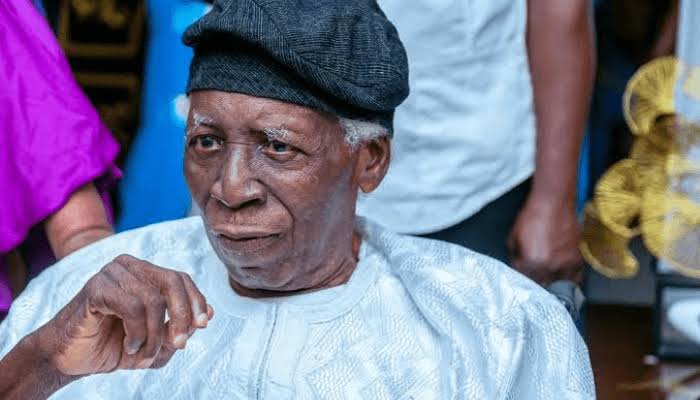
When I had waited a while, I took my leave and on my way home, I reflected on the frailty of life and its ephemerality. The once energetic Victor Omololu Olunloyo was being attended to by a physician! Of course he was already in his eighties and had been rumoured dead about thrice. Memories of the many tales about him started coming back to mind. Personally, I would say Dr Olunloyo’s reputation precedes him. My mum once told a story of how Olunloyo as a Commissioner in his 20s saw a schoolboy roaming the streets when studies were supposed to be ongoing. On sighting him, the boy reportedly ran and the youthful commissioner gave chase. The boy scaled a window but that was not enough to deter Dr. Olunloyo who jumped after him and continued the pursuit.
I could remember thinking about that event when we accompanied him to Idanre where the Owa, who was then celebrating the 30th anniversary of his coronation honoured Dr. Olunloyo. The monarch recognized his role as the then Commissioner for Local Government and Chieftaincy Matters in his ascension.
My cousin, Chief Adegboyega Adejumo who doubles as Mogaji of the Ikolaba Idiagbon Family of Agbeni where I come from, had also told me of how Dr. Olunloyo visited their house decades ago on his return from Cuba. What was strange was that he came with a gift for his dad, Reverend M.O Adejumo my Uncle, and the gift happened to be a box of Cuban cigars. The story had it that “Baba Alufaa” as we fondly called my uncle protested that “Mololu, ki ree? (Mololu, what is this?). His conclusion that the gift had been brought to the wrong place elicited explanation from Dr Olunloyo that the cigars were personally given to him by Fidel Castro, the legendary Cuban leader.
I didn’t realize the reason behind the move until the former Governor passed. Mogaji confirmed that he and his elder brothers gathered and asked their dad why he, a Reverend gentleman accepted cigars as gifts. That was when he told them that they, in their youthfulness could not understand that Olunloyo in his analytical mind knew that the only way to preserve the gift as a memento of his meeting with Castro was to put them in a safe place. Of course, giving them to a Reverend who would neither light nor smoke them was the surest kind of preservation.
His life was obviously an odyssey of achievements which climaxed in style with his exit days before his 90th birthday. As a Commissioner, Dr. Olunloyo oversaw the coronation of Oba Lamidi Adeyemi III, the immediate past Alaafin of Oyo, who bestowed the Balogun title on him. It was iconic that he waited to see the ascension of Alaafin Owoade Elewu Etu before taking his exit.
Those who knew him well would attest to the fact that his love for mathematics was glowingly manifest in all he did. Not many people have ever bothered to find out how many times “Halleluyah” came up in George Frideric Handel’s Halleluyah Chorus/ Well, Dr. Olunloyo did!
Another time he amazed me was at the reception held in his famous Garden after his son, Ayo’s wedding. Being a photojournalist, Wale Adenuga, my colleague from City People started taking pictures of the celebrities around. He was about to take a group photograph when Dr. Olunloyo furtively left the arranged group. Attempts to get him to rejoin were almost unsuccessful. His response was, “the best pictures are spontaneous”. That statement has refused to leave me and over the years, I have realized that the spontaneity of taking pictures has produced some astonishing images for me. A scuffle with armed policemen who dispossessed me of my camera some years after, was enough a reminder to stick to that principle. Though the camera was eventually returned with apologies by the Public Relations Officer of the Command, I saw sense in Dr. Olunloyo’s brilliant postulation.
At the reception, he held one of his grandchildren and told some of the guests that the boy had a great love for mathematics. He said he arrived at that conclusion when he asked a question from his grandchildren and it was only the boy that got the answer right. As the older guests left, Doctor Olunloyo simply told the boy, “let us go and work mathematics”. Wale and I exchanged glances and our thoughts were in sync, who on earth works mathematics with a three-year-old boy?
And talk of family traits, brilliance is one thing the Olunloyos have been known for over the centuries. When the first missionaries started their school in Ibadan, they requested all Ibadan chiefs to send one child each. While some did not, Balogun Olunloyo sent two of his children, a boy and a girl who became part of the first Ibadan indigenes to receive Western education. The young boy happened to be the grandfather of Victor Olunloyo.
Lest I forget, I adopted that appellation after hearing Aunty Ronke addressing him as “Good Old Victor”. Though his taste for wine and music were evocative of age-long connoisseurship, one other thing distinguished him from most of the others in his category; his politics was devoid of bitterness. Absolutely loyal to whatever he stood for, he would say his mind not minding whose ox was gored. He once explained how his friend, Professor Ogunmola told him that the late sage, Chief Obafemi Awolowo was looking for him. He confirmed that he went to Awo’s Oke Bola residence in Ibadan, took a bottle of Guiness Stout and when the sage asked him to join his party, he declined. He said he told Baba Awolowo that he wouldn’t win an election in Nigeria because only liars could do so.
He remarked that he once asked Chief Bola Ige whether Nigeria was worth dying for. He went further that Ige in his response was not sure if Nigeria was worth dying for but he was sure the country was worth living for. He had also stated in an interview that Chief Ige should not have contested the 1983 governorship election as he pointed out that Chief S.M Afolabi should have been the candidate of the Unity Party of Nigeria (U.P.N).
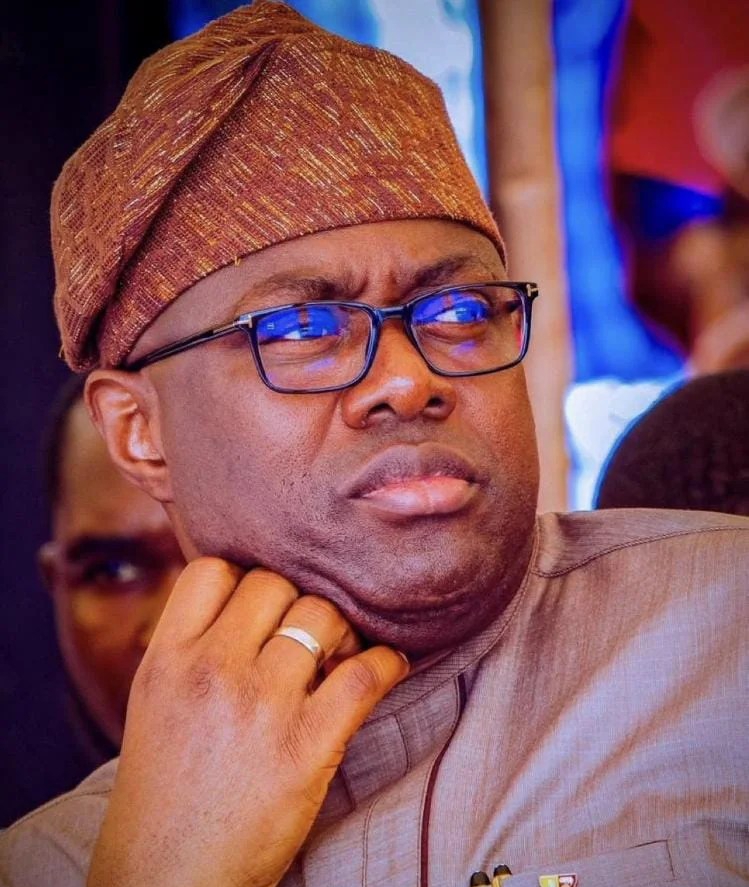
That is one reason Dr. Kemi Olunloyo never surprises me. The unprecedented Olunloyo bluntness has become her epithet over the years. I had followed her on social media for some time before eventually meeting her at the memorial we organized for Bola Davies, who was my Bureau Chief at City People.
Following a disappointment by the young man who was supposed to anchor the programme, members of the organizing committee unanimously decided that I should take over as the anchor. The responsibility however came with a strict warning, “on no account should Kemi Olunloyo be allowed to have the microphone” and the reason was because “no one is sure of what she would say”.
After the event, I met her and she quipped, “you did a good job of anchoring the event, by the way, my name is Kemi Olunloyo, what’s your name?” My answer was followed by another question, “are you related to Gboyega Adejumo?” That led to a lengthy conversation that went on till the driver came to pick her.
Aunty Kemi’s decision not to attend her dad’s burial is hers and I respect that. But in my opinion, life is an equation, death is a common denominator and the differential is that there is an appointed time for each person. And as long as I remember that Good Old Victor is a man whose encyclopaedic knowledge would be sorely missed, I think he deserves every honour done in his memory.
Adejumo sent this piece from Ibadan, the capital city of Oyo State
Related
Growing support has continued to trail a youthful politician and technology advocate, Hon. Khalil Mustapha Adegboyega, popularly known as Repete, as many youths in Ibadan North Federal Constituency expressed confidence in his leadership style and vision for development.
Across several communities within the constituency, residents, particularly students, artisans and young professionals, described Repete as one of the emerging political figures with strong grassroots appeal and a passion for youth empowerment.
Supporters said his growing popularity stems from his consistent advocacy for innovation, entrepreneurship and skills development aimed at addressing unemployment and creating opportunities for young people.
As an engineer and technology enthusiast, Repete is also said to possess a deep understanding of the evolving digital economy and the need to position youths for global competitiveness.
Many of his supporters noted that his approach to leadership focuses on practical solutions, mentorship and capacity-building initiatives capable of helping young people become self-reliant and economically productive.
Some community stakeholders who spoke on his rising profile said his humility, accessibility and relationship with the grassroots have continued to endear him to many residents within the constituency.
They added that Repete’s engagement with youths and community groups reflects his commitment to inclusive governance and people-oriented representation.
Observers within the constituency also maintained that the increasing support for the politician reflects a growing desire among residents for a new generation of leaders driven by innovation, competence and accountability.
According to them, many young people see Repete as a symbol of hope and progressive leadership capable of contributing meaningfully to the development of Ibadan North Federal Constituency.
Related
The All Progressives Congress (APC) in Oyo State stands on the edge of a consequential decision—one that may define not only its fortunes in Ibadan North Federal Constituency but also its broader political relevance in the state.
As the countdown to the party primaries intensifies, the question before APC leaders is no longer routine. It is strategic. It is urgent. And it is decisive: will the party align with the clear preference of the people or risk repeating costly political miscalculations?
At the centre of this debate is Hon. Khalil Mustapha Adegboyega, widely known as Repete—a name that has, over time, evolved from a political identity into a grassroots phenomenon.
A Candidate Rooted in the People
In contemporary Nigerian politics, where voter awareness is rising and expectations are shifting, candidates are increasingly judged not by promises but by presence. On this scale, Adegboyega stands tall.
His political journey is marked by consistent engagement with constituents—far beyond the optics of election seasons. From youth empowerment initiatives that provide practical skills and startup support, to sustained interventions in healthcare access for the elderly and indigent, his footprint across Ibadan North reflects a model of leadership anchored on service.
Unlike the transactional approach that often defines political relationships, Adegboyega’s connection with the people appears organic—built on trust, accessibility, and continuity. These are not mere campaign attributes; they are political assets.
The Danger of Political Disconnect
History offers the APC a clear lesson: parties that ignore grassroots sentiment often pay a heavy electoral price. The imposition of candidates perceived as distant or untested has, in several instances, resulted in voter apathy, internal dissent, and eventual defeat at the polls.
Ibadan North presents no exception.
With opposition parties closely monitoring the APC’s internal dynamics, any misstep in candidate selection could provide a ready opening. A divided house, coupled with a candidate lacking widespread acceptance, is a formula the opposition is well-positioned to exploit.
The implication is straightforward: this is not merely about party loyalty; it is about electoral viability.
Echoes from the Grassroots
Across the length and breadth of Ibadan North—markets, motor parks, religious centres, and community gatherings—a consistent pattern emerges in political conversations. The name “Repete” resonates with familiarity and acceptance.
Such organic support is not easily manufactured. It is cultivated over time through visible impact and sustained presence. For a party seeking electoral certainty in a competitive environment, this level of grassroots validation is not just desirable—it is critical.
A Test of Leadership and Judgment
For the APC leadership in Oyo State, the moment calls for clarity of purpose. Decisions driven by narrow interests, personal alignments, or short-term calculations may carry long-term consequences.
The task, therefore, is to balance internal considerations with external realities. Elections are ultimately decided by voters, not by party caucuses. A candidate who commands public confidence offers the strongest pathway to victory.
The Stakes Are Clear
Ibadan North is too strategic a constituency for experimentation. The cost of error is not limited to a single seat; it extends to party cohesion, credibility, and future positioning within the state’s political landscape.
In this context, the argument for Adegboyega is less about sentiment and more about strategy. His visibility, acceptability, and record of engagement place him in a strong position to consolidate support and mobilise voters effectively.
Conclusion: A Choice with Consequences
As the APC moves closer to its primaries, the decision before it is both simple and significant: align with a candidate who reflects the mood of the electorate or risk conceding advantage to a watchful opposition.
In politics, moments such as this often separate foresight from hindsight.
For APC in Ibadan North, this may well be one of those defining moments.
Aderibigbe Akanbi, a political analyst, writes from Ibadan.
Related
Opinion
Ibarapa East: Yusuf Ramon’s Quest for Responsive Representation
Published
3 months agoon
February 14, 2026As the road to 2027 gradually unfolds across Oyo State, political conversations are shifting from routine permutations to deeper questions about competence, generational leadership, and measurable impact. In Ibarapa East, that conversation has found a new voice in Yusuf Abiodun Ramon — a Lanlate-born technocrat whose entry into the race for the State House of Assembly is redefining what representation could mean for the constituency.
In a political environment often dominated by familiar faces and conventional calculations, Ramon presents a profile shaped by technical discipline, structured thinking, and solution-driven engagement. His professional background, anchored in analytical precision and systems management, forms the foundation of his public service aspiration.
For him, representation must move beyond ceremonial presence to practical responsiveness — laws that reflect local realities, oversight that protects public resources, and advocacy that translates into visible development.
Ramon argues that the future of Ibarapa East lies in leadership that listens deliberately, plans strategically, and delivers measurably. He speaks of strengthening rural infrastructure, expanding youth-driven economic opportunities, and institutionalising transparency as core pillars of his agenda. In his view, governance must not merely be symbolic; it must be structured, accountable, and people-centred.
Rooted in Ile Odede, Isale Alubata Compound, Ward Seven of Ibarapa East Local Government, and maternally linked to Ile Sobaloju, Isale Ajidun Compound, Eruwa, Ramon’s story is not one of distant ambition but of lived experience. He is, in every sense, a son of the soil — shaped by the same roads, schools, and economic realities that define daily life in Ibarapa East.
“I was born here. I grew up here. I understand our struggles, our strengths, and our untapped potential,” he says. “Representation must go beyond occupying a seat; it must translate into preparation, competence, and genuine commitment to development.”
His academic journey mirrors that philosophy of steady growth. He began at Islamic Primary School, Lanlate (1995–2001), proceeded to Baptist Grammar School, Orita Eruwa (2001–2007), and later earned a National Diploma in Mechanical Engineering Technology from Federal Polytechnic, Ilaro, between 2009 and 2011. Refusing to plateau, he advanced his intellectual horizon and is now completing a Bachelor of Science in Business Administration at the University of Lagos. “Education,” he reflects, “is continuous capacity building. Leadership today requires both technical knowledge and administrative insight.”
That blend of engineering precision and managerial training has defined a professional career spanning more than a decade. Shortly after his diploma, Yusuf joined Mikano International Limited as a generator installer, gaining hands-on experience in industrial power systems — a sector central to Nigeria’s infrastructural backbone. He later transitioned into telecommunications at Safari Telecoms Nigeria Limited, where he received specialized training in Industrial, Scientific, and Medical radio bands, strengthening his expertise in network operations.
In 2013, he became a Field Support Engineer at Netrux Global Concepts Ltd., then a leading ISM service provider in Nigeria. Over four formative years, he immersed himself in telecom infrastructure deployment and maintenance, mastering field coordination, logistics management, and real-time technical problem-solving.
Since July 2017, he has served as a Field Support Engineer with Specific Tools and Techniques Ltd., a power solutions firm providing services to major operators including MTN Nigeria and Airtel Nigeria. In that capacity, he operates at the frontline of ensuring energy reliability and network uptime — responsibilities that demand discipline, accountability, and systems thinking.
For political observers in Ibarapa East, this trajectory matters. It reflects more than résumé credentials; it speaks to a mindset anchored in efficiency, coordination, and measurable outcomes — qualities increasingly demanded in legislative representation.
Beyond the private sector, Ramon’s political exposure is neither sudden nor superficial. A loyal member of the progressive political family in Lagos, he once served as a personal assistant to a former lawmaker, gaining practical insight into legislative procedure and constituency engagement. Within his community, he has quietly extended financial support to small-scale entrepreneurs and students — modest but consistent interventions rooted in personal responsibility.
“My interest is my people,” he states firmly. “Ibarapa East deserves strategic, responsive, and capable leadership at the State Assembly. We must move from rhetoric to results.”
Across the constituency — from Lanlate to Eruwa — development priorities remain clear: youth employment, vocational empowerment, rural road rehabilitation, stable power supply, agricultural value-chain expansion, improved educational standards, and stronger lawmaking that directly reflects community needs.
Political analysts argue that Ramon’s technocratic background positions him uniquely at the intersection of policy formulation and practical implementation. At a time when national discourse increasingly favours competence over grandstanding, his profile resonates with a broader generational shift toward performance-driven governance. His engineering discipline reinforces problem-solving; his business training strengthens administrative understanding; his grassroots roots anchor his empathy.
For Ibarapa East, the 2027 election cycle may represent more than a routine democratic exercise. It may mark a recalibration of expectations — a demand for representation that understands both the soil beneath its feet and the systems that drive modern development. As political alignments gradually crystallize in Oyo State, Yusuf Abiodun Ramon’s declaration signals the arrival of a candidate seeking to translate private-sector structure into public-sector impact.
One thing is clear: the conversation about the future of Ibarapa East has begun — and it is now framed around competence, credibility, and capacity.
Oluwasegun Idowu sent in this piece from Eruwa, Ibarapa East LG, Oyo State
Related
Advertisement
Entertainment
Adekunle Gold, Simi welcome twins
Ayefele drops new album, Reflections
Reggae Legend, Jimmy Cliff, Dies At 81
Photos: Davido blows $3.7m on lavish Miami white wedding for Chioma
FAAN probes K1 for spilling alcohol on airport officer during boarding
Odunlade Adekola loses father
MegaIcon Magazine Facebook Page
MEGAICON TV
Advertisement
Trending
-
Politics1 day ago2027: APC Perfects Consensus Strategy for Oyo
-
Politics2 days ago2027: Oyo APC Set for Credible Direct Primaries, Says Alake Adeyemo
-
News1 week agoTCN plans power outage in Ibadan over substation maintenance
-
Crime & Court8 hours agoEx-Power Minister Mamman Jailed 75 Years Over ₦33.8bn Fraud