Opinion
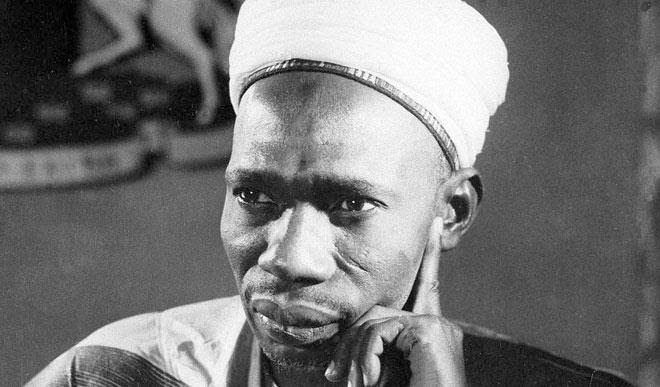
Do Buhari, Malami know a man called Tafawa Balewa?|By Festus Adedayo
Published
6 years agoon
Apparently a young officer of the Nigerian Army at the time Abubakar Tafawa Balewa was the Nigerian Prime Minister from 1957-1966, it goes without saying that President Muhammadu Buhari must know of Balewa, even if he didn’t know him. Conversely however, if his official birthday of April 17, 1967 is indeed real, Abubakar Malami probably encountered Balewa as a historical piece. For both however, the life of Balewa and his disposition to Western Nigeria, especially during the crisis that seized the region from 1962 to 1966, should be a reference point if both men do not want the fate that befell Nigeria as a result of Balewa’s self-imposed deafness to the turmoil that began like a minor crisis in the West, to take another shuttle back to Nigeria.
Western Nigeria, aftermath the fiasco of the 1963 national census and the 1964 Federal Elections, was literally a bedlam. The census provoked a narrative of divisionism as results claimed that the whole of Southern Nigeria was less than the North. Commentators were riled by what was perceived as fictitious figures “concocted from harem curtains.”
The allegation was that the North hid behind the purdah system of ba siga, gidan aore ne (no entrance, it’s a house of married women) to stuff figures in the headcount under the conspiratorial goggles of Balewa. In the same vein came allegation that foreigners were being imported into Northern Nigeria. Commentators after commentators pilloried the idea of women in purdah not being physically counted by the census inspectors, relying on verbal figures handed them by family heads. They warned that if a doctored figure was imposed on the people, Nigeria was a few meters from Golgotha. As Buhari does today, 56 years after, Balewa’s silence to this tinder that was primed to burn Nigeria was palpably bothersome.
Balewa advertised this silence when the Federal Elections of 1964 became an orgy of killings in the Western Region. Acrimonious and vengeful campaigns, preparatory to the elections, especially in the West, became the order of the day. Deputy Premier, Victor Babaremilekun Adetokunboh Fani-Kayode, Richard Akinjide and Bayo Olowofoyeku formed the Nigerian National Democratic Party (NNDP), comprising Akintola’s United Peoples Party (UPP), the rump of fragmented National Council of Nigeria and the Cameroons (NCNC) leaders and the Northern Peoples Congress (NPC), to form the Nigerian National Alliance (NNA). The rump of the Action Group (AG) that was left also went into an alliance with the NCNC, Northern Elements Progressive Union (NEPU) and United Middle Belt Congress (UMBC), to form an alliance it called the United Progressive Ground Alliance (UPGA). At the end of the day, the election was so farcical that it brimmed with violence. UPGA then announced a boycott. In the 1965 regional election, there was It was a repeat of this gangsterism with both Akintola’s NNA and UPGA’s Dauda Soroye Adegbenro laying claim to having won the election. Sworn in for another term, the Akintola government met serious resistance by the populace, including decisions of the people not to pay tax, which forced government to review cocoa price from £110 per ton to £60. This eventually led to the Weti e upheaval.
While on a tour of Benin in June, 1964, still feigning ignorance of the crisis, Balewa was quoted to have said that he could not judge the intensity of lawlessness in the West on account of newspaper report of the brigandage. Balewa, who projected the image of an “unworried” and “unconcerned” Prime Minister with his “ominous silence,” was pummeled by the Western Region media. He still advertised a façade of insulation from the worsening fate of the West and someone who didn’t read newspapers. Worse still, as Balewa departed Nigeria for Accra to attend an OAU meeting in October, 1965, he was quoted to have alleged that the violence in the region was contrived. While at the Ikeja Airport, he was asked by journalists what he was going to do about the fire raging in Western Nigeria. Successfully tucking his bother inside his flowing babanriga, Tafawa Balewa reportedly looked round and cynically declared; “Ikeja is part of the West and I cannot see any fire burning.” That same fire consumed him on January 15, 1966. It was a case of a disease that would kill one which is always pampered and treated with kid gloves. The pillory of Balewa that resulted from this peremptory treatment of the western crisis was accentuated by his perceived shield of his party man and “fast drowning political friend” – a la the Nigerian press – Premier S. L. Akintola and Balewa’s refusal to invoke the Emergency powers as he did in 1962. This led to an editorial comment by the Nigerian Tribune saying that: “Whether Abubakar (Balewa) intervenes or not, (we are) convinced that this is a war the people are bound to win.” This was the situation on the morning of January 15, 1966 when the fire that Balewa ignored successfully gave birth to the first military coup in Nigeria which effectively ended the lives of Balewa, Akintola and others.
This writer went into this long-winding retelling of a long Nigerian history so as to situate Buhari’s Balewa-like ominous personal silence on the fire burning from the flanks of the Western part of Nigeria which is manifesting as a slide in its security affairs. Call it tribal arrogance or needless over-hype, history tells us that the Western Region is always where the Nigerian crisis snowballs from. Apart from the consequential crash of Nigerian first democratic practice of the First Republic, the seed of which was sown in the West, military rule also crumbled in Nigeria on account of the West’s united civil resistance against autocracy, with the martyrdom of its son, MKO Abiola, in 1998. With these, a charge of unnecessary revisionism cannot be sustained against my claim that there is another ominous fire that is burning in the country from the Western flank, as well as my projection that any Nigerian leader with a heady or natural laid-back disposition that manifests as resistance to peace in the West can be said to be peering at the grave of Balewa.
If you collate the anger of the people of Western Nigeria today against the Buhari government’s attempt to stop the Western Nigeria Security Network (WNSN) called Operation Amotekun and their pleasantly strange unity of purpose on Amotekun, you would arrive at a juncture that makes the current situation a throwback to Nigeria’s Western region’s palpable animosity and brimming angst against the government of Balewa. These are the offshoot of a press release issued by the office of Abubakar Malami, Attorney General and Minister of Justice, offering legalistic arguments against the security outfit. In the release, Malami also made a Balewa-like statement, to wit that Southwest could not inform him of Amotekun from the pages of newspapers. Such arrogance!
If Buhari’s DSS would give him truthful report of current situation in the west today, he would find out that, for the first time in a very long while, Southwest Nigeria is throwing away her constant variables of politics and religion to damn the Federal Government on its apparently self-centered stand on Amotekun. It is worsened by Buhari’s baffling taciturnity to the crisis.
While Balewa at least showed his patent disregard for the escalating violence, Buhari’s embarrassing absence of a personal opinion on the matter, leading to the projection of his government’s voice by surrogates like Malami make the belief that Nigerians are being ruled by unelected triumvirates to gain notoriety.
Malami’s press release has been subjected to a forensic post-mortem by very knowledgeable Nigerians which makes a repeat of the damning verdict on him irrelevant here. The greatest way to put a lie to Malami’s legalistic argument is to scan it for abidance by the principle of natural justice. This resultant query will emanate from the scan: Is man made for law or laws are made for man?
When South-westerners were being killed, kidnapped and ransomed like pawned necklace by rampaging Fulani herdsmen from the North or wherever, with a Federal Government that was either too inept to counter them or too complicit in the plot to lift a finger, should the letter of the law or its spirit rescue the people from the bind that the Malamis conscripted them?
The frenetic pace with which Northern Nigeria demanded the surrender of Southwest’s desire to secure herself, against the backdrop of the Federal Government’s inability or incapability to ensure peace in Nigeria as a whole, is not only suspicious but smacks of an ulterior motive. Only a few days ago, Miyetti Allah, the umbrella body of a group said to be one of the most deadly terrorist groups in the world and whose reckless public utterances are festering by the day, audaciously asked Southwest to drop the idea of Amotekun if it wants the presidency in 2023. It was also reported to have asked that governors behind Amotekun should be arrested. What arrant nonsense and magisterial belief in entitlement to power!
All these seem to confirm earlier tissues of rumour that the banditry of the Fulani felons, the attempt by the Buhari government to get settlements for them in all parts of Nigeria, the defence of herdsmen’s bloodletting by no less a person than Buhari himself with all manner of ill-logics at his disposal, as well as by top officers of his government, the RUGA plot and other shenanigans by government that were largely targeted at getting the people’s tormentors-in-chief soft landing in all the nooks and crannies of Nigeria, are all parts of a larger plot to Fulanize the rest of Nigeria. If you lay the premises like this: Fulnai herdsmen are tormenting Southwest Nigeria; Buhari and his government are defending Fulani herdsmen; Southwest Nigeria plans security outfit to combat Fulani herdsmen and other criminals; Buhari government wants to stop Southwest Nigeria, that conclusion will naturally flow from the premises. Amotekun and the resistance of its coming to life are a palpable indication that the satanic plot to inflict Fulani herdsmen on Southern Nigeria was real after all.
The coincidence of the 40th anniversary of the end of the Nigerian Civil War with this current governmental bigotry must have made the world realize that the about one million Nigerians killed in the war may have been martyred needlessly. This is because the Nigerian Hausa-Fulani leaders have not purged themselves of the rank, narrow-minded and selfish leadership that rankled Emeka Odumegwu-Ojukwu and which was the major impetus for the civil war. Yakubu Gowon was recently quoted to have said that he didn’t regret his actions in the war, which included the killings of multiple of thousands Igbo and thousands of soldiers on both sides. Except he is fascinated with untruth, Gowon should know that it is very glaring from the experiences of other ethnic groups in Nigeria under this government that going through the 30-month war only to have a Nigerian leadership consumed by this government’s kind of thinking makes the death of our heroes past a vainglorious exercise. It is obvious that resistance to Amotekun is fired by a narrow-minded protection of the President’s ethnicity while other ethnicities are left naked and at the mercy of violent murderers.
Just like Balewa, Buhari has turned a deaf ear to solicitations not to set Nigeria alight by this ominous silence on Amotekun. He is egged on to a destructive stiff-neckedness by his ostensible obsession with the defence of his Fulani kin. I cite a prophetic Nigerian Tribune editorial of November 18, 1965 where the newspaper had written, inter alia: “Whether Abubakar (Balewa) intervenes or not, (we are) convinced that this is a war the people are bound to win…with all (his) cunning of a fox and all the trickery of a monkey…”
Buhari should learn from Balewa’s fall and not take the silly silence of self-styled Yoruba leaders who Yakubu Danjuma called Fifth columnists, as approximating a bendable will of the Southwest people. Southwest Nigeria has always been the graveyards of the Balewas and their recalcitrant offspring in federal office.
Growing support has continued to trail a youthful politician and technology advocate, Hon. Khalil Mustapha Adegboyega, popularly known as Repete, as many youths in Ibadan North Federal Constituency expressed confidence in his leadership style and vision for development.
Across several communities within the constituency, residents, particularly students, artisans and young professionals, described Repete as one of the emerging political figures with strong grassroots appeal and a passion for youth empowerment.
Supporters said his growing popularity stems from his consistent advocacy for innovation, entrepreneurship and skills development aimed at addressing unemployment and creating opportunities for young people.
As an engineer and technology enthusiast, Repete is also said to possess a deep understanding of the evolving digital economy and the need to position youths for global competitiveness.
Many of his supporters noted that his approach to leadership focuses on practical solutions, mentorship and capacity-building initiatives capable of helping young people become self-reliant and economically productive.
Some community stakeholders who spoke on his rising profile said his humility, accessibility and relationship with the grassroots have continued to endear him to many residents within the constituency.
They added that Repete’s engagement with youths and community groups reflects his commitment to inclusive governance and people-oriented representation.
Observers within the constituency also maintained that the increasing support for the politician reflects a growing desire among residents for a new generation of leaders driven by innovation, competence and accountability.
According to them, many young people see Repete as a symbol of hope and progressive leadership capable of contributing meaningfully to the development of Ibadan North Federal Constituency.
Opinion
Repete or Regret: APC’s Moment of Truth in Ibadan North
Published
4 weeks agoon
May 6, 2026The All Progressives Congress (APC) in Oyo State stands on the edge of a consequential decision—one that may define not only its fortunes in Ibadan North Federal Constituency but also its broader political relevance in the state.
As the countdown to the party primaries intensifies, the question before APC leaders is no longer routine. It is strategic. It is urgent. And it is decisive: will the party align with the clear preference of the people or risk repeating costly political miscalculations?
At the centre of this debate is Hon. Khalil Mustapha Adegboyega, widely known as Repete—a name that has, over time, evolved from a political identity into a grassroots phenomenon.
A Candidate Rooted in the People
In contemporary Nigerian politics, where voter awareness is rising and expectations are shifting, candidates are increasingly judged not by promises but by presence. On this scale, Adegboyega stands tall.
His political journey is marked by consistent engagement with constituents—far beyond the optics of election seasons. From youth empowerment initiatives that provide practical skills and startup support, to sustained interventions in healthcare access for the elderly and indigent, his footprint across Ibadan North reflects a model of leadership anchored on service.
Unlike the transactional approach that often defines political relationships, Adegboyega’s connection with the people appears organic—built on trust, accessibility, and continuity. These are not mere campaign attributes; they are political assets.
The Danger of Political Disconnect
History offers the APC a clear lesson: parties that ignore grassroots sentiment often pay a heavy electoral price. The imposition of candidates perceived as distant or untested has, in several instances, resulted in voter apathy, internal dissent, and eventual defeat at the polls.
Ibadan North presents no exception.
With opposition parties closely monitoring the APC’s internal dynamics, any misstep in candidate selection could provide a ready opening. A divided house, coupled with a candidate lacking widespread acceptance, is a formula the opposition is well-positioned to exploit.
The implication is straightforward: this is not merely about party loyalty; it is about electoral viability.
Echoes from the Grassroots
Across the length and breadth of Ibadan North—markets, motor parks, religious centres, and community gatherings—a consistent pattern emerges in political conversations. The name “Repete” resonates with familiarity and acceptance.
Such organic support is not easily manufactured. It is cultivated over time through visible impact and sustained presence. For a party seeking electoral certainty in a competitive environment, this level of grassroots validation is not just desirable—it is critical.
A Test of Leadership and Judgment
For the APC leadership in Oyo State, the moment calls for clarity of purpose. Decisions driven by narrow interests, personal alignments, or short-term calculations may carry long-term consequences.
The task, therefore, is to balance internal considerations with external realities. Elections are ultimately decided by voters, not by party caucuses. A candidate who commands public confidence offers the strongest pathway to victory.
The Stakes Are Clear
Ibadan North is too strategic a constituency for experimentation. The cost of error is not limited to a single seat; it extends to party cohesion, credibility, and future positioning within the state’s political landscape.
In this context, the argument for Adegboyega is less about sentiment and more about strategy. His visibility, acceptability, and record of engagement place him in a strong position to consolidate support and mobilise voters effectively.
Conclusion: A Choice with Consequences
As the APC moves closer to its primaries, the decision before it is both simple and significant: align with a candidate who reflects the mood of the electorate or risk conceding advantage to a watchful opposition.
In politics, moments such as this often separate foresight from hindsight.
For APC in Ibadan North, this may well be one of those defining moments.
Aderibigbe Akanbi, a political analyst, writes from Ibadan.
Opinion
Ibarapa East: Yusuf Ramon’s Quest for Responsive Representation
Published
4 months agoon
February 14, 2026As the road to 2027 gradually unfolds across Oyo State, political conversations are shifting from routine permutations to deeper questions about competence, generational leadership, and measurable impact. In Ibarapa East, that conversation has found a new voice in Yusuf Abiodun Ramon — a Lanlate-born technocrat whose entry into the race for the State House of Assembly is redefining what representation could mean for the constituency.
In a political environment often dominated by familiar faces and conventional calculations, Ramon presents a profile shaped by technical discipline, structured thinking, and solution-driven engagement. His professional background, anchored in analytical precision and systems management, forms the foundation of his public service aspiration.
For him, representation must move beyond ceremonial presence to practical responsiveness — laws that reflect local realities, oversight that protects public resources, and advocacy that translates into visible development.
Ramon argues that the future of Ibarapa East lies in leadership that listens deliberately, plans strategically, and delivers measurably. He speaks of strengthening rural infrastructure, expanding youth-driven economic opportunities, and institutionalising transparency as core pillars of his agenda. In his view, governance must not merely be symbolic; it must be structured, accountable, and people-centred.
Rooted in Ile Odede, Isale Alubata Compound, Ward Seven of Ibarapa East Local Government, and maternally linked to Ile Sobaloju, Isale Ajidun Compound, Eruwa, Ramon’s story is not one of distant ambition but of lived experience. He is, in every sense, a son of the soil — shaped by the same roads, schools, and economic realities that define daily life in Ibarapa East.
“I was born here. I grew up here. I understand our struggles, our strengths, and our untapped potential,” he says. “Representation must go beyond occupying a seat; it must translate into preparation, competence, and genuine commitment to development.”
His academic journey mirrors that philosophy of steady growth. He began at Islamic Primary School, Lanlate (1995–2001), proceeded to Baptist Grammar School, Orita Eruwa (2001–2007), and later earned a National Diploma in Mechanical Engineering Technology from Federal Polytechnic, Ilaro, between 2009 and 2011. Refusing to plateau, he advanced his intellectual horizon and is now completing a Bachelor of Science in Business Administration at the University of Lagos. “Education,” he reflects, “is continuous capacity building. Leadership today requires both technical knowledge and administrative insight.”
That blend of engineering precision and managerial training has defined a professional career spanning more than a decade. Shortly after his diploma, Yusuf joined Mikano International Limited as a generator installer, gaining hands-on experience in industrial power systems — a sector central to Nigeria’s infrastructural backbone. He later transitioned into telecommunications at Safari Telecoms Nigeria Limited, where he received specialized training in Industrial, Scientific, and Medical radio bands, strengthening his expertise in network operations.
In 2013, he became a Field Support Engineer at Netrux Global Concepts Ltd., then a leading ISM service provider in Nigeria. Over four formative years, he immersed himself in telecom infrastructure deployment and maintenance, mastering field coordination, logistics management, and real-time technical problem-solving.
Since July 2017, he has served as a Field Support Engineer with Specific Tools and Techniques Ltd., a power solutions firm providing services to major operators including MTN Nigeria and Airtel Nigeria. In that capacity, he operates at the frontline of ensuring energy reliability and network uptime — responsibilities that demand discipline, accountability, and systems thinking.
For political observers in Ibarapa East, this trajectory matters. It reflects more than résumé credentials; it speaks to a mindset anchored in efficiency, coordination, and measurable outcomes — qualities increasingly demanded in legislative representation.
Beyond the private sector, Ramon’s political exposure is neither sudden nor superficial. A loyal member of the progressive political family in Lagos, he once served as a personal assistant to a former lawmaker, gaining practical insight into legislative procedure and constituency engagement. Within his community, he has quietly extended financial support to small-scale entrepreneurs and students — modest but consistent interventions rooted in personal responsibility.
“My interest is my people,” he states firmly. “Ibarapa East deserves strategic, responsive, and capable leadership at the State Assembly. We must move from rhetoric to results.”
Across the constituency — from Lanlate to Eruwa — development priorities remain clear: youth employment, vocational empowerment, rural road rehabilitation, stable power supply, agricultural value-chain expansion, improved educational standards, and stronger lawmaking that directly reflects community needs.
Political analysts argue that Ramon’s technocratic background positions him uniquely at the intersection of policy formulation and practical implementation. At a time when national discourse increasingly favours competence over grandstanding, his profile resonates with a broader generational shift toward performance-driven governance. His engineering discipline reinforces problem-solving; his business training strengthens administrative understanding; his grassroots roots anchor his empathy.
For Ibarapa East, the 2027 election cycle may represent more than a routine democratic exercise. It may mark a recalibration of expectations — a demand for representation that understands both the soil beneath its feet and the systems that drive modern development. As political alignments gradually crystallize in Oyo State, Yusuf Abiodun Ramon’s declaration signals the arrival of a candidate seeking to translate private-sector structure into public-sector impact.
One thing is clear: the conversation about the future of Ibarapa East has begun — and it is now framed around competence, credibility, and capacity.
Oluwasegun Idowu sent in this piece from Eruwa, Ibarapa East LG, Oyo State
Advertisement
Entertainment
Adekunle Gold, Simi welcome twins
Ayefele drops new album, Reflections
Reggae Legend, Jimmy Cliff, Dies At 81
Photos: Davido blows $3.7m on lavish Miami white wedding for Chioma
FAAN probes K1 for spilling alcohol on airport officer during boarding
Odunlade Adekola loses father
MegaIcon Magazine Facebook Page
MEGAICON TV
Advertisement
Trending
-
News1 week agoEid: Oseni Calls for Vigilance, Lauds Security Operatives
-
News1 week agoEid-El-Kabir: JTF warns of Boko Haram, ISWAP attacks
-
Politics5 days agoAlli, Folarin, Adedeji, Oseni, Dare Named to APC Ekiti Re-election Campaign Team
-
News1 week agoOyo Abduction: SWEGOP Demands Swift Rescue of Pupils, Teachers