Connect with us

News

Atiku: Buhari’s govt continues offensive against ex-VP as FIRS seals Intels office

Published

on

Atiku: Buhari’s govt continues offensive against ex-VP as FIRS seals Intels office

The onslaught against former Vice President, Atiku Abubakar in the hands of the Buhari government continued on Monday as the Federal Inland Revenue Service, FIRS, sealed the headquarters of his company Intels, in Onne, Rivers State.

DAIlY POST gathered that the company was sealed over “unremitted taxes”.

Intels operates in a Free Zone Authority located in Nigeria’s Niger Delta.

FIRS is accusing the oil services company, Intels of operating illegally within the zone.

An impeccable source close to Alhaji Atiku confirmed the seal to our corespondent Monday night.

“Yes. They (FIRS) posted stickers on the company premises asking for tax to be paid. But Onne is a duty free zone. This is shocking. Nigeria is a joke”, the source fumed.

Calls to FIRS Director of Commmunication, Wahab Gbadamosi, to explain the agency’s action went unanswered.

The development occurred barely a week after the Nigerian government directed the Nigerian Ports Authority (NPA) to terminate the boats pilotage monitoring and supervision agreement that the agency has with Intels.

Government says the contract with Intels, a leading integrated logistics and facilities services provider in the maritime and oil and gas logistics sectors of the country, was void ab initio.

Attorney General of the Federation (AGF) and Minister of Justice, Mallam Abubakar Malami (SAN), in a letter dated September 27, 2017 to the Managing Director of the NPA, Ms. Hadiza Bala-Usman, said that the agreement, which has allowed Intels to receive revenue on behalf of NPA for 17 years, violates the Nigerian Constitution, especially in view of the implementation of the Treasury Single Account (TSA) policy of government.

Intels, also co-owned by Mr. Gabriel Volpi, an Italian national who also has Nigerian citizenship, will lose several millions of dollars in commissions for the monitoring and supervision pilotage services it handles on behalf of NPA on Nigerian coastal waters.

In the maritime industry, pilotage is compulsory for all ships of 35 metres overall length or greater unless a valid Pilotage Exemption Certificate is held by the ship’s master.

In return for the service, ship owners/companies are required to pay a pilotage fee, which Intels collects on NPA’s behalf and retains 28 per cent of the revenue as commission for the services rendered.

In a memo, Malami stated that the agreement violates Sections 80(1) and 162(1) and (10) of the constitution, and wondered that the parties – NPA and Intels – did not avert their minds to the relevant provisions when they were negotiating the agreement in 2010.

In the letter titled: “Request for Clarification of Conflict Between Executed Agreement and Federal Government Treasury Single Account Policy,” the attorney general said: “I refer to your letter dated 31st May 2017, ref: MD/17/MF/Vol.XX/583 in respect of the above subject matter wherein you sought clarification on the legal issues implicated by the continuous implementation of the Managing Agent Contract Agreement dated 11th February 2010 executed between the Nigerian Ports Authority (NPA) and Intels Nigeria Limited for the provision of boats pilotage operations, in the light of the Federal Government of Nigeria’s Treasury Singe Account (TSA) policy.

“Upon my review of your letter under reference and the relevant agreements, I have been able to conclude inevitably that the terms of the agreement as agreed by parties and the dynamics of its implementation which permits Intels to receive revenue generated on behalf of NPA ab initio, clearly violates express provisions of Sections 80(1) and 162(1) and (10) of the 1999 Constitution of the Federal Republic of Nigeria, 1999 (as amended). It is thus curious that parties did not avert their minds to the above provisions of the constitution whilst negotiating the agreement.

“The inherent illegality of the agreement as formed has since been expounded by the TSA policy issued by the Head of Service of the Federation on behalf of the Federal Government of Nigeria directing all ministries, departments and agencies to collect payment of all revenues due to the federal government or any of her agencies through the TSA.

“The objective of the presidential directive (TSA policy) in exercise of the executive powers of the president under Section 5 of the 1999 Constitution (as amended) was in furtherance of the spirit and intent of Sections 80 and 162 of the constitution and to aid transparency in government revenue collection and management.

“NPA being an agency of the federal government is bound by the TSA policy and has not howsoever been exempt therefrom. Due to the constitutional nature of the TSA, where there is a conflict between the TSA and the terms of the agreement, the TSA shall prevail.

“Therefore all monies due to the NPA currently being collected by Intels and any other agents/third parties on behalf of NPA must henceforth be paid into the TSA or any of the sub-accounts linked thereto in the Central Bank of Nigeria (information of the account will be communicated in due course) in accordance with the TSA policy.

“For the avoidance of doubt, the agreement for the monitoring and supervision of pilotage districts in the Exclusive Economic Zone of Nigeria on terms inter alia that permits Intels to receive revenue generated in each pilotage district from service boat operations in consideration for 28% of total revenue as commission to Intels is void, being a contract ex facie illegal as formed for permitting Intels to receive federal government revenue contrary to the express provisions of Sections 80(1) and 162(1) and (10) of the 1999 Constitution of the Federal Republic of Nigeria (as amended), which mandates that such revenue must be paid into the Federation Account/Consolidated Revenue Fund.

“In the premise of the above, the conflict between the agreement and the TSA policy presents a force majeure event under the agreement, and NPA should forthwith commence the process of issuing the relevant notices to Intels exiting the agreement which indeed was void ab initio.”

Reacting, Intels vowed to sue the Buhari government over the termination

Comments

News

IGP Disu seeks NIPR partnership to boost public trust in police

Published

on

NIPR President, Dr Ike Neliaku, in a handshake with the Inspector-General of Police, Olatunji Disu, at the Force Headquarters in Abuja on Tuesday.

The Inspector-General of Police, IGP Olatunji Disu, has called for stronger collaboration between the Nigeria Police Force (NPF) and the Nigerian Institute of Public Relations (NIPR) to enhance public confidence in the police.

The IGP made the call on Tuesday when he received a delegation of the NIPR, led by its President and Chairman of Council, Dr Ike Neliaku, on a courtesy visit to the Force Headquarters, Abuja.

According to a statement issued by the Force Public Relations Officer, CSP Ani Iniedu, the IGP emphasised the importance of effective communication, professionalism, transparency and fairness in strengthening the relationship between the police and members of the public.

Disu noted that every police officer was an image-maker of the Force, adding that the conduct of personnel in their daily interactions with citizens had a direct impact on public perception of the police.

He said the Nigeria Police Force (NPF) remained committed to policing by consent and promoting a service-oriented policing culture built on professionalism, empathy, accountability and respect for human rights.

The IGP also sought the support of the NIPR in providing specialised communication training for police personnel and developing a coherent communication framework that would effectively communicate the sacrifices and contributions of police officers to public safety and national security.

Earlier, Neliaku commended the IGP for his professional accomplishments and briefed him on Nigeria’s hosting of the 2026 World Public Relations Forum and Africa Charter Forum.

The international event is scheduled to hold at the Transcorp Hilton, Abuja, and is expected to attract more than 3,000 delegates from 126 member countries of the Global Alliance for Public Relations.

The NIPR delegation also sought the support of the Nigeria Police Force in security planning and coverage for the event.

Neliaku further invited the IGP to serve as a keynote speaker at the forum and encouraged police officers to register and participate as delegates.

The delegation included the Secretary-General of the African Public Relations Association, Dr Omoniyi Ibietan; Dr Suleiman Haruna; Mrs Maryam Sanusi; Mrs Olubunmi Badejo; Commandant Olusola Odumosu; Chief Uzoma Oyegbadu; Chief Moji Makanjuola; Mr Stanley Ogadigo and other members of the institute.

Iniedu said the meeting reflected the commitment of the  Police Force to building productive partnerships with professional bodies and other stakeholders to strengthen public trust, enhance public safety and promote national security.


Continue Reading

News

Inflation drops marginally to 15.39% — NBS

Published

on

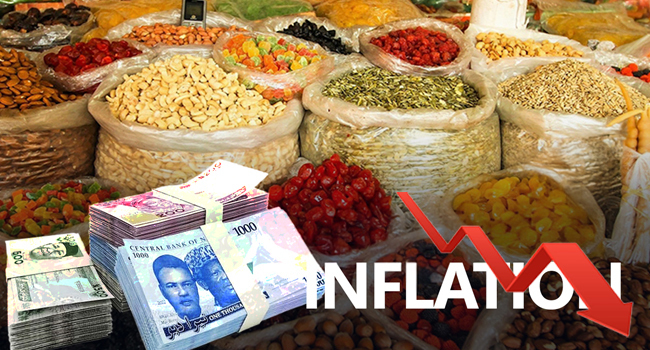
Nigeria’s headline inflation rate fell marginally to 15.39 per cent in August 2026 from 15.43 per cent in July, according to the National Bureau of Statistics.

The NBS disclosed this in its Consumer Price Index released on Tuesday, saying the latest figure represented a 0.04 percentage point decline from the previous month.

The statistics agency, however, reported a sharper decline in the month-on-month inflation rate, which dropped to 0.71 per cent in August from 1.57 per cent in July.

The month-on-month rate, according to the bureau, declined by 0.86 percentage points compared with the July figure.

The NBS explained that the development indicated that the rate at which the average price level increased in August was slower than that recorded in July.

The latest data also showed a significant moderation in food inflation, which stood at 19.57 per cent year-on-year in August.

The figure was substantially lower than the 25.30 per cent recorded in August 2025.

On a month-on-month basis, food inflation fell to 1.02 per cent in August from 5.56 per cent in July, representing a decline of 4.55 percentage points.

The NBS said the development showed that food prices were still rising, but at a slower rate during the month under review.

It attributed the decline largely to changes in the average prices of a number of food items, including palm oil, carrots, pepper, onions, cassava flour, beef, yam flour, water yam, melon (egusi), fresh ginger, fresh fish, Irish potatoes, wheat grain, frozen chicken and turkey meat.

At the state level, Adamawa recorded the highest year-on-year food inflation rate in August at 38.85 per cent.

It was followed by Zamfara with 37.96 per cent and Bayelsa with 36.20 per cent.

On the other hand, Borno recorded the lowest year-on-year food inflation rate at -4.04 per cent, followed by Jigawa at -0.23 per cent and Kebbi at 3.47 per cent.

The month-on-month figures presented a different picture, with Katsina recording the highest food inflation rate at 9.48 per cent.

Rivers and Osun followed with 8.86 per cent and 8.32 per cent respectively.

Taraba recorded the lowest month-on-month food inflation rate at -12.42 per cent, followed by Borno at -12.15 per cent and Bauchi at -8.88 per cent.

The latest figures indicate a moderation in the pace of price increases, particularly in the food sector, although the NBS data show that consumers continue to face varying price pressures across the states.

Continue Reading

News

Nigeria’s Oil Output Rises to 1.68m Barrels Per Day

Published

on

Nigeria’s crude oil and condensate production rose to 1.68 million barrels per day in August 2026, representing a 0.4 per cent increase from the 1.67 million barrels per day recorded in July.

The Nigerian Upstream Petroleum Regulatory Commission disclosed this in its latest production report released on Sunday.

Excluding condensate, the country produced an average of 1,500,190 barrels of crude oil per day in August, allowing Nigeria to meet its Organisation of Petroleum Exporting Countries quota for the fourth consecutive month.

Daily combined crude oil and condensate production ranged between 1.64 million barrels and 1.71 million barrels during the month under review.

A breakdown of production by terminals showed that Bonny Terminal recorded the highest output at 320.04 thousand barrels per day, followed by Forcados Terminal with 317.40 thousand barrels per day.

Qua Iboe Terminal recorded an average production of 171.72 thousand barrels per day, while Escravos Oil Terminal posted 131.71 thousand barrels per day.

Bonga ranked fifth among the highest-producing terminals, with an average output of 92.50 thousand barrels per day.

The NUPRC attributed the modest improvement in August production largely to the resolution of operational challenges involving the Single Buoy Mooring at the Erha field.

The commission said the challenges had adversely affected production in the preceding month.

“The restoration of normal evacuation and production operations at the asset contributed positively to overall production volumes during the period under review,” the commission’s spokesperson, Eniola Akinkuotu, said in a statement on Sunday.

The regulator added that production activities across most other producing assets remained relatively stable during the month.

“Production activities across most other producing assets remained relatively stable, with operators sustaining implementation measures aimed at optimising production efficiency, maintaining asset integrity, and minimising operational disruptions,” the statement said.

The latest figures indicate a continued improvement in Nigeria’s oil production, with the country maintaining its OPEC quota compliance for the fourth consecutive month.

Continue Reading

Trending

All Rights Reserved. Copyright © 2026 MegaIcon Magazine