Connect with us

News

Africa spends $35 billion on food imports each year, AfDB boss reveals

Published

on

• Over 800 million people worldwide suffering from hunger


WITH over 800 million people worldwide suffering from hunger and more than two billion affected by malnutrition, food insecurity remains a real threat to global development.

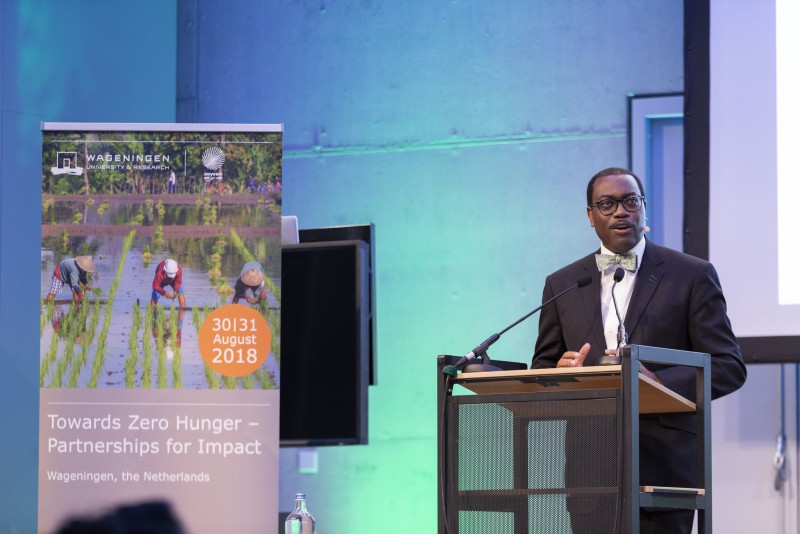
Adesina, who is making a global pitch for renewed visionary leadership and strategic alliances, “the future of food in the world will depend on what Africa does with Agriculture.”

The African Development Bank, which he leads, envisions a food secure continent which uses advanced technologies, creatively adapts to climate change, and develops a whole new generation of what he describes as ‘agripreneurs’ – empowered youth and women who he expects to take agriculture to the next level.

By 2050, an additional 38 million African will be hungry. The paradox of lack in the midst of plenty, and Africa’s growing youth bulge are some of the reasons why Adesina’s sense of urgency is resonating with numerous government, private sector, and multilateral leaders during recent European and Asian trips. The banker and 2017 World Food Prize Laureate will be the first to admit that he considers himself the ‘evangelist-in-chief’ for a food secure Africa.

Africa continues to import what it should be producing, spending $35 billion on food imports each year, a figure that is expected to rise to $110 billion in 2025 if present trends continue.

A few days later, Adesina joined Rockefeller Foundation President Raj Shah, Unilever CEO Paul Polman, and 2018 World Food Prize nominees Lawrence Haddad and David Navarro, among other prominent global academic, development, and agriculture experts at Wageningen University and Research, in the Netherlands, to make the case for urgent collective action by State and non-State players to accelerate Africa’s agricultural growth and transformation.

https://iso.keq.mybluehost.me/african-development-bank-launches-coding-for-employment-program/


Africa receives only 2 percent of the $100 billion annual revenues from chocolates globally. Adesina tells his audience that “adding value to what nations produce, is the secret to their wealth. Producing chocolate instead of simply exporting cocoa beans does not require rocket science.”

To expand opportunities for youth, women, and private sector players, Adesina is on a global mission to promote and seek support for the bank’s  Affirmative Finance for Women in Africa (AFAWA) program which aims to mobilize $3 billion to support women entrepreneurs who historically lack access to finance, land, and land titles; a $300 million ENABLE Youth program to develop the next generation of agribusiness and commercial farmers for Africa; and a new global investment marketplace, the African Investment Forum, which will be held in Johannesburg November 7-9.

In separate meetings with Sigrid A.M. Kaag, Minister for Foreign Trade and Development Cooperation, in the Hague; Peter van Mierlo, CEO of the Dutch Entrepreneurial Development Bank (FMO), key private sector players, and members of the Dutch Foreign Affairs Advisory Council, Adesina said Africa and its partners must seize unprecedented opportunities for innovative partnerships and increased development impact.

Mierlo believes, “a huge benefit for Africa is that it can skip development cycles that often almost all developed countries had to go through, by deploying new technologies such as artificial intelligence and robotics in agriculture”.

In a continent where more than 640 million are without electricity, Adesina says the private sector is key to Africa’s development in Africa’s energy and agriculture sectors.

“If Africa is going to turn the tide of irregular migration, this is critical. There are three ways in which we can collaborate: either through the NEPAD Infrastructure Project Preparation Facility, Africa 50 – a private equity institution which has raised more than US$ 850 million from 22 countries, and the new Africa Investment Forum.”

Adesina, recognizes that the lack of electricity is Africa’s biggest development impediment. The Bank’s new and ambitious Desert-to-Power initiative which aims to generate 10,000MW of power across Africa’s Sahel region will be critical to reducing migration and climate change impacts. We will do this through a blended finance mechanism with guarantees”, Mr. Adesina said.

https://iso.keq.mybluehost.me/korea-announces-5-billion-financial-package-for-africa-at-afdb-annual-meetings/

Speaking to a High-level Roundtable of Dutch Business Leaders at the Netherlands Enterprise Agency (RVO), informed key private sector leaders that “governance structures and business regulatory environments are changing in Africa. Indeed, several African countries have already made significant progress in improving their general business and investment environments. Africa is doing better than some of the Asian countries,” he reminded his audience. “In the energy sector, the African Development Bank is investing $12 billion over the next 5 years, with the goal of leveraging $40-50 billion; and an additional $US 24 billion, over ten years, in agriculture to implement its Feed Africa Strategy.”

Agriculture steadily taking center-stage

The strategy is already bearing fruit with the establishment of Staple Crop Processing Zones in several African countries, including Ethiopia, Togo, Democratic Republic of Congo, and Mozambique, with a plan to reach 15 countries in a few years.

Strategically located in and around rural farming communities Adesina says “these agriculture zones will form the nucleus of a new wave of agro-industries and greenfield ventures, attracting agripreneurs, biotechnology firms, intellectual and capital investments. They will also ensure that foods are processed and packaged right where they are produced, rather than in urban centers far removed from centers of production.”

Described as a visionary optimist by many colleagues, Adesina believes the bank’s policies and investments will help turn rural areas from zones of economic misery into zones of economic prosperity.

Comments

News

IGP Disu seeks NIPR partnership to boost public trust in police

Published

on

NIPR President, Dr Ike Neliaku, in a handshake with the Inspector-General of Police, Olatunji Disu, at the Force Headquarters in Abuja on Tuesday.

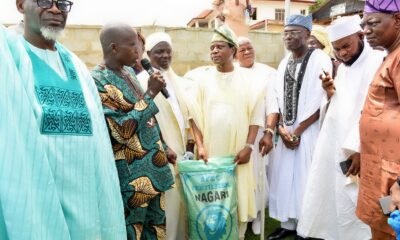
The Inspector-General of Police, IGP Olatunji Disu, has called for stronger collaboration between the Nigeria Police Force (NPF) and the Nigerian Institute of Public Relations (NIPR) to enhance public confidence in the police.

The IGP made the call on Tuesday when he received a delegation of the NIPR, led by its President and Chairman of Council, Dr Ike Neliaku, on a courtesy visit to the Force Headquarters, Abuja.

According to a statement issued by the Force Public Relations Officer, CSP Ani Iniedu, the IGP emphasised the importance of effective communication, professionalism, transparency and fairness in strengthening the relationship between the police and members of the public.

Disu noted that every police officer was an image-maker of the Force, adding that the conduct of personnel in their daily interactions with citizens had a direct impact on public perception of the police.

He said the Nigeria Police Force (NPF) remained committed to policing by consent and promoting a service-oriented policing culture built on professionalism, empathy, accountability and respect for human rights.

The IGP also sought the support of the NIPR in providing specialised communication training for police personnel and developing a coherent communication framework that would effectively communicate the sacrifices and contributions of police officers to public safety and national security.

Earlier, Neliaku commended the IGP for his professional accomplishments and briefed him on Nigeria’s hosting of the 2026 World Public Relations Forum and Africa Charter Forum.

The international event is scheduled to hold at the Transcorp Hilton, Abuja, and is expected to attract more than 3,000 delegates from 126 member countries of the Global Alliance for Public Relations.

The NIPR delegation also sought the support of the Nigeria Police Force in security planning and coverage for the event.

Neliaku further invited the IGP to serve as a keynote speaker at the forum and encouraged police officers to register and participate as delegates.

The delegation included the Secretary-General of the African Public Relations Association, Dr Omoniyi Ibietan; Dr Suleiman Haruna; Mrs Maryam Sanusi; Mrs Olubunmi Badejo; Commandant Olusola Odumosu; Chief Uzoma Oyegbadu; Chief Moji Makanjuola; Mr Stanley Ogadigo and other members of the institute.

Iniedu said the meeting reflected the commitment of the  Police Force to building productive partnerships with professional bodies and other stakeholders to strengthen public trust, enhance public safety and promote national security.


Continue Reading

News

Inflation drops marginally to 15.39% — NBS

Published

on

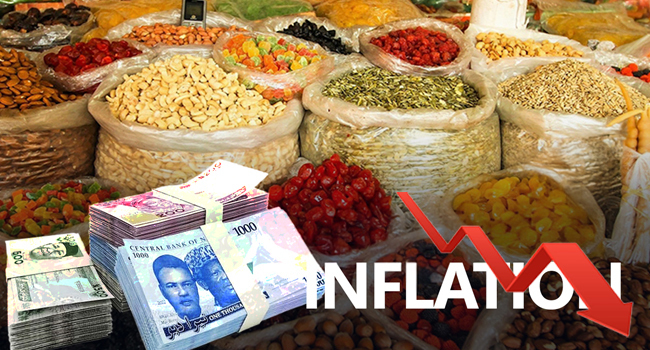
Nigeria’s headline inflation rate fell marginally to 15.39 per cent in August 2026 from 15.43 per cent in July, according to the National Bureau of Statistics.

The NBS disclosed this in its Consumer Price Index released on Tuesday, saying the latest figure represented a 0.04 percentage point decline from the previous month.

The statistics agency, however, reported a sharper decline in the month-on-month inflation rate, which dropped to 0.71 per cent in August from 1.57 per cent in July.

The month-on-month rate, according to the bureau, declined by 0.86 percentage points compared with the July figure.

The NBS explained that the development indicated that the rate at which the average price level increased in August was slower than that recorded in July.

The latest data also showed a significant moderation in food inflation, which stood at 19.57 per cent year-on-year in August.

The figure was substantially lower than the 25.30 per cent recorded in August 2025.

On a month-on-month basis, food inflation fell to 1.02 per cent in August from 5.56 per cent in July, representing a decline of 4.55 percentage points.

The NBS said the development showed that food prices were still rising, but at a slower rate during the month under review.

It attributed the decline largely to changes in the average prices of a number of food items, including palm oil, carrots, pepper, onions, cassava flour, beef, yam flour, water yam, melon (egusi), fresh ginger, fresh fish, Irish potatoes, wheat grain, frozen chicken and turkey meat.

At the state level, Adamawa recorded the highest year-on-year food inflation rate in August at 38.85 per cent.

It was followed by Zamfara with 37.96 per cent and Bayelsa with 36.20 per cent.

On the other hand, Borno recorded the lowest year-on-year food inflation rate at -4.04 per cent, followed by Jigawa at -0.23 per cent and Kebbi at 3.47 per cent.

The month-on-month figures presented a different picture, with Katsina recording the highest food inflation rate at 9.48 per cent.

Rivers and Osun followed with 8.86 per cent and 8.32 per cent respectively.

Taraba recorded the lowest month-on-month food inflation rate at -12.42 per cent, followed by Borno at -12.15 per cent and Bauchi at -8.88 per cent.

The latest figures indicate a moderation in the pace of price increases, particularly in the food sector, although the NBS data show that consumers continue to face varying price pressures across the states.

Continue Reading

News

Nigeria’s Oil Output Rises to 1.68m Barrels Per Day

Published

on

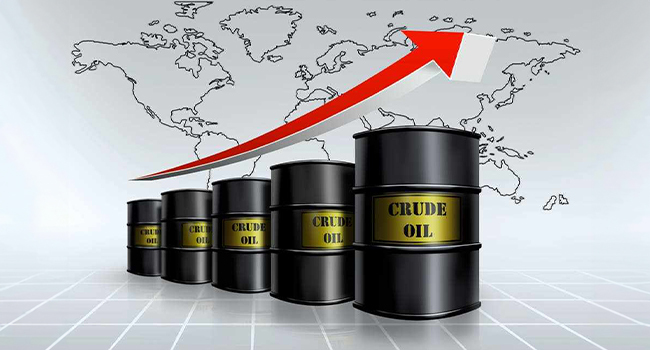
Nigeria’s crude oil and condensate production rose to 1.68 million barrels per day in August 2026, representing a 0.4 per cent increase from the 1.67 million barrels per day recorded in July.

The Nigerian Upstream Petroleum Regulatory Commission disclosed this in its latest production report released on Sunday.

Excluding condensate, the country produced an average of 1,500,190 barrels of crude oil per day in August, allowing Nigeria to meet its Organisation of Petroleum Exporting Countries quota for the fourth consecutive month.

Daily combined crude oil and condensate production ranged between 1.64 million barrels and 1.71 million barrels during the month under review.

A breakdown of production by terminals showed that Bonny Terminal recorded the highest output at 320.04 thousand barrels per day, followed by Forcados Terminal with 317.40 thousand barrels per day.

Qua Iboe Terminal recorded an average production of 171.72 thousand barrels per day, while Escravos Oil Terminal posted 131.71 thousand barrels per day.

Bonga ranked fifth among the highest-producing terminals, with an average output of 92.50 thousand barrels per day.

The NUPRC attributed the modest improvement in August production largely to the resolution of operational challenges involving the Single Buoy Mooring at the Erha field.

The commission said the challenges had adversely affected production in the preceding month.

“The restoration of normal evacuation and production operations at the asset contributed positively to overall production volumes during the period under review,” the commission’s spokesperson, Eniola Akinkuotu, said in a statement on Sunday.

The regulator added that production activities across most other producing assets remained relatively stable during the month.

“Production activities across most other producing assets remained relatively stable, with operators sustaining implementation measures aimed at optimising production efficiency, maintaining asset integrity, and minimising operational disruptions,” the statement said.

The latest figures indicate a continued improvement in Nigeria’s oil production, with the country maintaining its OPEC quota compliance for the fourth consecutive month.

Continue Reading

Trending

All Rights Reserved. Copyright © 2026 MegaIcon Magazine