Connect with us

News

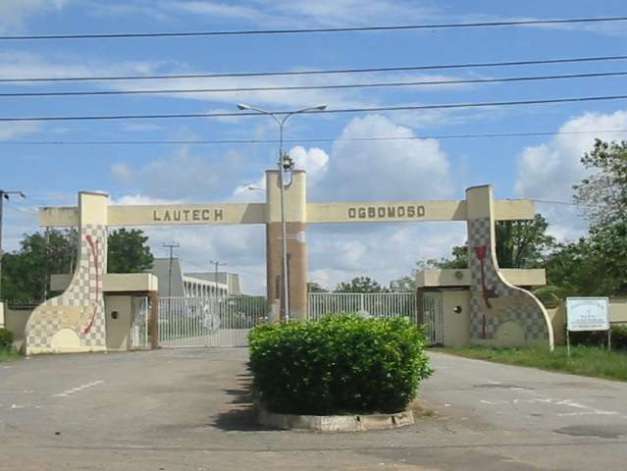
Reply to LAUTECH ASUU: University Accounts And Forensic Audit: Setting The Records Straight.

Published

on

THE Oyo state Commissioner for Education, Science and Technology, Professor Adeniyi Olowofela has reacted to the recent statement credited to the Academic Staff Union of Nigerian Universities, ASUU, LAUTECH CHAPTER over the lingering imbroglio rocking the citadel of learning as regards the problem of funding of the University and owner state governments response to the issues.
Excerpts:
ISSUE : Our Union, ASUU, is aware of the persistent claim by the Oyo state Commissioner for Education, Prof. ‘Niyi Olowofela, on the operation of alleged 97 bank accounts by the LAUTECH and the release of N13.63 billion by the owner states between 2011 – 2016. Olowofela also claimed that members of staff Unions were the ones preventing the audit firm, KPMG, from carrying out the forensic exercise, on which the owner states premised their decision not to release funds to the University.

REACTION: For ease of reference, I want to draw the attention of ASUU to page 72 and 73 Visitation Panel’s report:

The Panel observed that the University opened ninety-seven different bank accounts in almost all the commercial banks in the country. Some of the banks have closed shop, due to either restructuring, merger or outright de-listment by the Central Bank of Nigeria. The Panel felt concerned about the monies in some of the banks that are no longer active and the possibility of the recovery in future. The banks include but not limited to, Intercontinental Bank, Oceanic Bank, Afribank and Enterprise Bank, just to mention a few. The implication of having funds in any of the banks that are in this category is that some of them might not be in a position to make good to the University, such sums of money standing to the credit of the Institution, if and when a demand is made for them).

ISSUE : Our Union is disturbed but not surprised, about this deliberate misinformation and manipulation of facts about issues on ground. While ASUU is NOT a mouthpiece for the University administration, it is strange that the governments which put LAUTECH administration in place cannot demand accountability from the same appointees. The prefer to confuse issues by putting blames on the door-step of the workers of the University and putting the lives and careers of about 30,000 students in jeopardy. The operation of the accounts solely lies with the University administration and it must be held responsible for any infractions thereof.

REACTION : See page 39 Visitation Panel report for ease of reference: At the inaugural meeting of the Panel, the above documents were requested from the Bursar, who in turn made a qualified promise to make them available – the qualification being to the effect that not all of the documents/records could be made available as the (Bursary) was still working on them. The Panel was told that the arrears of work was as a result of the non-computerization of the Bursary Department’s operations, and that there were lots of arrears when the Bursar assumed the acting headship of the Bursary in 2013.

The findings in summary confirmed that the Panel got only the audited accounts for 2010/11 and 2011/12, while the ones for 2012/13, 9 months ended 2013, 2014 and 2015 were still being prepared, as at the time of the inaugural meeting. There was no Bank Reconciliation for the period and there was no standard Fixed Assets Register in place for the University since its inception, as well as an Accounting manual.

With the above situation being that which the Panel met on ground, the Panel was able to formulate an issue to be resolved for the University, which is “ineffective, inefficient and untimely record keeping of the accounting operations, resulting in inability to authenticate the accuracy and completeness of the accounting records of the University).

ISSUE : The wage bill of LAUTECH is about N365 million per month; this amounts to N4.38 billion per year. Therefore for 2011-2016, the total wage bill expected as subvention from the owner governments stood at N26.28 billion. This amount does not include allowances, gratuities and pensions that accrued. It is also necessary to note that the University administration used Internally Generated Revenue (IGR) and reserves to offset salaries for 18 months.

The IGR is derived essentially from fees paid by different categories of students. Therefore, it is appalling that the Commissioner for Education who is also a University Professor will be peddling lies alleging that N13.63 billion will pay EVEN salaries of members of staff for 6 years! During this period (2011-2016).

REACTION: I never talked about using subventions for payment of salaries, and you did not refute the fact that the owner states paid the said amount, I wonder why ASUU will abandon the truth on the table of exigencies, to have said I lied is indecorous, cantankerous and perfidious).

ISSUE: There was no release of capital grant and overheads to LAUTECH. Regarding capital development, infrastructure, acquisition of equipment and staff training, LAUTECH has barely managed to be credible as a university through ASUU-inspired Federal Government intervention programmes such as TetFund and NEEDs Assessment. It is particularly regrettable that the level of indebtedness of the owner states to the University succinctly captured by the Olanipekun Visitation Panel is being down-played by the Commissioner just to pursue the shadow they call “forensic audit”.

The locus of financial policy and the repository of the financial documents of LAUTECH are the University Council and administration which are the appropriate organs to be asked to account. Our Union, ASUU, should not be dragged into the encumbrances surrounding the financial auditing by KPMG and this should not be linked with non-payment of salaries.

Our union wants to point out the unexplained and unacceptable silence of the University administration on the claims highlighted above; a pointer to either the acceptance or connivance with the owner state governments to destroy LAUTECH.

REACTION: (While on Fresh FM radio, Ibadan,  I asked, the ASUU and SSANU presidents, are you aware that Oyo-State Government has paid the 25 % subvention for January and February to LAUTECH? The SSANU president said, it’s a lie and I told him that, you should have used the world “I am not aware, I said asked your Bursar).

For your information the sum of 147.9 Million Naira for the month of January and February has been credited to LAUTECH by Oyo-State Government.

Furthermore, the ASUU President, asked me whether I am aware that Council tenure has expired, I ignored the question because I knew it was not true, when I asked him to confirm the expiration of council is July, he said Union will respond.

So the response, is to disparage the truth?

The position of Government is to solve the issue of LAUTECH permanently,  this campaign of calumny will soon fizzle away.

LAUTECH will rise again.
Stronger and better.

But Forensic Audit must be done.


Long live ASUU. Long Live Oyo and Osun States.


Professor J. A. Olowofela.

Commissioner for Education, Science & Technology, Oyo State.



Comments

News

IGP Disu seeks NIPR partnership to boost public trust in police

Published

on

NIPR President, Dr Ike Neliaku, in a handshake with the Inspector-General of Police, Olatunji Disu, at the Force Headquarters in Abuja on Tuesday.

The Inspector-General of Police, IGP Olatunji Disu, has called for stronger collaboration between the Nigeria Police Force (NPF) and the Nigerian Institute of Public Relations (NIPR) to enhance public confidence in the police.

The IGP made the call on Tuesday when he received a delegation of the NIPR, led by its President and Chairman of Council, Dr Ike Neliaku, on a courtesy visit to the Force Headquarters, Abuja.

According to a statement issued by the Force Public Relations Officer, CSP Ani Iniedu, the IGP emphasised the importance of effective communication, professionalism, transparency and fairness in strengthening the relationship between the police and members of the public.

Disu noted that every police officer was an image-maker of the Force, adding that the conduct of personnel in their daily interactions with citizens had a direct impact on public perception of the police.

He said the Nigeria Police Force (NPF) remained committed to policing by consent and promoting a service-oriented policing culture built on professionalism, empathy, accountability and respect for human rights.

The IGP also sought the support of the NIPR in providing specialised communication training for police personnel and developing a coherent communication framework that would effectively communicate the sacrifices and contributions of police officers to public safety and national security.

Earlier, Neliaku commended the IGP for his professional accomplishments and briefed him on Nigeria’s hosting of the 2026 World Public Relations Forum and Africa Charter Forum.

The international event is scheduled to hold at the Transcorp Hilton, Abuja, and is expected to attract more than 3,000 delegates from 126 member countries of the Global Alliance for Public Relations.

The NIPR delegation also sought the support of the Nigeria Police Force in security planning and coverage for the event.

Neliaku further invited the IGP to serve as a keynote speaker at the forum and encouraged police officers to register and participate as delegates.

The delegation included the Secretary-General of the African Public Relations Association, Dr Omoniyi Ibietan; Dr Suleiman Haruna; Mrs Maryam Sanusi; Mrs Olubunmi Badejo; Commandant Olusola Odumosu; Chief Uzoma Oyegbadu; Chief Moji Makanjuola; Mr Stanley Ogadigo and other members of the institute.

Iniedu said the meeting reflected the commitment of the  Police Force to building productive partnerships with professional bodies and other stakeholders to strengthen public trust, enhance public safety and promote national security.


Continue Reading

News

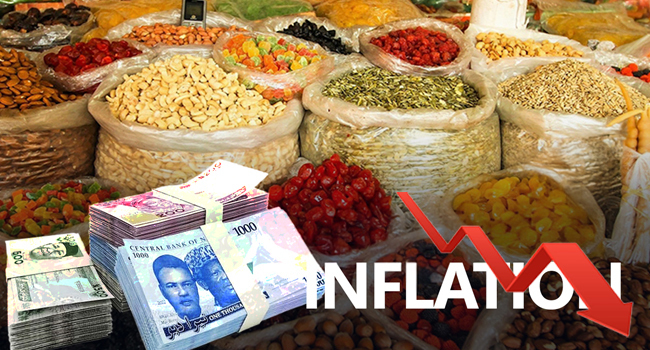
Inflation drops marginally to 15.39% — NBS

Published

on

Nigeria’s headline inflation rate fell marginally to 15.39 per cent in August 2026 from 15.43 per cent in July, according to the National Bureau of Statistics.

The NBS disclosed this in its Consumer Price Index released on Tuesday, saying the latest figure represented a 0.04 percentage point decline from the previous month.

The statistics agency, however, reported a sharper decline in the month-on-month inflation rate, which dropped to 0.71 per cent in August from 1.57 per cent in July.

The month-on-month rate, according to the bureau, declined by 0.86 percentage points compared with the July figure.

The NBS explained that the development indicated that the rate at which the average price level increased in August was slower than that recorded in July.

The latest data also showed a significant moderation in food inflation, which stood at 19.57 per cent year-on-year in August.

The figure was substantially lower than the 25.30 per cent recorded in August 2025.

On a month-on-month basis, food inflation fell to 1.02 per cent in August from 5.56 per cent in July, representing a decline of 4.55 percentage points.

The NBS said the development showed that food prices were still rising, but at a slower rate during the month under review.

It attributed the decline largely to changes in the average prices of a number of food items, including palm oil, carrots, pepper, onions, cassava flour, beef, yam flour, water yam, melon (egusi), fresh ginger, fresh fish, Irish potatoes, wheat grain, frozen chicken and turkey meat.

At the state level, Adamawa recorded the highest year-on-year food inflation rate in August at 38.85 per cent.

It was followed by Zamfara with 37.96 per cent and Bayelsa with 36.20 per cent.

On the other hand, Borno recorded the lowest year-on-year food inflation rate at -4.04 per cent, followed by Jigawa at -0.23 per cent and Kebbi at 3.47 per cent.

The month-on-month figures presented a different picture, with Katsina recording the highest food inflation rate at 9.48 per cent.

Rivers and Osun followed with 8.86 per cent and 8.32 per cent respectively.

Taraba recorded the lowest month-on-month food inflation rate at -12.42 per cent, followed by Borno at -12.15 per cent and Bauchi at -8.88 per cent.

The latest figures indicate a moderation in the pace of price increases, particularly in the food sector, although the NBS data show that consumers continue to face varying price pressures across the states.

Continue Reading

News

Nigeria’s Oil Output Rises to 1.68m Barrels Per Day

Published

on

Nigeria’s crude oil and condensate production rose to 1.68 million barrels per day in August 2026, representing a 0.4 per cent increase from the 1.67 million barrels per day recorded in July.

The Nigerian Upstream Petroleum Regulatory Commission disclosed this in its latest production report released on Sunday.

Excluding condensate, the country produced an average of 1,500,190 barrels of crude oil per day in August, allowing Nigeria to meet its Organisation of Petroleum Exporting Countries quota for the fourth consecutive month.

Daily combined crude oil and condensate production ranged between 1.64 million barrels and 1.71 million barrels during the month under review.

A breakdown of production by terminals showed that Bonny Terminal recorded the highest output at 320.04 thousand barrels per day, followed by Forcados Terminal with 317.40 thousand barrels per day.

Qua Iboe Terminal recorded an average production of 171.72 thousand barrels per day, while Escravos Oil Terminal posted 131.71 thousand barrels per day.

Bonga ranked fifth among the highest-producing terminals, with an average output of 92.50 thousand barrels per day.

The NUPRC attributed the modest improvement in August production largely to the resolution of operational challenges involving the Single Buoy Mooring at the Erha field.

The commission said the challenges had adversely affected production in the preceding month.

“The restoration of normal evacuation and production operations at the asset contributed positively to overall production volumes during the period under review,” the commission’s spokesperson, Eniola Akinkuotu, said in a statement on Sunday.

The regulator added that production activities across most other producing assets remained relatively stable during the month.

“Production activities across most other producing assets remained relatively stable, with operators sustaining implementation measures aimed at optimising production efficiency, maintaining asset integrity, and minimising operational disruptions,” the statement said.

The latest figures indicate a continued improvement in Nigeria’s oil production, with the country maintaining its OPEC quota compliance for the fourth consecutive month.

Continue Reading

Trending

All Rights Reserved. Copyright © 2026 MegaIcon Magazine