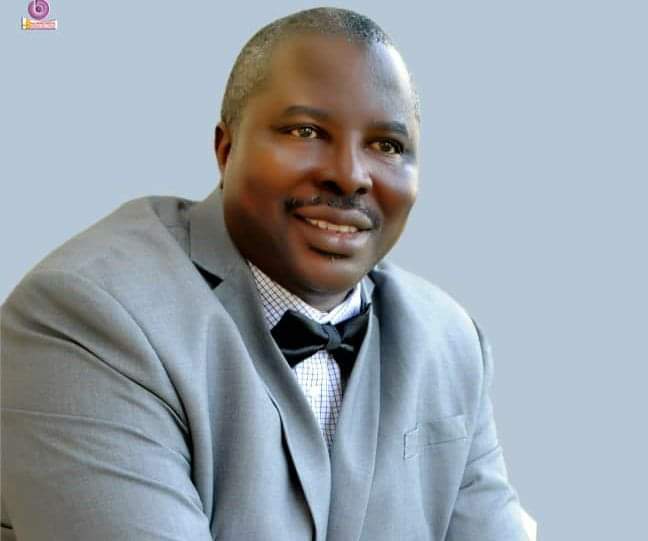
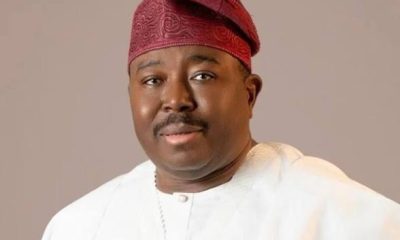
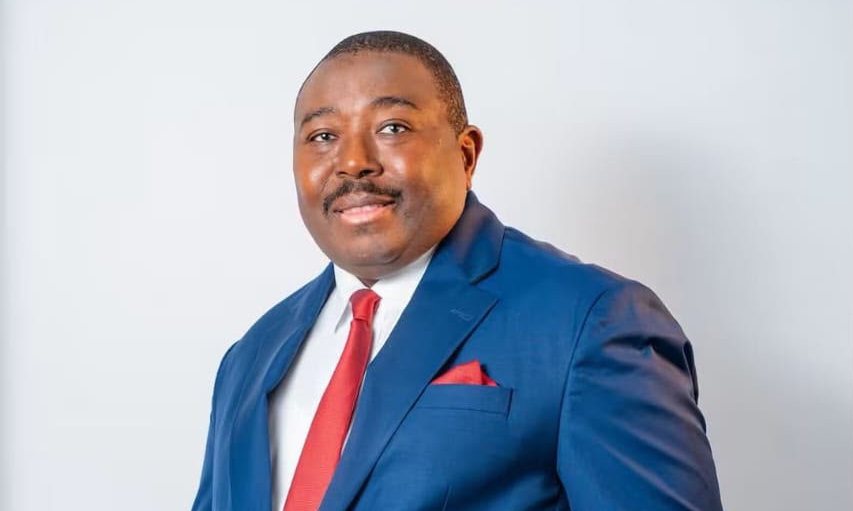
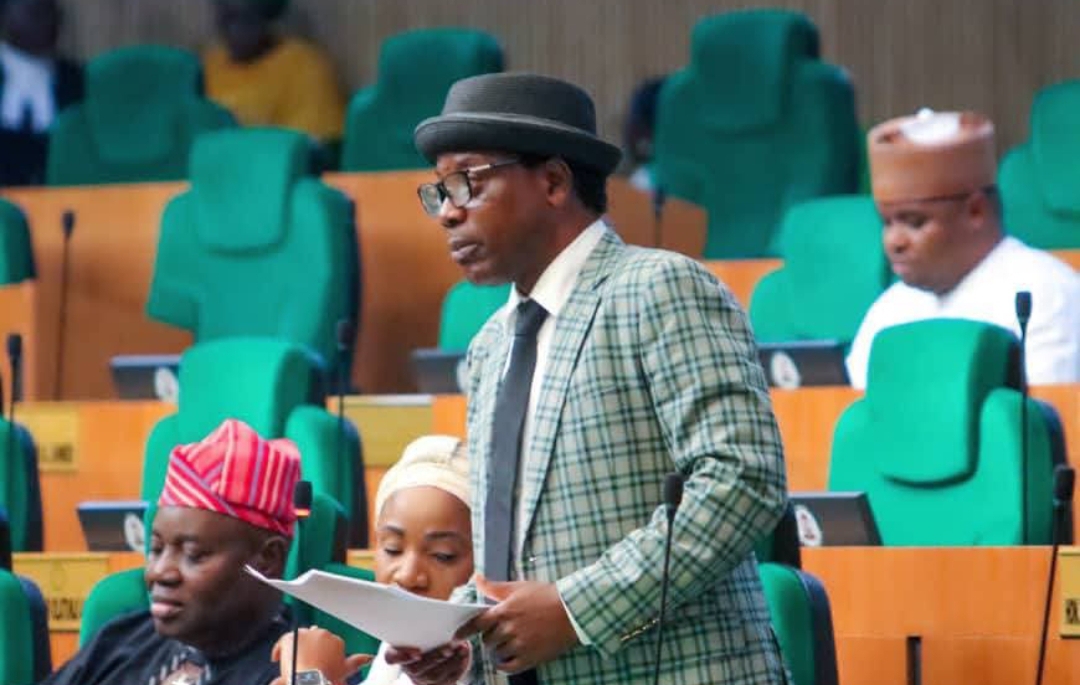
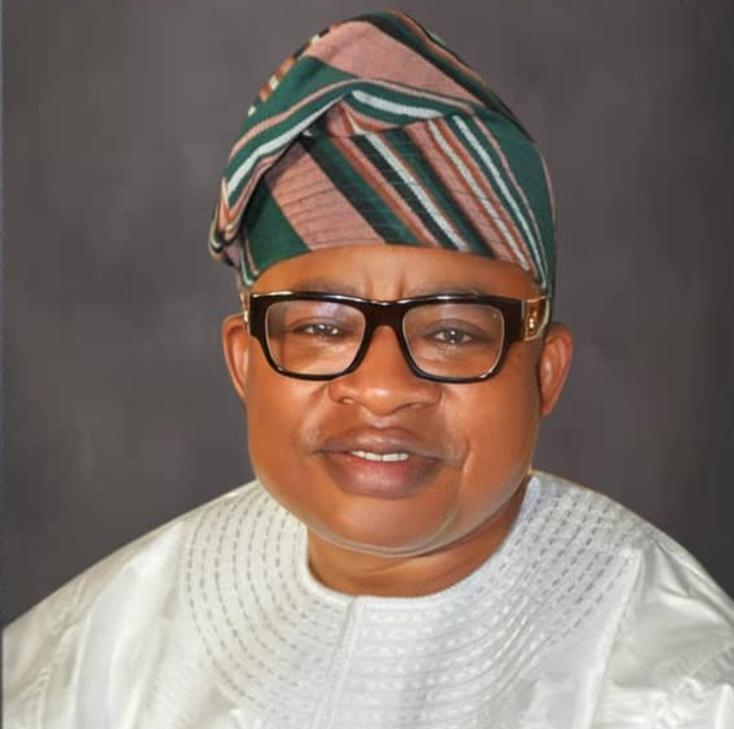
Following the abolishment of N3000 school fees in Oyo State public schools by the new governor of Oyo State, the ex- commissioner for Education under the administration of former Governor Abiola Ajimobi, Prof. Adeniyi Olowofela has rather advised Governor Makinde that he shouldn’t be hasty with such decision.
According to him, for the governor to abolish the payment as one of the instruments that strengthen the policy of School Governing Board (SGB), it is either he was not properly briefed or lacked information concerning the issue at stake.
Prof. Olowofela maintained that the funds generated from the abolished school fees are being used to tackle some of the challenges in the public schools in the state. He noted that this decision by the immediate past government has led to laudable developments in these schools saying the current government should go to secondary schools in the state and make enquiries as regard the development of the School Governing Board (SGB) and would be marveled with the drastic developments.
In this interview with our reporter, the University don cum politician revealed other details on why the policy of SGB and N3000 school fees payment should be sustained.
“I listened to the inaugural speech of His Excellency, the governor of the state, Engr. Seyi Makinde on the cancellation of N3,000 Education Development Levy and I realised that is either he was not properly briefed or he lacked adequate information concerning the issue as stake. Abini tio, I have made up my mind not to comment on anything pertaining to this administration. I have read several issues, both pros and cons as affect the Education Development Levy. I belief that I need to shed lights on the matter as a major stakeholder and the implementor of the project which is called ‘ the School Governing Board’ (SGB).
I want to state to give some background information that Oyo State Government carried out Education Summit in the year 2012 to look at how to solve the perennial issues facing education in the state and shortly early 2016 when government wanted to start the implementation of some of the recommendations of the Education Summit, some members of the public misconstrued the idea and that was the time they mobilized pupils against the government, when the students demonstrate against the government’s intention to make sure that we reposition the education sector in Oyo state.
“However, the government was not deterred under the leadership of the courageous leader, Sen. Abiola Ajimobi who said that we were not where we are supposed to be and that all hands must be on deck. So, on the basis of that, a 31 man committee under the chairmanship of Prof. Gbadegesin, former Vice Chancellor of LAUTECH was set up to look at the education once again and all major stakeholders were invited including religious bodies, the old students’ association, people that are very vast on issues of education, the private sectors, public sectors. It was on account of that that they came up with a policy in order to solve these perennial problems. This was done to ensure all hands be on deck so as to reinvigorate and reposition the education in the state.
“The major highlight of that policy is that the Parent Teacher’s Association (PTA) must participate in the programme, the old students must participate in the programme, major stakeholders must participate in the programme. And we equally recognised that some schools were established by faith base organizations, the Moslem and Christian communities. We brought everybody into this programme and that is why it was called School Governing Board (SGB) system. I need to reiterate that the recommendation of the committee was that 50% from the Education Development Levy should be with the government and other 50% should be with the boards.
“However, at the Executive Council Meeting, government decided that let the 100% be with the School Governing Board (SGB) so that they can use the money as ‘Baseline Fund’ to solve problems that are peculiar to each institution. And I must say that during my time as Commissioner for Education, there was hardly any week in which I was not invited to come and commission one project or the other for the government. I need to state that with this policy, a lot of funds were injected into the school system which were used to tackle the infrastructural decay. Part of the funds was used to reconstruct and built about 100 schools in the state.
“But, as I’m talking today, there is no school in the entire state in which monumental projects are not ongoing. I equally need to state that the principals of the schools are the secretary of the boards and they all commended unequivocally with popular acclamation that this is the best thing that could happen in the policy of education in Oyo state. I want to say also that our historical position as far as education is concern being the centre of the Western region. Oyo state, if you recall, especially Ibadan, is the capital city of the western region and there were so many schools that were built, even during the time of late sage Obafemi Awolowo, most of them had suffered structural and infrastructural decay.
“These funds are being used to tackle some of the challenges in these schools. I made bold to state that the current government can go to any secondary school in the state and make enquiries as regard the development of the School Governing Board (SGB). I equally want to state that ability and capability defer. There are schools that are well endowed with very strong old students, some of them include: Government College, Ibadan; Ibadan Boys High School; Ibadan Grammar School; Lagelu Grammar School. And there are some that are relatively speaking are ‘younger’ than the other ones. But, whether ‘young ones’ or ‘old ones’ there is no school that is not positively affected.
“I have also read the argument of Dr. Festus Adedayo as relates to Awolowo’s policy as far as education was concerned. Awolowo had to raise special tax to solve the issue of primary education (basic education) as at that time. And that was one of the things that gave the western region a edge in the entire country in which they gave it to the region as the hot bed or Potpourri of education in Nigeria. I equally need to state that there are deficiencies in previous policies, but the School Governing Board (SGB) as it is presently constituted has tackled so many of the problems of the time past.
“But, when you look at what has been achieved in the last two years, because the implementation of the policy started two years ago, is so massive and the fund injected into the system too, is also massive because everybody believes that you must give back to the system that made you. I equally need to state that the current governor has also supported his alma mater which is Bishop Philip Academy under the School Governing Board (SGB) policy. The composition is such that you have 9 members for each school as at the time of implementation and we have 628 public secondary schools in Oyo state. When you multiply that one by 9, these are people that are working free of charge for their various schools.
“So, it makes management of public secondary schools easier for government and the commitment of the Board is unparalleled. So, when you remove the ‘Baseline Fund’ by fiat is like insulting those who invested their time and energy without being given a penny to the various institutions. I want to say that even private organisations also participated. In fact, I have also said this just before this time that if we are able to sustain this programme for the next seven years nobody will be able to distinguish between public schools and the best private schools in the state.
“I believe that the step taken by the current government should be revisited and that the governor should look at all the documents that back up this policy. Let us also say that we also belief that there are some parents that are poor, there is no doubt about that. We know that there are some people that are rich as well. The rich people are not sending their children and wards to public schools, they are sending them to private schools. However, with the advent of this School Governing Board (SGB) policy, the story is changing fast. The configuration of School Governing Board (SGB) is apolitical. I was the one that wrote letters to all the chairmen of the board. Some chairmen are PDP, Accord members but we are less bothered about those ones. What we were concern about is that, what can you do to support and improve education in the state.
“It is commendable that the government of Oyo state has said it will increase the budget of education to 10%, but I can guarantee this administration that if they annulled either directly or indirectly, the School Governing Board (SGB) System and they inject even 30% of the budget into the education sector, concerning what will have on ground today, it won’t solve the problem in the next 4 years. I want to say that the records are there for people to see. When this democratic dispensation started in the year 1999 , the time of late Alhaji Lam Adesina who happens to be the leader of the progressives in the state, the percentage pass in WAEC was 4%, later it moved to the era of Governor Ladoja.
“In fact Governor Ladoja also made some efforts to change the paradigm. In fact, honestly speaking, I thought that we are going to have the best result, but we find out that Ladoja/Akala era we only had 8% pass rate. At the advent of Governor Ajimobi’s administration in the year 2011, the percentage pass rate was 11%. So, when you consider 4% of Lam Adesina era, 8% of Ladoja, Akala era, even the commencement of Ajimobi era, there was really no remarkable difference.
“However, shortly after the commencement of the policy (SGB) and the fact that we also cancelled automatic promotion in the state, we moved from 23% pass rate to 54.4% which happens to be the best result in the last 24 years, even prior to democratic dispensation. I equally listened to His Excellency, Engr. Seyi Makinde when he said that Oyo state WAEC position is 26, I want to say that people are just pushing around figure that is not backed by facts.
“When Oyo state had 8%, they said we were 26th position, when we also had 23%, they said it was 26th and when we also recorded 54.4%, they said it was the same 26th position. I can tell this current governor that they will equally say that next year is 26th position, even the following year. WAEC doesn’t do any rating, but done by people who think they have facts and they don’t. I just want to say that people should participate in the development of their children and the development of their wards. I know that government is not spending anything less than N40,000 per child annually. While the 2018 result was 56.7% . Though, still an improvement but our target is beyond this.
“But, if a parent should contribute N3,000 per annum is that too much for having quality education? I wanted to do what Uncle Bola Ige called ‘Sitdown look’ for this matter, but since I find out that the argument was to and fro, I think I have the responsibility to provide some of this information. I know that there is no policy that cannot be improved upon, I have no doubt about that, however, I want to appeal to this government to revisit the issue once again because this state belongs to all of us, it was on the basis of this that I feel that I need to provide some simple explanation. I still have my fact and figure as far as this policy is concern.
“But, I belief that it is parody, a clear case of short circuiting a beautiful, laudable and workable programme. Frankly speaking, if the government should set up a committee to look at the matter critically, I am of the opinion that the government may revise its earlier decision and encourage people, including the parent to participate in the development of their wards. We have successfully halted the poor ratings of position as far as education is concern. I just belief that this government will also mean well and will not take us back to the era in which we have nothing to show for education in the state.
“I do not want to create an impression that we know it all, I belief that policies can be look into, sustain those one that are good, improve upon those one that are necessary, but not just waking up one day by fiat. Rhetorics is not governance, government is different from rhetorics. Education certainly requires injection of funds from the government and people that have issues of education at heart. I want to state too that we have a commission that is assisting primary education which is called Universal Basic Education, for tertiary education we have a commission that is assisting them, TETFUND, the midway is the issue of secondary education , more or less there is no commission.
“I know that federal government is creating one , but it will be a disaster if we sabotage inadvertently a working policy and a programme that is working for all. Come to think of it, N3,000 per annum, what does that translate to per day, N3,000 divided by 360? Certainly, it is less than N100, per day. Though, ability defers, but I know that those parents, especially in this Southwestern part of the country will be willing to do what is require to make sure that their children have quality education. The records are there in terms of structure, content, however, despite these achievements, there are still many grounds to be covered. Anybody that give birth to a child must know that he or she has a responsibility towards that child.
“I am not making empty boast, this government cannot solve the problem of education within the next 48 months, but I wish them the best. We cannot play partisanship with the issue of education. I want to admonish this government seriously that they should revisit the issue of Education Development Levy, revisit the policies that are on ground and give credit to where credit is due and not to be hasty in taking decision. Let them take decision from informed position not from hearsay that I met one man or woman, they said that they cannot pay N1,000 for 3 months.
“I believe strongly that if we have managed the resources of this country very well, then we may be in the position to provide free education at all level to the children in Nigeria, but the reality is that the resources of this country has been badly managed. With the current economy of the state, it is impossible, impracticable for the government to solely shoulder the education in totality. There must be a way by which fund would be injected”.